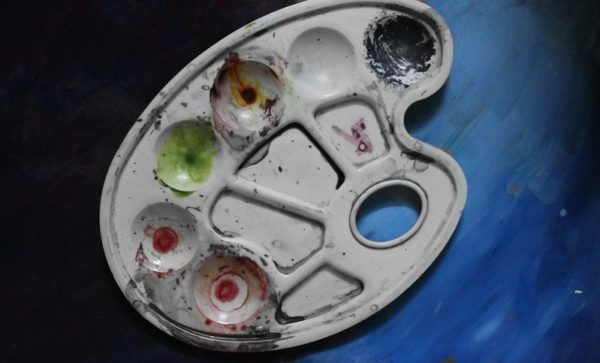
 Historically, art is a concept too broad to comprehend on a simplistic term. It can reference painting, drawing, music, writing, sculpting, acting, most creative ventures tend to fall under the category of art. With such a wide scape, it is no surprise that art also covers a range of topics, from love to politics to recycling. Poverty is a matter which has not escaped the global creative community and artists all over the world use their work to either raise awareness or take action against poverty. There are hundreds of thousands of relevant artists and projects around the world, though a few have caught significant attention for their contributions to the problem. Though a small sample, this article features a few of these artists against poverty and shows how art can be more than a pretty picture.
Willie Baronet
Willie Baronet is an artist, advocate, professor, entrepreneur and creative director who has dabbled in various projects and industries throughout the years. According to SMU (Southern Methodist University), his career includes advertising and design for several graphic projects, such as Communication Art, New York Art Annual and Annual Report Design: A Historical Retrospective 1510-1990. Baronet was also named as an AIGA Fellow in 2013 for his work in establishing a higher standard of performance for the creative community. His significant work as one of the artists against poverty, however, started back in 1993 with a project called We Are All Homeless.
Baronet began collecting signs from the homeless in an effort to raise awareness of the issue and try to understand their situation better. The project touches on both the moral challenge of those in a higher socio-economic position, as well as the more obvious subject of those in need. The work has won several awards and been exhibited all over the country, proving to be a powerful piece in the global conversation of poverty. Baronet’s contributes to such discussion establishes him as a powerful advocate for the homeless and leading voice in the fight against poverty.
Caitlin Beidler
Caitlin Beidler has taken advocacy to new heights with her art career. Back in 2006, she launched Redemption Art, a business that works to “free people through art,” according to the official website. The project has allowed this artist against poverty to directly interact with those in need by fostering a healthier community through small projects, such as murals with local children and live art events. Beidler has also taken global action by going to Haiti to paint murals with the children there in an effort to boost local morale. The work in Haiti has been done primarily through her sister’s non-profit, Growing Roots, an organization that works to help local communities in Haiti through direct action.
Beidler is a founding member of Growing Roots and helps oversee its four primary branches: Camp Hope, Community Mural Projects, the Planting Project and Mercy Relief. Each project touches on a different aspect of daily life for the Haitian people. Camp Hope is a day camp for local children, the Community Mural Projects are an artistic outlet (as previously mentioned), the Planting Project provides education and Mercy Relief provides aid during crisis periods. The work Beidler as done showcases the important facets of an artist’s life, they can both promote creativity while still contributing to the community. Art is both a means of emotional and practical support.
Michael Rakowitz
Michael Rakowitz is one of the artists against poverty who has taken direct action in fighting for the underdog. His career has spanned decades, with work being featured in such prominent venues as MoMA. Rakowitz is famous for its pieces with multiple purposes outside the artistic realm. In 2013, he opened a restaurant in Dubai called Dar Al Sulh. The art project doubled as nourishment for others as it told the history of the Jewish community in Iraq through the cuisine, showcasing the downfall of an entire people. Additionally, Rakowitz has been working on a long-term project since 1998 in which he turns art into a shelter.
The project, entitled paraSITE, utilizes the heat emitting from ventilation systems to create tent-like structures on the sides of buildings. These temporary homes often look like parasitic insects due to their bulbus form and positioning in the city. They have double lining as space between fills with air to inflate the structure while also heating the area inside for the homeless to sit in. The work—still ongoing today—has garnered mass attention for both its versatility and creative representation in the community. Rakowitz (throughout his career and with paraSITE in specific) proves art isn’t just for viewing or experience; it is an active part of life that can truly help others.
Conclusion
A common misconception about artists is that they are only a voice, they cannot contribute physically to the modern world. Art, however, has been evolving with the times the same way every other industry has for centuries. Artists have adapted to today’s fast-paced, efficiency-focused mindset. They raise the topic to eager ears, find creative ways to asses the problem and act as emotional and mental support to those in need all the while.
– Eleanora Kamerow
Photo: Flickr

10 Facts About Human Trafficking in Laos
Laos is one of the most underdeveloped countries in the world and the poorest in its region. Poverty and low levels of education leave its residents vulnerable to diverse sorts of crime and one of the largest crimes the country faces is human trafficking. Here are 10 facts about human trafficking in Laos.
10 Facts About Human Trafficking in Laos
The people of Laos, and especially the young women who live there, face great dangers when seeking employment opportunities abroad. As expressed in these 10 facts about human trafficking in Laos, however, the country is making positive strides. Thanks to recent government efforts and groups like LWU, The Lotus Project and VFI, more Laotians are able to avoid those hardships or receive rescue.
– Ariana Kiessling
Photo: Flickr
Roads in Zimbabwe: Development Can Reduce Poverty
In developing countries like Zimbabwe where more than 67 percent of the population lives in rural areas, adequate roadways are essential for communities in the countryside to have access to education, jobs and health care. However, even those city roads in Zimbabwe that are paved, are filled with potholes while others have totally washed away. Rural areas have largely remained unlinked by asphalt roads, and the Zimbabwean government has historically lacked the necessary funds to launch an infrastructure overhaul that would not only maintain urban roads but also expand the transportation network to rural areas as well.
Road Improvements
However, improvements for roads in Zimbabwe are now underway. Extensive infrastructure developments have begun as of February 2019 to create more adequate highways to facilitate increases in traffic and create a safer environment for drivers. These developments will help ensure the quicker movement of goods and people across the region and are expected to help spur further economic development in the country. Regional connectivity will also improve, as the project has been planned in conjunction with Mozambique and South Africa. Zimbabwean President Emmerson Mnangagwa has already opened the newly-refurbished Tanganda-Ngundu Highway that connects the eastern part of Zimbabwe to South Africa.
The revamping of these roads is in line with Vision 2030 — a development initiative launched by the Zimbabwean government to upgrade the country to an upper-middle-class economy by 2030. The project has already created a spike in employment due to the rapid infrastructure overhaul construction operations, reflected in the Zimbabwe National Road Administration (ZINARA) minister’s statement calling everyone who wants money to come help build the roads, “Those who are ready to work on the roads come and get your money.”
While the renovation of highways and other essential roads in Zimbabwe is of utmost importance, rural communities are seeing significantly less attention. But that does not mean they are forgotten. In January 2019, the Zimbabwean government expressed interest with local officials of Kanyemba to expand updated roads to the rural province. Kanyemba is a largely underdeveloped province in northern Zimbabwe, and under the new infrastructure developments, the province officially received township status.
Looking Forward
With the expected economic growth after the road infrastructure improvements have been completed, rural areas are likely to develop as well. Once the government has more capital to put into its infrastructure services, it will be able to implement more extensive road network programs to reach beyond its main cities and highways to regions like Kanyemba. Zimbabwe’s future development, once rural roads are improved and/or created, will likely bring adequate jobs, health care and education to the more remote corners of the country. If all these expectations come to light, Zimbabwe has a great chance at realizing its goal of becoming an upper-middle-income country by 2030 in accordance with Vision 2030.
– Graham Gordon
Photo: Flickr
10 Facts About the Sudan Genocide
The grave human rights abuses and mass slaughter in Darfur, West Sudan between 2003-2008 was the first genocide of the 21st century. The Sudanese government and the Janjaweed (government-funded and armed Arab militias) targeted civilians, burned villages and committed many more atrocities. Below are 10 facts about the Sudan genocide.
10 Facts About the Sudan Genocide
These are just 10 facts about the Sudan Genocide which are essential to understanding the current events happening in Sudan. Despite the peak of violence in Sudan in 2019 which killed hundreds of protestors, the country finally has a new government and it seems willing to right the wrongs committed during the genocide. The new prime minister Abdullah Adam Hamdok expressed in front of the UN in September 2019: “The ‘great revolution’ of Sudan has succeeded and the Government and people and will now rebuild and restore the values of human coexistence and social cohesion in the country as they try and turn the page on three decades of abhorrent oppression, discrimination and warfare.”
– Andrea Duleux
Photo: Flickr
The Increasing Threat of Dengue Fever
Why the Increase?
While dengue fever used to be concentrated in countries with extreme tropical climates, such as India and Bangladesh, the disease is now prevalent in countries that have more temperate climates, such as Nepal. With higher than average temperatures, rainy seasons are lasting longer which creates the perfect environment for the Aedes mosquito, the carrier of the disease. Unfortunately, the geographic regions that the Aedes mosquito inhabits coincide with low and middle-income countries. Many of these countries do not have sufficient health care systems to cope with this major health issue. Therefore, the effects of dengue are even more severe.
Protection from Mosquitoes
The World Health Organization is leading efforts to reverse the increasing threat of dengue fever. One common tactic used is immunization. The first immunization for dengue fever was approved in 20 countries in 2015. However, follow-up data from 2017 showed that the vaccine was actually harmful to those who had never contracted the disease, putting people at a higher risk of more severe cases of dengue. Now, the vaccination is recommended as a measure for those who have already been affected.
In addition to immunization, people can inhibit the Aedes mosquito’s survival and procreation by properly disposing of human waste, and not leaving out any stagnate, uncovered containers of water, as mosquitoes thrive and lay eggs in both environments. It is also advised to use spray insecticide to repel bugs and invest in screened windows and sleeping nets for protection in homes.
Combatting the Threat
The World Health Organization is partnering with local organizations and governments in affected countries to ensure that the number of deaths caused by dengue fever will decrease by 50 percent in 2020. In order to reach this goal, however, additional funding and research are needed so that the scope of dengue fever is properly understood. Health care providers also need the training and resources to properly address the issue and detect the disease in its early stages as well. If dengue fever is diagnosed before the symptoms become too severe, mortality rates of the disease become much more optimistic.
– Madeline Lyons
Photo: Flickr
Artists Against Poverty
Willie Baronet
Willie Baronet is an artist, advocate, professor, entrepreneur and creative director who has dabbled in various projects and industries throughout the years. According to SMU (Southern Methodist University), his career includes advertising and design for several graphic projects, such as Communication Art, New York Art Annual and Annual Report Design: A Historical Retrospective 1510-1990. Baronet was also named as an AIGA Fellow in 2013 for his work in establishing a higher standard of performance for the creative community. His significant work as one of the artists against poverty, however, started back in 1993 with a project called We Are All Homeless.
Baronet began collecting signs from the homeless in an effort to raise awareness of the issue and try to understand their situation better. The project touches on both the moral challenge of those in a higher socio-economic position, as well as the more obvious subject of those in need. The work has won several awards and been exhibited all over the country, proving to be a powerful piece in the global conversation of poverty. Baronet’s contributes to such discussion establishes him as a powerful advocate for the homeless and leading voice in the fight against poverty.
Caitlin Beidler
Caitlin Beidler has taken advocacy to new heights with her art career. Back in 2006, she launched Redemption Art, a business that works to “free people through art,” according to the official website. The project has allowed this artist against poverty to directly interact with those in need by fostering a healthier community through small projects, such as murals with local children and live art events. Beidler has also taken global action by going to Haiti to paint murals with the children there in an effort to boost local morale. The work in Haiti has been done primarily through her sister’s non-profit, Growing Roots, an organization that works to help local communities in Haiti through direct action.
Beidler is a founding member of Growing Roots and helps oversee its four primary branches: Camp Hope, Community Mural Projects, the Planting Project and Mercy Relief. Each project touches on a different aspect of daily life for the Haitian people. Camp Hope is a day camp for local children, the Community Mural Projects are an artistic outlet (as previously mentioned), the Planting Project provides education and Mercy Relief provides aid during crisis periods. The work Beidler as done showcases the important facets of an artist’s life, they can both promote creativity while still contributing to the community. Art is both a means of emotional and practical support.
Michael Rakowitz
Michael Rakowitz is one of the artists against poverty who has taken direct action in fighting for the underdog. His career has spanned decades, with work being featured in such prominent venues as MoMA. Rakowitz is famous for its pieces with multiple purposes outside the artistic realm. In 2013, he opened a restaurant in Dubai called Dar Al Sulh. The art project doubled as nourishment for others as it told the history of the Jewish community in Iraq through the cuisine, showcasing the downfall of an entire people. Additionally, Rakowitz has been working on a long-term project since 1998 in which he turns art into a shelter.
The project, entitled paraSITE, utilizes the heat emitting from ventilation systems to create tent-like structures on the sides of buildings. These temporary homes often look like parasitic insects due to their bulbus form and positioning in the city. They have double lining as space between fills with air to inflate the structure while also heating the area inside for the homeless to sit in. The work—still ongoing today—has garnered mass attention for both its versatility and creative representation in the community. Rakowitz (throughout his career and with paraSITE in specific) proves art isn’t just for viewing or experience; it is an active part of life that can truly help others.
Conclusion
A common misconception about artists is that they are only a voice, they cannot contribute physically to the modern world. Art, however, has been evolving with the times the same way every other industry has for centuries. Artists have adapted to today’s fast-paced, efficiency-focused mindset. They raise the topic to eager ears, find creative ways to asses the problem and act as emotional and mental support to those in need all the while.
– Eleanora Kamerow
Photo: Flickr
4 Connections Between Oral Health and Poverty
Dental health is a topic that people often forget in discussions of global poverty as other health issues can overshadow it. However, oral health and poverty have a link. Maintaining proper dental health is essential for individuals to stay healthy and out of poverty. Listed below are four ways in which improving individuals’ oral health can help fight global poverty.
4 Connections Between Oral Health and Poverty
Efforts by NGOs to Improve Oral Health
Fortunately, many groups have already begun to respond to this pressing issue. Dental care-centered mission trips and humanitarian outreach programs have long been in effect. Now, other larger organizations are increasingly involving themselves in oral health. For example, the organization Shoulder to Shoulder conducted a 17-year-long effort to craft an oral health program that produced many benefits for the people of Honduras. The program helped many individuals improve their dental health and people considered it to be a great success. UNICEF implemented a similar program that focused on tooth-brushing in the Philippines. This program reached countless schoolchildren in the country.
All of the above reasons demonstrate why improving oral health is crucial for fighting poverty. All said, there is a lot of good work that NGOs are currently doing to help promote oral health education and practices. Oral health is essential to ensure individuals’ overall health as well as their financial security. It is important that the connection between oral health and poverty remains at the forefront of discussions surrounding global health care going forward.
– Molly Power
Photo: Flickr
Redefining STEM Education in India
According to India’s latest census, 7.8 million children must earn a living while attending school. Another 84 million children do not even attend school. One of India’s biggest challenges is making education accessible to all its people. While primary education in India is now required, many children do not have the means to attend school. Although India’s literacy rates are rising, studies show that many children in primary schools fail to comprehend basic skills and concepts. As new technologies emerge, STEM education is becoming an important aspect of India’s education. The Agastya International Foundation and India STEM Foundation are two nonprofit organizations introducing rural children to STEM education.
STEM Education in India
In 2011, The Wall Street Journal reported that 75 percent of India’s technology graduates lack the qualifications for jobs in their fields. This report came a month after India released its 2011 census stating that nearly 92 million children in India struggle to achieve an education. Today, India’s government and nonprofit organizations, such as the Agastya International Foundation and the India STEM Foundation, have partnered to provide children with a strong education they can depend on later in life.
Agastya International Foundation
Founded in 1999, the Agastya International Foundation is a “transformative educational organization” that provides poor rural and urban children with hands-on learning through its mobile science labs. With more than 130 mobile labs set up across India, Agastya provides more than 500 students with hands-on learning every day. The Agastya International Foundation hones its curriculum to fill noticeable gaps within India’s education system.
India STEM Foundation
Similar to the Agastya International Foundation, the India STEM Foundation’s mission is to educate young children about science and technology. In an interview, the program manager, Nityanand Channur, stated that “there is definitely a need [for a] holistic learning approach in [India’s] education system.” Through its hands-on education in robotics, the India STEM Foundation hopes to inspire young students to pursue careers in STEM fields. Since 2006, the Foundation has created robotic labs, workshops, training for teachers and robotics competitions.
STEM education is not only fostering an interest in science, technology, engineering and math, but a future for children and India. India’s next generation of innovators is on the rise and ready to meet India’s growing need for STEM careers.
– Emily Beaver
Photo: Flickr
10 Facts About Child Labor in Syria
Since 2010, at least half of all Syrians have been displaced by the ongoing conflict. Children are the most vulnerable members of society, particularly during times of war or conflict. As a result, they often bear adolescent hardships far into adulthood. The poverty caused by extended warfare has forced many children to seek to supplement their household income by getting jobs of their own. Child labor in Syria is a serious issue that continues to worsen with time. Here are 10 facts about child labor in Syria.
10 Facts About Child Labor in Syria
Although these 10 facts about child labor in Syria are serious, there have been improvements in the lives of Syrian children made by organizations like UNICEF. In 2018, UNICEF trained 57,000 teachers, helping to ensure that there is not a shortage of teachers for the student in school. In 2019, UNICEF provided 289 consultations for women and children to receive healthcare Significant resources are being mobilized to end child labor in Syria.
– Evan Williams
Photo: Flickr
3 Programs Aiding Women in Vietnam
Too many Vietnamese women find themselves locked into a life of abuse and poverty, with no skills or access to education to become gainfully employed. One example lies in the story of Sung Thi Sy. Sy resides in the Sa Phin village in the Dong Van District of Vietnam. According to the Asia News Network, her family lived in severe poverty for much of her life and she constantly lived in fear of her husband who would regularly abuse her. She considered running away, but she was worried about providing for her two young children. However, thanks to the support of a locally-funded program, Sy and her children are now thriving. There are many other programs aiding women in Vietnam including the following.
3 Programs Aiding Women in Vietnam
Today, Sung Thi Sy has a job in the production of flaxseed products and brings home a consistent paycheck to feed her children and preserve the roof above their heads. Women like Sy are living proof that with enough funding, programs like these can promote tangible improvements in the fight against poverty and inequality in Vietnam.
– Charles Nettles
Photo: Flickr
Venezuela’s Education System
A number of factors are greatly affecting Venezuela‘s education system. The Venezuelan government has always believed that every citizen has the right to free education. When oil prices drove Venezuela’s economy, so too was its educational system. Venezuela used to rank as one of the highest in education in Latin America until 2010 when it became number six in the region. Now the country is undergoing one of the worst humanitarian crises and it is affecting Venezuela‘s education system.
Economic and Political Collapse
High Dropout Rates and Limited Faculty Members
Several students living in Venezuela have missed more than 40 percent of class due to school cancellations, strikes, protests or vacation days. That is equal to missing more than half of their mandatory instruction school days. There has been a “massive desertion of students” in every level of education. Yearly dropout rates have doubled since 2011 and in 2017 about 50 percent of students in three public universities located in Táchira dropped out. About one-fourth of the students do not attend school at all.
Massive numbers of teachers have left their jobs because of their low-wage salary of $6-$30 a month. About 400 employees have quit one of Venezuela’s top science universities, Simon Bolivar University, in the past 2 years. Some teachers dedicate their time to attending strikes and protests in the hopes of changing the education system, which results in them only working 10 days out of the month. Teachers also miss school when they encounter long food lines to feed their families, and some fear that someone will shoot, murder or rob them on campus when they go to work. Robberies in universities have increased by 50 percent in the last three years.
Lack of Food, Water, Electricity and Supplies
“There is only one bathroom for 1,700 children, the lights are broken, there is no water and the school meals are no longer being served,” said a teacher working in one of Venezuela’s middle-class public schools. The scarcity of water, food in cafeterias and electricity has caused schools like Caracas Public High School to close down for weeks at a time. Teachers are even trading passing grades for milk and flour because of the scarcity of food. Students are passing out every day at physical education classes due to their empty stomachs and broken school kitchens.
Budget cuts on school funding are the major reason why schools lack the supplies they need. In 2019, the University of Central Venezuela received only 28 percent of its “requested annual funding.” This is less than the 40 percent it received in 2014 and estimates determine that it will decline to 18 percent next year. These budget cuts result in “broken toilets, leaking ceilings, unlit classrooms and cracked” classroom floors. The education budget now prioritizes Bolivarian Universities due to the fact that they teach 21st-century socialism.
Lack of Intellectual Freedom
Solutions
Global Giving is another NGO that has started a foundation called the I Love Venezuela Foundation. This Foundation focuses on creating and channeling resources to NGOs that focus on the “wellbeing, human development, and social transformation” in Venezuela. It also works on raising money in order to buy shoes for low-income families in Venezuela so that they can safely walk to school, play with their friends and be children. Its goal is to reach $10,000 and it has raised about $630 so far.
While Venezuela’s education system has had challenges in recent years, organizations like Caritas and Global Giving should help alleviate some of the burdens that prevent children from attending school. With continued support, Venezuela’s school system should one day reach its height again.
– Isabella Gonzalez
Photo: Flickr