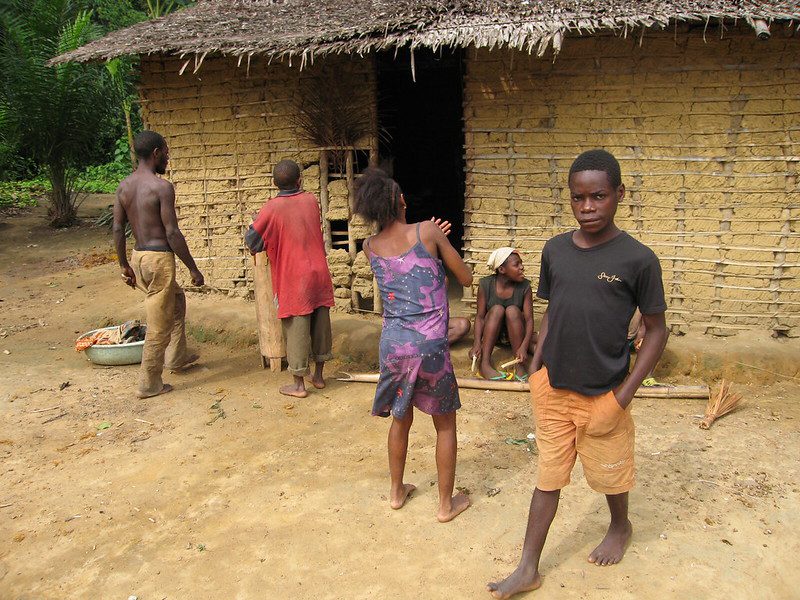
The Anglophone Crisis in Cameroon has internally displaced half a million people. Many are seeking refuge in forests with little access to medical care and portable water. Only recently has the world acknowledged the crisis, despite three years of growing human rights abuses driving the country to the brink of civil war.
The Makings of a Disaster
French and English are the official languages of Cameroon, which consists of 10 semi-autonomous regions. However, the Northwest and Southwest English-speaking regions have felt marginalized by the central government for decades.
Anglophones make up 20 percent of the population and have long complained of few job opportunities and the predominance of Francophones. When the government assigned French-speaking teachers and judges to anglophone schools and courts, anglophone lawyers and teachers felt that it violated their rights, leading to peaceful protests in 2016.
Government security forces responded by killing four protestors and arresting around 100, including several anglophone leaders. The government even banned civil society groups seeking a peaceful solution.
Escalating the Crisis
In 2017, an anglophone separatist group declared a new independent state called Ambazonia. In a pro-Ambazonia demonstration, security forces killed 17 people. The Borgen Project interviewed Mausi Segun, executive director of Human Rights Watch (HRW) in Africa, who said, “If anyone is putting the abuses on both sides on a scale, the government has the upper hand. They have the most effective military equipment.”
Security forces have killed unarmed civilians and burned down villages. Meanwhile, authorities are arresting civilians on suspicion of supporting or belonging to the separatist movement. A number of those held on suspicion are undergoing torture.
Dr. Christopher Fomunyoh, a Regional Director at the National Democratic Institute told The Borgen Project that authorities are catching civilians in a web of violence and mistaken affinity. “They can be arrested for not having their identification card,” he said.
As authorities hold anglophones in detention without trial, lose property and loved ones, resentment and distrust in the government is growing, fueling the grievances of the separatist movement. “We’re concerned the government is throwing the military, and arms and ammunition at a problem that is beyond just a military one,” Segun said.
Armed separatists have committed unlawful abuses as well, including killing security forces, kidnapping students and burning down approximately 36 schools. The International Crisis Group reported the killing of 235 soldiers, along with 1,000 separatists and 650 civilians.
Although one can blame the Anglophone Crisis on a failure of governance, Fomunyoh said that it is no longer a governance issue, “It’s now one of political insecurity.”
International Response
Cameroon now has the sixth-largest displaced population in the world. A wider conflict could threaten the entire region, impacting bordering countries such as Chad and Nigeria, who are fighting Boko Haram alongside Cameroon.
In March 2019, after three years of growing systematic violence, the U.N. human rights chief told the Cameroon government that its violent response will only fuel more violence and the U.N. Security Council (UNSC) held its first meeting on the crisis in the following May. The E.U. called on Cameroon’s government to initiate a dialogue with armed separatists and Switzerland agreed to act as a mediator.
Fomunyoh said that countries may have been slow to respond because they expected African organizations to intervene. The African Union (A.U.) is one such organization, which has intervened in precarious situations before, including South Sudan’s recent crackdown on protestors. The A.U. called on Sudan to restore civil law and expelled the country from the Union. Although the A.U. has endorsed Switzerland’s peace talks, it has yet to take further action.
Solutions
Fomunyoh said that there are three divided propositions to the Anglophone Crisis, “The Amba boys who want separation, those who want a federation and those who believe the status quo is fine the way it is,” however, the first step should be to end this violence.
All parties need to agree to a cease-fire, separatists need to allow children to go back to school and the government should release anglophone prisoners so they can be part of finding a solution. Although the idea of federalism has almost become taboo, Human Rights Lawyer Felix Agbor Nkongho strongly believes it would appease all sides.
“People would have a separation of powers. People would have the autonomy,” said Nkongho. However, the government has made promises in the past it did not keep.
Cameroon’s previous federation dissolved in 1972 under the same government. So, promises to implement any agreement will not mean anything unless the government regains trust. Segun believes this can start by holding those guilty of human rights abuses accountable. “To sacrifice justice on the order peace would only lead to more violence and a crisis later, if not immediately.”
Preventing a future crisis also requires healing from the trauma, which is Fomunyoh’s biggest concern. If the country does not make investments in healing, it could threaten future security by creating an environment where corruption thrives.
“When you have dead bodies in the street when that becomes the norm, then other abuses like assault, rape, theft, are pale in comparison,” said Fomunyoh. The Anglophone Crisis can become much direr and have unintended long-lasting consequences.
International solidarity helped South Africa’s struggle against apartheid. The AU and UNSC helped resolve Côte d’Ivoire’s post-election crisis. There is no reason that Cameroon cannot stop its Anglophone Crisis.
– Emma Uk
Photo: Flickr

Generous Coffee Co.’s Purpose Is Giving Back
Ben Higgins, a former star of “The Bachelor”, gives back through his company Generous Coffee Co. He does this with his friend and business partner Riley Fuller and they operate Generous Coffee Co. as a not-for-profit organization. The purpose that Higgins and Fuller have in mind stems from kindness, efficiency and sustainability. Generous Coffee Co.’s customers know that the company uses its profits to change lives for the better around the world
The Foundation of Generous Coffee Co.
Higgins and Fuller had the idea for Generous Coffee Co. in Honduras at the end of 2016. While having dinner, a friend asked them how Fuller’s nonprofit, Humanity and Hope United, would survive if its fundraising ran out. Fuller founded Humanity and Hope United in 2010 after a family mission trip to Honduras inspired him in 2007.
Honduras is home to 8.5 million people, but 70 percent of them earn less than $1,200 a year. The country has the highest rate of income inequality in Latin America. In rural areas, 50 percent of the population lives beneath poverty levels, which means that one in every five people make less than $1.90 a day, or less than $700 a year. Education plays a large role in continuing or ending the cycle of poverty, and the Honduran education system is doing extremely poorly; only around 30 percent of students continue to high school after sixth grade because their families cannot afford secondary school. Ninety percent of the students who stop in sixth grade have to repeat a grade at some point. Approximately 100,000 students drop out of school every year because they need to start working to help provide for their families.
Humanity of Hope United
The critical conditions for families in Honduras inspired Fuller to found Humanity of Hope United. The organization currently provides relief to multiple villages throughout Honduras by providing people with clean water, making education more accessible and working to improve employment opportunities. Humanity of Hope United has an education sponsorship program where donors sponsor children for $100 a month, which pays for a student’s food, transportation, school uniform and school supplies.
The organization also creates job opportunities with the Grand Farm, a 30-acre farm that grows crops and raises animals in a village called La Coroza. The farm currently has 126 people working on it who make around $10 a day, and about $50 for each cow that they sell on the farm. This is a significant improvement over the average $2 per day that other Honduran farmworkers make. In 2019, Humanity of Hope United reached a milestone when it exceeded its goal of raising $200,000 to purchase The Grand Farm for the people of La Coroza. In fact, the organization has raised $215,000 for the farm. Humanity of Hope’s work started the goals that Higgins and Fuller continued with Generous Coffee Co.’s “purpose, not profit” business model.
Generous Coffee Co.’s Coffee and Reach
At the beginning of the project, Higgins and Fuller invited Drew Scholl to be a partner in Generous Coffee Co. because Scholl had already tried to create a coffee company that worked with developing countries. Together, the three of them established Generous Coffee Co. in November 2017. Generous Coffee Co.’s purpose is to invest 100 percent of its profits into charity organizations to help the countries that make the company’s coffee. The company operates in Honduras, Rwanda, Colombia and Guatemala, and roasts the beans at Utopian Roasters in Fort Wayne, Indiana, Higgins’ home town. All of the coffee sold by Generous Coffee Country has single, traceable origins. After roasting and packaging, the company sells its coffee directly online. Generous Coffee Co. has over 50 volunteers that help the company in its efforts to spread generosity and give back to the people who make its coffee.
Every two or three days, the company ships coffee orders to consumers and cafes. In 2018, Generous Coffee Co. launched a clothing line that sells t-shirts that single mothers in Haiti make, providing them with a living wage and retirement insurance. The company also started a program where people can go on trips with the company and opened its inaugural Generous Coffee Shop in Golden, Colorado at the Tributary Market. As Generous Coffee Co.’s purpose of giving back to its sources continues, the company aims to let people invest in the company and to expand globally into Generous International.
Purchases of Generous Coffee makes a positive impact worldwide, and its customers know that by buying from Generous Coffee Co., they are giving back to its sources.
– Cyndi Payton
Photo: Wikipedia
Cancer Treatment in Nigeria
Thousands of Nigerians die every year from cancer. Though deaths are mostly preventable, Nigeria lacks the infrastructure, equipment and health care professionals necessary to treat its cancer victims. Furthermore, the high cost of cancer treatment prevents many Nigerians from seeking it soon enough to cure it. Yet the Nigerian government is improving Nigeria’s cancer treatment and making it easier for Nigerians to access it. This article will reveal the future of cancer treatment in Nigeria by first explaining why so many Nigerians die from cancer, and then listing the solutions that people are proposing and implementing to eradicate it.
Cancer in Nigeria
The World Health Organization identifies cancer as the second leading cause of death around the world. It is responsible for 70 percent of deaths in low- and middle-income countries. This is more than the number of deaths from AIDS, malaria and tuberculosis combined. In Nigeria, around 72,000 Nigerians die each year from cancer among the more than 100,000 cancer diagnoses. The two most common, and often treatable, forms of cancer in Nigeria are breast and cervical cancer.
Specifically, Nigerian men suffer from mostly prostate, colorectal, liver, stomach cancer and non-Hodgkin’s lymphoma. Nigerian women suffer from mostly breast, cervical, colorectal, ovarian cancer and non-Hodgkin’s lymphoma. The number of new cancer cases per year among Nigerian women, 71,022, is greater than the number of new cancer cases per year among Nigerian men, 44,928.
Reasons for Nigerian Cancer Deaths
First and foremost, many Nigerians are unable to reach physicians who can diagnose and treat their cancer. Additionally, when they are able to get the treatment they need, their cancer is in such an advanced state that any treatment they receive fails to save their lives. Thirdly, Nigeria has not had a national plan to control cancer or a national registry to track trends about who has cancer and where they live for most of its history.
In addition, Nigerians often do not have the money to pay for cancer treatment. On top of this, many Nigerians who suffer from cancer do not receive enough information about cancer to motivate them to seek immediate medical attention.
There are also infrastructure limitations as Nigeria currently only has four functional cancer treatment centers, which is not enough to treat the immense number of Nigerian citizens who suffer from cancer. Furthermore, in a population of more than 200 million, there are only nine radiation therapy machines. At any time, some or all of these machines might be broken, sometimes for months. Nigeria additionally lacks well-equipped treatment centers and an adequate amount of qualified health professionals.
Goals with Cancer Treatment in Nigeria
The current state of cancer treatment in Nigeria might look dreadful, however, Nigerians are making great efforts to improve the care it provides to Nigeria’s cancer victims with the help of partners like the World Health Organization and the American Cancer Society. On April 13, 2015, the Nigerian Federal Ministry of Health launched the Cancer Control Plan (CCP). This plan sets the course for the Ministry of Health to improve cancer treatment in Nigeria from 2018 to 2022. The goals included in the CCP that Nigeria intends to reach to improve its response to cancer are:
Progress
A major stepping-stone in the advancement of cancer treatment in Nigeria is the construction of the world-class Nigeria Sovereign Investment Authority (NSIA) and Lagos University Teaching Hospital (LUTH) Advanced Cancer Treatment Centre. This facility emerged to ensure that the prevention, early diagnosis and treatment of cancer are available to many more Nigerians and is equipped with the most innovative cancer therapy solutions from Varian Medical Systems. This facility can treat 100 patients a day and provide more advanced training for 80 health care professionals. Predictions determine that this facility will serve as a model for future cancer research facilities throughout West Africa.
Even though Nigeria has a long way to travel to create a cancer treatment system on par with those of high-income countries like the United Kingdom or Switzerland. The goals listed above will take a great effort to reach. Yet, the fact that Nigeria is already making progress towards advancing its cancer treatment system proves the bright future of cancer treatment in Nigeria is already here.
– Jacob Stubbs
Photo: Flickr
The Anglophone Crisis in Cameroon
The Anglophone Crisis in Cameroon has internally displaced half a million people. Many are seeking refuge in forests with little access to medical care and portable water. Only recently has the world acknowledged the crisis, despite three years of growing human rights abuses driving the country to the brink of civil war.
The Makings of a Disaster
French and English are the official languages of Cameroon, which consists of 10 semi-autonomous regions. However, the Northwest and Southwest English-speaking regions have felt marginalized by the central government for decades.
Anglophones make up 20 percent of the population and have long complained of few job opportunities and the predominance of Francophones. When the government assigned French-speaking teachers and judges to anglophone schools and courts, anglophone lawyers and teachers felt that it violated their rights, leading to peaceful protests in 2016.
Government security forces responded by killing four protestors and arresting around 100, including several anglophone leaders. The government even banned civil society groups seeking a peaceful solution.
Escalating the Crisis
In 2017, an anglophone separatist group declared a new independent state called Ambazonia. In a pro-Ambazonia demonstration, security forces killed 17 people. The Borgen Project interviewed Mausi Segun, executive director of Human Rights Watch (HRW) in Africa, who said, “If anyone is putting the abuses on both sides on a scale, the government has the upper hand. They have the most effective military equipment.”
Security forces have killed unarmed civilians and burned down villages. Meanwhile, authorities are arresting civilians on suspicion of supporting or belonging to the separatist movement. A number of those held on suspicion are undergoing torture.
Dr. Christopher Fomunyoh, a Regional Director at the National Democratic Institute told The Borgen Project that authorities are catching civilians in a web of violence and mistaken affinity. “They can be arrested for not having their identification card,” he said.
As authorities hold anglophones in detention without trial, lose property and loved ones, resentment and distrust in the government is growing, fueling the grievances of the separatist movement. “We’re concerned the government is throwing the military, and arms and ammunition at a problem that is beyond just a military one,” Segun said.
Armed separatists have committed unlawful abuses as well, including killing security forces, kidnapping students and burning down approximately 36 schools. The International Crisis Group reported the killing of 235 soldiers, along with 1,000 separatists and 650 civilians.
Although one can blame the Anglophone Crisis on a failure of governance, Fomunyoh said that it is no longer a governance issue, “It’s now one of political insecurity.”
International Response
Cameroon now has the sixth-largest displaced population in the world. A wider conflict could threaten the entire region, impacting bordering countries such as Chad and Nigeria, who are fighting Boko Haram alongside Cameroon.
In March 2019, after three years of growing systematic violence, the U.N. human rights chief told the Cameroon government that its violent response will only fuel more violence and the U.N. Security Council (UNSC) held its first meeting on the crisis in the following May. The E.U. called on Cameroon’s government to initiate a dialogue with armed separatists and Switzerland agreed to act as a mediator.
Fomunyoh said that countries may have been slow to respond because they expected African organizations to intervene. The African Union (A.U.) is one such organization, which has intervened in precarious situations before, including South Sudan’s recent crackdown on protestors. The A.U. called on Sudan to restore civil law and expelled the country from the Union. Although the A.U. has endorsed Switzerland’s peace talks, it has yet to take further action.
Solutions
Fomunyoh said that there are three divided propositions to the Anglophone Crisis, “The Amba boys who want separation, those who want a federation and those who believe the status quo is fine the way it is,” however, the first step should be to end this violence.
All parties need to agree to a cease-fire, separatists need to allow children to go back to school and the government should release anglophone prisoners so they can be part of finding a solution. Although the idea of federalism has almost become taboo, Human Rights Lawyer Felix Agbor Nkongho strongly believes it would appease all sides.
“People would have a separation of powers. People would have the autonomy,” said Nkongho. However, the government has made promises in the past it did not keep.
Cameroon’s previous federation dissolved in 1972 under the same government. So, promises to implement any agreement will not mean anything unless the government regains trust. Segun believes this can start by holding those guilty of human rights abuses accountable. “To sacrifice justice on the order peace would only lead to more violence and a crisis later, if not immediately.”
Preventing a future crisis also requires healing from the trauma, which is Fomunyoh’s biggest concern. If the country does not make investments in healing, it could threaten future security by creating an environment where corruption thrives.
“When you have dead bodies in the street when that becomes the norm, then other abuses like assault, rape, theft, are pale in comparison,” said Fomunyoh. The Anglophone Crisis can become much direr and have unintended long-lasting consequences.
International solidarity helped South Africa’s struggle against apartheid. The AU and UNSC helped resolve Côte d’Ivoire’s post-election crisis. There is no reason that Cameroon cannot stop its Anglophone Crisis.
– Emma Uk
Photo: Flickr
Social Justice Helps to Fight Social Challenges
After defining terms, now the question raised must be addressed: how can social justice helps to fight social challenges? Social justice can help to fight social challenges by providing society with equal opportunities to overcome its problems.
Social justice and education
For instance, poverty is considered a social challenge because it relates to how society views people’s lives. One way to help reduce poverty is to provide greater and more equal education opportunities since many find themselves living in poverty due to a lack of education. From the years of 2002 to 2007, about 40 million more children around the world were able to attend school, due largely in part to the lowering of costs and the increase in investment. Programs like these are examples of social justice and the impact it can have on addressing social problems like global poverty.
Social justice and access to clean water
Another factor that influences poverty rates is a lack of access to clean potable water and nutritious foods. Although having access to these resources is a basic human right, many people around the world do not have access to clean water and food. To be more specific, according to The Water Project one in nine people worldwide do not have access to clean and safe drinking water, as a result, people find themselves without the ability to “grow food, build housing, stay healthy, stay in school, and keep a job.” By implementing programs such as building wells in rural communities and bringing access to potable water within a half-mile of villages across the globe, social justice in the form of providing people with equal access to privileges within a society, the social challenge of global poverty is being addressed.
Social justice and job development
Another important aspect is the economy and how job development can help to eradicate poverty. In China, 700 million people have been raised out of poverty due to several different programs being put in place by the government, one of which is its focus on the creation of jobs and the economic development of rural areas. Additionally, by providing underdeveloped areas with officers to regulate the poverty-alleviation programs, Chinese citizens were able to rise up out of the inhumane living conditions they were surviving in. Through the government’s efforts in the job and economic development, China’s poor population has been given the same opportunities to achieve wealth and change their situation, which just goes to show that social justice can make a difference in how social challenges are addressed.
In conclusion, in terms of how social justice can help to fight social challenges, one could say that through the implementation of programs that offer the same opportunities to the underprivileged, social justice helps to fight social issues like global poverty.
– Laura Rogers
Photo: Flickr
8 Facts About Poverty Among Aboriginal Australians
By simply removing the words “…other than the Aboriginal people in any State…” in section 51(xxvi) and the whole of section 127 of the constitution, the country finally saw Aboriginals as their own individualized people. They are now part of the census and the government can make laws specifically concerning Aboriginal issues. However, even with the government’s recognition of these peoples did not eliminate the discrimination and inequality they often face from the government and society. Here are eight facts about aboriginal Australians’ quality of life.
8 Facts About Aboriginal Australians’ Quality of Life
NASCA
Australia has so long ignored its Aboriginal community on both a social and governmental level, so it is a welcome and pleasant change to see so much work on behalf of an underprivileged group of people. Though there is still far to go, some are taking steps both within and outside of the community to build up the visibility and civil rights of the Aboriginal peoples and their needs. Poverty among Aboriginal Australians has set them back long enough. Though they are undeniably Australian, they are fiercely and independently Aboriginal peoples with a right to civil liberties, native land and socioeconomic equality.
– Emma Hodge
Photo: Flickr
Developing Women’s Digital Financial Inclusion
Barriers and Challenges
Despite rapid growth, there is still a significant deficit in women’s digital financial inclusion. According to the World Bank, there is a 9 percent disparity in financial inclusion between men and women in the developing world. This number has remained the same since 2011. The disparity is in large part born out of several social, economic and cultural barriers that hinder women in the developing world from gaining access to these kinds of services. Lower rates of mobile phone ownership and low rates of digital literacy among women are arguably the two most prominent barriers for women in the developing world.
A 2018 report recorded that women in low to middle-income countries are 10 percent less likely to own a mobile phone than their male counterparts. That 10 percent translates to around 184 million women without access to a mobile device and, therefore, digital financing services. Without this crucial link to a formal economy, women are excluded from credit approval and economic and political decision-making. They have little to no control over how their personal funds are spent.
In addition, an overall lack of digital literacy causes an assortment of issues for women’s inclusion in financial matters. According to the Alliance for Financial Inclusion (AFI), 75 percent of survey respondents classified a lack of digital literacy as a major barrier in women’s digital financial inclusion. Without knowledge of these innovative services, women in rural and impoverished regions are forced to resort to less trustworthy forms of investment and informal savings. These often yield large negative returns for participants. This method of financing makes the identification of these women extremely difficult. This leads to low loan approval and higher interest rates for those women who are lucky enough to get approved.
Nonprofits Commit to Closing the Gender Gap
Despite various challenges, much is being done to assist women in developing countries on their path to financial stability and independence. In 2014, AFI signed the Denarau Action Plan, which lays out a commitment to halve the financial gender gap by 2021. AFI isn’t alone in their pursuits either. The Bill and Melinda Gates Foundation recently launched an institutional gender strategy that will commit $170 million to the economic empowerment of women. Consultive Group to Assist the Poor (CGAP) also recently joined forces with 200 different organizations in similar pursuits.
The issue of women’s digital financial inclusion is gaining momentum globally. The world is starting to recognize just how much of a positive impact financial gender-equality will have on the global economy. AFI found that global gender-equality could unlock $12 trillion in incremental GDP by 2025 with a specific focus on digital finance services. Although progress is slow, women in developing nations are beginning to reap the benefits of financial inclusion on a more personal scale.
Digital financial services give these women the opportunity to gain financial independence, create and expand their businesses, plan for their families’ futures and make empowered decisions about how their funds will be spent. The world is recognizing women’s digital financial inclusion as a top priority and it is bursting into action to provide these women with financial independence, stability and empowerment.
– Ashlyn Jensen
Photo: Pixabay
The Impact of US Food Policy
The U.S. produces around 38.7 percent of all corn grown globally and around 35 percent of all soybeans. With such a large stake in global markets, it is not surprising that when U.S. food policy changes occur, many and often poorer places feel their effects throughout the globe.
Over 1 billion people work in world agriculture, and in poorer regions, a majority of the workforce population works in agriculture. In Sub-Saharan Africa, for example, over 60 percent of the workforce is involved in agriculture. With such a dependence on agriculture, changes in global markets and farming policies can severely affect these poorer populations. U.S. food policy may impact foreign farmers negatively in four principal ways: restricting imports in which developing countries have a comparative advantage; stimulating an overproduction of commodities in the U.S., that when the U.S. exports lowers the international price of goods from which low-income country farmers derive their income; distorting food markets in developing countries by the provision of in-kind food aid; and reducing official development assistance for agricultural and rural development.
Subsidies
Subsidies are a long-standing agricultural policy in the United States. Originating during the Great Depression, farming subsidies are payments and other support that the U.S. federal government gives to certain farmers. Today, the U.S. distributes around $20 billion to farming businesses annually. In 1930, when the stock market crashed, around 25 percent of Americans lived on farms and ranches and the government intended subsidies to help support these smaller family-run farms. Today, the largest 15 percent of farm businesses receive 85 percent of government subsidies that protect them from price fluctuations and unexpected decreased crop production.
Because of the U.S. subsidy system, it is cheaper for U.S. farmers to produce certain crops and thus it is cheaper for many poor nations to import crops such as wheat, barley and corn, instead of buying and growing locally. As one of the world’s largest cotton producers, subsidies can cause severe global price depression. In 2004, Brazil challenged the U.S. cotton subsidies with the support of the World Trade Organization (WTO). The WTO found that U.S. cotton subsidies were responsible for distorted international markets. In winning the dispute, Brazil could impose $830 million in product sanctions and the U.S. paid $300 million to the Brazil Cotton Institute as reparations.
Subsidies are also the main cause of more market distortion for corn, one of the U.S.’s most lucrative crops. Under the North American Free Trade Agreement (NAFTA), the U.S. exports highly subsidized crops that compete with Mexican products. The exported corn contributed to a 413 percent increase in U.S. exports and a 66 percent decline in Mexican producer prices from the 1990s to 2005.
Cargo Preference
Cargo preference is another policy interfering in international relations between the U.S. and its beneficiaries. The Cargo Preference Act of 1954 ensures that ships operated by U.S.-based companies must transport at least 50 percent of overseas-bound food aid. Because of this regulation, 35-40 cents of each dollar spent on food aid goes toward transportation rather than the food itself.
The United States established Cargo Preference to protect U.S.-flag maritime companies and unions from competing for foreign cargo ships. These companies may increase or decrease the cost of transportation. The disparity between foreign-flag and U.S.-flag ships is very costly to the food aid effort. U.S.-flag ships can cost around $100-135 per metric ton while foreign-flag ships cost around $65 per metric ton. By matching foreign pricing, the country could use the $23.8 million that the country that it would have spent on shipping towards feeding the poor.
If the U.S. were to eradicate cargo preference, there would be an additional $300 million to feed another 9.5 million people each year.
Biofuel Mandates
The Renewable Fuel Standard (RFS) emerged with the Energy Policy Act of 2005. This federal policy requires transportation fuel to contain a minimum volume of renewable fuel, namely ethanol from corn or soybeans. This policy was to help American farmers and decrease dependency on foreign oil.
The policy has, however, had a negative effect on global food prices. According to the Resources for the Future, estimates determine that the RFS in the U.S. and the E.U.’s own biofuel mandate will increase global food prices by 15 percent by 2022. Because the RFS demands more corn for ethanol production and because the U.S. produces 40 percent of the world’s corn crops, the policy has had a critical impact on global corn markets. An Iowa State University study estimates that the RFS has diverted a third of U.S. corn crops (10.8 percent of the global corn market) towards production of ethanol and biofuel and has caused an increase in global corn prices from 8-34 percent.
Proactive Policy
The U.S. government has taken major steps toward improving the food security of poor nations. While many food policies focus on farmers and exporting goods, the Global Food Security Reauthorization Act (GSRA) targets farmers in developing countries. Signed into law in 2018, the GSRA ensures funding and support for the Feed the Future initiative. Feed the Future works with local agriculture sectors in developing countries to help build up strong farming techniques and give them the tools to ensure their food security. Thanks to Feed the Future, estimates state that 23.4 million people now live above the poverty line and that farmers have generated $12 billion in new agricultural sales from 2011 to 2017.
Due to the size and volume of exported crops and resources, the U.S. food policy has a strong pull on global markets. Developing and poor nations can feel the effects of rising and falling global food prices most keenly. Therefore, it is important for U.S. policymakers to assess the impact of these policies and others like them. Luckily, initiatives like Feed the Future are working hard to help build stable agricultural communities in developing countries. With such size and resources, the U.S. has the power to create positive change in global markets.
– Maya Watanabe
Photo: Flickr
8 Facts About Living Conditions in Lesotho
Lesotho is a small, mountainous African kingdom surrounded by South Africa. Lesotho’s population is 72 percent rural and 80 percent are engaged in the agricultural sector, which has suffered greatly due to recent droughts, climate change and failed harvests. Lesotho is classified as a lower-middle-income country; however, 57 percent of its two million residents live below the poverty line. Here are eight facts about living conditions in Lesotho to know.
8 Facts About Living Conditions in Lesotho
These eight facts about living conditions in Lesotho show that there are still major issues including epidemics, water, hunger and sanitation crises that need to be further addressed. However, progress is being made to improve living conditions on many fronts due to the collaboration of charitable organizations and the Government of Lesotho.
– Camryn Lemke
Photo: Flickr
7 Quotes On Poverty From Former U.S. Presidents
There are many quotes on poverty from world leaders that make it clear what their stance is. American leaders are no different; they too have things to say about poverty. These former presidents understood the roots and the long-term effects of poverty on human beings. Below is a list of seven quotes on poverty with some background information on the former American presidents.
Seven Quotes On Poverty From Former U.S. Presidents
It is important to highlight these seven quotes on poverty from our leaders to remind us how national and global poverty can affect everyone’s daily lives. This effect can come through in the forms of policies or everyday interactions.
– Nergis Sefer
Photo: Flickr
Chinese Farmer Uses Streaming To Make An Income
For many rural citizens of China, earning a living is an unproductive grind. More than one-third of the country’s working population consists of rural migrant workers. Despite the long and difficult hours of labor, the average income of these jobs is only approximately 45,000 yuan (less than $6,400 USD). That amount is enough to cover the laborers’ expenses and send some money home to their families but is not enough to ensure long-term financial stability.
Not only are the wages low, but the work conditions are poor. Laborers often resort to living in overcrowded dormitories or apartments that cost a large portion of their monthly salaries. There are hardly any welfare benefits in any migrant-based jobs and social insurance is rare. Workers also struggle to acquaint themselves with their new locales. Hardly any have enough free time to truly settle into their new cities and report feeling isolated and out of place.
Such occupations can no doubt feel limiting. That is why some people in bleak working environments make their own careers. With some ingenuity and with technology as simple as a smartphone, impoverished laborers are continually improving their quality of life. Here is the story of a person who used streaming to make an income.
From Working Construction to Streaming Chickens
Liu Jinyin, a Chinese chicken farmer in Luzhou, Sichuan province, used to struggle with his meager migrant worker’s salary. Making just 48,000 yuan (around $6,750 USD) annually, Liu worked in construction, followed by a facility that manufactured zippers. After that, he worked as a goat breeder. In his former jobs, he was unhappy with both his wages and his quality of life.
In early 2017, he decided to try something new. With his smartphone and a live streaming app, he began sharing everyday life on his family’s rural farm. He wanted to tap into the ever-growing streaming market in China. Liu features his morning chores, various maintenance projects on the farm and descriptions of the flora and fauna that he encounters every day, among other activities. Gradually, he began to amass a following while streaming to make an income. Urban Chinese often commented that they used to live in rural areas and enjoyed the videos because they reminded them of home. People from other areas of the world were simply fascinated with the way of life and liked the casual look into someone else’s routine.
Tapping into his entrepreneurial side, Liu began to develop a regular schedule for his casual streams. His fanbase responded, and he now has nearly 200,000 followers and makes $1,500 USD per month. Best of all, he is able to stay home and work on his family’s farm full-time. While some of the inhabitants of his hometown were apprehensive about his new line of work, Liu paid his critics no mind. “I’m… now able to stay at home to take care of my parents. Everyone’s happy. This has changed me,” he once remarked.
Other Ways Technology Can Share Prosperity
Liu developed a following with nothing more than a good idea and a smartphone. He now makes nearly three times his prior income in a much more comfortable environment. There is no reason why anyone else in his situation could not find the same success if they had the right tools to do so.
Streaming to make an income is not necessarily the only option either. Some people use basic technologies to make and share videos, advertise their handmade goods or seek microloans to own and operate local businesses. With the proper tools, people living in or near poverty can better support themselves, their families and their communities. Remote entrepreneurs do not have to worry about commuting and have the freedom to tend to their homes and young children while working. Often, the global market is better for the sale of specialty items, like jewelry or art pieces. Access to a bigger market generates more profits.
Ways Anyone Can Help
When business people begin their ventures, they primarily need customers to interact with. A person can visit websites that sell fairly-produced handmade goods to offer support. One can also engage with men and women on microloan services, many of whom share interesting and inspirational stories.
From a political perspective, it is also important to support the Digital GAP Act, currently in the U.S. Senate. This bill would allocate funds to give 1.5 billion people first-time internet access by 2020. Not only would this legislation improve educational, political and societal operations, but a huge number of people would have better economic opportunities thanks to its implementation.
Liu Jinyin’s story is a great example of how no career should be off-limits for anyone, no matter their background. It also shows a small glimpse of how the newest generation of impoverished young adults is using modern technologies to improve their lives. Whether it is buying art or watching chickens, one can give these hardworking people support. The story of a Chinese chicken farmer streaming to make an income is truly amazing.
– Molly Power
Photo: Flickr