• Link to X
  • Link to Facebook
  • Link to Instagram
  • Link to TikTok
  • Link to Youtube
  • About
    • About Us
      • President
      • Board of Directors
      • Board of Advisors
      • Financials
      • Our Methodology
      • Success Tracker
      • Contact
  • Act Now
    • 30 Ways to Help
      • Email Congress
      • Call Congress
      • Volunteer
      • Courses & Certificates
      • Be a Donor
    • Internships
      • In-Office Internships
      • Remote Internships
    • Legislation
      • Politics 101
  • The Blog
  • The Podcast
  • Magazine
  • Donate
  • Click to open the search input field Click to open the search input field Search
  • Menu Menu

Tag Archive for: Malnutrition

Posts

Education, Global Poverty, Health

Three Innovations Helping Nepal Escape Poverty

Nepal escape poverty

It is common for countries around the world to experience rapid growth instead of modest poverty reduction, as income is increasingly concentrated in the hands of the wealthy. Nepal, however, leans toward the opposite. The country has reduced the poverty rate by half in just seven years and witnessed an equally significant decline in income inequality. Yet, Nepal remains one of the poorest and slowest-growing economies in Asia. Nonetheless, a few groundbreaking innovations are helping Nepal escape poverty.

Even without poverty as a factor, Nepal faces challenging obstacles to overcome. Since Nepal is a landlocked country it creates a natural barrier to its development. Nepal’s history of extractive political regimes left Nepal with extremely low levels of physical and human capital and illiteracy rates of 90 percent in 1951. A propensity for natural disasters also contributes to continuous setbacks.

Getting to the root of poverty requires solving many of these additional issues along the way. Poverty isn’t just inadequate access to income. It manifests itself in health services and education, often allowing sexism and racism to flourish. In spite of that, numerous solutions are being drafted every day with the world’s poor in mind. Here are three innovations helping Nepal escape poverty:

Suaahara Nutrition Project

Suaahara translates to “good nutrition,” and is a comprehensive nutrition program that teaches skills for nutrient-rich backyard vegetable farming, raising poultry, improving sanitation and hygiene, and controlling pests through demonstration farms and new mothers’ discussion groups.

Though about two-thirds of Nepalese workers worked in agriculture in recent years, the country’s agricultural sector has suffered dramatic losses since a devastating earthquake in 2015. Against a backdrop of food price volatility, the percent of households relying on food assistance increased from less than one-tenth of a percent before the earthquake to 35 percent after. Suaahara will ensure the health of future generations and guarantee budgets prioritize not just the amount of food people eat, but also the nutritional quality.

The Rani Jamara Kulariya Irrigation Project

Before 2012, Nepal’s rural population was primarily made up of smallholder farmers whose level of income was low by international standards. Farmers often experienced rainfalls and droughts that threatened their crop yields. Before project implementation, the Rani Jamara Kulariya Irrigation Scheme regularly suffered from either a shortage of water or severe flood damage. Furthermore, the government was unable to manage the water equitability which hindered the water distribution. The Rani Jamara Kulariya Irrigation Project put an emphasis on providing more efficient, reliable and flexible water services to farmers and households to mitigate agricultural losses due to water hazards and improve economic gains.

Modernizing the irrigation scheme allowed it to be resilient to water-induced hazards, proven after torrential rain in August of 2017. The project’s inclusive approach increased the number of women working in the Water User Association from 19 percent to 33 percent between 2012 and 2017. Moreover, about 40 percent of the command area saw an increase in irrigated crop yields; 117 kilometers of village roads were upgraded to gravel roads, bridges and culverts, and nearly 16,000 water users have benefitted from this project so far.

Promotion of Early Grade Reading

Nepal has made remarkable progress in expanding learning opportunities for children and adults. Since 1990, primary school enrollment rates have increased from 64 to 96 percent. However, the quality of education remains low and the overall literacy rate is around 65 percent.

A USAID-supported early grade reading assessment in 2014 showed that 19 percent of third-graders could not read a single word of Nepali. Together with the Ministry of Education, USAID plans to help one million young children acquire strong reading skills in grades one to three across 16 districts of Nepal.

Beyond just improving reading and literacy skills, these focused education efforts are strengthening curriculum and training teachers, school committee members, parents and technical support staff across the country. Just a 10 percent increase in basic literacy skills can boost a country’s economic growth by 0.3 percent and create a foundation for future learning.

These kinds of innovations are crucial in helping bend the curve toward increased child survival, lower malnutrition, greater literacy skills, and ultimately, the end of extreme poverty. Solutions like these will help Nepal escape poverty, drive broader development progress and elevate transformative efforts toward change.

– GiGi Hogan
Photo: Flickr


August 4, 2019
https://borgenproject.org/wp-content/uploads/borgen-project-logo.svg 0 0 Kim Thelwell https://borgenproject.org/wp-content/uploads/borgen-project-logo.svg Kim Thelwell2019-08-04 01:30:402020-01-26 19:16:20Three Innovations Helping Nepal Escape Poverty
Global Poverty, Humanitarian Aid

Promoting Relief for Venezuelans During the Crisis

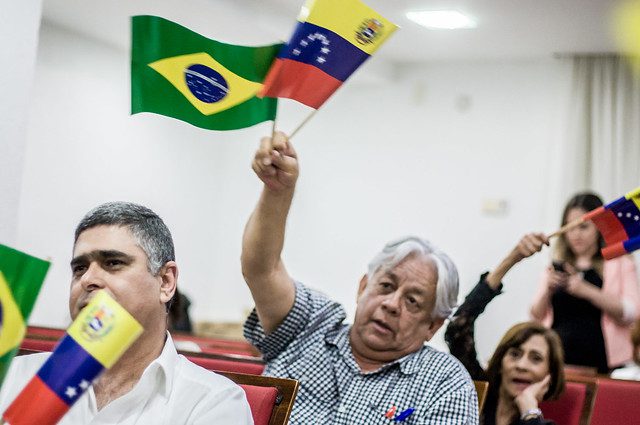
relief for VenezuelansThe Venezuelan people are experiencing a crisis with the collapse of their economic and healthcare system. They are challenged with a lack of medical supplies and equipment. Malnutrition and food insecurity are becoming extreme issues as well. Since 2014, it is estimated that more than 3 million Venezuelans have migrated to other countries to seek food and a better life. In the wake of Venezuela’s crisis, Rep. Debbie Mucarsel-Powell (D-Fla.) proposed the Humanitarian Assistance to the Venezuelan People Act of 2019, which will contribute to relief for Venezuelans during this time of crisis.
Aid to the Healthcare System

The Humanitarian Assistance to the Venezuelan People Act of 2019 focuses on healthcare facilities. The bill suggests offering aid by supplying the healthcare facilities with necessary medical equipment, medicines that are in great demand and other basic medical supplies that a facility might need.

With the Venezuelan healthcare system collapsing and shortages of medicine and supplies growing, several diseases, such as measles and malaria, have started to affect many people. This proposed bill will ensure the proper distribution of medicines and supplies to Venezuelan healthcare facilities via local nongovernment organizations.

Food and Nutrition Assistance

Assistance in food and nutritional supplies will also contribute to relief for Venezuelans. The children of Venezuela are experiencing extreme malnutrition in what some researchers are already considering a famine. As much as 41 percent of children can go without eating throughout for an entire day in Venezuela. Rep. Mucarsel-Powell’s bill aims to address the lack of food security and increased malnutrition. The bill will handle these issues by supplying people with food commodities and supplements.

Reports stated in the proposed bill will monitor the relief for Venezuelans. The bill proposes assistance with ensuring that all health and food supplies being distributed to Venezuelans are dutifully selected and spread throughout the entire population. Local nongovernment organizations are to oversee these distributions.

The bill’s reports will cover how well supplies are being spread out to the population and assess the degree of relief being provided to the population. The United States Agency for International Development and the Department of State will oversee the delivery of the assistance and ensure that it is properly handled.

Where is the Bill Now?

On March 25, 2019, the Humanitarian Assistance to the Venezuelan People Act of 2019 was passed in the House of Representatives and will now move on to the U.S. Senate. The proposed bill was read by the U.S. Senate and the Committee on Foreign Relations on March 26, 2019. Rep. Mucarsel-Powell states that providing $150 million each fiscal year will help to achieve the goals of providing relief for Venezuelans. The proposed bill concludes with condemning the current situation in Venezuela and the actions carried out by the Maduro regime and the country’s security forces.

– Logan Derbes
Photo: Flickr

July 5, 2019
https://borgenproject.org/wp-content/uploads/borgen-project-logo.svg 0 0 Kim Thelwell https://borgenproject.org/wp-content/uploads/borgen-project-logo.svg Kim Thelwell2019-07-05 01:30:502019-07-05 09:04:48Promoting Relief for Venezuelans During the Crisis
Global Poverty

Detained Migrants and Malnutrition in Libya

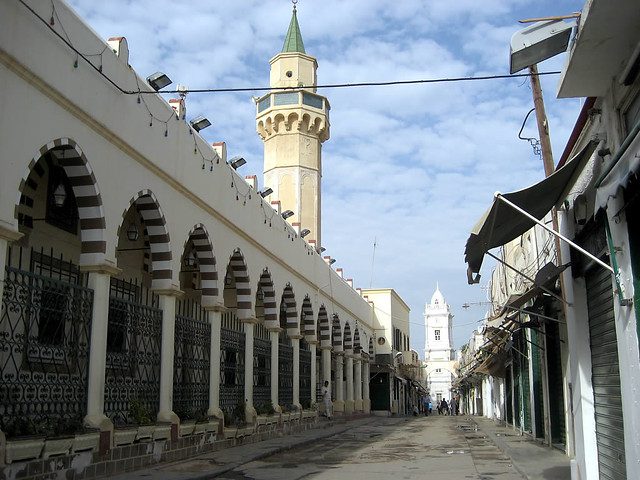
malnutrition in libya

Malnutrition impacts children all over the world, particularly those who are poor or who reside in poorer countries. In Libya, rates for children who experience stunting, wasting and are overweight — the three main effects of malnutrition — are all moderate to very high, indicating that the nation has a lot of work to do to decrease these numbers and improve nutrition and health.

Malnutrition in Libya is exacerbated by the prevalence of migrants, refugees and internally displaced persons (IDPs) in Libya, as many attempt to use the nation as a crossing point to reach Europe. A recent analysis of migrant detention facilities has shown that malnutrition is prevalent in these centers.

Comparing Libya to Global Trends

Worldwide, 21.9 percent of children under five have stunted growth as a result of malnutrition, a significant decrease from 2000, when the rate was nearly 33 percent. Stunting refers to impaired cognitive skills that often lead to a decrease in school and work performance, negatively impacting children for the rest of their lives. Rates are highest in South Asia and Sub-Saharan Africa, where many countries continue to have a rate of 30 percent or higher.

Libya is just below the global average, with 21 percent of children experiencing stunting.

Wasting is the rapid loss of body weight due to malnutrition. Based on UNICEF estimates, 7.3 percent of children globally are wasted and 2.4 percent are severely wasted, with the highest rates in South Asia, followed by West and Central Africa. Rates in Libya are classified as medium, as 5 to 10 percent of children under 5 are wasted. This is comparable to the global average of 7.3 percent.

Complications of Malnutrition

Malnutrition can also cause children to be overweight. Overnutrition is a form of malnutrition that occurs when there is an imbalance in protein, energy and micronutrients in someone’s diet, often resulting in obesity. Not only is it important to eat food, but it is also important to eat the right combination of foods to have a healthy diet.

Globally, 5.9 percent of children under five are overweight, with the highest rates in Eastern Europe and Central Asia and the Middle East and North Africa. Libya is classified as very high, as more than 15 percent of children under five are overweight. This indicates that poor nutrition is one of the most serious food-related issues that Libya faces.

Efforts by the World Food Programme

Malnutrition in Libya has received global attention, and the World Food Programme has stepped in to fight food insecurity. As a nation with a largely desert environment, agriculture is limited, causing Libya to rely heavily on imported food. The country’s current trade deficit has a significant impact on the availability of food and proper nutrition, as prosperous trade is essential to feeding the nation.

To counteract this, the World Food Programme partners with four local organizations, LibAid, the Kafaa Development Foundation, the Sheikh Taher Azzawi Charity Organization (STACO) and the Ayady Al Khair Society (AKS), as well as the UN Country Team and Security Management Team. These local organizations work closely with communities experiencing malnutrition in Libya to determine the amount of need in particular areas.

The World Food Programme then provides onsite food distributions to vulnerable and malnourished families, with each family receiving two food parcels, which can feed five people over the course of a month. The parcels contain pasta, rice, wheat flour, vegetable oil, chickpeas, sugar and tomato paste, all of which provide approximately 75 percent of daily energy requirements. The parcels are meant to be used alongside other food sources, providing access to certain nutrients that are otherwise unavailable.

A Focus on Migrants, Refugees and IDPs

Migrants, refugees and internally displaced persons (IDPs) are the most in need of food assistance worldwide.  Approximately 60 percent of IDPs are vulnerable to food insecurity. As a result, the World Food Programme focuses many of its food distribution efforts on IDPs and other migrants in Libya, as they are among the most vulnerable to malnutrition in Libya.

Many migrants in Libya are out of reach of the World Food Programme as hundreds of detainees are in migrant detention facilities. In March 2019, a detention center in Tripoli came under fire after Doctors Without Borders published nutrition assessments and determined that almost one quarter of those in the center were malnourished or underweight.

Those held in detention facilities are entirely dependent on the Libyan authorities for the food they receive, and Doctors Without Borders found that many only receive one meal every two or three days and that those who are new arrivals sometimes do not receive food for four days.

Doctors Without Borders Respond

In response to this crisis, Doctors Without Borders began providing emergency food rations to ensure that food needs will be met in the future. Karline Kleijer, the head of emergencies for Doctors Without Borders, stated that “If food, shelter and essential services can’t be provided in a consistent and appropriate manner, then these people should be released immediately by the Libyan authorities.”

Hopefully, with the efforts of organizations like the World Food Programme and Doctors Without Borders malnutrition in Libya will continue to be addressed, and the plight of migrants will soon be recognized and responded to by the Libyan government. Malnutrition is clearly a mounting crisis that requires attention as soon as possible.

– Sara Olk
Photo: Flickr

June 30, 2019
https://borgenproject.org/wp-content/uploads/borgen-project-logo.svg 0 0 Kim Thelwell https://borgenproject.org/wp-content/uploads/borgen-project-logo.svg Kim Thelwell2019-06-30 14:13:312019-12-16 11:43:25Detained Migrants and Malnutrition in Libya
Hunger

How to Fight Global Hunger with ShareTheMeal

 ShareTheMeal App
This year, The Shorty Awards, an awards program that recognizes the best of social media, expanded their reach to include Shorty Social Good awards. The Shorty Social Good awards honor initiatives, projects or programs designed to combat lack of food or shelter. ShareTheMeal, a smartphone app, was among this year’s winners in the Mobile Campaign, Poverty & Hunger and nonprofit categories. The app shows us how to fight global hunger by reaching donors through smartphones and social media sharing.

Fighting Global Hunger with ShareTheMeal App

According to the Food Aid Foundation, approximately 795 million people around the world don’t have enough food to live a productive lifestyle. Beyond this, lack of proper nutrition is life-threatening for children worldwide.

Malnutrition is responsible for 45 percent of deaths for children under the age of five. Put more simply, around 3.1 million children every year die from poor nutrition. However, it costs as little as $0.50 to feed a child for an entire day. The ShareTheMeal app fights global hunger by focusing on microdonations and empowering users to donate from anywhere using their smartphones.

As an innovative part of the World Food Programme, ShareTheMeal mobilizes users to give through social media. Starting with donations of just $0.50, users can fund a child’s meals for an entire day. When someone donates, The United Nations’ World Food Program, in turn, supplies the meals to hungry children.

The food assistance provided varies according to the situation in the donor’s choice country. While children in more stable countries may receive school meals, children in high-risk situations may receive staple foods, designed to fortify basic nutrition. Donors may also opt to join The Table, a monthly giving club that receives regular updates and focused stories on global hunger.

Managers of the World Food Programme, Sebastian Stricker and Bernhard Kowatsch, developed the app in 2014. Though it began as an independent startup, it quickly earned the backing of the World Food Programme.

The founders wanted to expand the demographic of donors for programs fighting global hunger. They focused on social media and smartphone technology since they saw great potential for growth among millennial donors.

During its first trial run, the app earned nearly $850,000 to fight hunger in Lesotho. This successful trial run lead to a global launch focused on feeding Syrian refugee children in Jordan. With that initiative, ShareTheMeal fed 20,000 refugee children for a year.

Since then, the app has grown tremendously. Now, there are more than 1.1 million users worldwide and the app fights global hunger in various developing countries. According to ShareTheMeal’s data, nearly a third of their users are millennials, so the app has reached its target demographic.

Making Donations Easy and Personal

ShareTheMeal has innovated the World Food Programme’s donations, by making donations easy and personal. Each user can choose where to direct their donation by swiping through pictures of individual children in need of meals. These pictures give the donations a personal character, backed by information about the status of global hunger in that country.

The app also provides a constant tally of the total meals shared so far which allow donors to see the app’s progress. As of now, users have shared over 26 billion meals through the app and the number is constantly growing.

Beyond merely working through smartphones, the ShareTheMeal app fights global hunger via social media. Individuals can mobilize their friends and family through social media platforms, such as Facebook, by creating teams. These teams invite others to donate together and track their progress as a group.

Finally, the app also offers an innovative tool called Camera Giving. This feature capitalizes on food photos shared on Instagram and similar platforms. By taking a photo of their meal and donating through ShareTheMeal, users gain access to a #ShareTheMeal filter which they can use to publicize their food photo as well as their donation to ShareTheMeal on social media. With tags like “this picture fed a hungry child,” ShareTheMeal not only gains publicity through the Camera Giving feature but also it turns the food photo trend into a vehicle for positive change.

Moving Forward: How to Fight Global Hunger with Technology

In today’s technology-driven world, there are 20 times more people with smartphones than children suffering from hunger. Wondering how to fight global hunger with technology? The ShareTheMeal app fights global hunger by connecting lots of people to the problem.

Anyone around the world with a phone, iOS or Android, can download the app in nine different languages with donations payable in 27 different currencies. With the mere tap of a button, users are connected to global hunger from anywhere and at any moment. ShareTheMeal is turning social media into social good.

– Morgan Harden
Photo: Flickr

October 30, 2018
https://borgenproject.org/wp-content/uploads/borgen-project-logo.svg 0 0 Borgen Project https://borgenproject.org/wp-content/uploads/borgen-project-logo.svg Borgen Project2018-10-30 05:42:422024-05-29 22:53:24How to Fight Global Hunger with ShareTheMeal
Hunger

Top Ten Facts About Hunger in Armenia

Armenia

In Armenia, hunger has been a problem faced by its citizens since the country gained independence in 1991. However, through steady economic growth and the implementation of strategies from global agencies, the country’s hunger issue has been slowly reducing. Here are the top ten facts about hunger in Armenia:

  1. Hunger is closely related to poverty, as people that live under the poverty line tend to be the most food insecure. As of 2015, six percent of the Armenian population was undernourished. Hunger in Armenia tends to rise and fall as a result of the country’s economic stability. Since the global financial crisis of 2008, food insecurity in the country has almost doubled, as an estimated 16 percent of families were classified as food insecure in 2015.
  2. Armenia is a low to middle income, landlocked country that relies on imports for most food. Because of this, the country and its citizens are reliant on other countries for stability. When surrounding countries are in financial downturn, it takes a negative effect on Armenians as well. The country has had slow economic development since 1991 when borders with neighboring countries Turkey and Azerbaijan were established post-Armenian independence. Due in large to its slow economic growth, 29.4 percent of Armenians lived in poverty as of 2016.

  3. In Armenia, the effect of hunger is visible in two main ways: stunted growth and being overweight. Approximately 9 percent of Armenian children under five have had their growth stunted while 14 percent were overweight as of 2015. To some, it may be surprising that people can be overweight while still food insecure, but it is more common than one might think. Because many people who are food insecure are also impoverished, they tend to purchase food based on quantity over quality. This results in the intake of less-nutritious foods in low-income areas. In countries like Armenia, it has resulted in many of its poorer citizens becoming overweight.

  4. Armenia has reduced the country’s poverty rate from 54 percent in 1998 to 28 percent in 2008. After a brief rise and stagnation in the poverty rate, at approximately 32 percent after the global economic crises, the country’s poverty rate has again begun to fall.

  5. Organizations like the World Economic Forum and the World Bank are considering ways to reanalyze the causes behind Armenia’s hunger problems. More reasons for hunger, like education, health and labor, are being examined in addition to poverty.

  6. As Armenia’s hunger problem is examined from various perspectives, new solutions are being presented to combat the country’s food insecurity.

  7. One solution from the National Strategic Review of Food Safety and Nutrition is to apply healthcare, social protections and regional policies in order to reduce the disparities in hunger and malnutrition throughout Armenia. These policies will target hunger and food insecurity with strategies not traditionally used in the country.

  8. An additional solution is to raise public awareness about healthy nutrition and how to make better decisions about food choices. These public awareness and education campaigns would take place in remote communities where food education is not prevalent, giving way to unhealthy choices. The education campaign will also serve as a preventative measure against malnutrition and undernourishment by focusing on sustainable food choices.

  9. The solution to hunger and food insecurity in Armenia may be in the revision of policy that would protect the most underserved people. Part of this solution will include commencing vouchers to the unemployed, social assistance programs to children 3-5 years of age, as well as monetary and non-monetary plans to ensure nutritious food intake to beneficiary families of assistance programs.

  10. Armenia is a country still growing and recovering from many outside factors that have hindered the young country’s development. However, with newly proposed sustainable solutions and the promise of continued economic security, the country is beginning to address its hunger and food insecurity problem.

Armenia’s hunger problem is a complex and multi-causal issue. However, through steady advancement and changes to its economy and food programs, solutions are possible. These strategies are only a few of many to relieve hunger in the country. These top ten facts about hunger in Armenia are a brief way to understand a longstanding problem.

– Savannah Hawley

Photo: Flickr

August 12, 2018
https://borgenproject.org/wp-content/uploads/borgen-project-logo.svg 0 0 Borgen Project https://borgenproject.org/wp-content/uploads/borgen-project-logo.svg Borgen Project2018-08-12 18:38:072019-09-02 16:28:50Top Ten Facts About Hunger in Armenia
Global Poverty, Human Rights, Malaria

10 Biggest World Issues

Biggest World Issues
World issues range from a variety of different factors; it could be anything from an environmental problem to a global health risk or an international conflict.

10 Biggest World Issues

  1. Malnutrition and Hunger: Malnutrition and hunger continue to be issues in developing countries, such as the Central African Republic, Chad and Yemen. According to the Food Aid Foundation, 795 million people in the world are not receiving the proper amount of nutrients. Additionally, hunger is the leading health problem among children and adults, causing approximately 45 percent of children’s deaths.
  2. AIDS: HIV/AIDS is an epidemic, in which more than 36.7 million people are living with the disease. About 2.1 million children currently have the disease, and in 2016 alone, one million people have died. The prevalence of AIDS is still alive; however, many international organizations have contributed to its decrease in recent years.
  3. Malaria: Malaria is a major health risk in tropical, developing countries, such as Kenya and the Congo. Approximately 3.2 billion individuals are vulnerable to Malaria — this is half of the world’s population. Young children are the most susceptible, and about 445,000 people died from Malaria in 2016.
  4. Air Pollution: Air Pollution is a global environmental problem that causes health issues and food shortages. Pollutants harm food supplies and crops, which further create problems for malnutrition and hunger. Pollutants also directly harm human life. According to Conserve Energy Future, 65 percent of deaths in Asia and 25 percent of deaths in India are due to air pollution.
  5. Lack of Human Rights: Political systems hinder human rights and liberties that are inherent to every individual regardless of his or her demographic, religion, culture, gender, race, etc. In 2014, Amnesty International recorded that more than a third of governments imprisoned its citizens who were exercising their rights. Abuse and conflict occur on every continent — from state-sponsored killings in Syria to repression of speech in Russia.
  6. Lack of Education: The right to education is not guaranteed within developing countries because of issues such as inequality among different ethnicities or classes, interstate or intrastate conflict, and poverty. 72 million children are unschooled, and about 759 million adults are illiterate. Additionally, girls are the least likely to receive an education.
  7. Gender Inequality:  Due to gender inequality, education and economic opportunity are inaccessible to many women of all backgrounds. About 150 countries have laws that discriminate against women’s rights. Underrepresented in governmental bodies, women only hold an average of 23 percent in parliamentary seats.
  8. Conflict and War: There are still many active conflicts in today’s world that have devastating effects for citizens living within war-stricken areas. The total number of casualties from the Syrian Civil War is about 465,000 individuals, and one in four children are the victims of war. In addition, international tension with North Korea has become the leading determinant of the United States’ international agenda and foreign policy. There is a multitude of other conflicts that have detrimental effects on civilian livelihoods and international peace/security.
  9. Displacement: The number of individuals who were forced to flee their homes has skyrocketed drastically in recent years. The Internal Displacement Monitoring Centre (iDMC) reported that 31.1 million individuals were displaced in 2016. Displacement could occur after natural disasters or throughout war. Unfortunately displaced individuals have increased to approximately 59.5 million due to continuing conflict in the Middle East. In Syria alone, there are about 11 million refugees, which include young children.
  10. Global Poverty: Poverty is an overarching world issue that affects infrastructure, health, education, human rights, etc. Roughly one billion children live in poverty, and 80 percent of people live on less than $10 a day. Additionally, every 10 seconds, citizens across the globe die due to poverty-related issues. Dismally, the gap between economic and income disparity among countries is widening.

Fortunately, world issues have solutions, and a multitude of organizations are fighting to alleviate pain that has been afflicted by these problems. The International Affairs Budget is one of many solutions that funds development and helps fight diseases, prevent hunger, and create new jobs, while solving many other issues around the world.

If you would like to get involved in helping prevent these world issues, join The Borgen Project in supporting the protection of The International Affairs Budget from proposed budget cuts by sending a letter of support.

– Diana Hallisey

Photo: Flickr


June 17, 2018
https://borgenproject.org/wp-content/uploads/borgen-project-logo.svg 0 0 Kim Thelwell https://borgenproject.org/wp-content/uploads/borgen-project-logo.svg Kim Thelwell2018-06-17 01:30:512024-05-29 22:40:0010 Biggest World Issues
Global Poverty, Hunger

Mitigating the Effects of Hunger in East Timor

Hunger in East TimorThe situation in Timor Leste (East Timor) has been characterized by war and oppression for decades. In 1975, after Portuguese colonialism finally abdicated control of the region, there began a brutal war between the people of Timor Leste and neighboring Indonesia.

The war resulted in a 24-year Indonesian occupation of Timor Leste, and a cumulative death toll of 200,000 people – nearly one-quarter of the current population. Throughout the country’s occupation, there were guerilla movements working to remove Indonesia from power. However, the final decision to leave Timor Leste to its own devices came after a change of leadership occurred in Indonesia and U.N. intervention.

The Timorese voted for independence in 1999 – the result was a 78 percent majority. Unfortunately, the vote was far from respected. Those who did not wish to be independent of Indonesia instigated yet another insurgency against the majority of Timorese, necessitating more direct United Nations involvement. Finally, in 2002, after two years of U.N. Peacekeeping presence, full independence was attained.

However sweet this victory may have been, it did little to alleviate the problems of poverty, malnutrition and hunger in East Timor. Hunger is arguably the country’s most urgent problem. It affects nearly 100 percent of the population.

In 2010, 57.7 percent of children under the age five were classified as stunting, a term used to describe the condition of weighing too little for your height. Other indicators of malnutrition, such as wasting and generally being underweight, are prevalent, indicating that the situation is dire.

One of the many organizations working to mitigate the effects of hunger in East Timor is Oxfam Australia. The work they do is primarily aimed at educating the public, generally women and children, about the effects of malnutrition and specific ways to increase their family’s consumption of important nutrients.

In classes that they term “supplementary feeding courses,” they demonstrate how to cook nutritious meals, process fresh food so it lasts longer and which ingredients have the highest protein content.

This program, coupled with the organization’s efforts to work with local farmers on improving agricultural yields for their farming cooperatives, has been a formidable attempt to arm Timorese communities with life-saving nutritional and agricultural knowledge.

-Katarina Schrag

Photo: Flickr


November 14, 2017
https://borgenproject.org/wp-content/uploads/borgen-project-logo.svg 0 0 Borgen Project https://borgenproject.org/wp-content/uploads/borgen-project-logo.svg Borgen Project2017-11-14 01:30:182024-05-29 22:29:01Mitigating the Effects of Hunger in East Timor
Global Poverty, Hunger

Hunger in Uzbekistan: A need for change

Hunger in UzbekistanHunger in Uzbekistan remains a serious issue, yet it is not recognized as a national one.

Close to 75 percent of the working-class population in Uzbekistan live in rural areas, and thus the income of this stratum of the population typically remains low, which exacerbates the lack of food security. This level of poverty has its roots in Uzbekistan’s independence.

Both the domestic and foreign policy of Uzbekistan are inimical to any significant changes that would address the hunger that plagues the country. Since the main priority of such policies is to keep the ruling regime in power, securing food and combating hunger is simply not a huge priority.

Another cause of the lack of food security is the slow growth of the gross domestic product (GDP), which in recent years was as low as seven percent, which is not sufficient for the steadily increasing population.

Furthermore, the economy of Uzbekistan, in regards to agriculture, is largely confined to producing cotton. This lack of diversification exposes Uzbekistan to increased economic risk. This problem is exacerbated by rising food prices as well.

Despite all of these indicators painting a bleak picture of Uzbekistan in the long run, recent reports have shown a decrease in hunger. From 2000 to 2014 the number of undernourished Uzbeks was reduced to less than half of what they previously were. Currently, this number is at around 1.7 million. While much work has to be done, this is a great improvement.

Additionally, unlike the GDP, the rate of agricultural production increased gradually at about 6 percent every year from 2000 to 2007. Furthermore, wheat production grew nine-fold from 1991 to 2006. These stark improvements are largely a result of the isolationist approach Uzbekistan has adopted in terms of its foreign policy, which has both its pros and cons.

One of the downsides that the Uzbeks have experienced as a result of this foreign policy has already been mentioned: the aversion of the rigid regime to take chances that may benefit its population but would otherwise risk its own stability, such as lifting restrictions on trade. The pros of this are increased self-sufficiency that has spurred the growth in certain aspects of the agricultural sector.

There is much work that needs to be done in order to reduce hunger in Uzbekistan. The country has improved in some ways but further work is needed in order to develop a sustainable model that adequately addresses the needs of the citizenry.

– Mohammad Hasan Javed

Photo: Flickr


November 13, 2017
https://borgenproject.org/wp-content/uploads/borgen-project-logo.svg 0 0 Borgen Project https://borgenproject.org/wp-content/uploads/borgen-project-logo.svg Borgen Project2017-11-13 01:30:232024-05-29 22:28:01Hunger in Uzbekistan: A need for change
Global Poverty

How VALID Nutrition Fights Malnutrition in Africa

VALID Nutrition Fights Malnutrition in Africa
Global malnutrition rates “remain alarming” in 2017, according to research done by UNICEF, the World Health Organization and the World Bank. Fourteen million children in Africa are too thin for their height, and 4.1 million of these children are said to be in critical condition. Fifty-nine million are “stunted” or failing to grow both physically and cognitively due to acute malnutrition. In 2016, one-third of the world’s stunted children under the age of five lived in Africa.

Progress is being made to find innovative and cost-effective ways to get starving and stunted children the nutrition they need. Ready-to-use therapeutic foods such as pastes and pills providing protein, vitamins, minerals and fat are given to individuals suffering from severe acute malnutrition. The nonprofit VALID Nutrition fights malnutrition in Africa as the first organization to develop, manufacture and distribute such foods exclusively on the continent.

Funded by the Global Innovation Fund, VALID Nutrition received a grant of over $155,000 to test a new supplement in Malawi. The new high-nutritional food is made of local ingredients to reduce the cost of manufacturing.

According to VALID Nutrition, the nonprofit “sources ingredients for its products from indigenous smallholder farmers and local suppliers. This brings major advantages in terms of food security for farmers and, critically, a developmental multiplier effect to local economies— a sustainable approach in the broadest sense.”

Currently, two-thirds of all ingredients for ready-to-use therapeutic foods are sourced from developed countries, whereas only one-third is sourced from crops in developing countries, according to VALID Nutrition.

In Malawi, the nonprofit built a factory in the capital city of Kanengo, which in 2016 produced 8.5 million units of ready-to-use therapeutic foods. This food then treated 80,000 children suffering from severe acute malnutrition. VALID Nutrition fights malnutrition in Africa on a large scale, which continues spread to other countries.

In 2016, VALID Nutrition launched a new ready-to-use therapeutic food supplement in Malawi with the aid of Dr. Peter Kumpalume, MP and Minister for Health, Malawi.

“VALID Nutrition’s Social Enterprise model, whereby they source and manufacture locally, is one we very much admire,” stated Kumpalume in a press release. “Not only does it contribute to economic development and avoid the need to import, but thanks to the innovative approach, the company has also got the potential for export.”

VALID Nutrition’s business model pushes for further engagement in the private sector, engaging other non-governmental organizations. Since established, the VALID Nutrition factory in Malawi has produced 40 million units of ready-to-use therapeutic foods which treated 400,000 children suffering from severe acute malnutrition. VALID Nutrition fights malnutrition in Africa by utilizing local resources that go directly to those in need.

– Riley Bunch

Photo: Google

August 26, 2017
https://borgenproject.org/wp-content/uploads/borgen-project-logo.svg 0 0 Borgen Project https://borgenproject.org/wp-content/uploads/borgen-project-logo.svg Borgen Project2017-08-26 01:30:242024-05-28 00:16:05How VALID Nutrition Fights Malnutrition in Africa
Children, Global Poverty, Hunger

How Many People Die from Hunger Each Year


Hunger continues to be the world’s biggest health problem. Hunger is one of the most emblematic images of poverty: the picture of stunted, malnourished children tends to resonate empathetical feelings in almost anyone. Just thinking of an image like this shows how, in one way or another, society knows how much suffering world hunger causes. With this information, the real question is how many people die from hunger each year.

This year, 36 million people will die from starvation. Essentially, that equates to a person dying of hunger every second of the year. Of these 36 million inhabitants, children are especially vulnerable. Every minute, 12 children under the age of five will die of hunger. This fact represents a death every five seconds.

The question itself of hunger, not just hunger-related deaths, is just as equally an important issue. The Oxford English Dictionary defines hunger as the want or scarcity of food in a country. The current world population is more than seven billion, and 795 million people, or one in every nine people, suffer from hunger. Almost all of these people are living in developing countries. Countries in Asia suffer from this problem more than any other region, with 525 million people suffering. Sub-Saharan African countries follow with a combined 214 million.

These regions are the most susceptible to conflict and drought, and usually, these tragedies end in famine.  All of these factors are a direct relation to hunger. Consequently, 50 percent of all hungry people are families that depend on agriculture.

While there may have been an extreme spike in cases of hunger from 1995 to 2009 (an increase from sub-800 million hungry citizens to more than one billion in 2009), there has been a stark and continual decrease from 2009 to 2017. Currently, the world is seeing the lowest number of hungry people since 1995. There are 200 million fewer people suffering from hunger than there were 25 years ago.

With the understanding of how many people die from hunger each year and how many people still suffer from it, the question is how can this issue be addressed? One method to fight against global hunger is by supporting The Borgen Project. The Borgen Project places its focus on alleviating global poverty.  By ridding the world of poverty, there will directly influence those who are also suffering from hunger.

– James Hardison

Photo: Flickr

July 13, 2017
https://borgenproject.org/wp-content/uploads/borgen-project-logo.svg 0 0 Borgen Project https://borgenproject.org/wp-content/uploads/borgen-project-logo.svg Borgen Project2017-07-13 01:30:162020-06-08 09:18:36How Many People Die from Hunger Each Year
Page 8 of 19«‹678910›»

Get Smarter

  • Global Poverty 101
  • Global Poverty… The Good News
  • Global Poverty & U.S. Jobs
  • Global Poverty and National Security
  • Innovative Solutions to Poverty
  • Global Poverty & Aid FAQ’s
Search Search

Take Action

  • Call Congress
  • Email Congress
  • Donate
  • 30 Ways to Help
  • Volunteer Ops
  • Internships
  • Courses & Certificates
  • The Podcast
Borgen Project

“The Borgen Project is an incredible nonprofit organization that is addressing poverty and hunger and working towards ending them.”

-The Huffington Post

Inside The Borgen Project

  • Contact
  • About
  • Financials
  • President
  • Board of Directors
  • Board of Advisors

International Links

  • UK Email Parliament
  • UK Donate
  • Canada Email Parliament

Get Smarter

  • Global Poverty 101
  • Global Poverty… The Good News
  • Global Poverty & U.S. Jobs
  • Global Poverty and National Security
  • Innovative Solutions to Poverty
  • Global Poverty & Aid FAQ’s

Ways to Help

  • Call Congress
  • Email Congress
  • Donate
  • 30 Ways to Help
  • Volunteer Ops
  • Internships
  • Courses & Certificates
  • The Podcast
Scroll to top Scroll to top Scroll to top