Eight Facts About Water Quality in Kyrgyzstan
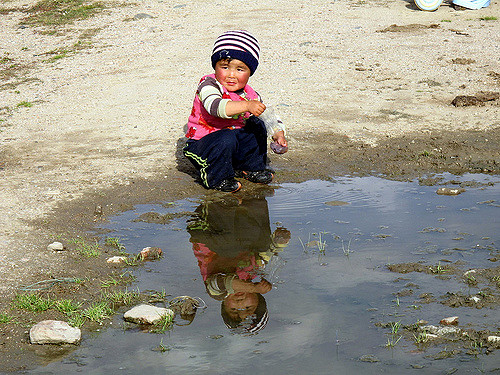 Eighty-two percent of the world’s urban population has access to clean drinking water. This fact may sound impressive until it is juxtaposed with the 51 percent of the world’s rural population without the same benefit. In total, that’s 2.4 billion people without access to proper water sanitation. In Kyrgyzstan, a country in Central Asia, about 64 percent of the population lives in rural areas. Water quality in Kyrgyzstan is, therefore, a major threat to everyday life. Here are some facts about water quality in Kyrgyzstan:
- Of the 1,805 rural villages in Kyrgyzstan, 595 do not have access to centralized drinking water, and 390 have no water supply networks at all. Instead, people drink from open water sources.
- The 150,000 people in those 390 villages depend solely on aryk for drinking water supply. Aryk water is from open irrigation channels that are vulnerable to contamination from animals, debris and trash. Even something as simple as leaves falling into the aryk in autumn significantly increases the number of acute waterborne diseases.
- In villages without access to clean water, homes, schools and hospitals must all collect water in buckets. The water should be filtered through cheesecloth and then left overnight to let the dust settle to the bottom. Finally, the water should be boiled. Unfortunately, those without the time or patience to go through this process pay the unfair price for skipping steps.
- The poor water quality in Kyrgyzstan offers an ideal breeding ground for diseases. Consumption of contaminated water causes 24 percent of acute intestinal infections due to parasites and 86 percent of typhoid cases.
- The impacts of climate change also threaten the water quality in Kyrgyzstan. The average rise in temperature in Kyrgyzstan due to climate change is three times higher than the global average. This climate change can cause droughts and therefore, a lack of water for the population.
- Glaciers cover 4.2 percent of the land in Kyrgyzstan. Glaciers can often be a steady source of water. However, one impact of climate change is the transformation of glaciers into glacial lakes. The accumulation of such mass amounts of water in unprepared terrain leads to the threat of mudslides, landslides and floods, all of which threaten water supply and water quality in Kyrgyzstan.
- Thankfully, Kyrgyzstan’s government has taken notice of the water crisis in its abundant rural regions. In 2017, the government launched a new program to develop the water supply and sanitation sector. The program, called “Ala-Too bulagy,” allocated $51 million toward the program’s implementation in the areas of Osh, Chui, Issyk-Kul and Jalal-Abad.
- The World Bank has already promised to allocate $36 million to the “Ala-Too bulagy” program in its second stage beginning in 2018.
While the “Ala-Too bulagy” program holds much promise for the future of water quality in Kyrgyzstan, the situation in the country’s rural communities is much too dire to simply write off the issue as resolved. Further efforts to both increase water supply and sanitation services and decrease the effects of climate change are necessary to help Kyrgyzstan and the countless other nations affected by the global water crisis.
– Sophie Nunnally
Photo: Flickr
