• Link to X
  • Link to Facebook
  • Link to Instagram
  • Link to TikTok
  • Link to Youtube
  • About
    • About Us
      • President
      • Board of Directors
      • Board of Advisors
      • Financials
      • Our Methodology
      • Success Tracker
      • Contact
  • Act Now
    • 30 Ways to Help
      • Email Congress
      • Call Congress
      • Volunteer
      • Courses & Certificates
      • Be a Donor
    • Internships
      • In-Office Internships
      • Remote Internships
    • Legislation
      • Politics 101
  • The Blog
  • The Podcast
  • Magazine
  • Donate
  • Click to open the search input field Click to open the search input field Search
  • Menu Menu

Archive for category: War and Violence

Information and news War and Violence

Global Poverty, Refugees, War and Violence

10 Facts About South Sudanese Refugees


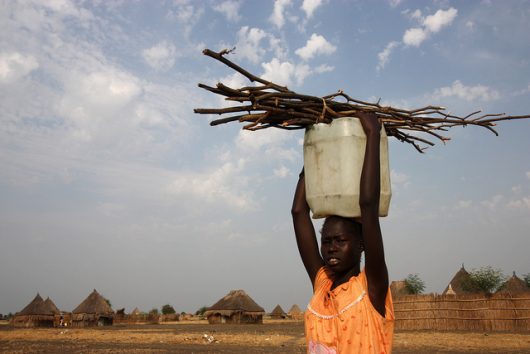
The Sudanese civil war ended with South Sudan’s successful secession referendum. The referendum effectively split Sudan in two. Less than two years later, South Sudan was plunged into its own three-year civil war. As a result, South Sudan, the youngest country in the world, now has the largest refugee crisis in Africa. Here are 10 facts about South Sudanese refugees.

  1. One and a half million South Sudanese have been forced to leave their homes and seek refuge in neighboring countries, predominantly Uganda, Ethiopia, Sudan and other eastern sub-Saharan African countries.
  2.  The South Sudanese civil war sparked from a falling out between President Salva Kiir, an ethnic Dinka, and Vice President Riek Machar, an ethnic Nuer.  As a result, 3.5 million people have lost their homes.
  3. As violence began to escalate in the capital city of Juba in July 2016, the rates of displaced refugees have continued to rise. On average, 63,000 people are displaced every month.
  4. Ninety percent of the South Sudanese refugees are women and children. Human rights groups have found that both Dinka and Nuer forces have killed civilians, raped thousands of women, and forcefully recruited children to fight in their armies.
  5. Food security is a real problem in South Sudan. According to the World Food Program, 40 percent of the population is in desperate need of food assistance. The Sudanese government is unable to feed its population because it has diverted most of its resources to fighting rebel forces.
  6. The international community warns that the growing humanitarian crisis has the potential to become the worst global famine in 70 years.
  7. One million people are on the brink of extreme hunger, 2.9 million faces a food crisis that will likely escalate into a famine, while more than 7.5 million South Sudanese are in need of food assistance.
  8. In order to prevent the impending famine, the international community would need to come up with $4.4 billion by the end of March. As of Mar. 29, 2017, only 10 percent of that goal has been reached.
  9. In the midst of this impending famine, the government is planning to build a $10 billion new capitol building in Ramciel. However, if the construction was postponed and the funding was allocated as humanitarian assistance, the famine could be averted.
  10. Uganda has received the most South Sudanese refugees. The country’s handling of the steady inflow of 3,000 refugees per day is impressive. Refugees are allowed access to farmland and shelter, ensuring integration into Ugandan society. The people of Uganda do not want the refugees to become isolated in camps with no opportunity to branch out and join the greater Ugandan community.

If the South Sudanese government continues with its new capital project and the international community remains unsuccessful in accruing the $3.9 billion funding gap necessary to end the famine, then this humanitarian crisis will continue to develop and complicate poverty in sub-Saharan Africa, likely becoming one of the largest humanitarian crises of our time.

– Josh Ward

Photo: Flickr

April 11, 2017
https://borgenproject.org/wp-content/uploads/borgen-project-logo.svg 0 0 Borgen Project https://borgenproject.org/wp-content/uploads/borgen-project-logo.svg Borgen Project2017-04-11 01:30:212020-05-04 11:34:4810 Facts About South Sudanese Refugees
Global Poverty, War and Violence

Humanitarian Crisis in Yemen

Crisis in Yemen
The humanitarian crisis in Yemen is reaching new heights. There is a proxy war being fought between the Sunni Muslim state of Saudi Arabia and the Shiite Muslim state of Iran. More than 10,000 Yemeni civilians have been killed and roughly 2.1 million have been displaced.

According to the U.N., 80 percent of the population is in need of some form of humanitarian aid. There is a water shortage that may completely deteriorate in 2017. There are now 21 million people dependent on international aid to survive.

Factors Contributing to the Crisis

The Houthi uprising began in the wake of the Tunisian civil war in 2011. This was a major security concern for the Saudi government, as it shares its southern border with Yemen. Yemen’s President Ali Abdullah Saleh, backed by Saudi Arabia and the U.S., was forced to resign from office in 2011. This occurred after widespread protests were held in opposition to his illegal business dealing and his amassed $60 billion. A U.N. expert panel stated in a report that, “Many have argued that the country’s spiraling debt and economic problems would be alleviated with a repatriation of these alleged stolen assets.”

Power was ceded to Abd Rabbuh Mansur Hadi in February 2012. Houthi rebels then took control of Sana’a, the capital city, through a string of terrorist attacks. Hadi fled the country.

The humanitarian crisis in Yemen continued to worsen with a growing food deficit, increasing drought and terrorism concerns. Half of Yemen’s population was living below the poverty line, and almost half of the population was under the age of 18 and unemployed. Saudi Arabia led a U.S., U.K., and France-backed coalition in support of Hadi’s internationally recognized government against the Houthi rebels.

Former secretary-general Ban Ki-Moon announced that the U.N. had documentation of widespread violations of children’s rights in Syria that were committed as part of the Houthi child soldier recruitment efforts, as well as the child casualties from the Saudi airstrikes. Saudi Arabia threatened that if it were not removed from the report, they would cut off its funding to the U.N. and incredulously, the threat succeeded. This miscarriage of justice has hurt the U.N.’s reputation as an impartial mediator in the conflict.

War crimes are being committed on both sides as the humanitarian crisis in Yemen carries on. Unfortunately, these crimes will likely continue without reprimand or sanctions as Saudi allies, like the U.S., have vetoed the U.N.’s independent international investigation into these war crimes. This effectively kills any charges against the Saudi’s or Houthi rebels, endangering countless more children’s lives.

– Joshua Ward

Photo: Flickr

April 10, 2017
https://borgenproject.org/wp-content/uploads/borgen-project-logo.svg 0 0 Borgen Project https://borgenproject.org/wp-content/uploads/borgen-project-logo.svg Borgen Project2017-04-10 01:30:582024-12-13 17:57:33Humanitarian Crisis in Yemen
Global Poverty, Refugees and Displaced Persons, War and Violence

15 Statistics on Refugees

refugee statistics
The refugee statistics are appalling. The last few years have seen the highest levels of refugees on record. The topic is everywhere — on television, online and on the minds of both those displaced and those trying to help. To grasp how big the world refugee crisis truly is, below are 15 statistics on refugees worth knowing.

Top Refugee Statistics

  1. Nearly one in 100 people worldwide have been pushed out of their homes due to war or political instability.
  2. Including 5.2 million Palestinian refugees, the total number of refugees in the world today is 21.3 million. This does not include internally displaced persons (IDPs) who have not left their country’s borders but were forcibly moved from their community. More than 65 million people are affected by war and power struggles, including IDPs.
  3. Fifty-three percent of refugees come from Somalia, Afghanistan and Syria. Respectively, 1.1 million, 2.7 million, and 4.8 million refugees are from these countries.
  4. The Middle East and North Africa host 39 percent of refugees. Africa hosts 29 percent, Europe and the Americas host 18 percent, while Asia and the Pacific host 14 percent. Turkey, Pakistan, Lebanon, Ethiopia, and Jordan rank as the top hosting countries.
  5. The number of people seeking asylum in Europe has also reached a record high of 1.3 million. Most of these refugees are from Syria, Afghanistan and Iraq.
  6. Germany, Hungary and Sweden have become the top destination countries in Europe for refugees.
  7. In the history of statistics on refugees, the last five years have seen the greatest rate of increase on record. The greatest rate of decrease occurred between the years 1994 to 1999. The lowest recorded number of refugees was in 1963.
  8. Nine out of 10 refugees head for neighboring countries. Most do not seek asylum in industrialized countries. About 86 percent are hosted in developing countries.
  9. Pakistan and Iran house nearly 95 percent of Afghan refugees.
  10. Turkey, Lebanon, Jordan, Iraq and Egypt house nearly 95 percent of Syrian refugees.
  11. The U.N. Refugee Agency was underfunded by $10.3 billion dollars in 2015. It is estimated that the annual cost of U.S. airstrikes against ISIS in Syria will be $10 billion.
  12. Several countries are doing their statistical “fair share” to assist in the latest refugee crisis. Canada is at the top of this list, receiving almost 250 percent of its estimated fair share of refugees. Norway is second, accepting 144 percent of its fair share, and Germany is not far behind, welcoming 118 percent.
  13. The countries that accept the least of their fair share include the U.S., Spain and France, all standing at 10 percent. Japan, Russia and South Korea rank last, having accepted zero percent of what would be considered fair.
  14. The largest refugee camps in the world include Kakuma Camp in Kenya, Zaatari in Jordan and Yida in South Sudan. Each of these camps hold more than 70,000 people, which is more than the population of Boston.
  15. Many case studies illustrate the need for clean water. In Kakuma camp, households that had access to 110 liters of water per day saw 11 cases of cholera; those who had access to 37 liters of water per day noted 163 cases.

These statistics on refugees show the extent to which this unprecedented crisis has affected the world. Certain regions are more affected than others, but affected most are the displaced persons themselves.

– Michael Ros

Photo: Flickr

April 9, 2017
https://borgenproject.org/wp-content/uploads/borgen-project-logo.svg 0 0 Borgen Project https://borgenproject.org/wp-content/uploads/borgen-project-logo.svg Borgen Project2017-04-09 01:30:152024-05-27 23:59:3215 Statistics on Refugees
Children, Global Poverty, United Nations, War and Violence

Why Are Child Soldiers Used In War?

Soldiers Used In War
The use of child soldiers in war is a persistent issue, despite ongoing international efforts to stop the practice. The U.N. defines a child soldier as anyone under age 18 who is recruited or used by an armed force or group in any capacity. The International Criminal Court further designates recruiting or using children under age 15 as a war crime. Yet, military groups continue to recruit children because they are cheap and manipulable.

Many children are forced to join military groups at a young age. Child soldiers are also easier to manipulate and force into conflict. Recruiters typically target children from troubled areas or conflict zones, likely accustomed to violence and with fewer educational or work opportunities.

Other children join military groups voluntarily to flee poverty, gain protection, or to connect with something resembling a family. Military organizations are viewed as a safe and secure group of comrades, distant from their difficult lives.

There are several roles that militant groups fill with child soldiers. In many cases, children participate directly in conflict, but they can also be used for other dangerous support roles. Many are porters who carry heavy loads of ammunition or injured soldiers, while others are lookouts or cooks. Girls are often forced to be sex slaves.

Participating in armed conflict has significant consequences for the physical and emotional development of children. Many endure abuse and witness extreme violence or death. Even worse, they are forced to commit horrific acts, resulting in lifelong psychological distress. Child soldiers also have a higher risk of sexual abuse by adults or other children. These children are plagued by depression, anxiety, insomnia and numerous other health issues.

While the issue of child soldiers remains daunting, progress is being made to reduce the practice across the globe. UNICEF created a campaign in 2014 called “Children, Not Soldiers” aimed towards global prevention of the use of child soldiers. The campaign focuses on seven countries: Afghanistan, Chad, the Democratic Republic of the Congo, Myanmar, Somalia, Sudan, and Yemen. Thousands of soldiers have been released and introduced back into civilian life because of the campaign.

National campaigns have also helped countries make significant strides towards reducing the use of child soldiers. Countries have implemented disarmament, demobilization and reintegration programs to make a change. Stopping such an ingrained practice and rehabilitating children who have grown up in conflict is a difficult task. However, these programs represent a strong effort to stop the recruitment and use of child soldiers.

– Lindsay Harris

Photo: Flickr

April 7, 2017
https://borgenproject.org/wp-content/uploads/borgen-project-logo.svg 0 0 Borgen Project https://borgenproject.org/wp-content/uploads/borgen-project-logo.svg Borgen Project2017-04-07 01:30:052024-06-04 01:08:20Why Are Child Soldiers Used In War?
Global Poverty, Refugees, War and Violence

10 Important Facts to Know About Refugees in Thailand

Refugees in Thailand
The 1951 Refugee Convention and its 1967 protocol established a legal framework that implemented rights for refugees. To date, 145 state parties have ratified this agreement; however, Thailand is not one of these countries and provides no legal protection to refugees and asylum-seekers. Currently, there are more than 100,000 refugees in Thailand. Discussed below are 10 facts about the lives and circumstances of refugees in Thailand.

Top 10 Facts on Refugees in Thailand

  1. Nearly 130,000 people reside as refugees in Thailand, of whom approximately 90 percent are from the bordering country of Myanmar, also known as Burma. More than 80 percent of Burmese refugees in Thailand are ethnic Karen. They fled eastern Myanmar due to persecution by the Myanmar army beginning in 1988 and have resided in nine refugee camps along the Thailand-Myanmar border for nearly three decades. Thousands of refugees have been born inside these camps and know no other life.
  2. Because Thailand did not ratify the 1951 Refugee Convention, the Thai Royal Government (TRG) considers refugees stateless persons or irregular migrants. They are not citizens, meaning they are do not have access to healthcare, employment or education, nor are they allowed to vote, own property or obtain a driver’s license.
  3. Due to their stateless status, refugees must live exclusively in refugee camps, without the right to work or leave the camp. Refugees who choose to live and work outside of camps in Thailand are considered illegal and do not have any legal protection, making them highly susceptible to arrest and deportation.
  4. Cut off from government assistance and employment opportunities, many refugees in Thailand depend entirely on aid organizations for food and other basic resources.
  5. The TRG has pledged to end statelessness by 2024. One step toward this goal is the 2010 Civil Registration Act, which allows babies born to refugee parents to receive birth registration. While this does not grant the infants citizenship, they are no longer considered stateless persons. The U.N. Refugee Agency (UNHCR) estimates that 4,300 infants were registered and provided birth certificates in 2017.
  6. The refugee camps have become highly organized. The TRG serves as the overall authority for the camps, implementing refugee policies and providing border patrol. The Karen Refugee Committee (KRC) and Karenni Refugee Committee (KnRC) serve as the representatives of refugees in the camps and act as liaisons between the camps and the government, border patrol, NGOs and the UNHCR. Camp members elect committee members and all refugees over the age of 20, regardless of registration status, are eligible to vote.
  7. Most refugee camps are in mountainous regions with limited access to electricity, phones and healthcare services. These areas are also susceptible to flash floods during the rainy season. Overcrowding is rampant, with houses primarily built out of bamboo and wood, leading to a high fire risk. In 2015, a fire in the Ban Mai Nai Soi refugee camp damaged 194 homes and five community buildings. Fortunately, there were no casualties and several nonprofits and the UNHCR pooled together to begin rebuilding within a month.
  8. The KRC and World Education are two of the leading nonprofits supporting education opportunities for refugees. Schools are primarily located in the largest refugee camp, Mae La. There are currently more than 2,000 students who come from other camps and live in boarding houses in Mae La while completing their secondary education.
  9. Resettlement to third countries began in 2005, and since then more than 80,000 refugees have resettled. The U.S., Australia, and Canada accept many of these refugees.
  10. Now under a democratically elected government, in 2014, the Myanmar government opened peace talks with persecuted ethnic minorities. While they are still in progress, in October 2016, the Myanmar and Thai governments endorsed the return of 68 refugees to Myanmar and hope to gradually support the return of more.

While the TRG still does not provide legal rights or protection to refugees, it has taken steps toward eliminating the stateless status of refugees and assisting them in resettling in other countries or safely returning to Myanmar. The TRG has pledged not only to eliminate statelessness by 2024 but at the 2016 U.N. Leaders’ Summit on Refugees it also pledged to provide better skills training opportunities for refugees, coupled with employment opportunities.

– Nicole Toomey

Photo: Flickr

April 6, 2017
https://borgenproject.org/wp-content/uploads/borgen-project-logo.svg 0 0 Borgen Project https://borgenproject.org/wp-content/uploads/borgen-project-logo.svg Borgen Project2017-04-06 01:30:572024-12-13 17:57:3710 Important Facts to Know About Refugees in Thailand
Global Poverty, Refugees, War and Violence

How Many Refugees Are There in the World?

How Many Refugees Are in the World
On Feb. 17, the U.N. High Commissioner for Refugees (UNHCR) published its highly anticipated 2016 mid-year trends report. The document provides fresh insight into the global humanitarian crisis and yields a tentative answer to the question: how many refugees are there in the world? The agency has a tall order to fill — roughly 65.3 million people worldwide have been forcibly displaced from their homes. In 2015, 24 people were displaced from their homes every minute.

According to the UNHCR, a refugee is “someone who has been forced to flee his or her country because of persecution, war or violence.” They are recognized under the 1951 U.N. Refugee Convention, the Convention’s 1967 Protocol and the 1969 OAU Convention. The question remains: how many refugees are there in the world?

Though it is difficult to accurately state how many refugees there are in the world at a given time, the UNHCR statistic reported last month was 15,874,208. It is important to realize that this excludes 640,982 individuals currently in a refugee-like situation. The UNHCR defines this particular sub-category as “groups of persons who are outside their country or territory of origin and who face protection risks similar to those of refugees, but for whom refugee status has, for practical or other reasons, not been ascertained.”

One trend in the report is clear: the numbers have grown. In 2015, the UNHCR mandate stood at 16.1 million refugees with an additional 5.2 million registered with the U.N. Relief and Works Agency (UNRWA). By June 2016, there were 16.5 million refugees and people in refugee-like situations worldwide. Approximately 12.4 million have been assisted by the UNHCR.

The largest concentrations of refugees presented in the report are in the Middle East and North Africa (5,816,454) as well as the rest of Africa (5,275,845). As additional information becomes available, these figures may be adjusted.

The scope of UNHCR’s mandate is global in nature, while the UNRWA’s mandate is specific to refugees living in Gaza, Lebanon, Syria, the West Bank and Jordan. The UNRWA for Palestine Refugees in the Near East was established in 1949 and continues to provide relief for people in those regions.

Understanding How Many Refugees Exist

To correctly interpret the findings outlined above, several qualifications are warranted. First, the dataset contains the latest available estimates — which are subject to change. The nature of statistics is that data is provisional. Second, the number of refugees is different when those in refugee-like situations are considered in a total summation. Third, the published values in the trend report are based on different government definitions and data collection methodologies within each respective nation. These various interpretations make it increasingly difficult to calculate the total number of refugees in the world. Fourth, the figures only represent the first half of 2016 — there is more data still to analyze. Finally, refugees who have been resettled are not included in these estimates. Although, the UNHCR still monitors these groups to ensure their safety and welfare. Overall, the question — how many refugees are there in the world — is answerable in a relatively statistical sense.

The UNHCR claims that many industrialized nations are not equipped with refugee registers or effective data collection procedures. This means governments are unable to accurately report on the number of refugees within their borders. One step forward in managing this crisis would be to standardize definitions and collection procedures so that precise figures can be ascertained. Without reliable data, there is only guesswork.

With a U.S. federal budget battle brewing, the impact of reduced diplomacy and foreign aid investments could prolong the suffering of millions around the globe. A weakened State Department may be unable to cope with the decades-long fallout of mass disillusionment, fear and anguish. Furthermore, the spectrum of sentiment among U.S. leaders and divided public opinion on matters of foreign policy signals an era of uncertainty regarding the management of the refugee crisis and any progress toward a swift resolution.

– JG Federman

Photo: Flickr

April 4, 2017
https://borgenproject.org/wp-content/uploads/borgen-project-logo.svg 0 0 Borgen Project https://borgenproject.org/wp-content/uploads/borgen-project-logo.svg Borgen Project2017-04-04 01:30:542024-12-13 17:57:38How Many Refugees Are There in the World?
Global Poverty, Refugees, War and Violence

Nine Facts to Know About Yemen Refugees

Yemen Refugees
The Yemen civil war has escalated the number of refugees fleeing from Yemen to safer locations for their families. Here are nine facts you need to know about Yemen refugees.

  1. About two million people have been displaced because of the war in Yemen.
    Before the war began in Yemen, poverty was already an issue for many in the country and it was the poorest nation in the Arabian Peninsula before the war. The war has only caused the number to rise. Refugees have been fleeing to neighboring countries, with Saudi Arabia taking in the largest amount of Yemen refugees. As a result of poverty, most refugees are not able to flee to the United States and Europe as often due to the high costs of traveling to these countries.
  2. Civilians and many family members are still in danger in Yemen.
    A number of the victims in Yemen are civilians who have been caught in the crossfire of the war. A six-year-old was shot in the back while walking in his home city of Taiz with his father, according to the BBC. Civilians that spoke with BBC described multiple times when civilians have been shot at and innocent people that have died due to the war. Also, many refugees that have fled end up returning to different parts of Yemen in order to help their family members, according to the United Nations High Commissioner for Refugees (UNHCR).
  3. Many have been fleeing to the Horn of Africa despite the war going on there.
    About 3,000 Yemen refugees have been fleeing to the Horn of Africa, a place where war and crisis are also prominent. The countries in the Horn include Somalia, Ethiopia, Eritrea, Djibouti and Sudan, all of which have suffered from many political issues. Everything from famine to bombings has disrupted the region, but still, many Yemen refugees migrate across the Gulf of Aden to escape the danger in their home country.
  4. Refugees are without food, water and other basic needs.
    With many citizens being displaced across the country and region, some of the biggest needs include food, water and shelter, according to Ayman Gharaibeh, the country representative for Yemen for UNHCR. “More than half the population is without adequate food and health care and this will only worsen,” said Gharaibeh in an interview with UNHCR. Many refugees are living in poor conditions, which just increases the spreading of diseases among them.
  5. Yemen was one of the seven countries banned from the United States by President Trump.
    On Jan. 27, 2017, President Trump signed an executive order banning immigrants for 90 days from seven countries, one of which was Yemen. The other countries, which comprise Iraq, Syria, Sudan, Iran, Somalia and Libya, were placed on a ban to “prevent a terrorist or criminal infiltration by foreign nationals,” according to the United States Department of Homeland Security.As of recently, President Trump’s ban has been suspended by multiple federal judges who repealed the ban. This now allows citizens of the seven countries to come to the United States. President Trump does have plans to fight the repeal in court.
  6. Many are forced to live in refugee camps.
    There are countless stories of refugees leaving their homes and lives behind in order to find a safe place to stay while the war continues. Many have fled to neighboring countries and other countries in the world, but many have also ended up in refugee camps. Al Kharaz is a refugee camp in the southwest region of Yemen near the Gulf of Aden. More than 16,000 refugees live in this camp, with many from Somalia and Ethiopia, according to UNHCR.
  7. Different humanitarian groups and organizations are bringing aid to Yemen.
    Around the world, many groups and organizations have brought attention to the crisis in Yemen since the civil war began. UNHCR is just one of the many organizations bringing aid to Yemen. Others include UNICEF and the World Food Programme (WFP).
  8. Many of the victims are children.
    As with the story of the six-year-old who was shot in the back, many children have been victims of the war. About 500,000 children are in need of care in Yemen due to malnutrition, according to UNICEF. One child dies every ten minutes in Yemen due to starvation and malnutrition, also according to UNICEF.Not only are children starving, but many have been caught in the crossfires in their own towns. In President Trump’s first raid, 10 women and children died due to an airstrike in al-Bayda, according to Al Jazeera.
  9. There are a lot of ways to help the refugees of Yemen.
    Through the countless organizations in the world that are helping those in Yemen, any citizen can donate money to the organizations to help feed and care for the Yemen refugees. Another way to help is by learning about the situation or supporting a group such as Doctors Without Borders in order to help those in need in Yemen

As the war in Yemen continues, people will continue to flee the country to seek the necessary resources to live safely, causing the crisis to grow and for more refugees to need help.

– Hailey Rose McLaughlin

Photo: Flickr

March 31, 2017
https://borgenproject.org/wp-content/uploads/borgen-project-logo.svg 0 0 Borgen Project https://borgenproject.org/wp-content/uploads/borgen-project-logo.svg Borgen Project2017-03-31 01:30:282020-04-28 13:28:28Nine Facts to Know About Yemen Refugees
Global Poverty, Hunger, War and Violence

Italy Helps Fight Hunger in Ukraine With Donation of €1 Million


Amidst facing a humanitarian crisis and lack of mine regulations, Ukraine received aid totaling one million euros from Italy through the World Food Programme (WFP) and UNICEF to help those impacted by the actions in Eastern Ukraine in 2017. The donation will help the WFP provide basic necessities and humanitarian assistance Ukrainians need to combat hunger, while also fighting against their own government and people.

Among a population of 45.2 million, more than 4.4 million Ukrainians have been impacted, and more than 3.8 million still need humanitarian assistance.

Who the Donation Will Help Most

“Our contribution to WFP and UNICEF operations will help ease people’s suffering, in particular for the most vulnerable, providing food assistance, increasing knowledge and building safe behaviour practices to deal with the risk of mines,” said Davide La Cecilia, the Italian Ambassador to Ukraine in a press release published by the WFP.

Thanks to Italy’s donation, UNICEF will help protect 500,000 children and their guardians from the dangers in mines by supporting the mine risk education program.

The WFP plans to help those who do not receive assistance from other humanitarian actors and further small-scale recovery activities, such as providing food, to aid local citizens. UNICEF will use the funding to promote children’s education programs and for families living in areas close to the contact line, which divides the government and non-government controlled areas and where the fighting is most intense.

Giancarlo Stopponi, WFP deputy country director in Ukraine, said, “WFP greatly appreciates Italy’s support at a time when communities across Ukraine continue to experience the negative consequences of the conflict.”

The WFP has been aiding those experiencing hunger in Ukraine since 2014 by providing emergency food services to internally displaced citizens in Eastern Ukraine, handing out monthly food packages and food assistance. To this day, about 850,000 of most Eastern Ukraine’s most vulnerable people have received food from WFP, despite attempts to bar humanitarian staff.

Ongoing Efforts to Battle Hunger

The program plans to continue its efforts, aiming to assist 220,000 citizens in Eastern Ukraine. These people both rely on and need WFP’s food assistance, along with their other operations, such as the Logistic Cluster Support to the Humanitarian Response in Ukraine.

In 2017, UNICEF has appealed to the U.S. for $31.3 million to be used towards combatting hunger in Ukraine. The money will be used for health and nutrition needs, education, water, hygiene and sanitation, and protection for those most vulnerable to the conflict, such as children and families.

– Mary Waller

Photo: Flickr

March 31, 2017
https://borgenproject.org/wp-content/uploads/borgen-project-logo.svg 0 0 Borgen Project https://borgenproject.org/wp-content/uploads/borgen-project-logo.svg Borgen Project2017-03-31 01:30:072024-12-13 17:57:38Italy Helps Fight Hunger in Ukraine With Donation of €1 Million
Global Poverty, Hunger, War and Violence

The Battle Against Hunger in Côte d’Ivoire

Hunger in Côte d’Ivoire
Côte d’Ivoire continues to experience aftershocks of the military coup in December 1999, which turned into an all-out civil war in 2002, leading to the creation of a North and South Côte d’Ivoire. This resolution was supposed to be disbanded in 2010, but there was a conflict over the results of the election for the new leader of the unified government, complicating the transition of power. This threw the country into another five months of the war. The political unrest in Côte d’Ivoire has created widespread economic instability and food security issues.

Following the conflicts in 2011, President Alassane Ouattara adopted the National Agricultural Investment Program (PNIA), and the National Development Plan (PND) in an effort to alleviate the widespread hunger in Côte d’Ivoire, as well as to repair social relations between the polarized country. The country is ushering into a new era of human rights, job creation, availability of social services, sustainable resource consumption and poverty reduction. This new phase, which will run until 2021, and is focused on decoupling agriculture from deforestation by using more sustainable farming methods, is projected to create 400,000 jobs. This shows that the aid given will cultivate lasting economic growth for the country.

Unfortunately, despite all the positive forward momentum in the government, Côte d’Ivoire still ranks in the bottom tenth percentile of the United Nations Development Programs Human Development Index. Twenty-three percent of the population lives below $1.25 per day. Primary school enrollment is at 50 percent. And there is still widespread hunger in Cote d’Ivoire, with 13.3 percent of the population experiencing undernourishment in 2016, and 30 percent of children under 5 years old experiencing growth stunting. The country received a global Hunger Index Score of 25.7 out of 100 in 2016.

So what’s being done about it? The World Food Program opened up a Protracted Relief and Recovery Operation to save lives and combat hunger in Côte d’Ivoire. The program has opened a school breakfast program that has fed 571,000 children. Action Against Hunger (ACF) has also started a program that has successfully provided food to 792,688 people and helped 848,698 people gain access to safe water and sanitation.

Difficulties for the future will depend on the influx of foreign aid to sustain these development projects. However, it is clear that Côte d’Ivoire is on the right track. It has reached a period of stability and has been able to focus inward on lowering hunger in Côte d’Ivoire and raising the quality of life. Things look bright for the country’s future.

– Joshua Ward

Photo: Flickr

March 31, 2017
https://borgenproject.org/wp-content/uploads/borgen-project-logo.svg 0 0 Borgen Project https://borgenproject.org/wp-content/uploads/borgen-project-logo.svg Borgen Project2017-03-31 01:30:062024-12-13 17:56:40The Battle Against Hunger in Côte d’Ivoire
Global Poverty, Refugees and Displaced Persons, War and Violence

Where Do the World’s Refugees Come From?

Refugees Come From
2015 UNHCR statistics estimate that 65.3 million people have been forced from their homes around the world. This equates to roughly one out of every 113 people on Earth. Almost one percent of the Earth’s population is displaced either internally, as an asylum-seeker, or as a refugee. Approximately 21.3 million of these people are considered refugees, and over half of these refugees come from just three countries: Syria, Afghanistan, and Somalia.

Syria

Approximately 4.9 million refugees are from Syria. This is a subset of the 12.3 million people who have been displaced from their homes within or outside of the country. The Syrian Civil War began in 2011 with anti-government protests, creating an opening for the militant group ISIS to infiltrate the country. The fighting has killed many citizens while destroying infrastructure including homes, schools, and hospitals.

Most Syrian refugees are resettled in five neighboring countries: Turkey, Lebanon, Jordan, Iraq, and Egypt. Many struggle to meet their basic needs and most live below the poverty line in these countries. Yet, life is still better in refugee camps than at home.

Afghanistan

Around 2.7 million refugees come from Afghanistan. Most of these individuals are resettled in Pakistan and Iran, where their human rights are in constant jeopardy. The number of Afghan refugees continues to dwindle because of continued efforts to repatriate them. These efforts are controversial because citizens still face poverty and war upon their return.

Afghanistan has had economic and security-related difficulties since the withdrawal of many international humanitarian programs in 2014. At the end of 2015, an earthquake displaced even more people. Violence continues to put those remaining in the country in danger. The country’s failing infrastructure has caused a lack of access to electricity, education, and clean water. Women and children are also heavily abused.

Somalia

Roughly 1.1 million refugees come from Somalia. Since disastrous battles in 1991, Somalia has endured continued conflict. In combination with ongoing flooding and drought, many face extreme poverty and malnutrition.

Seventeen percent of the population is either displaced or living elsewhere as refugees. Thousands of Somalis live in the Dadaab refugee camp in Kenya, where they have remained for multiple decades. Many others live in Ethiopia and Yemen. From 1990 to 2015, the number of Somalian-born people living outside the country doubled.

Humanitarian crises have put these countries at the forefront, in terms of numbers, of displaced persons and refugees. Nonetheless, waves of refugees change with global conflict. Most refugees today are fleeing conflicts in the Middle East and Africa. The 1970s saw many from Vietnam and Cambodia, while the 1990s saw mostly European refugees from the former Soviet Union and Kosovo. No matter where refugees come from or where they resettle, we must continue supporting them.

– Lindsay Harris

Photo: Flickr

March 22, 2017
https://borgenproject.org/wp-content/uploads/borgen-project-logo.svg 0 0 Borgen Project https://borgenproject.org/wp-content/uploads/borgen-project-logo.svg Borgen Project2017-03-22 01:30:152020-05-12 12:00:17Where Do the World’s Refugees Come From?
Page 10 of 20«‹89101112›»

Get Smarter

  • Global Poverty 101
  • Global Poverty… The Good News
  • Global Poverty & U.S. Jobs
  • Global Poverty and National Security
  • Innovative Solutions to Poverty
  • Global Poverty & Aid FAQ’s
Search Search

Take Action

  • Call Congress
  • Email Congress
  • Donate
  • 30 Ways to Help
  • Volunteer Ops
  • Internships
  • Courses & Certificates
  • The Podcast
Borgen Project

“The Borgen Project is an incredible nonprofit organization that is addressing poverty and hunger and working towards ending them.”

-The Huffington Post

Inside The Borgen Project

  • Contact
  • About
  • Financials
  • President
  • Board of Directors
  • Board of Advisors

International Links

  • UK Email Parliament
  • UK Donate
  • Canada Email Parliament

Get Smarter

  • Global Poverty 101
  • Global Poverty… The Good News
  • Global Poverty & U.S. Jobs
  • Global Poverty and National Security
  • Innovative Solutions to Poverty
  • Global Poverty & Aid FAQ’s

Ways to Help

  • Call Congress
  • Email Congress
  • Donate
  • 30 Ways to Help
  • Volunteer Ops
  • Internships
  • Courses & Certificates
  • The Podcast
Scroll to top Scroll to top Scroll to top