• Link to X
  • Link to Facebook
  • Link to Instagram
  • Link to TikTok
  • Link to Youtube
  • About
    • About Us
      • President
      • Board of Directors
      • Board of Advisors
      • Financials
      • Our Methodology
      • Success Tracker
      • Contact
  • Act Now
    • 30 Ways to Help
      • Email Congress
      • Call Congress
      • Volunteer
      • Courses & Certificates
      • Be a Donor
    • Internships
      • In-Office Internships
      • Remote Internships
    • Legislation
      • Politics 101
  • The Blog
  • The Podcast
  • Magazine
  • Donate
  • Click to open the search input field Click to open the search input field Search
  • Menu Menu

Archive for category: War and Violence

Information and news War and Violence

Global Poverty, War and Violence

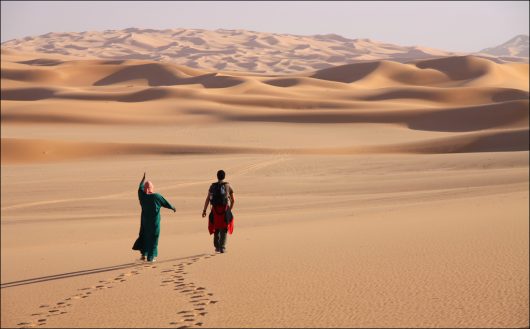
10 Facts on Healthcare in Libya


Since the Arab Spring, Libya has been a hotbed of division. Ongoing internal conflict, economic stagnation and loss of infrastructure have affected one of the most important sectors: healthcare. Lack of help from the government and an influx of Syrian refugees are increasingly adding to the chaos. Here are 10 facts about the current state of healthcare in Libya.

  1. Prior to the 2011 Arab Spring, Libya had a functioning healthcare system that could fairly support its nation’s citizens. Post-2011, the complete division of the country into multiple governments left the healthcare system extremely underfunded.
  2. Healthcare in Libya before 2011 was mostly facilitated by foreign workers who fled once war broke out. Now, with a nearly decimated healthcare system, foreign workers from universal government organizations like Doctors Without Borders are the main providers of health services in the nation.
  3. In the last six months of 2016 alone, 60 percent of hospitals became inaccessible or closed. Hospitals and clinics have closed because of shortages of resources, including: Shortage of staff with experience, basic medicines such as insulin and basic equipment such as dialysis equipment.
  4. Healthcare in Libya has also become divided in two. East Libya’s government is recognized by the Western World with the capital of Tobruk, but the Western government based in Tripoli is controlled by rebels and the Islamic State.
  5. Mothers are heavily affected by the ongoing civil war in the country. The stress of life during the war has led to numerous miscarriages. Many pregnant women have also become anemic because they cannot access the right foods. Several women have even resorted to staying at home for their births, which has increased the number of deaths for mothers at birth because of lack of sanitation and medical knowledge. The International Medical Corps has set up a midwife and OBGYN pop-up clinic only for pregnant women.
  6. The influx of refugees and asylum seekers entering into Libya add another strain to the already collapsed healthcare system. The lives of all of these people are at risk because of the lack of a functioning asylum system.
  7. According to the World Health Organization, there are about 250,000 refugees, asylum seekers and migrants in Libya. They add to the already displaced 430,000 locals.
  8. Doctors Without Borders has set up seven mobile clinics in Tripoli and its bordering areas. As of December 2016, the organization’s doctors have performed 5,579 medical consultations, meeting with around 500 patients weekly. The consolations focus on infections, diarrhea, skin diseases and urinary tract infections. Many of these infections are caused by the lack of infrastructures caused by the war in the country. About 680,000 people are still in need of help to access clean water and sanitation.
  9. The mobile clinics, though helpful, also have problems of their own. Most do not have enough food to provide for their patients, feeding people by community bowls. Outside of the clinics, people in Libya are also struggling to eat, with 1.2 million people struggling to access food.
  10. Luckily, the World Health Organization has mapped out a Humanitarian Response Plan to improve healthcare in Libya. The plan is comprised of three steps:
    1. Making sure people have access to basic and lifesaving healthcare services;
    2. Reducing communicable diseases and outbreaks;
    3. Strengthening the entire healthcare system to allow hospitals to open up again so more people have access.

It is important to note that although the future of the Libyan government remains unknown, many organizations are coming together to help citizens receive some sort of healthcare. Hopefully, things will begin to look up for healthcare in the nation as a whole.

– Maria Rodriguez

Photo: Flickr
June 1, 2017
https://borgenproject.org/wp-content/uploads/borgen-project-logo.svg 0 0 Borgen Project https://borgenproject.org/wp-content/uploads/borgen-project-logo.svg Borgen Project2017-06-01 01:30:232024-05-28 00:01:5910 Facts on Healthcare in Libya
Global Poverty, Refugees, War and Violence

The Status of Syrian Refugees in Saudi Arabia

Refugees in Saudi Arabia and War in Syria
The ongoing war in Syria has left many of its citizens desperate for a safe place to live. In response, government officials in Saudi Arabia have allowed the entry of Syrian refugees. However, the Kingdom of Saudi Arabia is considered a Gulf state and thus not part of the 1951 United Nation Refugee Convention. It is, therefore, entirely up to state officials to determine if and how many refugees should be allowed entrance into the state.

Refugees in Saudi Arabia are required to possess a passport and a visa prior to entry. Moreover, the state’s interactions in the Syrian war coupled with its unwillingness to let in more Syrian refugees as compared to other Gulf states has made it subject to much criticism.

Syrian scholar Ali Al-Ahmed has inferred that one of the reasons why officials are cautious of allowing the entry of refugees in Saudi Arabia is the notion that Syrians present a major “cultural and political risk.” In other words, they fear that allowing in too many Syrians at once would constitute a major threat to security.

Currently, there are roughly 895,000 Syrian refugees in Saudi Arabia. Some are students and a large amount are adults who work full-time within the Arab state. Yet it has been predicted that the kingdom will never allow access to more than one million Syrian refugees at a given time.

According to Abdulla Al-Rabeeah, chief of the King Salman Center for Relief and Humanitarian Aid (KSRelief), more effort has been put forth towards assisting individuals who are in desperate need of relief. Al-Rabeeah stated that KSRelief has “carried out 127 projects in Yemen providing relief and humanitarian aid, as well as shelter, in addition to agricultural and water programs.” Furthermore, Al-Rabeeah reported that Saudi Arabia has allocated a total of $700 million in humanitarian aid and relief to 37 countries, including Syria.

– Lael Pierce

Photo: Flickr

May 26, 2017
https://borgenproject.org/wp-content/uploads/borgen-project-logo.svg 0 0 Borgen Project https://borgenproject.org/wp-content/uploads/borgen-project-logo.svg Borgen Project2017-05-26 01:30:482024-06-07 05:07:40The Status of Syrian Refugees in Saudi Arabia
Global Poverty, Refugees, War and Violence

10 Things You Need to Know About Refugees From Iraq

 Refugees from Iraq
Most refugees from Iraq were forced to leave their homes after the militant group ISIS invaded the region. ISIS began to infiltrate Iraq in 2014, creating a large-scale humanitarian crisis in the region. Since then, ISIS has gained control of some of the largest cities in the country and has caused 3.4 million individuals to be uprooted from their homes.

Increasing numbers of displaced persons are fleeing war-torn regions of Iraq, and in response to the crisis, international organizations are rallying to provide relief. Ahead are 10 facts about refugees from Iraq.

10 Things You Need to Know About Refugees From Iraq

  1. Many Iraqis are internally displaced and have relocated to safer parts of the country. Around 850,000 Iraqis have fled to the Kurdish region of Iraq, where 250,000 Syrian refugees are already living. Many people now live in displacement camps with access to emergency supplies and medical care.
  2. Nearly 16,000 Iraqis were forced into Syria, where ISIS is also controlling various regions of the country. Many refugees pay smugglers to lead them on dangerous and exhausting journeys across ISIS territory.
  3. Mosul, the second-largest city in Iraq, remains in the hands of ISIS. Around 500,000 people may be trapped in the western part of the city with minimal or no access to necessary aid. Those who live in the eastern part of Mosul are living in dangerous conditions as well and will also face the challenge of entirely rebuilding their lives.
  4. In October 2016, a military operation began to free the city of Mosul from ISIS control. Even if the operation is eventually successful and Mosul is retaken from ISIS, mines and other explosive devices will remain scattered throughout the city. This will prevent many refugees from returning home safely.
  5. In addition to food and shelter, many Iraqi refugees require trauma counseling and medical care. ISIS has imposed severe restrictions on the individuals who live in the regions it controls. People are left without jobs and struggle to meet their basic needs. Numerous religious buildings and heritage sites have also been destroyed.
  6. The International Rescue Committee (IRC) provides relief to vulnerable Iraqis. It provides counseling to women and girls, gives monetary aid to displaced families and provides business training to Iraqi youth in camps.
  7. The World Bank plans to offer Iraq financial support for reconstruction efforts after ISIS is defeated. The organization will also focus efforts on rebuilding the social fabric of the country upon the return of refugees. In December, the World Bank approved a loan of $1.485 billion to Iraq.
  8. In 2016, the United Nations International Children’s Emergency Fund (UNICEF) provided immediate relief to more than 118,000 people in Mosul. They also gave more than 156,000 people in the area access to safe water and vaccinated more than 13,500 children against measles. The organization plans to continue these efforts in 2017, with a goal of providing 1.3 million displaced persons with relief kits within 72 hours of a trigger for response.
  9. The International Organization for Migration (IOM) partners with local authorities in the Kerbala and Najaf governorates of Iraq to meet the needs of internally displaced persons. It provides medical and mental health services at camps in the region. In 2016, the organization oversaw the refurbishment of three schools and a water network benefiting 8,2000 individuals.
  10. Refugee camps run by the United Nations Higher Commission for Refugees (UNHCR) will have increasing space as displaced persons begin to return to east Mosul. In camps near the city, there are more than 4,000 family plots available for new arrivals. UNHCR plans to develop additional facilities and plots as need increases.

Though the situation of many refugees from Iraq is bleak, hope remains. Organizations are working to provide relief to those displaced by the conflict. The fight to return ISIS-controlled regions of Iraq to their people will continue.

– Lindsay Harris

Photo: Flickr

May 17, 2017
https://borgenproject.org/wp-content/uploads/borgen-project-logo.svg 0 0 Borgen Project https://borgenproject.org/wp-content/uploads/borgen-project-logo.svg Borgen Project2017-05-17 21:02:412024-12-13 17:54:4810 Things You Need to Know About Refugees From Iraq
Disease, Global Poverty, War and Violence

Top Diseases in Libya


Libya, a country in North Africa, is home to more than six million people. The population employs a variety of careers and activities, such as farming and exporting petroleum. Though the country enjoys a relatively healthy lifestyle, the top diseases in Libya bring much strife to the population.

Communicable Diseases

Communicable diseases like influenza, hepatitis and dysentery contribute to a large portion of the mortality rates in Libya, especially in the rural areas where people do not have access to clean water and sanitation. Also, the closure of primary healthcare centers has only furthered the effect of these diseases on the population.

Another one of the top diseases in Libya is malaria. According to the World Health Organization (WHO), malaria is transmitted to humans when they are bitten by female mosquitoes. Parasites then multiply in the liver and attack red blood cells, causing damage to vital organs.

Non-Communicable Diseases

Non-communicable diseases also play a big part when it comes to the top diseases in Libya, and the closure of health centers has not helped slow the effect of cancer, cardiovascular disease and diabetes in the country.

According to the WHO, the closure of these health centers is mainly war-related, caused by the shortage of funds and damage done by fighting. Those who try to treat their ailments often turn to “overburdened hospitals,” and the treatments can be ineffective.

Interestingly, communicable diseases were not on the list of top diseases in Libya until conflict began in the country. This was because most of the country had good water and sanitation systems. Furthermore, nonprofit organizations and health centers had a large percentage of the population covered in terms of vaccination.

The Libyan civil war began in 2014, and the lack of a control system caused the downfall of the country’s health system. For the most part, Libya had many of its biggest diseases under control with the help of vaccinations, health programs and volunteers from a nonprofit organization providing information on proper sanitary methods. Since the Libyan Civil War, however, many of these supporters have lost their hold in the region, and the population has paid the price.

In order to decrease the prevalence of the top diseases in Libya, the country has to pay more attention to programs that can benefit its citizens. The shortage of staff and supplies may put the health system in the country at further risk if nothing is done.

Informational programs about vaccination, proper sanitary methods and staying safe during the conflict is necessary for those who are currently suffering. Also, refilling the stocks of essential medical supplies will prove to be a big help to the country. Once the above goals are met, the country will be better situated to get back on track in terms of health.

– Jacqueline Artz

Photo: Flickr

May 16, 2017
https://borgenproject.org/wp-content/uploads/borgen-project-logo.svg 0 0 Borgen Project https://borgenproject.org/wp-content/uploads/borgen-project-logo.svg Borgen Project2017-05-16 01:30:292024-05-28 00:00:01Top Diseases in Libya
Global Poverty, Hunger, War and Violence

Disastrous Poverty in Eritrea

Poverty in Eritrea
Poverty in Eritrea remains a problem. While the country’s economy was doing well from 1993 to 1997, Eritrea was suddenly thrown into turmoil both by nature and politics. Due to challenges like drought, famine and recurrent war, poverty in Eritrea is on the rise and doesn’t seem to be stopping.

Eritrea fought with Ethiopia for 30 years before winning its independence. As any new country would, it had to deal with socio-economic hardships of a newly forming nation. Agriculture is its major source of income as well as food, as is the case for many African nations.

While Eritrea may be known as one of the world’s youngest countries, it is also one of the poorest. In 2005, the annual per capita income was $150. Out of 175 countries in the Human Development Index, Eritrea is ranked 155th.

Poverty and food insecurity in Eritrea are widespread and increasing. According to the Rural Poverty Portal, “even in years of adequate rainfall, about half of the food that the country requires has to be imported.”

While Eritrea’s government has implemented some poverty alleviation measures, these attempts have not mitigated poverty as they should have. This is partially due to the lack of resources and overall poorly implemented programs. Poverty in Eritrea has become rampant, and more than 66 percent of the population lives below the poverty line.

Access to sanitation was only available to 13 percent of Eritreans in 1997, and only 22 percent had access to clean water. Widespread malnutrition and inadequate healthcare also result in high infant mortality rates and low life expectancy.

Poverty in Eritrea barely allows its people to survive, let alone receive a proper education. The literacy rate is estimated at 49 percent. In addition, a weak education system does not help to relieve the issues associated with poverty.

While Eritrea still lacks resources and foreign aid, it will not be able to support itself after natural disasters and an ongoing war have ravaged the country. This young nation will require aid and guidance as it seeks growth and prosperity.

– Karyn Adams

Photo: Flickr

April 28, 2017
https://borgenproject.org/wp-content/uploads/borgen-project-logo.svg 0 0 Borgen Project https://borgenproject.org/wp-content/uploads/borgen-project-logo.svg Borgen Project2017-04-28 01:30:462020-05-03 14:43:59Disastrous Poverty in Eritrea
Global Poverty, Hunger, War and Violence

10 Organizations Addressing Famine in South Sudan


A couple of weeks ago, the U.N. announced that there is a famine in South Sudan. A number of factors have contributed to this famine, such as the civil war that began in 2013 and a drought that has stymied agricultural production.

According to Newsweek, nearly 5.5 million people will not have a reliable food source by July 2017. This is unacceptable, especially since the world’s wealthiest countries can help save millions of lives. Luckily, there are many organizations working to help the South Sudanese through donations and support from American citizens. Here are 10 organizations that are addressing the famine in South Sudan.

10 Organizations Addressing Famine in South Sudan

  1. The United Nations International Children’s Emergency Fund (UNICEF) supports people in need through “fundraising, advocacy, and education in the United States.” In addition to raising awareness and raising funds, UNICEF designs and executes emergency relief programs, and is currently providing aid to the South Sudanese.
  2. Save the Children is on the ground in South Sudan, providing support to the people fleeing famine and war with healthcare facilities that provide immunizations and care for infections and disease. Save the Children is also supporting malnourished children with health and nutrition programs.
  3. World Vision provides relief from the violence and famine in South Sudan that has been ravaging the country’s population. The organization ensures that essentials like food, shelter and sanitation are available to those who need it.
  4. Water for South Sudan works hard to bring clean water to the rural areas of the country that do not have access. Clean water is not only necessary for sanitation purposes but also to ensure that each person in South Sudan is getting enough water to survive during the harsh famine that has taken over some parts of the country. By drilling holes, fixing infrastructure and constructing roads, its teams are slowly helping the country get water in even the most remote areas of South Sudan.
  5. Sudan Relief Fund goes where the need is by providing immediate relief to those who are undernourished in the wake of the famine in South Sudan. In addition, the organization works on long-term projects that will provide everlasting support in the country, such as hospital construction and education classes. Whether it is building wells, handing out food or raising awareness about proper hygiene and sanitation methods, this organization is putting in the work to help the South Sudanese people.
  6. Oxfam is helping the South Sudanese who have had to flee their homes to escape violence, as well as those who had their agriculture affected by climate change and drought. Oxfam provides food relief, water treatment and health services.
  7. Action Against Hunger has been in South Sudan for more than 20 years, providing support with life-saving relief and education programs. Now, the organization is helping work towards ending the famine in South Sudan by mobilizing emergency response teams, gathering data to identify areas in need and treating thousands of malnourished children.
  8. CARE is currently working in South Sudan in response to the famine and crisis surrounding undernourishment and improper sanitation methods. This organization provides urgent medical and food relief to those who require attention.
  9. International Medical Corps works in Nyal, one of the most affected counties in South Sudan. It provides support through medical services, nutrition services and has established 24-hour emergency relief centers in the area.
  10. Norwegian Refugee Council has been in South Sudan since the country’s independence in 2011. Since then, it has started and continues to support education, nutrition, shelter and medical programs, especially in light of the famine and violence that is ravaging the population.

The sheer number of organizations working to provide aid in the country offers hope in the fight to end the famine in South Sudan. Any of these organizations are worthy of support in whatever form it comes in, such as advocacy, fundraising, donations and volunteering.

– Jacqueline Nicole Artz

Photo: Flickr

April 25, 2017
https://borgenproject.org/wp-content/uploads/borgen-project-logo.svg 0 0 Borgen Project https://borgenproject.org/wp-content/uploads/borgen-project-logo.svg Borgen Project2017-04-25 01:30:302024-12-13 17:56:4710 Organizations Addressing Famine in South Sudan
Children, Global Poverty, Refugees, War and Violence

Refugee Child Abuse in Libya

Libya
A recent United Nations International Children’s Emergency Fund (UNICEF) study titled A Deadly Journey for Children: The Central Mediterranean Migration Route, surveyed migrant women and children in Libya making their way to Europe. Refugee children leaving war and poverty are being mentally and physically abused, sexually assaulted and starved.

Last September, it was estimated that 256,000 migrants were in Libya, 11 percent of whom were women and nine percent of whom were children. A third of these children were unaccompanied. However, these figures are estimations and the actual statistics are assumed to be much higher.

About 70 percent of migrants traveling through Africa to Europe experience some type of exploitation, according to an October International Organization for Migration (IOM) survey. Last year, nine of out 10 children who used the Central Mediterranean Migration Route arrived in Europe unaccompanied. Nearly 26,000 children made the journey in 2016, which is twice the number of children from the previous year. Unaccompanied children are more prone to different types of abuse, trafficking and exploitation.

UNICEF staff members in Libya have documented many cases of refugee child abuse over time. Three-quarters of the children interviewed in the survey said they had experienced some type of violence from an adult. A majority of the children had experienced emotional abuse, with girls reporting higher rates than boys. Some children also said that they had to rely on smugglers, which resulted in other types of abuse like trafficking.

Amid the refugee child abuse shown in this study, UNICEF has created a six-part plan that they want governments and the European Union to adopt. The UNICEF Agenda for Action is comprised of the following goals:

  1. Protect child refugees and migrants, particularly unaccompanied children, from exploitation and violence.
  2. End the detention of children seeking refugee status or migrating by introducing a range of practical alternatives.
  3. Keep families together as the best way to protect children and give them legal status.
  4. Keep all refugee and migrant children learning and give them access to health and other quality services.
  5. Press for action on the underlying causes of large-scale movements of refugees and migrants.
  6. Promote measures to combat xenophobia, discrimination and marginalization in countries of transit and destination.

UNICEF spokesperson Sarah Crowe told Al Jazeera, “We need to work on finding a solution to the root causes of the problem and we need to do more to support children at every step of the way.”

– Shannon Elder

Photo: Flickr

April 24, 2017
https://borgenproject.org/wp-content/uploads/borgen-project-logo.svg 0 0 Borgen Project https://borgenproject.org/wp-content/uploads/borgen-project-logo.svg Borgen Project2017-04-24 01:30:182024-12-13 17:56:47Refugee Child Abuse in Libya
Global Poverty, War and Violence

Top 10 Facts About the Kosovo War

Kosovo War
The Kosovo War was a quick and highly destructive conflict that displaced 90 percent of the population. The severity of the unrest in Kosovo and the involvement of the North Atlantic Treaty Organisation (NATO) brought the Kosovo conflict to international attention in the late 1990’s. The conflict led to the displacement of thousands and lasting tension between Serbs and Albanians. The brutality of the war is largely credited with launching The Borgen Project, a humanitarian organization that has helped hundreds of thousands of people.

10 Facts about the Kosovo War

    1. The Kosovo War was waged in the Serbian province of Kosovo from 1998 to 1999. Ethnic Albanians living in Kosovo faced the pressure of Serbs fighting for control of the region. Albanians also opposed the government of Yugoslavia, which was made up of modern day Serbia, Montenegro, Croatia, Bosnia-Herzegovina, Slovenia and Macedonia.
    2. Muslim Albanians were the ethnic majority in Kosovo. The president of Serbia, Slobodan Milosevic, refused to recognize the rights of the majority because Kosovo was an area sacred to the Serbs. He planned to replace Albanian language and culture with Serbian institutions.
    3. The international community failed to address the escalation of tension between the Albanians and the Serbs. In doing so, they inadvertently supported radicals in the region. Ethnic Albanians in Kosovo formed the Kosovo Liberation Army (KLA) in the early 1990s. The militant group began attacks on Serbian police and politicians and were engaged in an all-out uprising by 1998.
    4. Serbian and Yugoslav forces tried to fight growing KLA support through oppressive tactics and violence. The government destroyed villages and forced people to leave their homes. They massacred entire villages. Many people fled their homes.
    5. As the conflict grew worse, international intervention rose. The Contact Group (consisting of the U.S., Britain, Germany, France, Italy and Russia) demanded a cease-fire, the withdrawal of Yugoslav and Serbian forces from Kosovo and the return of refugees. Yugoslavia at first agreed but ultimately failed to implement the terms of the agreement.
    6. Yugoslav and Serbian forces engaged in an ethnic cleansing campaign throughout the duration of the war. By the end of May 1999, 1.5 million people had fled their homes. At the time, that constituted approximately 90 percent of Kosovo’s population.
    7. Diplomatic negotiations between Kosovar and Serbian delegations began in France in 1999, but Serbian officials refused to cooperate. In response, NATO began a campaign of airstrikes against Serbian targets, focusing mainly on destroying Serbian government buildings and infrastructure. The bombings caused further flows of refugees into neighboring countries and the deaths of several civilians.
    8. In June 1999, NATO and Yugoslavia signed a peace accord to end the Kosovo War. The Yugoslav government agreed to troop withdrawal and the return of almost one million ethnic Albanians and half a million general displaced persons. Unfortunately, tensions between Albanians and Serbs continued into the 21st century. Anti-Serb riots broke out in March 2004 throughout the Kosovo region. Twenty people were killed and over 4,000 Serbs and other minorities were displaced.
    9. In February 2008, Kosovo declared independence from Serbia. Subsequently, Yugoslavia ceased to exist in 2003 and became the individual countries of Serbia and Montenegro. Serbia, along with numerous other countries, refused to recognize Kosovo’s independence.
    10. At the end of 2016, a tribunal was established in the International Criminal Court to try Kosovars for committing war crimes against ethnic minorities and political opponents. Additionally, an EU taskforce set up in 2011 found evidence that members of the KLA committed these crimes after the war ended. Previously, the U.N. International Criminal Tribunal for the Former Yugoslavia tried several the KLA members.

Overall, the Kosovo War was one of Europe’s most chaotic conflicts, leaving lasting impressions on all those living in the region. Not only has the conflict been coined with the terms genocide and crimes against humanity, but the involvement and bombings from NATO also caused widespread controversy.

– Lindsay Harris

Photo: Flickr


April 20, 2017
https://borgenproject.org/wp-content/uploads/borgen-project-logo.svg 0 0 Borgen Project https://borgenproject.org/wp-content/uploads/borgen-project-logo.svg Borgen Project2017-04-20 01:30:582024-12-13 17:56:43Top 10 Facts About the Kosovo War
Children, Global Poverty, War and Violence

Organizations Helping Child Soldiers Recover

Child Soldiers
Around 250,000 children around the globe are child soldiers.

Child soldiers are people under the age of 18 who are used for military purposes. They can be boys or girls and can range in age from four to late teens. The tasks of a child soldier vary from fighting to being a messenger. Discussed below are the three leading organizations that help child soldiers recover from being involved in such activities.

Organizations Helping Child Soldiers

Child Soldiers International

Child Soldiers International is an organization based in London that has been around since 1998. Established by other leading human rights organizations such as Amnesty International, Child Soldiers International works to end recruitment and use of children on behalf of armed groups.

Among things such as reduction of violations and promoting the ban on child recruitment, the organization puts an emphasis on reintegration. For instance, Child Soldiers International offers literacy and numeracy classes for girls in the Democratic Republic of the Congo. The organization also advocates “to increase the quantity and quality of reintegration programs.”

War Child

War Child, a Canadian based organization, has been around since 1999. “By providing access to education, opportunity and justice, War Child gives children in war-affected communities the chance to reclaim their childhood.” With better education and opportunity, one can better resist the appeal of armed groups.

United Nations International Children’s Emergency Fund (UNICEF)

UNICEF has been committed to children for the past 70 years. UNICEF has played a big role in helping children around the world by releasing children associated with armed forces and providing them with assistance to return home. The organization supports a variety of recovery services such as physical and mental health, education and skills training.

Since 1998, UNICEF has helped more than 100,000 former children associated with armed groups reintegrate into their communities. The organization discourages the use of the term ‘child soldier’ as it doesn’t adequately include the variety of roles children are recruited to do for military purposes.

These three organizations helping child soldiers recover are making a difference in the lives of children around the world who find themselves caught in the conflict.

– Shannon Elder

Photo: Flickr

April 14, 2017
https://borgenproject.org/wp-content/uploads/borgen-project-logo.svg 0 0 Borgen Project https://borgenproject.org/wp-content/uploads/borgen-project-logo.svg Borgen Project2017-04-14 01:30:222024-12-13 17:57:46Organizations Helping Child Soldiers Recover
Global Poverty, War and Violence

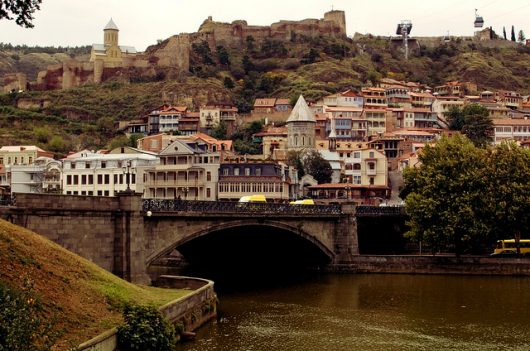
Nine Facts About Refugees in Georgia


Georgia is a nation well-known for its conflict with Russia over provinces South Ossetia and Abkhazia in 2008. Georgia is a former member of the Soviet Union, and South Ossetia and Abkhazia declared independence from Georgia shortly after it left the Soviet Union. However, neither Abkhazia nor South Ossetia is fully recognized as independent from Georgia internationally. Their declarations of independence resulted in conflict with Georgia.

Nine Facts About Refugees in Georgia

1. As of mid-2015, there were more than 250,000 “refugees and other persons of concern to UNHCR” in Georgia. This includes refugees, people in refugee-like situations (who have not been formally recognized as refugees), internally displaced persons, asylum seekers and other stateless persons.

3. The 2008 conflict created 150,000 Georgian asylum seekers. Fewer than 1,000 Georgian asylum seekers had been accepted each year globally since the early 2000s.

4. More than 1,400 refugees from other countries were accepted into Georgia in 2015. The majority of them were from Iraq and Syria.

5. Since Russia’s second invasion of Chechnya in 1999, about 12,000 Chechnya refugees came to Georgia. Russia has made claims that Georgia hid Chechnya rebels, but Georgia has deemed those claims as false.

6. The International Criminal Court started investigating the war crimes of South Ossetia, Russia and Georgia in and around South Ossetia in order to bring justice to over 6,000 victims. Still, it is doubtful the victims will receive reparations.

7. There are almost 300,000 internally displaced persons in Georgia due to the conflicts with Abkhazia and South Ossetia over the last 20 years. Five percent of the population is internally displaced.

8. During Georgia’s conflict with Abkhazia in 1992-1993, both sides terrorized civilians based on which group they were from and this led to many displaced persons.

9. The EU voted in February to allow Georgians to travel visa-free into the EU for up to 90 days. The EU was concerned this could cause an upsurge in Georgian migrants overstaying illegally, therefore it reserved the right to reinstate visa requirements if needed.

These are just nine facts about refugees in Georgia. Refugees in Georgia are affected by the conflict in South Ossetia, Abkhazia and Russia.

– Jennifer Taggart

Photo: Flickr

April 13, 2017
https://borgenproject.org/wp-content/uploads/borgen-project-logo.svg 0 0 Borgen Project https://borgenproject.org/wp-content/uploads/borgen-project-logo.svg Borgen Project2017-04-13 01:30:232020-05-04 17:16:45Nine Facts About Refugees in Georgia
Page 9 of 20«‹7891011›»

Get Smarter

  • Global Poverty 101
  • Global Poverty… The Good News
  • Global Poverty & U.S. Jobs
  • Global Poverty and National Security
  • Innovative Solutions to Poverty
  • Global Poverty & Aid FAQ’s
Search Search

Take Action

  • Call Congress
  • Email Congress
  • Donate
  • 30 Ways to Help
  • Volunteer Ops
  • Internships
  • Courses & Certificates
  • The Podcast
Borgen Project

“The Borgen Project is an incredible nonprofit organization that is addressing poverty and hunger and working towards ending them.”

-The Huffington Post

Inside The Borgen Project

  • Contact
  • About
  • Financials
  • President
  • Board of Directors
  • Board of Advisors

International Links

  • UK Email Parliament
  • UK Donate
  • Canada Email Parliament

Get Smarter

  • Global Poverty 101
  • Global Poverty… The Good News
  • Global Poverty & U.S. Jobs
  • Global Poverty and National Security
  • Innovative Solutions to Poverty
  • Global Poverty & Aid FAQ’s

Ways to Help

  • Call Congress
  • Email Congress
  • Donate
  • 30 Ways to Help
  • Volunteer Ops
  • Internships
  • Courses & Certificates
  • The Podcast
Scroll to top Scroll to top Scroll to top