• Link to X
  • Link to Facebook
  • Link to Instagram
  • Link to TikTok
  • Link to Youtube
  • About
    • About Us
      • President
      • Board of Directors
      • Board of Advisors
      • Financials
      • Our Methodology
      • Success Tracker
      • Contact
  • Act Now
    • 30 Ways to Help
      • Email Congress
      • Call Congress
      • Volunteer
      • Courses & Certificates
      • Be a Donor
    • Internships
      • In-Office Internships
      • Remote Internships
    • Legislation
      • Politics 101
  • The Blog
  • The Podcast
  • Magazine
  • Donate
  • Click to open the search input field Click to open the search input field Search
  • Menu Menu

Archive for category: War and Violence

Information and news War and Violence

War and Violence

10 Facts About the Three Kingdoms’ War


Civil wars are scattered throughout world history as power struggles that have torn governments apart. From the U.S. in the 19th century, to Spain, Korea and Vietnam in the 20th century, the division of power in a country is nothing new. Usually, that division is split between two sides, north and south. Going back almost two thousand years, the Three Kingdoms’ War was unique for featuring a three-way tie for power. Here are 10 facts about the Three Kingdoms’ War:

    1. The Three Kingdoms’ War took place in China, ultimately driving the country into three warring regions as they engaged in a makeshift civil war.
    2. The Three Kingdom’s War took place between the Han Dynasty and the Jin Dynasty, starting in the year 220 AD and lasting until 280 AD.
    3. Although the Three Kingdom’s War lasted for a period of 60 years, the origins of the conflicts go back further than 220 AD, to 189 AD. At that time, the Han emperor died and a young emperor was placed on the throne.
    4. Many generals were unhappy with the new emperor and were dismayed at the influence that eunuchs had in the role of government. The young emperor was eventually ousted and replaced, but the fighting and political tension continued to grow. Civil wars broke out and divided the country into three kingdoms.
    5. The Three Kingdoms were the Wei Kingdom, the Shu Kingdom and the Wu Kingdom. The Wei Kingdom was led by Cao Pi, who controlled the northern part of China; the Shu Kingdom was led by Liu Bein, who controlled the southwestern part of China; and the Wu Kingdom was led by Sun Quan, who controlled the southeastern part of China.
    6. Of the Three Kingdoms, the Wei Kingdom had the strongest military. Located north of the Yangtze (Yellow) River, the Wei Kingdom was unable to conquer the other two kingdoms. The two kingdoms in the south, the Shu and Wu, formed an alliance out of military strategy to keep the Wei contained to the north.
    7. The Wei Kingdom was overthrown as the Jin Dynasty emerged in 265 AD. After conquering the north, they turned their sights south and gradually took over the Shu and Wu kingdoms, declaring victory in 280 AD. The Jin dynasty lasted until 420 AD.
    8. This period of fighting was responsible for one of the deadliest periods in China’s history. During the Han Empire, China boasted a population of 54 million, but during the Jin Empire, their population fell to 16 million. This population loss was a result of ongoing fighting and internal displacement brought on by war.
    9. Despite the fighting and death tolls, innovation thrived. This period is credited with the invention of gunpowder for weaponry. Additionally, irrigation systems were updated while shipbuilding increased to meet the demands of the trade from the growing Silk Route.
    10. The history of the war was immortalized in the book The Romance of the Three Kingdoms. This popular historical fiction was written by Luo Guan Zhong. The exact publication year is unknown but is speculated to have been written between 1279 and 1644.

– Jeffery Silvey

Photo: Flickr
March 21, 2017
https://borgenproject.org/wp-content/uploads/borgen-project-logo.svg 0 0 Borgen Project https://borgenproject.org/wp-content/uploads/borgen-project-logo.svg Borgen Project2017-03-21 01:30:252020-05-12 12:22:0910 Facts About the Three Kingdoms’ War
Global Poverty, War and Violence

10 Largest Wars: Earth’s Biggest Battle-cries


War is often not discreet, pretty or humane. War tends to ravage countries, level cities and devastate families. War is abusive, destructive, and aggressive; but war looks for solutions. War is the last means to an end, the final attempt to solve a problem that no other solution has been able to solve. That being said, war involves everyone, from soldiers and sailors to mothers and children. The death toll can be high. Here is a list of the 10 largest wars fought on Earth based on the number of people who gave their lives fighting.

  1. The American Civil War from 1861 to 1865. This war was fought between the North (Union) and the South (Confederacy) based on issues surrounding slavery and extending the U.S. westward. According to a recent study by the Civil War Trust approximately 850,000 soldiers died due to “combat, accident, starvation, and disease during the Civil War.”
  2. The Soviet War in Afghanistan from 1979 to 1989. The Soviet Union occupied Afghanistan and attempted to support a pro-Soviet regime in Kabul. By means of taking over cities and highways, the Soviets quickly took control but the rebellion was immediate and widespread. During the course of the nine-year occupation an estimated total of nearly 1,125,000 Afghani civilians and troops, Mujahideen fighters and Soviet soldiers were killed.
  3. The Vietnam War from 1955 to 1975. The Vietnam War began as a result of the U.S.’s strategy to contain the spread of communism throughout the world during the Cold War. It is estimated that between the U.S. and its allies 64,000 lives were lost, between North Vietnam and its Communist allies 1.1 million lives were lost. As for civilian casualties, the official estimate is 2 million people. Totaling the death tally at just fewer than 3.2 million lives.
  4. The Napoleonic Wars from 1803 to 1815. Fought during Napoleon Bonaparte’s imperial rule over France as a means to extend his empire, this war resulted in over 6.5 million people dead.
  5. The Thirty Year’s War from 1618 to 1648. Based off of its name, this war raged on uninterrupted for thirty years, making it the longest continuous war in modern history. In total, including civilians, the death toll was 8 million.
  6. Taiping Rebellion from 1850-1864. The Taiping Rebellion was a “radical political and religious upheaval that was…the most important event in Chino in the 19th century.” And according to Britannica, it claimed at least 20 million lives.
  7. The Second Sino-Japanese War from 1937 to 1945. This war fought between China and Japan before and during World War II resulted in nearly 23 million lives.
  8. World War I from 1914 to 1918. After the assassination of Franz Ferdinand set off a chain of events that lead to the “Great War,” the end result in lives lost on both Allied and Central Powers sides was 37 million.
  9. The Mongol Conquests from 1206 to 1368. This war resulted in not only the significant expansion of the Mongol Empire but also the loss of 60 million lives.
  10. World War II from 1938 to 1945. WWII touched every corner of the Earth. That is why it is highest on this list of 10 largest wars. Every continent and ocean were involved in some way or another resulting in the staggering death total of 72,468,900 lives lost.

War can positively bolster the economy and national pride. Larger empires can exploit their gains to solve political issues. However, the notion of war is a dark one and this list of the 10 largest wars demonstrates that even if there is light at its end, the devastation and loss of life are unfortunate consequences to achieve peace.

– Karyn Adams

Photo: Flickr

March 21, 2017
https://borgenproject.org/wp-content/uploads/borgen-project-logo.svg 0 0 Borgen Project https://borgenproject.org/wp-content/uploads/borgen-project-logo.svg Borgen Project2017-03-21 01:30:212024-05-27 23:59:3310 Largest Wars: Earth’s Biggest Battle-cries
Global Poverty, War and Violence

Samaritan’s Purse Hospital in Iraq


In October of last year, a coalition including Iraqi, Kurdish and Assyrian troops launched what they hoped would be a final assault to retake Mosul from the Islamic State. Nearly six months later, the battle continues to rage on. Over 200,000 people have been displaced because of this conflict. In northern Iraq, Samaritan’s Purse is working to provide food and healthcare. The Samaritan’s Purse Hospital in Iraq opened on Christmas day and has cared for more nearly 1,000 patients.

The Samaritan’s Purse Hospital in Iraq is located in the northern plains of Nineveh. It has an emergency room and two operating rooms to serve patients who might not survive a lengthy trip to the nearest medical center in Erbil.

As expected, many of the patients being treated are victims of trauma, both physical and psychological. What may surprise people is that most of the patients at the Samaritan’s Purse Hospital in Iraq are women or children. For over two years, Mosul has been under ISIS control. The Iraqis have witnessed their communities destroyed by fire and bombs set off by the extremists. They have witnessed the beheading of those that have tried to resist.

Time seems to be running out for ISIS in Iraq’s second-largest city, and their desperation is clear. As Iraqi forces close in on the remaining ISIS stronghold, the extremists have resorted to using chemical weapons on innocent civilians. Patients at the Samaritan’s Purse Hospital in Iraq and other medical facilities have presented symptoms consistent with chemical exposure. Victims of chemical attacks can suffer from eye irritation, coughing, blisters, and vomiting. WHO activated an emergency response plan to help aid in the treatment of these patients.

These extreme measures being used by ISIS suggest that defeat is imminent. However, even after ISIS has been defeated in Mosul, and the Samaritan’s Purse hospital in Iraq can be closed, a battle remains to be fought — one with new, potentially more difficult challenges than the current conflict. In the absence of a shared, unifying enemy, disparate factions could prevent the country from recovering properly. Without sufficient support and leadership, the victory would be incomplete.

– Rebecca Yu

Photo: Flickr

March 17, 2017
https://borgenproject.org/wp-content/uploads/borgen-project-logo.svg 0 0 Borgen Project https://borgenproject.org/wp-content/uploads/borgen-project-logo.svg Borgen Project2017-03-17 01:30:392024-12-13 17:57:37Samaritan’s Purse Hospital in Iraq
Education, Global Poverty, War and Violence

Rebuilding Schools in Aleppo: Hope for Syrian Children

Schools In Aleppo
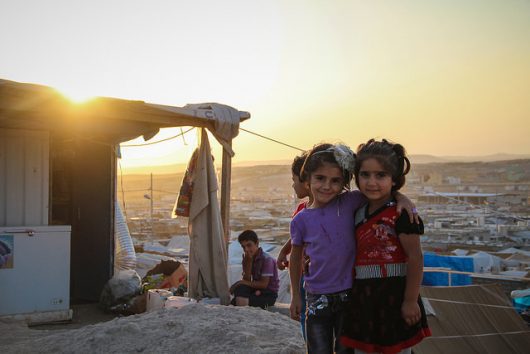
Thousands of individuals and families are returning to eastern Aleppo after months of displacement. The U.N. estimates that since the beginning of February, over 40,000 people have moved back to the area. Despite the joy of being able to return home, the war-torn city remains in ruin.

An estimated 1.8 million people in and around Aleppo lack access to clean water. The supply was cut off in the middle of January. The weather in Syria is extremely cold during this time of year, and most houses have no windows or doors. The U.N. is providing assistance in the form of sleeping mats and plastic sheets to cover open windows. Nonetheless, most remain unable to find the same comfort in their homes as they used to.

There is one beacon of hope that remains despite these horrors: the promise of education. Schools in Aleppo are gradually reopening after being destroyed by bombing. Thousands of children require remedial classes to reintegrate into the schooling system. More importantly, these students need to rebuild their confidence.

Close to half of the schools in eastern Aleppo are damaged in some way. However, the process of rebuilding is ongoing. UNICEF is playing a vital role in ensuring that children have access to education in the area. The organization is working hard to reopen and secure safe access to schools in Aleppo.

UNICEF is assessing which former schools can still be used for educational purposes. Roughly 23 primary schools have reopened since the beginning of 2017, and the number continues to grow. Prefabricated classrooms have also been set up for overflows of students who don’t have access to safe buildings.

In some areas of Aleppo, UNICEF has provided “schools in a box” and recreational kits to 90,000 children. Almost 300 teachers have received special training to help children catch up after long periods of missed education.

Children can supplement their education with classes in 70 child service spaces opened by UNICEF. The spaces allow children to play while also providing education on how to stay safe in a war-torn environment. Clinics in these spaces have taught over 60,000 people life-saving information, including how to recognize explosives.

Despite the cold and often uncomfortable conditions inside these makeshift classrooms, children are extremely excited to be getting back into a familiar routine. It is estimated that 1.7 million children in Syria are still not in school. However, the progress being made thus far provides hope that soon all returning children will have access to schools in Aleppo.

– Lindsay Harris

Photo: Flickr


March 11, 2017
https://borgenproject.org/wp-content/uploads/borgen-project-logo.svg 0 0 Borgen Project https://borgenproject.org/wp-content/uploads/borgen-project-logo.svg Borgen Project2017-03-11 01:30:442024-12-13 17:56:43Rebuilding Schools in Aleppo: Hope for Syrian Children
Global Poverty, Refugees, War and Violence

10 Facts About Serbia Refugees

 Serbia Refugees
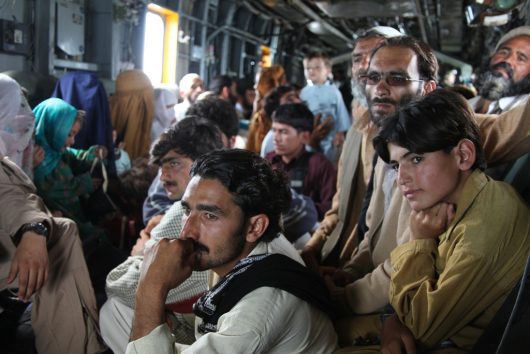
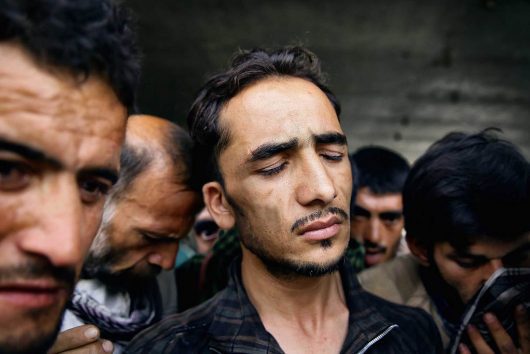
From 2015 through March 2016 refugees from countries including Syria, Afghanistan, Iraq and more traveled through Serbia on their way to Hungary and Croatia. The closing of the border led many people to think that the refugee crisis was over, but refugees from Bulgaria and the former Yugoslav Republic of Macedonia continue to arrive in Serbia daily. Below are 10 facts about Serbia refugees and the unprecedented crisis.

  1. Between May 2015 and March 2016, over 920,000 refugees from Greece, Bulgaria, the former Yugoslav Republic of Macedonia, Syria, Afghanistan and Iraq traveled through Serbia as they made their way to Hungary and Croatia.
  2. About 20.1 million euros in humanitarian aid from the EU helped provide emergency assistance at 16 government shelters. These shelters provide services including medical care, family-friendly shelter, clothing, food, water and security. Currently, aid is being used to improve living conditions at shelters. Previously, Serbia received 24.5 million euros in aid toward the refugee crisis.
  3. Winter weather and freezing temperatures as low as -20 degrees Celsius endanger the health and lives of as many as 1,500 refugees living in the streets or unheated temporary shelters. Sadly, 60% are unaccompanied minors. Many people are afraid to go to official shelters due to concerns that they will be deported.
  4. The Serbian government, the U.N. Refugee Agency, and other humanitarian agencies made room in heated shelters for 5,000 more beds.
  5. The Serbian government opened additional accommodations in mid-January, enabling 400 refugees, including women and children, to move from unsanitary improvised shelters to a clean shelter – 85% of refugees are now living in one of 17 government shelters.
  6. Humanitarian organizations are prohibited from helping refugees outside official shelters. A group of international volunteers called “Hot Food Idomeni” has found a way to help. They serve hot soup, ensuring that refugees living outside official shelters get a least one meal a day.
  7. The EU civil protection mechanism, along with 10 Member States, provided 246,000 relief items to Serbia.
  8. The government registered 815,000 refugees in 2015. There was a dramatic drop in the number of refugees arriving in Serbia after the closure of the “Western Balkan migration route” in March 2016.
  9. Since the closure of the “Western Balkan migration route” refugees have been stranded in Serbia. Many have stayed in one of 16 reception centers located in the west and south. Refugees are free to travel around the country. They can even apply for asylum.
  10. After the closure of the migration route, a small number of refugees from Bulgaria and the former Yugoslav Republic of Macedonia continued to arrive increasing the number of refugees from 2,000 in March 2016 to 7,550 in December 2016.

People flee war-torn countries hoping to find safe refuge within the borders of their neighbor. These 10 facts about Serbia refugees reveal what these brave refugees endure in their journey to find their safe refuge.

– Mary Barringer

Photo: Flickr

March 8, 2017
https://borgenproject.org/wp-content/uploads/borgen-project-logo.svg 0 0 Borgen Project https://borgenproject.org/wp-content/uploads/borgen-project-logo.svg Borgen Project2017-03-08 01:30:212020-05-21 12:00:0310 Facts About Serbia Refugees
War and Violence

Seven Worst Wars in History

Worst Wars in History
War is a terrible phenomenon and one can uncover multiple layers of evil when evaluating just how bad a war is. One way to compare wars in history is to look at the loss of life during each war. Using that calculation, the worst wars in history become horrifically obvious.

Seven of the Worst Wars in History:

1. The Napoleonic Wars (1803-1815) – Between 3.5 and 6 million people were killed in the wars Napoleon Bonaparte waged in the early 19th century. The Napoleonic Wars were some of the worst wars in history partly because of the widespread use of mass conscription, which was applied at an unprecedented scale during this war.

2. The Russian Civil War (1917-1922) – Some five to nine million people died in the Russian Civil War, which took place in the years that followed the collapse of the Russian Empire and the death of the last Russian Czar.

3. World War I (1914-1918) – An estimated 20 million people were killed in the first World War, then also known as the Great War. Erupting in Europe after the death of Archduke Franz Ferdinand, World War I is one of the worst wars in history partially because it was among the first wars to have been fought using modern warfare tactics. Up until then, no one had ever seen a war of such scale, and the resulting trauma rippled through several generations.

4. An Lushan Rebellion (755-763 AD) – The An Lushan Rebellion happened in the Chinese Tang Dynasty when a Tang general established a rival dynasty in the North. Despite some disagreements about the reliability of the census system during the time, experts estimate between 13 and 36 million casualties.

5. Qing Dynasty Conquest of the Ming (1618-1683) – The Qing Dynasty is known for being the last of the old Chinese dynasties before the beginning of the Republic, but an estimated 25 million people died in the Conquest of the Ming before the Qing Dynasty began.

6. Taiping Rebellion (1850) – During the Taiping Rebellion, a convert to Christianity named Hong Xiquan led a rebellion against the Manchu Qing Dynasty, during which anywhere between 20 to 100 million people (mostly civilians) were killed.

7. World War II (1938-1945) – With a death toll between 40 and 85 million, the Second World War was the deadliest and worst war in history. Experts estimate with such a high death toll, about three percent of the world’s population in 1940 died.

While the wars listed above are some of the worst wars in history, one must be careful not to forget that deadly wars are being fought today all around the globe as well. These may be the worst wars in history, but who’s to say that the worst war of all isn’t one being fought right now?

– Mary Grace Costa

Photo: Flickr

March 5, 2017
https://borgenproject.org/wp-content/uploads/borgen-project-logo.svg 0 0 Borgen Project https://borgenproject.org/wp-content/uploads/borgen-project-logo.svg Borgen Project2017-03-05 01:30:492024-12-13 17:56:44Seven Worst Wars in History
Global Poverty, War and Violence

Top 10 Facts About the War in Northwest Pakistan

Northwest Pakistan
As the attention of Americans is turned toward the new administration in the White House and the ongoing effects of the Syrian refugee crisis, certain problems in other parts of the world slip under the radar. The war in Northwest Pakistan is one such problem.

Here are some facts about the war that most Americans are not aware of:

  1. Another name for the war in Northwest Pakistan is the war in Waziristan, after the region predominantly affected. Located in the northwest of Pakistan, Waziristan holds three federally administered tribes — the Wazirs, the Mehsuds and the Dawar.
  2. The war began in 2004. The Pakistan Army sought to drive out al-Qaeda and the Taliban, who were using Waziristan as a home-base to attack U.S. forces in Afghanistan.
  3. The Taliban in Pakistan is allied with but not synonymous with the Taliban in Afghanistan. Both forces, along with the Afghan Haqqani network and small branches of al-Qaeda, still occupy Waziristan. Terrorism in the region is the driving force behind the fighting.
  4. An attack in 2014 on the international airport in Karachi, Pakistan’s largest and wealthiest city, triggered the Pakistani government to a new onslaught against the terrorist groups. The attack killed 26 people and tainted the sacred image of the city.
  5. The military operation against the suspected terrorists was code-named Zarb-e-Azb, which was the sword used by the prophet Muhammad in an ancient battle. The retaliating airstrikes killed 140 suspects in Waziristan.
  6. Pakistani forces killed 376 rebels in the first 15 days of the government’s retaliation to the Karachi attack. The number of civilian casualties was not released to the public.
  7. The effects of the war on the civilians of Waziristan are kept tightly hidden from the public. What is known thus far is this: 500,000 residents have fled the region due to the war — some fleeing as far into Afghanistan, and others to eastern regions of Pakistan.
  8. The United States has been periodically involved throughout the war in northwest Pakistan. Between 2008 and 2013, the CIA completed around 400 drone strikes in Waziristan in order “to weaken al-Qaeda and to suppress Taliban fighters.” The attacks came after Obama ordered a new round of American forces into Afghanistan in 2009. The Pakistani government approved the airstrikes.
  9. When the war first launched in 2004, Pakistani forces had suffered three times the loss than the U.S. since the 2001 Afghanistan war on terror.
  10. For years, Washington and other allies called on Islamabad to join the fight in ridding the Waziristan region of rebel militants. Until the act of terrorism in Karachi, Islamabad was resistant. But even with Islamabad’s added assistance, civilians remain pessimistic of the terrorist groups leaving anytime soon.

In 2005, when the war had only started, the local Taliban and its allies declared to be in the “fight until the last man and the last bullet.” Thirteen years later, their determination to defeat the Pakistani government has held true.

– Brenna Yowell

Photo: Flickr

March 5, 2017
https://borgenproject.org/wp-content/uploads/borgen-project-logo.svg 0 0 Borgen Project https://borgenproject.org/wp-content/uploads/borgen-project-logo.svg Borgen Project2017-03-05 01:30:262024-12-13 17:56:41Top 10 Facts About the War in Northwest Pakistan
Global Poverty, Refugees, War and Violence

Ten Facts About Refugees in Iran

 Refugees in Iran
There are more refugees and displaced people now than ever before in history. An estimated 65.3 million people are displaced, with 21.3 million of those being refugees. Here are 10 facts about refugees in Iran.

  1. As of October 2016, the Islamic Republic of Iran was the fifth top refugee-hosting country in the world. The number of refugees in Iran come in after Jordan, Turkey, Pakistan and Lebanon.
  2. Iran only has a small number of refugees that flee to find resettlement elsewhere. Iran has taken on a significant role in the refugee crisis, taking in around 979,400 refugees, most of which have fled from Afghanistan and Iraq.
  3. At the end of 2015, Iran constructed and renovated three schools for the benefit of refugee and host communities. In 2016, UNHCR supported Iran in building four more additional schools and providing literacy classes for approximately 3,000 refugees, both children and adults.
  4. The Supreme Leader of Iran declared, in 2015, that every child in Iran is required to attend school, no matter their documentation status. This allowed around 48,000 undocumented Afghans to enroll in the education system. Over 350,000 Afghan and Iraqi students enrolled for the 2015–2016 school year and that number is only expected to grow.
  5. UNHCR has worked together with Iran’s Ministry of Health to provide Primary Health Care (PHC) to all refugees. PHC includes vaccines, family planning, and care specifically for mothers and children. There were 83,000 refugees enrolled in Iran’s national health insurance program in 2015.
  6. The Iranian government and UNHCR are working together to provide prevention and rehabilitation to those who have been victims of violence. Assistance is given to sexual and gender-based violence victims as well as those victims to substance abuse.
  7. Around 6,000 refugees were set to receive legal assistance from the Iranian government in 2016. UNHCR also invests in infrastructure in areas of Iran that have the largest refugee populations.
  8. Iran’s government has recently shifted its view on formal skills training for refugees. Skills learned in this training will assist in providing the refugees with self-reliance tools. This will not only be valuable for them during their time in Iran, but also if they choose to return to their home country. Around 3,500 refugees were to be enrolled in formal skills training in 2016.
  9. There were 157 health centers and 24 educational facilities planned to be constructed, rehabilitated, or adequately equipped in Iran in 2016.
  10. Iran and nine other developing countries host more of the world’s refugees than any of the world’s wealthiest nations. These 10 countries account for only 2.5% of the world’s economy. Amnesty International said that the wealthiest nations do the least in providing host communities and resources.

Over 20 million refugees, including refugees in Iran, are under the age of 18. Every day, nearly 34,000 people are forced to flee their home countries worldwide. Some organizations that assist Iran and other developing countries in their support of refugees are UNHCR, Amnesty International, and World Relief — among many others.

– Shannon Elder

Photo: Flickr

March 3, 2017
https://borgenproject.org/wp-content/uploads/borgen-project-logo.svg 0 0 Borgen Project https://borgenproject.org/wp-content/uploads/borgen-project-logo.svg Borgen Project2017-03-03 01:30:312020-05-26 13:57:17Ten Facts About Refugees in Iran
Global Poverty, Refugees, War and Violence

Ten Facts About Mozambique Refugees

10 Facts About Mozambique Refugees
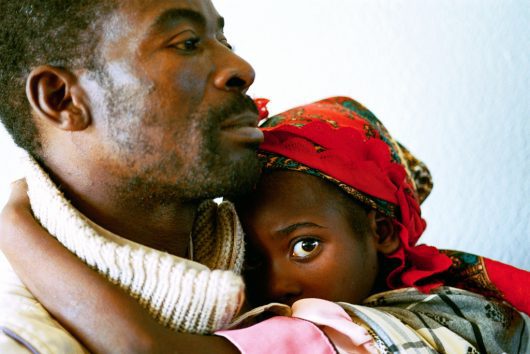
Mozambique, on the southeast coast of Africa, gained independence from Portugal in 1975. Conflict marred much of the country’s recent history, first during a protracted liberation struggle, followed by a 16-year civil war that ended in 1992. Tension between the ruling Frelimo party and its opposition, the former rebel movement Renamo, has remained high. Clashes between government forces and armed elements of Renamo contribute to the flow of refugees from Mozambique to neighboring countries.

Here are 10 facts about Mozambique refugees:

  1. Mozambique has a history of a massive displacement of people. By 1992, 1.5 million Mozambicans fled the country due to the civil war, representing 10% of the population at that time.
  2. Mozambicans fled to neighboring Malawi, Tanzania and Zimbabwe. Most of the refugees returned to Mozambique after the end of the war in 1992.
  3. Recently there has been an increase in the number of people fleeing Mozambique. Since 2015, 12,000 Mozambicans have fled from violence in their communities due to the longstanding conflict between Frelimo and Renamo. Tensions between the two parties have risen in the run-up to the 2014 Presidential election, and have only continued to escalate since then.
  4. Mozambicans are fleeing several forms of political violence reportedly perpetrated by government and opposition forces. A recent Freedom House report shows that Mozambicans are fleeing due to the perception that government and opposition forces are targeting them. This includes killings, assaults and the burning of homes, intended to create fear and punish sympathizers.
  5. For many Mozambique refugees, Kapise village in Malawi is the first port of call. At the peak of the current refugee crisis in March 2016, the U.N. Refugee Agency (UNHCR) recorded 250 people crossing the border from Mozambique to Kapise village every day. At this time, the makeshift camp at Kapise housed 6,000 Mozambicans in conditions that Doctors Without Borders classified as well below minimum humanitarian standards. The refugees have to compete for scarce resources with the 150 Malawian families already living in the village. The United Nations Children’s Fund (UNICEF), the World Food Programme (WFP) and Doctors Without Borders provided essential services in Kapise, such as water boreholes, food and healthcare. This has helped improve life in Kapise but conditions remain tough.
  6. In March 2016, Malawi reopened the Luwani Refugee Camp to house the influx of Mozambicans. Luwani Refugee Camp previously housed Mozambique refugees from 1977 to 1992 during the civil war and was finally closed in 2007. The Malawian government authorized UNHCR to reopen Luwani Camp and move Mozambique refugees there from Kapise village. Refugees have access to better facilities and services including healthcare, education, sanitation, security and self-sustaining activities like agriculture.
  7. Mozambique refugees are not the only Africans seeking asylum in Malawi. Dzaleka camp in Malawi is already hosting some 25,000 refugees from other African regions including the Horn of Africa and the Great Lakes Region.
  8. Some 3,000 Mozambicans also fled to Zimbabwe in 2015 and 2016. Many of the refugees that fled to Zimbabwe are living in makeshift camps and face severe food shortages. WFP classifies Zimbabwe as a low-income food-deficit country with 30% of the rural poor considered “food poor.” Zimbabwe and Malawi are both currently suffering the effects of a prolonged El Niño-induced drought. Mozambique refugees thus place an additional burden on already limited resources in these countries.
  9. Mozambique refugees in Malawi and Zimbabwe are largely dependent on food assistance from the WFP. The WFP works to achieve and maintain food security among refugees in the region through monthly food distributions in refugee camps. The WFP, however, has had to cut food rations since 2014 due to funding shortages.
  10. Mozambique itself is a destination for other African refugees. Mozambique currently hosts some 15,000 refugees originating from the Democratic Republic of the Congo, Burundi, Rwanda and Somalia. The majority of these people live in Maratane camp in the north of the country.

Frelimo and Renamo have engaged in mediated peace talks since mid-2016 and a ceasefire agreement was reached over Christmas and later extended to March 2017, which provides hope for a resolution to the instability in the country.

– Helena Jacobs

Photo: Flickr

March 2, 2017
https://borgenproject.org/wp-content/uploads/borgen-project-logo.svg 0 0 Borgen Project https://borgenproject.org/wp-content/uploads/borgen-project-logo.svg Borgen Project2017-03-02 01:30:142024-12-13 17:56:34Ten Facts About Mozambique Refugees
Global Poverty, Politics, War and Violence

Ten Deadly Wars

10 Deadly Wars
There is sufficient evidence to suggest that war causes and exacerbates poverty. It results in damage to infrastructure, breaks up communities and leads to the injury and death of countless people. Here is a list of 10 deadly wars that did just that:

  1. Second Congo War — 5.4 million deaths. It began in 1998, in the Democratic Republic of the Congo (DRC), and it lasted until 2003. Eight other African nations were drawn into the fight, and the cause included local disputes over land and resources. It also claimed the life of DRC President Laurent-Desire Kabila in 2001.
  2. Iran-Iraq War — 1.5 million deaths. In September 1980, Iraq invaded Khuzestan and Iran under Saddam Hussein’s dictatorship. This deadly war lasted nearly eight years. It ended in July 1988, after U.N. Resolution 598 was accepted. However, this resolution was not reached before many casualties and billions of dollars in damages.
  3. Vietnam War — 3 million + deaths. This war began in 1954 but did not end until 1975. It involved North Vietnam and its southern allies, the Viet Cong, fighting against South Vietnam and the United States. North Vietnam wanted to unite the whole country under a communist regime, and in 1976 they succeeded when the country was officially united as the Socialist Republic of Vietnam.
  4. World War II — 56.4 million deaths. Known as the deadliest war in history, World War II began in 1939 with Germany’s invasion of Poland, under the leadership of Adolf Hitler. It was a conflict that involved nearly every part of the world, until its end six deadly years later in September 1945.
  5. Second Sino-Japanese War — nearly 22 million deaths. The largest Asian war in the twentieth century was fought between the Republic of China and the Empire of Japan. It began in 1937, and ended in 1945 when Japan surrendered, shortly after an atomic bomb was dropped on Hiroshima by the United States.
  6. Chinese Civil War — 6 million deaths. This war started in 1927 when the Shanghai Massacre occurred, along with the collapse of the First United Front. In reality, the war ended in 1949 when the Chinese Communist Party was victorious in gaining control. However, because there was never a peace treaty signed, this war technically still continues today.
  7. Russian Civil War — 9.5 million deaths. A war that began in 1917 and ended in 1920, it consisted of the Red Army, fighting for the Bolsheviks, against the White Army, who were Anti-Bolshevik. The Bolsheviks was a communist political party, led by Vladimir Lenin.
  8. World War I — 35 million + deaths. A war centered in Europe, beginning in 1914 and ending in 1918. It was essentially Germany, Austria-Hungary and the Ottoman Empire (the Central Powers), against Great Britain, France, Russia, Italy and Japan (the Allied Powers). The United States joined the Allied Powers after 1917. At the time, it was thought to be the war to end all wars.
  9. Dungan Revolt — 8 to 10 million deaths. This religious war, which began in 1862 and lasted until 1877, took place in China. It was between the Hui people, who were primarily Muslim, and the Han people, an ethnic group native to East Asia. Actions from the generals of the Qing Dynasty brought the war to an end, without any real resolution to the conflict that started it.
  10. Taiping Rebellion — 20 million deaths. The Taiping Rebellion was started in 1850 by Hong Xiuquan, a man claiming to be the younger brother of Jesus Christ who said he had been sent to reform China. The rebellion ended in 1864, when the central government in China finally defeated Hong Xiuquan and his followers.

According to the World Development Report 2011: Conflict, Security and Development, “interstate and civil wars have declined since peaking in the early 1990s.” However, one in four people in this world still, “live in fragile and conflict-affected states or in countries with very high levels of criminal violence.” The 10 deadly wars listed here are an important part of history, but modern violence does not always come in the form of a typical war. Its consequences, though, are very much the same. It is essential for world leaders to recognize this change so they may effectively deal with the problem.

– Kristin Westad

Photo: Flickr

February 25, 2017
https://borgenproject.org/wp-content/uploads/borgen-project-logo.svg 0 0 Borgen Project https://borgenproject.org/wp-content/uploads/borgen-project-logo.svg Borgen Project2017-02-25 01:30:412024-06-05 04:37:51Ten Deadly Wars
Page 11 of 20«‹910111213›»

Get Smarter

  • Global Poverty 101
  • Global Poverty… The Good News
  • Global Poverty & U.S. Jobs
  • Global Poverty and National Security
  • Innovative Solutions to Poverty
  • Global Poverty & Aid FAQ’s
Search Search

Take Action

  • Call Congress
  • Email Congress
  • Donate
  • 30 Ways to Help
  • Volunteer Ops
  • Internships
  • Courses & Certificates
  • The Podcast
Borgen Project

“The Borgen Project is an incredible nonprofit organization that is addressing poverty and hunger and working towards ending them.”

-The Huffington Post

Inside The Borgen Project

  • Contact
  • About
  • Financials
  • President
  • Board of Directors
  • Board of Advisors

International Links

  • UK Email Parliament
  • UK Donate
  • Canada Email Parliament

Get Smarter

  • Global Poverty 101
  • Global Poverty… The Good News
  • Global Poverty & U.S. Jobs
  • Global Poverty and National Security
  • Innovative Solutions to Poverty
  • Global Poverty & Aid FAQ’s

Ways to Help

  • Call Congress
  • Email Congress
  • Donate
  • 30 Ways to Help
  • Volunteer Ops
  • Internships
  • Courses & Certificates
  • The Podcast
Scroll to top Scroll to top Scroll to top