• Link to X
  • Link to Facebook
  • Link to Instagram
  • Link to TikTok
  • Link to Youtube
  • About
    • About Us
      • President
      • Board of Directors
      • Board of Advisors
      • Financials
      • Our Methodology
      • Success Tracker
      • Contact
  • Act Now
    • 30 Ways to Help
      • Email Congress
      • Call Congress
      • Volunteer
      • Courses & Certificates
      • Be a Donor
    • Internships
      • In-Office Internships
      • Remote Internships
    • Legislation
      • Politics 101
  • The Blog
  • The Podcast
  • Magazine
  • Donate
  • Click to open the search input field Click to open the search input field Search
  • Menu Menu

Archive for category: War and Violence

Information and news War and Violence

Global Poverty, Refugees, War and Violence

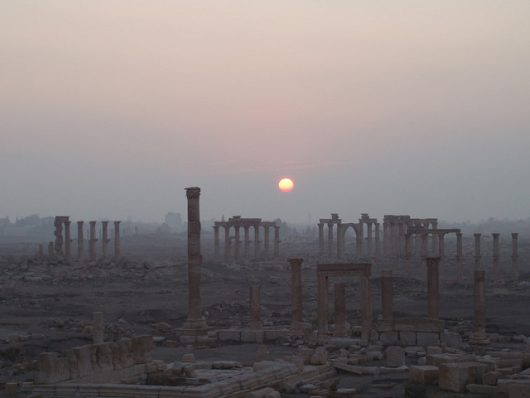
10 Facts About Syrian Refugees

10 Facts About Syrian Refugees
It has been six years since the outbreak of civil war in Syria that has resulted in a reported 470,000 Syrian deaths. The war began with anti-government demonstrations and escalated into armed opposition groups fighting the government after a violent crackdown on the protests. The ongoing threat of the civil war has caused 11 million Syrians to flee so far. Here are 10 facts about Syrian refugees:

  1. Of the 11 million people displaced by the conflict in Syria, five million Syrians are refugees. This means that the other 6.3 million are displaced within Syria.
  2. Four out of five Syrian refugees are children.
  3. In just over a year after the civil uprising began, 500,000 Syrian refugees had left their homes.
  4. Many Syrian refugees remain in the Middle East. They reside in countries such as Turkey, Lebanon, Jordan, Iraq and Egypt, although an estimated 10% have relocated to Europe.
  5. Many Syrians who fled into Northern Iraq are now trapped inside Iraq’s internal conflict. Because of the pre-existing conflict, Iraq struggles to meet the needs of the Syrian refugees.
  6. In order to flee, many Syrian refugees attempt to cross the Mediterranean Sea. Not all of them make it across alive.
  7. In January 2016, a reported 2,647 refugees fled to the United States, amounting to roughly 0.06% of the total refugee population.
  8. Around 40,000 Syrian refugees have fled to Canada.
  9. Nearly the entire population of Syria lives in poverty, with about 70% lacking access to clean drinking water.
  10. In 2016, the U.N. declared that $4.5 billion was required in order to meet the urgent needs of Syrians, yet only $2.9 billion was actually received.

These 10 facts about Syrian refugees illustrate the always-escalating nature of the crisis, showing that aid is needed more than ever before.

– Danyel Harrigan

Photo: Flickr

July 25, 2017
https://borgenproject.org/wp-content/uploads/borgen-project-logo.svg 0 0 Borgen Project https://borgenproject.org/wp-content/uploads/borgen-project-logo.svg Borgen Project2017-07-25 07:30:022024-12-13 17:58:2310 Facts About Syrian Refugees
Foreign Aid, Global Poverty, Politics, War and Violence

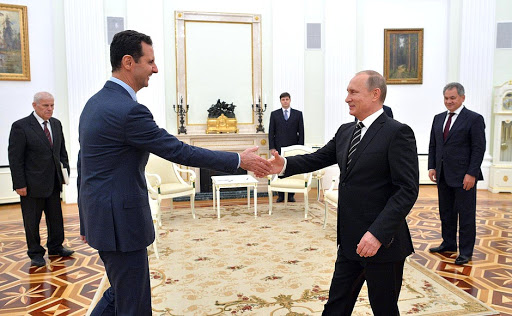
Assad Diverts Foreign Aid from Those in Need

The U.S has spent a total of $6 billion in Syria as of 2016. The need for this assistance is extensive. USAID estimated that there are 13.5 million people in need of humanitarian assistance in Syria. However, President Bashar al-Assad of Syria diverts foreign aid from those who need it. He uses it for political goals.

Every day, Russian aircraft drop tons of food in the government-controlled neighborhood of Deir Ezzor. This has saved the lives of countless Syrians in the city. However, in towns controlled by the opposition, countless Syrians starve. Through the use of systematic regulations, President Assad diverts foreign aid from those in need. He then uses foreign aid as a political tool to increase his authority. Syrian expert Joshua Landis said that the Syrian government needs to manipulate foreign aid because “food is loyalty.”

The U.N. admits that it can only work with a small number of partners approved by Assad. Assad’s wife and close friend run two of these partnerships. Other humanitarian relief contracts are awarded to individuals under sanction and members of the Syrian regime known for their brutality and oppression. This is because the Syrian relief effort is the most challenging and complex operation the U.N. has ever seen. This gives Assad more bargaining power. He diverts foreign aid only to areas he controls. He only allows the U.N. into the country without interference if they play by his rules.

Moreover, a Russian airliner company, Abakan Air, carries out the aid transportation. Two Russian nationals, Nikolai Ustimenko and his son Patel, own the company. Both have previously been barred from doing business with the U.N. on account of bribery. It is unclear to what extent they play in Assad’s distribution of foreign aid.

It wasn’t always this way. Initially, the U.N. and Syrian Red Cross delivered aid impartially to the Syrian people. However, as the world turned its attention elsewhere, the Syrian government began blocking aid deliveries to rebel-controlled towns.

Advocates of the foreign aid program point to the amount of good aid have done in the region. Even through the aid only affects certain areas, civilians in need are still being fed. They say it would be unfair to punish those civilians in desperate need by withdrawing aid.

The USAID and UNICEF have done well to give aid. However, it is not good enough. The fact that Assad diverts foreign aid must be addressed. People are starving in Syria and aid needs to be distributed equally.

– Bruce Truax

Photo: Google

July 15, 2017
https://borgenproject.org/wp-content/uploads/borgen-project-logo.svg 0 0 Borgen Project https://borgenproject.org/wp-content/uploads/borgen-project-logo.svg Borgen Project2017-07-15 01:30:572020-05-29 08:07:28Assad Diverts Foreign Aid from Those in Need
Disease, Global Poverty, War and Violence

Fighting Common Diseases in War-Torn Countries

Diseases in War-Torn Countries
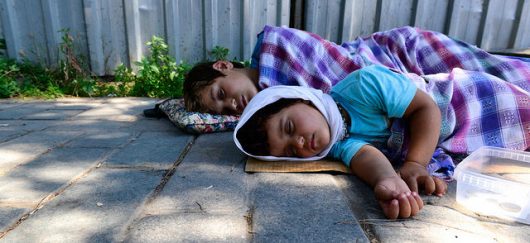
Poor sanitation, hygiene, overcrowding, medicine shortages and food insecurity are major issues in countries immersed in warfare. Nations such as Syria, Iraq, Afghanistan, Nigeria, South Sudan, Somalia, Libya and the Central African Republic face these issues. Consequently, diseases in war-torn countries are a major concern. Inadequate amounts of safe drinking water and nutritious meals in refugee camps endanger millions of lives. One child dies every 10 minutes due to preventable diseases.

The International Office of Migration recently declared that a rise in the number of individuals in refugee camps is coincident with the increase in the number of diseases in war-torn countries in Africa.

The following diseases are most prevalent among individuals who have been externally and internally displaced:

Malnutrition
Over 400,000 children in African countries under 5 currently suffer from acute malnutrition. Additionally, nearly 2.2 million children in Yemen are also suffering from severe cases of acute malnutrition. Malnutrition can exacerbate and give rise to other diseases, like cholera, tuberculosis and pneumonia.

Consequently, UNICEF is conducting localized vaccination campaigns and nutrition surveillance initiatives to address malnutrition. The World Health Organization (WHO) is working alongside health authorities and other partners to swiftly respond to the risks posed by life-threatening diseases in war-torn countries. Under the WHO, the Early Warning Alert and Response System (EWARS) is aiding in the training of health personnel and surveillance officers. It also assists with the effective detection of massive disease outbreaks.

Cholera
Cholera is growing very common in South Sudan. The Vibrio cholerae bacterium produces a distinct toxin that poisons cells. Once this condition aggravates, it is difficult to absorb water from the gastrointestinal tract. This results in the secretion of large volumes of water.

UNICEF-sponsored clinics are initiating oral-rehydration therapies and distributing water purification tablets to help those impacted.

Malaria
Malaria is becoming especially common among refugee camps along the Turkish-Syria border and many parts of Pakistan. It can culminate in the complete collapse of the body systems. Additionally, children are especially susceptible to this illness.

China has recently transported over 500,000 anti-malaria drugs to South Sudan to combat the threat of malaria. Over 400,000 individuals will benefit from this.

Polio
This disease is still endemic in countries like Nigeria, Pakistan and Afghanistan. Polio results in weaknesses in the muscles of the legs and diaphragm and paralysis. Immunization coverage is also quite poor in these places.

However, the Gavi Alliance board is supporting the Inactivated Polio Vaccine (IPV) as a way of addressing the humanitarian emergency it poses to refugees and vulnerable civilians. With the help of the Gavi initiative, immunization programs will become more routine and efficient in combatting such diseases in war-torn countries. The cost to extend the project until 2020 is over $250 million. The Bill and Melinda Gates Foundation, the Global Polio Eradication Initiative (GPEI) and the U.K. Department for International Development (DFID) currently spearhead the project.

Hepatitis E
This particular infection is essentially a liver disease and is caused by the HEV virus due to the consumption of contaminated food and water. The disease passes through the fecal-oral route. Hepatitis E impacts over 20 million individuals worldwide every year. The WHO’s Strategic Advisory Group of Experts (SAGE) on immunization has been reviewing the state of the disease and the immunogenicity of the vaccine since 2015.

Measles
An estimated of 2.6 million children under the age of 15 are at risk of contracting the disease in Yemen. The majority of women and children have not received vaccinations for more than 2 years. Also known as rubeola, measles can become very ubiquitous during periods of mass-displacement. It is an infectious and contagious disease that results in high fever and challenges to the respiratory system. The current lack of vaccination and immunization schemes is debilitating.

The Global Measles and Rubella Strategic Plan is a 10-year initiative conducted by the WHO and World Health Assembly from 2012 to 2020. It aims to ensure the control and elimination of measles.

Overall, it is vital to counter the risk of diseases in war-torn countries from becoming endemics in refugee camps and war-torn areas. Due to the close proximity in which people live in these zones, diseases and infections can become very widespread. But the current collaborative efforts undertaken by nonprofit and international organizations will go a long way in alleviating the problem.

– Shivani Ekkanath

Photo: Flickr
July 14, 2017
https://borgenproject.org/wp-content/uploads/borgen-project-logo.svg 0 0 Borgen Project https://borgenproject.org/wp-content/uploads/borgen-project-logo.svg Borgen Project2017-07-14 01:30:192024-05-28 00:02:57Fighting Common Diseases in War-Torn Countries
Global Poverty, Refugees, War and Violence

10 Facts About Senegalese Refugees


Located on the northwestern coast of Africa, Senegal is lauded as one of the most stable democracies in Africa. It is the only country in post-colonial Africa that has avoided a military coup against its democratic government. However, the democracy of Senegal still experiences lapses in its democratic process, a common ailment of African nations establishing independence post-colonization.

2004 marked the beginning of the most significant violent conflict in Senegal’s recent history. Located in the southwestern corner of Senegal lies Casamance, a province which has been vying for independence from the Senegalese government since 1982. Civil unrest in Casamance came to a head in 2004, with instances of violent conflict being documented well into 2014. The conflict between the Casamance rebels, known as the Casamance Movement of Democratic Forces (MFDC), and the official Senegalese military has displaced thousands and taken a serious toll on civilian life.

While a ceasefire was signed by both warring factions in 2014, fighting between the Senegalese army and the MFDC continues today, albeit at a much smaller scale. Little has been done to reincorporate internally displaced Senegalese people into the state and remediate the living conditions of those affected by the civil strife of the separatist movement. Below are 10 facts about Senegalese refugees and their status as liminal bodies in a warring state.

  1. Sixty percent of Senegal’s population lives on less $3.10 a day, making it extremely difficult for them to obtain even the most basic human necessities such as food, water, shelter and vaccines.
  2. The richest 20 percent of Senegal hold 46.9 percent of the country’s wealth, illustrating that those displaced by conflict have limited economic resources to rebuild their lives.
  3. The most recent data concerning casualties resulting from the conflict states that approximately 14 civilians, including persons of refugee and internally displaced status, have been killed since February. The continued destruction of human life despite the three-year-old cease-fire illustrates that the conflict still seriously threatens the stability of the nation.
  4. The Senegalese government reports that the MFDC has repeatedly looted local villages to fund its military campaigns. However, the only official report on this comes from a readily biased Senegalese account, illustrating that the control of information is perhaps detrimental to the nation’s democracy.
  5. According to the most recently conducted study, there are an estimated 62,638 internally displaced people (IDP) in and around Senegal as a result of this civil strife.
  6. While physical displacement is the most severe form of displacement, less extreme forms of displacement, including the postponing of infrastructure development, has decreased post-war job opportunities and caused economic stagnation.
  7. Stigmatization of the entire Casamance region has also had impacted civilian life and citizens’ ability to relocate and establish themselves within the larger Senegalese economy.
  8. Humanitarian efforts to aid IDPs have largely focused on conflict resolution and the rebuilding of infrastructure and have not necessarily addressed the most basic and urgent needs of returning IDPs.
  9. The number of non-military landmine deaths was estimated to be around 748 as of December 2008. Efforts to remove landmines exist but are typically run by the Senegalese government, which is more or less unresponsive to the needs of Senegalese refugees and IDPs located in war-torn areas.
  10. Corruption within the MFDC led to a largely war-based economy, which has since devolved into drug trafficking and has initiated a new wave of terror for the people of Casamance. Drug trafficking is especially heavy between Casamance and Guinea-Bissau, and some Senegalese refugees in this area have looked to the notoriously violent narco-trafficking trade for work.

While the recovery statuses of the Casamance region and the Senegalese refugees’ areas are problematic, political and social stability is slowly being reinstated. Approximately one-third of IDPs have returned home in recent years, and the worst of the bloodshed has subsided. Further international intervention seems to be required for complete resolution.

– Spencer Linford

Photo: Flickr

June 21, 2017
https://borgenproject.org/wp-content/uploads/borgen-project-logo.svg 0 0 Borgen Project https://borgenproject.org/wp-content/uploads/borgen-project-logo.svg Borgen Project2017-06-21 07:30:322024-05-28 00:02:1410 Facts About Senegalese Refugees
Human Rights, Politics and Political Attention, Refugees and Displaced Persons, Technology, War and Violence

Albert Einstein: The Refugee

Albert_Einstein_refugee
As the author of the theory of special and general relativity, his name stands synonymous with the word “genius.” Changing fundamental ideas about the physical relationship between space, time, and gravitation, Albert Einstein radicalized how humans think about the building blocks of the physical world we live in. His theory of relativity was confirmed in 1919 from further research into solar eclipses. His popularization by the press gained him a quick rise to fame and in 1921, Einstein would receive the Nobel Prize for his related work.

Being himself a German Jew, Einstein cultivated an outspoken political personality and was well known for his pacifist ideals. His work, paired with his political persona triggered negative attention from extreme right-wing groups.

Anti-Semites were determined to publicize his discoveries as “un-German”. The rise of the Nazi party made it more and more difficult for Einstein to work in Germany, so in 1932 when offered a position at Princeton University, he accepted, retaining dual U.S. and Swiss citizenship.

While his theories were still widely taught, he was ultimately accused of treason in 1933 by the Nazi Third Reich; winning the party a partial victory when Einstein’s name could no longer be mentioned in academic circles. Although Einstein was not in Germany at the time, Nazi fanatics still had his property seized and his books were among those burned on the famous May 10, 1933, as a symbol of purging an “un-German” spirit.

He fled to the United States on October 17th of that year, using his fame and financial resources to work vigorously with his wife to obtain U.S. visas for other German Jew refugees. Einstein had haunting mixed feelings about his life in Princeton:


“I am privileged by fate to live here in Princeton…In this small university town the chaotic voices of human strife barely penetrate. I am almost ashamed to be living in such peace while all the rest struggle and suffer.”


Among many notable others, the legacy of Albert Einstein’s refugee status resulted in the founding of the German Academic Refugee Initiative Fund (DAFI), an organization whose primary objective is to promote self-reliance of refugees through providing professional qualifications for future employment. In addition, DAFI contributes to the development of critical human resources that may be needed in the potential restoration of refugees’ home countries. DAFI also offers a scholarship project; an effective instrument used to attain and maintain self-reliance of refugees when used in the right context. The funds given from the scholarship must be used to aid in the academic studies of eligible refugee recipients.

Thus, Albert Einstein left us not only with mind-blowing new theories in physics, but a key organization telling us that education paves the road out of socioeconomic poverty.

– Kali Faulwetter

Sources: Azer, UNHCR, Jewish Virtual Library, PPU, OFADEC
Photo: Native Pakistan


Donate to fight global poverty.


June 18, 2017
https://borgenproject.org/wp-content/uploads/borgen-project-logo.svg 0 0 Borgen Project https://borgenproject.org/wp-content/uploads/borgen-project-logo.svg Borgen Project2017-06-18 03:00:462024-06-10 03:24:05Albert Einstein: The Refugee
Global Poverty, Refugees, War and Violence

10 Important Facts About Refugees in Saudi Arabia

Refugees in Saudi Arabia
The Syrian refugee crisis has become the worst humanitarian crisis of our time. Millions of people have been forced to make new homes in foreign countries. These countries often struggle to absorb the number of refugees needing homes. Some countries, such as Saudi Arabia and other Gulf countries, are opposed to opening their doors to people seeking refuge altogether. This article provides 10 facts about refugees in Saudi Arabia and a few problems they have experienced during their transition process.

10 Important Facts About Refugees in Saudi Arabia

  1. Refugees in Saudi Arabia have had a difficult time initially entering the country. Saudi Arabia has faced a series of criticisms for refusing to open their doors to these refugees.
  2. Social media, the news and human rights reports have taken turns in shaming Saudi Arabia for its refusal. Saudi Arabia denies these criticisms, saying that they have given residency to 100,000 people during the crisis.
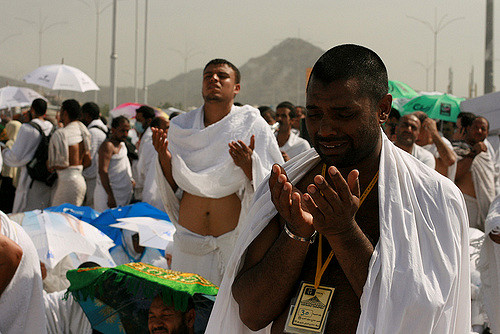
  3. The country is home to a tent city, Mina, spanning 20 square kilometers and holding about 100,000 tents. Refugees in Saudi Arabia have not been permitted to stay in these tents because they hold religious significance as a stop on the annual Hajj pilgrimage to Mecca. Each tent costs between $500 and $3,500.
  4. The Mina tent city has not been opened to people seeking refuge in Saudi Arabia because their government claims that this is not what such people want. The government has also voted against giving the displaced people the official designation of “refugee.”
  5. Due to increased criticism, in 2016 Saudi Arabia provided $75 million to aid refugees. However, with the number of people seeking refuge in Saudi Arabia continuously growing, the country continues to dismiss their status and refrains from putting them in refugee camps.
  6. Since Saudi Arabia is not a signatory to the U.N. Convention on Refugees, there is some discrepancy over the exact number of refugees in Saudi Arabia.
  7. The Office of the U.N. High Commissioner for Refugees (UNHCR) says there are between 100,000 and 500,000 refugees in the country, but some disagree that this number is not representative enough of the Saudi population of 31 million.
  8. A significant reason for Saudi Arabia closing its doors to people seeking refuge has to do with the Islamic State and Syrian Sunni Muslims. A majority of the refugees fleeing to Saudi Arabia are from Sunni areas of Syria–areas that play host to the Islamic State. Saudi Arabian forces have bombed these regions and want to know if the refugees are escaping ISIS or the bombings.
  9. The overarching reason that people seeking refuge in Saudi Arabia are being denied status or even shut out of the country has to do with issues of national security more than threats to demographic stability.
  10. The foreign ministers of the Gulf Cooperation Council have asked Saudi Arabia and the other Gulf countries also halting entry to refugees to find a solution to the crisis.

The Syrian refugee crisis continues to affect a large percentage of our world. The Syrians can no longer live in safety within their country, and so they seek safer lands. But the sheer number of refugees creates trouble for host countries trying to integrate refugees into society. This problem warrants a need for significant humanitarian aid and cooperation.

– Katelynn Kenworthy

Photo: Flickr

June 15, 2017
https://borgenproject.org/wp-content/uploads/borgen-project-logo.svg 0 0 Borgen Project https://borgenproject.org/wp-content/uploads/borgen-project-logo.svg Borgen Project2017-06-15 01:30:372020-06-25 19:08:0910 Important Facts About Refugees in Saudi Arabia
Global Poverty, USAID, War and Violence

5 Ways USAID Can Help Build Sustainable Peace in Colombia


The media’s obsession with Pablo Escobar and Colombia of the 1980s fails to highlight the massive achievements Colombia had in recent decades. Legitimate progress has been made in improving basic security and economic conditions. While Colombians in previous generations lived amidst some of the worst poverty and violence in all of the Americas, this has changed over the past 15 years. In 2016, the homicide rate in Colombia dropped to its lowest level since 1974.

International aid groups working with local communities were an indispensable part of these improving conditions. This stability has allowed for the government to seek a peace agreement with the FARC jungle insurgency that has been waging a guerilla war against the government for over half of a century. Here are five ways USAID can help build sustainable peace in Colombia.

Five Ways USAID Can Help Build Sustainable Peace in Colombia

  1. Delivering the $450 million of peace aid promised by the Obama administration that was recently allocated by Congress, can help achieve a more stable community. The Secretary of State still has the power to restrict funds and the Trump administration has considered reducing the total USAID budget by 30 percent, putting Colombia’s peace funds at risk. Colombian politicians to the right of conservative President Juan Manuel Santos have even tried to appeal to the U.S. Congress to freeze aid. A bipartisan effort must be made to protect the fragile peace in Colombia by continuing to grow the return on the aid investment in the country.
  2. Peace can be reached through increased protection of persecuted groups. Although homicides have been at a 45-year low, the targeted killing of labor organizers, human rights activists and former combatants has been steadily increasing in recent years. In 2016, there were 116 human rights workers killed, and 7,000 FARC members have yet to be reintegrated back into society. These killings undermine the rule of law fundamental to democracy and silence those trying to make necessary reforms.
  3. Syria is the only place with more internally displaced people than Colombia. Whenever possible, USAID should facilitate ways to help people move back to their homes. One successful land restitution initiative depended on ensuring owners land deeds and then paying them to improve their own abandoned farms, this way poor farmers could afford to stay and invest in their home for the season.
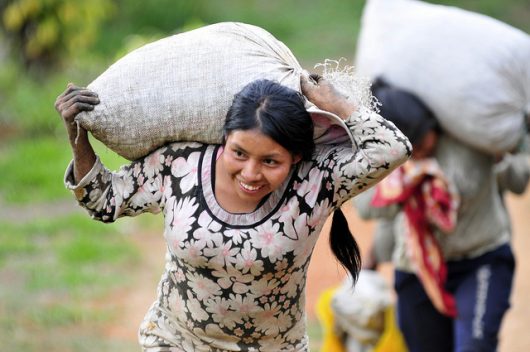
  4. Supporting Crop Substitution Programs, like Cacao for Peace, help farmers develop a sustainable living by teaching them to cultivate alternative crops to replace the illicit drug economy. Areas deep in FARC territory were previously not eligible to receive development funds spent in “pacified areas.” The scorched earth policy of dropping pesticides on coca fields has not worked. Coca crops have increased by 38 percent since the beginning of Plan Colombia. However, USAID’s track record developing crop substitution in pacified areas has been stellar. USAID’s Nebraska Mission aimed to teach rose farming to poor farmers. Fifty years later, roses are a billion dollar vital export industry for Colombia.
  5. Displaced people in Colombia generally move from the countryside to the city. When displaced residents living in makeshift slums outside Cartagena organized for better conditions, they were able to convince USAID to purchase ground for them to build what would become known as the “City of Women.” Women learned construction techniques, built a city, and were rewarded with deeds to their own homes. This not only empowers women economically, it helps them compete in the labor market. Now, it’s a model the government wants to replicate in other parts of the country.

There are considerable challenges to building a sustainable peace in Colombia. From reintegrating FARC members from the world’s oldest guerrilla war back into society to helping the nearly seven million internally displaced Colombians find adequate housing. However, these challenges shouldn’t discourage us from acting. Critics should note that extreme poverty was halved in Colombia from 2002-2014.

In the 1980s, Colombia was a failing state, today it is a stable American ally with a growing economy and a young fragile peace.

– Jared Gilbert

Photo: Flickr

June 13, 2017
https://borgenproject.org/wp-content/uploads/borgen-project-logo.svg 0 0 Borgen Project https://borgenproject.org/wp-content/uploads/borgen-project-logo.svg Borgen Project2017-06-13 01:30:492024-12-13 17:58:035 Ways USAID Can Help Build Sustainable Peace in Colombia
Global Poverty, Refugees, War and Violence

10 Important Facts To Know About Refugees in Argentina


As the Syrian refugee crisis continues to become the worst refugee crisis in recorded history (beating the 4.6 million Afghans who fled in 1992), it might be beneficial to know about refugees in Argentina, one of the most refugee-accepting countries.

10 Important Facts To Know About Refugees in Argentina

  1. High wages, economic prosperity, a good public education system and a liberal legal framework brought many European immigrants to Argentina between 1870 and 1914.  By the start of World War I, Argentina was one-third European.
  2. Although fewer in number, Europeans continued to immigrate to Argentina between the two World Wars and throughout the post-World War II era. However, by the end of 1960, most European migration to Argentina halted.
  3. With the ending of migration from Europe, regional migrant numbers became more significant. Interest in the job opportunities and a relatively beneficial currency exchange rate brought many regional migrants in the 1990s. Oddly enough, this became an issue as Argentina’s laws were increasingly restrictive, leaving many migrants susceptible to abuse.
  4. By the end of the decade, this led to a degree of contempt between natural-born Argentinians and migrants or refugees. The degree of the contempt was so harsh that even legislation denounced irregular migrants, and trade unions claimed they were stealing jobs.
  5. Argentina formally switched course, though, and signed a regional agreement, along with Brazil, Paraguay, Uruguay and Venezuela. The agreement recognizes the right to migrate, provides equal treatment for foreigners and the right to family reunification. It also established the “Patria Grande” program, granting residency and creating a process for foreigners to become permanent residents.
  6. Argentina signed a Memorandum of Understanding with the Office of the United Nations High Commissioner for Refugees (UNHCR) in 2005, dictating the guidelines for the admission of refugees in Argentina. Among the criteria for resettlement in Argentina are that immigrants are survivors of torture or violence, women at risk, or women with children or families with strong integration potential.
  7. Before refugees in Argentina are considered for visas, relatives or other Argentinian citizens must vouch for them. The process kicks off with a letter of invitation sent to the refugee family.
  8. In July 2016, Argentina announced it would accept 3,000 Syrian refugees.
  9. By making this announcement, Argentina was the first country to assist the European Union with the Syrian refugee crisis.
  10. On April 7, 2017, an international non-governmental organization, Blue Rose Compass, announced it would provide 1,000 university scholarships to young women, ages 18 through 34, who are Syrian refugees. The scholarships will grant the women humanitarian visas to Argentina and eventually allow them to register as citizens.

Hopefully, as the Syrian refugee crisis persists, Argentina will continue to represent itself as a role model for countries accepting refugees.

– James Hardison

Photo: Flickr

June 13, 2017
https://borgenproject.org/wp-content/uploads/borgen-project-logo.svg 0 0 Borgen Project https://borgenproject.org/wp-content/uploads/borgen-project-logo.svg Borgen Project2017-06-13 01:30:192024-05-28 00:02:0510 Important Facts To Know About Refugees in Argentina
Global Poverty, War and Violence

Attacks in Syria Targeting Syrian Healthcare Workers


The Geneva Convention declared in 1949 that targeting healthcare workers and hospitals is a violation of international humanitarian law. Yet in the past six years of conflict, more than 800 Syrian healthcare workers have been killed. More than half were due to bombings or shelling; at least 160 of these deaths were due to either torture or execution. The Syrian government and its allied forces are held responsible for 92 percent of these healthcare worker killings.

An analysis of attacks on healthcare facilities indicates that certain facilities are targeted to cut off access to care and potentially force civilian displacement. Repeated attacks on facilities are noted, with one specialty hospital built in a cave bombed six times already in 2017 and 33 times in the past three years. In 2016, there were almost 200 reported attacks on healthcare facilities.

Not only are healthcare workers in danger, but the attacks on healthcare facilities and the overall destruction due to conflict leaves many facilities without electricity, water or necessary equipment to treat and diagnose patients. In 2016, 95 percent of the doctors who had once worked in Aleppo, formerly the most populous city in Syria, had fled. Current estimates are that only 42 percent of the Syrian population lives in an area with a sufficient proportion of healthcare workers, while almost one-third live in an area where there are no healthcare workers at all.

Conflicts between Syrian healthcare workers and the government have been ongoing since 2011, when healthcare workers were arrested during protests. In 2012, the Syrian government declared that it was a crime to provide medical care to any persons injured in anti-government protests. Current targeting patterns indicates that the Syrian government views any facilities in opposition-controlled areas as terrorist affiliates and therefore legitimate targets.

Because of the low number of Syrian healthcare workers and the dangers they face, many healthcare professionals are trying to find innovative ways to help from outside of the country. A network of underground hospitals has been established, and cameras are being installed in facilities so that doctors can monitor patients and provide consultations remotely. Phone lights are used in underground hospitals that do not have access to electricity.

These solutions are beneficial, but until there is an end to the violence, Syrian healthcare workers are likely to continue to be targeted and care for victims of the conflict will suffer.

– Nicole Toomey

Photo: Flickr

June 4, 2017
https://borgenproject.org/wp-content/uploads/borgen-project-logo.svg 0 0 Borgen Project https://borgenproject.org/wp-content/uploads/borgen-project-logo.svg Borgen Project2017-06-04 07:30:352024-12-13 17:57:53Attacks in Syria Targeting Syrian Healthcare Workers
Global Poverty, War and Violence

Poverty in Angola: Oil, Corruption and Land Grabs


Poverty in Angola runs high; roughly 40 percent of the population currently lives below the poverty line. The combination of a long, drawn-out civil war, systematic political corruption and economic crisis have prevented the country from establishing itself as a stable and prosperous state since Angola received its independence from Portugal in 1975.

While Angola does not have many lucrative exports, oil does make an important contribution to the country’s economy. Between 2006 and 2016, it accounted for as much as 97 percent of exports on average each year and, while there has been some reinvestment into national infrastructure, the president, José Eduardo dos Santos, has received criticism for not redistributing the profits fairly and using the financial boost from oil exports to reduce poverty in Angola as much as he could have.

Beyond its meddling in the oil industry, other forms of government corruption and nepotism are also rife in Angola. One particularly prominent example is the appointment of the president’s daughter, Isabel dos Santos, to the position of chief executive of the state-run oil firm in 2016. Forbes ranks her the richest woman in Africa, and she has an estimated net worth of more than $3 billion. Meanwhile, there is extreme poverty in much of Angola and subsistence farming is the main source of income for the majority of her countrymen and women.

This over-reliance on oil causes another problem: Angola is especially vulnerable to the fluctuations in the global oil market. Just last year, a global drop in oil prices resulted in an economic catastrophe for Angola. This triggered a rise in prices on everything from food and fuel to healthcare, putting an even greater strain on the country’s poorest inhabitants. The situation was exacerbated when the government imposed tough austerity measures, a move the U.N. Committee on Economic, Social and Cultural Rights deemed regressive and concerning.

Meanwhile, in a bid to diversify the economy with additional sources of revenue, huge land grabs have taken place at the hands of government officials and private businesses. In many cases, citizens have been forcibly evicted without adequate housing alternatives and proper compensation. Instead, they have been resettled in makeshift housing with little access to amenities such as healthcare, education, water and electricity.

Even before this move, access to healthcare and education has been severely limited, helping to reinforce a cycle of poverty. So while progress – although slow – has been made in both areas since peace was established in 2002, there is still much progress to be made. More investment is needed in the country’s public services to alleviate levels of poverty in Angola.

– Rosie McCall

Photo: Flickr

June 2, 2017
https://borgenproject.org/wp-content/uploads/borgen-project-logo.svg 0 0 Borgen Project https://borgenproject.org/wp-content/uploads/borgen-project-logo.svg Borgen Project2017-06-02 11:29:552024-12-13 17:57:54Poverty in Angola: Oil, Corruption and Land Grabs
Page 8 of 20«‹678910›»

Get Smarter

  • Global Poverty 101
  • Global Poverty… The Good News
  • Global Poverty & U.S. Jobs
  • Global Poverty and National Security
  • Innovative Solutions to Poverty
  • Global Poverty & Aid FAQ’s
Search Search

Take Action

  • Call Congress
  • Email Congress
  • Donate
  • 30 Ways to Help
  • Volunteer Ops
  • Internships
  • Courses & Certificates
  • The Podcast
Borgen Project

“The Borgen Project is an incredible nonprofit organization that is addressing poverty and hunger and working towards ending them.”

-The Huffington Post

Inside The Borgen Project

  • Contact
  • About
  • Financials
  • President
  • Board of Directors
  • Board of Advisors

International Links

  • UK Email Parliament
  • UK Donate
  • Canada Email Parliament

Get Smarter

  • Global Poverty 101
  • Global Poverty… The Good News
  • Global Poverty & U.S. Jobs
  • Global Poverty and National Security
  • Innovative Solutions to Poverty
  • Global Poverty & Aid FAQ’s

Ways to Help

  • Call Congress
  • Email Congress
  • Donate
  • 30 Ways to Help
  • Volunteer Ops
  • Internships
  • Courses & Certificates
  • The Podcast
Scroll to top Scroll to top Scroll to top