• Link to X
  • Link to Facebook
  • Link to Instagram
  • Link to TikTok
  • Link to Youtube
  • About
    • About Us
      • President
      • Board of Directors
      • Board of Advisors
      • Financials
      • Our Methodology
      • Success Tracker
      • Contact
  • Act Now
    • 30 Ways to Help
      • Email Congress
      • Call Congress
      • Volunteer
      • Courses & Certificates
      • Be a Donor
    • Internships
      • In-Office Internships
      • Remote Internships
    • Legislation
      • Politics 101
  • The Blog
  • The Podcast
  • Magazine
  • Donate
  • Click to open the search input field Click to open the search input field Search
  • Menu Menu

Archive for category: War and Violence

Information and news War and Violence

Global Poverty, War and Violence

Conflict and Poverty in Eastern Congo

Eastern_Congo_Conflict_Poverty
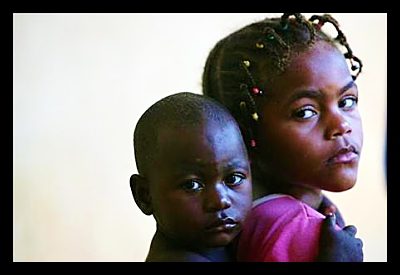
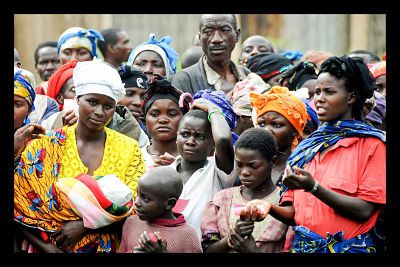
In spite of its massive natural resource endowments, the Democratic Republic of the Congo remains one of the poorest countries on earth, with a GDP per capita of just $194. This is in no small part due to a conflict that has been raging – at various levels of intensity – since the early 1990s. As a result, more than 5.4 million Congolese have died and over 2 million have been displaced. Widespread sexual violence and the use of child soldiers have deeply scarred communities and left them with little to no economic development. The ongoing instability and poverty in the eastern part of the country poses a threat not only to Congo’s development and stability, but also to that of its Central African neighbors.

Intercommunal hatred based on years of conflict, competition among armed groups over natural resources, and regional power struggles have fueled the instability in the region. The largest armed groups include the Rwandan Hutu militia FDLR, the M23 militia backed by Rwanda and Uganda, collections of “Mai Mai” militias, and the Congolese Army. The Lord’s Resistance Army (LRA) has also been known to operate in eastern Congo.

In addition, conflict minerals, notably gold, tin, tungsten, and tantalum, utilized in most consumer electronic products, are mined in eastern Congo. Due to worldwide demand for such products, the minerals offer massive spoils to any armed group able to control the mines. This has led to greater violence as groups fight one another over access to minerals.

The weak institutions and lack of government in the region have only encouraged conflict by allowing war criminals to act with impunity. And without a strict hierarchy or accountability measures, the Congolese military effectively acts as a large gang. Corrupt police forces and judiciaries also partake in violence or turn a blind eye to war crimes and human rights abuses.

Human and economic development in eastern Congo has been entirely derailed by the conflict. Sexual violence has both physically and psychologically harmed women and left them unable to care for themselves or their families. Similarly, the use of child soldiers has devastated communities by raising death tolls and making parents unable to protect their children from harm. A lack of trust between neighboring villages and communities has also eroded development and entrenched poverty by promoting isolation and discouraging trade.

In response to the ongoing crisis, the UN has provided the largest and most expensive peacekeeping operation in the world, MONUSCO, with 20,000 personnel and an annual budget of $1.4 billion. Celebrities such as Ben Affleck have called attention to the dire situation, and USAID has begun a Community Recovery and Livelihoods Project to address victims of sexual violence and the conflict minerals industry.

– David E Wilson

Sources: Enough Project, Eastern Congo Initiative, International Crisis Group 
Photo: World Vision Australia
August 2, 2013
https://borgenproject.org/wp-content/uploads/borgen-project-logo.svg 0 0 Borgen Project https://borgenproject.org/wp-content/uploads/borgen-project-logo.svg Borgen Project2013-08-02 05:00:392018-01-30 13:13:06Conflict and Poverty in Eastern Congo
War and Violence

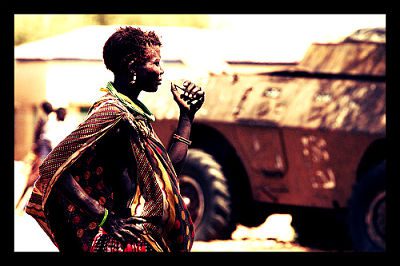
The Sudan and South Sudan Conflict 101

sudanese_conflict
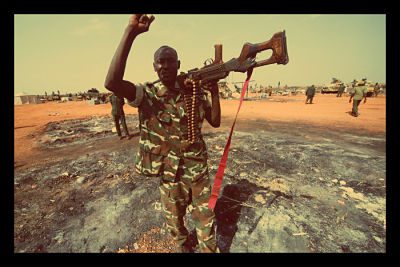
In order to understand the conflict between Sudan and South Sudan, it is necessary to understand the colonial history of Sudan. Sudan consisted of kingdoms and tribal communities until the Turko-Egyptian invasion of 1821. The Turko-Egyptian invasion was motivated by the expansionist ambitions of the Ottoman empire and its interest in commodities, such as slaves, ivory, gold, and timber. The Turko-Egyptian and North Sudanese collaborated against those of South Sudan and exploited them into slavery. Turko-Egyptian rule lasted for sixty years, but during this time, South Sudan was not fully incorporated under the new administration. The Mahdist administration, 1883-1989, also struggled to maintain control over South Sudan.

During this time, Belgium and France both attempted to maintain some control over Sudanese territory. However, after the French attempted to annex South Sudan to the French territories in West Africa, a conflict developed between the British and French over South Sudan known as the Fashoda incident. In 1898, Egyptian and British forces teamed up to reconquer Sudan. This incident resulted in the signing of the Condominium Agreement, which established Sudan’s current borders. France and Belgium eventually receded from Sudan, giving Britain-Egyptian forces full control over the country. During this time, Britain created separate administrative policies for South and North Sudan. These policies, which included immigration and trade laws, coupled with differing official languages, treated North and South Sudan as two separate entities.

British forces established an Advisory Council for North Sudan, in which all six provinces of North Sudan were represented and the council had the power to decide what was administered where. However, no such council was established in South Sudan. Rather, in 1946, British forces suggested that the North colonize the South. Since the South was not represented in the Council, the choice to colonize South Sudan was made without consulting anyone from the South and the South was betrayed by the British.

When Sudan achieved independence from British-Egyptian forces in 1956, independence was seldom felt in the South as the North assumed full control over the colonial state. The parliamentary republic, which was established at the onset of independence, failed to incorporate the South and this has led to years of civil unrest. Since achieving independence, the South has been politically marginalized, socio-economically ignored, if not retarded, and culturally subjugated by the North. The South, which is predominantly Christian and Animist, is culturally different from the Arab Muslim North. Yet, the North has used Islam as a weapon by denying basic rights to those who do not convert to Islam. In addition, the North has forced Islam and Arabization onto the Southern populations through educational systems which aim to kill indigenous languages and culture.

The military-led government of President Jaafar Numeiri agreed to autonomy for the South in 1972, but this Peace Treaty was undermined in 1979 when oil was discovered in South Sudan. After the discovery, the Numeiri government attempted to deny the South ownership of the resource by redrawing the southern boundaries to include the oil reserves. The new boundaries, however, violated the Addis Ababa Agreement which accepted the boundaries from colonial rule. Rather than improving the living standards of the Sudanese, it led to further conflict between the North and South. Civil war broke out in 1983 when Numeiri divided South Sudan into three regions, each with a governor appointed by himself, and declared Arabic the official language. To make matters worse, Numeiri imposed Shari’a law on all of Sudan. Since then, the government has waged war on South Sudan, whose forces are known as Sudan People’s Liberation Army (SPLA).

Throughout the 22 year conflict, Southern villages were ransacked and destroyed. Numeiri was eventually removed from power and replaced by Al-Bashir, who is supported by the Nationalist Islamic Front (NIF). Al-Bashir was able to maintain control until 1999, when SPLA forces began to gain control over large areas outside of more populated cities. In addition, SPLA forces made huge gains by attacking transportation lines and government forces. But by 2000, the South was hit with a widespread famine and the government did nothing to help its people. With the help of the United Nations and the United States, Operation Lifeline Sudan began to deploy food and supplies to areas affected by the conflict. By 2002, 2 million lives had been lost due to the genocide by the Bashir government. Throughout 2003 and 2004, the international community pressured the Sudanese government and the conflict began to die down.

In 2005, Sudan and South Sudan ended the 22 year conflict. The Comprehensive Peace Agreement (CPA) was underpinned by an agreement to 6 years of Southern autonomy, with a vote on succession at its end, split revenues from southern oil evenly between north and south sudan, islamic law in the north but to be voted on in the South, and if the succession vote was negative, the north and south were to combine forces. Six years later, in July of 2011, a vote for succession was held in Sudan and South Sudan gained independence from Sudan. Since then, South Sudan has been recognized by the international community after being accepted into the United Nations.

– Kelsey Ziomek

Sources: Global Witness, University of Pennsylvania, Pulitzer Center, University of Massachusetts
Photo: ABC

August 2, 2013
https://borgenproject.org/wp-content/uploads/borgen-project-logo.svg 0 0 Borgen Project https://borgenproject.org/wp-content/uploads/borgen-project-logo.svg Borgen Project2013-08-02 04:00:522024-12-13 17:49:36The Sudan and South Sudan Conflict 101
War and Violence, Women and Female Empowerment

Women in War

women-in-war_opt
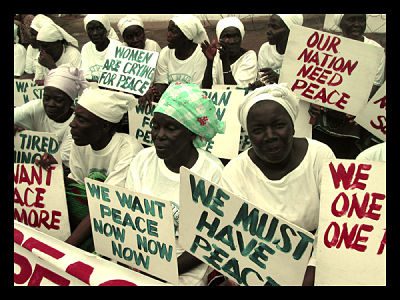
Women in War is the Harvard Humanitarian Initiative’s groundbreaking interdisciplinary approach to addressing problems that females face in impoverished and conflict-ridden states. By conducting research in affected areas, the program strives to produce pragmatic community and policy-based solutions.

Although Women in War has worked in countries ranging from Sierra Leone to Sudan, it has concentrated the majority of its efforts into ending sexual assault and violence against women in the Democratic Republic of Congo. For decades, DRC has been embroiled in what has been referred to as the greatest multistate war in the African continent.

Despite its estimated worth of $24 trillion in natural resources (DRC holds up to a third of worldwide diamond reserves), DRC’s annual GDP per capita of $171 is shockingly low. Just as political instability and social unrest have undoubtedly contributed to its struggling economy, they too have factored into the prevalence of sexual assault–often by military personnel–against civilians.

While the roots of gender-based violence are manifold, Jocelyn Kelly, an HHI Research Coordinator, postulates that soldiers–who are often enlisted at a young age through coercion–may justify rape by dissociating their actions from themselves as individuals. It has been noted that the crude process of army initiation dehumanizes the soldiers and strips them of their former identities. Moreover, among soldiers, there exists the superstitious belief that rape may lead to victory on the battlefield.

The aftermath of sexual assault is equally complex. Many women have been raped in the confines of their own homes and in front of their loved ones. Naturally, rape may also result in unwanted pregnancies and/or damage to a woman’s reproductive organs, thereby adding tangible reminders on top of psychological wounds. Women in War has sought the skills and expertise of both gynecologists and counselors to give survivors a new lease–both inside and out–on life.

A helping hand has also been extended to the perpetrators. Researchers have been developing methods to reintegrate traumatized ex-soldiers into civilian society. By recognizing the humanity inherent in both the survivor and the offender, Women in War serves as a beacon of hope in times of strife.

– Melrose Huang

Sources: Harvard Humanitarian Initiative, Women Under Siege Project BBC The OTC Investor Global Security PBS
Photo: Ms. Magazine

July 27, 2013
https://borgenproject.org/wp-content/uploads/borgen-project-logo.svg 0 0 Borgen Project https://borgenproject.org/wp-content/uploads/borgen-project-logo.svg Borgen Project2013-07-27 10:00:502024-05-25 00:09:35Women in War
Global Poverty, War and Violence

Post War Struggles: Poverty in Bosnia-Herzegovina

Poverty_in_Bosnia_Herzegovina
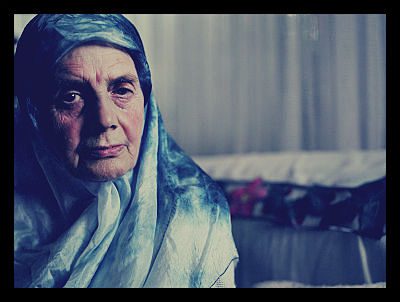
In 1992, a major conflict developed within Bosnia and Herzegovina. Serbians and Croatians living in Bosnia hoped to make the country a part of their own. Led by Slobodan Milosevic, the Serbians and Bosnians raged a violent war, resulting in over 100,000 lives lost. Years later, the remnants of the war are still inflicting damage on the citizens of Bosnia.

In total, 100 billion United States dollars worth of damage was inflicted on the country during the three-year war. Nearly half of the Bosnia-Herzegovina population fled the country following the war. This impact has been significant, making BH one of the poorest countries in Europe.

The majority of the poverty resides in rural areas, where the failures of the market economy have become evident. The damage from the war had a profound impact on the Bosnian farmers. Nearly ninety percent of their livestock were killed in the struggle and over half of their assets lost. These misfortunes have resulted in an extremely high unemployment rate. For farmers in an area where cultivation and agriculture is already difficult to make a living off of, these blows have been crippling.

Another reason for the high poverty rate in Bosnia and Herzegovina is the focus on post-war reconstruction. The majority of the areas that received support and rebuilding were the highly populated urban areas of the country. This left the citizens residing in rural areas, which make up the majority of the population, on their own.

The post-war poverty struggles have had the most significant impact on the women of Bosnia. Unable to form working skills and lacking the same civil rights as men, many women have become susceptible and vulnerable to prostitution and trafficking. The impact on women has severely affected Bosnian families. The amount of households headed by a woman has increased by one to four following the war. These women are often unable to obtain suitable incomes to support their children.

Bosnia-Herzegovina is a perfect example of the long-term impacts war can have on an economy and a society. They continue to try to lift themselves out of the devastation today.

– William Norris

Sources: Rural Poverty Portal, Mtholyoke.edu
Photo: A Woman’s War

July 26, 2013
https://borgenproject.org/wp-content/uploads/borgen-project-logo.svg 0 0 Borgen Project https://borgenproject.org/wp-content/uploads/borgen-project-logo.svg Borgen Project2013-07-26 09:42:102024-05-25 00:10:44Post War Struggles: Poverty in Bosnia-Herzegovina
Activism, Advocacy, Nonprofit Organizations and NGOs, War and Violence

Center for Civilians in Conflict

Center_for_Civilians_in_conflict
The Center for Civilians in Conflict is a non-profit organization that advocates for civilians threatened by armed conflicts around the world. The organization was founded in 2003 by Marla Ruzicka, an American political activist and aid worker who was concerned about the wellbeing of civilians who were indirectly harmed by U.S. bombs in the War on Terror.

Originally titled the Campaign for Innocent Victims in Conflict (CIVIC), Ruzicka’s startup received funding from the U.S. government to conduct aid operations specifically targeting hurting civilians in Iraq and Afghanistan. Ruzicka’s life tragically came to an end in April 2005 when she was killed by the blast from a suicide bomb in Baghdad. Since Ruzicka’s death, the Center for Civilians in Conflict (the new name of the organization as of 2012) has broadened its horizons to countries outside of Afghanistan and Iraq to further the legacy of an extraordinary humanitarian.

Today, the Center for Civilians in Conflict operates in Mali, Libya, Pakistan, Syria, and Somalia, in addition to Iraq and Afghanistan. The main areas of the Center’s work are these parts of the world that can be characterized as “conflict zones.”  Civilians who are threatened by a conflict are interviewed by CCC volunteers and the grievances of these civilians are documented and brought to the attention of the warring parties or military groups involved.

In January 2013 the Center assembled a roundtable of experts to analyze the outcome of U.S. military involvement in the Syrian civil war. The specialists utilized data collected from interviews from CCC field missions in Syria, Lebanon, Turkey, and Jordan in 2012. The interviewers obtained information from a large number of sources including “leaders of the political and armed opposition, Syrian army defectors, UN agencies, local and international NGO staff, government and military officials, lawmakers, diplomats, doctors and nurses, journalists, civil society activists, and religious leaders.”

The panel concluded that a five-point plan of action must be instituted by the US military if they chose to become involved in Syria. This is only one example of the thorough way in which the Center for Civilians in Conflict contributes to the protection of innocent civilians in conflict zones.

According to the organization’s website, the Center for Civilians in Conflict identifies themselves as “advocates and advisers creating policies and practices to make warring parties more responsible to civilians before, during, and after combat operations.”  This expectation of “responsibility” on the part of the perpetrators is one of the hallmarks of CCC, making it an effective and singular champion for noncombatant victims of war.

– Josh Forget

Source: Foreign Affairs, Civilians in Conflict

July 18, 2013
https://borgenproject.org/wp-content/uploads/borgen-project-logo.svg 0 0 Borgen Project https://borgenproject.org/wp-content/uploads/borgen-project-logo.svg Borgen Project2013-07-18 08:40:352024-05-25 00:00:42Center for Civilians in Conflict
Global Poverty, War and Violence

Do War Crimes Affect the World’s Poor?

War_Crimes_Poverty
For hundreds of years, humans have been developing the modern-day laws of war to determine what is legal in the context of armed conflict. For the most part, such laws have been set to govern international armed conflict, such as the Geneva Conventions. Nonetheless, the Internet, traditional media sources, and social media connect us to daily atrocities, carried out under the guise of war that continue to violate international humanitarian law and prey on the extreme poor. As a result of violations that inhibit domestic and international aid, millions of people face hunger and disease in association with extreme poverty that goes unaddressed by international courts.

In 1945, when WWII was won by the Allied Forces, with 6 million dead in concentration camps, the responsible Nazi officers were tried for war crimes. All of the Allied nations, though not initially supporting the format of the trials themselves, backed the justice meted out by the Allied courts as a response. Some of the officers faced death, while others were sentenced to prison.

Today, the international body charged with bringing justice to war-torn nations, the International Criminal Court, fails to be recognized by the United States and many other influential countries that affect the global-political environment of the United Nations. Without having all countries as signatories, the ICC struggles to address atrocities being committed in some of the world’s poorest and most disenfranchised communities.

Because the ICC depends on participation from countries hosting alleged criminals to assert jurisdiction over the criminals within that host country’s borders, a lack of participation effectively cripples the ability of the Court to perform its duties in upholding international humanitarian law. In some cases, domestic courts are left to deliver justice, which, in the context of Syria, becomes all but impossible, seeing as the target of charges is the country’s president.

Because the poorest communities are often targeted by the perpetrators of war crimes, such as leader of the Lord’s Resistance Army Jospeh Kony, it may be all the more necessary that international courts acquire jurisdiction over these otherwise ungoverned warlords. The most impoverished are often the first casualties of war and feel the effects of a diminished food supply, lacking sanitation, and inadequate first aid facilities. Refugees of war in Africa and Asia are particularly vulnerable in the face of natural disasters and the long-term effects of climate change.

– Herman Watson

Source: USHMM, International Criminal Court, WarChild UK
Photo: Save the Children

July 12, 2013
https://borgenproject.org/wp-content/uploads/borgen-project-logo.svg 0 0 Borgen Project https://borgenproject.org/wp-content/uploads/borgen-project-logo.svg Borgen Project2013-07-12 13:46:032024-05-25 00:03:14Do War Crimes Affect the World’s Poor?
War and Violence

Angola Remains in Poverty Despite Economic Growth

Angolan children in Uige Angola
Though Angola is one of Africa’s leading exporters of oil, the country ranks 148 out of 187 countries on the United Nations Human Development Index. More than a decade has passed since a 27-year civil war displaced millions of Angolans and killed thousands more.

While the violent conflict involving three liberation movements and several foreign interventions has come to an end, many of Angola’s people continue to live in poverty.

Angola’s GDP has improved significantly since the war ended in 2002, growing 12 percent in 2012. Despite this progress, 67.4 percent of the country’s population lives on less than $2 a day, down from 70.2 percent in 2002. This reduction shows that poverty rates are decreasing, but the economy is growing at a much faster rate.

Foreign investors have provided funds for a national reconstruction program to rebuild the infrastructure destroyed during the civil war. The slums to which many fled during the war are being made over, and landmines are being cleared from formerly uninhabitable areas of the countryside.

While economic indicators seem to tout Angola’s transformation from a war-stricken wasteland to an up-and-coming African power, social indicators reveal that poverty remains an issue yet to be addressed.

President Jose Eduardo Dos Santos and the ruling MPLA party fiercely protect Angola’s image, controlling everything from the country’s economy to private media, but the peaceful image they project is far from the reality of most Angolan citizens.

While Angola’s investors and leaders enjoy immense material wealth, the country remains one of the most undeveloped states in the world. One in five children die before reaching the age of five, and almost 66 percent of people live in slums. Life expectancy hovers at around 51 years.

As Angola becomes an important part of the global economy, millions of its citizens continue to suffer from the long-lasting effects of a brutal civil war and a government focused more on abstract economic measures than true social change.

– Katie Bandera

Source: BBC, United Nations, Rural Poverty Portal
Photo: Reuters

July 11, 2013
https://borgenproject.org/wp-content/uploads/borgen-project-logo.svg 0 0 Borgen Project https://borgenproject.org/wp-content/uploads/borgen-project-logo.svg Borgen Project2013-07-11 04:00:012024-05-24 23:57:45Angola Remains in Poverty Despite Economic Growth
Refugees and Displaced Persons, War and Violence

Global Displacement by the Numbers

Displaced_refugees_Syria

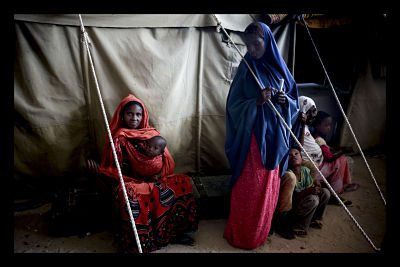
Every day an entire town’s worth of people is rendered homeless.

23,000 persons per day are forced to flee their homes, according to a United Nations report. By the numbers, this is akin to the evacuation of entire American towns. Due to conflict or persecution, these persons must rely on aid provided by various domestic and international organizations, placing strain on already weakened local economies and food supplies. The vast majority of these persons – over 80% – are hosted by developing nations.

Not only are local economies suffering as a result of displacement, the burden is also felt by the United Nations Refugee Agency (UNHCR), which logged some 35.8 million persons of concern in 2012. As a reference point, the population of California, the largest state in the U.S, is approximately 38.1 million people. In Pakistan, the number of refugees in relation to economic capacity is 552 persons to every $1 of GDP per capita, an astonishing statistic by our measurements.

In response to displacement concerns in Syria, a state in which 70% Palestinian refugees are displaced by conflict in addition to the Syrians themselves, the Obama administration has authorized an additional $300 million in humanitarian relief funds. This brings the total amount of aid given to Syria to nearly $815 million, making the U.S. the single-largest contributor of humanitarian assistance to the Syrian people.

These contributions will be used “to help feed, shelter, and provide medical care for children, women, and men affected by the ongoing conflict in Syria,” according to a recent press release from the White House. The move is especially significant for efforts to increase global poverty relief and awareness in U.S. foreign affairs as it represents a clear recognition of an American responsibility to protect people worldwide.

In spite these commendable contributions, there remains a wide discrepancy between the number of refugees being hosted by developing countries and nations more capable of hosting displaced persons. To wit, UNHCR’s recent report  shows that more than half of the refugees under UNHCR’s mandate resided in countries where the GDP per capita was below $5,000 in 2012. Pakistan and Iran hosted the largest number of refugees. Clearly, there is a great need for the U.S. and other developed countries to support refugees and the countries that host them.

– Herman Watson

Source: New York Times, UN Refugee Agency, Huffington Post, NBC News, The White House
Photo: NBC News

July 5, 2013
https://borgenproject.org/wp-content/uploads/borgen-project-logo.svg 0 0 Borgen Project https://borgenproject.org/wp-content/uploads/borgen-project-logo.svg Borgen Project2013-07-05 05:25:142024-06-10 03:35:09Global Displacement by the Numbers
Economy, War and Violence

Civil War and Economy in Sierra Leone

Economy in Sierra Leone
The Sierra Leone civil war destroyed the national economy, making it one of the poorest countries in the world. The civil war that ravaged the small west African nation from 1991-2002 was the impetus for a huge displacement of people within Sierra Leone, leading to a downturn in the economy that left almost 75% of the population living in extreme poverty.

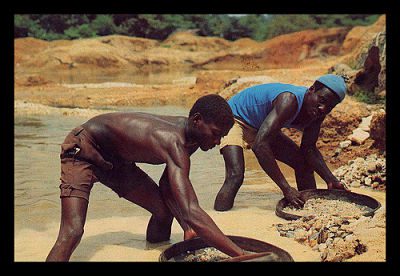
Sierra Leone’s main export is diamonds. Diamonds have created a significant wealth gap in Sierra Leone that has benefited the rich and paralyzed the poor for decades. The country’s dependence on this single mineral resource impedes economic growth. In order for Sierra Leone to lift itself out of abject poverty, the economy must diversify. Economic diversification is exceptionally difficult, however, with around 50% of the adult working population working in subsistence agriculture. Luckily, the IMF set up a program in 2010 to deliver $45 million to Sierra Leone through 2013.

Over the last few years, Sierra Leone has developed its offshore oil resources as another source of income. This, however, does not negate the enormous need for international aid to power the development process and prevent increased in inequalit in Sierra Leone. In order for the economy to stabilize, foreign aid must be delivered on a consistent basis and domestic peace must be preserved at all costs.

– Josh Forgét
Source: BBC News, Rural Poverty Portal, CIA World Factbook
Photo: Human Trafficking Movie Project

June 25, 2013
https://borgenproject.org/wp-content/uploads/borgen-project-logo.svg 0 0 Borgen Project https://borgenproject.org/wp-content/uploads/borgen-project-logo.svg Borgen Project2013-06-25 05:54:152024-06-05 01:53:33Civil War and Economy in Sierra Leone
Development, Foreign Policy, Global Poverty, Human Rights, Human Trafficking, Politics and Political Attention, Refugees and Displaced Persons, USAID, War and Violence

Afghan Child Refugees Flee to Europe

afghanistan-refugees
As citizens of the United States, we hear a lot about the war in Afghanistan. We hear about what the U.S. is doing, our withdrawal timeline, attacks and progress. What we don’t hear about is how the war has affected Afghan citizens, and what life has been like for them.

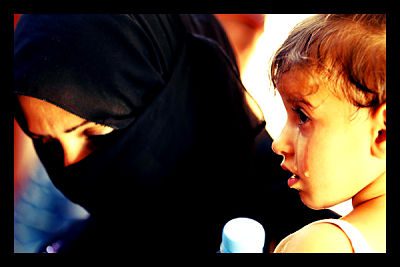
Right now in Afghanistan, there is a mass exodus of teenage boys who are fleeing Afghanistan. These Afghan child refugees are headed on a 10,000-mile journey towards Europe, where, if they are lucky enough to live and arrive in Europe, they may be able to seek asylum. Teens are forced to trust in smugglers who transport them in secret compartments in vans and truck, or take them on dangerous water crossings with low survival rates.  Many of the boys who take on this journey die in the process, with estimates as low as 35% of boys making it to Europe.

Additionally, Afghan boys are at risk for sex trafficking on their journey. Many of the boys are sexually abused, or turned into sex slaves by their smugglers. They are powerless to the smugglers, who control their livelihood and safety. Many children may also be diverted into menial jobs as they try to save money to pay smugglers for future legs of their jouney. Boys disappear often, and anonymously. They are incredibly vulnerable and very susceptible to kidnappers.

The deaths and disappearances of these boys are, in part, a result of their vulnerability and poverty. The poorer and less educated the boys, the bigger risk they may suffer. Additionally, some of the children may be experiencing post-traumatic stress from the war-related events that they may have witnessed in Afghanistan. The children are also subject to the constant threat of deportation, as most of them do not have legal status or documentation.

The lack of legal status can have many implications on the children. They could be exposed to organized crime, physical abuse, and child labor, as well as the previously mentioned sex trafficking. In several of the countries through which the boys travel, such as Greece, unaccompanied children are not guaranteed asylum or refugee status. Those children who are caught, deported, and sent back to Afghanistan may be at an even greater risk if returned. The plight of young Afghans is undoubtedly a serious human rights violation and one that should be more widely covered by mainstream media.

– Caitlin Zusy 

Sources: 60 Minutes, 60 Minutes, UNHRC
Photo: The National

June 5, 2013
https://borgenproject.org/wp-content/uploads/borgen-project-logo.svg 0 0 Borgen Project https://borgenproject.org/wp-content/uploads/borgen-project-logo.svg Borgen Project2013-06-05 04:11:062024-05-24 23:54:08Afghan Child Refugees Flee to Europe
Page 20 of 20«‹181920

Get Smarter

  • Global Poverty 101
  • Global Poverty… The Good News
  • Global Poverty & U.S. Jobs
  • Global Poverty and National Security
  • Innovative Solutions to Poverty
  • Global Poverty & Aid FAQ’s
Search Search

Take Action

  • Call Congress
  • Email Congress
  • Donate
  • 30 Ways to Help
  • Volunteer Ops
  • Internships
  • Courses & Certificates
  • The Podcast
Borgen Project

“The Borgen Project is an incredible nonprofit organization that is addressing poverty and hunger and working towards ending them.”

-The Huffington Post

Inside The Borgen Project

  • Contact
  • About
  • Financials
  • President
  • Board of Directors
  • Board of Advisors

International Links

  • UK Email Parliament
  • UK Donate
  • Canada Email Parliament

Get Smarter

  • Global Poverty 101
  • Global Poverty… The Good News
  • Global Poverty & U.S. Jobs
  • Global Poverty and National Security
  • Innovative Solutions to Poverty
  • Global Poverty & Aid FAQ’s

Ways to Help

  • Call Congress
  • Email Congress
  • Donate
  • 30 Ways to Help
  • Volunteer Ops
  • Internships
  • Courses & Certificates
  • The Podcast
Scroll to top Scroll to top Scroll to top