• Link to X
  • Link to Facebook
  • Link to Instagram
  • Link to TikTok
  • Link to Youtube
  • About
    • About Us
      • President
      • Board of Directors
      • Board of Advisors
      • Financials
      • Our Methodology
      • Success Tracker
      • Contact
  • Act Now
    • 30 Ways to Help
      • Email Congress
      • Call Congress
      • Volunteer
      • Courses & Certificates
      • Be a Donor
    • Internships
      • In-Office Internships
      • Remote Internships
    • Legislation
      • Politics 101
  • The Blog
  • The Podcast
  • Magazine
  • Donate
  • Click to open the search input field Click to open the search input field Search
  • Menu Menu

Archive for category: War and Violence

Information and news War and Violence

Global Poverty, War and Violence

Five Things to Know About the Bosnian War

 Bosnian War
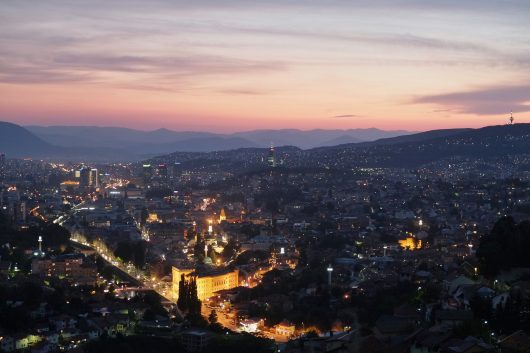
Between the years of 1991 and 1992, the country of Yugoslavia suffered mass chaos as nationalism in six different regions of the country began to surge. This was due in large part to growing perceptions of ethnic distinctions and a faltering economy. This time gave rise to intense violence and ethnic cleansing throughout the region, resulting in the Bosnian War. Here are five things to know about the Bosnian War:

    1. On March 3, 1992, Bosnia (now Bosnia-Herzegovina) declared its independence from Yugoslavia, following in the footsteps of neighboring Croatia, Slovenia and Macedonia from the previous year. The official beginning of the Bosnian War is typically marked as April 6, 1992, when Bosnian Serb forces invaded the capital of Sarajevo.
    2. Three primary ethnic groups were embroiled in the conflict: the Bosniaks, Bosnian Muslims who comprised more than 44% of the population; the Bosnian Serbs, who predominately practiced Eastern Orthodox Christianity (31% of the population) and Bosnian Croats, a Catholic minority who comprised 17% of Bosnia’s populace at the time.
    3. Reelected to the Serbian presidency in 1992, Slobodan Milošević encouraged rising nationalist sentiments within the region and backed the attacks on Sarajevo, as well as the siege on Srebrenica on July 11, 1995. Serbian forces invaded the town, which had previously been designated a safe haven by the U.N., and separated the Muslim Bosniaks from the rest of the population. The women and girls — many of them raped and sexually assaulted — were bussed to nearby villages, while the remaining 8,000 Muslims were murdered and left in mass graves.
    4. By the end of 1993, Bosnian Serbs controlled 70% of the country, and most Bosnian Croats had fled. The term “ethnic cleansing” arose, a painful euphemism for the thousands that had been expelled, tortured, raped and murdered at the hands of Serbian forces. Many were forced into concentration camps, while vestiges of Bosniak culture, including places of worship and sites of cultural importance, were destroyed.
    5. In May 1993, the U.N. created the first war crimes tribunal since the Nuremberg Trials in 1945-1946, which indicted Nazi officials for crimes against humanity. The International Criminal Tribunal for the Former Yugoslavia (ICTY) charged more than 160 individuals for their participation in the violence, including Slobodan Milošević, who was tried and convicted in 2002 of war crimes, crimes against humanity and genocide. He was found dead in his prison cell in The Hague in 2006 following a heart attack.

From 1992 to 1995, the Bosnian War claimed the lives of roughly 100,000 people, 80% of whom were Bosniak — the worst act of genocide since the Holocaust. To date, almost 120,000 of the original 2.2 million people displaced by the conflict still live in bleak conditions in refugee centers far from their homes.

– Emily Marshall

Photo: Flickr
February 20, 2017
https://borgenproject.org/wp-content/uploads/borgen-project-logo.svg 0 0 Borgen Project https://borgenproject.org/wp-content/uploads/borgen-project-logo.svg Borgen Project2017-02-20 01:30:002020-06-01 14:27:54Five Things to Know About the Bosnian War
Aid, War and Violence

Eight Facts About the Libyan Crisis

8 Facts About the Libyan Crisis
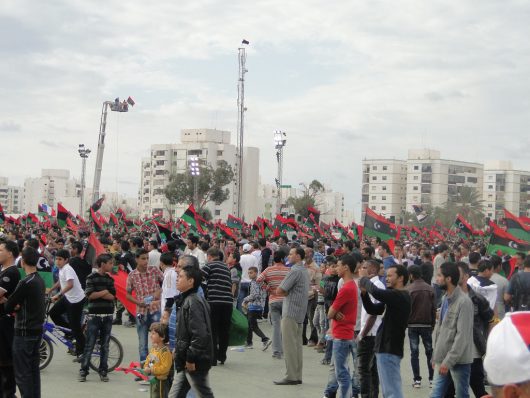
Disputes in Libya date back to the 7th century when the Arabs conquered Libya and first spread Islam. Since then, it has developed first into a united country, then into a divided one. Now, the Libyan crisis is worsening. Here are eight facts about the Libyan crisis:

  1. Conflict in Libya has a long history. The beginning of the conflict in Libya dates back to the 7th century when Islam spread widely and became the national religion. In 2011, Arab Spring protests led to the first civil war in Libya.
  2. The conflict that led to the 2011 civil war began in 1969. Muammar Gaddafi led a group of military officers in a protest against King Idris in 1969, which landed Gaddafi in power of the new Libyan African Republic. As all power and wealth within Libya were under Gaddafi’s control, many pro-monarchy civilians lashed out, and anti-Gaddafi groups formed.
  3. Protests in neighboring countries spurred the war on. Word spread of revolts in neighboring countries, which inspired protests in Benghazi and other cities in Libya. War broke out in early 2011 as rebels opposed the Gaddafi government, but security forces defeated them. With the National Transitional Council, the main opposition group, now recognized as the new Libyan government, the first civil war ended in October 2011. The second civil war began in 2014, as the conflict began between various rebel groups seeking control of Libyan territory.
  4. During the Libyan civil war of 2011, it is estimated that between 10,000 and 15,000 people were killed. Death sources are from rebel sides, government forces and civilians. To date, since the 2014 crisis broke out, there have been 5,871 civilian deaths in Libya.
  5. Countries across the world have aided Libya’s citizens in a number of ways. Over the course of the Libyan crisis, the European Union has given almost $160 million in aid. Aid came in different forms: civilian resources, transportation, sanitation, healthcare resources, food supplies. Many other countries around the world have also donated generously, but those within the EU take the lead as a combined force.
  6. The Libyan crisis has produced thousands of refugees who flee to neighboring countries, for example, Egypt, seeking asylum. In May 2011, already around 746,000 people had fled Libya since the beginning of the War. Most Libyans fled to Italy, where 36,222 refugees currently reside. Surrounding European countries also continue to allow migrants to seek refuge.
  7. Gaddafi’s capture was a major turning point. The rebels captured and killed Colonel Gaddafi on Oct. 20, 2011. This is a key event within the Libyan crisis because the beginning of the conflict started with pro-Gaddafi forces and anti-Gaddafi rebels.
  8. International organizations tried to help Libya in solving civil issues. In March 2011, the United Nations Security Council issued a no-fly zone over Libya. NATO then authorized air strikes in order to protect civilians. Many countries give help by providing Libya with vital resources for its citizens, such as warmth, food and shelter.

For now, Libya continues its division while the international community continues providing aid. Recently, African leaders have held a mini-summit in Congo to discuss what further action is necessary. They decided that lifting the arms embargo was necessary to begin a more proactive approach to ending the war in Libya. Over 29 countries in the Middle East and Europe are continuing to open their borders to refugees, which is the greatest help that Libyan citizens can receive at present.

– Georgia Boyle

Photo: Flickr

February 19, 2017
https://borgenproject.org/wp-content/uploads/borgen-project-logo.svg 0 0 Borgen Project https://borgenproject.org/wp-content/uploads/borgen-project-logo.svg Borgen Project2017-02-19 01:30:372020-06-01 14:32:43Eight Facts About the Libyan Crisis
War and Violence

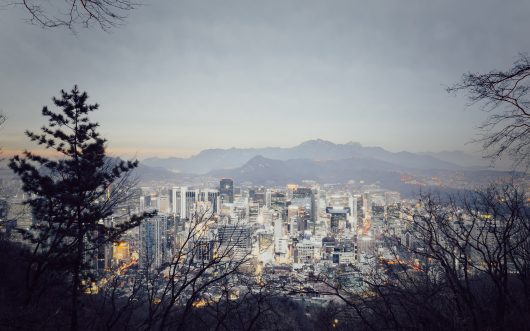
Ten Facts About the Korean War

 Korean War Facts
After World War II, the Korean War displayed the growing, global rivalry between the leading superpowers at the time, the United States and the Soviet Union. Engaged in “limited war,” the U.S. aimed to protect South Korea instead of totally defeating its enemy. The public was accustomed to total victories from World War II, therefore the Korean War is a forgotten war for many Americans. However, Koreans live and breathe the effects of the first “limited war” between the U.S. and the Soviet Union. Below are crucial Korean War facts and how the forgotten war continues to impact Koreans.

Top Korean War Facts

  1. The Korean War (1950-1953), juxtaposed with Japan’s colonization of Korea (1910-1945), continued a painful history for many Koreans. As colonized people, Koreans suffered repeated abuse and violations. The Japanese forced comfort women, as young as middle school girls, to become sex slaves. Against their wills, Koreans were sent to work in Japan’s factories and to fight on the front lines of World War II. When the U.S. dropped the atomic bomb on Hiroshima, the number of Koreans thought to be killed in the bombing was more than 20,000.
  2. In August 1945, the Japanese Empire fell, and two young colonels temporarily divided the Korean peninsula in half along the 38th parallel, without consulting the Korean government. The Cold War brought a new set of challenges. South of the border, the U.S. reluctantly backed Syngman Rhee, the anti-communist dictator. Supported by the Soviets, Kim Il Sung, the communist dictator, reigned north of the border. As South Korea prepared to elect their leader, the Soviet Union blocked free elections in the North.
  3. On June 25, 1950, the North Korean People’s Army crossed the 38th Parallel. After three days, South Korea’s capital, Seoul, fell to the communists.
  4. In July 1950, U.S. troops entered the Korean War. In the eyes of the U.S., the Korean War was a war against international communism. Harry S. Truman said, “If we let Korea down, the Soviets will keep right on going and swallow up one after another.” Sixteen U.N. members contributed combat forces that were led by General Douglas MacArthur, commander of U.N. forces in Korea.
  5. MacArthur’s Operation Chromite, a surprise amphibious landing at Incheon, dealt with skepticism because of the city’s narrow port and extreme tides. On Sept. 15, 1950, MacArthur’s amphibious assault successfully pushed North Koreans out of Seoul and to their side of the 38th parallel, shifting the tides of the Korean War.
  6. Yet MacArthur’s successes became a dangerous flaw. In the past, the general successfully defended Bataan and Corregidor; in World War II, he conquered the Japanese in the Southwest Pacific. After pushing the North Koreans back, MacArthur confidently pressed upward to achieve his vision of unifying the Koreas, ignoring Chinese warnings of retaliation in response to further U.S. encroachment near their lands. When his troops pressed forward into North Korea, China entered the war and annihilated South Korean and the U.N. troops.
  7. Fearing escalated fighting with China would draw the Soviets into the Korean War, Truman fired MacArthur for insubordination. MacArthur’s wishes to wage war conflicted with President Truman’s agenda to maintain peace in Europe. In one instance, the general publicly threatened to bomb China.
  8. Civilian casualties amounted to more than half of total casualties during the Korean War. (In 2012, the Washington Post argued that the U.S. largely ignores civilians who die in military interventions. When looking at Iraq and Afghanistan, the article argues that U.S. leaders, emboldened by the public overlooking the civilian costs associated with each war, pursue greater international interventions.)
  9. Although an armistice was signed on July 27, 1953, the war technically continues today. In 1974, a North Korean agent assassinated Park Chung-hee, mother of current South Korean President Park Geun-Hye. In March 2010, a North Korean submarine torpedoed a South Korean warship, killing 46 sailors. To this date, a peace treaty has not been signed.
  10. After the Korean War, the U.S. national defense budget increased. South Korea immediately became poor; children survived on food donations like powdered milk. On the other hand, North Korea quickly recovered with Soviet and Chinese support. North Korea’s army became, and still remains, one of the largest armies in the world. However, North Korea‘s economy collapsed with the decline of the Soviet Union.

Today, South Korea has become the first nation in the Organisation for Economic Co-operation and Development (OECD) to shift from being a recipient into a donor. In fact, since the 1960s, South Korea has increased its per capita GDP, which was once less than $40, more quickly than any of its neighbors. However, skirmishes between the two countries are frequent and fatal. Because the Korean War never ended, one wrong move could result in an expanded conflict.

– Andy Jung

Photo: Flickr

February 19, 2017
https://borgenproject.org/wp-content/uploads/borgen-project-logo.svg 0 0 Borgen Project https://borgenproject.org/wp-content/uploads/borgen-project-logo.svg Borgen Project2017-02-19 01:30:112024-05-27 23:58:59Ten Facts About the Korean War
Children, Refugees, War and Violence

Three Reasons to Welcome Refugees

Welcome RefugeesThe current refugee situation has been called the worst humanitarian crisis of our time. In 2015, the United Nations High Commissioner for Refugees (UNHCR) estimated that there were more than 65 million forcibly displaced people worldwide. More than half of all refugees come from three countries: Syria, Afghanistan and Somalia. For the countries to which these refugees have fled, the massive influx of displaced persons is often viewed as a burden. However, with the right policies and integration services, host countries can benefit from them. Here are three reasons to welcome refugees:
  1. Successful integration can lead to significant economic benefits. Economic growth is strongly correlated with the available workforce. Over the past decade, immigrants have constituted 47 percent and 70 percent of the workforce increase in the United States and Europe, respectively. According to a study by McKinsey Global Institute, the refugee population has the potential to increase the GDP of European countries by more than 60 billion euros annually (USD$65 billion). As productive members of their new communities, refugees would place less of a burden on social welfare programs.
  2. Successful integration decreases the risk of social conflict and radicalization. Approximately half of the 21.3 million refugees worldwide are children. Coordinated efforts should be made to incorporate these children into education systems, as education boosts their future economic prospects and decreases the risk of radicalization. Language programs for adults and children would help refugees build relationships with native speakers in their communities.
  3. It’s a moral imperative. Though this is the least tangible of the three reasons to welcome refugees, it is perhaps the most compelling. A refugee is defined as “someone who is unable or unwilling to return to their country of origin owing to a well-founded fear of being persecuted for reasons of race, religion, nationality, membership of a particular social group, or political opinion.” According to the 1951 Convention Relating to the Status of Refugees, refugees are entitled to access to courts, education, work, and documentation as part of their basic rights. As such, refugees are not threats– they are fellow human beings seeking life, liberty, and the pursuit of happiness.

– Rebecca Yu

Photo: Flickr

February 3, 2017
https://borgenproject.org/wp-content/uploads/borgen-project-logo.svg 0 0 Borgen Project https://borgenproject.org/wp-content/uploads/borgen-project-logo.svg Borgen Project2017-02-03 01:30:332020-05-28 08:43:23Three Reasons to Welcome Refugees
Global Poverty, War and Violence

10 Disturbing Facts About the Somali Civil War

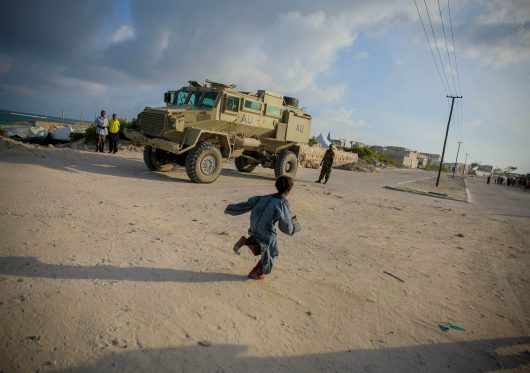
10 Facts About the Somali Civil WarThe Federal Republic of Somalia, located on the eastern horn of the African continent, has had a complicated and tumultuous past rooted in extensive European colonialization. In the last few decades, the people of Somalia have endured extended periods of upheaval, uncertainty, and violence, as well as unprecedented political instability. Here are 10 things to know about the Somali civil war.
  1. In 1950, the U.N. established a protectorate state in the southern region of the country, known then as Italian Somaliland under the Italian government’s supervision. Six years later, the fledgling country was granted autonomy and renamed Somalia, followed by its first democratic elections.
  2. In July 1960, the northern region of the country, known as British Somaliland, was granted independence and merged with Somalia in the south the create the United Republic of Somalia. With a governmental framework in place and leaders in position, Somalis ratified a constitution the following July.
  3. On 15 October 1969, Somali President Abdirashid Ali Shermarke was assassinated by a member of his own presidential guard. Major General and Commander of the Army Mohamed Siad Barre utilized this coup d’état to take control of the Somali government and declared it a socialist state.
  4. After 22 years in power, Barre was forced to flee when warring clan leaders embarked on a bloody campaign to overtake the country. Early in 1991, Ali Mahdi Muhammad overtook the palace in the capital of Mogadishu, declaring himself the new president of the republic and establishing control of southern Somalia. Splitting the country even further, rival clan leader Mohamed Farah Aideed of the Somali National Movement took control of the northern region, formerly British Somaliland, and declared it the Independent Somali Republic. This shift in power marked the beginning of the Somali civil war.
  5. As the Republic of Somalia and the Somali Republic continued to clash, the worst drought to hit Africa in the 20th century descended upon the region, causing a famine that took the lives of almost 300,000 people. Warlords exacerbated the conflict by using food as a weapon against those who opposed them.
  6. In response to this crisis, the U.N. Security Council approved Operation Restore Hope, part of the U.S.-led United Task Force (UNITAF), which sought to protect humanitarian efforts and food supplies from warlords in the southern portion of the embattled country. Between late 1992 and early 1993, it is estimated that 100 thousand people were saved as a result of Operation Restore Hope.
  7. In early October 1993, the Battle of Mogadishu brought the Somali civil war into the limelight when 18 U.S. Army Rangers and hundreds of Somali civilians were killed and two U.S. Black Hawk helicopters were shot down above the capital.
  8. As the violent conflict raged on, conditions within the country deteriorated. In 2001, U.N. peacekeeping missions pulled all staff from the country, unable to guarantee their safety amid threats of kidnapping and violence. Three years later, Somalia established a transitional government for the fourteenth time since 1991, although deep divisions among its members remained. Civilians continued to suffer as food shipments intended for aid were hijacked.
  9. Conflict continued in 2006 when Ethiopian troops entered to oppose the institution of an Islamic state, creating a massive refugee crisis and the emergence of Al-Qaida and Al-Shabaab in the country. Somali pirates regularly patrolled the coast, capturing hostages and demanding ransoms for shipping vessels. By 2008, 3.5 million Somalis were suffering from the results of the famine wrought by droughts and compounded with ongoing violence.
  10. Humanitarian concerns persist in Somalia as the country finds itself at the mercy of yet another drought. Up to one million Somalis face hunger as a result, and a total of 4.7 million people, 40 percent of the population, are in need of humanitarian aid.

Somalia continues to work through its tumultuous past toward a brighter future, but scars of the Somali civil war remain. However, programs such as the United Nations Assistance Mission in Somalia (UNSOM) continue to push forward and are dedicated to the idea of a peaceful and stable country.

– Emily Marshall

Photo: Flickr

February 1, 2017
https://borgenproject.org/wp-content/uploads/borgen-project-logo.svg 0 0 Borgen Project https://borgenproject.org/wp-content/uploads/borgen-project-logo.svg Borgen Project2017-02-01 01:30:452020-05-28 09:03:5610 Disturbing Facts About the Somali Civil War
Global Poverty, War and Violence

10 Facts About the War in Donbass

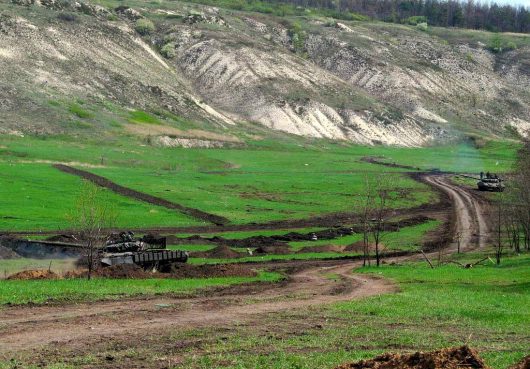
 DonbassThe war in the Donbass region of the Ukraine has been ongoing since 2014 when groups known as the Donetsk People’s Republic (DPR) and the Luhansk People’s Republic (LPR) broke from the Ukraine. Here are 10 facts about the little-known war in Donbass:
  1. When the DPR and the LPR broke from the Ukraine in 2014 they created a federation called Novorossiya, yet the region is still more commonly known as the Donbass.
  2. In the Donbass region which is largely populated by Russian speakers, a strong “anti-maidan” movement grew in the region after the 2014 coup in Kiev. This movement’s goal was to prevent far-right groups from entering the region.
  3. Russia annexed the Crimea Peninsula of Ukraine in March of 2014 following the ousting of a pro-Russia president in Kiev. Despite Russia’s denial that it is supporting the separatists, Kiev claims that many Russian soldiers have traveled to the region.
  4. It is highly unlikely that soldiers from Russia and its allies would have traveled to the Ukraine against the will of Russian president Vladimir Putin.
  5. Fighting remains intense in the region, and civilian casualties still frequently occur.
  6. Ukraine’s pro-Russian president, Viktor Yanukovych borrowed $3 billion from Russia to resist protesters in the early days of the conflict. When he was subsequently ousted, the Ukraine failed to pay back the bond, which led to Russia suing for repayment in British courts.
  7. The U.N. human rights office reported that between February 2015 and June 2016, 261 civilians were killed on both sides of the conflict. They stress, however, that these figures are a conservative estimate, and the DPR’s number of reported casualties is much higher.
  8. There have been several truces called, including in September and December 2016, yet they have all failed to secure lasting peace.
  9. There have been two Minsk agreements, the second of which was signed by Vladimir Putin, Francis Holland, Angela Merkel and Ukranian president Petro Poroshenko. Neither agreement has succeeded in ending the war in Donbass.
  10. There was hope that the Minsk II agreement would lead to free elections in the regions and a separate status for the Donbass region.

The conflict may be occurring in a reduced capacity, but the reality remains that there is a war in eastern Ukraine. Ongoing attention is required to create a lasting peace for the communities in this region.

– Eva Kennedy

Photo: Flickr

January 31, 2017
https://borgenproject.org/wp-content/uploads/borgen-project-logo.svg 0 0 Borgen Project https://borgenproject.org/wp-content/uploads/borgen-project-logo.svg Borgen Project2017-01-31 01:30:402024-12-13 17:56:3610 Facts About the War in Donbass
Global Poverty, Refugees, War and Violence

8 Facts About the Vietnam War and Vietnamese Refugees

10 Facts About the Vietnam War
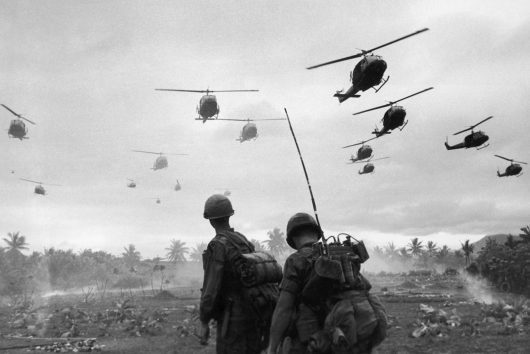
Over the course of 30 years, the Vietnam War not only contributed towards the intensity of the Cold War but also directly resulted in mass displacement and escalating poverty as Vietnamese refugees fled the region. The humanitarian emergency that the debilitating conflict created also impacted neighboring nations like Laos and Cambodia.

In an effort to contain Communism in then Indo-China, the U.S. began to progressively involve itself in the growing hostility between the North and the South. The U.S. aspired to salvage Ngo Din Diem’s regime in the South despite his unpopularity among the working class and the priests so that it could control the excesses of Ho Chi Minh’s communist guerilla group, the Viet Cong.

After the Gulf of Tonkin Resolution was passed, the U.S. became fully embroiled in the war. Record amounts were spent on military support to Vietnam, including chemical weaponry such as weedkillers, napalm and Agent Orange. The guerilla warfare tactics, coupled with public outrage in the U.S. after atrocities during the My-Lai massacre brought an end to the war after the Fall of Saigon.

The Vietnam War is reminiscent of yet another situation we see today with the refugee crisis, brought about by persecution and human rights violations.

8 Facts of Vietnamese Refugees and the Vietnam War

  1. A total of three million people from Laos, Cambodia and Vietnam fled over the span of two decades, out of which 800,000 Vietnamese fled by boat according to the UNHCR.
  2. Vietnamese refugees who fled were later called the ‘Boat people of Vietnam’. Not unlike the scene of the mass exodus in Europe, the defectors used ramshackle fishing boats not devised to be used in the open sea. Owing to the sheer numbers who were trying to flee, the boats were often overcrowded.
  3. The primary causes of death were drowning at sea as a result of being smuggled. The refugees were attacked by pirates and were trafficked and sold into slavery and prostitution.
  4. Two hundred thousand Cambodians and Vietnamese displaced by the war were allowed to enter the U.S. on a ‘parole’ status under the Indochina Migration and Refugee Assistance Act passed in 1975. An aggregate of 450 million dollars was spent on this initiative, with over a million refugees finding asylum in the United States.
  5. Despite a 1979 U.N. conference to regulate the number of refugees residing in refugee camps in Southeast Asia, the United Nations finally resolved to stretch the limits of regular migration to help Vietnamese refugees seek asylum successfully.
  6. Owing to the success that Vietnam has had in achieving the U.N. Sustainable Development Goals and achieving food security, the food poverty rate, fortunately, plummeted by two-thirds between the years 1993 and 2008. Vietnam is now also a large exporter of rice.
  7. By 2010, nearly 1.5 million overseas Vietnamese, now referred to as Viet Kieu, were resettled in the US. These individuals are beginning to lead businesses. The remittances they are sending back home are worth $13.2 billion, thus increasing Foreign Direct Investment (FDI). This development is a 900% increase from the year 2000 according to the World Bank.
  8. Vietnam’s growing technology sector is symbolic of its recovery. Education and living standards have drastically improved. Owing to the investment capacity of Vietnam, Silicon Valley is establishing 500 Startups in the country.

In an effort to halt the spread of communism, there was a tremendous cost to human life. Only time will reveal the full extent of U.S. and U.N. humanitarian assistance in aiding Vietnamese refugees.

– Shivani Ekkanath

Photo: Flickr

January 25, 2017
https://borgenproject.org/wp-content/uploads/borgen-project-logo.svg 0 0 Borgen Project https://borgenproject.org/wp-content/uploads/borgen-project-logo.svg Borgen Project2017-01-25 01:30:582024-12-13 17:56:318 Facts About the Vietnam War and Vietnamese Refugees
Global Poverty, Refugees, War and Violence

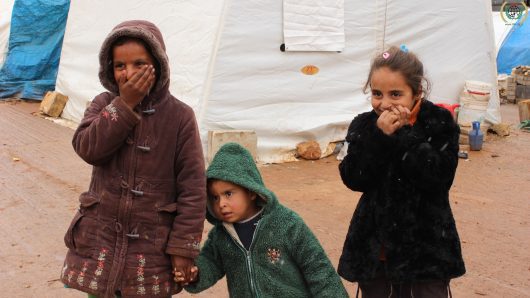
What’s Next for Aleppo Residents?

Aleppo Residents
As civil war rages on in Syria, residents of the country’s largest city have been forced to flee to surrounding areas. For former Aleppo residents, these evacuations present a new series of challenges and dangers.

Many of these evacuees have fled to the Syrian countryside, Lebanon, or the Turkish border town of Idlib. Lebanon hosts more than 1 million Syrian refugees, yet most evacuees from Aleppo have been transferred to Idlib, inundating the already war-weary area with traumatized and often severely injured evacuees.

Idlib, which is one of the few remaining rebel-held areas in the country, is likely to become the next target as the regime attempts to recapture the country. Rebel fighters from Aleppo are moving to Idlib along with civilians as the regime recaptures large swaths of the country.

For former Aleppo residents in Idlib, however, simply securing housing has been an immense challenge. Evacuees describe exorbitant rent prices and a cold reception from Idlib residents. For former Aleppo residents who lost most of their belongings in the siege and face unemployment, rent prices that can reach $187 a month are often far out of reach. Some evacuees describe conditions where several families are cramped into one house, and those who still cannot afford rent are forced to move to nearby border camps.

As Aleppo residents settle into Idlib and its surrounding camps, the extent of their trauma is becoming quickly evident. Surgeon Mounir Hakimi described children from Aleppo who face amputation or who have shrapnel lodged in their spines. Some have lost vision from the bombing and doctors in Idlib are seeing many patients with seriously infected wounds. In addition, many are suffering from hypothermia and malnutrition.

Even those who escaped Aleppo without serious injury face psychological trauma. In one case, a three-year-old boy was unable to speak due to the shock of the airstrikes. Idlib has seen serious bombing in the past few years, and as a result, its medical infrastructure is sadly reminiscent of Aleppo’s. Many aid workers who left with Aleppo residents intend to continue their work in Idlib. For groups like the Syrian Defence Force who rescued civilians in Aleppo, Idlib is simply a place to continue their work. One Defence Force member expressed the group’s commitment to the residents of Idlib, pointing out that the city had been bombed for the past five years and was unlikely to see a respite in the near future.

Many see Idlib as the next target for the regime now that Aleppo has been recaptured. Airstrikes have inundated Idlib in recent weeks, and dozens of deaths have been reported in the region. In addition, experts believe that as the regime recaptures more territory, the city will be forced to take in further waves of evacuees. This will further exacerbate the humanitarian crisis in Idlib, and for many former Aleppo residents, the town will provide a continuation of their suffering instead of a much-needed respite.

– Eva Kennedy

Photo: Flickr

January 24, 2017
https://borgenproject.org/wp-content/uploads/borgen-project-logo.svg 0 0 Borgen Project https://borgenproject.org/wp-content/uploads/borgen-project-logo.svg Borgen Project2017-01-24 01:30:162024-12-13 17:56:33What’s Next for Aleppo Residents?
Global Poverty, War and Violence

Syrian Mental Health

Syrian Mental Health
During a 2015 study, the German Federal Chamber of Psychotherapists found that half of Syrian refugees had mental issues, while nearly three-quarters of those affected have witnessed violence and 50 percent have been subjected to violence themselves. The United Nations High Commissioner for Refugees (UNHCR) cites that the most common clinical disorders regarding Syrian mental health are “depression, prolonged grief disorder, posttraumatic stress disorder and various forms of anxiety disorders.”

A Chinese study found that children who experience the deprivation of parental care are at higher risk of intellectual and emotional struggles. Larger volumes of gray matter, which indicates “insufficient pruning and maturity of the brain,” appeared in children subjected to substantial parental absence.

Essential rights including education and access to health services are often absent among displaced refugees and children are more likely to be exposed to human trafficking. According to the United Nations High Commissioner for Refugees, Syrian refugees total 4.8 million and almost half of that number are children.

The International Medical Corps (IMC) found that Syrian refugees and internally displaced persons (IDP) have extremely limited access to mental health facilities and 54 percent suffer from severe emotional disorders like depression and anxiety.

Refugee policies in Syria’s neighboring countries such as in Lebanon are also harmful to fostering Syrian mental health for refugees, such as the inability for the establishment of permanent refugee camps and forbiddance of Syrians to work in the country. The United Nations Population Fund (UNFPA) found that 41% of Syrian youth in Lebanon have experienced suicidal compulsions.

However, during the Obama administration in the summer of 2016, Secretary Kerry announced a rise of an additional $439 million in humanitarian assistance for Syrians including increased access to mental health services. Emergency relief funding aims to support non-governmental organizations (NGOs), international organizations and United Nations operations, especially those addressed in the eight billion dollars U.N. appeal of 2016 for Syrian aid. Included in the funding is $130 million to the UNHCR to provide mental health support and child protection for IDPs and refugees, while an additional $36 million to Turkey also provides mental health support through the International Organization for Migration (IOM).

– Amber Bailey

Photo: Flickr

January 20, 2017
https://borgenproject.org/wp-content/uploads/borgen-project-logo.svg 0 0 Borgen Project https://borgenproject.org/wp-content/uploads/borgen-project-logo.svg Borgen Project2017-01-20 01:30:362024-12-13 17:56:34Syrian Mental Health
War and Violence

Eight Facts About the Mongol Empire and Mongol Conquests

8 Facts About the Mongol Empire and Mongol Conquests
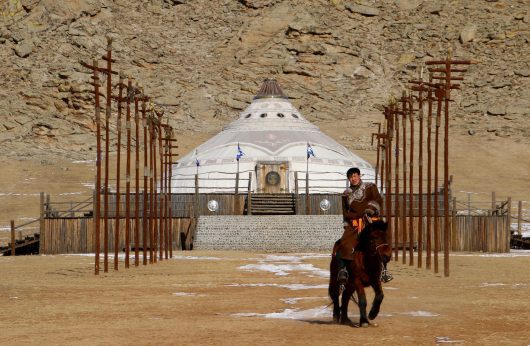
While not known as a major player on the global political stage, once upon a time, Mongolia was the largest contiguous land empire in the world. The Mongols originated their empire in the steppes of central Asia when Genghis Khan unified the nomadic clans of Mongolia and led a years-long campaign of conquest in the 13th century. At its prime, the borders of Genghis’ empire stretched from Central Europe and Siberia to the eastern Chinese coast and Arabia. Here are eight facts about the Mongols, their culture and their conquests:

  1. Kublai Khan ordered two campaigns to invade Japan in 1274 and 1281. The campaigns were ultimately unsuccessful, however, as the Mongol fleet met with a powerful typhoon during both campaigns, which wiped out between 60 and 90 percent of their forces. This massive upset became an important event in Japanese history and suggested that despite the strength of the empire, Mongol conquest had its limits. The intervention of nature during these battles became known as kamikaze, or “divine wind”, a concept that the Japanese turned to once again in WWII.
  2. Scholar and writer of The Secret History of Mongol Queens, Jack Weatherford, says that as Genghis Khan built his empire, he solidified the Mongol Empire’s control over conquered territories by securing strategic marriages for his daughters. For example, his daughter Alaqai married into the Onggud tribe while Al-Atun married a prince of the Uighurs. Upon marriage, Genghis made sure his daughters became their husbands’ principal wives.
  3. Medieval Mongol Empire warfare relied mostly on mounted archers. Mongolian cavalry favored the Mongol recurve bow when riding into battle. This type of bow has limbs that curve away from the archer, allowing the bow to lend more potential energy and speed to the arrow. Being smaller than other bows, the Mongol recurve bow was also a less-cumbersome weapon for a soldier on horseback. Scholar Jeanine Davis-Kimball also points out that horseback riding and archery were martial arts that could be easily learned by both men and women, making Mongol society a bit more egalitarian.
  4. The Battle of Xiangyang in 1273 was a key victory for Kublai Khan’s Yuan Mongols, one that gave the Mongols, even more access to the Southern Song heartland. The Song eventually surrendered to Kublai Khan’s Mongol forces in 1276, and the incorporation of the Chinese into the empire resulted in some sinicization of Mongol culture, meaning that the Mongols adopted some Chinese customs and values such as the reinstation of the Civil Service Examination.
  5. After Kublai Khan conquered the Song Dynasty and declared the beginning of the Yuan Dynasty, he moved the capital of his empire from the Karakorum in Central Asia to Khanbaliq, the site of present-day Beijing.
  6. In 1231, Genghis’ son Ogodei ordered a campaign of conquest on the Korean Peninsula, which was then known as the Kingdom of Goryeo. The campaigns continued until 1270 when the king of Goryeo signed a peace treaty with the Mongols and Korea became a Mongol vassal state.
  7. Genghis’ grandson, Hulagu became the Great Khan in the kurultai of 1256. As Great Khan, Hulagu ordered a series of campaigns in the Middle East. Under his rule, the Mongols captured Baghdad in 1258, and the Abbassid Caliphate became a part of the growing Mongol Empire.
  8. The Mongols, along with other nomadic central Asian cultures of the time, practiced sky burials or the practice of leaving the bodies of their dead out in the open to be exposed to the elements and eaten by carrion birds. The ritual is a part of a branch of Buddhism practiced by the Mongols known as Vajrayana. According to Vajrayana Buddhism, death is simply a transmigration of the spirit, therefore corpses are merely empty vessels that ought to be disposed of in a generous way, such as decomposition or as food for birds. The custom is still practiced today in parts of Mongolia and Tibet.

These are just a handful of fascinating facts about the Mongol Empire, but the story of the Mongol people didn’t end with the fall of the empire. Today, Mongolia is a fast-growing economic frontier full of sprawling steppes and desert, rich with minerals. They’ve since abandoned their military campaigns of conquest and transitioned to democracy and a market economy. Though Mongolia is not known as the most outspoken state today, one wonders when and how Genghis’ people will next stun the world.

– Mary Grace Costa

Photo: Flickr

January 20, 2017
https://borgenproject.org/wp-content/uploads/borgen-project-logo.svg 0 0 Borgen Project https://borgenproject.org/wp-content/uploads/borgen-project-logo.svg Borgen Project2017-01-20 01:30:322024-12-13 17:56:32Eight Facts About the Mongol Empire and Mongol Conquests
Page 12 of 20«‹1011121314›»

Get Smarter

  • Global Poverty 101
  • Global Poverty… The Good News
  • Global Poverty & U.S. Jobs
  • Global Poverty and National Security
  • Innovative Solutions to Poverty
  • Global Poverty & Aid FAQ’s
Search Search

Take Action

  • Call Congress
  • Email Congress
  • Donate
  • 30 Ways to Help
  • Volunteer Ops
  • Internships
  • Courses & Certificates
  • The Podcast
Borgen Project

“The Borgen Project is an incredible nonprofit organization that is addressing poverty and hunger and working towards ending them.”

-The Huffington Post

Inside The Borgen Project

  • Contact
  • About
  • Financials
  • President
  • Board of Directors
  • Board of Advisors

International Links

  • UK Email Parliament
  • UK Donate
  • Canada Email Parliament

Get Smarter

  • Global Poverty 101
  • Global Poverty… The Good News
  • Global Poverty & U.S. Jobs
  • Global Poverty and National Security
  • Innovative Solutions to Poverty
  • Global Poverty & Aid FAQ’s

Ways to Help

  • Call Congress
  • Email Congress
  • Donate
  • 30 Ways to Help
  • Volunteer Ops
  • Internships
  • Courses & Certificates
  • The Podcast
Scroll to top Scroll to top Scroll to top