• Link to X
  • Link to Facebook
  • Link to Instagram
  • Link to TikTok
  • Link to Youtube
  • About
    • About Us
      • President
      • Board of Directors
      • Board of Advisors
      • Financials
      • Our Methodology
      • Success Tracker
      • Contact
  • Act Now
    • 30 Ways to Help
      • Email Congress
      • Call Congress
      • Volunteer
      • Courses & Certificates
      • Be a Donor
    • Internships
      • In-Office Internships
      • Remote Internships
    • Legislation
      • Politics 101
  • The Blog
  • The Podcast
  • Magazine
  • Donate
  • Click to open the search input field Click to open the search input field Search
  • Menu Menu

Archive for category: Refugees

Global Poverty, Refugees

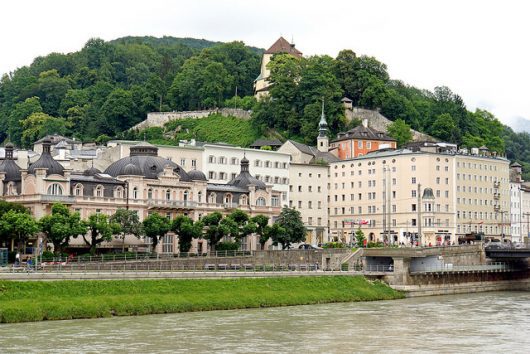
10 Interesting Facts About Austrian Refugees


Austria is a beautiful country nestled in the Alps with a rich cultural and musical history. When floods of immigrants, mostly from Syria, poured over its borders in 2015, Austria became a focal point for global forced displacement. Because of the sheer volume of immigrants passing through, Austrian refugees face difficulties earlier generations did not.

10 Facts About Austrian Refugees

  1. Austria has a long history of embracing refugees. Most of the 200,000 people who fled during the Hungarian Uprising of 1956 became refugees in Austria. The Prague Spring in 1968 and the Balkan Wars of 1995 also resulted in thousands of Austrian refugees
  2. Half of Vienna’s current 1.8 million residents are of immigrant origin, including Hungarians, Czechs, Poles, refugees from the Balkan Wars, Afghans and Turks.
  3. In the fall of 2015, 788,000 migrants traveled through Austria, many on their way to Germany and Scandinavia. Most fled from Syria, Afghanistan and Iraq — 300,000 came through Vienna in a matter of weeks.
  4. Unemployment in Austria during 2016 was 8.3 percent, the highest rate since the ’50s (higher than after the global financial crisis) and impacting competition for jobs for Austrian refugees seeking asylum.
  5. During the first days of the crisis, Vienna set up a Refugee Coordination Centre and erected 65 emergency shelters, which included 10,600 beds. The city’s police and social service groups worked with international nongovernmental organizations to help with immediate needs.
  6. An old army barracks outside Vienna called the Traiskirchen center housed 4,800. Originally set up to sleep 1,000, many refugees were forced to sleep outdoors. Amnesty International called attention to the deplorable living conditions.
  7. More than 90,000 Austrian refugees applied for asylum by the end of 2015. This is twice as many per capita as in Germany.
  8. One of the worst tragedies of the Syrian crisis occurred near the Austrian border in the town of Parndorf. A refrigerated truck carrying 71 refugees was found abandoned. All the occupants were dead.
  9. Austria has an education policy for the children of refugees. Every child is enrolled in a local school within two weeks of their arrival. They are also offered intensive German language classes and classes on life in Austria. Adult education is also offered.
  10. Some 21,600 refugees remain in Vienna, registered for basic welfare support. Half are in the asylum-seeking process.

The challenge ahead for Austrian refugees: assimilating into a new culture, learning a new language and finding suitable employment.

– Jene Cates

Photo: Flickr

June 4, 2017
https://borgenproject.org/wp-content/uploads/borgen-project-logo.svg 0 0 Borgen Project https://borgenproject.org/wp-content/uploads/borgen-project-logo.svg Borgen Project2017-06-04 01:30:422024-05-24 23:52:0610 Interesting Facts About Austrian Refugees
Global Poverty, Refugees

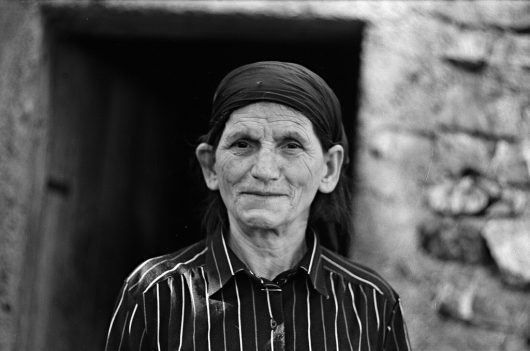
7 Facts About Albanian Refugees

10 Facts About Albanian RefugeesThe Albanian exodus has been the largest emigration movement in Europe since the population movements after World War II. It had been caused by the collapse of the communist regime in 1991 and the following economic crisis. Here are 10 facts about Albanian refugees.

7 Facts About Albanian Refugees

  1. The first wave of immigration occurred in 1991 when 20,000 Albanians squeezed shoulder-to-shoulder head to Italy on the cargo ship La Vlora.
  2. More Albanian refugees live outside of Albania than within. Countries like Kosovo, Macedonia, Montenegro, Greece, Turkey, Italy, Germany, Switzerland, Sweden and the United States all have Albanian diasporas.
  3. About $500 million was sent home by Albanian refugees in 1996 from these countries, supporting the survival of the people remaining in Albania and the development of the private sector.
  4. Albania’s population is approximately three million, and about 10 million Albanians are living outside of the country.
  5. Roughly 600,000 Albanian refugees work in Greece.
  6. About 480,000 ethnic Albanian refugees entered into Albania in 1999 because of the war in neighboring Kosovo. This influx strained the country’s resources.
  7. The unemployment rate is incredibly high in Albania, where a small and overcrowded job market doesn’t allow new businesses to emerge.

However, things are changing for the better in Albania, and the future is bright for the nation. While the country is still struggling with outcomes of the refugee crises of the early ’90s, the Albanian government considers tourism as a key strategic economic sector, touting its potential to act as a catalyst for the development of the rest of the country.

– Yana Emets

Photo: Flickr

June 3, 2017
https://borgenproject.org/wp-content/uploads/borgen-project-logo.svg 0 0 Borgen Project https://borgenproject.org/wp-content/uploads/borgen-project-logo.svg Borgen Project2017-06-03 07:30:052024-05-25 00:18:267 Facts About Albanian Refugees
Global Poverty, Refugees

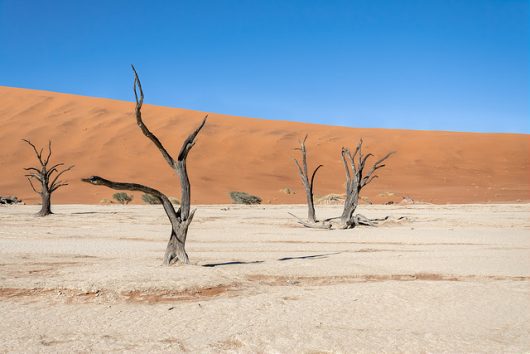
10 Facts About Namibian Refugees


The country of Namibia has been plagued by recurrent droughts, which have left crop production in decline. With the prevalence of HIV/AIDS, the region is affected by a combination of factors such as the environment and lack of medical resources. Efforts by the government to quell the drought have led to improvement and the country has seen an influx of refugees from other nations.

  1. Every month in 2015, 30 new refugees entered Namibia; a lot of them fled from drought and famine in their own countries. Many are from the Great Lakes region.
  2. At the same time, Namibian refugees leave the country for opportunities in South Africa and Germany. Many students seek to find more lucrative jobs internationally rather than stay in the Namibia.
  3. The government of Namibia has asked many outside countries to help assist with the incoming population of refugees from various African regions. Many refugees in Namibia require nutritional support and various forms of humanitarian aid.
  4. There are many Namibian refugees that are re-entering the country after being away for an extended period of time. Some returnees came back from the region of Botswana. The government of Namibia is making sure resettlement efforts go smoothly.
  5. As reported, Namibian refugees were given incentives. Cash grants were given to those who relocated back into the country after being away.
  6. Many Namibian refugees are escaping the country because of the financial crisis, which has hit the country hard due to environmental conditions that reduce the crop production.
  7. Namibian refugees at Osire refugee camp are being registered in an electronic database and have been given identification cards. The purpose is to collect information on asylum seekers. Most refugees in the camp are from Angola.
  8. Refugees and asylum seekers in Namibia are guaranteed a piece of land by the government to ensure care. They are given security and protection that is enforced and mandated.
  9. Medical treatment is given to refugees in Namibia as if they were Namibian citizens. The government has made a point to present its support and prove that the refugee’s needs are crucial.
  10. Despite this commitment, Namibian refugees and others from sub-Saharan regions sometimes do not receive the proper care they need from countries that have accepted asylum seekers.

In many cases, refugees enter Namibia in hopes of escaping persecution as well as drought and famine in their respective countries. Namibian refugees seek to find a better opportunity in neighboring countries and the government hopes to successfully combat recurrent droughts.

– Nick Katsos

Photo: Flickr

June 2, 2017
https://borgenproject.org/wp-content/uploads/borgen-project-logo.svg 0 0 Borgen Project https://borgenproject.org/wp-content/uploads/borgen-project-logo.svg Borgen Project2017-06-02 01:30:552024-05-28 00:01:5810 Facts About Namibian Refugees
Global Poverty, Refugees

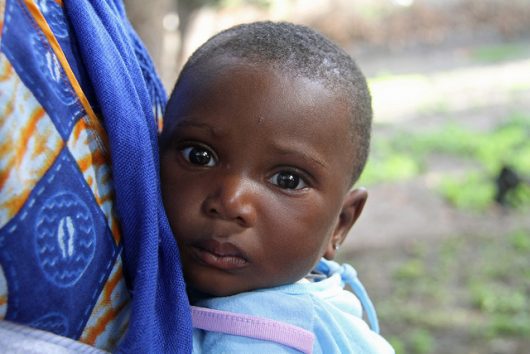
10 Important Facts to Know About Gambian Refugees


Outlined in House Resolution 89, Gambia is noted to have dealt with a leader who did not meet international standards of promoting human rights. Throughout his 22-year rule, President Yahya Jammeh consistently governed without regard for minority groups or those who opposed his regime. Refugees have left Gambia in search of a life that is not susceptible to Jammeh’s authority. Here are 10 facts about Gambian refugees.

  1. The majority of Gambian refugees are young males. Hundreds have fled for Europe. Stories of Gambian refugees arriving in Italy or Spain reached remote villages through Facebook and texting.
  2. Making the grueling exodus from Africa has become easier over time. Smuggling networks have expanded due of deterioration in Libya, allowing Gambian refugees to escape through unsecured channels. Many Gambian refugees are fleeing possible forced servitude and sexual slavery.
  3. The country has become a hub for the African trade network operating human trafficking throughout several parts of Africa, including Senegal. Gambian refugees and those from other sub-Saharan nations hope to reach North Africa in order to eventually reach Europe.
  4. Gambian citizens were greatly impoverished under the regime of President Jammeh; only those within his sphere were able to accumulate any wealth. Those who were not as fortunate ended up earning $100 dollars a month. Refugees lived under extreme poverty.
  5. The government of Gambia did not respect the freedom of the media. Through criminal prosecutions and physical intimidation, censorship of journalism was carried out. Journalists were susceptible to cruel and degrading treatment by the government. A percentage of those escaping  Gambia were journalists.
  6. Conditions along smuggling routes are very unsafe. Boats capsizing or smugglers abandoning people along desert routes are a reality for many Gambian refugees.
  7. A growing number of refugees are literate, but unable to find work matching their skill set. This is similar to China in the ’60s and is a primary reason many refugees leave Gambia.
  8. A percentage of refugees were a part of the LGBT community. Jammeh sought to cultivate what the Washington Post called a “bizarre mythology around himself as a man who could cure AIDS and threatened to personally slit the throats of gay men.”
  9. Many of Gambia’s refugees were held as political prisoners, including officials of parties in opposition to the president.
  10. In the recent election, Jammeh lost to Adam Barrow. However, some are concerned about the political tensions resulting from that decision, so many are sending their children as refugees to Senegal.

With Adama Barrow now president of Gambia, the country can look forward to positive change. The region has been known for corruption and scandals and has failed to effectively represent its people. Gambian refugees were escaping the regime of a leader who did not operate a democratic nation. Their new government represents change in a positive direction.

– Nick Katsos

Photo: Flickr

June 1, 2017
https://borgenproject.org/wp-content/uploads/borgen-project-logo.svg 0 0 Borgen Project https://borgenproject.org/wp-content/uploads/borgen-project-logo.svg Borgen Project2017-06-01 01:30:542024-06-11 23:17:1210 Important Facts to Know About Gambian Refugees
Aid, Global Poverty, Refugees

New Aid to Come to Nigerian Refugees


According to the Internal Displacement Monitoring Centre, there are almost 2,152,000 internally displaced Nigerian refugees as of Dec. 31, 2015. The displacement has been caused by Nigerian terrorist group Boko Haram.

Boko Haram is an Islamic terrorist group that has been trying to enforce Sharia law onto Nigeria and other Northern African countries. Despite its violent strategic nature, the military campaign led by the newly elected president of Nigeria, Muhammadu Buhari, has proven successful in recent efforts.

As reported by the International Crisis Group, Nigeria has been more successful in fending off Boko Haram and it has become less of a threat. Nigerian forces have been able to clear Boko Haram out of some occupied territory, thus opening up opportunities for citizens to return to their homes and humanitarian efforts to distribute much-needed aid.

The U.N. Refugee Agency (UNHCR) states that there are an estimated 8.5 million Nigerians refugees requiring humanitarian aid in 2017. Thankfully, the head Commissioner for Refugees, Filippo Grandi, has brought up a way for ensuring protection and solutions for the growing population Nigerians that are returning to their previously occupied homes. Working closely with the Nigerian government, Grandi presented a plan called “Directions on Protection, Access and Solutions for IDPs and Returnees in North-East Nigeria.”

The plan prioritizes voluntary returns and protection from gender-based violence to ensure the dignity and safety of those receiving aid. Access to both therapy and legal support, specifically to settle cases of unclaimed or claimed land, was also outlined in the plan. The main goal of UNHCR seems to be to establish social harmony among the tense community.  Goals of “empowerment,” “community reconciliation” and “gender equality” were also included.

With the U.N. raising more than $670 million in pledges that will help support aid for Nigerian refugees and their neighboring countries over the next two years, the victims of the widespread terrorism in North Africa will now have new found funding and resources to help them adjust back into their home lives.

– Vicente Vera

Photo: Flickr

May 31, 2017
https://borgenproject.org/wp-content/uploads/borgen-project-logo.svg 0 0 Borgen Project https://borgenproject.org/wp-content/uploads/borgen-project-logo.svg Borgen Project2017-05-31 01:30:512024-06-11 02:48:28New Aid to Come to Nigerian Refugees
Global Poverty, Refugees

10 Facts About Refugees in Gambia

Refugees in Gambia
The Gambia is a tiny nation, bounded by Senegal, on the west coast of Africa. The primary economic drivers in the country are tourism, agriculture and remittances from overseas. Between 2013 and 2016, it is estimated that real GDP per capita fell by 20 percent, suggesting an increase in poverty levels. The poor economy and recent political tensions are two main reasons why thousands of Gambians seek refuge elsewhere, hoping for a better life for themselves and their families.


Here are 10 facts about Gambian refugees:


  1. Around 45,000 people fled to neighboring Senegal after a contentious 2016 presidential election. Incumbent President Yahya Jammeh, who had led the country for 22 years following a military coup in 1994, was defeated by his opponent Adama Barrow. After initially accepting the outcome, Jammeh refused to step down and called for a new election. After Jammeh was exiled in January, many Gambians returned home from Senegal.
  2. Gambians currently account for more than seven percent of refugees making the deadly crossing over the Mediterranean to mainland Europe. Considering The Gambia has a population of fewer than two million, Gambians make up a disproportionate percentage of migrants arriving into Europe. According to the International Organization for Migration (IOM), 11,929 Gambians arrived in Greece and Italy in 2016.
  3. The method of attempting to get into Europe via the Mediterranean is colloquially known as the “Backway.” The flood of Gambians heading for Europe has become such a problem that the Gambian government has launched ad campaigns that attempt to dissuade would-be migrants with slogans such as, “Say No to the Backway.” In 2016, at least 5,000 migrants perished or went missing attempting to make the perilous crossing.
  4. Most Gambian refugees seeking asylum in Europe are between the ages of 14 and 34. According to Richard Danziger, IOM’s regional director for West and Central Africa, “The numbers are huge; I understand there are villages [in Gambia] with no young males left.”
  5. Most Gambian refugees are economic migrants. According to 2010 figures from the World Bank, the poverty rate in The Gambia was 48.4 percent. Over-reliance on tourism, agriculture and remittances have resulted in an undiversified economy that is vulnerable to external shocks and lacking opportunities for many Gambians.
  6. Instability in Libya has created an unguarded coastline in North Africa; smugglers are taking advantage and expanding their networks. Widespread violence and instability continue to plague Libya as the conflict continues after the ousting of Muammar Gaddafi in 2011.
  7. Gambian refugees in Libya are at risk of exploitation in modern-day “slave markets.” The IOM reports hundreds of migrants — including Gambians — being kidnapped, sold and either extorted for more money or forced into labor.
  8. According to the World Bank, 20 percent of Gambia’s Gross Domestic Product (GDP) comes from remittances. Relatives of those who make it to Europe are able to build new homes with the remittances they receive. Their success is alluring for many and provides a powerful incentive for people to risk their lives for the chance of a better life for themselves and their families back home.
  9. According to Eurostat, the EU statistics organization, there were 14,735 first-time asylum applications from The Gambia in 2016 to the following countries: Italy, 8,850 (56 percent), Germany, 5,655 (36 percent), Austria, 230 (one percent).
  10. The EU set up the Emergency Trust Fund for Africa in 2015 in an attempt to address the migrant crisis. The Trust Fund is worth more than €2.6 billion and focuses on projects that endeavor to address the root causes of irregular migration. The Gambia is one of the countries eligible to receive this assistance.

President Adama Barrow has promised to try and create jobs in an effort to stem the tide of Gambians leaving via the “Backway.” Barrow will serve only three years because he is not able to stand in the next election, but there are hopes that he can initiate urgently needed reforms and help lay the foundations for economic growth and prosperity.

– Michael Farquharson

Photo: Flickr

May 31, 2017
https://borgenproject.org/wp-content/uploads/borgen-project-logo.svg 0 0 Borgen Project https://borgenproject.org/wp-content/uploads/borgen-project-logo.svg Borgen Project2017-05-31 01:30:212024-05-28 00:02:0010 Facts About Refugees in Gambia
Global Poverty, Refugees

What You Don’t Know: 10 Facts About Poland’s Refugee Efforts


The refugee crisis is one of the biggest impacting the world, Europe in particular. With a prominent history of accepting refugees after the collapse of the Union of Soviet Socialist Republics (U.S.S.R.), Poland today is playing a surprisingly limited role. Here are 10 facts about Poland’s refugee efforts.

  1. Poland has been turning away refugees. Asylum seekers from Chechnya, an increasingly repressive part of Russia, have been being denied entry into Poland, even though the Terespol border became an entry point for Chechens, Tajiks and other citizens of former Soviet Republics when the U.S.S.R. dissolved.
  2. Terespol border guards rejected 85,000 attempts to cross the border from Belarus in 2016. Only 25,000 were turned away in 2015, illustrating a major change in the Polish perspective of refugees.
  3. Lack of refugee support reflects a lack of Polish influence in the EU. Poland’s anti-liberal shift has resulted in Poland losing a great deal of negotiating power with other European powers.
  4. “There is no mechanism that would ensure safety,” explained Jaroslaw Kaczynski, who leads Poland’s ruling Law and Justice (PiS) party. The PiS party takes a nationalist and right-wing stance. It is very vocal in opposing housing and feeding refugees from Syria and others in humanitarian crisis.
  5. The EU has suggested that countries should have a quota of refugees, or pay €250,000 ($280,188) for each asylum-seeker they turn away. The money would go to countries that have a disproportionately high number of refugees, such as Greece, Germany and Italy.
  6. Poland’s stagnation isn’t good for its politics. Such stubbornness could lead to less power and credibility with other European nations while also questioning the relationship it has with Europe on the one hand, and on the other hand, Russia.
  7. Human rights groups have been covering and warning the EU about Polish actions, but the EU has failed to reprimand or sanction Poland. An EU executive was even quoted as “closely following the situation” regarding Poland’s refugee efforts, but no follow-up has been taken.
  8. Chechens trying to go to Poland are in great danger. Trying to cross the border, Chechens risk getting sent to detention centers in Belarus.
  9. The most obvious solution is for Poland to respect the EU’s concept of “effective solidarity.” However, with the right-leaning government and anti-liberal views running through Poland, this seems the most unrealistic solution.
  10. Poland may be breaking the law. Chechens denied refugee status are sent back to Belarus and fear deportation to Russia. According to Polish law, however, the Office for Foreigners, not the Border Guard, is to evaluate applications for refugee status. Some refugees have applied more than 70 times and been denied each time.

Poland’s refugee efforts, or lack thereof, have led many nations to questions the future of Poland’s power and influence in the EU. Additionally, Poland’s relations with Russia will remain in question until Poland becomes active in the refugee crisis.

– Mary Waller

Photo: Flickr

May 30, 2017
https://borgenproject.org/wp-content/uploads/borgen-project-logo.svg 0 0 Borgen Project https://borgenproject.org/wp-content/uploads/borgen-project-logo.svg Borgen Project2017-05-30 01:30:332024-12-13 17:58:00What You Don’t Know: 10 Facts About Poland’s Refugee Efforts
Global Poverty, Refugees

10 Facts About New Zealand Refugees


The small number of refugees New Zealand takes in ranks them 90th per capita in resettlement. After making adjustments considering wealth and population, the ranking falls to 116th. Many countries in Europe are critical of the small number of refugees New Zealand takes in. Here is a look at 10 facts about New Zealand refugees that may be a surprise.

  1. The New Zealand government works with the United Nations Refugee Agency (UNHCR) to offer refugees permanent resettlement in New Zealand.
  2. In 2016, after more than 30 years, New Zealand increased their refugee quota from 750 to 1000.
  3. New Zealand accepts refugees from the following major groups: Sri Lanka, Afghanistan, Colombia, Myanmar, Rohingya and Syria.
  4. Refugees undergo background checks before being allowed to live in New Zealand.
  5. The needs and services required by refugees are determined prior to their arrival.
  6. Refugees must complete a six-week reception program at Auckland’s Mangere Refugee Resettlement Centre (MRRC). The program helps refugees build social and coping skills and provides information regarding work and employment expectations.
  7. The Refugee Resettlement Strategy has five goals:
    · All refugees of working age have a job and income or are supported by a family member with a paying job.
    · All refugees actively participate in life in New Zealand and have a keen sense of belonging.
    · Ensure the health and well-being of refugees and their families.
    · Refugees can speak English well enough to allow them to participate in school and daily activities.
    · Refugees live in homes that are safe, secure, clean and affordable without assistance from government housing.
  8. Refugees settle in six regions: Auckland, Hamilton, Manawatu, Wellington, Nelson and Dunedin.
  9. Family reunification is when a refugee living in New Zealand applies for a family member to receive a visa. Refugees coming to New Zealand on a Refugee Family Support Category visa do not receive financial assistance from the government or any of the resettlement assistance provided to refugees.
  10. Refugees who fear serious harm or cruel treatment if they return to their country of origin can apply for asylum. In 2013-14 New Zealand granted refugee status to 69 asylum seekers — a dismally low number when compared to countries such as Hungary (129, 203) and Sweden (228,601).

The Syrian refugee crisis in addition to 59.5 million people forced to flee their country of origin have drawn the attention of the world and highlighted the woefully small number of refugees New Zealand is willing to take in. These 10 Facts about New Zealand refugees make it clear that they have a strategy that helps refugees make a smooth transition from living in their country of origin to living in New Zealand. Sadly, it also highlights the unwillingness of New Zealand to stand with their international partners and do their fair share.

– Mary Barringer

Photo: Flickr

May 28, 2017
https://borgenproject.org/wp-content/uploads/borgen-project-logo.svg 0 0 Borgen Project https://borgenproject.org/wp-content/uploads/borgen-project-logo.svg Borgen Project2017-05-28 01:30:282024-05-28 00:00:2410 Facts About New Zealand Refugees
Global Poverty, Refugees

10 Facts About Refugees and Asylum Seekers in Indonesia

Refugees in Indonesia
Located in East Asia between the Pacific and Indian Oceans, Indonesia is home to more than 260 million people. Thousands are refugees and asylum seekers, and the number is rising. This growth is often overlooked when regarding issues of global poverty. Discussed below are the leading facts about refugees in Indonesia.


Top 10 Facts on Refugees in Indonesia


  1. There are approximately 13,800 asylum-seekers and refugees in Indonesia.
  2. More than half of the total asylum-seekers and refugees in Indonesia originate in Afghanistan. Regarding refugees, Myanmar follows, but when considering asylum-seekers, Somalia is in second place. In addition to these countries, Iran, Pakistan and Iraq are common countries of origin for persons of concern in Indonesia.
  3. In 2015, there was a 21 percent increase in refugees and asylum seekers.
  4. Indonesia has requested roughly $7.8 million to help ensure a better environment for current and new persons of concern.
  5. According to experts, many refugee children in Indonesia are denied education due to language barriers and administrative requirements.
  6. In partnership with several organizations, the U.N. Refugee Agency (UNHCR) helps provide basic healthcare services to persons of concern in Indonesia. However, language and financial barriers prevent a lot of refugees in Indonesia from receiving proper medical treatments.
  7. Some refugees become stranded in Indonesia on their way to destinations such as Australia.
  8. Indonesia is becoming more liberal about refugees. According to the UNHCR, “Indonesia will continue to receive new asylum-seekers as part of mixed migration movements.” The hope is to integrate them properly into Indonesia.
  9. In January 2017, Indonesia announced that it would open its arms to persons of concern. President Joko Widodo decreed that the government will begin to protect refugees in Indonesia. This is a huge step for refugees and asylum-seekers, previously overlooked in the nation’s laws.
  10. Even with the president’s decree, there are major gaps between the treatment of refugees and non-refugees under Indonesian law. According to experts, this decree does not ensure human rights such as education or healthcare, but it does make it illegal to deny refugees work and education.

Change is in the air for persons of concern in Southeast Asia. With the Indonesian president’s decree, there is a lot of hope for refugees in Indonesia.

– Morgan Leahy

Photo: Flickr

May 28, 2017
https://borgenproject.org/wp-content/uploads/borgen-project-logo.svg 0 0 Borgen Project https://borgenproject.org/wp-content/uploads/borgen-project-logo.svg Borgen Project2017-05-28 01:30:232024-12-13 17:58:0110 Facts About Refugees and Asylum Seekers in Indonesia
Global Poverty, Refugees, War and Violence

The Status of Syrian Refugees in Saudi Arabia

Refugees in Saudi Arabia and War in Syria
The ongoing war in Syria has left many of its citizens desperate for a safe place to live. In response, government officials in Saudi Arabia have allowed the entry of Syrian refugees. However, the Kingdom of Saudi Arabia is considered a Gulf state and thus not part of the 1951 United Nation Refugee Convention. It is, therefore, entirely up to state officials to determine if and how many refugees should be allowed entrance into the state.

Refugees in Saudi Arabia are required to possess a passport and a visa prior to entry. Moreover, the state’s interactions in the Syrian war coupled with its unwillingness to let in more Syrian refugees as compared to other Gulf states has made it subject to much criticism.

Syrian scholar Ali Al-Ahmed has inferred that one of the reasons why officials are cautious of allowing the entry of refugees in Saudi Arabia is the notion that Syrians present a major “cultural and political risk.” In other words, they fear that allowing in too many Syrians at once would constitute a major threat to security.

Currently, there are roughly 895,000 Syrian refugees in Saudi Arabia. Some are students and a large amount are adults who work full-time within the Arab state. Yet it has been predicted that the kingdom will never allow access to more than one million Syrian refugees at a given time.

According to Abdulla Al-Rabeeah, chief of the King Salman Center for Relief and Humanitarian Aid (KSRelief), more effort has been put forth towards assisting individuals who are in desperate need of relief. Al-Rabeeah stated that KSRelief has “carried out 127 projects in Yemen providing relief and humanitarian aid, as well as shelter, in addition to agricultural and water programs.” Furthermore, Al-Rabeeah reported that Saudi Arabia has allocated a total of $700 million in humanitarian aid and relief to 37 countries, including Syria.

– Lael Pierce

Photo: Flickr

May 26, 2017
https://borgenproject.org/wp-content/uploads/borgen-project-logo.svg 0 0 Borgen Project https://borgenproject.org/wp-content/uploads/borgen-project-logo.svg Borgen Project2017-05-26 01:30:482024-06-07 05:07:40The Status of Syrian Refugees in Saudi Arabia
Page 42 of 53«‹4041424344›»

Get Smarter

  • Global Poverty 101
  • Global Poverty… The Good News
  • Global Poverty & U.S. Jobs
  • Global Poverty and National Security
  • Innovative Solutions to Poverty
  • Global Poverty & Aid FAQ’s
Search Search

Take Action

  • Call Congress
  • Email Congress
  • Donate
  • 30 Ways to Help
  • Volunteer Ops
  • Internships
  • Courses & Certificates
  • The Podcast
Borgen Project

“The Borgen Project is an incredible nonprofit organization that is addressing poverty and hunger and working towards ending them.”

-The Huffington Post

Inside The Borgen Project

  • Contact
  • About
  • Financials
  • President
  • Board of Directors
  • Board of Advisors

International Links

  • UK Email Parliament
  • UK Donate
  • Canada Email Parliament

Get Smarter

  • Global Poverty 101
  • Global Poverty… The Good News
  • Global Poverty & U.S. Jobs
  • Global Poverty and National Security
  • Innovative Solutions to Poverty
  • Global Poverty & Aid FAQ’s

Ways to Help

  • Call Congress
  • Email Congress
  • Donate
  • 30 Ways to Help
  • Volunteer Ops
  • Internships
  • Courses & Certificates
  • The Podcast
Scroll to top Scroll to top Scroll to top