• Link to X
  • Link to Facebook
  • Link to Instagram
  • Link to TikTok
  • Link to Youtube
  • About
    • About Us
      • President
      • Board of Directors
      • Board of Advisors
      • Financials
      • Our Methodology
      • Success Tracker
      • Contact
  • Act Now
    • 30 Ways to Help
      • Email Congress
      • Call Congress
      • Volunteer
      • Courses & Certificates
      • Be a Donor
    • Internships
      • In-Office Internships
      • Remote Internships
    • Legislation
      • Politics 101
  • The Blog
  • The Podcast
  • Magazine
  • Donate
  • Click to open the search input field Click to open the search input field Search
  • Menu Menu

Archive for category: Refugees

Global Poverty, Refugees

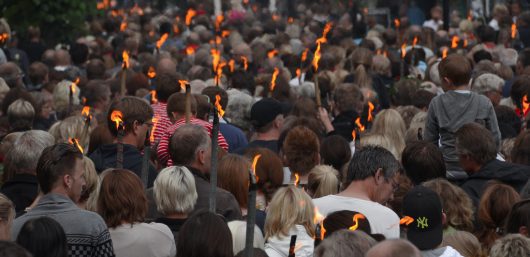
7 Facts About Poverty in Norway

 Poverty in Norway

The European Union (EU) definition of the poverty line are those individuals making 60 percent of the national median earnings — for Norway, that would be about $17,000 a year. Using the EU definition, about 10 percent of Norwegians were considered below the relative poverty line in 2006, two years before the 2008 recession hit. Here are seven facts about poverty in Norway.

7 Facts About Poverty in Norway

  1. The Borgen Project had the opportunity to speak with Researcher Sindre Bangstad of the Frisch Institute in Oslo. He states: “A number of recent studies have shown that socio-economic inequalities continue to rise in Norway. Inequality is due to extensive tax cuts for the wealthiest five percent under the present right-wing government.”
  2. Aside from tax cuts, Norway provides a massive amount of social welfare programs and many regular citizens are able to find help. According to the “Inequality of Opportunity Index,” first put forth by Fransisco Ferreira of the World Bank, only two percent of Norwegians can attribute the lack of social mobility to a factor such as race, gender, birthplace, or disability.
  3. The young and old are both at risk. While inequality hurts youth, especially immigrant youth, the elderly are also facing economic hardships. Norway still needs to pay out the services promised to the older population. The elderly receive a good amount of benefits and make up a smaller percentage of the population in poverty. Contraceptive use is high and keeps birth rates low, so new generations are not as large as their predecessors. Only one in 200 children of Norwegian parents live under the poverty line.
  4.  At the same time, four in 10 immigrant children live in poverty in Norway. According to the CIA World Factbook, more than 27,000 refugees reside in Norway, who arrived from Eritrea, Somalia and Afghanistan. “Poverty is increasingly racialized in that children of immigrants are much more likely to grow up in poverty than children of white Norwegians born here,” Bangstad said.
  5. Many people facing economic trouble are centered in urban areas. Homelessness is a growing concern as housing prices remain high. With the wind, the temperature can be negative 15 degrees Celsius at night. People use shrubbery, churchyards, or sheds as toilets. Norway recently passed a law banning street beggars along with giving municipalities the power to begin making other regulations.
  6. The country’s welfare model makes social programs reliant on oil tax revenue. The decline of oil is a pressing concern for policymakers. According to the CIA World Factbook, this sector comprises nine percent of Norwegian jobs, 15 percent of its GDP and 39 percent of its exports.
  7. Norway has built up the world’s largest sovereign wealth fund, stockpiling more than $800 billion. The budget each year is projected to use only four percent of those funds. The Norwegian government said it is willing to increase public spending to avoid a recession but provides many amenities to its citizens already. Perhaps something as simple as offering increased access or outreach to those who need such amenities could boost productivity and halt progress towards an economic recession.

Poverty looks similar and different across the globe. Norway still has challenges to overcome but has a government that continually works for its people. The current problem for social welfare programs fighting poverty in Norway may be hard to solve, but luckily the stockpile the country has accumulated can buy time for all its citizens to continue working towards a more sustainable future.


– Michael Rose

Photo: Flickr

April 23, 2017
https://borgenproject.org/wp-content/uploads/borgen-project-logo.svg 0 0 Borgen Project https://borgenproject.org/wp-content/uploads/borgen-project-logo.svg Borgen Project2017-04-23 01:30:062024-12-13 17:56:427 Facts About Poverty in Norway
Global Poverty, Refugees

10 Facts About Japan Refugees


Shinzo Abe, Japan’s Prime Minister, said Japan must improve its own living standards before concerning itself with Syrian refugees. Human rights groups and advocacy groups are highly critical of Japan’s refugee policies. Here are 10 facts about Japan refugees.

10 Facts About Japan Refugees

  1. The number of foreign people applying for refugee status in 2016 was up 44 percent, at an all-time high of just fewer than 11,000.
  2. Japan only accepted 28 refugees in 2016, an increase of one from 2015. Most of those applications came from Afghanistan, Ethiopia, Eritrea and Bangladesh.
  3. In 2016, 97 people were allowed to remain in Japan for humanitarian reasons. They were not granted refugee status, however. According to Brian Barbour of the Japan Association for Refugees, 99 percent of asylum applications are denied.
  4. People applying for refugee status in 2016 included: 1,829 Indonesians, 1,451 Nepalese, 1,412 Filipinos, 1,143 Turks, 1,072 Vietnamese, 938 Sri Lankans, 650, Myanmarese, 470 Indians, 318 Cambodians and 289 Pakistanis.
  5. Japan’s population is shrinking and along with it, Japan’s labor force. Still, Japan does not accept unskilled workers, and there are no plans to increase the number of applicants granted refugee status. Japan has introduced a category that will allow for a large number of unskilled workers as trainees. Also, people with a student visa are allowed to work up to 28 hours per week.
  6. Only 69 Syrians applied for refugee status between 2011 and 2016 in Japan. In order to apply, applicants must go to Japan.
  7. Japan only accepts refugees who are being persecuted for political reasons; they do not accept economic refugees. Japan is closed to thousands of people seeking asylum including Syrians. Those who make it to Japan rarely have their refugee status recognized.
  8. Japan attempts to compensate for its decision not to take refugees by donating money to the UNHCR. In 2016, Japan was the fourth-largest donor, giving more than $164 million. In September 2016 Japan said it would provide $1.6 billion in assistance for Syrians and Iraqis engulfed in conflict.
  9. Japan plans to grant refugee status to 300 Syrians over the next five years. This number includes study abroad students and their families. Between 2017 and 2021, Japan plans to work with the Japan International Cooperation Agency to accept 20 Syrian students and their spouses and children each year if taking refuge in Lebanon and Jordan.
  10. In a move designed to show that Japan is willing to help with the Syrian refugee crisis, the government announced plans to accept 150 Syrian refugees over a period of five years as a part of the JICA program and the Japanese Government Scholarship program.

These 10 facts about Japan refugees make it clear that instead of accommodating refugees, Japan prefers to place a financial band-aid on the refugee crisis.

– Mary Barringer

Photo: Flickr

April 19, 2017
https://borgenproject.org/wp-content/uploads/borgen-project-logo.svg 0 0 Borgen Project https://borgenproject.org/wp-content/uploads/borgen-project-logo.svg Borgen Project2017-04-19 01:30:102020-05-07 19:21:4410 Facts About Japan Refugees
Education, Global Poverty, Refugees

Refugee Access to Education in Azerbaijan


In the past decade, access to education has been on the rise in Azerbaijan. As of 2009, the literacy rate in Azerbaijan was 99.5 percent, an impressive number for the Caucasus region. Education in Azerbaijan is well on the way to meeting the Millennium Development Goal 2 of universal primary education in the next few years. However, there are clear, massive inequalities in primary education between refugees and non-refugees.

Azerbaijan has one of the largest displaced populations, as it is currently home to over one million refugees who are internally displaced people (IDP) hoping for asylum status. According to UNICEF, Azerbaijan has the highest IDP population per capita in the entire world; a majority of these people are Azeris, who have been displaced from their own homes due to the Nagorno-Karabakh war.

Refugee Children Require Additional Educational Resources

Azerbaijan is leading the Caucasus region in access to education for refugees. In 2003, Azerbaijan began allowing refugees to attend public school. However, since there is a large IDP population, inequities in refugee education are inevitably holding back universal education in Azerbaijan. Many refugee children do not have the same access to education as native children, affecting early, primary and secondary schooling.

A 2010 report indicates that about 20 percent of Chechen refugee children in Azerbaijan do not attend school, and of those who do attend, many cannot understand their instructors due to language barriers. This is common for many refugee populations in Azerbaijan. UNICEF notes that “most refugees have special linguistic needs since many do not speak the national language, straining teachers and school resources.”

It is common for displaced children to experience violence and hardship due to their refugee status, leading to many children requiring additional special psychosocial learning. Additionally, refugee children enter school later and tend to be less prepared for school, compared with the average Azerbaijani student.

Though Azerbaijan is working to ensure increased access to education for all children, many outside organizations have taken initiative to increase educational opportunities for refugees in Azerbaijan. For example, the U.N. High Commissioner for Refugees (UNHCR) found that oftentimes, refugee children do not go to school because their school materials are too expensive. To remedy this, the UNHCR created a textbook fund, giving more than 8,000 textbooks to about 2,000 refugee children.

In the future, there is a great deal of hope for the state of universal education in Azerbaijan.

– Morgan Leahy

Photo: Flickr

April 16, 2017
https://borgenproject.org/wp-content/uploads/borgen-project-logo.svg 0 0 Borgen Project https://borgenproject.org/wp-content/uploads/borgen-project-logo.svg Borgen Project2017-04-16 01:30:452024-12-13 17:57:50Refugee Access to Education in Azerbaijan
Global Poverty, Refugees

10 Facts About Italy Refugees

10 facts about Italy refugees
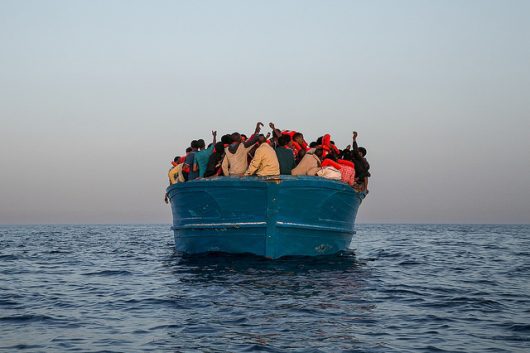
Italy has become one of the top destinations for refugees, or asylum seekers, over the past few years. Many of its current refugees transport via boat, crossing the Mediterranean Sea on their way to find peace. Here are 10 facts about Italy refugees:

  1. In 2016, Italy broke its record of asylum seekers admitted from the Mediterranean, at close to 200,000 for the year.
  2. Eighty-five percent of these migrants were from African countries, including Nigeria, Eritrea, and Sudan.
  3. More than 176,000 refugees are in reception centers.
  4. October and November were record-breaking months for Italy, with more refugees making the sea voyage than in previous years. This was partially due to better sea conditions.
  5. Better sea conditions resulted in more people traveling on a single boat, which also resulted in more deaths. Almost 5,000 people died at sea in 2016, compared to fewer than 4,000 the previous year.
  6. The United Nations High Commissioner for Refugees (UNHCR) estimated that more than 85 percent of migrants arriving in Italy through the Mediterranean started their journey in Libya.
  7. In September 2016, European countries agreed to relocate 160,000 refugees from Italy and Greece, to help ease the heavy loads that these two countries carry — only 4,000 were displaced.
  8. Some Italy refugees perform volunteer community service — sweeping the streets, cleaning up parks and maintaining gardens.
  9. According to the U.N. refugee agency, 26,000 unaccompanied minors made the trek to Italy last year.
  10. The Italian government is constructing a plan to integrate asylum seekers into the workforce while they are waiting in the reception centers.

Attempts to get help from other European countries to lessen the load on Italy have fizzled out over the past few years. As a result, the Italian government strains to make providing aid to those who flee from turmoil possible. These 10 facts about Italy refugees illustrate the difficulties, and the opportunities, that this mass displacement presents for all countries.

– Dustin Jayroe

Photo: Flickr

April 16, 2017
https://borgenproject.org/wp-content/uploads/borgen-project-logo.svg 0 0 Borgen Project https://borgenproject.org/wp-content/uploads/borgen-project-logo.svg Borgen Project2017-04-16 01:30:222024-12-13 17:57:4610 Facts About Italy Refugees
Global Poverty, Refugees, War and Violence

10 Facts About South Sudanese Refugees


The Sudanese civil war ended with South Sudan’s successful secession referendum. The referendum effectively split Sudan in two. Less than two years later, South Sudan was plunged into its own three-year civil war. As a result, South Sudan, the youngest country in the world, now has the largest refugee crisis in Africa. Here are 10 facts about South Sudanese refugees.

  1. One and a half million South Sudanese have been forced to leave their homes and seek refuge in neighboring countries, predominantly Uganda, Ethiopia, Sudan and other eastern sub-Saharan African countries.
  2.  The South Sudanese civil war sparked from a falling out between President Salva Kiir, an ethnic Dinka, and Vice President Riek Machar, an ethnic Nuer.  As a result, 3.5 million people have lost their homes.
  3. As violence began to escalate in the capital city of Juba in July 2016, the rates of displaced refugees have continued to rise. On average, 63,000 people are displaced every month.
  4. Ninety percent of the South Sudanese refugees are women and children. Human rights groups have found that both Dinka and Nuer forces have killed civilians, raped thousands of women, and forcefully recruited children to fight in their armies.
  5. Food security is a real problem in South Sudan. According to the World Food Program, 40 percent of the population is in desperate need of food assistance. The Sudanese government is unable to feed its population because it has diverted most of its resources to fighting rebel forces.
  6. The international community warns that the growing humanitarian crisis has the potential to become the worst global famine in 70 years.
  7. One million people are on the brink of extreme hunger, 2.9 million faces a food crisis that will likely escalate into a famine, while more than 7.5 million South Sudanese are in need of food assistance.
  8. In order to prevent the impending famine, the international community would need to come up with $4.4 billion by the end of March. As of Mar. 29, 2017, only 10 percent of that goal has been reached.
  9. In the midst of this impending famine, the government is planning to build a $10 billion new capitol building in Ramciel. However, if the construction was postponed and the funding was allocated as humanitarian assistance, the famine could be averted.
  10. Uganda has received the most South Sudanese refugees. The country’s handling of the steady inflow of 3,000 refugees per day is impressive. Refugees are allowed access to farmland and shelter, ensuring integration into Ugandan society. The people of Uganda do not want the refugees to become isolated in camps with no opportunity to branch out and join the greater Ugandan community.

If the South Sudanese government continues with its new capital project and the international community remains unsuccessful in accruing the $3.9 billion funding gap necessary to end the famine, then this humanitarian crisis will continue to develop and complicate poverty in sub-Saharan Africa, likely becoming one of the largest humanitarian crises of our time.

– Josh Ward

Photo: Flickr

April 11, 2017
https://borgenproject.org/wp-content/uploads/borgen-project-logo.svg 0 0 Borgen Project https://borgenproject.org/wp-content/uploads/borgen-project-logo.svg Borgen Project2017-04-11 01:30:212020-05-04 11:34:4810 Facts About South Sudanese Refugees
Global Poverty, Refugees, War and Violence

10 Important Facts to Know About Refugees in Thailand

Refugees in Thailand
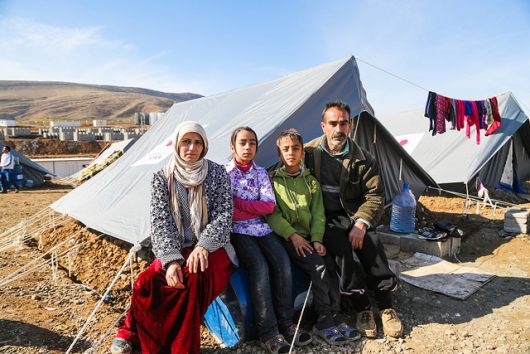
The 1951 Refugee Convention and its 1967 protocol established a legal framework that implemented rights for refugees. To date, 145 state parties have ratified this agreement; however, Thailand is not one of these countries and provides no legal protection to refugees and asylum-seekers. Currently, there are more than 100,000 refugees in Thailand. Discussed below are 10 facts about the lives and circumstances of refugees in Thailand.

Top 10 Facts on Refugees in Thailand

  1. Nearly 130,000 people reside as refugees in Thailand, of whom approximately 90 percent are from the bordering country of Myanmar, also known as Burma. More than 80 percent of Burmese refugees in Thailand are ethnic Karen. They fled eastern Myanmar due to persecution by the Myanmar army beginning in 1988 and have resided in nine refugee camps along the Thailand-Myanmar border for nearly three decades. Thousands of refugees have been born inside these camps and know no other life.
  2. Because Thailand did not ratify the 1951 Refugee Convention, the Thai Royal Government (TRG) considers refugees stateless persons or irregular migrants. They are not citizens, meaning they are do not have access to healthcare, employment or education, nor are they allowed to vote, own property or obtain a driver’s license.
  3. Due to their stateless status, refugees must live exclusively in refugee camps, without the right to work or leave the camp. Refugees who choose to live and work outside of camps in Thailand are considered illegal and do not have any legal protection, making them highly susceptible to arrest and deportation.
  4. Cut off from government assistance and employment opportunities, many refugees in Thailand depend entirely on aid organizations for food and other basic resources.
  5. The TRG has pledged to end statelessness by 2024. One step toward this goal is the 2010 Civil Registration Act, which allows babies born to refugee parents to receive birth registration. While this does not grant the infants citizenship, they are no longer considered stateless persons. The U.N. Refugee Agency (UNHCR) estimates that 4,300 infants were registered and provided birth certificates in 2017.
  6. The refugee camps have become highly organized. The TRG serves as the overall authority for the camps, implementing refugee policies and providing border patrol. The Karen Refugee Committee (KRC) and Karenni Refugee Committee (KnRC) serve as the representatives of refugees in the camps and act as liaisons between the camps and the government, border patrol, NGOs and the UNHCR. Camp members elect committee members and all refugees over the age of 20, regardless of registration status, are eligible to vote.
  7. Most refugee camps are in mountainous regions with limited access to electricity, phones and healthcare services. These areas are also susceptible to flash floods during the rainy season. Overcrowding is rampant, with houses primarily built out of bamboo and wood, leading to a high fire risk. In 2015, a fire in the Ban Mai Nai Soi refugee camp damaged 194 homes and five community buildings. Fortunately, there were no casualties and several nonprofits and the UNHCR pooled together to begin rebuilding within a month.
  8. The KRC and World Education are two of the leading nonprofits supporting education opportunities for refugees. Schools are primarily located in the largest refugee camp, Mae La. There are currently more than 2,000 students who come from other camps and live in boarding houses in Mae La while completing their secondary education.
  9. Resettlement to third countries began in 2005, and since then more than 80,000 refugees have resettled. The U.S., Australia, and Canada accept many of these refugees.
  10. Now under a democratically elected government, in 2014, the Myanmar government opened peace talks with persecuted ethnic minorities. While they are still in progress, in October 2016, the Myanmar and Thai governments endorsed the return of 68 refugees to Myanmar and hope to gradually support the return of more.

While the TRG still does not provide legal rights or protection to refugees, it has taken steps toward eliminating the stateless status of refugees and assisting them in resettling in other countries or safely returning to Myanmar. The TRG has pledged not only to eliminate statelessness by 2024 but at the 2016 U.N. Leaders’ Summit on Refugees it also pledged to provide better skills training opportunities for refugees, coupled with employment opportunities.

– Nicole Toomey

Photo: Flickr

April 6, 2017
https://borgenproject.org/wp-content/uploads/borgen-project-logo.svg 0 0 Borgen Project https://borgenproject.org/wp-content/uploads/borgen-project-logo.svg Borgen Project2017-04-06 01:30:572024-12-13 17:57:3710 Important Facts to Know About Refugees in Thailand
Global Poverty, Refugees, War and Violence

How Many Refugees Are There in the World?

How Many Refugees Are in the World
On Feb. 17, the U.N. High Commissioner for Refugees (UNHCR) published its highly anticipated 2016 mid-year trends report. The document provides fresh insight into the global humanitarian crisis and yields a tentative answer to the question: how many refugees are there in the world? The agency has a tall order to fill — roughly 65.3 million people worldwide have been forcibly displaced from their homes. In 2015, 24 people were displaced from their homes every minute.

According to the UNHCR, a refugee is “someone who has been forced to flee his or her country because of persecution, war or violence.” They are recognized under the 1951 U.N. Refugee Convention, the Convention’s 1967 Protocol and the 1969 OAU Convention. The question remains: how many refugees are there in the world?

Though it is difficult to accurately state how many refugees there are in the world at a given time, the UNHCR statistic reported last month was 15,874,208. It is important to realize that this excludes 640,982 individuals currently in a refugee-like situation. The UNHCR defines this particular sub-category as “groups of persons who are outside their country or territory of origin and who face protection risks similar to those of refugees, but for whom refugee status has, for practical or other reasons, not been ascertained.”

One trend in the report is clear: the numbers have grown. In 2015, the UNHCR mandate stood at 16.1 million refugees with an additional 5.2 million registered with the U.N. Relief and Works Agency (UNRWA). By June 2016, there were 16.5 million refugees and people in refugee-like situations worldwide. Approximately 12.4 million have been assisted by the UNHCR.

The largest concentrations of refugees presented in the report are in the Middle East and North Africa (5,816,454) as well as the rest of Africa (5,275,845). As additional information becomes available, these figures may be adjusted.

The scope of UNHCR’s mandate is global in nature, while the UNRWA’s mandate is specific to refugees living in Gaza, Lebanon, Syria, the West Bank and Jordan. The UNRWA for Palestine Refugees in the Near East was established in 1949 and continues to provide relief for people in those regions.

Understanding How Many Refugees Exist

To correctly interpret the findings outlined above, several qualifications are warranted. First, the dataset contains the latest available estimates — which are subject to change. The nature of statistics is that data is provisional. Second, the number of refugees is different when those in refugee-like situations are considered in a total summation. Third, the published values in the trend report are based on different government definitions and data collection methodologies within each respective nation. These various interpretations make it increasingly difficult to calculate the total number of refugees in the world. Fourth, the figures only represent the first half of 2016 — there is more data still to analyze. Finally, refugees who have been resettled are not included in these estimates. Although, the UNHCR still monitors these groups to ensure their safety and welfare. Overall, the question — how many refugees are there in the world — is answerable in a relatively statistical sense.

The UNHCR claims that many industrialized nations are not equipped with refugee registers or effective data collection procedures. This means governments are unable to accurately report on the number of refugees within their borders. One step forward in managing this crisis would be to standardize definitions and collection procedures so that precise figures can be ascertained. Without reliable data, there is only guesswork.

With a U.S. federal budget battle brewing, the impact of reduced diplomacy and foreign aid investments could prolong the suffering of millions around the globe. A weakened State Department may be unable to cope with the decades-long fallout of mass disillusionment, fear and anguish. Furthermore, the spectrum of sentiment among U.S. leaders and divided public opinion on matters of foreign policy signals an era of uncertainty regarding the management of the refugee crisis and any progress toward a swift resolution.

– JG Federman

Photo: Flickr

April 4, 2017
https://borgenproject.org/wp-content/uploads/borgen-project-logo.svg 0 0 Borgen Project https://borgenproject.org/wp-content/uploads/borgen-project-logo.svg Borgen Project2017-04-04 01:30:542024-12-13 17:57:38How Many Refugees Are There in the World?
Global Poverty, Refugees, War and Violence

Nine Facts to Know About Yemen Refugees

Yemen Refugees
The Yemen civil war has escalated the number of refugees fleeing from Yemen to safer locations for their families. Here are nine facts you need to know about Yemen refugees.

  1. About two million people have been displaced because of the war in Yemen.
    Before the war began in Yemen, poverty was already an issue for many in the country and it was the poorest nation in the Arabian Peninsula before the war. The war has only caused the number to rise. Refugees have been fleeing to neighboring countries, with Saudi Arabia taking in the largest amount of Yemen refugees. As a result of poverty, most refugees are not able to flee to the United States and Europe as often due to the high costs of traveling to these countries.
  2. Civilians and many family members are still in danger in Yemen.
    A number of the victims in Yemen are civilians who have been caught in the crossfire of the war. A six-year-old was shot in the back while walking in his home city of Taiz with his father, according to the BBC. Civilians that spoke with BBC described multiple times when civilians have been shot at and innocent people that have died due to the war. Also, many refugees that have fled end up returning to different parts of Yemen in order to help their family members, according to the United Nations High Commissioner for Refugees (UNHCR).
  3. Many have been fleeing to the Horn of Africa despite the war going on there.
    About 3,000 Yemen refugees have been fleeing to the Horn of Africa, a place where war and crisis are also prominent. The countries in the Horn include Somalia, Ethiopia, Eritrea, Djibouti and Sudan, all of which have suffered from many political issues. Everything from famine to bombings has disrupted the region, but still, many Yemen refugees migrate across the Gulf of Aden to escape the danger in their home country.
  4. Refugees are without food, water and other basic needs.
    With many citizens being displaced across the country and region, some of the biggest needs include food, water and shelter, according to Ayman Gharaibeh, the country representative for Yemen for UNHCR. “More than half the population is without adequate food and health care and this will only worsen,” said Gharaibeh in an interview with UNHCR. Many refugees are living in poor conditions, which just increases the spreading of diseases among them.
  5. Yemen was one of the seven countries banned from the United States by President Trump.
    On Jan. 27, 2017, President Trump signed an executive order banning immigrants for 90 days from seven countries, one of which was Yemen. The other countries, which comprise Iraq, Syria, Sudan, Iran, Somalia and Libya, were placed on a ban to “prevent a terrorist or criminal infiltration by foreign nationals,” according to the United States Department of Homeland Security.As of recently, President Trump’s ban has been suspended by multiple federal judges who repealed the ban. This now allows citizens of the seven countries to come to the United States. President Trump does have plans to fight the repeal in court.
  6. Many are forced to live in refugee camps.
    There are countless stories of refugees leaving their homes and lives behind in order to find a safe place to stay while the war continues. Many have fled to neighboring countries and other countries in the world, but many have also ended up in refugee camps. Al Kharaz is a refugee camp in the southwest region of Yemen near the Gulf of Aden. More than 16,000 refugees live in this camp, with many from Somalia and Ethiopia, according to UNHCR.
  7. Different humanitarian groups and organizations are bringing aid to Yemen.
    Around the world, many groups and organizations have brought attention to the crisis in Yemen since the civil war began. UNHCR is just one of the many organizations bringing aid to Yemen. Others include UNICEF and the World Food Programme (WFP).
  8. Many of the victims are children.
    As with the story of the six-year-old who was shot in the back, many children have been victims of the war. About 500,000 children are in need of care in Yemen due to malnutrition, according to UNICEF. One child dies every ten minutes in Yemen due to starvation and malnutrition, also according to UNICEF.Not only are children starving, but many have been caught in the crossfires in their own towns. In President Trump’s first raid, 10 women and children died due to an airstrike in al-Bayda, according to Al Jazeera.
  9. There are a lot of ways to help the refugees of Yemen.
    Through the countless organizations in the world that are helping those in Yemen, any citizen can donate money to the organizations to help feed and care for the Yemen refugees. Another way to help is by learning about the situation or supporting a group such as Doctors Without Borders in order to help those in need in Yemen

As the war in Yemen continues, people will continue to flee the country to seek the necessary resources to live safely, causing the crisis to grow and for more refugees to need help.

– Hailey Rose McLaughlin

Photo: Flickr

March 31, 2017
https://borgenproject.org/wp-content/uploads/borgen-project-logo.svg 0 0 Borgen Project https://borgenproject.org/wp-content/uploads/borgen-project-logo.svg Borgen Project2017-03-31 01:30:282020-04-28 13:28:28Nine Facts to Know About Yemen Refugees
Global Poverty, Refugees

Ten Facts About Brazil Refugees

Brazil Refugees
As the fifth-largest country by both area and population, Brazil is the largest country in South America and Latin America and receives more refugees than any other country in the region. Brazil is also the only country in the Americas to have Portuguese as the official language.

The country is both a regional power in Latin America and a middle power in international affairs. Due to its recognition as an emerging global power, Brazil has been identified as a shelter to refugees and migrants. Here are 10 facts about Brazil refugees:

  1. As of 2016, Brazil has about 2,100 refugees living in the country.
  2. Brazil receives more displaced people from Syria than any other country in Latin America.
  3. As of 2013, Brazil issued 8,000 humanitarian visas under more simplified conditions to allow survivors of the Syrian war to claim asylum in the country.
  4. Due to these visas, Brazil has had approximately 2,000 refugees settle in the country.
  5. Brazil’s refugees are able to receive informal, temporary employment in the services and retail industry.
  6. Refugees in Brazil are considered by some to be an unnecessary cost and security threat due to the country’s deep economic recession.
  7. Asylum-seekers in Brazil have a higher education than the average Brazilian.
  8. The Brazilian government wants to limit the intake of refugees due to the country’s economic woes.
  9. Brazilian refugees will now be faced with the country’s recalibration of its foreign policy.
  10. Brazil’s refugees have the right to work, access to education, and health care.

In recent years, Brazil has been praised for the country’s humanitarian efforts and openness to asylum seekers. As of recently, questions of the country’s ability to aid refugees have plagued the government amid the country distancing itself from developing nations and experiencing the worst recession in its memory.

– Rochelle R. Dean

Photo: Flickr

March 24, 2017
https://borgenproject.org/wp-content/uploads/borgen-project-logo.svg 0 0 Borgen Project https://borgenproject.org/wp-content/uploads/borgen-project-logo.svg Borgen Project2017-03-24 01:30:562024-12-13 17:57:39Ten Facts About Brazil Refugees
Global Poverty, Refugees

10 Facts About Spain Refugees

Spain Refugees
Despite having a history of being a welcoming and friendly culture, Spain does not have a very inviting asylum policy. Citizens are pushing their leaders to make Spain a viable location for refugees escaping war-torn countries. Here are 10 facts about Spain refugees.

  1. There were over one million sea arrivals to Europe for refugees in 2015 but only a few thousand went to Spain. There were 1.3 million asylum applications logged but only 13,000 in Madrid.
  2. In 2015, Prime Minister Mariano Rajoy issued a statement agreeing that Spain would take only 2,749 refugees. Rajoy believed that due to Spain’s current economic struggles, they could not support an influx of refugees. This number is “less than half of the quote requested by the EU.”
  3. Spanish citizens protested and pressured local governments to change this decision and Rajoy changed the refugee quota to 14,931 in addition to the 2,749.
  4. Even though Spain claimed to have accepted roughly 15,000 refugees over a six-month period in 2015 and 2016, Spain only accepted 18 people according to Spanish NGOs.
  5. In response to this, big cities like Barcelona and Madrid planned a countrywide network for citizens to register to have refugees to stay in their personal homes.
  6. Other cities have offered to join this network. Valencia, the island of Mallorca and the region of Castilla y Leon also pledged to work with local banks, public buildings and universities to receive housing for Spain’s refugees.
  7. Spain refugees see the country as a stepping stone to getting farther north in Europe. Many want to continue on to Germany.
  8. Spain refugees are placed in reception centers for six months. There they receive food, shelter, clothing, legal aid and counseling. “After six months, you don’t get anything. Spain simply throws you out into the street,” says Bashar Haousheh, a Syrian refugee in Spain.
  9. The percentage of Syrian refugees arriving in Spain was 44.2 percent in 2015, over triple that of the next largest nationality, Guinea (Conakry), at 13.6 percent.
  10. Madrid has pledged 10 million euros towards resettlement services. Madrid’s football team, Real Madrid, has pledged over one million euros and the use of its facilities to incoming refugees.

Even though Spain’s recent attempts at accepting refugees are lower than past years, and regardless of the government putting staunch regulations on incoming refugees, the regular citizens of Spain still want to give their assistance and try to make a difference.

– Karyn Adams

Photo: Flickr

March 12, 2017
https://borgenproject.org/wp-content/uploads/borgen-project-logo.svg 0 0 Borgen Project https://borgenproject.org/wp-content/uploads/borgen-project-logo.svg Borgen Project2017-03-12 01:30:002020-05-15 13:29:2410 Facts About Spain Refugees
Page 44 of 53«‹4243444546›»

Get Smarter

  • Global Poverty 101
  • Global Poverty… The Good News
  • Global Poverty & U.S. Jobs
  • Global Poverty and National Security
  • Innovative Solutions to Poverty
  • Global Poverty & Aid FAQ’s
Search Search

Take Action

  • Call Congress
  • Email Congress
  • Donate
  • 30 Ways to Help
  • Volunteer Ops
  • Internships
  • Courses & Certificates
  • The Podcast
Borgen Project

“The Borgen Project is an incredible nonprofit organization that is addressing poverty and hunger and working towards ending them.”

-The Huffington Post

Inside The Borgen Project

  • Contact
  • About
  • Financials
  • President
  • Board of Directors
  • Board of Advisors

International Links

  • UK Email Parliament
  • UK Donate
  • Canada Email Parliament

Get Smarter

  • Global Poverty 101
  • Global Poverty… The Good News
  • Global Poverty & U.S. Jobs
  • Global Poverty and National Security
  • Innovative Solutions to Poverty
  • Global Poverty & Aid FAQ’s

Ways to Help

  • Call Congress
  • Email Congress
  • Donate
  • 30 Ways to Help
  • Volunteer Ops
  • Internships
  • Courses & Certificates
  • The Podcast
Scroll to top Scroll to top Scroll to top