• Link to X
  • Link to Facebook
  • Link to Instagram
  • Link to TikTok
  • Link to Youtube
  • About
    • About Us
      • President
      • Board of Directors
      • Board of Advisors
      • Financials
      • Our Methodology
      • Success Tracker
      • Contact
  • Act Now
    • 30 Ways to Help
      • Email Congress
      • Call Congress
      • Volunteer
      • Courses & Certificates
      • Be a Donor
    • Internships
      • In-Office Internships
      • Remote Internships
    • Legislation
      • Politics 101
  • The Blog
  • The Podcast
  • Magazine
  • Donate
  • Click to open the search input field Click to open the search input field Search
  • Menu Menu

Archive for category: Refugees

Global Poverty, Refugees

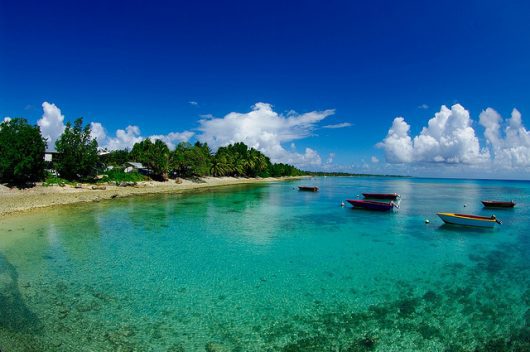
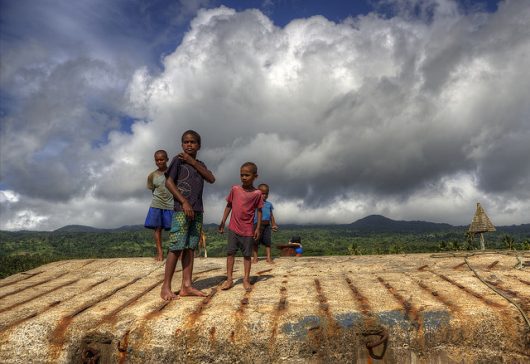
9 Facts About Refugees in Fiji


All around the world, there are more than 65 million people seeking refuge and relocation. With so much controversy surrounding the acceptance of refugees, the safety of those who are fleeing harm is at stake. Fiji is welcoming of refugees, and the United Nations refugee agency (UNHCR) works to ensure that refugees in Fiji will be acknowledged and their concerns heard. Here are nine facts about refugees in Fiji.

9 Facts About Refugees in Fiji

  1. As of June 2, 2017, there are 12 confirmed refugees in the country.
  2. These 12 are left from the original group of 40 that arrived in Fiji in 2006.
  3. People seeking refuge come to Fiji from various countries, including Pakistan and Congo.
  4. Fijian refugees are guaranteed confirmation thanks to something called “a claim for asylum,” which is filed when an individual indicates the want to be acknowledged by the country as a refugee.
  5. A lot of people seeking refuge in Fiji are “climate refugees,” meaning that they are experiencing a sudden change in environment and climate in their country of origin and flee to Fiji for refuge.
  6. Fiji has offered to give refuge to its neighboring citizens of Kiribati and Tuvalu in the event of a disaster.
  7. Fiji is at high risk for climate-induced natural disasters as well. So while Fijian refugees may find solace in their new homes, they may still be at risk of being affected by natural disasters.
  8. The UNHCR covers Fijian refugees by ensuring funding to help protect their refugees.
  9. People seeing refuge do not always permanently reside in the country, seeing as Fiji is typically a temporary holding ground for refugees rather than a permanent residence.

These nine facts about people seeking refuge in Fiji suggest that the country has struggled on its own, but its efforts to make refugees feel accepted and taken care of displays its ability to welcome those seeking shelter with open borders.

– Trisha Noel McDavid

Photo: Flickr

June 27, 2017
https://borgenproject.org/wp-content/uploads/borgen-project-logo.svg 0 0 Borgen Project https://borgenproject.org/wp-content/uploads/borgen-project-logo.svg Borgen Project2017-06-27 01:30:422024-05-28 00:02:249 Facts About Refugees in Fiji
Global Poverty, Refugees

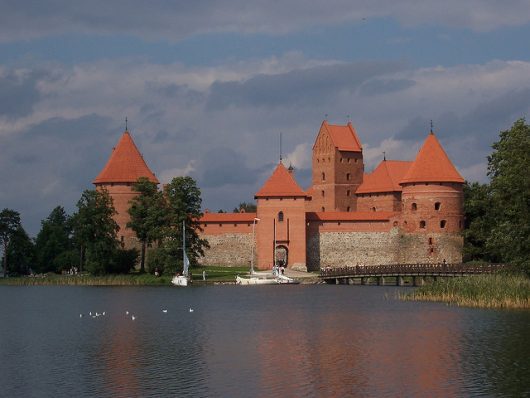
10 Facts About Refugees in Lithuania


Since August 2015, more than one million refugees have entered the EU, many of them fleeing conflicts in Syria, Afghanistan, and Iraq. Under block rules, refugees faced relocation to Lithuania, Latvia and Estonia. As these countries are among the poorest in the European Union, refugees relocated to Lithuania are fleeing elsewhere out of fear of starvation. Here are ten facts about refugees in Lithuania.

10 Facts About Refugees in Lithuania

  1. Through the EU relocation plan, refugees from Syria, Afghanistan, and Iraq have been sent to live in Lithuania, a small country on the Baltic Sea, north of Poland.
  2. While Lithuania is home to less than three million people, it has a quota of about 1,100 refugees to take in within two years. So far, there have been around 90 refugees sent there. Lithuania’s interior minister Tomas Zilinskas noted that even the small number of accepted refugees in Lithuania faced opposition by half of the country’s citizens.
  3. As benefits in Lithuania are already extremely limited, a refugee family of four receives €450 a month for half a year, after which the payment halves.
  4. A whopping 72 out of 90 of those granted refugee status in Lithuania have left. Many refugees claim living in a refugee center somewhere else is better than life in the Baltic States. As Mohamed Kamel Haj Ali, a refugee sent to Lithuania said: “The ones who left for Germany said they left Syria out of fear of death from bombs, but here they feared they would die from hunger.”
  5. EU rules dictate that refugees are to be forbidden from work or to claim refuge in other member states. Some destroy their identification documents before leaving Lithuania, hoping to claim asylum in richer countries amidst Western Europe.
  6. Refugees in Lithuania struggle to find work due to an insufficient amount of jobs available. As NPR’s Corey Flintoff states, “Lithuania cannot supply enough jobs for its own citizens. Hundreds of thousands of them have had to find work in other countries. Still, Lithuania’s current government considers it an obligation to do its part to help solve the migrant crisis among its fellow EU members.”
  7. After the discovery of a new route through Lithuania’s eastern border, a gateway into Western Europe allows refugees in to enter the country. Renatas Pozela, acting commander of the Lithuanian State Border Guard Service, states, “We are also seeing constant attempts to open new corridors [to Europe], mostly by Syrian and Iraqi refugees who are trying to reach Scandinavian countries.”
  8. While Lithuania joined the EU in 2004, its population has shrunk 12 percent to 2.9 million people over the past decade, as refugees and citizens alike flee in search of higher wages and better job availability.
  9. As Lithuania continues to depopulate, refugees help to sustain local businesses, such as a barber shop operated by Vilius Leveris.  Leveris finds most new staff for his barber shop in the refugee hostel. Since Leveris opened his business four years ago, he has taken on 12 employees from Turkey, Libya, Syria, Morocco and Colombia. Leveris states, “I couldn’t find anyone here. Even getting a wet shave is a completely new thing… Now, if a refugee who was a barber at home arrives in Lithuania, the refugee center calls me at once.”
  10. Ilmars Latkovskis, head of the Latvian parliament’s Citizenship, Migration, and Social Cohesion Committee, said to make staying in Lithuania feasible for refugees, it was necessary to have benefits increased “to a level which would be very unpleasant for our population, which is not that well-off.”

These were ten facts about refugees in Lithuania. It is evident from the significant number of refugees in Lithuania fleeing the country, as well as the other neighboring Baltic nations, many areas within the European Union need assistance in their efforts to aid refugees worldwide.

– Kendra Richardson

Photo: Flickr

June 26, 2017
https://borgenproject.org/wp-content/uploads/borgen-project-logo.svg 0 0 Borgen Project https://borgenproject.org/wp-content/uploads/borgen-project-logo.svg Borgen Project2017-06-26 07:30:352020-05-09 19:45:0110 Facts About Refugees in Lithuania
Global Poverty, Refugees

10 Things You Should Know About Refugees in Estonia

10 Things You Should Know About Estonian Refugees
Tucked away in the far-eastern corner of Europe, bordering Russia, lies the small Baltic State of Estonia. It may not be the most well-known member of the European Union, but nonetheless, Estonia is proving a valuable asset in the EU’s response to the growing refugee crisis.

Here are 10 things you should know about refugees in Estonia:

  1. Refugees in Estonia primarily come from Syria, Afghanistan, Ukraine, Russia and Georgia.
  2. Estonia has not received as many applications for asylum as other EU member states, but the number of applicants is steadily growing. As of March 2016, Estonia had accepted 107 quota refugees–87 from Greece and 20 from Turkey. Estonia has also agreed to take in about 500 people over the next two years.
  3. Estonia has one of the best welfare support systems in Europe. Estonia currently offers every refugee free housing and income support for two years. Refugees also receive benefits including language courses, translators and assistance in finding employment. They receive the same unemployment and welfare benefits available to Estonian citizens, as long as they remain in Estonia.
  4. Refugees in Estonia have one of the best advocates in the EU, Riina Kionka, the chief foreign policy advisor to the president of the European Council. She is passionate about the refugee crisis, as her mother was an Estonian refugee that came to the U.S., where Kionka was born. She stated that she believes Estonians should be at the forefront of helping refugees, “given Estonia’s history, with so many of its compatriots having been welcomed by other countries as refugees after the second World War and during the Soviet occupation.”
  5. Refugees come to Estonia mainly through relocation programs, not resettlement. Estonia and Italy are currently negotiating a relocation agreement, in which Estonia will take on some of the influx of refugees surging into Italy. This agreement has been discussed for several months, but predicted to close soon. Estonia is already relocating refugees from Greece and Turkey through a similar agreement.
  6. Estonia’s retention rate of refugees is one of the lowest in all of Europe. As of May 2017, more than 25 percent of the 150 refugees taken in by Estonia had left the country. Most refugees coming in do not choose Estonia; the EU assigned them to the country in an effort to spread the number of refugees across Europe. Many are disappointed with the cold climate and discouraged by the low-paying jobs they secure, which often contrast deeply with what they had in their home countries.
  7. The greatest challenge refugees in Estonia face is their own expectations. Many refugees, especially the ones relocated from other EU countries, find themselves discontent with life in Estonia. Analysts from Estonia’s relocation program trace this dissatisfaction to social media, as most of the refugees “spent the past year stuck in Greece…seeing the successes of refugees who landed in Germany or Sweden through the filters of Facebook and Instagram.”
  8. Refugees living in Estonia are among the most welcomed in all of Europe. Anti-migrant attitudes are growing dangerously fast across the rest of Europe, but there has been little backlash in Estonia. Seeing as how the country was deeply divided over the refugee crisis only a few years ago, this signals a great shift in the country’s mindset. Communities and families alike are coming together to try and make refugees feel welcome, helping the newcomers furnish their apartments and even giving out winter clothes to shield refugees from Estonia’s colder climate.
  9. Refugees living in Estonia have some of the best chances at integrating into the society of their host country. The government has spread its refugees all across the country, especially to sparsely populated rural areas, in order to give refugees a better chance at immersion. Children are immediately enrolled in schools, and adults receive help learning Estonian and English and coaching on finding jobs. The goal of the resettlement process is to empower refugees to support themselves and no longer need government benefits.
  10. If the refugees can’t come to Estonia, Estonians are going to them. The Estonian Refugee Council has substantially increased its efforts to reach refugees, especially in the Luhansk, Donetsk and Zaporizhia oblasts of Ukraine. In April alone, they delivered hundreds of humanitarian aid packages consisting of food, hygiene products and blankets. Estonians also increased support for these efforts, as the ERC gathered 34,876 euros by the end of April 2017 in donations alone.

Though there is still work to do, Estonia is setting a strong example for the world by warmly welcoming refugees. Estonia’s approach to the refugee crisis will contribute significantly to resolving the refugee crisis and will hopefully inspire its EU counterparts to implement similar tactics.

– Sydney Cooney

Photo: Flickr

June 24, 2017
https://borgenproject.org/wp-content/uploads/borgen-project-logo.svg 0 0 Borgen Project https://borgenproject.org/wp-content/uploads/borgen-project-logo.svg Borgen Project2017-06-24 01:30:462024-12-13 17:58:0810 Things You Should Know About Refugees in Estonia
Global Poverty, Refugees

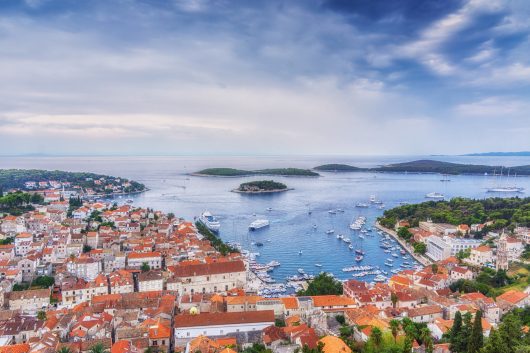
10 Facts About Croatian Refugees

10 Facts About Croatia Refugees
Croatia is a top tourist destination with its long, beautiful coastline along the Adriatic Sea, and tourism accounts for 17 percent of country’s annual gross national product. However, over the past 25 years, the country has been in headlines for something quite different. The Balkan Wars of the 1990s saw a large number of Croatian refugees leaving the country. In addition, the Syrian refugee crisis of the last few years has caused an influx of foreign refugees into Croatia. Syrian, Afghan and Iraqi refugees began arriving in Croatia in 2015. Below are 10 facts about Croatian refugees.

  1. Croatia declared its independence from the former Yugoslavia in 1991. This resulted in a war that lasted until 1995. During this time, 900,000 Croats were displaced both inside and outside the country.
  2. It is estimated that between 200,000 and 300,000 ethnic Serbs left Croatia in August 1995 after a military conflict. In turn, 130,000 ethnic Croats left Bosnia and Herzegovina for Croatia.
  3. War broke out in Bosnia and Herzegovina in 1992. During the war, an estimated 403,000 refugees arrived in Croatia as a result of the conflict.
  4. The Croatian refugees who left the country began returning in 1996. By 2012, more than 132,600 of the Croatian refugees of Serbian descent had returned to Croatia. One of the main issues impeding their return was housing. The Office of the United Nations High Commissioner for Refugees (UNHCR) has worked to help alleviate this problem as well as the legal, social and technical issues that arise for returning refugees.
  5. In 2015, Croatia faced new refugee challenges, when a huge wave of Syrian refugees arrived en route to northern Europe. During this influx, more than 800,000 people passed through Croatia.
  6. During this period, there were two refugee camps set up in Croatia, and the government provided free transport for refugees to Hungary and later to Slovenia.
  7. On September 16, 2015, Croatia became one of the main transit countries when Hungary closed its borders to refugees. Since then, the country sees approximately 12,000 entries each day.
  8. The Balkan refugee route was effectively closed in March of 2016, when Slovenia closed its borders to migrants, and Croatia, Serbia and Macedonia quickly followed suit. The aim was to end the flow of migrants to Europe through the Balkans.
  9. As a member of the European Union, Croatia has an obligation to abide by a plan to relocate refugees from Greece and Italy, countries where the most refugees have arrived.
  10. Croatia has agreed to receive a total of 1,600 asylum-seekers by the end of 2017 as agreed with the EU resettlement scheme.

These 10 facts about Croatian refugees demonstrate that the refugees that left Croatia in the 1990s as well as those that have entered the country since 2015 have brought Croatia into world headlines for the last quarter of a century.

– Jene Cates

Photo: Flickr

June 23, 2017
https://borgenproject.org/wp-content/uploads/borgen-project-logo.svg 0 0 Borgen Project https://borgenproject.org/wp-content/uploads/borgen-project-logo.svg Borgen Project2017-06-23 01:30:252024-12-13 17:58:0810 Facts About Croatian Refugees
Global Poverty, Refugees

10 Facts About Refugees in Malawi


Situated in southeastern Africa, Malawi is landlocked between Mozambique, Tanzania and Zambia. Over the last few decades, this largely agrarian nation experienced turbulent times. Despite inflation, corruption, HIV/AIDS and underdevelopment, Malawians are tenacious and remain incredibly friendly people. Here are 10 facts about refugees in Malawi:

  1. There are two camps for refugees in Malawi: Luwani (in the south) and Dzaleka (to the north). Luwani was reopened by the Malawian government in March 2016 to cope with refugees from Mozambique in the wake of conflicts between the government and opposition groups.
  2. At the end of March of this year, 3,073 Mozambican nationals who fled the Tete Province resided in the southern Luwani camp, according to the U.N. Office for the Coordination of Humanitarian Affairs (OCHA). This was a reduction of 382 refugees in Malawi from the end of February.
  3. The Dzaleka encampment, near Malawi’s capital Lilongwe, houses refugees and asylum-seekers from Burundi, the Democratic Republic of Congo, Ethiopia, Rwanda and Somalia. Most stay a few weeks before heading to South Africa.
  4. In a March 2017 press release, the UNHCR officially claimed the “Dzaleka refugee camp, originally built for a population of some 9,000 people now has more than tripled in size to nearly 28,000 people.”
  5. According to Monique Ekoko, UNHCR’s Representative to Malawi, “The new arrivals of refugees in Malawi has been at a steady rate of between 400 to 700 people per month over the past two years.”
  6. More than one million Mozambican refugees fled to the Luwani Camp during the nation’s civil war from 1977 to 1992.
  7. Due to weather-related events, the Malawi Vulnerability Assessment Committee (MVAC) suggests that 39 percent of the population (6,491,847 people out of a total population of 16,832,910) will not receive the minimum food requirement for 2016 and 2017. This is an increase of 129 percent since the previous year, a fact which makes it difficult to feed increasing numbers of refugees in Malawi.
  8. Mozambican officials pressure the Malawian government to refrain from recognizing every individual who crosses the nation’s borders as a refugee.
  9. Malaria, water shortages, dwindling food rations and respiratory infections are rampant in the encampments. Without proper funding, these and many other problems will persist.
  10. The Dzaleka camp’s health center serves a combination of 65,000 refugees and Malawians. Nearly 60 percent of the individuals cared for are Malawians.

The pressing problem of food insecurity – due to unpredictable weather and rising food prices – will be a major hurdle in the region’s recovery. Among its key planning figures for 2017, the U.N. expects to distribute an average of 2,100 calories to each refugee in Malawi and construct 920 latrines in the Dzaleka camp to meet sanitation standards. To reach long-term goals of peace and security, the UNHCR cites a 30 percent primary school enrollment figure for refugee children. With help of the international community, these activities should improve the lives of individuals in Malawi and promote regional prosperity.

— JG Federman

Photo: Flickr

June 22, 2017
https://borgenproject.org/wp-content/uploads/borgen-project-logo.svg 0 0 Borgen Project https://borgenproject.org/wp-content/uploads/borgen-project-logo.svg Borgen Project2017-06-22 01:30:192024-12-13 17:58:0610 Facts About Refugees in Malawi
Global Poverty, Refugees, War and Violence

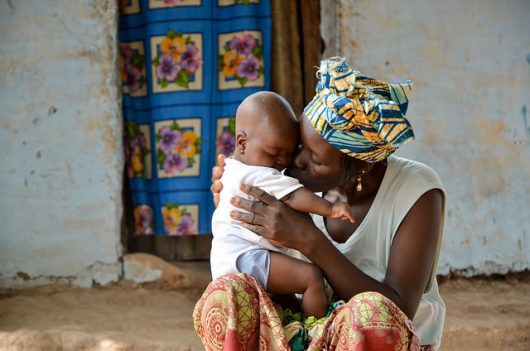
10 Facts About Senegalese Refugees


Located on the northwestern coast of Africa, Senegal is lauded as one of the most stable democracies in Africa. It is the only country in post-colonial Africa that has avoided a military coup against its democratic government. However, the democracy of Senegal still experiences lapses in its democratic process, a common ailment of African nations establishing independence post-colonization.

2004 marked the beginning of the most significant violent conflict in Senegal’s recent history. Located in the southwestern corner of Senegal lies Casamance, a province which has been vying for independence from the Senegalese government since 1982. Civil unrest in Casamance came to a head in 2004, with instances of violent conflict being documented well into 2014. The conflict between the Casamance rebels, known as the Casamance Movement of Democratic Forces (MFDC), and the official Senegalese military has displaced thousands and taken a serious toll on civilian life.

While a ceasefire was signed by both warring factions in 2014, fighting between the Senegalese army and the MFDC continues today, albeit at a much smaller scale. Little has been done to reincorporate internally displaced Senegalese people into the state and remediate the living conditions of those affected by the civil strife of the separatist movement. Below are 10 facts about Senegalese refugees and their status as liminal bodies in a warring state.

  1. Sixty percent of Senegal’s population lives on less $3.10 a day, making it extremely difficult for them to obtain even the most basic human necessities such as food, water, shelter and vaccines.
  2. The richest 20 percent of Senegal hold 46.9 percent of the country’s wealth, illustrating that those displaced by conflict have limited economic resources to rebuild their lives.
  3. The most recent data concerning casualties resulting from the conflict states that approximately 14 civilians, including persons of refugee and internally displaced status, have been killed since February. The continued destruction of human life despite the three-year-old cease-fire illustrates that the conflict still seriously threatens the stability of the nation.
  4. The Senegalese government reports that the MFDC has repeatedly looted local villages to fund its military campaigns. However, the only official report on this comes from a readily biased Senegalese account, illustrating that the control of information is perhaps detrimental to the nation’s democracy.
  5. According to the most recently conducted study, there are an estimated 62,638 internally displaced people (IDP) in and around Senegal as a result of this civil strife.
  6. While physical displacement is the most severe form of displacement, less extreme forms of displacement, including the postponing of infrastructure development, has decreased post-war job opportunities and caused economic stagnation.
  7. Stigmatization of the entire Casamance region has also had impacted civilian life and citizens’ ability to relocate and establish themselves within the larger Senegalese economy.
  8. Humanitarian efforts to aid IDPs have largely focused on conflict resolution and the rebuilding of infrastructure and have not necessarily addressed the most basic and urgent needs of returning IDPs.
  9. The number of non-military landmine deaths was estimated to be around 748 as of December 2008. Efforts to remove landmines exist but are typically run by the Senegalese government, which is more or less unresponsive to the needs of Senegalese refugees and IDPs located in war-torn areas.
  10. Corruption within the MFDC led to a largely war-based economy, which has since devolved into drug trafficking and has initiated a new wave of terror for the people of Casamance. Drug trafficking is especially heavy between Casamance and Guinea-Bissau, and some Senegalese refugees in this area have looked to the notoriously violent narco-trafficking trade for work.

While the recovery statuses of the Casamance region and the Senegalese refugees’ areas are problematic, political and social stability is slowly being reinstated. Approximately one-third of IDPs have returned home in recent years, and the worst of the bloodshed has subsided. Further international intervention seems to be required for complete resolution.

– Spencer Linford

Photo: Flickr

June 21, 2017
https://borgenproject.org/wp-content/uploads/borgen-project-logo.svg 0 0 Borgen Project https://borgenproject.org/wp-content/uploads/borgen-project-logo.svg Borgen Project2017-06-21 07:30:322024-05-28 00:02:1410 Facts About Senegalese Refugees
Global Poverty, Refugees

10 Facts About Refugees in Norway


Due to the increasing urgency of the refugee crisis, many countries are adjusting their immigration policies. Norway has long been hailed as one of the most open countries in terms of accepting refugees and providing aid for war-torn countries such as Syria. However, after a huge influx of immigrants in 2015, Norway has begun tightening its borders. In order better to understand the changes in the country’s policies, here are 10 facts about refugees in Norway:

  1. After World War II, an independent Norwegian organization called the Norwegian Refugee Council (NRC) became one of the greatest advocates for displaced people and working with national governments. In 2015 alone, the NRC assisted more than 5.4 million displaced people.
  2. In 2016, Norway contributed one of the largest pledges of humanitarian aid aimed at helping Syrian refugees. The small country pledged $1.2 billion dollars ($240 per person) toward four years of funding.
  3. Norway has a history of emphasizing humanitarian efforts regarding both donations and admitting refugees from foreign countries. Since 2013, Norway has granted citizenship to over 260 percent of its “fair share” of Syrian refugees based on an estimation by Red Cross and Red Crescent groups.
  4. Norway has been increasing its focus on ensuring that refugees integrate into society smoothly by assessing their access to education and the workforce. A large component of this assessment includes observing and treating the mental health of immigrants, many of whom suffer from post-traumatic stress disorder, major depressive disorder and other mental illnesses.
  5. Norway has recently tightened restrictions on refugee immigration. In 2015, these restrictions resulted in a sharp decline in the number of refugees entering the country.
  6. Recently, asylum centers have been facing closures since the number of immigrants has dropped steadily since its peak in 2015.
  7. In 2017 thus far, Norway has experienced the lowest number of refugees seeking asylum since 1997. Many Norwegians believe this can be attributed to the recent increase in immigration restrictions.
  8. As of 2015, 3.6 percent of Norway’s population was comprised of refugees living legally. These refugees come from over 169 countries. A large majority of these refugees are from Bosnia and Herzegovina and were granted protection in the early 1990s.
  9. The Norwegian government has made headlines for its criticism of U.S. President Trump’s policies on the refugee crisis. Foreign Minister Brende tweeted: “Norway strongly believes that refugees should receive equal treatment regardless of religion, nationality or race. Hence, concerned [about] U.S. policy.”
  10. Like an increasing number of U.S. colleges and universities, the University of Oslo (UIO) has made its stance on the refugee crisis clear. The UIO website states its academic policies as well as their newly implemented efforts to welcome student refugees and asylum seekers.

Essentially, these 10 facts about refugees in Norway highlight that, despite the country’s massive funding of foreign aid, there are currently 65 million displaced refugees with nowhere to go. Additionally, many refugees in Norway are not yet capable of entering the workforce or educational system. This means that Norway faces the challenge of finding a solution for integrating refugees into its society while maintaining its reputation as an asylum.

– Julia Morrison

Photo: Flickr

June 20, 2017
https://borgenproject.org/wp-content/uploads/borgen-project-logo.svg 0 0 Borgen Project https://borgenproject.org/wp-content/uploads/borgen-project-logo.svg Borgen Project2017-06-20 07:30:482024-05-28 00:02:1210 Facts About Refugees in Norway
Global Poverty, Refugees

10 Facts About Refugees in Cameroon


With increasing conflict in neighboring countries, Cameroon must find a way to safely house its refugees and find a solution to the increasing food shortage. Here are 10 facts about refugees in Cameroon.

10 Facts About Refugees in Cameroon

  1. In July 2005, a law was created to reflect the Cameroonian tradition of taking in foreigners. This justified the migration of thousands of refugees into Cameroon, fleeing abuse and violence in their own countries. There are three categories for these: Central African refugees, Nigerian refugees, and internally displaced persons.
  2. Increasing violence in Nigeria and the Central African Republic by the insurgency Boko Haram threatens the refugees finding solace in Cameroon.
  3. Boko Haram started out as a Nigerian armed group but now operates to carry out attacks and kidnappings on refugees.
  4. In January, Cameroon faced a “refugee crisis.” They needed to continue helping refugees escape the terror of Boko Haram while protecting their own citizens. The terror has resulted in nearly 1.6 million displaced people in Cameroon, which could potentially increase to 2.7 million in the coming year.
  5. The U.N. estimated that Cameroon already has approximately half a million registered refugees, not including the 200,000 registered internally.
  6. With the huge influx of refugees in the past few months, the U.N. and the Cameroonian government are worried about an impending food shortage. To support everyone, refugees in Cameroon will need $310 million over the next three years.
  7. Cameroon’s refugee camp, Minawao, currently hosts 32,621 Nigerian refugees. This is an increase of 16,000 following recent clashes between the North Eastern Nigerian military and Boko Haram.
  8. As tensions increased on the border, the United Nations High Commissioner for Refugees (UNHCR) discussed setting up a second refugee camp. Once the screening is complete, the camp will house nearly 66,000 refugees, of which 41,571 were verified by the UNHCR.
  9. Faced with a food shortage and increasing danger from Boko Haram, Cameroon began forcibly moving Nigerian refugees back home, around 2,600 people in total. Most of these refugees end up in camps for security reasons.
  10. To aid new refugees in Cameroon, UNICEF and its partners plan to help 58,000 children between five and six years old severely affected by acute malnutrition and 2,800 unaccompanied children. They also plan to provide approximately 145,000 children between ages 3-17 with quality formal or informal basic education in 2017.

Cameroon became a beacon of hope to neighboring countries. A beacon which now must rely on foreign aid to continue helping refugees and prevent a nationwide food shortage, while keeping its own citizens safe from the wrath of Boko Haram.

– Amira Wynn

Photo: Flickr

June 20, 2017
https://borgenproject.org/wp-content/uploads/borgen-project-logo.svg 0 0 Borgen Project https://borgenproject.org/wp-content/uploads/borgen-project-logo.svg Borgen Project2017-06-20 01:30:592024-12-13 17:58:0710 Facts About Refugees in Cameroon
Global Poverty, Refugees

Ten Facts About Refugees in Ireland

Refugees in Ireland
The UN believes the world is experiencing the worst refugee crisis since World War II. At the end of 2015, 63.5 million refugees had been reported. That means that one out of every 113 people on the planet is a refugee. The tremendous number of people seeking refugee status is partially a result of the Syrian civil war and the long-standing war in Afghanistan. While Italy, Greece and Turkey initially received the most refugees, there are now more people coming to these shores than these countries can be expected to take in. Other European Union (EU) member nations are being asked to resettle some of these refugees. Ireland is one country that has agreed to do so. What is the refugee climate like in Ireland? Discussed below are the leading facts about refugees in Ireland.


Top 10 Facts About Refugees in Ireland


  1. A recent poll revealed that 87 percent of the Irish are sympathetic to Syrian refugees. Despite this, approximately one-third of the citizens are worried about the burden that Syrian refugees could place upon the welfare, education, healthcare and housing systems. One-fourth of the Irish were concerned that Syrian refugees could cost their government too much money.
  2. After countries like Turkey were struggling to accommodate the large influx of refugees safely, the European Commission devised a plan in which other EU member states would begin accepting pre-screened refugees. Ireland was not obligated to participate, but the country volunteered to receive up to 4,000 refugees. As of May 2017, Ireland has taken in 273 refugees.
  3. The top 10 countries of origin for refugees in Ireland are Syria, Pakistan, Albania, Zimbabwe, Nigeria, Afghanistan, South Africa, Iraq, Libya and the Democratic Republic of Congo. A little more than half of the refugees are men; women and children almost equally make up the remainder.
  4. In 2016, Ireland received 2,245 applications for asylum from refugees. The country gave 20.8 percent of these people refugee status.
  5. The country is helping to relieve the crisis in additional ways. Ireland has deployed border patrol to Greece to aid in processing refugees. Ireland has also deployed naval ships to find and save refugees who leave their countries by sea. Often, ships carrying refugees are dangerously overcrowded, and they are sometimes shipwrecked. In 2015, the Irish Navy saved 8,592 refugees from the Mediterranean Sea.
  6. While refugees are awaiting status approval, they are housed by Ireland’s Reception and Integration Agency. Here they live in hostel-like settings. Typically, one family shares one room, and individuals are roomed with other refugees of the same sex. Most rooms have televisions, bathroom quarters are shared and meals are served on-site at specific times.
  7. Those awaiting refugee status in Ireland are not authorized to work, so the Irish government provides them with living stipends. Each adult receives €19.10 per week, and each child receives €15.60. This allowance is to cover any extra living expenses such as cell phones, internet service, clothes and toiletries.
  8. Primary and secondary education are provided for children awaiting refugee status. To attend a university they must pay the non-EU resident tuition fees, ranging from €9,750 for a business degree to €52,000 for a pre-medical degree. According to the Irish Refugee Council, this is usually unaffordable for a child seeking refugee status, whether or not they have support from their parents.
  9. On average, refugees in Ireland spend three to four years awaiting refugee status. Some have lived with the Reception and Integration Agency for 10 years.
  10. Each refugee in Ireland has his or her own story. George Labbad came to Ireland as a teenager from Aleppo, Syria in 2001 to learn English. Labbad eventually returned to Syria to attend a university, so he could take over the restaurant his family had owned for more than 30 years. After the Syrian civil war erupted, Labbad’s family was forced to close their restaurant, which had employed nearly 180 people. Eventually, all of Labbad’s family gained refugee status in Ireland. Labbad laments some, missing his home and the future he planned for, but he has made connections in Ireland and sees the country as his new home. Ireland is his future now.

With each refugee having a unique story, 10 facts about refugees in Ireland cannot begin to sum them all up. Some have left a family in their country of origin, while others have left loved ones in new EU countries. All the same, refugees remember what their homeland was to them while resettling in places like Ireland.

– Mary Katherine Crowley

Photo: Flickr

June 17, 2017
https://borgenproject.org/wp-content/uploads/borgen-project-logo.svg 0 0 Borgen Project https://borgenproject.org/wp-content/uploads/borgen-project-logo.svg Borgen Project2017-06-17 01:30:502024-05-28 00:02:10Ten Facts About Refugees in Ireland
Global Poverty, Refugees

10 Facts About Shia Refugees in Bahrain


Bahrain is a small Muslim country located in the Persian Gulf off the coast of Saudi Arabia. Bahrain has only been independent of imperial governance for 42 years. It has been governed by a Sunni-led constitutional monarchy since its release from British rule and Iranian influence in 1971. Although many of the violent conflicts in the Middle East dwarf the issues in Bahrain, the country’s refugee problem has grown since 2011. Shia refugees in Bahrain today face displacement, religious segregation and suppression of free speech.

Until recently, Sunni and Shia Muslims have lived in relative peace since Bahrain’s formal independence. In comparison to many other Islamic countries in the Middle East, Bahrain experienced little violence along religious lines. Whether this was because the nation is in its infancy, or because of the absolute rule of the government, remains to be seen. However, it is clear that a stark divide between the two sects of Islam was revived in light of recent political turmoil.

The dominant sect of Shia Muslims began a series of protests in 2011 which have occurred through to the present day. Dissatisfied with their representation in the government since independence, protesters hope to galvanize political reform. The royal family’s militant suppression of free speech caused most protests to subside and created a mass of Shia refugees.

Government analysts noted the possibility that the religious divide between Sunni and Shia has been rehashed as a political tactic to suppress dissenters. Bahraini dissenters are displeased with the lack of democratic representation in the government. As local Bahraini historians and politicians suggested, pitting the two sects of Islam against each other appears to be an attempt to consolidate power within the royal family.

Civil unrest in Bahrain and the royal family’s purported desire to consolidate power within the country led to the marginalization of Shia Muslims. Below are ten facts about Shia refugees in Bahrain which indicate the disenfranchisement, poverty and exploitation they suffer.

10 Facts About Shia Refugees in Bahrain

  1. Most Bahraini refugees are Shia Muslims. Unlike most instances of political scapegoating, the situation in Bahrain is peculiar in that the Shia sect of Islam is the religious majority.
  2. The official reason for the exile of many Shia Muslims is the sect’s purported allegiance to Iran’s political agenda. However, there is no hard evidence that Bahraini Shia Muslims are advancing an Iranian political agenda. Furthermore, the overwhelming majority of Bahraini exiles are noted political dissenters who are critical of Bahrain’s royal family.
  3. Shia refugees live in ghettos which are becoming increasingly common in Bahrain. The slums are often purposely masked by new infrastructure. This infrastructure is funded by donations from Arab nations seeking to quell the civil unrest boiling beneath the surface.
  4. Political dissidents in Bahrain can receive sentences of up to five years in prison, which may include torture depending on the dissident’s level of cooperation. The Security Law of Bahrain, which passed in 1975, states that any political prisoner may be imprisoned for up to three years if the ruling party deems the dissident a threat to the ultimate goals of the nation.
  5. Routine and institutionalized discrimination against Shia Muslims bars the religious group from easily obtaining the most basic human necessities, such as food, shelter and water.
  6. Since 2012, the Sunni ruling family has been tinkering with the citizen naturalization process to disrupt the demographics of Bahrain and weaken the voice of the Shia in the nation’s political institutions.
  7. The right to fair trial is regularly kept from Shia Muslims, which serves to exacerbate the injustices which cause extreme poverty in ghettos.
  8. Health care for Shia refugees is minimal, but there is an even more chronic lack of medical care for persons living with HIV/AIDS, posing a serious threat to public health.
  9. While the egregious human rights violations carried out against the Shia in Bahrain have subsided somewhat recently, the institutions which facilitated these abuses of power remain intact. Work must still be done in order to alleviate the poverty and oppression of Shia Muslims in Bahrain.
  10. Bahrain has not agreed to the 1954 Convention relating to the Status of Stateless Persons or the 1961 Convention on the Reduction of Statelessness. This means that the treatment of refugees in Bahrain is not monitored, and information concerning refugees in Bahrain is disorganized and largely missing.

– Linford Spencer

Photo: Flickr

June 16, 2017
https://borgenproject.org/wp-content/uploads/borgen-project-logo.svg 0 0 Borgen Project https://borgenproject.org/wp-content/uploads/borgen-project-logo.svg Borgen Project2017-06-16 07:30:272024-06-07 05:07:4110 Facts About Shia Refugees in Bahrain
Page 40 of 53«‹3839404142›»

Get Smarter

  • Global Poverty 101
  • Global Poverty… The Good News
  • Global Poverty & U.S. Jobs
  • Global Poverty and National Security
  • Innovative Solutions to Poverty
  • Global Poverty & Aid FAQ’s
Search Search

Take Action

  • Call Congress
  • Email Congress
  • Donate
  • 30 Ways to Help
  • Volunteer Ops
  • Internships
  • Courses & Certificates
  • The Podcast
Borgen Project

“The Borgen Project is an incredible nonprofit organization that is addressing poverty and hunger and working towards ending them.”

-The Huffington Post

Inside The Borgen Project

  • Contact
  • About
  • Financials
  • President
  • Board of Directors
  • Board of Advisors

International Links

  • UK Email Parliament
  • UK Donate
  • Canada Email Parliament

Get Smarter

  • Global Poverty 101
  • Global Poverty… The Good News
  • Global Poverty & U.S. Jobs
  • Global Poverty and National Security
  • Innovative Solutions to Poverty
  • Global Poverty & Aid FAQ’s

Ways to Help

  • Call Congress
  • Email Congress
  • Donate
  • 30 Ways to Help
  • Volunteer Ops
  • Internships
  • Courses & Certificates
  • The Podcast
Scroll to top Scroll to top Scroll to top