• Link to X
  • Link to Facebook
  • Link to Instagram
  • Link to TikTok
  • Link to Youtube
  • About
    • About Us
      • President
      • Board of Directors
      • Board of Advisors
      • Financials
      • Our Methodology
      • Success Tracker
      • Contact
  • Act Now
    • 30 Ways to Help
      • Email Congress
      • Call Congress
      • Volunteer
      • Courses & Certificates
      • Be a Donor
    • Internships
      • In-Office Internships
      • Remote Internships
    • Legislation
      • Politics 101
  • The Blog
  • The Podcast
  • Magazine
  • Donate
  • Click to open the search input field Click to open the search input field Search
  • Menu Menu

Archive for category: Refugees

Aid, Education, Global Poverty, Refugees

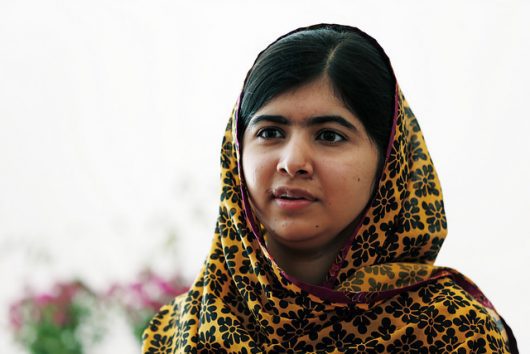
12 Facts About the World’s Champion: Malala Yousafzai


Malala Yousafzai, the world’s youngest and most powerful champion for girls’ education, may soon be attending one of the most prestigious schools in the world: the University of Oxford. Back in March of this year, Yousafzai announced that she had received a conditional offer (based on her A Level grades) from Oxford and that she plans to attend the University. She plans to study philosophy, politics and economics (PPE), and work on her organization, the Malala Fund. To commemorate this outstanding individual, here are 12 facts about her life, her achievements and her organization.

12 Facts About Malala Yousafzai

  1. At the young age of 12, when her hometown of Swat was held by the Taliban in 2009, Yousafzai wrote for a BBC blog critiquing the hardline Islamic movement under a pseudonym, even while she and her father were receiving multiple death threats.
  2. Yousafzai was the first recipient of Pakistan’s National Youth Peace Prize.
  3. Archbishop Desmond Tutu, a world-renowned social rights activist and retired Anglican bishop, nominated Malala Yousafzai for the International Children’s Peace Prize in 2011.
  4. Yousafzai was an international figure by now, and Taliban leaders voted among themselves to kill her. On October 9, 2012, Malala’s school bus was attacked by a gunman. He broke through the door and demanded to know where Yousafzai was. When some of the girls looked her way, she was shot in the head.
  5. Miraculously, the 15-year-old survived the attack. She was flown to Birmingham, U.K., for treatment. Her attack was condemned worldwide, and, after protests in Pakistan, more than 2 million people signed a right to education petition. The petition became a bill later ratified by the National Assembly, making it Pakistan’s first Right To Free and Compulsory Education Bill.
  6. In 2013, Yousafzai and her father co-founded the Malala Fund, an organization that advocates at all political levels to ensure all girls complete 12 years of school.
  7. The Malala Fund currently has programs in Pakistan, Kenya, Nigeria and in various countries for Syrian refugees.
  8. In Pakistan, a country with the second-largest number of girls not in school, the program focuses on getting more girls in school, building schools, providing materials (books, uniforms, etc.) and grants for secondary schooling.
  9. In Kenya, a country quickly evolving into its digital era, the Malala Fund works to ensure girls can take advantage of the technology trend.
  10. In Nigeria, the organization helps girls who have escaped from Boko Haram get an education.
  11. For Syrian refugees in Jordan and Lebanon, the organization opens new schools and funds educational programs in safe refugee camps.
  12. In October 2014, Malala Yousafzai won the Nobel Peace Prize. At age 17, she is the award’s youngest recipient.

<

As Yousafzai continues to push for girls’ education around the globe, we should follow in her footsteps and do what we can do alleviate global poverty and ensure global education.

– James Hardison

Photo: Flickr

June 16, 2017
https://borgenproject.org/wp-content/uploads/borgen-project-logo.svg 0 0 Borgen Project https://borgenproject.org/wp-content/uploads/borgen-project-logo.svg Borgen Project2017-06-16 07:30:222024-12-13 17:58:0412 Facts About the World’s Champion: Malala Yousafzai
Global Poverty, Refugees, War and Violence

10 Important Facts About Refugees in Saudi Arabia

Refugees in Saudi Arabia
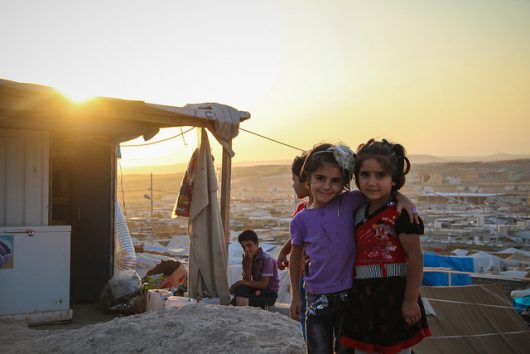
The Syrian refugee crisis has become the worst humanitarian crisis of our time. Millions of people have been forced to make new homes in foreign countries. These countries often struggle to absorb the number of refugees needing homes. Some countries, such as Saudi Arabia and other Gulf countries, are opposed to opening their doors to people seeking refuge altogether. This article provides 10 facts about refugees in Saudi Arabia and a few problems they have experienced during their transition process.

10 Important Facts About Refugees in Saudi Arabia

  1. Refugees in Saudi Arabia have had a difficult time initially entering the country. Saudi Arabia has faced a series of criticisms for refusing to open their doors to these refugees.
  2. Social media, the news and human rights reports have taken turns in shaming Saudi Arabia for its refusal. Saudi Arabia denies these criticisms, saying that they have given residency to 100,000 people during the crisis.
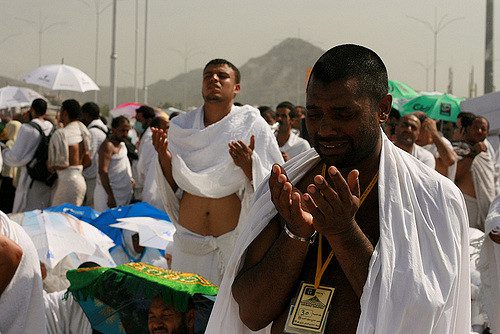
  3. The country is home to a tent city, Mina, spanning 20 square kilometers and holding about 100,000 tents. Refugees in Saudi Arabia have not been permitted to stay in these tents because they hold religious significance as a stop on the annual Hajj pilgrimage to Mecca. Each tent costs between $500 and $3,500.
  4. The Mina tent city has not been opened to people seeking refuge in Saudi Arabia because their government claims that this is not what such people want. The government has also voted against giving the displaced people the official designation of “refugee.”
  5. Due to increased criticism, in 2016 Saudi Arabia provided $75 million to aid refugees. However, with the number of people seeking refuge in Saudi Arabia continuously growing, the country continues to dismiss their status and refrains from putting them in refugee camps.
  6. Since Saudi Arabia is not a signatory to the U.N. Convention on Refugees, there is some discrepancy over the exact number of refugees in Saudi Arabia.
  7. The Office of the U.N. High Commissioner for Refugees (UNHCR) says there are between 100,000 and 500,000 refugees in the country, but some disagree that this number is not representative enough of the Saudi population of 31 million.
  8. A significant reason for Saudi Arabia closing its doors to people seeking refuge has to do with the Islamic State and Syrian Sunni Muslims. A majority of the refugees fleeing to Saudi Arabia are from Sunni areas of Syria–areas that play host to the Islamic State. Saudi Arabian forces have bombed these regions and want to know if the refugees are escaping ISIS or the bombings.
  9. The overarching reason that people seeking refuge in Saudi Arabia are being denied status or even shut out of the country has to do with issues of national security more than threats to demographic stability.
  10. The foreign ministers of the Gulf Cooperation Council have asked Saudi Arabia and the other Gulf countries also halting entry to refugees to find a solution to the crisis.

The Syrian refugee crisis continues to affect a large percentage of our world. The Syrians can no longer live in safety within their country, and so they seek safer lands. But the sheer number of refugees creates trouble for host countries trying to integrate refugees into society. This problem warrants a need for significant humanitarian aid and cooperation.

– Katelynn Kenworthy

Photo: Flickr

June 15, 2017
https://borgenproject.org/wp-content/uploads/borgen-project-logo.svg 0 0 Borgen Project https://borgenproject.org/wp-content/uploads/borgen-project-logo.svg Borgen Project2017-06-15 01:30:372020-06-25 19:08:0910 Important Facts About Refugees in Saudi Arabia
Global Poverty, Refugees

10 Facts About Refugees in Luxembourg


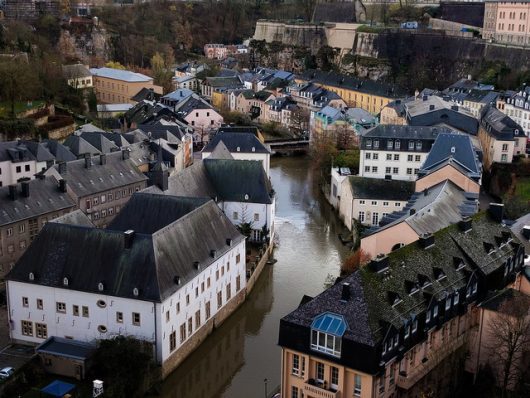
Refugees in  Luxembourg seek asylum for a number of reasons. National conflicts such the Syrian civil war and the forced conscription crisis in Eritrea have landed refugees in the small, wealthy European nation.

Hundreds of thousands of people continue to flee these war-torn areas — but benevolent Luxembourg is running out of space. Below are 10 facts about refugees in Luxembourg and how European countries are working to address their needs.

10 Facts About Refugees in Luxembourg

  1. As the wealthiest nation in Europe (and second-wealthiest in the world), Luxembourg provides exceptionally high-quality housing and other resources for refugees. Though the nation has not instituted an official refugee program, they frequently arrange case-by-case resettlements.
  2. In March 2016, the European Union instituted a resettlement agreement with Turkey. The agreement focuses on minimizing suffering and maximizing safety by monitoring and regulating refugees’ journeys from the Middle East to Europe, and by providing clear paths to obtaining official refugee status and citizenship. This development allowed Luxembourg to accept a new group of Syrian refugees in February.
  3. Government officials and civilians alike take an active interest in accommodating refugees. Caritas Luxembourg has set up a campaign to welcome and support refugees from Syria, and, in 2015, teen Djuna Bernard launched a Facebook page called “Refugees Welcome to Luxembourg,” which has since evolved into an organization that helps refugees meet their basic needs.
  4. While many welcome refugees with open arms, others harbor reservations. With foreigners making up nearly half of the population, some native Luxembourgers have begun to worry that their culture will be lost, particularly if refugees refuse to learn the language and work to contribute to the nation’s growth. The nation already has three official languages — Luxembourgish, French and German — and the influx of additional cultures leaves natives even fewer opportunities to speak their own language in public arenas.
  5. Indeed, the refugee experience in Luxembourg is riddled with both positive and negative factors. Molut Haille, a refugee from Eritrea, warns potential migrants of the pitfalls of living in Luxembourg. Some refugees in Luxembourg struggle to make ends meet because it is a rich nation, says Haille, who also cites the language issue as an impediment. Refugees may experience difficulty assimilating without fluency in at least two of the nation’s languages.
  6. InSitu Jobs combats these issues. In May 2015, The Liaison Committee of Foreigners’ Associations in Luxembourg (CLAE) received funding from the European Asylum, Migration and Integration Fund (AMIF) and the Luxembourg Office for Reception and Integration (OLAI) to establish the InSitu Jobs Project. The project creates avenues for recognized refugees in Luxembourg to support themselves by providing assistance with writing resumes, understanding the job market, and authenticating any professional or academic credentials from their home countries. A handful of refugees have been mobilized to work and learn French as a result, and the project effectively supplements existing initiatives.
  7. In October 2015, the EU released a “safe countries of origin” list, a continually updated document which monitors conflict shifts in refugees’ home countries and notifies asylum countries when it is safe to send refugees back. This motion allows Luxembourg to reject those applicants in less dire situations than others and to send refugees home and create space for those who need it more desperately.
  8. In 2016, Luxembourg opened 1,000 new housing containers for refugees—but these accommodations, too, filled up quickly.
  9. Today, Luxembourg’s asylum application process is fairly selective due to dwindling resources. Of the 155 Syrians who applied between January and April of this year, only 52 were accepted into the resettlement program.
  10. Citizens remain passionate about the refugee crisis. As a result of its wealth and unprecedented excitement to help refugees, Luxembourg has shot close to the top of the list of refugee intake per capita in Europe. Unfortunately, the country’s limited size has begun to impede its humanitarian vision. With housing rapidly filling up, the nation seeks new ways to assist refugees.

The plight of refugees in Luxembourg has shifted continuously over the past few years. But while the nation is generous with its resources, the volume of refugees seeking homes threatens to topple its infrastructure. Nonetheless, officials and citizens of Luxembourg and other European countries are determined to help. These 10 facts about refugees in Luxembourg illustrate the country’s continued efforts to create a safer world for all.

– Madeline Forwerck

Photo: Flickr

June 15, 2017
https://borgenproject.org/wp-content/uploads/borgen-project-logo.svg 0 0 Borgen Project https://borgenproject.org/wp-content/uploads/borgen-project-logo.svg Borgen Project2017-06-15 01:30:232024-05-28 00:02:0710 Facts About Refugees in Luxembourg
Global Poverty, Refugees

10 Crucial Facts to Know About Refugees in Qatar


As the war in the Middle East rages on, many people are forced to leave their homes due to violence and intolerance. As a result, millions of people from the Middle East are seeking refuge. Qatar, home to 2.7 million people, is a peninsular Arab country located on the Persian Gulf. Many Syrian refugees have tried to flee to Qatar but are unable to do so. Here are 10 facts about refugees in Qatar.

10 Crucial Facts to Know About Refugees in Qatar

  1. A refugee is someone forced to leave their country to escape a disaster.
  2. Despite being an extraordinarily wealthy country, Qatar has resettled no refugees.
  3. Many Gulf countries, including United Arab Emirates, Saudi Arabia, Kuwait and Bahrain, have also turned down Syrian refugees.
  4. There are more than 13.5 million people in Syria who are in need of humanitarian assistance. Five million Syrian refugees currently live inTurkey, Lebanon, Jordan, Iraq and Egypt.
  5. Qatar has earned vocal criticism for its refusal to accept refugees.
  6. Why are there no refugees in Qatar? Many experts blame visa restrictions, which make it difficult for Syrians to enter countries along the Gulf.
  7. Officials from Qatar defend the country by pointing out that their country donates millions of dollars to the United Nations to help refugees.
  8. In an exclusive interview, Qatari Foreign Minister Dr. Khalid Al-Attiyah further defended Qatar. He stated, “The state of Qatar is in no way falling short in its responsibilities when it comes to the Syrian crisis.” He reminded people that Qatar has launched many programs to help Syrian refugees, including humanitarian, economic and diplomatic initiatives.
  9. This is true, as seen in an initiative by Qatar back in 2012. In partnership with the Office of the United Nations High Commissioner for Refugees,  Sheikha Moza, a member of Qatar’s royal family, launched a $12 million education program that will help dozens of countries fund schooling for 172,000 refugee children.
  10. Despite Qatar’s financial aid, many experts believe Qatar must do more. The U.N. has requested that all developed nations open their borders to refugees, including Qatar.

Overall, Qatar’s response to the refugee crisis is quite controversial. Qatar has donated millions of dollars to help refugees, but it has yet to accept any refugees into its own borders. The hope for the future is that there will be more opportunities for Syrian refugees in Qatar.

– Morgan Leahy

Photo: Flickr

June 14, 2017
https://borgenproject.org/wp-content/uploads/borgen-project-logo.svg 0 0 Borgen Project https://borgenproject.org/wp-content/uploads/borgen-project-logo.svg Borgen Project2017-06-14 01:30:242020-04-18 13:16:3910 Crucial Facts to Know About Refugees in Qatar
Global Poverty, Refugees

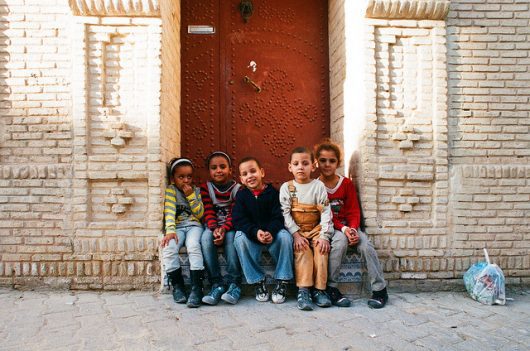
10 Important Facts to Know About Refugees in Tunisia


Tunisia is a small, African nation located on the Mediterranean Sea and nestled between Algeria and Libya that transitioned to a democracy after the 2011 Arab Spring and adopted a progressive constitution in 2014. In the same year, it held elections to elect a president. Its location makes it a favorite point for refugees in Tunisia, but most see it as a transit country.

10 Facts About Refugees in Tunisia

  1. Before 2011, only 100 refugees arrived each year in Tunisia. These refugees came primarily from Algeria, other western African countries, and Palestine.
  2. During the height of the Arab Spring in Libya in 2011, some 990,900 people (10 percent of Tunisia’s population) crossed the border into Tunisia. However, 77 percent of the Libyans who became refugees in Tunisia later returned to Libya.
  3. Since 2011, there has been a steady decrease in the number of “persons of concern” — a designation of the Office of the U.N. High Commissioner for Refugees (UNHCR) for refugees, returnees, stateless people and asylum-seekers — in Tunisia. The number of Tunisian refugees in 2017 is close to 1,000.
  4. Libyans arriving in Tunisia have three months before they must apply for a work permit from the Ministries of Interior. An organization called International General Services was created in Tunisia to assist refugees in becoming more self-reliant. Refugees sign one-year contracts with the service organization for jobs in fields such as maintenance in electricity and air conditioning.
  5. Tunisian refugees often arrive after being rescued from sea trying to get to Europe. Of the 900 people rescued by this method in 2015, 147 people claimed asylum in Tunisia.
  6. At the beginning of 2015, 80 percent of those who boarded boats in Libya and arrived in Tunisia were economic migrants looking for a better life. The remaining 20 percent were Eritrean, Somalian and Syrian refugees. The UNHCR assists Tunisia in determining if the person is a migrant or a refugee.
  7. Tunisian refugees have access to French and English language classes and may enroll in Information Technology training in the towns of Medenine and Ben Guerdane.
  8. The UNHCR is assisting Tunisia in drafting a new asylum law. Until that time, UNHCR is the sole entity conducting refugee status determination.
  9. All elementary school-aged refugees are enrolled in primary school once they have reached Tunisia.
  10. All asylum seekers in Tunisia receive health care. UNHCR covers the cost of primary and emergency visits through their partner, Tunisian Red Crescent.

Tunisia has seen the number of refugees increase greatly since 2011, and then decrease to a much smaller number today. The country’s location attracts both migrants and refugees. It has promised to adopt a national asylum law soon, which will take the burden away from the UNHCR as the sole entity conducting refugee interviews.

– Jene Cates

Photo: Flickr

June 13, 2017
https://borgenproject.org/wp-content/uploads/borgen-project-logo.svg 0 0 Borgen Project https://borgenproject.org/wp-content/uploads/borgen-project-logo.svg Borgen Project2017-06-13 07:30:372024-05-28 00:02:0510 Important Facts to Know About Refugees in Tunisia
Global Poverty, Refugees, War and Violence

10 Important Facts To Know About Refugees in Argentina


As the Syrian refugee crisis continues to become the worst refugee crisis in recorded history (beating the 4.6 million Afghans who fled in 1992), it might be beneficial to know about refugees in Argentina, one of the most refugee-accepting countries.

10 Important Facts To Know About Refugees in Argentina

  1. High wages, economic prosperity, a good public education system and a liberal legal framework brought many European immigrants to Argentina between 1870 and 1914.  By the start of World War I, Argentina was one-third European.
  2. Although fewer in number, Europeans continued to immigrate to Argentina between the two World Wars and throughout the post-World War II era. However, by the end of 1960, most European migration to Argentina halted.
  3. With the ending of migration from Europe, regional migrant numbers became more significant. Interest in the job opportunities and a relatively beneficial currency exchange rate brought many regional migrants in the 1990s. Oddly enough, this became an issue as Argentina’s laws were increasingly restrictive, leaving many migrants susceptible to abuse.
  4. By the end of the decade, this led to a degree of contempt between natural-born Argentinians and migrants or refugees. The degree of the contempt was so harsh that even legislation denounced irregular migrants, and trade unions claimed they were stealing jobs.
  5. Argentina formally switched course, though, and signed a regional agreement, along with Brazil, Paraguay, Uruguay and Venezuela. The agreement recognizes the right to migrate, provides equal treatment for foreigners and the right to family reunification. It also established the “Patria Grande” program, granting residency and creating a process for foreigners to become permanent residents.
  6. Argentina signed a Memorandum of Understanding with the Office of the United Nations High Commissioner for Refugees (UNHCR) in 2005, dictating the guidelines for the admission of refugees in Argentina. Among the criteria for resettlement in Argentina are that immigrants are survivors of torture or violence, women at risk, or women with children or families with strong integration potential.
  7. Before refugees in Argentina are considered for visas, relatives or other Argentinian citizens must vouch for them. The process kicks off with a letter of invitation sent to the refugee family.
  8. In July 2016, Argentina announced it would accept 3,000 Syrian refugees.
  9. By making this announcement, Argentina was the first country to assist the European Union with the Syrian refugee crisis.
  10. On April 7, 2017, an international non-governmental organization, Blue Rose Compass, announced it would provide 1,000 university scholarships to young women, ages 18 through 34, who are Syrian refugees. The scholarships will grant the women humanitarian visas to Argentina and eventually allow them to register as citizens.

Hopefully, as the Syrian refugee crisis persists, Argentina will continue to represent itself as a role model for countries accepting refugees.

– James Hardison

Photo: Flickr

June 13, 2017
https://borgenproject.org/wp-content/uploads/borgen-project-logo.svg 0 0 Borgen Project https://borgenproject.org/wp-content/uploads/borgen-project-logo.svg Borgen Project2017-06-13 01:30:192024-05-28 00:02:0510 Important Facts To Know About Refugees in Argentina
Global Poverty, Refugees

10 Facts About Angola Refugees


For nearly three decades, Angola struggled with instability fighting for its independence from Portugal and then faced a crippling civil war which left many citizens displaced in and out of the country. Now, Angola faces a new issue on the brink of their reparations for their returning citizens. Refugees from the Democratic Republic of the Congo are flooding into the country. Here are 10 Facts about Angola refugees.

10 Facts About Angola Refugees

  1. The three decades of war left 550,000 Angola refugees primarily fleeing to Zambia, Congo, The Democratic Republic of the Congo and South Africa.
  2. Since the ceasing of war in 2002, around 70,000 Angola refugees have returned home. Many of the different types of soldiers have also returned. “There are also an estimated 4.1 million IDPs, of which 80,000 are former UNITA soldiers,” according to the Council of Foreign Relations.
  3. Though there are many refugees who have returned, there are still 73,000 people in exile. A lot of these people are scared to return home.
  4. In the end of 2016, South Africa was allowing Angola refugees, living in the country to apply for permanent residency status, for a limited time, ending the application process on the December 15th, 2016.
  5. In 2012, the Democratic Republic of the Congo ended the refugee status of Angola Refugees. This was part of a government plan to get refugees to return to Angola. During this time 23,000 people returned but as of 2014, 47,815 remained, not wanting to leave.
  6. For those who have returned to Angola, they have found the re-integration process hard to adjust to. Luckily the economy in Angola is getting a lot better but still high rates of unemployment and poverty remain. As Reported by Aljazeera.com, “Some even returned to the DRC after discovering little had been done by Angolan authorities to prepare for their arrival.”
  7. Now, refugees from the Democratic Republic of the Congo are flooding into Angola, due to problems back home. More than twenty thousand refugees from the DR Congo have fled to Angola since April 2017. In the second week of March 2017, nearly 3,000 had entered Angola with 70 percent of that population being women and children.
  8. Many of the Democratic Republic of the Congo refugees entering Angola arrive with severe wounds and burns and must be brought to emergency medical treatment immediately. In the second week of May alone, 70 patients were being treated for extreme burns injuries.
  9. The UNHR is helping the Angolan government cope with the current and urgent influx of refugees. The organization provides the government with: food and relief to new arrivals, distributing and pitching up tents for makeshift shelter and finding places that are able to successfully accommodate the refugees.
  10. Children make up one third of the Democratic Republic of the Congo refugees entering Angola. These child refugees are also the most vulnerable group, who are dying because of lack of food, medicine and basic hygiene.

The refugee situation in Angola has come full circle for the government and people of Angola. Luckily with a stable government, Angola is now able to help refugees who are coming from neighboring countries.

– Maria Rodriguez

Photo: Flickr

June 11, 2017
https://borgenproject.org/wp-content/uploads/borgen-project-logo.svg 0 0 Borgen Project https://borgenproject.org/wp-content/uploads/borgen-project-logo.svg Borgen Project2017-06-11 01:30:072020-04-04 16:36:5010 Facts About Angola Refugees
Global Poverty, Refugees

10 Facts About Refugees in Liberia

peope10 Facts About Refugees in Liberia
Bordering the Atlantic Ocean, Liberia is a country located on the continent of Africa and has a population roughly of 4 million people. Liberia is home to thousands of refugees, many of whom originate from Cote d’Ivoire (also known as the Ivory Coast), a country just east of Liberia. Here are 10 facts about refugees in Liberia.

10 Facts About Refugees in Liberia

  1. There are currently over 40,000 persons of concern in Liberia. From this total, 38,000 refugees originate from Cote d’Ivoire. This means that Ivorian refugees in Liberia make up 95 percent of the total refugee population.
  2. Ivorian refugees often flee to Liberia due to civil conflict in their country of origin. Populations in the Ivory Coast are constantly clashing with a rebellion which began shortly after the turn of the 21st century. Since then, there has been a great deal of unrest in the Ivory Coast, forcing many people out of the country. Liberia became a destination for many of the Ivorian asylum-seekers.
  3. A large majority of Ivorian refugees in Liberia live in refugee camps established by the United Nations High Commissioner for Refugees (UNHCR).
  4. With the sudden surge of persons of concern, Liberia has requested $34 million in foreign aid. Liberia has only been granted 28 percent of the requested funds.
  5. It is suspected that the reason Liberia is receiving less funding for its refugees is due to the Middle East’s own refugee crisis. People seeking refuge from the Middle East are more likely to gain the attention of nonprofits and global organizations than the Ivorian refugees in Liberia.
  6. In 2016, an Ebola outbreak occurred in Liberia which resulted in thousands of deaths. According to the UNHCR, refugees in Liberia were impacted the most by the outbreak.
  7. Even though it has been over a decade since the war in Cote d’Ivoire, many of the refugees in Liberia feel they cannot return to their country of origin. Instead, many people fleeing from their home countries choose to settle in refugee camps in Liberia.
  8. In 2016, Ivorian authorities, alongside the UNHCR, called for all Ivorian refugees to return home to Cote d’Ivoire. Mariatou Kone, the Ivorian Minister of Solidarity, Social Cohesion and Compensation, stated that Ivorians have conducted two elections without any problems since the election, pleading for the country’s citizens to return home.
  9. Refugee camps in Liberia were never intended or designed to be long-term settlements. As a result, food rations, educational opportunities and medical care are becoming difficult to obtain for people seeking refuge in Liberia.
  10. The majority of people seeking refuge in Liberia are women and children. As a result, UNICEF is working closely in order to ensure proper medical care and child protection for these refugees. For example, in 2012 UNICEF helped more than 20,200 Ivorian and Liberian children through child-friendly education and healthcare programs.


The refugee crisis is putting a lot of financial pressure on Liberia. It is absolutely crucial that conditions improve for refugees in Liberia in the near future.

– Morgan Leahy

Photo: Flickr

June 10, 2017
https://borgenproject.org/wp-content/uploads/borgen-project-logo.svg 0 0 Borgen Project https://borgenproject.org/wp-content/uploads/borgen-project-logo.svg Borgen Project2017-06-10 07:30:352024-05-28 00:00:2510 Facts About Refugees in Liberia
Global Poverty, Refugees, United Nations

10 Facts About Refugees in Taiwan

Taiwan
Taiwan, officially known as the Republic of China (ROC), is not a United Nations member and therefore does have a United Nations High Commission for Refugees office. However, the country has made great strides to provide for refugees all over the world. Here are 10 facts about refugees in Taiwan.

10 Facts About Refugees in Taiwan

  1. Taiwan does not yet accept refugees into the country, but, in July 2016, draft legislation for a refugee law passed its first of three legislative committee reviews. This new law, if passed, would ease the asylum process into Taiwan and allow it to take in more refugees.
  2. However, in 1981, Taiwan was one of the only Asian countries to grant temporary asylum to refugees and offered permanent settlements to all who reach its shores. However, this stopped after several hijackings of planes by Chinese asylum seekers in the 1990s.
  3. In addition, in January 2009, the Legislative Yuan passed an amendment to the National Immigration Act to allow anyone who is persecuted in their country to apply for residency. This really only involved the neighboring those from Myanmar, Tibet, Chinese dissidents or others in a “refugee-like situation,” rather than actual refugees.
  4. Although Taiwan currently does not accept refugees, since 1963, approximately 150,000 illegal Chinese immigrants have entered the country seeking refuge from the communist government.
  5. As a result of this huge annual illegal immigration rate, Taiwan has cracked down on illegal Chinese immigrants since 2003. This crackdown includes the trend of “foreign brides” that has risen in the last two decades.
  6. To compensate for not accepting refugees, two Taiwanese organizations, The Rising People Foundation and a nonprofit organization established by William Hsieh, have launched “Casa di Love,” to build a refugee facility on the Italian island of Lampedusa. The organizations will spend $0.37 million over the next three years to build the facility that will give shelter to refugees all over the world.
  7. In addition, Taiwan donated 10 prefabricated houses to Caritas, an organization in Jordan, to provide housing for 41 Syrian refugees.
  8. In 2013, Taiwan donated 5,000 sets of solar-LED lights to the Azraq Refugee Camp. In 2015, Taiwan signed a $100,000 grant with the International Medical Corps Jordan Country Office to support Syrian and Iraqi refugees.
  9. With the recent movements trying to ban refugees in the United States, Taiwan is now trying to push its own refugee law through the legislative process to allow refugees to seek permanent settlements in the country. Taiwan hopes the acceptance of refugees will stimulate the economy and help the country to become a tech power and be able to further separate itself from China.
  10. Although Taiwan helps refugees all around the world, many of its own citizens have fled the country due to China’s hold on the territory. More than half of all Taiwan refugees reside in the United States, accounting for around 360,000 Taiwanese people.

These 10 facts about refugees in Taiwan show the evolution of Taiwan from a place of solitude to quite the opposite in the 1990s, to once again trying to reinstate the country as a “land of fortune” for both global refugees and its own citizens.

– Amira Wynn

June 10, 2017
https://borgenproject.org/wp-content/uploads/borgen-project-logo.svg 0 0 Borgen Project https://borgenproject.org/wp-content/uploads/borgen-project-logo.svg Borgen Project2017-06-10 01:30:172024-06-04 01:08:2010 Facts About Refugees in Taiwan
Global Poverty, Refugees

9 Facts About Belgium Refugees


With the recent conflict in Syria and other nations, Belgium has prepared for a huge influx of asylum applications. However, with the huge numbers pouring into neighboring countries, Belgium is somewhat “spooked.” Following are nine facts about Belgium refugees.

9 Facts About Belgium Refugees

  1. With the huge influx of migrants and refugees, the Director of a Belgian regional tourism office warned hotels in March 2016 that they would lose government help and funding if they housed asylum seekers for more than three months.
  2. Additionally, the Mayor of the port city of Zeebrugge called for a “camp like Guantanamo” to house Belgium refugees and told locals to not feed refugees to discourage a large number of refugees attempting to find asylum in Belgium.
  3. In the past year, Belgium police have arrested 363 refugees, and in January it increased to 950. This increase comes after the dismantling of the “Jungle” housing camp in Calais, France, which housed nearly 4,000 people, and the border reinforcement in Hungary.
  4. Refugees detained in Belgium are sent to the last European country before arriving in Belgium, or if they have no documentation given the opportunity to claim asylum and released. The Interior Minister has said those arrested would reach thousands as migrants struggle to find alternative routes to Britain.
  5. In the wake of several refugee shelters being dismantled due to violence, local families have volunteered to host Belgium refugees.
  6. In August 2015, there were approximately 5,600 Belgium refugee applications, with about 1,900 of those applications coming from Brussels.
  7. Most of the refugees seeking temporary asylum in Belgium are Syrian. In 2016, 452 refugees entered Belgium and 448 of those refugees were Syrian. In addition, in the last four years, Belgium has accepted 862 refugees, and more are expected in 2017, including about 550 Syrians planning to enter the country that couldn’t be resettled per the EU-Turkey agreement.
  8. In 2016, 12,197 asylum seekers were granted Belgium refugee status, a record that doubled from the previous year. The 3,281 refugees that did not qualify for refugee status were granted protection until they could be resettled or granted refugee status later.
  9. In 2017, and for the next two years, the Belgian population is predicted to increase about 85,000 people each year. Half of the influx is attributed to refugees entering the country, while the other half is attributed to “natural” additions.

With the impending increase of refugees over the next few years, the government continues to find ways to control the flow and provide resources to Belgium refugees.

– Amira Wynn

Photo: Flickr

June 7, 2017
https://borgenproject.org/wp-content/uploads/borgen-project-logo.svg 0 0 Borgen Project https://borgenproject.org/wp-content/uploads/borgen-project-logo.svg Borgen Project2017-06-07 07:30:382020-04-19 16:50:039 Facts About Belgium Refugees
Page 41 of 53«‹3940414243›»

Get Smarter

  • Global Poverty 101
  • Global Poverty… The Good News
  • Global Poverty & U.S. Jobs
  • Global Poverty and National Security
  • Innovative Solutions to Poverty
  • Global Poverty & Aid FAQ’s
Search Search

Take Action

  • Call Congress
  • Email Congress
  • Donate
  • 30 Ways to Help
  • Volunteer Ops
  • Internships
  • Courses & Certificates
  • The Podcast
Borgen Project

“The Borgen Project is an incredible nonprofit organization that is addressing poverty and hunger and working towards ending them.”

-The Huffington Post

Inside The Borgen Project

  • Contact
  • About
  • Financials
  • President
  • Board of Directors
  • Board of Advisors

International Links

  • UK Email Parliament
  • UK Donate
  • Canada Email Parliament

Get Smarter

  • Global Poverty 101
  • Global Poverty… The Good News
  • Global Poverty & U.S. Jobs
  • Global Poverty and National Security
  • Innovative Solutions to Poverty
  • Global Poverty & Aid FAQ’s

Ways to Help

  • Call Congress
  • Email Congress
  • Donate
  • 30 Ways to Help
  • Volunteer Ops
  • Internships
  • Courses & Certificates
  • The Podcast
Scroll to top Scroll to top Scroll to top