• Link to X
  • Link to Facebook
  • Link to Instagram
  • Link to TikTok
  • Link to Youtube
  • About
    • About Us
      • President
      • Board of Directors
      • Board of Advisors
      • Financials
      • Our Methodology
      • Success Tracker
      • Contact
  • Act Now
    • 30 Ways to Help
      • Email Congress
      • Call Congress
      • Volunteer
      • Courses & Certificates
      • Be a Donor
    • Internships
      • In-Office Internships
      • Remote Internships
    • Legislation
      • Politics 101
  • The Blog
  • The Podcast
  • Magazine
  • Donate
  • Click to open the search input field Click to open the search input field Search
  • Menu Menu

Archive for category: Refugees

Global Poverty, Refugees

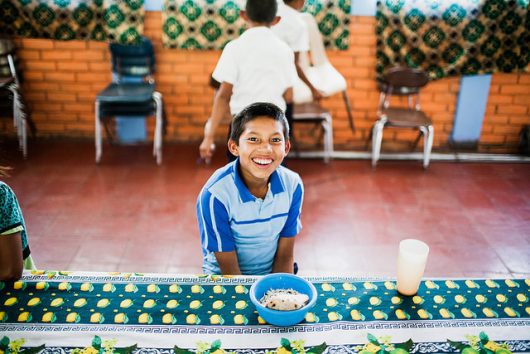
10 Facts About Nicaraguan Refugees


Nicaragua is a Central American nation with a population of more than six million people. While Latin America is not the center of the current refugee crisis, there is a long history of asylum seekers in the region. Here are 10 facts about Nicaraguan refugees.

  1. Many who decide to flee one of Latin America’s many countries attempt to head north to the United States. However, most Nicaraguans who leave their home country head south instead because visas are often cheaper, there’s more work and the pay is good.
  2. The United States has a long history of involvement in the politics of Central and Latin America. Nicaragua is no exception. Because of civil war and a U.S. trade embargo in the 1980s, many Nicaraguans sought refuge at that time.
  3. In 1983, more than 2,400 Nicaraguans were in refugee camps in Costa Rica, and around 1,750 more followed in 1984.
  4. In addition, more than 100,000 undocumented Nicaraguan refugees were likely to have crossed the border into Costa Rica in the 1980s because of the military draft, economic reasons or other dangers.
  5. Today, not many Nicaraguan migrants live in the U.S. compared to migrants of other Central American nationalities. The majority of Nicaraguans in the United States live in Miami and northern California.
  6. Nicaragua is one of the poorest countries in Latin America, and almost half the population lives on less than two dollars a day. However, Nicaragua has a low rate of crime and violence, two large factors in migration.
  7. According to the Huffington Post, polls indicate that more than half of Nicaraguans would prefer to migrate.
  8. Costa Rica is the place to go for Nicaraguan refugees. Costa Rica is close, has no language barrier and the education system is good.
  9. Many Nicaraguans who flee to Costa Rica face discrimination, exclusion and tough legal processes once they arrive.
  10. Nicaraguan refugees make up most of Costa Rica’s immigrants–around 75 percent of Costa Rica’s immigrants are Nicaraguan.

The refugee crisis is not limited to any one region in the world. These 10 facts about Nicaraguan refugees illustrate the need to think about the refugee crisis on a global scale.

– Shannon Elder

Photo: Flickr

May 24, 2017
https://borgenproject.org/wp-content/uploads/borgen-project-logo.svg 0 0 Borgen Project https://borgenproject.org/wp-content/uploads/borgen-project-logo.svg Borgen Project2017-05-24 01:30:572024-12-13 17:57:5310 Facts About Nicaraguan Refugees
Global Poverty, Refugees, War and Violence

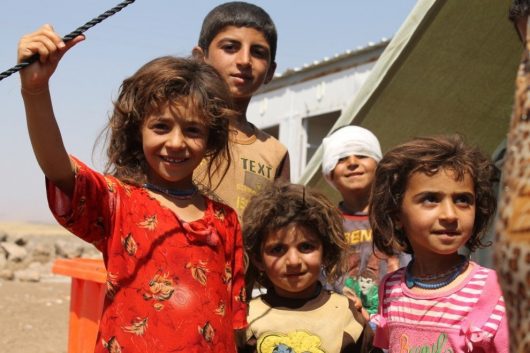
10 Things You Need to Know About Refugees From Iraq

 Refugees from Iraq
Most refugees from Iraq were forced to leave their homes after the militant group ISIS invaded the region. ISIS began to infiltrate Iraq in 2014, creating a large-scale humanitarian crisis in the region. Since then, ISIS has gained control of some of the largest cities in the country and has caused 3.4 million individuals to be uprooted from their homes.

Increasing numbers of displaced persons are fleeing war-torn regions of Iraq, and in response to the crisis, international organizations are rallying to provide relief. Ahead are 10 facts about refugees from Iraq.

10 Things You Need to Know About Refugees From Iraq

  1. Many Iraqis are internally displaced and have relocated to safer parts of the country. Around 850,000 Iraqis have fled to the Kurdish region of Iraq, where 250,000 Syrian refugees are already living. Many people now live in displacement camps with access to emergency supplies and medical care.
  2. Nearly 16,000 Iraqis were forced into Syria, where ISIS is also controlling various regions of the country. Many refugees pay smugglers to lead them on dangerous and exhausting journeys across ISIS territory.
  3. Mosul, the second-largest city in Iraq, remains in the hands of ISIS. Around 500,000 people may be trapped in the western part of the city with minimal or no access to necessary aid. Those who live in the eastern part of Mosul are living in dangerous conditions as well and will also face the challenge of entirely rebuilding their lives.
  4. In October 2016, a military operation began to free the city of Mosul from ISIS control. Even if the operation is eventually successful and Mosul is retaken from ISIS, mines and other explosive devices will remain scattered throughout the city. This will prevent many refugees from returning home safely.
  5. In addition to food and shelter, many Iraqi refugees require trauma counseling and medical care. ISIS has imposed severe restrictions on the individuals who live in the regions it controls. People are left without jobs and struggle to meet their basic needs. Numerous religious buildings and heritage sites have also been destroyed.
  6. The International Rescue Committee (IRC) provides relief to vulnerable Iraqis. It provides counseling to women and girls, gives monetary aid to displaced families and provides business training to Iraqi youth in camps.
  7. The World Bank plans to offer Iraq financial support for reconstruction efforts after ISIS is defeated. The organization will also focus efforts on rebuilding the social fabric of the country upon the return of refugees. In December, the World Bank approved a loan of $1.485 billion to Iraq.
  8. In 2016, the United Nations International Children’s Emergency Fund (UNICEF) provided immediate relief to more than 118,000 people in Mosul. They also gave more than 156,000 people in the area access to safe water and vaccinated more than 13,500 children against measles. The organization plans to continue these efforts in 2017, with a goal of providing 1.3 million displaced persons with relief kits within 72 hours of a trigger for response.
  9. The International Organization for Migration (IOM) partners with local authorities in the Kerbala and Najaf governorates of Iraq to meet the needs of internally displaced persons. It provides medical and mental health services at camps in the region. In 2016, the organization oversaw the refurbishment of three schools and a water network benefiting 8,2000 individuals.
  10. Refugee camps run by the United Nations Higher Commission for Refugees (UNHCR) will have increasing space as displaced persons begin to return to east Mosul. In camps near the city, there are more than 4,000 family plots available for new arrivals. UNHCR plans to develop additional facilities and plots as need increases.

Though the situation of many refugees from Iraq is bleak, hope remains. Organizations are working to provide relief to those displaced by the conflict. The fight to return ISIS-controlled regions of Iraq to their people will continue.

– Lindsay Harris

Photo: Flickr

May 17, 2017
https://borgenproject.org/wp-content/uploads/borgen-project-logo.svg 0 0 Borgen Project https://borgenproject.org/wp-content/uploads/borgen-project-logo.svg Borgen Project2017-05-17 21:02:412024-12-13 17:54:4810 Things You Need to Know About Refugees From Iraq
Global Poverty, Refugees

Facts about Guyana Refugees Put Crises in Perspective


Modern media and legislation are flooded with facts about asylum seekers because of refugee crises in the Middle East. The numbers in facts about Guyana refugees, albeit minuscule compared to 24 million Syrians, represents the refugee crisis on a smaller scale.

In 1994, there were 822 asylum applicants out of the South American country of Guyana. This figure drastically dropped over the following seven years, and increased again in 2002, with 847 applications. In the next year, 2003, 729 Guyanese sought asylum to main asylum countries like Canada and France. Additionally, more than 640 of those 729 applicants sought asylum in Canada and 45 applicants sought asylum to France.

The asylum-seeking number plummeted again in 2004, with only 315 total applications. There were even fewer the next year. The total number of asylum applications to main asylum countries in 2005 was just 279.

More recent facts about Guyana refugees show a downward sloping trend. A world database reported the total number of initial and continuing asylum applications of refugees from Guyana in 2015 to be only 122. The database provided a breakdown of which countries received the applications and how many were rejected.

Guyanese asylum seekers filed 46 applications seeking refuge to the United States, 38 to France, 31 to Canada and seven to the United Kingdom. Of those 122 applications, 40 were rejected. The United State rejected five applications, France rejected 19, Canada 10 and six were rejected by the United Kingdom.

According to the Migration Information Source, there were 2.86 million South American immigrants in the United States in the year 2014. Guyana represented 273,000, or 9.6 percent of those South American immigrants. In 2013, five percent of South Americans obtained green cards as refugees or asylees.

In that same year, there were reportedly 700 outgoing refugees from Guyana. More than 180 asylum seekers’ cases were pending at the start of 2014, and 145 asylum seekers’ cases were pending at the end of the year.

In 2014, there were 94 rejections, 27 asylum seekers were recognized and 31 asylum seekers’ applications were marked as closed. In total, 153 decisions were made and during the year and 145 new asylum applications were filed. Of all decisions, 17.6 percent were determined to be recognized refugees, with less than one percent receiving complementary protection status. More than 60 percent were rejected.

Current and ongoing refugee crises in Afghanistan and Syria have flooded the news cycle with facts about asylum seekers. Although small in comparison with three million refugees coming out of Afghanistan, the facts about Guyana refugees represent the crisis on a smaller scale.

– Shaun Savarese

Photo: Flickr

May 14, 2017
https://borgenproject.org/wp-content/uploads/borgen-project-logo.svg 0 0 Borgen Project https://borgenproject.org/wp-content/uploads/borgen-project-logo.svg Borgen Project2017-05-14 01:30:172020-05-03 14:20:45Facts about Guyana Refugees Put Crises in Perspective
Global Poverty, Refugees

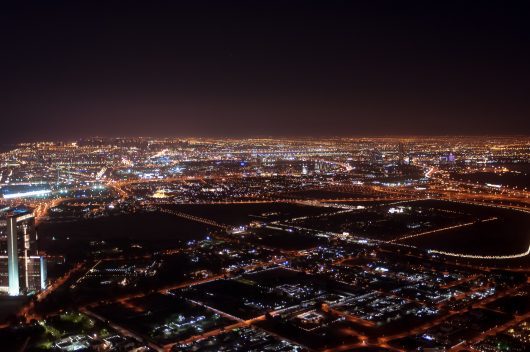
Ten Facts About United Arab Emirates Refugees

Ten Facts About United Arab Emirates Refugees
The United Arab Emirates (UAE) is a federation consisting of seven states that has grown into the most important economic center in the Middle East. The UAE is heavily dependent on oil and was dependent on the fishing and pearl industries prior to 1950. The UAE is very diverse and has become a trading and tourism hub for the region and heavily controls its media content — which includes foreign publications — before distribution. Here are ten facts about United Arab Emirates refugees.

Ten Facts About United Arab Emirates Refugees

  1. The UAE agreed in September 2016 to take in 15,000 Syrian refugees over a five-year period.
  2. The UAE is not a signatory of the 1951 Refugee Convention and legally is not obligated to allow refugees to stay in the federation.
  3. The UAE allowed 123,000 Syrians to relocate to the federation since the start of the conflict in 2011, but these have been mostly families and professionals on work visas.
  4. The UAE is the largest donor to humanitarian and development aid in the world on a per capita basis. The UAE has donated $750 million since 2012.
  5. The United Nations High Commissioner for Refugees (UNHCR) does not count refugees in the Gulf States due to these states not signing the Refugee Convention and therefore any refugee relocations are not handled by UNHCR.
  6. Keeping track of refugees in the Gulf States is difficult without data and they are referred to as Arab brothers and sisters in distress.
  7. United Arab Emirates refugees are given a permanent residence and freedom of movement to maintain their dignity. These refugees are also given access to work, medical care and education at no cost.
  8. In March 2017, Amnesty International noted that the UAE in addition to the other Gulf States had offered zero resettlement places to refugees seeking asylum in that federation.
  9. The UAE funds a number of humanitarian projects, such as Al Mreijeb Fhoud Refugee Camp in Jordan. This camp includes a field hospital with surgery, cardiology and pediatrics units that have treated about 500,000 refugees.
  10. UAE refugees fleeing conflict often do not want to be recognized or referred to as refugees in the Gulf States and tend to prefer to go to Europe to seek safety.

There continues to be an open conflict with UAE refugees and how the Gulf States will continue to handle these efforts without the aid of the U.N. However, the UAE maintains that it is offering the best aid to the millions of refugees that seek asylum in the federation.

– Rochelle R. Dean

May 7, 2017
https://borgenproject.org/wp-content/uploads/borgen-project-logo.svg 0 0 Borgen Project https://borgenproject.org/wp-content/uploads/borgen-project-logo.svg Borgen Project2017-05-07 01:30:122024-05-28 00:00:13Ten Facts About United Arab Emirates Refugees
Global Poverty, Refugees

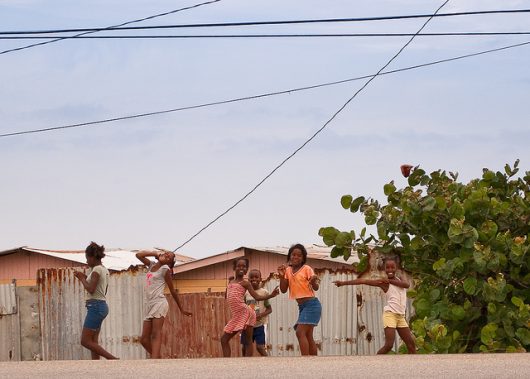
10 Facts About Jamaican Refugees


Jamaica is an island country situated in the Caribbean Sea, consisting of the third-largest island of the Greater Antilles and housing a population of 937,700 people. It is the third most populous Anglophone country in the Americas and the fourth most populous country in the Caribbean.

Jamaica is a small developing country that is seeking to promote human rights, safeguard the rule of law and protect refugees facing persecution. Here are 10 quick facts about Jamaican refugees:

10 Facts About Jamaican Refugees

  1. Jamaica has a comprehensive refugee policy that addresses many factors for refugees.
  2. An asylum seeker has to be classified as a political refugee in order to qualify for refugee status in Jamaica.
  3. In 2015, a report released by the United Nations (U.N.) Refugee Agency showed that Jamaicans made 836 applications for asylum.
  4. Jamaicans are seeking asylum in Canada, the U.S. and the U.K.
  5. Jamaicans are the top asylum seekers in the Caribbean.
  6. There is no proper identity registration currently in place for Jamaican refugees.
  7. Lack of documentation of Jamaican refugees makes it hard for these refugees to have social and economic rights.
  8. Employers are not aware that Jamaican refugees do not need work permits to work in the country, which creates unnecessary unemployment.
  9. The U.N. High Commissioner for Refugees has recommended that asylum-seekers and refugees should be provided with recognized identification cards.
  10. Currently, there are only 12 refugees from other countries in Jamaica.

Most Jamaican refugees are educated at the tertiary level in Jamaica, but have sought asylum for both economic and social opportunities. The loss of the country’s skill base of working professionals has had a tremendously negative impact on the productivity and education in the country, which are important factors that drive the Jamaican economy.

– Rochelle R. Dean

Photo: Flickr

May 1, 2017
https://borgenproject.org/wp-content/uploads/borgen-project-logo.svg 0 0 Borgen Project https://borgenproject.org/wp-content/uploads/borgen-project-logo.svg Borgen Project2017-05-01 01:30:162020-05-03 14:39:3410 Facts About Jamaican Refugees
Global Poverty, Refugees

10 Facts About Refugees in the Netherlands


The Netherlands has various strategies in terms of accepting refugees. There is the Dutch Council for Refugees, which works to improve the lives of migrants in the country. Despite having an organized council, there are still problems that accompany taking in refugees and handling their living arrangements.

Close to 60,000 refugees were admitted into the Netherlands in 2015.

Refugees in the Netherlands are housed in former prisons. The country’s crime rate has dropped drastically over the last several years, causing many correctional facilities to close down. The Central Agency for the Reception of Asylum Seekers (COA) decided to use these empty prisons as temporary housing for refugees. Before they are granted asylum status, refugees are normally stuck in temporary housing for at least six months.

A report shows that the Netherlands approved 70 percent of refugee applications made in the first nine months of 2015. In comparison, EU approval averaged 47 percent.

There have been many difficult housing issues in small Dutch towns caused by an influx of refugees. Some refugees were housed in cramped cities or hastily built homes in the suburbs. Although many have been able to find temporary homes, there are many others who have struggled.

A group founded in 2012 called We Are Here helps refugees in the Netherlands find temporary shelter in unoccupied buildings in Amsterdam. The group has more than 200 members and helps those who have a hard time integrating into society.

Thankfully, there have been projects to help refugees in the Netherlands. For example, a project called A Home Away from Home allowed Dutch people to design temporary houses for refugees.

There has been some controversy regarding refugees in the Netherlands paying for their living situation. In total, refugees in the Netherlands have paid more than EUR 700,000 over the past four years. According to a regulation placed in 2008, working refugees have to pay 75 percent of their income toward food and housing.

Once they have been living in the Netherlands for six months, refugees are required to work at least 24 weeks per year.

Back in mid-2016, the Netherlands made an agreement with Germany. It pledged to return the last half of 900 refugees that were sent to the Netherlands after Germany could not grant them formal asylum.

The Dutch Council for Refugees works with 14,000 volunteers and a few hundred paid employees to support refugees with legal rights and the asylum process. The organization also used “NGO twinning projects,” which is a process used to facilitate work with other refugee-assisting organizations.

– Emma Majewski

Photo: Flickr

May 1, 2017
https://borgenproject.org/wp-content/uploads/borgen-project-logo.svg 0 0 Borgen Project https://borgenproject.org/wp-content/uploads/borgen-project-logo.svg Borgen Project2017-05-01 01:30:122024-05-27 23:59:4810 Facts About Refugees in the Netherlands
Global Poverty, Refugees

10 Facts About Sierra Leone Refugees


The U.N. projects that there are more displaced people in the world now than at any other time since World War II. Most of these refugees come from Africa, which has put large demands on European and African countries. Future refugee projections continue to rise due to ongoing conflicts and the effects of climate change. Case studies in Sierra Leone show us the importance of rehabilitating governmental institutions and economic markets in conflict-prone regions.

10 Facts About Sierra Leone Refugees.

  1. Thousands of natives fled their country during a bloody civil war that lasted from 1991 to 2002.
  2. The Revolutionary United Front (RUF), with support from the National Patriotic Front of Liberia (NPFL), attempted to overthrow the president at the time, Joseph Momoh.
  3. This 11-year civil war resulted in 50,000 deaths and the internal displacement of two million people. Among the displaced, 490,000 sought refuge in the neighboring countries of Liberia and Guinea.
  4. In 2008, the U.N. High Commission for Refugees conducted a campaign in Guinea. The project aimed to inform Sierra Leone refugees of the upcoming withdrawal of their refugee status.
  5. The UNHCR convened in 2008, and found that conditions in Sierra Leone had returned to normal. This meant that Sierra Leoneans who fled their country during the civil war in the early 1990s would no longer be considered refugees because the root causes of the Sierra Leone refugee problem no longer existed.
  6. This decision was reached after an analysis of the fundamental and positive changes that have taken place in Sierra Leone. A peace agreement was struck between the Joseph Momoh government and the RUF in January of 2002, marking the beginning of these changes.
  7. Under a previous UNHCR initiative, a voluntary repatriation operation that took place from September 2000 to July 2004, more than 179,000 Sierra Leone refugees were able to return home.
  8. There are 13,500 refugees from Sierra Leone who continue to live abroad, 1,825 of whom are living in Guinea, and 2,368 in Liberia.
  9. The UNHCR voluntary repatriation operation for refugees from Sierra Leone ended in July 2004. This program offered financial assistance to refugees to assist in transit and resettlement in Sierra Leone.
  10. The U.N. Development Program (UNDP) continued to work with the local government to ensure that returning refugees were integrating effectively, without stressing markets. Additionally, UNDP continued to meet the needs and priorities of the government through aligning long-term development programs and non-governmental relief actors facilitating recovery.

Sierra Leone ended its 11-year long civil war in 2002 and has since re-established democratic institutions. This restructuring process strengthened Sierra Leone’s government and was essential to the reception of 60,000 Liberian refugees in 2005. Sierra Leone is a shining example for current conflict-rode regions as they look towards the future.

– Josh Ward

Photo: Flickr

April 30, 2017
https://borgenproject.org/wp-content/uploads/borgen-project-logo.svg 0 0 Borgen Project https://borgenproject.org/wp-content/uploads/borgen-project-logo.svg Borgen Project2017-04-30 01:30:412024-05-27 23:59:5810 Facts About Sierra Leone Refugees
Global Poverty, Refugees

10 Facts About United Kingdom Refugees From Syria

10 Facts About United Kingdom Refugees
In response to the Syrian refugee crisis, the United Kingdom initially had a policy of offering a generous amount of humanitarian aid to Syria’s neighbors instead of accepting Syrian refugees in the U.K. The logic behind this policy is that it is safer for refugees to remain where they are instead of making dangerous trips across Europe. Here are 10 facts about United Kingdom refugees.

10 Facts About United Kingdom Refugees From Syria

  1. The U.K. government said in 2016 that it had contributed £1.1 billion since 2012 on food, tents and other humanitarian aid to Syria.
  2. The Syrian Vulnerable Person Resettlement Programme (VPRP) was established in 2014 to provide a route for chosen Syrian refugees to go to the U.K.
  3. Under the Syrian VPRP, the U.K. plans to resettle as many as 20,000 refugees by the end of the current Parliament.
  4. The U.K. committed to resettling approximately 3,000 vulnerable children currently in the Middle East and North Africa, as well as 350 unaccompanied children already in Europe. This number includes Syrian nationals.
  5. When first implemented, the VPRP gave priority to refugees that were elderly, disabled or victims of sexual violence or torture. No cap was set on the number, but several hundred refugees are expected in the U.K. in the next three years.
  6. In order to help refugees integrate into British society, a community sponsorship program was started in July 2016.
  7. Refugees resettled in the U.K. are provided with five years Humanitarian Protection status, along with permission to work and access public funds. By September 2016, under the VPRP, 4,414 people had been given Humanitarian Protection status.
  8. The U.K. will provide resettlement for approximately 3,000 vulnerable children and their families from conflict situations in the Middle East and North Africa.
  9. Section 67 of the Immigration Act 2016 requires the government to relocate and support an unspecified number of unaccompanied refugee children currently in Europe. As of Feb. 8, 2017, it was announced that the number of unaccompanied children under section 67 will be capped at 350.
  10. Syrians can claim asylum once they arrive in the UK. In 2016, Syrian nationals requesting asylum numbered 2,102. At least 86 percent of Syrian asylum applications were granted in 2016 — more than any other nationality.

These 10 facts about United Kingdom refugees demonstrates that the country has one of the best refugee policies. Additionally, the U.K. is the second-largest donor to the Syrian refugee crisis with a commitment of £2.3 billion.

– Mary Barringer

Photo: Flickr

April 30, 2017
https://borgenproject.org/wp-content/uploads/borgen-project-logo.svg 0 0 Borgen Project https://borgenproject.org/wp-content/uploads/borgen-project-logo.svg Borgen Project2017-04-30 01:30:112024-12-13 17:57:5410 Facts About United Kingdom Refugees From Syria
Global Poverty, Hunger, Refugees

10 Facts About Hunger in Liberia


Liberia, officially the Republic of Liberia, is a country on the West African coast that is home to roughly 4.5 million people. Due to a recent civil war and outbreak of the deadly Ebola virus, the country has become vulnerable to poverty and hunger. Here are 10 facts about hunger in Liberia.

10 Facts About Hunger in Liberia

  1. Poverty in Liberia is high, and approximately 83.3 percent of the population lives on less than $1.25 a day.
  2. High levels of poverty often lead to hunger. Around 16 percent of households in Liberia are food-insecure and two percent are severely food-insecure.
  3. Food makes up a large portion of Liberian families’ expenses, with one-fourth of Liberian families spending more than 65 percent of their income on food. Some people are forced to resort to emergency coping strategies, such as begging, in order to feed their family.
  4. Liberia is classified as a low-income, least developed and food-deficit country. It ranks as number 177 out of 188 countries in the 2015 Human Development Index.
  5. Liberia is in the process of recovering from a 14-year civil war that destroyed social services and infrastructure critical to combating poverty and hunger in Liberia.
  6. An Ebola virus outbreak in March 2014 also had a detrimental impact on Liberia’s economy. Economic growth fell from an estimated 5.9 percent to between 0.7 and 0.9 percent in 2014.
  7. Refugees living in Liberia are even more vulnerable to hunger. The country has hosted approximately 39,000 refugees since December 2015, primarily people from Cote d’Ivoire. Those who live in camps are especially at risk for hunger.
  8. Livestock farming in Liberia is unable to meet the population’s demand. As a result, 80 percent of the country relies on fish as a protein source. However, climate change has led to flooding and rising sea levels that threaten Liberians’ ability to fish.
  9. Insufficient access to education contributes to poverty and hunger in Liberia. Only 26.7 percent of children are enrolled in school.
  10. Girls in Liberia are especially likely to be taken out of school early, either to help with work at home or as a way to save money. The World Food Programme offers take-home rations to girls as an incentive for families to keep them in school.

While the people of Liberia continue to face obstacles as they rebuild their country’s economy, continued international support and investment in education and infrastructure could help stabilize the country and reduce hunger.

– Alexi Worley

Photo: Flickr

April 25, 2017
https://borgenproject.org/wp-content/uploads/borgen-project-logo.svg 0 0 Borgen Project https://borgenproject.org/wp-content/uploads/borgen-project-logo.svg Borgen Project2017-04-25 01:30:212020-05-07 17:14:0710 Facts About Hunger in Liberia
Children, Global Poverty, Refugees, War and Violence

Refugee Child Abuse in Libya

Libya
A recent United Nations International Children’s Emergency Fund (UNICEF) study titled A Deadly Journey for Children: The Central Mediterranean Migration Route, surveyed migrant women and children in Libya making their way to Europe. Refugee children leaving war and poverty are being mentally and physically abused, sexually assaulted and starved.

Last September, it was estimated that 256,000 migrants were in Libya, 11 percent of whom were women and nine percent of whom were children. A third of these children were unaccompanied. However, these figures are estimations and the actual statistics are assumed to be much higher.

About 70 percent of migrants traveling through Africa to Europe experience some type of exploitation, according to an October International Organization for Migration (IOM) survey. Last year, nine of out 10 children who used the Central Mediterranean Migration Route arrived in Europe unaccompanied. Nearly 26,000 children made the journey in 2016, which is twice the number of children from the previous year. Unaccompanied children are more prone to different types of abuse, trafficking and exploitation.

UNICEF staff members in Libya have documented many cases of refugee child abuse over time. Three-quarters of the children interviewed in the survey said they had experienced some type of violence from an adult. A majority of the children had experienced emotional abuse, with girls reporting higher rates than boys. Some children also said that they had to rely on smugglers, which resulted in other types of abuse like trafficking.

Amid the refugee child abuse shown in this study, UNICEF has created a six-part plan that they want governments and the European Union to adopt. The UNICEF Agenda for Action is comprised of the following goals:

  1. Protect child refugees and migrants, particularly unaccompanied children, from exploitation and violence.
  2. End the detention of children seeking refugee status or migrating by introducing a range of practical alternatives.
  3. Keep families together as the best way to protect children and give them legal status.
  4. Keep all refugee and migrant children learning and give them access to health and other quality services.
  5. Press for action on the underlying causes of large-scale movements of refugees and migrants.
  6. Promote measures to combat xenophobia, discrimination and marginalization in countries of transit and destination.

UNICEF spokesperson Sarah Crowe told Al Jazeera, “We need to work on finding a solution to the root causes of the problem and we need to do more to support children at every step of the way.”

– Shannon Elder

Photo: Flickr

April 24, 2017
https://borgenproject.org/wp-content/uploads/borgen-project-logo.svg 0 0 Borgen Project https://borgenproject.org/wp-content/uploads/borgen-project-logo.svg Borgen Project2017-04-24 01:30:182024-12-13 17:56:47Refugee Child Abuse in Libya
Page 43 of 53«‹4142434445›»

Get Smarter

  • Global Poverty 101
  • Global Poverty… The Good News
  • Global Poverty & U.S. Jobs
  • Global Poverty and National Security
  • Innovative Solutions to Poverty
  • Global Poverty & Aid FAQ’s
Search Search

Take Action

  • Call Congress
  • Email Congress
  • Donate
  • 30 Ways to Help
  • Volunteer Ops
  • Internships
  • Courses & Certificates
  • The Podcast
Borgen Project

“The Borgen Project is an incredible nonprofit organization that is addressing poverty and hunger and working towards ending them.”

-The Huffington Post

Inside The Borgen Project

  • Contact
  • About
  • Financials
  • President
  • Board of Directors
  • Board of Advisors

International Links

  • UK Email Parliament
  • UK Donate
  • Canada Email Parliament

Get Smarter

  • Global Poverty 101
  • Global Poverty… The Good News
  • Global Poverty & U.S. Jobs
  • Global Poverty and National Security
  • Innovative Solutions to Poverty
  • Global Poverty & Aid FAQ’s

Ways to Help

  • Call Congress
  • Email Congress
  • Donate
  • 30 Ways to Help
  • Volunteer Ops
  • Internships
  • Courses & Certificates
  • The Podcast
Scroll to top Scroll to top Scroll to top