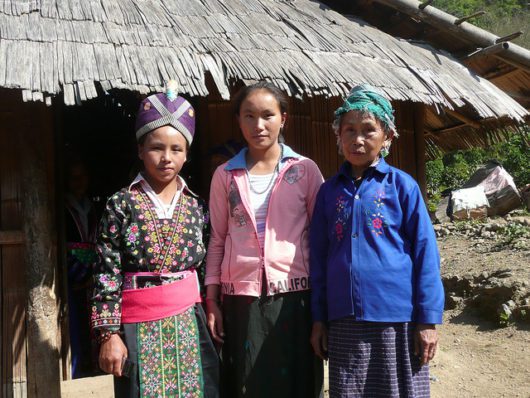
Within the aid sector, female disaster responders are essential to ensuring the concerns of women and girls are heard and met. Women and girls are particularly vulnerable during crises, facing risks that male responders may not even consider that can happen. Additionally, a lack of local female responders may reinforce gender inequalities. In certain regions of the world, however, women are coming together, taking charge of disaster response efforts and helping their communities prepare for and respond to crises.
The Forgotten Effects of Disasters
A recent study by the International Federation of the Red Cross on three Southeast Asian nations- Indonesia, Laos and the Philippines, found that sexual and gender-based violence increased after disasters. Sexual harassment, sexual assault, child marriage, child sexual abuse, domestic violence and human trafficking all increased in the aftermath of natural disasters.
Often, those in charge of the disaster response do not take into account these risks when designing shelters and evacuation centers. It is crucial that these facilities have separate areas for men and women, provide separate, lockable bathroom facilities and have adequate lighting.
The Importance of Female Disaster Responders
Having female disaster responders increases the likelihood that these issues will be considered and addressed. International aid groups need to work to increase the number of women who are deployed to participate in the disaster response. Having female staff can help make communication with local women easier, and ensure that women’s concerns are being met.
This can be difficult, however, as female responders face additional risks and concerns, including safety, security and access to personal hygiene products. To mitigate these concerns, the safety of female responders always needs to be taken into account when designing living arrangements and women need to be encouraged to speak up about sexual harassment or assault. Women should also be encouraged to speak up about hygiene needs, and all staff needs to be trained to be open and understanding about these issues.
Involving local women in response efforts is also crucial. Suzy Madigan, the senior humanitarian advisor for gender and protection with CARE International, stated: “By not understanding what are the protection risks facing women and girls and, crucially, what are the solutions that they themselves would suggest, then we’re failing 50 percent of the population that we’re trying to serve.”
Madigan also warns that not including women in disaster response efforts can “reinforce barriers and discrimination.” In certain communities, women may already be generally excluded from decision-making, so if humanitarian groups are only working with men, they are both reinforcing this inequality and ignoring the needs of women.
Femlink Pacific
In certain areas of the world, women have started forming female-led disaster response organizations for their communities, breaking down gender barriers and ensuring the needs of women are met. Female disaster responders in Fiji provide a perfect example of this and their work can potentially be used as a model for other locations. The southwestern Pacific averages seven tropical cyclones every year between November and April. Recent cyclones have been particularly devastating, with three Category 4 cyclones in the Pacific between November 2016 and April 2017.
The Women’s Weather Watch program, run by a women’s media organization in Fiji, Femlink Pacific, maintains a network of 350 women across the nation. They use this network to communicate weather reports to women in different communities and provide advice for preparing for the coming weather. Women working with Femlink Pacific connect with other women in their communities and may even lead meetings for local women to help educate them. For example, Fane Boseiwaqa leads monthly meetings for 60 women in the area. She says that women are leaders, but they have to have access to adequate information and communication.
It is not always easy for female disaster responders to get their voices heard by the wider community, however. While doing their part to prepare for disasters and help their neighbors, women are often sidelined. Sarojani Gounder, a member of the Femlink Pacific network and local district councilor, stated: “Nobody comes and asks the women what you want or what you need. There’s nothing.”
In response to this, women have begun organizing on their own, taking the initiative to form women-based groups. When there are shortages in food and supplies, women have proven themselves to be the most effective first responders, as they are more likely to work together for the betterment of the whole community. Selai Adi Maitoga, a member of the Femlink Pacific network, stated, “Men don’t ask the neighbors. But the women, we talk to each other. That’s why women are the first responders.”
The initiatives of female disaster responders in Fiji can provide a model for disaster response elsewhere, exemplifying the importance of getting local women involved in preparing for storms and providing aid in their aftermath. The knowledge that local women have about the needs of their communities is crucial to any disaster response. Where possible, efforts to include local women should be made, helping to bring women’s concerns and needs to light and adequately address them in the aftermath of a disaster.
– Sara Olk
Photo: Flickr

A Website Combats Human Rights Violations
Across the globe, human rights violations are committed by official law enforcement personnel far too often. In Africa and other parts of the developing world, such violations often occur in the context of extreme poverty. Although there has been some progress in protecting human rights, there is still much work to be done. A recently created website, WhoWasInCommand.com, seeks to help victims locate their perpetrators in order to bring about justice.
Restricting the Freedom of Peaceful Assembly
Amnesty International reports that in Africa in 2017 and 2018, “intolerance of peaceful dissent and an entrenched disregard for the right to freedom of peaceful assembly” had become all too commonplace. This includes arresting as well as beating and sometimes even killing, peaceful protestors. They also note that “these trends occurred within a context of slow and intermittent success in reducing poverty.”
Within the past two years, Angola, Chad, the Democratic Republic of the Congo (DRC), Ethiopia, Sudan and Togo all undertook measures that restricted or banned peaceful protests. All of these countries have poverty rates more than 30 percent, with the Democratic Republic of the Congo having the highest rate at 63 percent.
The restriction of peaceful protests does not always violate human rights, but law enforcement personnel sometimes resort to extreme measures to crack down on protesters. In Togo, a crackdown by security forces, which involved beatings and the firing of tear gas and ammunition at protestors, resulted in the deaths of 10 individuals, including three children.
Identifying the Perpetrator
Of course, protestors are not the only individuals suffering from human rights violations committed by law enforcement. Such violations can occur while an individual is being detained in jail, in their home or on the street. One of the largest barriers of bringing perpetrators to justice, however, is the inability to identify them. In fact, many victims of human rights abuses do not know the names of those who violated their rights, making it nearly impossible to develop a legal case. Even when perpetrators are identified, sometimes they are moved around to prevent prosecution.
In 2016, a 12-year-old was detained, tortured and left almost paralyzed by security force officers in Nigeria. His lawyer, Chino Edmund Obiagwu, who is also the director of the Legal Defense and Assistance Project in Nigeria, would have been unable to cite the officers because he could not have access information on their names if it had not been for the work of provided by the WhoWasInCommand.
Holding Officials Accountable for Their Actions
In response to difficulties in identifying law enforcement personnel who violate human rights, Tony Wilson, the director of Security Force Monitor, a project of Columbia Law School’s Human Rights Institute, started the website WhoWasInCommand in June 2017. The site publishes data on law enforcement, including names, ranks, commanders, location, history of service and previous allegations held against them.
Security Force Monitor was created to support researchers, investigative journalists and litigators that work specifically on human rights violations. Those behind the project believe that it is important to hold security force officials accountable for their actions, but also recognize that, as data on these groups is generally decentralized, difficult to locate and sometimes costly, individual lawyers or victims often do not have the resources to access it. The Security Force Monitor team analyzes thousands of public records to provide relevant information on WhoWasInCommand about law enforcement officials.
The Increasing Popularity of the Website
Initially, WhoWasInCommand only included research on Mexico, Nigeria and Egypt, but as of October 2018, six new countries have been added, including Bangladesh, Myanmar, Philippines, Rwanda, Saudi Arabia and Uganda, making the site the largest public database on security forces in the world. Countries are chosen based on the existence of longstanding concerns about human rights abuses by law enforcement as well as the consistent inability of lawyers and journalists to identify perpetrators in those areas.
In addition to the assistance the Security Force Monitor is providing, there have been some successes in cracking down on human rights violations through legislation. Nigeria passed an Anti-Torture Bill in December 2017, Burkina Faso’s has committed to increasing human rights protections in their draft Constitution, the Gambia pledged to abolish the death penalty and Kenya decided not to close a refugee camp that houses over a quarter of a million Somali refugees who could not return home without the risk of violence and abuse. While progress is slow, small victories such as these are not inconsequential, but are, in fact, an essential step in ensuring human rights across the globe.
As WhoWasInCommand continues to grow, hopefully, there will be a notable increase in successful prosecutions of law enforcement personnel who commit human rights violations. A researcher at Amnesty International, Aster van Kregten, expressed hope that nations may eventually begin freely contributing information about security forces, making a site like WhoWasInCommand unnecessary. Governments also need to continue to pass laws that ensure the protection of human rights for all individuals.
Photo: Flickr
Top 10 Facts About Living Conditions in Oman
Oman is a country known for its restored forts and castles. In 2010, the country, which is twice the size of Georgia, was ranked as the most improved nation over the last 40 years. However, none of this explains what it’s like to live among the Omani culture and people. Here are the top 10 facts about living conditions in Oman.
Top 10 Facts About Living Conditions in Oman
Oman has been known for its castles and wonderful exhibitions of culture through the famous Muscat Festival. It is a country offering much for its population as these top 10 facts about living conditions in Oman show. Although there are still key improvements to be made, the country is continuing to progress.
Photo: Flickr
Top 10 Facts About Living Conditions in Bolivia
Bolivia has recorded growth in several important life categories. However, being home to more than 11 million people, the country has a long way to go before being considered a developed country. In the article below, the top 10 facts about living conditions in Bolivia are presented.
Top 10 Facts About Living Conditions in Bolivia
Overall, Bolivia has grown in its diversification of employment, access to basic facilities and consideration of human rights issues. Poverty still troubles 39 percent of the population and many still require access to clean water and nutrition, but with the help of leaders like Willy Mendoza and groups like Habitat and CHOICE Humanitarian, fundamental needs like good shelter and water continue to be satisfied. These changes and many of the top 10 facts about living conditions in Bolivia show what sustainable organizations backed by the government can accomplish in a developing country.
– Hannah Peterson
Photo: Pixabay
Top 10 Facts About Living Conditions in El Salvador
El Salvador is the smallest country in Central America, bordered by Guatemala and Honduras. It is about the same size as the state of Massachusetts with a population of 6.4 million people. Most of the country overflows with mountains and rainforests, while one side is bordered by the Pacific Ocean, possessing miles of sandy beaches. El Salvador is a unique country filled with vivid culture, people, and beauty. In the article below, a list of the top 10 facts about living conditions in El Salvador is presented.
The top 10 facts about living conditions in El Salvador open the door for several improvements and changes the country has the opportunity to make over the next few years. Slowly but surely, El Salvador is developing better living conditions for its people.
– Savannah Huls
Photo: Flickr
Eight Facts About Mexican Immigration
The topic of immigration is inescapable in contemporary American politics. Political figures, news sources, late-night TV shows, other media outlets- it seems this topic is constantly being talked about. This coverage has created a flood of information about immigration in the United States, particularly about immigration from Mexico. But not all of this information is accurate. In the text below, eight facts about Mexican immigration are presented in an attempt to shed a light on this topic.
Eight Facts About Mexican Immigration
Poverty, violence, crime and corruption are the root causes of immigration from Mexico and Central America into the United States. International cooperation to fund development and alleviate global poverty addresses these root causes and is key to reducing immigration. The United Nations stresses the importance of global cooperation in addressing international immigration and the Council of Foreign Relations asserts that large-scale migration can be managed only with a global governance framework.
With the increased life standard in Mexico and more opportunities in the country, Mexican immigration to the United States can be reduced in a less painful way. Reducing immigration is important not because immigration is inherently bad, but because people should not have to flee their homes to have a safe, financially stable life. They should have the opportunity to immigrate to another country if they choose, but should also be able to lead a safe, stable, prosperous life in their home country.
– Laura Turner
Photo: Flickr
The Importance of Female Disaster Responders
Within the aid sector, female disaster responders are essential to ensuring the concerns of women and girls are heard and met. Women and girls are particularly vulnerable during crises, facing risks that male responders may not even consider that can happen. Additionally, a lack of local female responders may reinforce gender inequalities. In certain regions of the world, however, women are coming together, taking charge of disaster response efforts and helping their communities prepare for and respond to crises.
The Forgotten Effects of Disasters
A recent study by the International Federation of the Red Cross on three Southeast Asian nations- Indonesia, Laos and the Philippines, found that sexual and gender-based violence increased after disasters. Sexual harassment, sexual assault, child marriage, child sexual abuse, domestic violence and human trafficking all increased in the aftermath of natural disasters.
Often, those in charge of the disaster response do not take into account these risks when designing shelters and evacuation centers. It is crucial that these facilities have separate areas for men and women, provide separate, lockable bathroom facilities and have adequate lighting.
The Importance of Female Disaster Responders
Having female disaster responders increases the likelihood that these issues will be considered and addressed. International aid groups need to work to increase the number of women who are deployed to participate in the disaster response. Having female staff can help make communication with local women easier, and ensure that women’s concerns are being met.
This can be difficult, however, as female responders face additional risks and concerns, including safety, security and access to personal hygiene products. To mitigate these concerns, the safety of female responders always needs to be taken into account when designing living arrangements and women need to be encouraged to speak up about sexual harassment or assault. Women should also be encouraged to speak up about hygiene needs, and all staff needs to be trained to be open and understanding about these issues.
Involving local women in response efforts is also crucial. Suzy Madigan, the senior humanitarian advisor for gender and protection with CARE International, stated: “By not understanding what are the protection risks facing women and girls and, crucially, what are the solutions that they themselves would suggest, then we’re failing 50 percent of the population that we’re trying to serve.”
Madigan also warns that not including women in disaster response efforts can “reinforce barriers and discrimination.” In certain communities, women may already be generally excluded from decision-making, so if humanitarian groups are only working with men, they are both reinforcing this inequality and ignoring the needs of women.
Femlink Pacific
In certain areas of the world, women have started forming female-led disaster response organizations for their communities, breaking down gender barriers and ensuring the needs of women are met. Female disaster responders in Fiji provide a perfect example of this and their work can potentially be used as a model for other locations. The southwestern Pacific averages seven tropical cyclones every year between November and April. Recent cyclones have been particularly devastating, with three Category 4 cyclones in the Pacific between November 2016 and April 2017.
The Women’s Weather Watch program, run by a women’s media organization in Fiji, Femlink Pacific, maintains a network of 350 women across the nation. They use this network to communicate weather reports to women in different communities and provide advice for preparing for the coming weather. Women working with Femlink Pacific connect with other women in their communities and may even lead meetings for local women to help educate them. For example, Fane Boseiwaqa leads monthly meetings for 60 women in the area. She says that women are leaders, but they have to have access to adequate information and communication.
It is not always easy for female disaster responders to get their voices heard by the wider community, however. While doing their part to prepare for disasters and help their neighbors, women are often sidelined. Sarojani Gounder, a member of the Femlink Pacific network and local district councilor, stated: “Nobody comes and asks the women what you want or what you need. There’s nothing.”
In response to this, women have begun organizing on their own, taking the initiative to form women-based groups. When there are shortages in food and supplies, women have proven themselves to be the most effective first responders, as they are more likely to work together for the betterment of the whole community. Selai Adi Maitoga, a member of the Femlink Pacific network, stated, “Men don’t ask the neighbors. But the women, we talk to each other. That’s why women are the first responders.”
The initiatives of female disaster responders in Fiji can provide a model for disaster response elsewhere, exemplifying the importance of getting local women involved in preparing for storms and providing aid in their aftermath. The knowledge that local women have about the needs of their communities is crucial to any disaster response. Where possible, efforts to include local women should be made, helping to bring women’s concerns and needs to light and adequately address them in the aftermath of a disaster.
– Sara Olk
Photo: Flickr
The One Health Approach to Antibiotic Resistance
Generally, the One Health Approach is a collaborative method to address the three cornerstones of health outcomes: humans, vectors/wildlife and the environment. There is a growing concern for antibiotic resistance — the 2018 World Economic Forum estimates that for that there were 100,000 antibiotic-resistance-related deaths in U.S. hospitals and 80,000 in China last year.
One Health Approach to Antibiotic Resistance
Alongside the human toll is an economic burden of an estimated global GDP drag of between 1.1 and 3.8 percentage points between now and 2050. The major issue is that the resistance is spreading and the key drivers of antimicrobial resistance include the use and abuse of drugs in humans, animals and agricultural practices. Many of the antibiotics administered to humans are also being utilized to treat food pens for livestock.
There is a crucial link between humans, animals and the environment, which is why the One Health approach calls for action from all three fronts including measures that would limit and eliminate inappropriate drug use and thus infection for animals. The primary concerns in the animal-health and agriculture sectors are the massive scales in which medication is being used. Some are critical for humans — cephalosporins like Penicillin and other common antibiotics, for instance, prevent protein synthesis in bacteria, and fluoroquinolones commonly treat urinary tract infections.
Crucially Important Health Recommendations
It is critical to reduce over-prescribing and over-utilizing antimicrobials, and instead improve sanitation and infection control. There is inadequate conversation about the pollution from industrial, residential and farm waste; thus, the One Health approach calls for improvements in antimicrobial use regulation and policy, surveillance, stewardship, infection control, sanitation, animal husbandry and alternatives to antimicrobials.
The World Health Organization (WHO) recently launched updated guidelines on how people ought to view and use medically important antimicrobials in food-producing animals, recommending that farmers and the food industry stop using antimicrobials routinely to promote growth and prevent disease in healthy animals. By reducing our reliance on these antibiotics in animals, its effectiveness as human medicine can be preserved, if not, prolonged.
Every Action Counts
Small yet uniform individual steps can result in a larger collective impact. These steps from the One Health approach calls for humans to act preventatively, first and foremost. That is, to routinely practice strong hygiene practices which, in turn, can assist in the early detection of infection. Users of antibiotics must remember to not overuse, but rather to use it completely and for the entire treatment period so latent bacteria and fungus cannot mutate and grow resistant.
Vaccination is a key preventative measure as is remaining mindful that pets also share germs with its human owners. From the stance of animals, we must keep in mind that we share the planet with many wildlife species that may be playing its role as disease reservoirs, hosts or vectors, so it is crucial to wear tick spray and protective gear, and to treat these wildlife species with caution and care.
Lastly, on the environmental front, humans must change the current reliance on antibiotics in agriculture practices. Whether preventing crops from getting deterred by pests or encouraging and artificially accelerating growth of hens and pigs, the environment is being damaged and it’s important for populations to remain mindful of this sobering fact.
A Holistic Approach to Antibiotic Resistance
The WHO explains the critical importance of a holistic approach to antibiotic resistance since human use of antibiotics does not tend to recognize “geographic, human, or animal” borders. In general, the main takeaway from the One Health Approach is for all three actors and elements above to collaboratively prevent the spread of these diseases by corroborating with each other.
– Quy Mai
Photo: Flickr
Why Reducing Air Pollution in Mongolia Matters
Mongolia is a modern expanding economy with a tumultuous history and vast growth and development potential. Yet, at the same time, the country continues to grapple with the increasing pressures of environmental degradation, climate change, population growth and rapid industrialization.
Air Pollution in Mongolia
One third (26.9 percent) of the 3.1-million-strong population already lives below the established poverty line. A large proportion of the population inhabit rural areas and many live a nomadic lifestyle. Furthermore, 60 percent of people are plagued by deficiencies in necessities and basic water and sanitation services.
Air pollution in Mongolia remains a constant struggle for the country as it gives rise to health problems and developmental issues. The city of Ulan Bator is becoming one of the most heavily polluted cities in the world and is exacerbating existing poverty levels and standards of living. The urban poverty cycle may also rise due to the impacts of solid waste production, transportation and thermal power generation.
What Causes Air Pollution?
One of the leading causes of air pollution in Mongolia is rural-to-urban migration. There is a massive influx of people from rural areas that currently stands at over 230,000 households; at present, air pollution is at about PM 2.5 (a measure for fine particulate matter) and is also estimated to be 133 times above WHO-established safety levels. Conditions are known to be especially grave during winter months, and pollution levels in the country are also linked with high fetal mortality rates and other risks like birth defects.
Moreover, pneumonia remains one of the leading causes of death among children under five in the country, according to research by UNICEF. This phenomena is contributing to a mounting public health crisis and also giving rise to major domestic healthcare concerns like pneumonia, asthma, bronchitis and other respiratory infections.
The Ger System
While these health problems occur, the long-standing ger system — a form of residential districts in Mongolian settlements made up of houses or gers — is simultaneously expanding. Over 62 percent of Mongolia’s population now live in these kinds of establishments.
These settlements don’t possess water supplies and people often need to rely on public wells. Due to the excessive usage of iron stoves for cooking and burning of coal for heating during the winter months, the ger district systems are also increasing air pollution in Mongolia.
Counteractive Measures
In order to counteract the problem, the Climate and Clean Air Coalition is working in collaboration with the bank Xacbank to better address air pollution in Mongolia. Work is being carried out by stakeholders to ensure the incorporation and production of more efficient and renewable energy sources — particularly electric and solar technology systems.
The Japanese International Cooperation is also providing non-refundable aid by installing diesel particular filters (DPF) to help remove particulate matter in public buses and decrease pollution levels on the roads and highways. The government is also working to impose bans on the burning and use of fossil fuels like coal to help decrease air pollution in Mongolia.
Finally, to catalyze a long-term solution to air pollution in Mongolia, it is essential for key stakeholder groups in the country to work on strengthening healthcare and infrastructure systems to better respond and counteract the threat that this significant health issue poses to the public.
– Shivani Ekkanath
Photo: Flickr
10 Facts About Life Expectancy in Costa Rica
Costa Rica is home to 4.98 million people, with the second-highest per capita income in Central America, after Panama. Innovative initiatives like CCSS, a national health care system, not supporting a military since 1949, relying heavily on renewable energy and preserving natural land sets the country apart. Costa Rica’s spends almost 20 percent of GDP on social programs in an effort to meet their goals established in the 1970s of universal education, health care, clean water, sanitation and electricity.
The consistent political stability also distinguishes Costa Rica from neighbors in Central America. This context has produced measurable growth in health outcomes and reduced mortality. These 10 facts about life expectancy in Costa Rica highlight the impacts of Costa Rica’s policies.
10 Facts about Life Expectancy in Costa Rica
These 10 facts about life expectancy in Costa Rica paint the government as a nimble in its ability to enact policies that meet needs and consistently build better health outcomes for their people.
– Heather Hughes
Photo: Flickr
Top 10 Facts About Living Conditions in Cameroon
Cameroon is in trouble. The country is economically plagued by a devastatingly high poverty rate, struggling education and health care systems, paralyzing corruption and various internal rifts that threaten national security and any prospects of a vibrant tourism industry. Nevertheless, some bright spots remain that point towards a more prosperous future. With an official goal in place to be labeled as an “emerging market” by 2035, many questions about Cameroon’s precarious future linger. The top 10 facts about living conditions in Cameroon presented below will try to give a better picture of the situation in the country.
Top 10 Facts About Living Conditions in Cameroon
Despite being an independent country from 1960, Cameroon still has an autocratic rule that made country one of the poorest in the world. The country has a lot of work to do, especially in the fields of child labor and corruption. The positive developments are present, such as the low unemployment rate and high school attendance rates. These and similar positive examples provide hope for the citizens that a country can be categorized as an “emerging market” by 2035.
– William Lloyd
Photo: Flickr