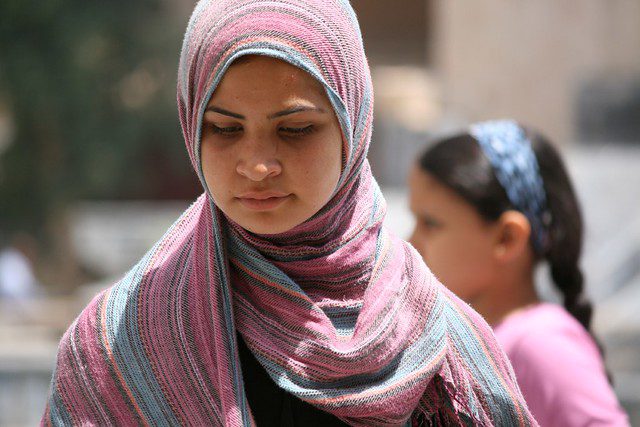
 Syria’s civil war has been raging on for eight years now. The conflict has created a huge population of 5.7 million refugees in critical need of humanitarian assistance. The resulting humanitarian crisis is one of the worst the world has seen in recent years. Several organizations are on the ground trying to provide humanitarian solutions for the victims of war in Syria.
Syrian Democratic Forces
Recently, the Islamic State (IS) made its last stand to desperately hold on to the last tiny piece of territory it has, a small town in Eastern Syria called Baghouz. In September 2018, the Kurdish-led Syrian Democratic Forces (SDF) initiated what they hope to be their final military push to reclaim IS turf. The operation has been excruciatingly slow and deadly.
Civilians are struggling to slip out of the militants’ grasp and into the global humanitarian community. The SDF is working to help extract the civilian families out of the last holdout of IS fighters. It is believed that several thousand people are still huddled together in the final IS enclave. The people pouring out of Baghouz to seek shelter from the war in Syria pose a huge humanitarian challenge.
Almost 40,000 civilians have already left the diminishing IS territory, but the flow was severely interrupted when IS fighters closed off all exit roads. IS extremists were obstructing civilians from escaping, using them as human shields from airstrikes. Now, small groups of refugees sneak out into humanitarian corridors with the help of smugglers. The International Rescue Committee (IRC) is a humanitarian organization working to help refugees escape the war in Syria and to monitor refugee movements.
Save the Children
Children escaping from the war in Syria are especially in need of humanitarian assistance. Beyond food, health services, education and other basic needs, child refugees require mental health services. Syrian refugee children consistently show signs of psychological trauma. Save the Children is striving to provide necessary services for Syrian child refugees. Among other things, they are working to establish recreational spaces and centers for unaccompanied children in the refugee camps. They provide mental health and socializing services in a safe environment for war-weary children.
According to Save the Children, the war in Syria has made it the most dangerous country in the world for children. In Syria, 5.3 million children need humanitarian assistance. Children are not only the victims of violence but also the targets of abduction and recruitment into armed groups. In three refugee camps in North-East Syria, there are more than 2,500 children from at least 30 different countries.
There is much work to be done, and Save the Children emphasizes that the organization is in dire need of more support. Extra funding is necessary to provide case management and protective services for more children. Foreign children need their countries of origin to facilitate repatriation. Save the Children urges the international community to help preserve family unity and aid those returning to their countries of origin from the war in Syria.
Other Humanitarian Organizations
Humanitarian organizations help 700,000 people each month in North Eastern Syria. In March, Brussels will host a pledging conference to raise more funds for humanitarian aid to Syria. In 2018, various nations collectively raised $5 billion for Syrian relief. In Syria, the United Nations aid feeds around 3 million people each month, and U.N. medical assistance has treated nearly 3 million patients.
The U.N. and the Syrian Arab Red Crescent have been cooperating to transport and deliver large amounts of aid to refugee camps in Syria. On February 6, the largest of such shipments arrived in Rukban, a refugee settlement in the demilitarized zone established by the major warring parties. The majority of Rukban’s inhabitants are women and children. The convoy included 133 trucks loaded with food, health and nutritional supplies, hygiene materials, education items, children’s recreational kits and vaccines. The aid came at a critical time to help save the lives of at least 40,000 people who live in the settlement.
The Syrian Society for Social Development (SSSD) is another humanitarian organization working to enhance the lives of marginalized Syrians. They improve and provide schools, community centers, safe spaces, elder care facilities and other communal programs. Since the beginning of the conflict, they have been able to increase the scope of their assistance in both geographical range and by the number of people helped. Their programs have benefitted more than 1 million people.
There are organizations doing everything they can to help Syrian refugees survive and return to a peaceful life. Thanks to the efforts of thses humanitarian organizations, refugees, who have been surrounded by airstrikes and extremist violence, have shelter against the harsh Syrian winter.
– Peter Mayer
Photo: Flickr

Top 10 Facts About Living Conditions in Botswana
In working on ameliorating living conditions in Botswana, there still remains a lot of work to be done, especially on improving women’s rights. For housing opportunities, organizations and the government in Botswana are still working on providing access to housing to meet the rise of people moving to cities. One positive development is the significant decrease in poverty. In the article below, the positive and negative trends of the country will be presented through the top 10 facts about living conditions in Botswana.
Top 10 Facts About Living Conditions in Botswana
While there is room for efforts to be made to improve living conditions in Botswana, the country has made significant progress. Specifically, it has almost cut the poverty rate in half from 2002 to 2010. With more work, Botswana can continue to see an improvement in living conditions for its citizens.
– Daniel McAndrew-Greiner
Photo: Flickr
Top 10 Facts about Girls’ Education in Honduras
As one of the largest and poorest countries in Central America, Honduras faces several obstacles in girls’ education. The people of Honduras fear gang violence and human trafficking. Child labor and domestic violence are also issues that the government continues to combat. These are only a few facts that impact education in Honduras and the reasons why one in three Honduran girls drop out of school every year. The top 10 facts about girls’ education in Honduras include problems connected to cultural attitudes, quality of education, and the issues related to crime.
Top 10 Facts about Girls’ Education in Honduras
Since 2007, the rate of education for girls has almost doubled in Honduras. Even taking into account school performance and drop-out rates included in the text above, the number of girls being enrolled in school and pursuing secondary education has improved over the last decade. It is clear from the top 10 facts about girls’ education in Honduras that many of the new changes implemented by the Honduran government are designed to favor girls. This is an effort to address mistakes made in the past and correct the systematic failure of girl’s education in Honduras. As of 2014, the Strategic Plan set forth by the Honduran Ministry of Education has addressed many of the pitfalls in their education system. The Honduran government continues to create legislation designed to promote equality for girls and better the educational prospects of girls nationwide.
– Rachel Kingsley
Photo: Flickr
Top 10 Facts About Life Expectancy in Madagascar
Madagascar, the fourth largest island in the world, is also one of the poorest countries in the world. A lacking healthcare system, malnutrition and prevalent diseases all lead to one question: how long do people live in Madagascar? Here are 10 facts about life expectancy in Madagascar.
10 Facts About Life Expectancy in Madagascar
Madagascar’s lacking healthcare system is being tackled from a variety of angles, as illustrated by these 10 facts about life expectancy in Madagascar. The country is working to reduce poverty and better the lives of its citizens in every regard; however, there is room for progress.
– Simone Edwards
Photo: Flickr
Top 10 Facts About Girls’ Education in Haiti
Education reform in Haiti has provided opportunities for women and young girls to escape the conditions of extreme poverty in the country. However, girls continue to struggle in getting an affordable education and traditional gender norms challenge the potential opportunities for women. Haiti ranks 177th out of 186 countries in the world in terms of national spending on education. Advocating for the benefits of education for young girls can break these barriers. In the text below, the top 10 facts about girls’ education in Haiti are presented.
Top 10 Facts About Girls’ Education in Haiti
These top 10 facts about girls’ education in Haiti demonstrate how barriers are broken and how conditions continue to improve for girls that are eager to learn. However, gender discrimination continues to be an obstacle to Haiti’s development in education. Despite these inequities, women in Haiti continue to be the necessary leaders, caregivers, professionals and heads of households by serving their communities and responding in times of crisis. As Haiti continues to rebuild, it will be critical to providing educational opportunities for the current generation of girls to ensure sustainable development efforts are met.
– Luis Santos
Photo: Flickr
Climate Resilience Project Aids Mozambique After Catastrophic Floods
Located in southeast Africa, Mozambique is home to 29.6 million people and almost 2500 kilometers of coastline. In February of 2000, a heavy rain began to fall that, in the coming months, would irreparably change millions of lives all across Mozambique. The unprecedented amount of rainfall caused all of the rivers that flow through Mozambique into the Indian Ocean to overflow, an event that has never happened in recorded history. Before the end of February, a massive cyclone made landfall in Beira and further inundated farms, businesses and homes in its path. Although the devastation aftermath reverberates into the present, organizations like the Baixo Limpopo Irrigation and Climate Resilience Project works to improve and resolve some of the long-lasting effects.
The 2000 Flood
The damages and loss of life of the 2000 flood were dreadful. Approximately 800 people died, 650,000 were displaced and 4.5 million were affected. The farmland and those that depend on it were hit the hardest from the disaster. Irrigation systems across the country were severely compromised and almost 1,500 square kilometers of land was destroyed. The repair efforts cost the government of Mozambique a total of $450 million, and the national GDP forecast fell from 7 to 1.5 percent.
Thirteen short years later, the southern region of Mozambique would again have to endure extreme flooding. On all fronts, this flood was not as severe as the 2000 flood, but there were still devastating consequences. The number of fatalities reached 117, 186,000 people were displaced and almost 500,000 were affected. The repair efforts cost a total of $512 million, 30 percent of which was spent solely on the agricultural sector. Up to this day, the people of Mozambique are continuing to recover from the economic impacts of these natural disasters.
Agriculture in Mozambique
Mozambique’s economy relies heavily on the success of its agricultural industry. Over 70 percent of the people living in Mozambique are employed in agriculture and the industry accounts for over 20 percent of the country’s GDP. There are 3.2 million smallholder farms in Mozambique, but only 400 commercial farms and most of these farms are located in flood- and drought-prone areas. In order to better utilize the potential of the industry and reduce poverty, more of these smallholder farms need to transition away from subsistence farming and make the move toward profit-oriented models.
A lack of modern technology in the industry has caused the crop yield to remain stagnant in recent years, leading to food shortages and the stunted growth of children in rural areas. The market is also experiencing volatile pricing, likely as a result of erratic rainfall patterns and the occurrence of droughts.
The government has supported and developed programs to promote agrarian mechanization, the use of new technologies and the modernization of farming practices in an effort to build a more stable and resilient agriculture industry. One such program initiated by the Climate Investment Fund and the African Development Bank Group is the Baixo Limpopo Irrigation and Climate Resilience Project.
The Baixo Limpopo Irrigation and Climate Resilience Project
The Climate Resilience Project began in 2013 and sought to bring economic stability to thousands of farming families in southern Mozambique by investing heavily in modernization of key infrastructure. The floods left all of the irrigation systems that farmers depend on to protect their crops in horrible condition.
The project hoped to add extra drainage to combat flood waters, introduce higher standards for irrigation systems for both farms and roads and develop measures against sea level rise. In addition to the tangible improvements in infrastructure, another key component of the plan was to promote the transition away from smallholder farms toward a more resilient, market-based economy.
A total of $15 million was invested, and the program was aimed at addressing the needs of more than 8000 farming families. Through its five-year lifespan, the project improved over 2000 hectares of land for vegetable production and rehabilitated 30.3 km of roadways. The money invested was able to renovate storage and processing facilities for crops, purchase tractors and other machines for the farmers and build brand new pumping stations equipped with emergency generators in case of flooding.
The Climate Resilience Project’s Long-Lasting Impact
Almost 500 farmers enrolled in the program and learned how to grow crops that are able to endure the erratic weather conditions in Mozambique. The average increase in income among these farmers is a staggering 150 percent.
Mozambique faces a great deal of uncertainty in the face of climate change. Eighteen years after an unprecedented natural disaster, the Climate Resilience Project has made considerable steps toward making the people of Mozambique more secure and in control of their future than they have ever been, but the coming years will undoubtedly test the strength of such progress.
– John Chapman
Photo: Flickr
Time for Action: Elderly Care in Iran
The Iranian government recently turned an eye towards aiding development and putting the nation back on track after the Iraq war. There is still a great deal of room for social reform in this improved state of development, especially in the area of elderly care in Iran.
Aid for the elderly population in Iran is projected to become a large issue, as the country experienced a baby boom in the years of the Iraq-Iran war (1980 to 1988) which will lead to an increased elderly population in the future. The rising rate of unemployment in Iran has made it difficult for the elderly to find and hold jobs, and most elderly people are unable to provide for themselves in their old age.
Elderly People in Iran
One-third of the Iranian elderly population is not covered by any health insurance; meanwhile, the Iranian government diminished the elderly retirement pension — only one-third of the elderly population receives a pension — while 20 percent of families are economically dependent on the senior householder. The elderly demographic has a very low socioeconomic status and basic insurance policies fail to cover most elderly care costs. Without the money to afford the extra costs, older people often fail to receive the help they need.
There are currently five main governmental organizations taxed with elderly care in Iran:
However, there are no clear developed policies on elderly care, and no single organization responsible for addressing this crucial societal need. As a result, ambiguity and uncertainty surround specific organizational responsibility.
Challenges of Elderly Care in Iran
Policy-making is one identified challenge of the elderly care process in addition to access, technical infrastructure, integrity and coordination and lastly, health-based care services. In regards to access, there are no transportation facilities and many of the elderly are entirely stuck at home due to physical reasons or an inability to pay for transportation costs.
Also, 70 percent of elderly people in Iran are illiterate, which impacts their awareness of access to resources. Currently, Iran does not have the physical, human and informational resources to implement an elderly care policy. This is concerning as the country is projected to experience fast demographic changes and a huge increase in the elderly population in the near future.
The country does have community-based services for the elderly such as nursing homes, adult daycare centers, cultural centers and meals on wheels; unfortunately, the distribution is sparse and these services are intended for mainly elderly people with disabilities. However, on a more positive note, the fact that this issue is being qualitatively and quantitatively studied is considered progress.
Need for Action
Historically, little attention has been paid to elderly care in Iran, but new studies and scenario exercises will thankfully aid the government in creating a sturdy policy framework for addressing elderly care in Iran.
The country is still developing and many other issues surrounding poverty are the main focus of the government right now. There is still time to address the problem of elderly care in Iran before it becomes too big to handle, but the Iranian government will need to start taking action immediately.
– Mary Spindler
Photo: Pixabay
Humanitarian Solutions for the Victims of War in Syria
Syrian Democratic Forces
Recently, the Islamic State (IS) made its last stand to desperately hold on to the last tiny piece of territory it has, a small town in Eastern Syria called Baghouz. In September 2018, the Kurdish-led Syrian Democratic Forces (SDF) initiated what they hope to be their final military push to reclaim IS turf. The operation has been excruciatingly slow and deadly.
Civilians are struggling to slip out of the militants’ grasp and into the global humanitarian community. The SDF is working to help extract the civilian families out of the last holdout of IS fighters. It is believed that several thousand people are still huddled together in the final IS enclave. The people pouring out of Baghouz to seek shelter from the war in Syria pose a huge humanitarian challenge.
Almost 40,000 civilians have already left the diminishing IS territory, but the flow was severely interrupted when IS fighters closed off all exit roads. IS extremists were obstructing civilians from escaping, using them as human shields from airstrikes. Now, small groups of refugees sneak out into humanitarian corridors with the help of smugglers. The International Rescue Committee (IRC) is a humanitarian organization working to help refugees escape the war in Syria and to monitor refugee movements.
Save the Children
Children escaping from the war in Syria are especially in need of humanitarian assistance. Beyond food, health services, education and other basic needs, child refugees require mental health services. Syrian refugee children consistently show signs of psychological trauma. Save the Children is striving to provide necessary services for Syrian child refugees. Among other things, they are working to establish recreational spaces and centers for unaccompanied children in the refugee camps. They provide mental health and socializing services in a safe environment for war-weary children.
According to Save the Children, the war in Syria has made it the most dangerous country in the world for children. In Syria, 5.3 million children need humanitarian assistance. Children are not only the victims of violence but also the targets of abduction and recruitment into armed groups. In three refugee camps in North-East Syria, there are more than 2,500 children from at least 30 different countries.
There is much work to be done, and Save the Children emphasizes that the organization is in dire need of more support. Extra funding is necessary to provide case management and protective services for more children. Foreign children need their countries of origin to facilitate repatriation. Save the Children urges the international community to help preserve family unity and aid those returning to their countries of origin from the war in Syria.
Other Humanitarian Organizations
Humanitarian organizations help 700,000 people each month in North Eastern Syria. In March, Brussels will host a pledging conference to raise more funds for humanitarian aid to Syria. In 2018, various nations collectively raised $5 billion for Syrian relief. In Syria, the United Nations aid feeds around 3 million people each month, and U.N. medical assistance has treated nearly 3 million patients.
The U.N. and the Syrian Arab Red Crescent have been cooperating to transport and deliver large amounts of aid to refugee camps in Syria. On February 6, the largest of such shipments arrived in Rukban, a refugee settlement in the demilitarized zone established by the major warring parties. The majority of Rukban’s inhabitants are women and children. The convoy included 133 trucks loaded with food, health and nutritional supplies, hygiene materials, education items, children’s recreational kits and vaccines. The aid came at a critical time to help save the lives of at least 40,000 people who live in the settlement.
The Syrian Society for Social Development (SSSD) is another humanitarian organization working to enhance the lives of marginalized Syrians. They improve and provide schools, community centers, safe spaces, elder care facilities and other communal programs. Since the beginning of the conflict, they have been able to increase the scope of their assistance in both geographical range and by the number of people helped. Their programs have benefitted more than 1 million people.
There are organizations doing everything they can to help Syrian refugees survive and return to a peaceful life. Thanks to the efforts of thses humanitarian organizations, refugees, who have been surrounded by airstrikes and extremist violence, have shelter against the harsh Syrian winter.
Photo: Flickr
Investing in Zimbabwe
Zimbabwe, a landlocked country located in Southern Africa, is becoming an interesting area for foreign investments. China is planning on investing more than $3 billion in the country this year. Some of the projects include investments in the hospitality, steel, mining and manufacturing sectors. China has been a major investor in Zimbabwe, accounting for more than 70 percent out of total Foreign Direct Investment (FDI).
Current Economic Climate
Acting Chinese Ambassador Zhao Baogang, stated that China has strong confidence in Zimbabwe. After the efforts made by the Government of Zimbabwe, China believes that more investments will be attracting, the economy will go back to normal and the country will become prosperous and strong. Baogang is referring to the past government corruption under dictator Robert Mugabe and the hyperinflation that caused many inhabitants to struggle to afford food.
With a per capita GDP of $1,000, many Zimbabweans struggle, finding it hard to afford even the essentials. One such indirect solution has been provided by external companies and nations investing in Zimbabwe, creating jobs and bringing the country out from poor economic conditions. Zimbabwean politician Patrick Chinamasa stated that he believes working with China is necessary and wise because they have been able to take almost 300 million people out of poverty. Chinamasa is the Finance Minister and trusts China to help the poverty-stricken nation grow financially. He believes that more jobs and less government corruption will help renew business interests in Zimbabwe.
China’s Past Investing Success
China has had previous success with investing in Africa. This year is not the first time China has partnered with an African country in a business venture. Shoemaker Huajian Group had a huge financial success in Ethiopia thanks to Chinese investment. The shoemaker is set to expand to Zimbabwe, opening a $2 billion shoe factory in the country. It will be Huajian Group’s second-largest shoe factory, second to their largest facility built in Addis Ababa, Ethiopia. If the deal is followed through, over 15,000 jobs will be created.
Future of Investing in Zimbabwe
According to Baogang, 2019 is an important year, as many international companies have discussed or already began their projects in Zimbabwe. Jinan Sinotruck Co. is a Chinese light truck maker that is collaborating with Quest Motors, a struggling vehicle manufacturer based in Mutare, to help them succeed again. More outside investors are seeing future financial prospects in steel, a basic component in building automobiles.
Investing in Zimbabwe is one opportunity external investors view as crucial for lithium mining. The Bikita and Kamatavi mines are seen as viable investments as the world turns to electric cars, which, such as the Tesla Model S and Chevy Volt, utilizes power from lithium-ion batteries. Pacemakers and other battery-utilized medical equipment make use of lithium batteries as well. With the future automobile industry appearing battery-powered, more companies are becoming interested in lithium mining. Zimbabwe’s ambassador to China Paul Chikawa has echoed Baogang’s optimistic statements, stating that Chinese investors are interested in projects involving tourism, manufacturing and mining.
Other International Investors
The outside involvement in the country’s lithium mining is good news for Zimbabwe. Various companies, such as Prospect Resources, founded in Australia and listed on the Australian Securities Exchange, invested more than $165 million in Zimbabwe’s lithium mining industry through the Arcadia Lithium Project. The company stated that $3 billion in export revenue is feasible. Baogang mentioned that two other companies are interested in lithium mining in the Kamativi mine in Matabeleland North province and that some progress has already been achieved.
According to diplomats from Australia and China, several more investors are interested in investing in Zimbabwe. They are keen on expanding to a nation with many prospects in the mining, hospitality, steel, agriculture, rail and timber industries. With many investors interested in Zimbabwe, the nation is set to create new jobs and grow financially, providing its citizens with better living conditions along the way.
– Lucas Schmidt
Photo: Flickr
Top 10 Facts About Living Conditions in Chile
Located on the western edge of South America, Chile is a densely populated country and home to as many as 18.05 million people. Unlike many other countries in Latin America, Chile has a relatively stable government, economy and society as a whole. In the text below, the top 10 facts about living conditions in Chile are presented.
Top 10 Facts About Living Conditions in Chile
These top 10 facts about living conditions in Chile show that compared to many other countries in Latin America, Chile is considered progressive in terms of technology, government, economics and living conditions. Countries such as Venezuela, Colombia and Ecuador struggle in terms of overall living conditions due to corrupt governments and failing infrastructures. Chile is continuing to progress regardless of its hazardous geographical location and state of its surrounding countries.
– Sara Devoe
Photo: Flickr
Los Angeles Couple Brings Opportunity to African Slums
Kenya is known as a contrasting country where there is a large gap between the economic and social classes. About half of the 44 million people who live in the African country live well below the poverty line. This makes necessities like clean water and health care seem like luxuries.
With limited opportunity in African slums, many fall ill from lack of sanitation and clean water, as well as food shortages. Others are unable to attend school and are either pushed into violence or become victims of it.
Kennedy Odede – A Ray of Hope
Kennedy Odede was born in Kibera, Kenya, one of the largest slums in Africa. Here, Odede and many of his friends and neighbors were subjected to violence, severe gender inequality and a constant feeling of hopelessness stemming from a lack of opportunity. Despite his extreme impoverished conditions, Odede remained hopeful for not only a better future for himself and his birthplace of Kibera but for all the slums of Africa.
As he continued his education and eventually migrated to the U.S., Odede became inspired by visionaries of change, Martin Luther King Jr. and Nelson Mandela. Like these influential men, Odede wanted to better the world for the vulnerable population.
In Kenya in 2004, Odede bought a soccer ball for 20 cents and taught people in his area the sport. Upon bringing people together to play, the Kenyan native was able to create open discussions about the pressing issues within the community of Kibera. Those included issues such as food security and gender-based violence. They started discussing ways to create opportunity in African slums.
Shining Hope for Communities
After meeting his wife, Jessica Posner, Odede’s initiatives branched out into a grassroots organization called Shining Hope for Communities (SHOFCO). It was founded in 2009. This nonprofit organization devised a plan to integrate programs for girls’ education and community forums to raise awareness about gender-based violence. SHOFCO’s mission statement pays homage to the mindset of Odede’s visionary inspirations. It reads “Empower communities to transform urban poverty to urban promise.”
SHOFCO set up an aerial network of pipes that brought access to clean water. It was an effort to help decrease Kenya’s alarming child mortality rate. SHOFCO has also set up several health clinics, including 6 in Odede’s home neighborhood of Kibera, where over 165,000 patients were served in 2017. Clinical services were desperately needed in Kibera with HIV and other diseases being endemically prominent.
According to SHOFCO’s annual report, in 2017 the organization helped provide free education and health services to nearly 220,000 people across Kenyan slums. Thus, along with health reform in Africa, the organization continues its initiatives to better education and transform the lives of people.
Educational Programs to Create Better Opportunity in African Slums
The Los Angeles based couple’s organization continued to transform urban poverty and create better opportunity in African slums through their educational programs. SHOFCO’s School-2-School program partners with schools across the United States to support efforts and raise awareness for SHOFCO’s free schooling for girls in Kenya.
This partnership has helped 45 percent of Kenyan girls enrolled in the free schooling program achieve A’s in Kenya’s primary education certification exam. Schools enrolled in the program received a B+ average on the same exam. Both Odede and his wife believe that providing young girls with education is important to fighting poverty as it creates female leaders and speaks for the need to fight for women’s rights.
SHOFCO now runs two schools, one in Kibera the other in Mathare. The schools teach 519 girls from pre-kindergarten up to eighth grade. Aside from traditional academic subjects, students focus on leadership skills and learn about Kenya’s government. This was Odede’s idea to make people realize the need to create more opportunities in African slums.
SHOFCO’s annual budget of $7 million is currently made up of donations and grants from both the U.S. and Kenya. Odede and his wife hope this budget will go well beyond $10 million by 2021. That would allow the organization to create more schools and also continue its efforts in addressing Kenya’s health and water security issues. SHOFCO’s model for lifting urban slums like Kibera out of poverty serves as a guide to how industrialized countries can help create opportunity in African slums.
– Haley Newlin
Photo: Flickr