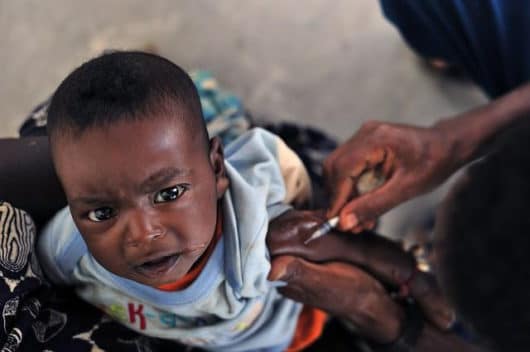
Malaria is a devastating disease that occurs mostly in tropical and subtropical environments in areas around the world. Malaria is the number one killer of children in underdeveloped countries and is often responsible for the child mortality rates of children under the age of five. Failure to eradicate this disease in these countries is a result of poverty, scarce resources and socio-economic instability. In regions like Africa, mainly south of the Sahara region, those are of the major causes of the continued spread of this devastating disease, creating a noticeable link between malaria and poverty in underdeveloped countries
Malaria in Underdeveloped Countries
Malaria is the number one killer of children in underdeveloped countries. Children who contract severe malaria frequently develop one or more of the following symptoms: severe anemia, respiratory malfunction and cerebral malaria. In areas where transmission is higher, children under the age of five are more susceptible to infection and death, with more than 70% of all malaria deaths falling into this group. Even though the number of malaria deaths within this age group had decreased by 155,00 in 2016, malaria remains the major cause of death for children under five years of age, ending a life every two minutes.
Malaria occurs when climate and other conditions suddenly favor transmission to areas where people have no immunity to malaria. They can also occur when people with low or no immunity move into areas of intense malaria transmission, for example, refugees and those looking for work. Human immunity plays a very important factor, especially in areas of moderate and intense transmission conditions. Partial immunity can be developed through the years, and while it never provides complete protection, can reduce the risk of infection. However, children under the age of five have not had the chance to build any kind of immunity because they have not been exposed to the disease.
The High Cost of Malaria
Malaria is directly related to poverty and economic inequality in underdeveloped countries due to the exponential costs that these countries must face by both individuals and governments. Costs include the purchase of necessary medication, treatment, maintenance, supply and staffing of trained personnel in health facilities, lost days of work with resulting loss of income, burial expenses and the overall loss of economic opportunities ventures through tourism during an outbreak.
Direct costs for illness, treatment and premature death are estimated to be at least $12 billion per year. Total funding for malaria control and elimination was only $2.7 billion in 2016, but this amount is not enough to eradicate the program to its completion. In order to hit the 2030 target from the WHO, an investment of $6,5 billion will be required annually by 2020. Which may be a problem because, on average since 2014, investments in malaria treatment and control have actually been declining in many highly affected countries.
Investing in the Eradication of Malaria
The level of progress in a specific country depends on the strength of that country’s national health system, the level of investment of the disease control and a number of factors including biological determinants, like the environment and the social, demographic, political and economic factors in a particular country.
Some of the challenges in trying to eradicate malaria include the lack of sustainable and predictable international and domestic funding, risks posed by countries in endemic areas, anomalous climate patterns, the emergence of parasite resistance to anti-malaria medicines and mosquito resistance to insecticides and other substances used for eradication and control purposes. In the 41 high-burden countries, malaria funding often remains below $2 per person.
All of these factors contribute to the reversal in recent progress of the eradication and continued treatment of the disease. Many high burden but low-income countries have reported reducing the funding per capita for the population at risk of malaria. For example, the complex situation of Nigeria, South Sudan, Venezuela and Yemen have all resulted in the interruption of services and increasing instances of malaria.
The Sucess of the Global Fund
The Global Fund response to malaria has been very successful, but it presents many future challenges in the battle of eradicating this disease. Between 2002 and 2017, the Global Fund has provided more than half of all international financing for malaria, investing $10.5 billion in programs aimed at controlling the disease in more than 100 countries. The approach targets several areas, such as education about symptoms, prevention and treatment; prevention methods like mosquito nets, insecticides and preventive treatment for children and pregnant women and diagnosis.
The Global Fund works with at-risk communities by providing training and treatment to stop the disease. They provide information about what malaria is, how it is transmitted, what treatments are available and, most importantly, what action to take if malaria is detected. In Ghana, for example, village elders educate their community “not to let the sun set twice” on a child with a fever.
Malaria is a devastating disease that affects everyone but presents a higher risk in children under the age of five especially in areas like the sub-Saharan region in Africa. There is a noticeable link between Malaria and poverty in underdeveloped countries. The efforts to eradicate this disease have been enormous, but the lack of funding, the disease’s immunity to drugs and insecticides, the socio and economic instability of the governments of some of these countries and the lack of training and information about the disease present major challenges to the successful eradication of the disease. Investing must continue. Hopefully, the work of organizations such as the Global Fund will ensure a future without Malaria.

New Programs to Reduce Poverty in the Philippines
As of 2015, poverty in the Philippines was prevalent with 22 million Filipinos living in the depths of poverty. That equates to one-fifth of the population. Poverty presents itself in a vicious cycle affecting mainly the uneducated population who tend to live in large family units. These family units usually have only one head of the household who provides income for the entire family.
The Filipino government is actively trying to speed up its poverty reduction plan. Its long-term goal is to be able to provide more economic prospects, which in turn would help many of their citizens earn a higher and more stable income. A World Bank report has shown how this economic growth helped decline the rate of poverty. Poverty in the Philippines dropped from 26.6% in 2006 to 21.6% in 2015.
Key Programs to Help Reduce Poverty in the Philippines
Some factors that resulted in the drop in poverty are the expansion of jobs outside the agriculture sector, government transfers and getting qualified Filipinos to help through the Pantawid Pamilyang Pilipino Program. This particular program which is a government cash-handout project has helped reduce poverty by 25%.
Most of the Philippines experience massive typhoons and armed conflict. These scenarios are a real struggle for the everyday worker who, even after a long day, still goes back home poor. Due to these factors, many citizens end up leaving behind farm work and going to find work in manufacturing hubs in the urban areas of the country. These jobs outside the agricultural dome have accounted for two-thirds of the progress in reducing poverty in the Philippines.
One of the key strategies to help bring down poverty in the Philippines is providing birth control to the poor. In a radical move for the heavily populated Catholic country, the President made readily available birth control to nearly 6 million women who cannot afford it.
Providing birth control is a powerful tool for families who now have full control over family planning. The hope is that by giving the women and family units more control, they will have fewer children. This, in turn, will mean that families can provide more responsibly. This new policy will help the government reach its goal of reducing poverty by 13% by 2022.
The current Filipino population is at 104 million and continues to rise at an alarming rate of 1.7% each year. This new law will enable families to control how many children they want. It will also hopefully take down the population rate to 1.4% each year once the law undergoes full execution.
Government Hopeful About Achieving its Aim
Even though the Philippines have worked hard in the past to reduce their poverty and keep up with their neighbors China, Vietnam and Indonesia, they still have a long way to go. Marak K. Warwick of The World Bank believes that with a solid foundation there is a reason to be optimistic that the Philippines can achieve its goal.
The goal of the Philippine government is to create more jobs, improve productivity, invest in health and nutrition while focusing on reducing poverty. If the government is able to execute its plans successfully, it is capable of reducing poverty in the Philippines by 13% to 15% by 2022.
– Jennifer O’Brien
Photo: Flickr
Top 10 Facts About Living Conditions in Thailand
In the last few years, Thailand is becoming a really popular tourist and backpacking destination, not only for its breathtaking nature and for its rich culture, but also for its particular and interesting culinary. But not everything that most people see as travelers truly represents real life in the country. In the text below, the top 10 facts about living conditions in Thailand, that will try to give a clearer picture of this Southeast Asian nation, are presented.
Top 10 Facts About Living Conditions in Thailand
As for every country, the top 10 living conditions in Thailand show that there are various pros and cons of living in the country. There are things that cannot be easily repaired, such as the unequal distribution of wealth. But improving other things, such as air pollution and the safety of the country can be done by realizing that everyone is responsible and that only by a joint effort of all citizens, Thailand can move forward.
– Rafaela Neno
Photo: Flickr
Reducing Malaria in Liberia
The Republic of Liberia, located on the western coast of Africa and bordered by Sierra Leone and Guinea, has a population of 4.7 million people. About 50 percent of the population, or 2.35 million people, fall below the national poverty line, meaning that they have less than $2.00 a day on their disposal.
Liberia Health Care System
Liberia’s health care system suffered a lot after a 14-year civil war that ended in 2003. Almost 95 percent of doctors were lost or were forced out of the country after the war, leaving staff shortages throughout the nation, and hospitals and other health care services were confined to the capital city of Monrovia. Organizations such as Hospitals of Hope that donated $1.1 million worth of medical supplies to the JFK Hospital, helped Liberia’s health care system recover after the civil war.
Malaria in Liberia
Although Liberia’s health care system continues to improve, the civil war left the country susceptible to many communicable diseases, including HIV/AIDS, diarrhea, respiratory illnesses and malaria. Malaria is the number one cause of inpatient death in Liberia, accounting for 44 percent of all inpatient deaths among children. In 2016, the prevalence of malaria parasitemia in children under the age of 5 was on average 45 percent. This number is even higher in some areas in the country, reaching levels over 60 percent.
President’s Malaria Initiative
In order to reduce malaria in Liberia, USAID works with the U.S. Centers for Disease Control and Prevention to implement the President’s Malaria Initiative (PMI). PMI first started in 2005 as a five-year program, intending to reduce malaria in Liberia by 50 percent. However, after 14 years and a 70 percent decrease in malaria, PMI created a new strategy for the period from 2015 to 2020, having in mind recent progress that was achieved. The current PMI strategy has a long-term goal of complete malaria elimination.
In Liberia, PMI supports four different malaria prevention and treatment methods: diagnosing and treating malaria, supplying citizens with Insecticide Treated Nets (ITNs), preventing and managing malaria during pregnancy and monitoring malaria outbreaks. PMI also supports the Liberian Ministry of Health (MOH) after Ebola outbreaks.
When it comes to treating malaria in Liberia, every little detail counts. In April 2017, a PMI warehouse used to store medications and medical supplies caught on fire, so USAID quickly transferred these supplies to the remaining warehouse. The result was a consolidated, centralized warehouse that made security and transportation cheaper and easier. This is just one example of how USAID and PMI are logistically jointly working to reduce malaria in Liberia. The goal of PMI in the following years is to reduce malaria-related illnesses and deaths by another 50 percent. Other goals for the benchmark year 2020 include:
Since 2003, Liberia has been slowly recovering from the detrimental civil wars, and episodes of malaria, an illness that is still a lingering issue in the country, have greatly decreased. With help from organizations and programs such as USAID and PMI, the country can continue to progress in this fight until malaria in Liberia is finally gone for good.
– Natalie Dell
Photo: Flickr
Five Diseases That Thrive in Poor Sanitation
Around 4 billion people in the world lack access to basic sanitation facilities like toilets or latrines and nearly 900 million people still defecate in the open. In addition, USAID estimates that 2.1 billion people currently do not have access to safe drinking water. These dismal conditions pose serious health hazards to the men, women and children living in these communities. Without toilets and latrines to separate human waste from living conditions and water sources, bacteria and virus are easily spread through food, water and direct human contact with waste.
World Health Organization (WHO) estimates that 4 percent of all deaths worldwide are the result of waterborne diseases like diarrhea, cholera, dysentery, typhoid and polio that thrive in unimproved sanitation conditions. This might not sound like a high number, but when considering that these diseases can be relatively easily prevented with inexpensive sanitation and potable water solutions, this percentage sounds absurd. The following list of five waterborne diseases that thrive in poor sanitation provides a glimpse of what is at stake when communities are devoid of proper water, sanitation and hygiene infrastructure.
Five Waterborne Diseases that Thrive in Poor Sanitation
Strategies to Eradicate Waterborne Diseases
Efforts to control these five waterborne diseases that thrive in poor sanitation come from both government and international aid organizations. There is also a concerted effort to implement strategy and resources to address the need for clean water and sanitation.
On the strategy front, a 2013 call to action from the U.N. Deputy Secretary-General on sanitation that included the elimination of open defecation by 2025, the sixth Sustainable Development Goal that aims ensure clean water and sanitation for all as well as numerous global guidelines and action plans for water and waste management set forth by WHO, UNICEF and partners are paving the way for large-scale change.
Meanwhile, in terms of providing resources, some examples include USAID’s country-based programs between 2012 and 2017 that supplied potable water to 12.2 million people worldwide. Numerous companies are partnering with large development organizations to develop their own campaigns or are developing products like LifeStraw, Life Sack and PeePoople that provide immediate potable water and sanitation solutions to millions around the world. These examples, in addition to new vaccines, antibiotics and other disease-specific campaigns are working together to eliminate the threats posed by unimproved sanitation and to eradicate waterborne diseased that are taking the lives of millions of people across the globe.
– Sarah Fodero
Photo: Flickr
Top 10 Facts About Living Conditions in Sudan
Since the start of the new year, Sudan has received a flurry of media attention. What started as students protesting rising wheat prices escalated into civil unrest quickly spread across the country as thousands of activists call for President Omar al-Bashir’s resignation. The government’s response has received widespread condemnation, with Amnesty International reporting the death of 40 protestors and thousands of arrests.
The unrest sweeping through Sudan is complex, rooted in social, political and economic instability. For decades, living conditions across this African nation have fostered an environment that leaves behind vulnerable citizens and perpetuates poverty. The following top 10 facts about living conditions in Sudan are intended to unpack these factors.
Top 10 Facts About Living Conditions in Sudan
These top 10 facts about living conditions in Sudan do not paint a hopeful picture for this African nation. But despite the various adversities imposed upon the people of Sudan, many are optimistic when it comes to the future. The historic protests dominating daily life since January indicates people are not afraid to mobilize for change. As pressure continues to mount on President al-Bashir, and his 27-year rule that dictated life for millions of oppressed people, could be coming to an end.
– Kyle Dunphey
Photo: Flickr
Top 10 Facts About Living Conditions in Switzerland
Switzerland is a great example of how addressing poverty and encouraging economic growth can lead to a multitude of positive outcomes. Below are the top 10 facts about living conditions in Switzerland.
Top 10 Facts About Living Conditions in Switzerland
These top 10 facts about the living conditions in Switzerland show how addressing poverty and encouraging economic growth has a positive domino effect on other aspects of life. Not only do people live better, but they feel happier and enjoy a closer sense of community. Addressing global poverty does much more than just save lives, it betters the individual, the country, the economy and their impact on the rest of the world.
– Mary Spindler
Photo: Flickr
Top 10 Facts About Living Conditions in Mali
Mali is a West African nation that is abundantly rich with culture and history; however, it is ranked at 16 out of the world’s 20 poorest countries. As a result of a vulnerable economy, the citizens of this vibrant nation have endured continuous economic hardships. Listed below are details regarding the top 10 facts about living conditions in Mali.
Top 10 Facts About Living Conditions in Mali
The living conditions in Mali are based on an intricate junction of resource scarcity and economic mobility. With the support of global investors and the contributions of scientific researchers, improvements in industrial, educational and agricultural disparities are being made and better living conditions are being improved. However, further legislative conversations must occur in order to ensure the preservation of intervention programs and foreign investment continues.
– Sabia Combrie
Photo: Flickr
Aid in The Holdout Province
While the world has breathed a collective sigh of relief following the September agreement made by Turkey and Russia – thus halting the advance of troops, the northwestern Syrian province of Idlib has yet to exhale. It remains one of the last rebel strongholds in the conflict. As world leaders work to decide Idlib’s political future, many workers toil to provide aid in the holdout province.
Aid in the Holdout Province
Presently the area known as the holdout province is home to three million people. There are around 1.5 million people living in the area who are internally displaced, having fled to escape previous rounds of fighting. This influx of people has stretched already scarce resources (housing, food and medicine) even more thinly.
The United Nations has been doing its part to help, both inside and out of the diplomatic arena. By running cross-border operations from Turkey, the U.N. has organized a convoy of more than 1,000 trucks to deliver winter supplies, such as blankets, coats, boats, gas stoves and plastic shelter materials. As winter approaches and nightly temperatures become cold – especially for those without proper housing – many will be glad to have the extra warmth.
Through its food assistance arm (The World Food Program or WFP), the U.N. is also doing what it can to give food aid in the holdout province. In October alone, the WFP was able to feed 3.2 million people. Food deliveries were able to reach 14 Syrian provinces, including the more isolated areas of Syria like the Aleppo, rural Damascus and Ar-Raqqa governorates, which fed almost 291,865. Specific packages addressing malnutrition and nutrient deficiency were provided to more than 100,000 children – reaching many in the holdout governorate.
Medical and Psychological Care
Medical attention is difficult to find in any conflict; keeping facilities well supplied and away from the fighting can be an impossible task. In September, four hospitals were damaged in attacks. The International Rescue Committee (IRC) is combating this shortage, supporting ten health facilities, as well as two mobile clinics and four emergency response teams. The teams deliver kits stocked with clothing and sanitary supplies. Through the IRC’s efforts, 860,000 patients were treated in 2017, with 80,000 people being treated every month.
Still, while it’s easy to focus on the physical (visible) needs of survivors, the emotional needs of children often – out of necessity – go overlooked. However, the IRC operates a safe space that gives psychosocial support to children as well as providing the children with a place to learn and play. In the future, the IRC plans to distribute kits containing games, books and learning aid through this center. As a consequence of war, children are exposed to the harsh realities of life in a conflict zone; they are denied an education that would enable them to succeed as adults in peacetime. Even small learning toys and aids make a significant difference in light of the alternatives.
Current Negotiations
With the conflict stretching into its eighth year, recent peace talks have been referred to as “a glimmer of hope” by high ranking U.N. members. Syrian representatives have agreed to send 50 representatives to the negotiating committee, and have agreed to speak with 50 representatives from the opposition. Unfortunately, they have refused to ratify any representatives of Syrian civil society in the negotiations. Only fair, fully-represented and public negotiations can truly end the suffering in the country. Until then, aid in the holdout province must continue in order to help these refugees survive.
– John Glade
Photo: Flickr
Problems Associated with Overpopulation In Uganda
Overpopulation is often one of the major causes of poverty. A lack of educational resources along with high death rates often go hand in hand with higher birth rates, resulting in large booms in population growth. The United Nations predicted that the poorest countries in the world are the biggest contributors to population growth. Uganda is one of the poorest developing countries in the world. There are many problems associated with overpopulation In Uganda.
High Fertility Rates
The poorest developing countries are usually the ones with the highest fertility rates and the ones with the least amount of resources to support their population growth. It has been proven that fertility rates in African nations are higher than in Western nations. One of the problems is that more developed nations are the ones that consume most of the resources, leaving the least possible amount to support the populations in African nations.
In addition to this, the lack of sexual education and family planning is a major cause of overpopulation in this region. Only 20 percent of Uganda’s women have access to contraception. Women in Uganda have an average of 7 children, which is higher the African average of 5.1 but more than double that of the global average of 2.7. Ugandan government’s lack of responsibility in improving family planning is a major reason for the country’s exponential population growth.
Population Increases
Presently there are 27.7 million people living in Uganda. By 2025, this number is estimated to double to 56 million people, making Uganda the nation with the world’s biggest population growth (at a rate of 3.3 percent). This kind of growth definitely continues to make resources more scarce in this region of the world. With already 19.5 percent of Uganda’s population living in poverty, efforts to decrease poverty rates will fail unless measures are taken.
As much as 78 percent of the population in Uganda are under the age of 30. Experts say that such big population will be a burden to the economy unless it is transformed into a working force. One major reason for the vast increase in the youth population was a need for family security, often to help with labor. There is minimal industrialization in many developing countries, so people have kids in order to have more help on the farm.
Unemployment and Overpopulation
Currently, 83 percent of young people have no formal employment. This is partly due to low economic growth, slow labor markets, high population growth rates, the rigid education system, rural-urban migration and limited access to capital. This boom in population growth is bound to put pressure on the economy by straining resources if the high birth rates are not controlled.
The major problem of Uganda’s young population is an increasing dependency burden at the household level with a related increase in demand for social services like health and education, which are not growing at the same pace as its population. For example, classrooms in public schools are overcrowded due to growth in school populations. One cause for the growth in the population has been an increase in unwanted births, leading back to the idea that family planning is an essential part of reducing overpopulation in Uganda.
Solutions to Overpopulation in Uganda
There are many possible solutions to overcoming the overpopulation crisis in Uganda. Experts highlight the need for a long-term plan that focuses on the role of the family, the government, the private sector and society in helping young people to become productive. By reducing the problems with overpopulation in Uganda, the economy will benefit through taxes and more sustained production of goods and services.
Family planning services would reduce fertility levels and increase the proportion of employed adults to young dependents. Furthermore, promoting family planning by educating men and women about contraception will play a key role in reducing fertility rates. A reduction in “fertility was achieved in the West over the course of a century of female education, national family planning services and the introduction of job opportunities for women.” Therefore, it is important to empower women by giving them access to reproductive health services as well as better economic options. The United Nations aims to tackle this issue by running microcredit projects to turn young women into advocates for reproductive health.
Another solution is government incentives. Governments must promote responsible parenthood and limit subsidies to the first two children unless the family is living in poverty. This can also be accomplished by promoting child spacing and having fewer children. In certain urban regions of the country, there are ads showing happy couples with just one or two children.
Cutting exponential population growth will give Uganda’s natural resources a higher chance of supporting the human burden. Government intervention through family planning by educating people on contraception methods and empowering women by enhancing female education are important steps towards reducing problems associated with overpopulation in Uganda and decreasing poverty.
Photo: Google
Malaria and Poverty in Underdeveloped Countries
Malaria is a devastating disease that occurs mostly in tropical and subtropical environments in areas around the world. Malaria is the number one killer of children in underdeveloped countries and is often responsible for the child mortality rates of children under the age of five. Failure to eradicate this disease in these countries is a result of poverty, scarce resources and socio-economic instability. In regions like Africa, mainly south of the Sahara region, those are of the major causes of the continued spread of this devastating disease, creating a noticeable link between malaria and poverty in underdeveloped countries
Malaria in Underdeveloped Countries
Malaria is the number one killer of children in underdeveloped countries. Children who contract severe malaria frequently develop one or more of the following symptoms: severe anemia, respiratory malfunction and cerebral malaria. In areas where transmission is higher, children under the age of five are more susceptible to infection and death, with more than 70% of all malaria deaths falling into this group. Even though the number of malaria deaths within this age group had decreased by 155,00 in 2016, malaria remains the major cause of death for children under five years of age, ending a life every two minutes.
Malaria occurs when climate and other conditions suddenly favor transmission to areas where people have no immunity to malaria. They can also occur when people with low or no immunity move into areas of intense malaria transmission, for example, refugees and those looking for work. Human immunity plays a very important factor, especially in areas of moderate and intense transmission conditions. Partial immunity can be developed through the years, and while it never provides complete protection, can reduce the risk of infection. However, children under the age of five have not had the chance to build any kind of immunity because they have not been exposed to the disease.
The High Cost of Malaria
Malaria is directly related to poverty and economic inequality in underdeveloped countries due to the exponential costs that these countries must face by both individuals and governments. Costs include the purchase of necessary medication, treatment, maintenance, supply and staffing of trained personnel in health facilities, lost days of work with resulting loss of income, burial expenses and the overall loss of economic opportunities ventures through tourism during an outbreak.
Direct costs for illness, treatment and premature death are estimated to be at least $12 billion per year. Total funding for malaria control and elimination was only $2.7 billion in 2016, but this amount is not enough to eradicate the program to its completion. In order to hit the 2030 target from the WHO, an investment of $6,5 billion will be required annually by 2020. Which may be a problem because, on average since 2014, investments in malaria treatment and control have actually been declining in many highly affected countries.
Investing in the Eradication of Malaria
The level of progress in a specific country depends on the strength of that country’s national health system, the level of investment of the disease control and a number of factors including biological determinants, like the environment and the social, demographic, political and economic factors in a particular country.
Some of the challenges in trying to eradicate malaria include the lack of sustainable and predictable international and domestic funding, risks posed by countries in endemic areas, anomalous climate patterns, the emergence of parasite resistance to anti-malaria medicines and mosquito resistance to insecticides and other substances used for eradication and control purposes. In the 41 high-burden countries, malaria funding often remains below $2 per person.
All of these factors contribute to the reversal in recent progress of the eradication and continued treatment of the disease. Many high burden but low-income countries have reported reducing the funding per capita for the population at risk of malaria. For example, the complex situation of Nigeria, South Sudan, Venezuela and Yemen have all resulted in the interruption of services and increasing instances of malaria.
The Sucess of the Global Fund
The Global Fund response to malaria has been very successful, but it presents many future challenges in the battle of eradicating this disease. Between 2002 and 2017, the Global Fund has provided more than half of all international financing for malaria, investing $10.5 billion in programs aimed at controlling the disease in more than 100 countries. The approach targets several areas, such as education about symptoms, prevention and treatment; prevention methods like mosquito nets, insecticides and preventive treatment for children and pregnant women and diagnosis.
The Global Fund works with at-risk communities by providing training and treatment to stop the disease. They provide information about what malaria is, how it is transmitted, what treatments are available and, most importantly, what action to take if malaria is detected. In Ghana, for example, village elders educate their community “not to let the sun set twice” on a child with a fever.
Malaria is a devastating disease that affects everyone but presents a higher risk in children under the age of five especially in areas like the sub-Saharan region in Africa. There is a noticeable link between Malaria and poverty in underdeveloped countries. The efforts to eradicate this disease have been enormous, but the lack of funding, the disease’s immunity to drugs and insecticides, the socio and economic instability of the governments of some of these countries and the lack of training and information about the disease present major challenges to the successful eradication of the disease. Investing must continue. Hopefully, the work of organizations such as the Global Fund will ensure a future without Malaria.
Photo: Flickr