• Link to X
  • Link to Facebook
  • Link to Instagram
  • Link to TikTok
  • Link to Youtube
  • About
    • About Us
      • President
      • Board of Directors
      • Board of Advisors
      • Financials
      • Our Methodology
      • Success Tracker
      • Contact
  • Act Now
    • 30 Ways to Help
      • Email Congress
      • Call Congress
      • Volunteer
      • Courses & Certificates
      • Be a Donor
    • Internships
      • In-Office Internships
      • Remote Internships
    • Legislation
      • Politics 101
  • The Blog
  • The Podcast
  • Magazine
  • Donate
  • Click to open the search input field Click to open the search input field Search
  • Menu Menu

Archive for category: Women’s Empowerment

Education, Global Poverty, Women and Female Empowerment, Women's Empowerment, Women's Rights

Girls’ Education in Sri Lanka Part of the Country’s Gender Equality Goals

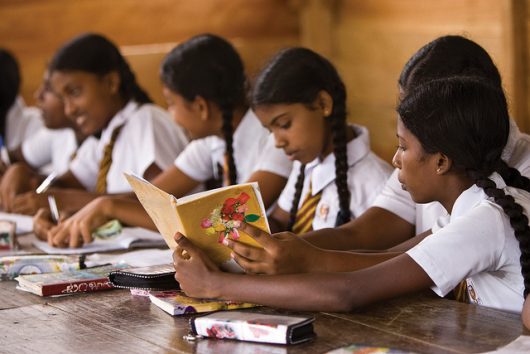
Girls' Education in Sri LankaGirls’ education in Sri Lanka has significantly improved over the last two decades. Boys and girls have equal enrollment in primary schools, and girls outnumber boys in secondary schools. Additionally, in 2011 girls consistently scored higher than boys in key subjects in the National Assessments of Learning Outcomes.

The Successes of Girls’ Education in Sri Lanka

Sri Lanka is the only South Asian country that has already achieved the United Nations’ Millennium Development Goal for gender equality at all levels of education. This is a great achievement for the small island nation, and it can be used as a model for other countries.

These achievements have been possible because the government has been committed to ensuring gender equality and improving girls’ education in Sri Lanka. In 1945, the government introduced free primary, secondary and university education for all children, regardless of gender. Additionally, the constitution provides for equal rights irrespective of sex and forms of affirmative action to ensure equality for women.

Continued Work Towards Complete Gender Equality

However, Sri Lanka does still have things to work on. While girls in the nation have access to the same education as boys and tend to do better than them in school, the statistics for adults do not quite mirror these trends. Women’s adult literacy is lower than that of men and the unemployment rate for women is two times higher than the rate for men.

This has been the case for the last three decades, indicating that while women have been given the same access to education, that education is not translating into equal employment later on in life. This is an issue that needs to be addressed by the government to ensure that girls’ access to education is really benefiting them in the long run.

NGOs Focus on Education

Of course, the Sri Lankan government does not have to face these challenges alone. There are numerous nonprofit organizations, such as the World Bank Group and the Asian Development Bank, that have partnered with the government to implement projects regarding gender equality and education. Additionally, there are a variety of independent organizations that focus on education in the nation.

Room to Read is one such organization that runs literacy and girls’ education programs in Sri Lanka, but there are also many others. The Sri Lankan government can utilize these resources and work with them to create equal opportunities for men and women both during and after their attendance at educational institutions.

Ultimately, girls’ education in Sri Lanka has been on the right track for many years. The country has shown a commitment to providing equal access to education regardless of gender, and this is a very commendable effort. While these accomplishments should not be forgotten, the government also needs to be aware of other issues of gender inequality, such as unequal employment and disparities in adult literacy. These are concerns that should be addressed through the development of new policies and collaboration with NGOs that work in the region.

– Liyanga De Silva
Photo: Flickr

May 9, 2018
https://borgenproject.org/wp-content/uploads/borgen-project-logo.svg 0 0 Borgen Project https://borgenproject.org/wp-content/uploads/borgen-project-logo.svg Borgen Project2018-05-09 18:07:082024-05-27 09:28:28Girls’ Education in Sri Lanka Part of the Country’s Gender Equality Goals
Education, Global Poverty, Women's Empowerment, Women's Rights

Girls’ Education in China More Accessible Than Ever

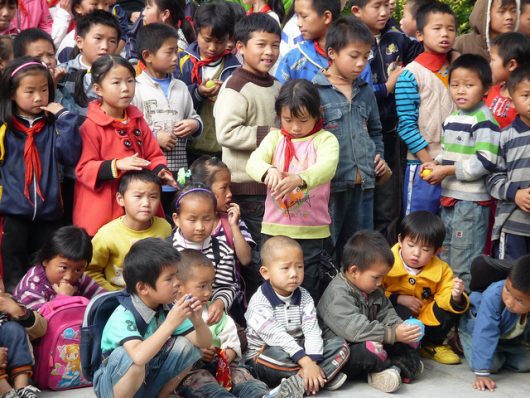
Girls' Education in ChinaChina, the world’s most populous nation, has made great strides and significant progress towards improving girls’ education. Since Deng Xiaoping’s societal reform and opening up, the country has not only made great economic improvements but has ensured growth and development in its education system. Although the country continues to take steps to improve girls’ education, there are still challenges that need to be further addressed.

Laws Mandate Girls’ Education in China

In 1986, the “Compulsory Education Law of the People’s Republic of China” Law took effect. This law required that all citizens obtain at least nine years of education, funded by the government. Before this, the greater value of males in society gave boys priority over girls to the right to an education. According to the journal Gender Inequality in Education in China, “Thanks to the compulsory education system and gender equity promotion, the gender gap in educational attainment has been greatly eliminated in the past decades.”

Rural Girls Still Struggle to Obtain an Education

As mentioned before, there are still many challenges in terms of girls’ education in China, including:

  • The priority of boys over girls to the right to education in poverty-stricken areas
  • Gender segregation between higher and vocational education
  • The education gap between urban and rural areas
  • Barriers for female educators and researchers in the workplace

A further challenge is the population of left-behind girls in China, a population of girls whose parents have moved from their village to the city to find better-paying jobs. Often times, parents are more inclined to take their sons to the city and leave their daughters behind. According to China Daily, 96.1 percent of girls in rural areas attend school from ages six to 11. However, only 79.3 percent have access to high school education. Additionally, these left-behind girls are often put in a position where they have to drop out of school and find work to provide for their aging grandparents.

Government and Nonprofit Programs Address Remaining Education Gaps

Nevertheless, the country’s government and international NGOs are working to improve such challenges to girls’ education in China. For instance, the State Council publicized its National Program for Women’s Development that worked towards development dealing with China’s women, making women’s education one of the six areas of priority.

In 2006, China’s new five-year plan incorporated more investments in education. In the same year, the state revised its compulsory education law that takes steps to improve rural students’ quality of education by “abolish[ing] tuition and miscellaneous fees for all rural students and guarantees free textbooks and subsidies for room and board.” Meanwhile, UNICEF has proceeded with its efforts in western China to improve the quality of education in poor areas, focusing on gender equality.

Furthermore, China has made significant progress in girls’ education in China in the last three decades. Female enrollment in higher education is on the rise. In 2012, female college students made up 51.4 percent of the total university student population. Women are beginning to take on more roles in science and technology. More and more programs are beginning to subsidize girls’ college tuitions. Although numerous programs have been put in place to further girls’ education in China, it is important to continue this work to improve gender equality awareness throughout the country.

– Emma Martin
Photo: Flickr

May 9, 2018
https://borgenproject.org/wp-content/uploads/borgen-project-logo.svg 0 0 Borgen Project https://borgenproject.org/wp-content/uploads/borgen-project-logo.svg Borgen Project2018-05-09 17:35:262019-11-22 08:47:02Girls’ Education in China More Accessible Than Ever
Education, Global Poverty, Women's Empowerment, Women's Rights

Girls’ Education in North Korea a Modernized Aspect of Its Society

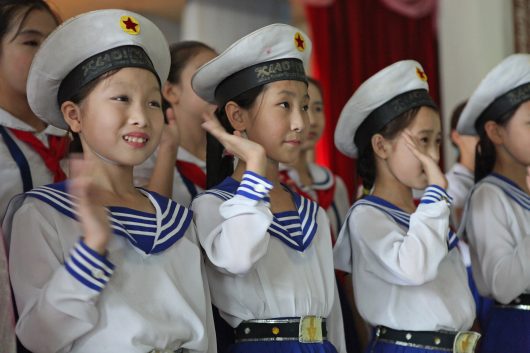
Girls' Education in North KoreaIn 2015, the tale of Yeonmi Park, a North Korean defector whose story shed light the repressive and backward nature of North Korea’s government and society, took the international media by storm. However, contrary to the usual negative depiction, girls’ education in North Korea is actually more modernized and progressive than many other aspects of its society. The statement “women hold equal social status and rights with men” was promulgated in the 1972 North Korean constitution, and to a large extent, this statement is accurate in regards to girls’ education in North Korea.

Public Education in North Korea

Only after the opening of Korea to foreign countries in the late 19th century could more Korean females gain access to modern education, with Christian missionaries establishing girls’ schools. In North Korea, education is universal and state-operated, offering free compulsory education to the secondary level, which consists of 11 years of schooling at the minimum. North Korea’s “people’s school” (primary school) and “middle-high” (secondary school) curriculum encompasses Korean language, mathematics, literature and “socialist ethics”, which refers to political and ideological subject matter.

The reported literacy rate of North Koreans is 100 percent for both men and women over age 15. This number is self-reported by the North Korean government, making its reliability questionable, but if accurate, it makes North Korea one of the most literate countries in the world. There is no doubt that the secondary education is equally accessible to men and women.

Some Obstacles to Girls’ Education in North Korea Remain

Nonetheless, some differences do exist among the varied educational programs directed at boys and girls, and there are some restrictions on higher education for women, obstructing the potential greater progress for girls’ education in North Korea.

Traditional gender roles influence the educational system in North Korea. In this patriarchal society, this is seen in the practice of separating boys and girls into single-gender schools in both the elementary and middle school levels, preventing the two sexes from receiving a uniform educational instruction. Meanwhile, there are different curriculums for boys and girls, with more emphasis on “physical education for boys and home economics for girls”.

On top of that, at the university level of education, the limitation on girls’ education in North Korea is showcased more obviously. In contrast with the high accessibility of basic education for women and men, one of the top universities in North Korea, Pyongyang University for Science and Technology, has previously only had male students. However, recent reports have indicated increasing numbers of female students at this university.

North Korean Women Work for Educational Equality

Despite the prescribed gender roles and attendant images, there are many women majoring in medicine, biology, foreign languages and literature. These North Korean women are encouraging the breakdown of certain obstinate social norms and expectations imposed on not only women, but on men as well, that may discourage students from studying the subject of their choice.

North Korea is notoriously restrictive of its people’s freedoms, and the limits placed on girls’ education are but a mild example of the government’s repression. However, the fact that North Korean girls have the educational opportunities that they do is a heartening sign of progress, and can be of great benefit to girls and women now and in the future.

– Heulwen Leung
Photo: Google

May 9, 2018
https://borgenproject.org/wp-content/uploads/borgen-project-logo.svg 0 0 Borgen Project https://borgenproject.org/wp-content/uploads/borgen-project-logo.svg Borgen Project2018-05-09 17:19:272024-06-06 00:07:58Girls’ Education in North Korea a Modernized Aspect of Its Society
Global Poverty, Women's Empowerment

Microentrepreneurship and Women Entrepreneurs Are Alleviating Poverty in India


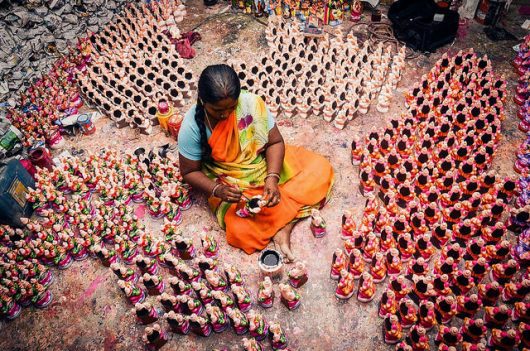
Small-scale enterprises have been a large part of industrialization as well as job creation in India. As defined by the Micro, Small and Medium Enterprises Development (MSMED) Act of 2006, a microenterprise in India is a small business in which the investment in plant and machinery is no more than $ 40,000. Microentrepreneurship and women entrepreneurs are alleviating poverty in India, particularly because up until the past couple of decades women were a largely untapped source of economic potential.

Women Entrepreneurs in India

The Government of India has defined women entrepreneurs as those whose enterprise has a minimum financial interest of 51 percent of the capital and is made up of at least 51 percent female workers. Although rural women in India are mainly responsible for agricultural production, domestic duties and childcare, their economic status is low in a male-dominated society. Women in India have been able to raise their economic status and fight poverty in their country by taking charge of microenterprises.

Increasing the participation of women in micro, small and medium enterprises is an important stepping stone to alleviating poverty in India because not only does it engage women in productive work outside their homes, but it also empowers them and improves family health. In addition, women entrepreneurs can provide society with different management, organization and business solutions because of their different perspectives and skills.

Self-Help Groups (SHGs)

One major resource for women entrepreneurs in India are the Self-Help groups (SHGs) provided by the Government of Bihar and supported by the World Bank. These groups are part of what is known as “Jeevika”, the Bihar Rural Livelihoods Project. (“Jeevika” means “livelihood” in Hindi.)

SHGs provide skills training, access to markets and finance as well as business development services. There are 45 million rural women in India who have been empowered by these SHGs under the National Rural Livelihoods Mission (NRLM) in 2011. The NRLM has saved $ 1.4 billion, leveraged $ 20 billion from commercial banks and is helping nearly 3.3 million women farmers increase agriculture and livestock productivity. Here are some success stories that, with the help of such programs, show how women entrepreneurs are alleviating poverty:

  • Nearly 800 rural homes in Gujarat have partnered with Airbnb to generate incomes averaging $ 500 a month. This service enterprise was made possible by the Self Employed Women’s Association (SEWA) that helped the homes to make official connections. In addition, tourism operators plus culinary and transportation services have been benefiting from local Airbnb homes.
  • Kiran Devi, due to resources from a self-help group in Bihar, went from stitching two to three pieces of clothing every day, ending up with blisters on her hands to directing the Aranyak Producer Company. Her farmer’s production company has adopted technological solutions to aggregate maize from small farmers and deliver better prices to over 6,000 maize farmers in the Purnia district of Bihar. Her company enhances agriculture and livestock productivity for small-scale women producers by helping them form producer groups in each village to aggregate produce, train and control quality. They even directly connect the market to these women farmers who would have sold their produce to local middlemen.
  • Technical assistance partners have increased the success of artisan groups in Madhubani, Bihar through design upgradation and implementation of e-commerce platforms.
  • Women Entrepreneurs India (WEI), an independent initiative, helps women entrepreneurs develop skills by providing training programs, financial education, motivation, mentorship and support with product and services marketing. Some of the home-based business options they suggest include retail consulting; home-based food services and delivery; event planning; writing; marketing; online translating; fitness; and fashion and jewelry design.

Future of Microenterprises

Women have, therefore, been able to use household skills to knit, stitch, weave and embroider for developing their microenterprises. They have also been able to use their technical skills and raw farm materials to earn substantial incomes and small agricultural units.

In conclusion, one reason the future of economic growth in India looks bright is that women entrepreneurs are alleviating poverty with their growing microenterprises. That is to say, the empowerment of women in India goes hand-in-hand with the auspicious development of microenterprises.

– Connie Loo
Photo: Flickr

May 5, 2018
https://borgenproject.org/wp-content/uploads/borgen-project-logo.svg 0 0 Borgen Project https://borgenproject.org/wp-content/uploads/borgen-project-logo.svg Borgen Project2018-05-05 22:27:082024-12-13 17:58:44Microentrepreneurship and Women Entrepreneurs Are Alleviating Poverty in India
Global Poverty, Poverty Reduction, Women's Empowerment

Gogo Olive Changing the Lives of Zimbabwean Women

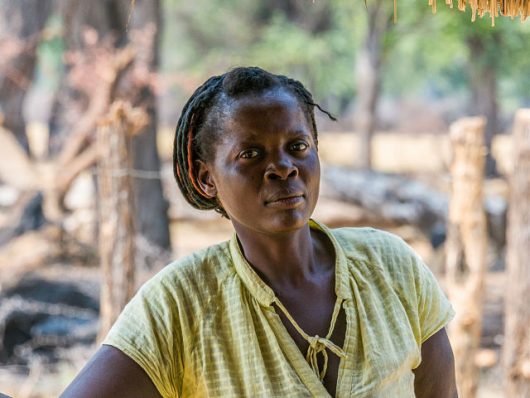
Gogo OliveSeventy-two percent of Zimbabweans live under the national poverty line, making it the 22nd poorest country in the world. Gogo Olive is a charity whose focus is to mitigate some of the problems faced by Zimbabweans, specifically women. Here is how one charity is changing the lives of Zimbabwean women.
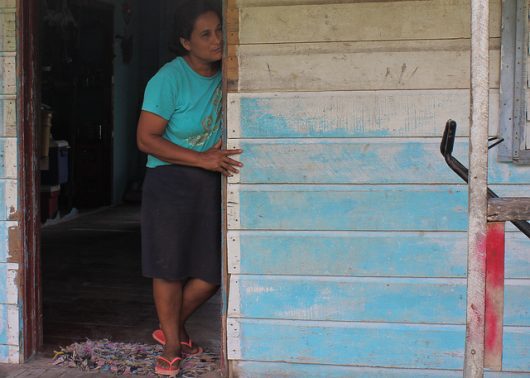
The Problem: Difficulty Making a Living

One hardship faced by many women is HIV/AIDS, a disease that affected 1.3 million Zimbabweans in 2016. This results in many widowed parents who have to provide for their families by themselves. Providing for their households, however, is a difficult task when job opportunities are so limited. The unemployment rate in Zimbabwe is currently at 11.3 percent, and increases when excluding the large numbers of subsistence farmers and those working in the informal economy. This, however, is not the main problem for Zimbabweans.

The real problem, according to the International Labour Organization, is the poor quality of employment, characterized by low wages, no sick leave for employees and poor working conditions. In this way, the great need in Zimbabwe is decent jobs. Gogo Olive has met this need by employing women to knit goods, primarily in the form of knitted animals.

The Solution: Gogo Olive

Gogo Olive was founded by Julie Hagan as a way to create jobs for six women through knitting. Since its inception in 2008, the charity has grown to include about 80 knitters who produce hundreds of these knitted animals each month. According to the website, “Knitting was chosen as it only requires basic materials and can be done anywhere and at anytime, which suits the lifestyle of a Zimbabwean woman.”

The charity operates on two levels. Gogo Olive Knits creates jobs and generates income for women by selling their knitted products. Gogo Olive Cares focuses on meeting the other needs of the women. This includes establishing savings plans, running educational workshops, distributing care packages, and setting up an emergency fund to help with health costs and school fees. This is how one charity is changing the lives of Zimbabwean women: they not only provide an income, they also include additional benefits that have no doubt helped the poor greatly.

Gogo Olive Knits presents a flexible way to earn income. The knitters are paid monthly for each product they produce. According to Ruth Hagan, they can earn up to $250 monthly.

An additional benefit of working for Gogo Olive is the educational workshops. The majority of the knitters have had little education, a problem which keeps them in the poverty trap. Some of the topics covered are budgeting, HIV/AIDS awareness, healthcare, single parenting and farming techniques.

Beyond Income: Gogo Olive Cares

Gogo Olive Cares also provides an emergency fund for people in special circumstances. This includes school fees for their children and medical fees for medication or treatment that the women would otherwise be unable to afford. Ruth Hagan shared a story about one of the knitters who received a payment from the emergency fund. “In January, one of our knitters accessed the fund which allowed her to have a hip replacement following living in considerable pain for a number of years.” The knitter, Florence, is now back at work and able to walk with a crutch.

The benefits extend far beyond simply meeting physical needs. Ruth explains, “We love that we are able to teach a skill and offer employment to many ladies. Not only does this allow them to make enough money to feed their children and pay for school fees but it also gives them each a sense of value and worth as they have meaningful occupation.”

Ruth Hagan said of the experience, “It is great to be a part of positively impacting lives of so many in Zimbabwe.” Seeing how one charity is changing the lives of Zimbabwean women goes to show that any good deed, big or small, can have an immense impact.

– Olivia Booth
Photo: Flickr

April 29, 2018
https://borgenproject.org/wp-content/uploads/borgen-project-logo.svg 0 0 Borgen Project https://borgenproject.org/wp-content/uploads/borgen-project-logo.svg Borgen Project2018-04-29 01:30:252024-05-29 22:42:09Gogo Olive Changing the Lives of Zimbabwean Women
Global Poverty, Women's Empowerment, Women's Rights

20,000 Women March for Women’s Rights in Belize City

Women’s Rights in BelizeCountries around the world celebrate March as International Women’s Month, and Belize is no different. On March 16, 2018, the country hosted its annual 20,000 Strong rally for women’s rights in Belize. Women traveled from all over the country to Belize City to add their voices to the thousands of empowered women making a statement about gender equality. Wearing orange and supporting the businesses of other women, attendees made a public statement that they refuse to live in fear.
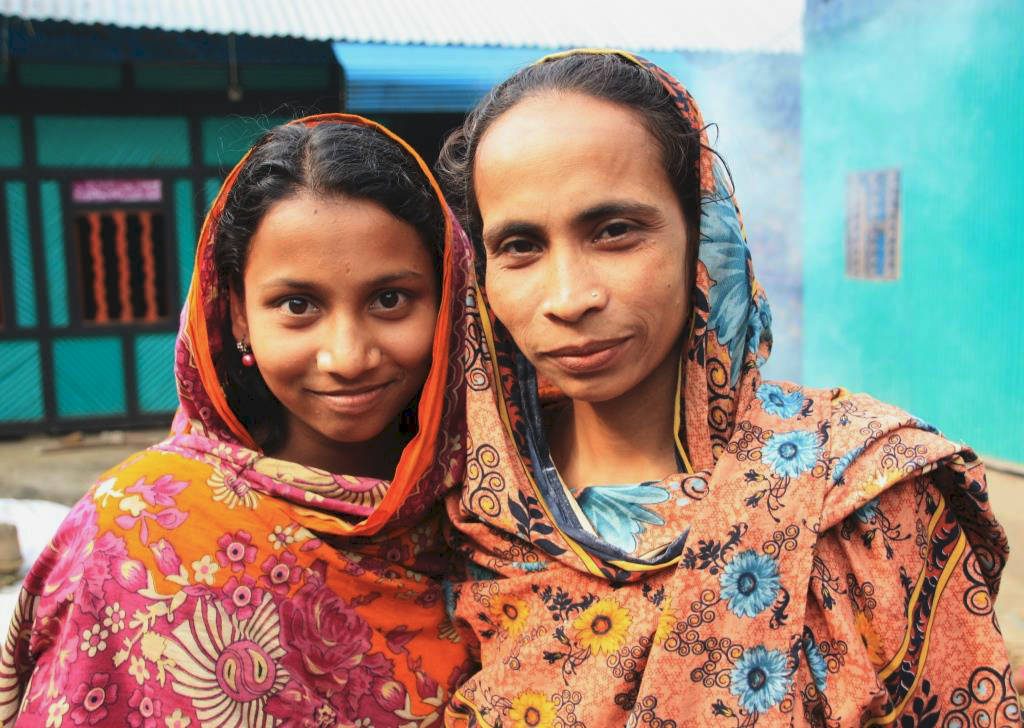
The 20,000 Strong Rally

The 20,000 Strong march began in 2014, boasting the slogan “Imagine a Belize Without Women.” Women were encouraged to take the day off from work in order to demonstrate how Belize is dependent on its women. Attendees were asked to wear orange clothes to show support for the UNITE Campaign, a U.N. campaign focused on ending violence against women around the globe.

The National Women’s Commission planned the event and executed it with the help of several other government departments. Speakers came to empower the women in attendance and encourage conversations about solutions for gender-based violence and women’s rights in Belize.

Initiatives like the 20,000 Strong march are critical for ending violence against women in Belize. The country has historically been a dangerous place for women to live. Abuse, rape and trafficking are real threats to women and children in Belize. While the 20,000 Strong march has always had special significance for women’s rights in Belize, the 2018 march could not have come at a more appropriate time.

Coming Together for Justice

On March 1, Belizeans awoke to the news that a 17-month old had been violently raped by her stepfather. She died on March 4, and Belize took to the streets on March 5 to call for justice. Belizeans gathered outside the courthouse in Belize City during the stepfather’s trial, demanding that justice be served and action be taken to protect children from heinous abuse.

The horrifying events of the month added fuel to the flame of the 20,000. On March 16, thousands of children joined the marchers, adding their voices to the conversation about women’s rights and violence against women. The coast guard, the Belize Defense force, the police and the First Lady of Belize joined the march, a crucial demonstration of the government’s support of women’s rights in Belize. Along with hosting speakers, some of whom are in high school, the event also supported Belizean small businesses operated by women.

The State of Women’s Rights in Belize

Women’s rights have been a point of concern for Belize. While rape is illegal, the justice system rarely convicts rapists, typically because the accuser cannot testify for fear of physical retaliation. Domestic violence records contain similar patterns. Belize has laws designed to combat sexual harassment, but they are not incredibly effective in practice. Employers are also mandated to pay men and women the same, but the pay gap and unemployment gap remains substantial. Furthermore, female representation in the government is low, with only 3 percent of Parliament members being women.

Female empowerment initiatives speak strongly to the direction Belize is headed. These women (and men!) are coming together and brainstorming ways to inspire change. With the support of the government, legislation is sure to follow that will improve conditions for women. The high attendance from schoolchildren also provides substantial hope for the future. More than 50 percent of Belizeans are under the age of 25, so they will set the direction for the country in the next few decades. With empowered women and children, Belize can look forward to better equality in the future.

– Julia McCartney

Photo: Flickr

April 24, 2018
https://borgenproject.org/wp-content/uploads/borgen-project-logo.svg 0 0 Borgen Project https://borgenproject.org/wp-content/uploads/borgen-project-logo.svg Borgen Project2018-04-24 17:50:332024-12-13 17:58:4120,000 Women March for Women’s Rights in Belize City
Global Poverty, Women's Empowerment

Digital Finance is Empowering Women in Bangladesh

Digital Finance is Empowering Women in Bangladesh

Recent innovation in digital finance is empowering women in Bangladesh by meeting their unique financial needs and capabilities. While 90 percent of Monetary Financial Institutions’ 21 million clients are women and 35 percent of Bangladesh women hold a bank account, women make up only 18 percent of digital finance users in Bangladesh.

Some of the barriers that hinder the inclusion of women in digital finance are low mobility, cultural barriers in male-dominated markets and English illiteracy incompatible with English-language phone menus. Women in Bangladesh also face low financial literacy, so they require guidance and training in order to benefit from increasingly more prevalent mobile-based platforms.

In addition, members of a typical household in low-income countries share one mobile phone. So, it makes sense that more than just having a registered mobile money account in her name is necessary in order for a woman to be financially included in Bangladesh.

Most low-income women in Bangladesh currently turn to insecure and informal saving mechanisms like keeping emergency funds stashed at home, buying excess stock for their business, using clay money boxes  or working with neighborhood savings groups. This puts their savings at risk of loss due to natural disasters or theft. It is no wonder, then, that it is difficult for women to save money for their futures, to pay school fees, to attain loans and to afford healthcare and insurance.

Saving money is particularly important to women. In Bangladesh, since women are dependent on their male spouses to provide for their families, they lack a safety net if their husband dies or abandons them. This makes women more vulnerable to health risks and death than men.

One innovation through which digital finance is empowering women is the human-centered designs financial service providers have been developing that are more intuitive, easy-to-use and affordable. The Bangladesh Rural Advancement Committee, an organization devoted to alleviating poverty by empowering the poor, started a training program for women in remote areas to learn how to handle mobile money.

Some other efforts that address the digital inclusion gap are:

  • Dutch-Bangla Bank Limited’s signing with 245 garment factories to distribute salaries to garment workers (mostly women) with accounts through agents, ATMs and client-initiated mobile transactions.
  • The Asia Foundation’s new program that will assist women entrepreneurs in using digital financial services and in using e-commerce to reach new markets.
  • Swosti’s new “mobile credit card” for depositing money and withdrawing emergency loans.
  • Grameen Bank’s creation of the concept of microcredit to be used by low-income women.

Some potential improvements that have been suggested further demonstrate how digital finance is empowering women. Some of the propositions include promoting government transfers and increasing the access women have to registered accounts by changing identity requirements and allowing for one-to-one interactions with women agents and sales representatives to improve communication and prevent harassment.

Other suggestions include making additional banking services that improve financial security for women available such as loan payments, insurance and long-term savings. Digital savings accounts would enable women to save small amounts of money as frequently as they want. It has also been suggested to make use of various channels of accessing finances to simplify the interface of mobile finance platforms.

There are so many financial possibilities that digital finance can make possible for women in Bangladesh. By considering the barriers to financial inclusion, the country is well on its way to improving the lives of its women and their families.

– Connie Loo

Photo: Flickr

April 8, 2018
https://borgenproject.org/wp-content/uploads/borgen-project-logo.svg 0 0 Borgen Project https://borgenproject.org/wp-content/uploads/borgen-project-logo.svg Borgen Project2018-04-08 01:30:162024-06-07 05:07:52Digital Finance is Empowering Women in Bangladesh
Global Poverty, Women and Female Empowerment, Women's Empowerment

Ethiopian Airlines Promotes Women’s Empowerment in Africa

Ethiopian Airlines Promotes Women’s Empowerment in Africa

During the month of March, as the world observed Women’s History Month, advocates for women’s empowerment in Ethiopia held a celebration of their own. On March 8, Ethiopian Airlines sent an all-female flight crew from the country’s capital, Addis Ababa, to Buenos Aires, Argentina, in observation of International Women’s Day.

This was a historical feat, as the group became the first all-female flight crew to fly from Ethiopia to the South American city. However, this event was not the first time Ethiopian Airlines made history by dispatching an all-female crew to another city.

As the premier airline of Africa, Ethiopian Airlines has the largest share of revenue in Africa’s airline industry and operates flights to 50 cities in Africa and 95 countries worldwide. The airline is also home to the continent’s largest aviation academy, which trains students from all over Africa to fulfill careers as pilots, cabin crew members, ground staff and maintenance technicians, among other positions. As of 2016, the airline’s academy enrolled 1,300 students in training and the number of enrolled students is expected to grow to 4,000 in the near future.

History in the Making

Ethiopian Airlines first made headlines in 2015 after it dispatched its first all-female flight crew from Addis Ababa to Bangkok, Thailand. Not only were the pilots and cabin crew members women, but so were the baggage handlers, ramp operators, ticket officers and air traffic controllers.

Furthermore, in 2017, the airline dispatched another all-female flight crew in a flight from Addis Ababa to Lagos, Nigeria, the first flight of its kind in Africa. President and CEO of Ethiopian Airlines Tewolde GebreMariam stated that the historical flights made to different cities are part of its efforts to promote women’s empowerment in Africa and that the historic flight on International Women’s Day reflects the airline’s values to mainstream gender into its business.

Educational Challenges for Women in Ethiopia

Due to cultural traditions in Ethiopia, women are not encouraged as much as men to pursue a secondary education of their choice and many have struggled to pursue professional careers. UNESCO reported that as of 2009, only 30 percent of Ethiopian women were enrolled in a secondary education program, compared to 39 percent of Ethiopian men. Furthermore, the literacy rate among Ethiopian adults was only 18 percent for women, compared to 42 percent for men.

A Time for Change in the Aviation Industry

This gesture by GebreMariam to promote women’s empowerment in Africa comes at a significant time, while the number of males to females in the aviation industry is still largely disproportionate. According to the Royal Aeronautical Society, “only 3 percent, or 4,000, of the world’s 130,000 pilots are women, and only 450 are captains.” GebreMariam is hoping to change this statistic by inspiring young girls in school to be optimistic about their futures with the opportunity to pursue a career in the aviation industry.

Besides establishing a platform to promote women’s empowerment in Africa, the historical flights are also helping bring attention to Africa’s aviation industry. GebreMariam stated that airlines in Africa only receive about a 20 percent share of the global airline market. He hopes that more efforts made to promote Africa’s airlines in distinct ways will help educate youth throughout Africa and, over time, create a greater market share for Africa in the airline industry.

– Lois Charm

Photo: Flickr

April 7, 2018
https://borgenproject.org/wp-content/uploads/borgen-project-logo.svg 0 0 Borgen Project https://borgenproject.org/wp-content/uploads/borgen-project-logo.svg Borgen Project2018-04-07 07:30:092024-06-11 23:17:15Ethiopian Airlines Promotes Women’s Empowerment in Africa
Education, Global Poverty, Women and Female Empowerment, Women's Empowerment

Strengthening Women’s Education in Ghana

Strengthening Women’s Education in Ghana
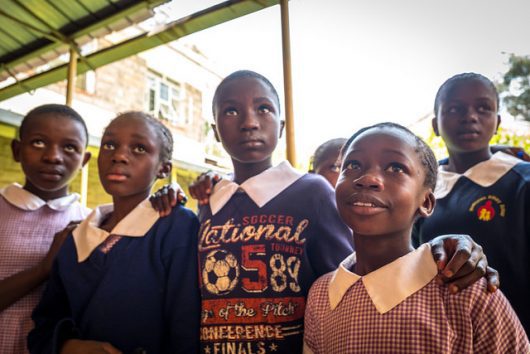
Several steps are being taken to strengthen women’s education in Ghana and to also narrow the gender gap in schools throughout the country. The country is very close to achieving gender equality in primary school enrollment, which is a significant milestone. Women’s access to education in Ghana past primary school, however, still has room for improvement.

Different approaches are being enacted to promote empowerment and women’s education in Ghana. While some approaches are traditional and in correlation with poverty reduction and Millenium Development Goals, others are led by individuals and women trying to make a difference in their own communities.

One such individual is Adeline Nyabu. Nyabu created the Girls Empowerment League, aiming to increase attendance and boost the academic performance of young girls. This league connects girls to female role models and teaches leadership, passion for education and achievement, and shows the realistic and positive outcomes for a woman who completes continuing education. In addition, the program is designed to boost the self-esteem, confidence, aspirations, determination and self-worth of girls in an unequal society.

Another program in place is the Campaign for Female Education. This program partners with MasterCard to provide scholarships to pay for examination registration fees, uniform costs, educational materials and financial packages for girls in rural communities in Ghana. Since 2012, more than 4,000 girls have been awarded the scholarship to continue their education and are equipped to become influential leaders and scholars, in hopes that they will pave the way and be role models for other girls in situations that seem impossible to get out of.

A traditional approach to improving women’s education in Ghana and narrowing the educational gender gap throughout the country is through the Girls Education Unit (GEU), part of the Ghana Education Service under the Ministry of Education. Since its establishment in 1997, GEU has made it possible to have a Girls Education Officer in every district and region of the country.

The Ministry of Education also provides training for female teachers in male-dominated rural areas and promotes girls’ clubs and camps teaching empowerment, self-worth, leadership and teamwork in a female-dominated environment.

These initiatives and programs have resulted in progress towards the goal to increase women’s education in Ghana, created greater access for girls and narrowed the gender gap within schools. Enrollment in both primary and secondary education has increased by around 10 percent, with a significantly greater increase in enrollment for girls. As a result, Ghana’s gender parity index has improved from 0.93 to 0.95. The country can continue to build on this success to achieve complete gender parity and empower its women and girls to reach their full potential.

– Lydia Lamm

Photo: Flickr

April 4, 2018
https://borgenproject.org/wp-content/uploads/borgen-project-logo.svg 0 0 Borgen Project https://borgenproject.org/wp-content/uploads/borgen-project-logo.svg Borgen Project2018-04-04 07:30:382024-05-29 22:40:06Strengthening Women’s Education in Ghana
Global Poverty, Violence Against Women, Women's Empowerment, Women's Rights

Addressing Challenges for Women in the Dominican Republic

Facing Challenges for Women in the Dominican Republic
In recent years, the Dominican Republic has transitioned from an agro-industrial economy to a service economy. With this transition has come many changes for the nation, primarily economic changes. The Dominican Republic has experienced significant economic growth due to this transition, which can be seen in its 4.7 percent growth rate between 2004 and 2012. Due to this growth, the Dominican Republic is now classified as a middle-income country, as opposed to a low-income country.

Despite the recent economic success of the country, the Dominican Republic is still facing many obstacles and challenges. Specifically, challenges for women in the Dominican Republic are especially prevalent. Though the economy has grown, so have crimes against women. Reported domestic violence and femicide cases have continued to increase in recent years.

Challenges for women in the Dominican Republic include the basic challenge of surviving. The Dominican Republic has the third highest rate of femicide in its region, and currently, femicide is the primary cause of death for women of reproductive age in the nation. In addition to femicide, gender-based violence has continued to rise in the Dominican Republic.

With gender violence rising, the need for assistance for survivors has risen as well. This need is one that is not being met currently. The Dominican Republic lacks adequate sanctuaries and care centers for the number of abused women and their children in the nation.

In response to these challenges for women in the Dominican Republic, the government has made constitutional amendments that are intended to help the advancement of gender equality in the nation. These amendments include a declaration that the state should promote equal rights for men and women, places an importance upon domestic work and condemns domestic and gender-based violence. In addition to these constitutional amendments, the government has also created the National Plan for Gender Equality, which makes up one of the four pillars of the country’s National Development Strategy.

Though these governmental and legislative actions have not been enough to decrease the amount of violence against women in the Dominican Republic yet, they are important first steps. With these pillars in place and the recent economic growth, the government now has the opportunity to allocate more funding for women’s programs moving forward.

Though the government still needs to make improvements to the amount of funding given to these programs, the problem has finally been recognized. In 2014, an Ambassador of the Dominican Republic, Mildred Guzmán, told the United Nations Third Committee, “As a country concerned about the issues related to women, and as a tireless actor in the long struggle for their advancement and accomplishments, we wish to reiterate the political will of the Dominican Republic for full, inclusive and participatory citizenship. Recognizing that violence against women is an obstacle for the fulfillment of all human rights and in consequence, in the entire citizenship.”

This statement holds hope for the future of women in the Dominican Republic, and now it is up to the government to fulfill this hope.

– Nicole Stout

Photo: Flickr

April 3, 2018
https://borgenproject.org/wp-content/uploads/borgen-project-logo.svg 0 0 Borgen Project https://borgenproject.org/wp-content/uploads/borgen-project-logo.svg Borgen Project2018-04-03 07:30:202024-06-06 00:07:53Addressing Challenges for Women in the Dominican Republic
Page 45 of 54«‹4344454647›»

Get Smarter

  • Global Poverty 101
  • Global Poverty… The Good News
  • Global Poverty & U.S. Jobs
  • Global Poverty and National Security
  • Innovative Solutions to Poverty
  • Global Poverty & Aid FAQ’s
Search Search

Take Action

  • Call Congress
  • Email Congress
  • Donate
  • 30 Ways to Help
  • Volunteer Ops
  • Internships
  • Courses & Certificates
  • The Podcast
Borgen Project

“The Borgen Project is an incredible nonprofit organization that is addressing poverty and hunger and working towards ending them.”

-The Huffington Post

Inside The Borgen Project

  • Contact
  • About
  • Financials
  • President
  • Board of Directors
  • Board of Advisors

International Links

  • UK Email Parliament
  • UK Donate
  • Canada Email Parliament

Get Smarter

  • Global Poverty 101
  • Global Poverty… The Good News
  • Global Poverty & U.S. Jobs
  • Global Poverty and National Security
  • Innovative Solutions to Poverty
  • Global Poverty & Aid FAQ’s

Ways to Help

  • Call Congress
  • Email Congress
  • Donate
  • 30 Ways to Help
  • Volunteer Ops
  • Internships
  • Courses & Certificates
  • The Podcast
Scroll to top Scroll to top Scroll to top