• Link to X
  • Link to Facebook
  • Link to Instagram
  • Link to TikTok
  • Link to Youtube
  • About
    • About Us
      • President
      • Board of Directors
      • Board of Advisors
      • Financials
      • Our Methodology
      • Success Tracker
      • Contact
  • Act Now
    • 30 Ways to Help
      • Email Congress
      • Call Congress
      • Volunteer
      • Courses & Certificates
      • Be a Donor
    • Internships
      • In-Office Internships
      • Remote Internships
    • Legislation
      • Politics 101
  • The Blog
  • The Podcast
  • Magazine
  • Donate
  • Click to open the search input field Click to open the search input field Search
  • Menu Menu

Archive for category: Women’s Empowerment

Education, Global Poverty, Women and Female Empowerment, Women's Empowerment

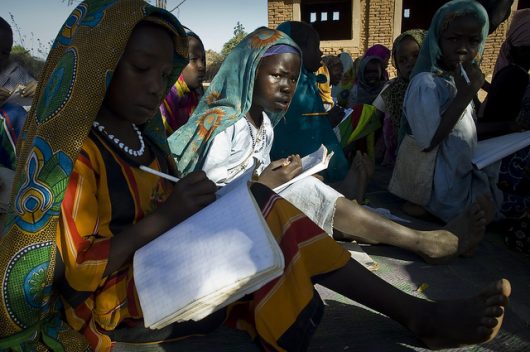
Girls’ Education in Chad Progresses After Outlaw of Child Marriage

Girls' Education in Chad
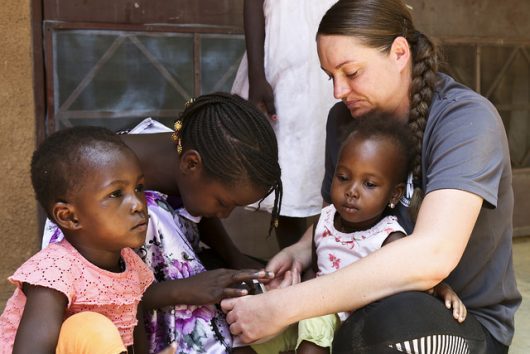
In 1960, Chad achieved independence from France. For close to half a century, Chad was embroiled in regional conflict and internal upheaval. As the conflict has begun to subside, the Chadian government is pursuing increased governance and development. Girls’ education in Chad is a salient point in development for the government.

As the Chadian government works to improve educational conditions for girls and the population at large, Chad continues to receive a large influx of refugees from Nigeria, Libya and the Central African Republic. For many of these refugees, the chances of returning to their countries seem unlikely. Therefore, the issue of providing education to girls becomes an even greater task. 

Statistics on Girls’ Education in Chad Show Inequality Compared to Boys

According to the United Nations Girls’ Education Initiative (UNGEI), the female literacy rate between the ages of 15 and 24 is roughly 41 percent. In contrast, the literacy rate for males in the same range sits at 53 percent. Furthermore, 49 percent of females have never attended primary school, compared to 42 percent of males. Furthermore, the Global Education Monitoring Report notes that the average number of years of education for females is 3.16 years.

Although the Chadian government has made primary and secondary education compulsory, girls are disproportionately less educated. One major contributor to this was the now-defunct legal marriage age. According to Chadian law, girls were allowed to marry at the age of 15, and 72.3 percent of girls married before the age of 18. At face value, this may not appear to be a major reason why girls have less access to school. However, it becomes evident when studying secondary school statistics. The transition from primary to secondary education for girls is 82 percent, which remains relatively close to male transition rates. But only 9 percent of these females manage to complete their secondary education, presumably because many girls married and left school.

Government Projects and New Marriage Age Minimum Help Girls

Chad has received large amounts of support from UNICEF through various education initiatives. One initiative, the Revitalizing Basic Education in Chad project, aims to provide quality education to impoverished children and adolescents in Chad. The project’s major goals are to provide quality education for 34,760 children who are currently out of school. Supporting the Chadian government’s efforts, this initiative plans to raise primary school completion rates to 80 percent by 2020. This project has the potential to greatly improve girls’ education in Chad. 

In 2015, Chad’s president launched a campaign to end child marriage and raise the legal marriage age to 18. This initiative was entered as a bill in Chad’s parliament and was successfully passed in 2016. Strict penalties were introduced; an individual who marries a female under the age of 18 can face up to 10 years in prison and a substantial fine. This legislative success will play a major role in girls’ education in Chad. 

Girls’ education in Chad still presents major challenges to the government and NGOs. However, great strides have been made to improve girls’ education in the country. With the support of UNGEI and continued educational reforms passed by the Chadian government, as well as raising the legal age of marriage, the future of girls’ education in Chad is improving. For these successes to continue, it is imperative that Chad continues to receive aid and guidance in developing a robust educational system. The ultimate goal is equal opportunity for all. 

– Colby McCoy
Photo: Flickr

June 2, 2018
https://borgenproject.org/wp-content/uploads/borgen-project-logo.svg 0 0 Borgen Project https://borgenproject.org/wp-content/uploads/borgen-project-logo.svg Borgen Project2018-06-02 01:30:032024-05-29 22:42:37Girls’ Education in Chad Progresses After Outlaw of Child Marriage
Gender Equality, Global Poverty, Women's Empowerment

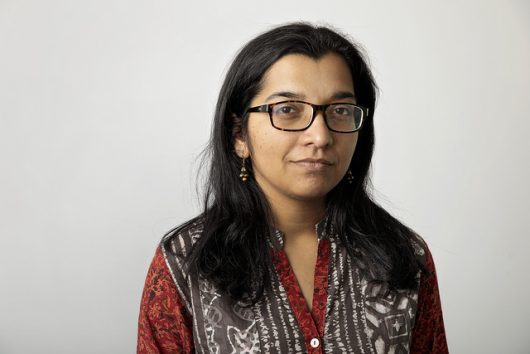
Women’s Empowerment in India: The Fight for Gender Equality

Women's Empowerment in India
We live in a world of gender inequality. Every country experiences it, and India is no exception. India is a country dominated by men, where women have significantly less opportunities; as a result of this disparity, Global Vision International created a campaign called the Women’s Empowerment Project to work with disadvantaged women to close the gender inequality gap.

By supporting these women gain access to employment, education and health care, GVI hopes to eliminate women’s oppression in a country so focused on men.

Women in India

In India, women are born into a society that is designed to have less opportunity for women. Although this population faces many challenges, there have been numerous changes to their situation over the past few decades. While the country has grown in aspects, there are certain areas where women are still lacking support. One of these is education.

Education in India

Around 82 percent of adult men in India are educated, and only 65 percent of women are known to be literate. This creates even more gender inequality — if a woman is married, and hasn’t had the opportunity to access any sort of education, she must rely on her husband. This doesn’t leave very much room for independence. Thankfully, there are a few organizations fighting for women’s empowerment in India.

Progress for Women

Along with Global Vision International’s Women’s Empowerment Project, The United Nations Development Program has created eight Millennium Development Goals, the third of which is directly related to women’s empowerment in India. The goal is to eliminate gender inequality in education on both the primary and secondary levels.

The government of India has made many changes over the past several decades. Since 1956, many laws have been passed that provide women with increased opportunities and independence. India recognizes that when women are empowered, the whole of society benefits. Some recent government acts include the Protection of Women from Domestic Violence Act of 2005, and the Hindu Succession Amendment, ensuring that women get an equal share in ancestral property.

Women’s empowerment in India has come a long way, with the support of many organizations, and the passing of laws that protect women. Women’s empowerment starts with eradicating poverty at the core, protecting women from violence and domestic abuse, and providing adequate education and job opportunities.

Organizational Support

Working alongside of the aforementioned organizations is a department of the Ministry of Human Resource Development, called The Ministry for Women and Child Development. This department was established specifically to formulate plans and provide health and safety for the women of India.

With so many organizations fighting for gender equality and women’s empowerment in India, the country has grown leaps and bounds from its former ways. Women are no longer oppressed and forced to live in the shadow of the men around them as often. Women are now able to work where they want, access higher education and thrive in their independence.

For a country that has given men opportunities for so long, India is now making long overdue strides towards eliminating gender inequality. A cohesive society starts with providing the same opportunities to everyone regardless of gender, and India is showing that change is possible.

– Allisa Rumreich
Photo: Flickr

May 31, 2018
https://borgenproject.org/wp-content/uploads/borgen-project-logo.svg 0 0 Borgen Project https://borgenproject.org/wp-content/uploads/borgen-project-logo.svg Borgen Project2018-05-31 01:30:332024-06-06 00:07:59Women’s Empowerment in India: The Fight for Gender Equality
Education, Women's Empowerment

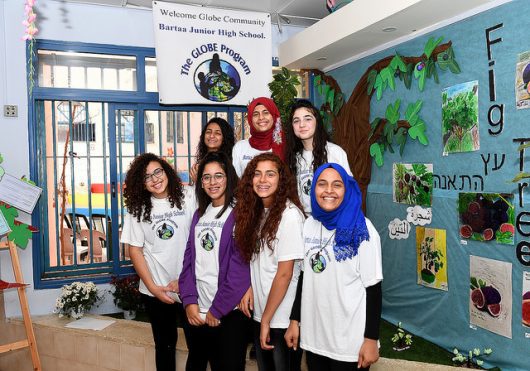
Women’s Achievements Through Education in Israel

Education in Israel
As Israel has become a center for innovation, the nation has attracted investors and entrepreneurs from across the globe. In fact, new technology in computer science and cyber security entices nearly 15 percent of the world’s venture-capital in the industry. While the standard of living in Israel ranks around 19th in the world, over one-fifth of its population lives in poverty.

Education Combats Poverty

One of the ways in which the country combats poverty is through access to education in Israel. Israeli culture and history emphasizes the importance of education and employment in traditionally white collar jobs. Israel’s education system is three-tiered, schooling children from age 5 to 18.

The OECD’s report on education recognizes Israel as one of the most educated countries in the world; almost half of the countries 25 to 34 years old held bachelor’s degrees. While there is high participation in higher education, there are major gender inequalities.

Gender Inequality in Israel

UNICEF’s data indicates that girls fare better in primary and secondary schools with rates slightly higher than their male counterparts.While access to education in the state-run school system is generally equal, the outcomes of this system are not. Education in Israel succeeds in educating its population through 18, but does not always provide ample employment opportunity for its women.

Women in Israel are enrolling in higher education, making up about 57 percent of incoming students. They are outperforming their male peers but are less likely to find work upon graduation.

Women are also paid around 30 percent less than their male counterparts, which is higher than the OECD average of 26 percent. Despite a well-educated population, over 20 percent of Israel’s population lives below the poverty line; the connection between gendered wage disparities and poverty is curious. Arab women and haredi men tend to see the highest rates of unemployment. Engaging women in the workforce and building on the classroom education experience could benefit the economy and quality of life for families in Israel.

Women in the Workforce

Women participating in the workforce, although earning less than men, also work fewer hours. The primary reason for the large portion of women working part-time is child care — only half of women with higher education and children aged 0 to 4 worked, while their husbands, with similar education levels, were employed at a rate of 84 percent.

The cost and responsibility of childcare rests primarily on women’s shoulders, preventing women from adding to the family income and also creating a ripple effect in delaying a woman’s professional development and the timeline for her career. That being said, Israel does have policies to protect women in the workforce before, during and after their pregnancy. With 6 months maternal leave, about 3 months paid, these policies provide incentives for women to remain in the workforce during childbearing years.

Keeping Israel’s Future Bright

While the future of Israel looks bright, low participation in the workforce remains a daunting problem hindering economic development and poverty reduction. By continuing to explore ways to strengthen the system of education in Israel, the state can improve on one of its best assets — its people.

An asset-based community development plan can help firms benefit from improved labor participation, and benefit families living below or near the poverty line. All in all, creating opportunities for women and using their education in Israel can lead to reduced poverty and a more robust economy.

– M. Shea Lamanna
Photo: Flickr

May 31, 2018
https://borgenproject.org/wp-content/uploads/borgen-project-logo.svg 0 0 Borgen Project https://borgenproject.org/wp-content/uploads/borgen-project-logo.svg Borgen Project2018-05-31 01:30:262024-05-29 22:42:35Women’s Achievements Through Education in Israel
Education, Women's Empowerment, Women's Rights

Girls’ Education in Belize Provides Career Opportunities for Women

Girls' Education in Belize
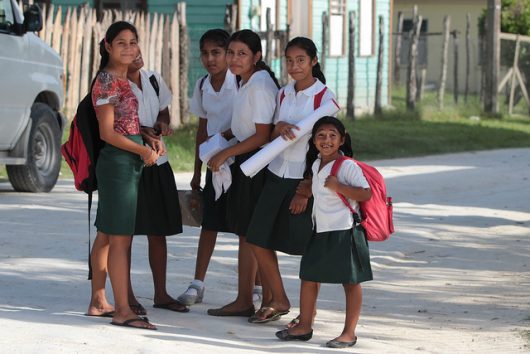
In Belize, the gender gap between men and women has been prevalent and consistent. However, in 1990, a bill was signed into law prohibiting discrimination against women based on their gender. Since then, the country has promoted women’s rights and has specifically focused on girls’ education. There are three major ways the Convention on the Elimination of All Forms of Discrimination Against Women and the Women’s Anti-Discrimination Committee has promoted a better life and has improved girls’ education in Belize.

Increased Literacy a Result of Girls’ Education in Belize

More young women are literate than ever before, leading to a more balanced workforce. Literacy, a strong indicator of equality, has increased in younger women. When literacy increases, nationwide productivity is enhanced and the reduced gender imbalance allows for a more equitable work environment between the sexes. As such, women are being given a chance to obtain degrees and higher positions in the workforce.

Not only is it statistically proven that a nation’s economy benefits from girls’ education, the social impact of girls’ education in Belize allows for cohesive collaboration for well-being in Belize. A country such as Belize that is working towards progressive goals can only benefit from closing the gender gap between those in the workforce.

While the gender gap is not wholly solved by the presence of more young girls in school, there is a significant increase in women both in post-secondary education and in the workforce. There are discrepancies in pay, but the step of promoting literacy to young girls is an important step in building a stronger Belize.

Women Gaining Access to More Diverse Career Options

The more women there are attending schools, the more the gender-career divide disappears. Without initial education, there would not be a basis upon which to form the beginnings of a woman’s career. Historically, the church-state setup of the Belizean government has promoted that women, specifically women who do not conform to the ideal standards set by the church, should remain at home and fulfill tasks for the family rather than for the economy.

While there is no shame in a woman being at home for her family, the promotion of girls’ education in Belize is making that scenario just one option of many for women. In addition to the classic educational materials, women are now being given the option to study for previously male-dominated careers via hands-on skills in carpentry, mechanics and other areas. By addressing the traditions of separating men and women into categories of whom should perform what action in society, Belize is well on the way to developing a strong nation with a multifaceted and talented workforce.

Emphasis on Women’s Equality Reduces Domestic Violence

A focus on education promotes health and independence, which are important for a developing country. Historically, there has been a connection between women with lower education levels and higher levels of domestic violence experienced by those women. In promoting gender equality in schools for girls between ages three and five, a sense of pride, autonomy and strength develops.

In providing an alternative to learning domestic tasks, the Belizean government may begin to reduce the pressing issue of domestic violence. The efforts being made in Belize show that there will likely be more progress in a country that needs both men and women to contribute to its economic growth.

– Kayleigh Mattoon
Photo: Flickr

May 29, 2018
https://borgenproject.org/wp-content/uploads/borgen-project-logo.svg 0 0 Borgen Project https://borgenproject.org/wp-content/uploads/borgen-project-logo.svg Borgen Project2018-05-29 01:30:592020-01-08 14:36:31Girls’ Education in Belize Provides Career Opportunities for Women
Education, Women's Empowerment, Women's Rights

Improving Girls’ Education in Senegal

 Senegal
Girls’ education in Senegal has greatly improved in the last 20 years, partially thanks to Senegal’s government. According to the World Bank, Senegal’s government allocates almost a quarter of its budget toward education, the highest percentage of any country in northwest Africa. The money pays for the construction of school buildings, teachers’ salaries and equal education initiatives. Despite the government’s commitment to education, cultural norms and widespread poverty still prevent many Senegalese girls from completing their education and less than 50 percent of Senegalese women are literate.

Improvements Made

Achieving gender parity in primary schools is one improvement the government has made in girls’ education in Senegal. Thanks to substantial budget allocations and initiatives for equal education, Senegal’s government has maintained gender parity in primary schools since 2010. For example, girls only made up 35 percent of Ndiarème B. Primary School’s student body when it first opened in 1996. In 2010, the percentage of girls had risen to 49 percent.

The World Bank reports that Gross Enrollment Ratios (GERs) have also risen across the small country. In 2016, 87.9 percent of girls were enrolled in primary schools according to the World Bank. However, only 63.5 percent of girls actually complete their primary education and only 57.9 percent enroll in lower secondary education (equivalent to middle school). The GER for girls enrolled in secondary education falls even lower at 48.4 percent.

The Fight Continues

First, educators fought to get girls enrolled in schools. Now, educators fight to keep them there. BuildOn is a non-governmental organization that works in the U.S. and around the world. Its global program helps build schools in poor villages. Employees and volunteers continue working with the communities to ensure each school’s success.

Aminata Ndiaye, a buildOn Education Coordinator in Senegal, has worked directly with children in Senegal’s rural communities since 2015 to bring students back to school. Ndiaye’s program has brought more than 2,000 students back to school in just a couple of years.

As a woman, Ndiaye is particularly sensitive to girls’ struggles to get an education, noting that Senegalese parents often prioritize boys’ education over girls’ education.

Poverty and Girls’ Education in Senegal

Tostan is a community-led NGO that works to educate and empower African women. Harouna Sy, a Tostan regional coordinator, says that poverty rather than culture is actually at the heart of girls’ education issues in Senegal.

Poverty is a widespread issue in Senegal and girls are often singled out to help support their families instead of attending school. Aisatou Ba’s parents took her out of school at age 11 so that she could help her mother at home and work as a maid to support her family. She watched her brothers continue going to school and eventually earn higher paying jobs. Ba’s little education disqualifies her from many higher paying opportunities. She still works as a maid and earns the equivalent of $70 per week.

Cultural Norms

Even though Sy claims poverty is at the root of girls’ unequal education, cultural norms do still affect girls’ education in Senegal. Many Senegalese parents take their girls out of school early to force them into marriages. Senegal’s government prohibits marriage for girls under 18 but it does not have the resources to enforce the policy, especially in rural villages.

Girls forced into marriage at a young age are also forced to take on new responsibilities in their new homes, such as cleaning, cooking and doing laundry. Even if the girls’ husbands allow them to stay in school, they have less time to devote to their studies. Many of these girls are also expected to get pregnant and those who do often leave school entirely.

There is still more work to do to keep Senegalese girls in school, but girls’ education in Senegal has made great strides thanks to government funding and help from NGOs.

– Kathryn Quelle
Photo: Flickr

May 28, 2018
https://borgenproject.org/wp-content/uploads/borgen-project-logo.svg 0 0 Borgen Project https://borgenproject.org/wp-content/uploads/borgen-project-logo.svg Borgen Project2018-05-28 12:22:352024-05-29 22:42:32Improving Girls’ Education in Senegal
Education, Women's Empowerment, Women's Rights

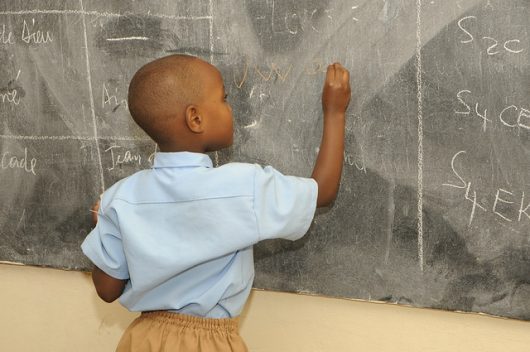
Girls’ Education in Rwanda a Success Story in East Africa

girls' Education in Rwanda
Thanks in large part to Rwandan women enthusiastically pursuing higher education and leadership positions, Rwanda is rising out of poverty and experiencing an optimistic rebirth of a growing economy.

Education Results in Representation in Government

After decades of civil war, conflicts and genocidal tragedy in Rwanda, women became 70 percent of the population and actively rose toward education and leadership positions. Improvements in quality and opportunities within girls’ education in Rwanda make it possible for women to prepare for leadership positions, including in government.

Rwandan women now hold more seats in Parliament than Rwandan men. Rwanda’s Parliament consists of 106 seats (80 Lower Chamber and 26 Upper Chamber) and Rwandan women fill 59 of those seats (49 Lower Chamber and 10 Upper Chamber). Of all the Lower Chamber Parliaments in the world, Rwanda’s has the highest percentage of women (60 percent).

Girls’ Education in Rwanda Exceeds All Goals

Rwandans have been achieving universal education goals and even surpassing them. After Rwandans surpassed their 2015 goals outlined in the Millennium Development Goals program, UNICEF reported that Rwandan girls surpassed boys in school enrollment at all levels (girls at 98 percent and boys at 97 percent) and Rwanda’s total school enrollment rate is the highest in East Africa. With such determination in meeting its goals and effectively using foreign aid funds, current and future endeavors in Rwanda are full of hope for continued success.

One such endeavor began in June 2017, when Rwandans began utilizing Huguka Dukore, an education initiative funded by the United States Agency for International Development. The goals include providing 40,000 Rwandan youths with job skills training by 2021. The training includes internships, job coaching, entrepreneurial development and access to financing and health services. The Education Development Center is managing the program.

Women and Girls in Rwanda Breaking Out of Traditional Gender Roles

Until the recent decades of drastic change in girls’ education in Rwanda after war and recovery, Rwanda functioned as a traditional patriarchal society. Young girls commonly bore children instead of staying in school and pursuing careers. Building confidence has been key in allowing girls to explore their potential beyond motherhood. The World Association of Girl Guides and Girl Scouts is one of the organizations working in Rwanda to build girls’ confidence and ensuring a path towards quality education and utilizing opportunities.

Before the recent drastic changes, men typically dominated science, technology, engineering and mathematics (STEM) fields, while females stayed home in traditional gender roles, some marrying and having children at very young ages. The recent focus on girls’ education in Rwanda opened the way for girls to feel safe pursuing education and to realize they have multiple options beyond the traditional gender roles.

Now, more than half of Rwandan girls choose science classes. Some government-funded schools now specialize in STEM classes and encourage girls’ participation, such as Fawe Girls’ School in Kigali, Rwanda.

If the recent success of improving girls’ education in Rwanda is an indication of momentum for continued success, the 2021 goals of the Huguka Dukore initiative may be reached and surpassed, and girls may continue to freely explore their potential along with boys. The momentum is currently pointing towards continued education advancements, economic growth and reduction of poverty.

Furthermore, Rwandans are utilizing foreign assistance for education as it is intended–to progress towards eventually not needing foreign funding. While Rwandans do still need assistance, perhaps their track record of effective utilization of education funds will prompt continued funding. Hopefully, if Rwandans continue with their current successful momentum, they will choose to pay it forward when they become successful enough to provide funding and guidance to others in need of assistance.

– Emme Leigh
Photo: Flickr

May 28, 2018
https://borgenproject.org/wp-content/uploads/borgen-project-logo.svg 0 0 Borgen Project https://borgenproject.org/wp-content/uploads/borgen-project-logo.svg Borgen Project2018-05-28 01:30:132024-12-13 17:58:47Girls’ Education in Rwanda a Success Story in East Africa
Education, Women's Empowerment, Women's Rights

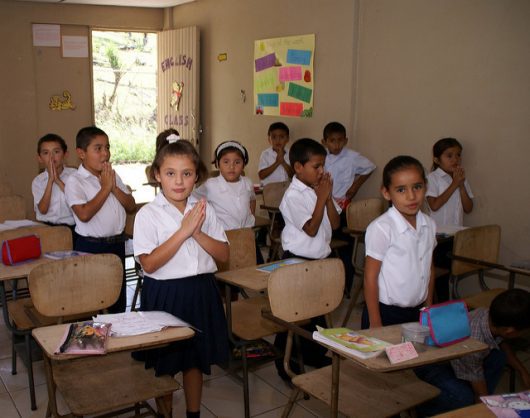
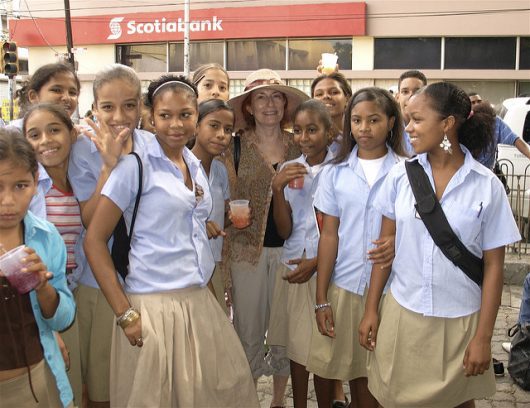
Girls’ Education in the Dominican Republic

Education in Dominican Republic
Girls’ education in the Dominican Republic is faced with many challenges. The Dominican Republic has one of the highest rates of adolescent pregnancy in Latin America. For every 1,000 pregnancies, 90 are by teenage girls. Twenty-five percent of female teens in the Dominican Republic are likely to become pregnant. Regionally, only Nicaragua at 28 percent and Honduras at 26 percent have higher rates of teen pregnancy.

Healthwise, younger women may not be physically developed enough for the stress the body endures during pregnancy and birth. Socially, teens are typically not mature enough to handle the stresses and responsibilities of becoming a parent. According to many studies, teen brains are just not grown up yet.

Furthermore, teen pregnancies compromise education and lead to higher rates of dropping out of school. Financially, teens are usually unable to provide much or anything for their family, possibly creating or extending a vicious cycle of poverty for themselves and their children.

Many organizations recognize the complex issue of adolescent pregnancies and are taking steps to help empower women through education, vocational training and proper medical care and treatment for women/girls and child. Here are just four among them:

  1. The Mariposa DR Foundation: This organization’s top priority is girls’ education in the Dominican Republic. It seeks to minimize the gender gap and generational poverty through the education and empowerment of young girls. The organization assists in funding the education, health and empowerment of a girl, as “she will reinvest 90 percent of her income back into her family and her community, making her the most influential figure in today’s world.”
  2. Sister Island Project: This organization’s mission is to foster “community empowerment, cultural exchange, diversity and equity awareness,” particularly in the Dominican Republic. The Sister Island Project has also built houses for community members, given scholarships to university students, coordinated micro-enterprise projects and distributed many donations.
  3. The DREAM Project: This organization was founded to make up for the lack of resources in Dominican Republic schools. The organization supports quality education for more than 7,500 children with 14 programs implemented across 27 communities in the nation.
  4. World Bank Dominican Republic Youth Development Program: Its mission is to “[improve] the employability of poor, at-risk youth by building their work experience and life skills and expanding second chance education programs to complete their formal education.”

World Bank senior director for education Jaime Saavedra says that “the Dominican Republic is facing a great opportunity to improve the education system and tackle the challenge of the global learning crisis. Improving the quality of education is a fundamental condition for expanding opportunities for all.” The World Bank currently supports the education sector in the Dominican Republic with a total investment of $49.9 million.

Over the years, the Dominican Republic has been a great trading partner for the United States. It supplies the country with medical appliances, electric components, textiles, minerals, tobacco and produce. Many U.S. citizens are also retiring there now. The country as a whole has seen economic improvements but is still facing many educational and economic pitfalls.

Girls’ education in the Dominican Republic is of great importance to each of these organizations. Their work and the work of others like them is providing the country with a much-needed boost and giving girls a much greater chance of success.

– Jonathan Jimenez
Photo: Flickr

May 27, 2018
https://borgenproject.org/wp-content/uploads/borgen-project-logo.svg 0 0 Borgen Project https://borgenproject.org/wp-content/uploads/borgen-project-logo.svg Borgen Project2018-05-27 23:46:382024-06-05 23:47:14Girls’ Education in the Dominican Republic
Education, Women's Empowerment, Women's Rights

Five Facts About Girls’ Education in Ghana

Girls’ Education in Ghana
There are many barriers to equality in education in Ghana ranging from poverty to negative cultural perceptions surrounding girls’ education, to a lack of nearby schools. But despite these barriers, girls’ education in Ghana has seen improvement and continues to be an issue of importance in this developing nation. Here are five facts about girls’ education in Ghana that highlight victories and steps taken to fight this problem.

Five Facts About Girls’ Education in Ghana

  1. The positive changes in girls’ education in Ghana stem from governmental and nonprofit agencies working together. For example, in 1997, the government of Ghana created the Girls’ Education Unit in the Ministry of Education, which means every region and district has a Girls’ Education Officer. The Ministry of Education also partnered with UNICEF to develop and implement education strategies for girls.Furthermore, the Global Partnership for Education (GPE) worked in Ghana from 2012-2016 in a joint effort with the Ministry of Education and UNICEF. This partnership saw real results, including that 889 district gender officers received training in guidance and counseling, 94,827 in-service teachers were trained and 28,056 teachers received math education and training.
  2. Since the early 2000s, girls have consistently enrolled in primary and secondary school at higher rates and closed the gender gap in school enrollment. In 2018, Ghana’s national primary gender parity index (GPI) is at 1.01 compared to 0.94 in 2004. This demonstrates an equality between girls and boys enrolled in school.This change was sparked when the Ministry of Education eliminated school fees for basic education (elementary and junior high school) nationwide in 2005 and established a capitation grant for all basic schools. The grant also effectively reduced the barrier that poverty presented to education.
  3. The United States Agency for International Development (USAID) has greatly impacted girls’ education. For example, USAID has provided scholarships for 7,000 girls in Ghana and 300 of the recipients have special needs and has aided in school construction and rehabilitation in 48 districts across the country.This was made possible through community programs that train volunteers to teach in high-need schools and partnerships with the Ministry of Education and the Ghana Education Service. Currently, USAID’s education objective in Ghana is to improve reading performance for 2.8 million Ghanaian primary school children by 2020.
  4. The Education Strategic Plan (ESP) 2018-2030 is currently being finalized by the government of Ghana and is focused on an inclusive education system that is accessible and equal for all. Its main goal is to use education to improve the national development agenda and make sure it has a positive impact on development.This is the sixth plan in the series and gets its foundation from the Millennium Development Goals (MDGs), Sustainable Development Goals and the National Development Plan 2016-2057. Other important priorities of the newest ESP include access, quality, relevance, effectiveness and sustainability.
  5. In September 2017, Ghanaian President Nana Akufo-Addo made secondary education free for children in Ghana. This measure was much needed as only 37 percent of students were taking part in secondary school in 2014. The president’s promise removed admission fees, library fees, computer lab fees, examination fees and utility fees and included free textbooks, meals and boarding.

While it is still challenging for poor and rural families to attend school, these efforts to improve access to girls’ education in Ghana have been steps in the right direction.

– Alexandra Eppenauer
Photo: Flickr

May 27, 2018
https://borgenproject.org/wp-content/uploads/borgen-project-logo.svg 0 0 Borgen Project https://borgenproject.org/wp-content/uploads/borgen-project-logo.svg Borgen Project2018-05-27 01:30:532024-05-29 22:40:06Five Facts About Girls’ Education in Ghana
Women's Empowerment, Women's Rights

Addressing the Continued Progress of Women in Saudi Arabia

Women in Saudi Arabia
Although the Kingdom of Saudi Arabia is known for human rights violations and women’s oppression, the Saudi government has made several changes in the past few years to change its reputation. These changes include giving women in Saudi Arabia the right to drive, vote and start their own business.

Saudi Arabia ranked 138 out of 144 on the World Economic Forum’s Global Gender Gap Report. Although this is a very low ranking, the report also acknowledges significant progress made over the past several years that is slowly moving the country toward gender equality. There is still room for improvement when it comes to the women’s dress code, male guardianship and sex segregation.

Women’s empowerment can help fight poverty when women become self-sufficient and turn into active contributors to the economy. Several steps have been taken by the government in order to increase the role of women in Saudi Arabia.

Women in Saudi Arabia in the Workplace

In 2011, King Abdullah announced the decision to allow women in Saudi Arabia to work in the retail sector in lingerie stores. This made many women financially independent and gave them the opportunity to participate in the economy. In the past few years, it has become more common for women to work in retail and hold other public jobs.

In 2018, several positions even opened for women to work at the country’s airports. According to a report released by the Ministry of Labor and Social Development in 2017, Saudi Arabia had a 130 percent increase in the number of Saudi women in the workplace. Additionally, women can now start their own businesses without permission from their male guardians.

Saudi Women in Government

In the past few years, steps have been taken to allow women in Saudi Arabia to be represented in government and even make several government jobs available to them. In 2011, women gained the right to vote under King Abdullah. Since elections do not happen often in Saudi Arabia, the first time they were able to exercise this right to vote was in 2015.

Additionally, women were also appointed to 30 seats of the Shura Council, a legislative advisory body, making up 20 percent of the council. In 2018, women also began working as investigators in the public prosecutor’s office for the first time.

Women’s Social Integration

In 2017, King Salman ordered that women be allowed access to government services such as education and healthcare without the need of consent from her guardian. However, the guardianship system still remains.

Most recently, in September of 2017, King Salman announced that women in Saudi Arabia would be able to drive starting in June 2018. Before this, Saudi Arabia was the only country in the world restricting female driving. The change was a result of international pressure and many Saudi women’s efforts advocating for the right to drive. This is a huge step forward as women will now have the freedom to take their kids to school, drive themselves to work and transport themselves as they wish without the need of a man.

Saudi Women in the Military

Saudi Arabia opened up noncombat military jobs in Riyadh, Mecca, al-Qassim and Medina to women in February 2018. These jobs will allow women to work in security. There are several requirements to apply for these positions including Saudi citizenship and holding a high school diploma, but it is a major change to allow women to form part of the Saudi military for the first time in history.

Although change is slow, it is clear through recent government reforms that the Kingdom of Saudi Arabia is heading in the right direction when it comes to women’s rights.

– Luz Solano-Flórez
Photo: Flickr

May 26, 2018
https://borgenproject.org/wp-content/uploads/borgen-project-logo.svg 0 0 Borgen Project https://borgenproject.org/wp-content/uploads/borgen-project-logo.svg Borgen Project2018-05-26 15:55:392019-10-27 18:50:44Addressing the Continued Progress of Women in Saudi Arabia
Education, Women's Empowerment, Women's Rights

Girls’ Education in Colombia Continues on the Path of Progress

Girls Education in Colombia
Extensive progress typically does not happen overnight, especially when the subject at hand is an entire country with numerous socioeconomic factors in play. However, Colombia has impressed the world and set a remarkable example in cultivating girls’ education.

Facts About Girls’ Education in Colombia

  1. The average number of school years girls complete grew about 23 percent, from 3 to 3.7 years, between 1900 and 2000.
  2. In rural areas, more than three-quarters of children in primary education go on to the next grade compared to almost 90 percent in urban areas.
  3. Between 1989 and 2011, girls’ completion of lower secondary school increased from 37 percent to 94 percent.
  4. Girls’ education has led to increased participation in the workforce, growing from 30 percent to 43 percent between 1990 and 2012.

These staggering present-day successes were achieved while Colombia also worked to help its internally displaced population. Internal displacement refers to people who are forced to leave their homes but remain in the same country. Colombia has had approximately seven million people internally displaced due to conflict within the country, one of the highest numbers in the world.

Despite the relatively difficult circumstances, girls’ education in Colombia continues to develop, which has helped Colombia create a prosperous and peaceful present and future.

An Inspiring Project

The Medellin Regional Corporation, supported by UNICEF, established the School in Search of the Child project that aims to reintegrate conflict-affected children back into the education system. The project provides funds to cover any expenses related to keeping children in school.

According to the United Nations Girls’ Education Initiative, in 2004, its first year of operation, 310 out of 375 children enrolled in the program were effectively reintegrated into schools, a more than 80 percent success rate. The project has proven to be a fruitful endeavor that with further assistance could be much more far-reaching.

De Cero a Siempre – “From Zero to Forever”

Colombia’s national government established the From Zero to Forever strategy in 2010, which introduced a now-common structure to organize the children’s well-being and development sector. The strategy is unifying key participants in the sector, both from private and public sectors as well as domestic and internal organizations and agencies. From Zero to Forever has linked several relevant policies and programs in the sector to provide poor children with much-needed comprehensive early childhood care and education.

Fundación Escuela Nueva – “New School”

The New School model innovates traditional teaching practices in Colombia and has been doing so since the late 1970s, growing to cover more than two-thirds of Colombia’s rural education system. The model has effectively delivered the following results:

  • Brought education to rural and misrepresented areas
  • Made school affordable
  • Fostered a team-building environment in students’ work
  • Trained teachers to initiate and manage settings conducive to learning
  • Tailored education to focus on children of varying levels separately, rather than addressing all levels simultaneously
  • Stimulated entrepreneurial teachings, modernized education skills and fostered leadership aptitudes among children

40 by 40 Program

Oscar Sánchez, the former Secretary of Education of Bogotá, presented the 40 by 40 program in 2012, with the goal to increase class time in schools across the country so that students attend full school days totaling 40 hours per week, 40 weeks per year. The program extended children’s access to extracurricular activities such as sports and arts that can ultimately fulfill children and promote fair and higher quality education.

Girls’ education in Colombia is one of several areas that the country has sought to improve. The effects are entirely positive and thereby reveal the capacity for a country to meet its goals, even during great adversities that would appear crippling. Fortunately, Colombia has flourished, and with its investment in the necessity that is girls’ education, its continued success looks very promising.

– Roberto Carlos Ventura
Photo: Flickr

May 26, 2018
https://borgenproject.org/wp-content/uploads/borgen-project-logo.svg 0 0 Borgen Project https://borgenproject.org/wp-content/uploads/borgen-project-logo.svg Borgen Project2018-05-26 07:30:052024-05-29 22:42:29Girls’ Education in Colombia Continues on the Path of Progress
Page 43 of 54«‹4142434445›»

Get Smarter

  • Global Poverty 101
  • Global Poverty… The Good News
  • Global Poverty & U.S. Jobs
  • Global Poverty and National Security
  • Innovative Solutions to Poverty
  • Global Poverty & Aid FAQ’s
Search Search

Take Action

  • Call Congress
  • Email Congress
  • Donate
  • 30 Ways to Help
  • Volunteer Ops
  • Internships
  • Courses & Certificates
  • The Podcast
Borgen Project

“The Borgen Project is an incredible nonprofit organization that is addressing poverty and hunger and working towards ending them.”

-The Huffington Post

Inside The Borgen Project

  • Contact
  • About
  • Financials
  • President
  • Board of Directors
  • Board of Advisors

International Links

  • UK Email Parliament
  • UK Donate
  • Canada Email Parliament

Get Smarter

  • Global Poverty 101
  • Global Poverty… The Good News
  • Global Poverty & U.S. Jobs
  • Global Poverty and National Security
  • Innovative Solutions to Poverty
  • Global Poverty & Aid FAQ’s

Ways to Help

  • Call Congress
  • Email Congress
  • Donate
  • 30 Ways to Help
  • Volunteer Ops
  • Internships
  • Courses & Certificates
  • The Podcast
Scroll to top Scroll to top Scroll to top