Top 10 Facts About Girls’ Education in Kenya
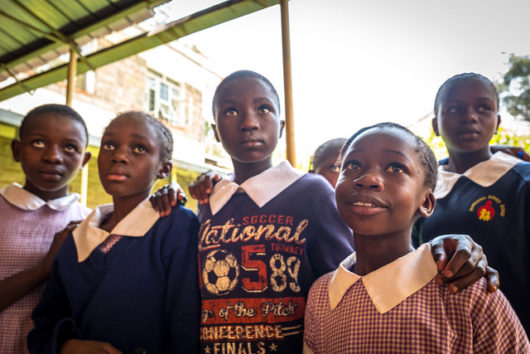
Kenya is a country located on the eastern coast of the African continent with ongoing reforms for tremendous political, social and economic development. The first steps of these reforms began with the passage of a new constitution in 2010 that introduced a bicameral legislative house and devolved county government. Whilst these developments are taking place, the country faces challenges fighting poverty, inequality, climate change and the vulnerability of the economy to internal and external fluctuations.
A huge subset of these challenges facing Kenya is girls education. Similar to the countries across the continent, Kenya portrays a reality where girls are denied their right to education due to social and cultural norms, such as child marriage and female genital cutting aside from economic barriers. These top 10 facts about girls’ education in Kenya reveal some of the historical contexts for these hurdles, the challenges for better access and steps being taken toward future goals.
Top 10 Facts About Girls’ Education in Kenya
- In 2003, Kenya enacted a law that made primary education free. As a result of this legislation, enrollment rates increased to 84 percent.
- This legislation by the government had a positive outcome at large; however, it was found that in some regions where poverty and gender inequality are particularly high, only 19 percent of girls were in school.
- From the student population that enrolls in the first year of school, one in five (or less) make it to their eighth year. This high rate of dropouts is a result of early marriage, female genital cutting, poverty and other factors.
- Female genital cutting is a historically and culturally rooted social tradition that has reached as high as 89 percent of the female population in marginalized areas such as the Maasailand in Kenya.
- While the practice of genital cutting is illegal in Kenya, lots of parents in marginalized areas still subject their girls to female genital cutting with the aim of eliminating teenage pregnancies and increasing girls’ chances for marriage.
- Although primary education is free, a family still holds the responsibility of paying for textbooks, uniforms and teachers’ salaries. Moreover, if a child is going to school, it also means that they are not spending time contributing to the family’s income. Such an occurrence adds a perceived loss in addition to the cost of going to school. This is particularly worse for girls who are expected to marry early and join their husband’s family.
- In 2016, the U.N. reported that an estimated one in 10 girls in Sub-Saharan Africa miss school during their menstrual cycle due to an inability to access affordable sanitary products.
- Despite its many obstacles, Kenya has met some Millennium Development Goals with targets — including reduced child mortality, near universal primary school enrolment and narrowed gender gaps in education.
- A step for progress, President Uhuru Kenyatta signed the Basic Education Amendment Act requiring the government to provide free sanitary towels to schoolgirls in 2017 and allocated $4.6 million to the gender department ministry for the projects.
- One year of secondary education for a girl in Kenya corresponds to over 25 percent increase in wages; if girls were to finish their secondary education, child marriage would be reduced by at least 50 percent.
Investing in Girls’ Education in Kenya
Long-standing traditions and beliefs along with high levels of poverty are seemingly huge hurdles to overcome; however, the pursuit of providing more than half of the Kenyan population with access to education is a challenge worth taking — especially when it has the potential for great social and economic returns.
– Bilen Kassie
Photo: Flickr
