• Link to X
  • Link to Facebook
  • Link to Instagram
  • Link to TikTok
  • Link to Youtube
  • About
    • About Us
      • President
      • Board of Directors
      • Board of Advisors
      • Financials
      • Our Methodology
      • Success Tracker
      • Contact
  • Act Now
    • 30 Ways to Help
      • Email Congress
      • Call Congress
      • Volunteer
      • Courses & Certificates
      • Be a Donor
    • Internships
      • In-Office Internships
      • Remote Internships
    • Legislation
      • Politics 101
  • The Blog
  • The Podcast
  • Magazine
  • Donate
  • Click to open the search input field Click to open the search input field Search
  • Menu Menu

Archive for category: Women’s Empowerment

Global Poverty, Women's Empowerment

Women’s Empowerment in Burundi Appears Optimistic

Women's Empowerment in BurundiBurundi is a small country in Africa with a population of over 10 million people. It is also one of the poorest countries on Earth. This African nation was involved in a 12-year civil war and is currently recovering from it.

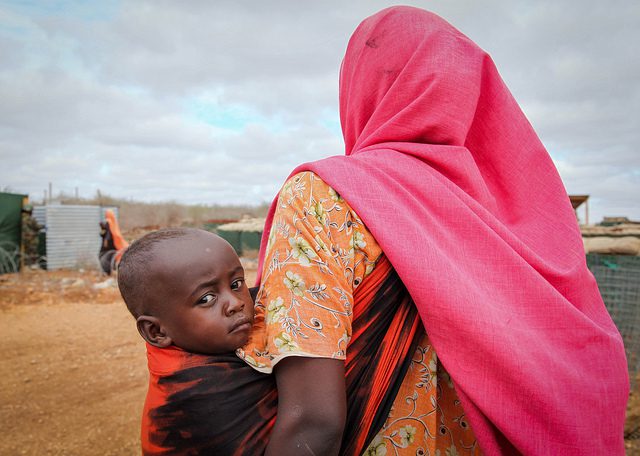
Fortunately, its recovery from war has not led women’s empowerment in Burundi astray. In fact, Burundi has a quota for the number of women in government. While it is not quite even with men, the country requires at least 30 percent of federal government positions be filled by women. Women also account for more than half of the workforce in Burundi and play a large role in agriculture.

Despite these factors, women still face discrimination when running for office. The 30 percent quota is not mandated for local government, and many citizens want more women in local positions. Women make up only 17 percent of local governments, much less than at the national level. At the local level, one is able to make a more direct impact on one’s community, leading many women to run for leadership positions within their communities. This movement toward more female leaders is a positive step toward overcoming gender discrimination and stereotypes.

The organization Search for Common Ground and the Dutch government have come together to help encourage women’s empowerment in Burundi, assisting in strengthening women’s participation in all levels of government. The women that they support must overcome the “practical challenges [that] make it difficult to attain true equality with their male counterparts, including balancing the demands of their position with responsibilities at home, a lack of funds to run a campaign, and simply overcoming a lack of experience in government in order to gain greater legitimacy and step into decision-making roles.”

The U.N. has also been working on this issue and has created programs to train women in how to participate in public affairs. Some of the topics covered include lobbying and negotiating, both skills that women need to be successful and make an impact when they are not equally represented. The U.N. also aims to make gender issues and gender policy the center of local and national conversations. This will not only empower women, but also empower their communities.

Because women are working harder to gain political power and there is more discussion about gender, the issues surrounding how women are viewed in society and culture will begin to be questioned more. Hopefully, as a result, Burundi will be able to see that women are more than just supporters of their husbands and children; they are also supporters of their country. For now, women’s empowerment in Burundi is growing and will continue to thrive until women have the same rights and representation as men.

– Emilia Beuger

Photo: Flickr
November 19, 2017
https://borgenproject.org/wp-content/uploads/borgen-project-logo.svg 0 0 Borgen Project https://borgenproject.org/wp-content/uploads/borgen-project-logo.svg Borgen Project2017-11-19 01:30:462019-11-21 00:54:18Women’s Empowerment in Burundi Appears Optimistic
Global Poverty, Women and Female Empowerment, Women's Empowerment

Improvements to Women’s Empowerment in Yemen

Women's empowerment in YemenYemen, a country in the Middle East, has been the center point of many headlines recently due to the ongoing civil war in the country. The war broke out in 2014 and Yemen has remained in conflict ever since.
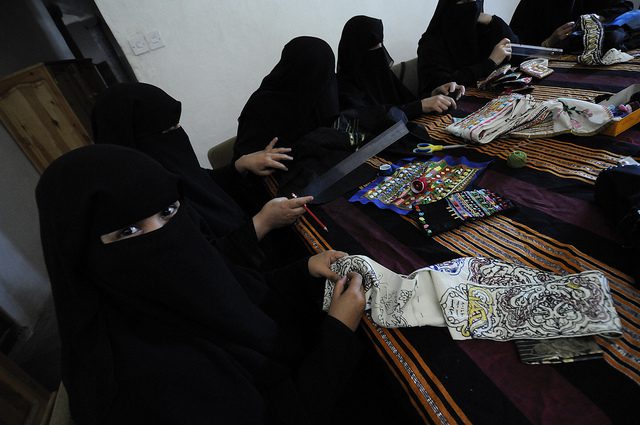
The country has a population of 27.5 million people, most of whom have been affected by the war, particularly Yemeni women. Many women in Yemen have expressed concerns about the war affecting their security, as well as the safety of their children. Despite these concerns, however, many women view the war as a contributor to women’s empowerment in Yemen because it has provided them with opportunities to assist in peace-building.

Since the outbreak of the war, women in Yemen have contributed in a plethora of ways, including providing aid to those who are wounded, aiding in the protection of children and providing psychosocial support to others. Some women have contributed in other ways, such as smuggling arms. Whichever end of the spectrum these women fall on, many of them regard their actions as an attempt to promote peace within the country.

Aside from providing aid and support to others during the war, Yemeni women are empowered through maintaining their own businesses and developing better leadership skills, which are two of the goals of Partners for Democratic Change. Though the country’s embassy emphasizes the importance of equality among the genders, there are still cultural attitudes and patriarchal structures that cause barriers for women in Yemen. Partners for Democratic Change has worked to tackle these barriers by changing people’s attitudes and by educating women. The organization has advanced women’s empowerment in Yemen by training 75 women in business and leadership so far.

Aside from Partners in Change, there are many other groups that have been established with the purpose of advancing women’s rights, such as the Supreme Council for Women and the National Commission for Women. Furthermore, the National Dialogue Conference (NDC), which took place from March of 2013 to January of 2014, occurred so as to begin a discussion about women in elected positions in Yemen.

The percent of women that made up the membership at this conference was 27 percent. During the NDC, those in attendance agreed upon the idea that, from then on, the number of women in elected council should be no less than 30 percent.

Though there is still progress to be made in regards to women’s empowerment in Yemen, the country has taken steps in the right direction through the various organizations and councils that it has established for advancing women in society. In addition, though the ongoing conflict in Yemen has been a source of turmoil for the country’s women, it has also caused them to feel empowered by providing them with opportunities to help others and contribute to rebuilding efforts.

– Haley Rogers

Photo: Flickr

November 19, 2017
https://borgenproject.org/wp-content/uploads/borgen-project-logo.svg 0 0 Borgen Project https://borgenproject.org/wp-content/uploads/borgen-project-logo.svg Borgen Project2017-11-19 01:30:082024-05-24 23:48:55Improvements to Women’s Empowerment in Yemen
Global Poverty, Women's Empowerment

Women’s Empowerment in Ghana

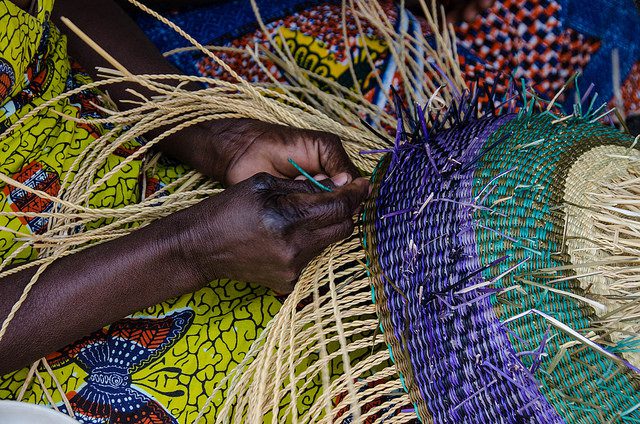
Women's Empowerment in GhanaUnfortunately, in many countries around the world, women are not treated as equal to men. Ghana is not an exception, as women are more likely to live in poverty, have less land, are excluded from decision-making, and make minimal income. These existing hardships make it hard for women’s Empowerment in Ghana.
Violence against women is a major issue that women face in Ghana. Women and young girls often face widespread violence, sexual harassment, and abuse in the areas that they populate, which includes their homes, workplaces, the streets, and on public transportation. In many circumstances, women have to constantly live in fear of being attacked and this can lessen their likelihood of living a full life.

The lack of control that women in Ghana have over their own bodies is also extremely harmful. Women and girls are forced to endure dangerous practices that bring great suffering to them. One of these practices is Female Genital Mutilation (FGM). At the young ages of 10 through 12, young girls are forced to go through this mutilation. In addition, they may be forced into marriage, sex-selective abortion, dowry-related crimes, honor crimes, and other harmful practices.

An organization, act!onaid, is a global movement that is working in Ghana to help improve rights and reduce poverty. Some of the issues they are working on are bringing awareness to violence against women and girls, bringing women to the forefront of decision making and leadership opportunities, and harnessing women’s economic empowerment and economic justice. They are working to include women’s rights as a priority in developmental policies and advocating for spaces where women’s voices, especially those from poorer backgrounds will be heard.

Dealing with women’s education in Ghana, there are major inequalities when it comes to women’s access. The country is nearing gender parity in primary education, but the gender gap in post-primary education level remains a challenge, although there was a marginal improvement in the percentage of girls in senior high school and technical vocational education and training.

To bring about women’s Empowerment in Ghana, act!onaid has adopted strategies and interventions to promote gender equality and women empowerment. They have established the Ministry of Women and Children’s Affairs through Executive Instrument. They will be initiating and coordinating formulation policies to monitor and evaluate the execution of policies in place to ensure the promotion of gender equality and empowerment.

Additionally, the organization plans to implement gender-responsive budgeting. They plan to use a strategy using the government’s fiscal policy to achieve gender equality and to implement gender-responsive budgeting in three sectors of the economy; education, health, and agriculture. In addition, they plan to mainstream justice as a policy area for gender equity. The legal reforms will include Constitutional provisions for gender equity under the law to criminalize harmful tradition practices against young women and girls.

The country of Ghana has the help of organizations and a government making changes to alter the hardships the women are facing. If these ideas are put into place, women’s Empowerment in Ghana can exist and these women can live full lives.

– Chavez Spicer

Photo: Flickr

November 18, 2017
https://borgenproject.org/wp-content/uploads/borgen-project-logo.svg 0 0 Borgen Project https://borgenproject.org/wp-content/uploads/borgen-project-logo.svg Borgen Project2017-11-18 01:30:312024-05-29 22:29:21Women’s Empowerment in Ghana
Education, Food & Hunger, Women's Empowerment

3 Keys to Ending World Hunger Forever

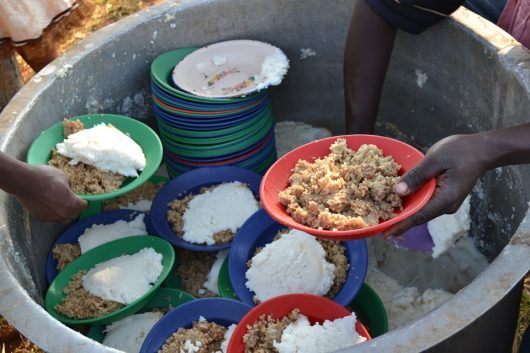
World HungerThe plight of world hunger is nothing new. On average, one in eight individuals go hungry every day. Currently, about 795 million people suffer from chronic hunger.

This is especially critical in developing countries. There, food productivity and sustainability are just one amongst a plethora of other issues, including overpopulation, civil conflict and lack of education.

However, while the effects of hunger are not limited by race, religion or country, the answer to ending the world’s food shortage problem lies in many, perhaps unexpected places.

Women’s Empowerment

For instance, one such solution can be found in empowering women. Of the 600 million small farmers, herders and food providers in the world, half are women. However, this large fraction of food providers is hindered from producing adequate quotas due to cultural and gender boundaries.

Typically, women have less access to education, ownership of land or livestock. They also receive less credit than their male counterparts. As a result, half of the world’s food providers are unable or not producing nearly enough to sustain themselves, let alone the world’s population.

If these restrictions on female agriculturists decreased, however, according to the Food and Agriculture Organization of the United Nations (FAO) the number of hungry people in the world would drop 17%.

Education

Another solution to ending world hunger revolves around education. Countries in Africa and South America have fertile land, but with ignorant farmers, food production remains low. These uneducated agriculturists practice outdated farming techniques and in turn reap poor results.

But programs such as Food for Training projects focus on educating food providers in developing nations. They can dramatically improve food production levels and encourage long term self-sustainability at very little cost.

Moreover, school meal projects also reduce hunger amongst children, who most heavily feel the effects of food shortages. In turn, the free or reduced meals schools provide encourage families to send their children to school, which supports education.

Reducing Food Waste

Lastly, a crucial part of reducing and eventually ending world hunger lies in ending global food waste. If the world were to reduce its food waste, a third of the world’s entire food supply would be saved, which is enough to feed 3 billion people.

Ultimately, this would result in a food surplus that could sustain entire countries. However, food recycling projects and campaigns such as Feedback, which focuses on saving leftover produce and creating nutritious meals from marketable food scraps, help reduce hunger. This provides thousands of people around the world with free, nutritious meals.

World hunger has reduced significantly since the 1990s; however, it has since leveled in 2010. Strategies such as food waste reduction campaigns, education and discouraging gender inequality can make significant dents in the fight to end this battle.

– Jenna Salisbury

Photo: Pixabay

August 16, 2016
https://borgenproject.org/wp-content/uploads/borgen-project-logo.svg 0 0 Borgen Project https://borgenproject.org/wp-content/uploads/borgen-project-logo.svg Borgen Project2016-08-16 01:30:232024-12-13 17:54:393 Keys to Ending World Hunger Forever
Page 54 of 54«‹525354

Get Smarter

  • Global Poverty 101
  • Global Poverty… The Good News
  • Global Poverty & U.S. Jobs
  • Global Poverty and National Security
  • Innovative Solutions to Poverty
  • Global Poverty & Aid FAQ’s
Search Search

Take Action

  • Call Congress
  • Email Congress
  • Donate
  • 30 Ways to Help
  • Volunteer Ops
  • Internships
  • Courses & Certificates
  • The Podcast
Borgen Project

“The Borgen Project is an incredible nonprofit organization that is addressing poverty and hunger and working towards ending them.”

-The Huffington Post

Inside The Borgen Project

  • Contact
  • About
  • Financials
  • President
  • Board of Directors
  • Board of Advisors

International Links

  • UK Email Parliament
  • UK Donate
  • Canada Email Parliament

Get Smarter

  • Global Poverty 101
  • Global Poverty… The Good News
  • Global Poverty & U.S. Jobs
  • Global Poverty and National Security
  • Innovative Solutions to Poverty
  • Global Poverty & Aid FAQ’s

Ways to Help

  • Call Congress
  • Email Congress
  • Donate
  • 30 Ways to Help
  • Volunteer Ops
  • Internships
  • Courses & Certificates
  • The Podcast
Scroll to top Scroll to top Scroll to top
