Girls’ Education in Kenya
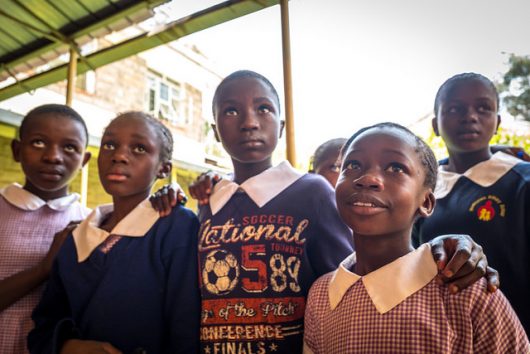
In 2003, Kenya first introduced what is known as free primary education. Since then, primary school enrolment rates have increased as much as 84 percent in some regions; a great improvement for the country as a whole. However, the reality is that barriers remain in Kenya that reinforce male privilege. A lack of girls’ education in Kenya is one of these barriers.
Low School Enrollment for Girls
In regions that experience high poverty rates and low levels of gender equality, as little as 19 percent of the girls in the region are enrolled in local primary schools. In others, as few as one in 15 girls are enrolled in primary school. There is an obvious gender gap when it comes to girls’ education in Kenya.
Although primary education may now be free in Kenya, families are still responsible for providing the children with the necessary equipment to attend these primary schools. Often, families must prioritize the education costs of their children and make the difficult decision to send the child thought to have the best possibility of future success and keep the other, or others, home.
In rural Kenya, one in two girls is married by age 19. The legal marriage age is 16. The percentage of girls getting married below the age of 18 is 30.5 percent.
One father describes his decision not to enroll his daughter in primary school: he says he was “trying to be practical by keeping [her] home” he “never thought of education as a right” and instead focused on her future marriage. This belief and thought process is not uncommon in Kenya. Most often, the result is sending the boy to school and keeping the girl home.
A Need to Challenge the Traditions
The good news is, this thought process and belief can be changed. It is evident that laws and policy do not impact enrollment rates for girls in Kenya, so what is left? What is needed is an engagement and challenge of the traditions and culture in Kenya, specifically rural Kenya.
Traditions have a large influence on education barriers for young girls. Poverty, ignorance and male preference factor in to disadvantage young girls and their educational track.
While it is rare enough for girls to attend primary school, transitioning to secondary school or universities is almost unheard of. In Trans Mara West, 2.4 percent of the female population attends university. Even more shocking, just 1 percent of girls are enrolled in university in Narok North.
Girls’ education has been proven to be one of the most beneficial strategies to enhance development and economic growth. Educated mothers tend to have healthier children and that these children are also more likely to attend school, breaking the cycle of illiteracy and poverty.
Foreign aid and governmental efforts must now be allocated towards changing beliefs and traditions surrounding girls’ education in Kenya in an effort to increase primary school and university enrollment rates.
– Haley Hine
Photo: Flickr
