• Link to X
  • Link to Facebook
  • Link to Instagram
  • Link to TikTok
  • Link to Youtube
  • About
    • About Us
      • President
      • Board of Directors
      • Board of Advisors
      • Financials
      • Our Methodology
      • Success Tracker
      • Contact
  • Act Now
    • 30 Ways to Help
      • Email Congress
      • Call Congress
      • Volunteer
      • Courses & Certificates
      • Be a Donor
    • Internships
      • In-Office Internships
      • Remote Internships
    • Legislation
      • Politics 101
  • The Blog
  • The Podcast
  • Magazine
  • Donate
  • Click to open the search input field Click to open the search input field Search
  • Menu Menu

Archive for category: Aid

Aid, Global Poverty, Humanitarian Aid

Australia’s Humanitarian Aid to Laos Improves Lives

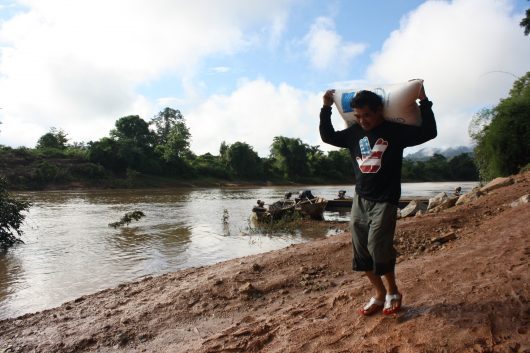
humanitarian aid to LaosLocated in Southeast Asia, Laos is regarded as the world’s most heavily bombed country, polluted with loaded ordnance. Vulnerable to extreme climate change, devastating impacts have been marked in this country in rural areas caused by flash floods, landslides, river floods and annual human and animal epidemics.

In 2017, Laos and Australia celebrated 65 years of diplomatic relations. Through its Department of Foreign Affairs and Trade, the Australian government will provide about $42.3 million in humanitarian aid to Laos from 2017 to 2018. Through this humanitarian aid to Laos, Australia aims to establish prosperity and decrease poverty while assisting with the economic integration with the region.

For 2016 to 2017, the total official development assistance from Australia is an estimated $44.2 million. Results from aid given in 2015 to 2016 had a tremendous impact on schools within Laos. Aid supported 217 new teacher trainees in completing their first year of teacher training, 140 being women. Scholarships were provided to 20 teacher educators and assisted 259 schools located in five provinces to acquire school lunches.

Research shows that in 2014 Laos received a total of $472.4 million in development aid. Although other countries, such as Japan and Germany, have contributed humanitarian aid to Laos, Australia has been most consistent.

Caritas Australia, a Catholic Agency for International Aid and Development, has left its mark on Laos as well. With a focus on developing women and children, Caritas is providing stability.

From 2010 to 2011, more than 40 Laotian mothers received livelihood and business training that helped pay for their children’s education. Without this opportunity, schooling funds would come from panhandling. Around 50 children living with a disability were provided education. Workshops were held to train and support caregivers, teachers and parents of children with disabilities.

Although Australia is the main donor of aid to Laos, the nation could use assistance from other countries as well. Through more aid, Laos can develop at a faster rate and create more opportunities for its citizens, leading to a better quality of life.

– Tara Jackson

Photo: Flickr

January 29, 2018
https://borgenproject.org/wp-content/uploads/borgen-project-logo.svg 0 0 Borgen Project https://borgenproject.org/wp-content/uploads/borgen-project-logo.svg Borgen Project2018-01-29 08:01:492024-05-29 22:39:04Australia’s Humanitarian Aid to Laos Improves Lives
Aid, Foreign Aid, Global Poverty

How the US Benefits From Foreign Aid to Egypt

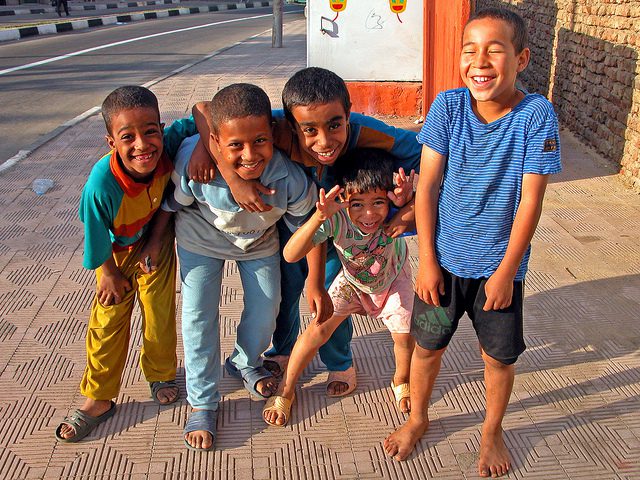
U.S. benefits from foreign aid to EgyptThere are many ways that Egypt has benefited from aid from the U.S. For years, poverty in Egypt has been a serious issue, with over a quarter of the population living below the national poverty line. With a turbulent economy, Egypt has relied on foreign aid and partnerships to keep the country sustained. But this is not the whole story. In fact, the U.S. benefits from foreign aid to Egypt.

Egypt receives more U.S. aid than any other country, except for Israel, Afghanistan, Pakistan and Iraq. Although the amount varies from year to year, U.S. foreign assistance to Egypt has averaged about $2 billion a year since 1979. It was during this time that Egypt struck a peace treaty with Israel, thus aligning itself with American interests and foreign policy. Once this commitment to maintaining peace in Israel was established, the U.S. began providing aid to Egypt to sustain this treaty.

Peace with Israel and Other Arab States

According to Robert Springborg, a Middle East expert and non-resident fellow at the Italian Institute of International Affairs, the primary benefit is the “cessation of hostilities against Israel” by Egypt and “other Arab states that could not wage war against Israel in the absence of Egyptian participation.” Egyptian support for American counterterrorism and counterinsurgency campaigns helps fuel peace and eliminate conflict that could reach U.S. soil.

Military Jobs

The U.S. benefits from foreign aid to Egypt have also helped create jobs and reduce unemployment in the U.S. More than 1.3 million Americans work in manufacturing weapons for defense companies, and more than three million others support the industry indirectly. According to the Stockholm International Peace Research Institute, “the U.S. is among the world’s top five arms producers and distributors.” This does not mean that the U.S. gives money to Egypt for military equipment, however. It means it gives the Egyptian military a list of equipment the American government will purchase on its behalf in the United States, thus aiding in the U.S. job market.

According to the State Department, military aid has included tanks, armored personnel carriers, anti-aircraft missile batteries and surveillance aircraft in addition to the F-16 fighters and Apache attack helicopters. U.S. benefits from foreign aid to Egypt also include expedited processing for U.S. Navy warships when passing through the Suez Canal.

Economic Stability

Since Egypt’s domestic stability is important to the U.S.,  there is an interest in its local economy. The Egyptian military controls up to 60 percent of the Egyptian economy, so it is crucial that for peace in the U.S. continue, there must be a form of economic aid and suitability. Therefore, by providing aid to Egypt to keep its economy stable, the U.S. in turn benefits from this alliance.

This alliance shows the importance of funding and supporting foreign aid. It not only affects the people and economy of many other nations, but there are also many benefits that drastically affect the way Americans live their lives. It only further strengthens the argument that aiding other countries is important and necessary.

– Kailey Brennan

Photo: Flickr

January 29, 2018
https://borgenproject.org/wp-content/uploads/borgen-project-logo.svg 0 0 Borgen Project https://borgenproject.org/wp-content/uploads/borgen-project-logo.svg Borgen Project2018-01-29 07:30:182019-11-08 02:39:03How the US Benefits From Foreign Aid to Egypt
Aid, Global Poverty, Humanitarian Aid

The Success of Humanitarian Aid to Benin

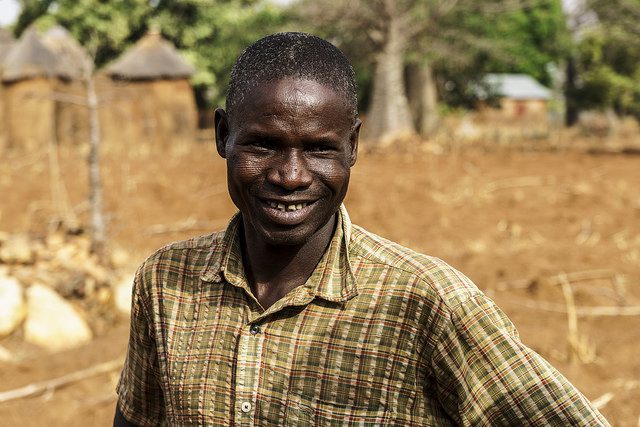
humanitarian aid to BeninIn 2005, more than 20,000 people fled from Togo to Benin after the extreme violence surrounding the presidential election in April. Since then, humanitarian aid to Benin has been constantly increasing in an effort to educate, feed, house and provide medical support to as many refugees as possible. Commissioner Louis Michel of Benin’s humanitarian aid department is responsible for the distribution of the €1.05 million allotted for humanitarian aid, which comes through its partnership with the U.N. High Commissioner for Refugees.
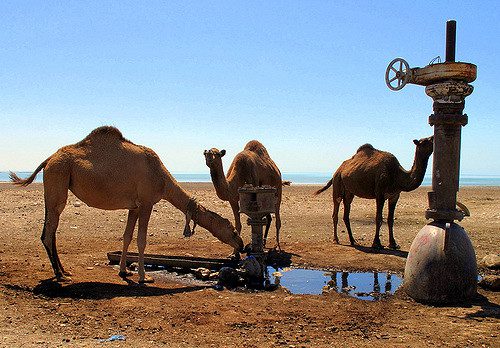
Of the 20,850 people who fled to Benin, more than 13,000 were granted asylum in small communities, while the remaining 7,400 lived in refugee camps in Comé and Lokossa. The last of these refugees were moved to the settlement of Agame in 2006, completing the successful placement and consolidation of refugees since they first entered the country and closing the camps in Comé and Lakossa.

Demands for humanitarian aid to Benin rose again in 2010, when more than 680,000 people were forced to flee their homes after severe flooding from heavy rains. In response to this crisis, under-secretary-general for the U.N. Office for the Coordination of Humanitarian Affairs, Valerie Amos, said, “The loss of homes, livestock, clothing, agricultural tools and seeds will have devastating and long-lasting effects for many people, and that is why, with the government of Benin, we have launched this appeal for urgent assistance.”

Benin’s government and multiple aid agencies launched the Emergency Humanitarian Action Plan, requesting $46 million in foreign aid. The Cooperative for Assistance and Emergency Relief Everywhere (CARE) focused on providing food, water purification and sanitation services to combat the increasing threat of a cholera outbreak in the aftermath of the flood. Benin constantly struggles with providing adequate healthcare and sanitation services as one of the world’s poorest countries.

Unfortunately, despite providing clean water and soap mosquito nets, in addition to other supplies, CARE’s humanitarian aid to Benin barely made a blip on the radar of other countries. Many assumed it was simply another flooding season and did not express much concern for Benin, which normally has periods of heavy rain.

Over 1.6 million people in Africa have suffered the effects of heavy rains, but Benin received the worst of it, according to the Department for International Development. Humanitarian aid to Benin has seen the successful provision of tents, food, water and medical supplies to all displaced citizens and refugees wherever possible and, with the help of the Red Cross of Benin, has provided for the basic needs of all.

– Kayla Rafkin

Photo: Flickr

January 29, 2018
https://borgenproject.org/wp-content/uploads/borgen-project-logo.svg 0 0 Borgen Project https://borgenproject.org/wp-content/uploads/borgen-project-logo.svg Borgen Project2018-01-29 07:30:062019-11-08 02:44:07The Success of Humanitarian Aid to Benin
Aid, Global Poverty, Humanitarian Aid

Isolation Creates a Barrier for Humanitarian Aid to Turkmenistan

humanitarian aid to Turkmenistan

The authoritarian rule in Turkmenistan, led by Gurbanguly Berdimuhamediv, has led to a more isolated state for the citizens of Turkmenistan. There is oppression on freedom of speech, the press, association and religion. This level of totalitarian rule is comparable to North Korea, Sudan and Syria. It has left the country largely closed to foreigners and has restricted travel outside the state.

This isolation in a time of need creates a problem for the Turkmens. When inflation occurs, as it did in 2015, food scarcity causes the population of Turkmenistan to suffer from increased malnutrition and infant mortality. Turkmenistan’s infant mortality rate was reported in 2015 as being at 44 per every 1,000 births.

Mortality rates and health concerns are intended to be monitored, but the World Health Organization is denied full access to data in Turkmenistan, causing limited accurate data and an inability to study the situation in order to find solutions. Issues such as these present a problem in delivering humanitarian aid to Turkmenistan. However, recent laws passed by the Turkmenistan government show some advancements in charitable acts and humanitarian rights.

In 2017 the Parliament (Mejlis) of Turkmenistan adopted the Law on Charitable Activity in order to support activities by financing charitable projects and programs developed by philanthropists. This law made it easier for public associations to register and report the use of foreign aid. This law still limits and restricts civic freedoms in the forms of speech, association and press, but allows for the beginnings of humanitarian aid to Turkmenistan.

While foreign aid to Turkmenistan may be limited, USAID has been working in Turkmenistan since 1992. Through a partnership with Chevron, USAID provides technical assistance to the agriculture sector in the development of livestock and horticulture, teaches practical skills to young people in the oil, gas and tourism fields for use in economic and entrepreneurship development and builds outreach centers for at-risk youth.

The restrictions in Turkmenistan supply an interesting case for humanitarian aid to reach within its borders. However, through persistence and governmental laws shifting to reform the current isolation state aid can benefit those suffering from food shortage, drug trafficking and disease.

– Bronti DeRoche

Photo: Flickr

January 29, 2018
https://borgenproject.org/wp-content/uploads/borgen-project-logo.svg 0 0 Borgen Project https://borgenproject.org/wp-content/uploads/borgen-project-logo.svg Borgen Project2018-01-29 01:30:092024-05-28 00:15:16Isolation Creates a Barrier for Humanitarian Aid to Turkmenistan
Aid, Global Poverty, Humanitarian Aid

The Success of Humanitarian Aid to Bolivia


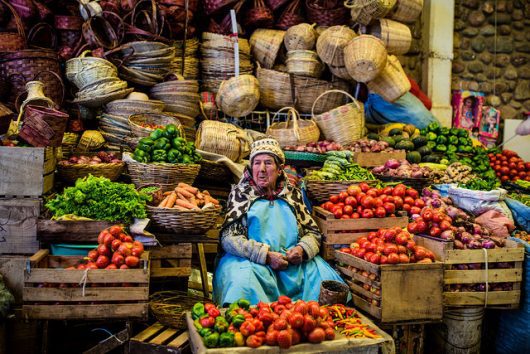
With an estimated 59 percent of its population living in poverty, Bolivia is one of the poorest countries in South America. Combined with its vulnerability to severe weather, humanitarian aid to Bolivia is essential.

Due to its high plateau 3,000 meters above sea level and valleys at mid-altitude with tropical plains, Bolivia experiences a diverse climate. This kind of diversity creates risk for weather events such as floods and droughts. In Bolivia, approximately four out of ten people live in flood-prone places. Upwards of 16 percent of the entire population living in areas that are at risk for droughts.

Food and Agriculture Organization of the United Nations (FAO)

The weather conditions of Bolivia have made its rural population vulnerable. The FAO works with Bolivians to help reestablish their livelihoods and increase their resilience to weather disasters. FAO focuses on establishing a strong disaster risk management program that includes early warning systems. This would warn Bolivian residents before disasters strike.

The FAO is also restoring embankments that will be built at two meters from the surface of the earth. This sole infrastructure would survive two severe disasters (floods or droughts) at different times throughout the year.

Additionally, FAO is helping individual families and farmers. For struggling families, the FAO is providing animals to struggling families to establish herds and the production of protein because animals are often essential for vulnerable families to make a living.

For farmers, FAO is distributing species of seeds such as rice, maize, beans and cassava in order to establish a routine crop production. With FAO’s direction, farmers will practice post-harvest conservation. This way, farmers decide what seeds are the best for sustainable production in the years to come.

World Food Programme (WFP) Providing Humanitarian Aid to Bolivia

Throughout the years, the WFP has been a crucial example of the success of humanitarian aid to Bolivia. Specifically, WFP contributed necessary emergency aid after a severe drought in the Bolivian Chaco and the Southern region of Cochabamba. It provided humanitarian assistance to approximately 10,000 families, or 50,000 people, for six months.

The interventions took place across 12 districts in the four most damaged areas. Food and work were provided as well as vouchers for work. The main goal of this assistance was to restore the food security to the families that were vulnerable because of the post-flood conditions.

Given that this country is so prone to floods, droughts and other severe weather conditions, humanitarian aid to Bolivia is essential in order to sustain living conditions and the livelihoods Bolivian residents. Although weather conditions are constantly proving to be unpredictable and dangerous, the assistance that Bolivia receives helps keep the country resilient regardless of the struggles it faces.

– McCall Robison

Photo: Flickr

January 28, 2018
https://borgenproject.org/wp-content/uploads/borgen-project-logo.svg 0 0 Borgen Project https://borgenproject.org/wp-content/uploads/borgen-project-logo.svg Borgen Project2018-01-28 01:30:392024-05-29 22:38:54The Success of Humanitarian Aid to Bolivia
Aid, Global Poverty, Humanitarian Aid

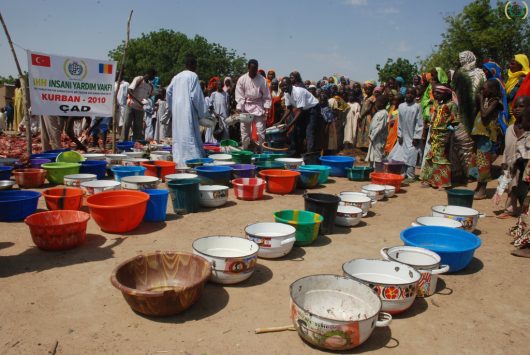
Success of Humanitarian Aid to Chad

humanitarian aid to chad

The sub-Saharan African nation of Chad is one of the poorest countries in the world. Nearly one-half of its 13 million inhabitants live in poverty, with that number reaching 87 percent in rural areas. Chad ranks 184 out of 188 on the Human Development Index, a measure of achievement in three essential elements of human development: life expectancy, education and standard of living. Given these statistics, humanitarian aid to Chad is imperative.

Issues Faced in Chad

Chad faces the overlapping crises of food insecurity, malnutrition, human displacement, epidemics, climate change, drought and chronic poverty. It has one of the world’s highest rates of maternal mortality, high infant mortality and a life expectancy of under 50 years. Over one-third of the population is undernourished, and less than one-third is literate.

Approximately 4.7 million citizens require humanitarian assistance, including 900,000 in need of emergency food. Conflict in neighboring countries has also led to an influx of 409,000 refugees into Chad, which has an extremely limited capacity to shelter them.

International Organizations Providing Humanitarian Aid to Chad

Thankfully, a number of international organizations are providing humanitarian aid to Chad.

The European Commission (EC) is one of the main donors. It focuses largely on food assistance, malnutrition, epidemics, internally displaced people and refugees. The EC has helped 750,000 people through food programs. It has also provided healthcare and education for internally displaced people, protection for those fleeing Boko Haram violence and agricultural programs for refugees.

Solidarites International

Solidarites International assists farmers and herders, whose livelihoods have been in decline for several years. It provides them with resource management to combat lack of income and malnutrition, and risk reduction activities to better handle natural disasters.

Solidarites also establishes agricultural cooperatives, credit facilities and various income-generating activities. Joining the fight against malnutrition, it feeds therapeutic meals to children under five and leads campaigns for nutrition and hygiene awareness. To reduce the usage of unsanitary water, Solidarites rehabilitates water points and helps communities better manage their water supplies.

UNICEF Providing Aid For Children

In 2018, the United Nations Children’s Fund (UNICEF) plans to provide treatment for 169,200 young children suffering from severe acute malnutrition, measles vaccinations for 147,000 children and clean water for 182,500 conflict-affected people. It estimates that there are 4.4 million people and 2.5 million children in urgent need. Of these, UNICEF hopes to reach 763,800 and 502,650 respectively.

Its multi-faceted humanitarian strategy encompasses a broad range of solutions. It includes children’s rights, psychosocial support for refugees, care for unaccompanied children, family reunification services and mine-risk education. To meet the need, UNICEF is requesting $54 million in funding for 2018.

Humanitarian aid to Chad is essential yet underfunded. The international community bears the responsibility of intervening on behalf of the Chadian people. While many organizations are doing amazing work on the ground in Chad, more help is urgently needed to combat the complex crises facing the nation.

– Anna Parker

Photo: Flickr

January 28, 2018
https://borgenproject.org/wp-content/uploads/borgen-project-logo.svg 0 0 Borgen Project https://borgenproject.org/wp-content/uploads/borgen-project-logo.svg Borgen Project2018-01-28 01:30:282024-05-29 22:38:54Success of Humanitarian Aid to Chad
Aid, Global Poverty, Humanitarian Aid

USAID’s Humanitarian Aid to Niger Alleviates Hardships

NigerNiger is known as one of the poorest countries in the world. According to the World Bank, 45.5 percent of Nigeriens live on less than $2 a day. With the highest birth rate in the world, averaging 7.4 births per woman, the growing population struggles to feed and educate its people without humanitarian aid to Niger.
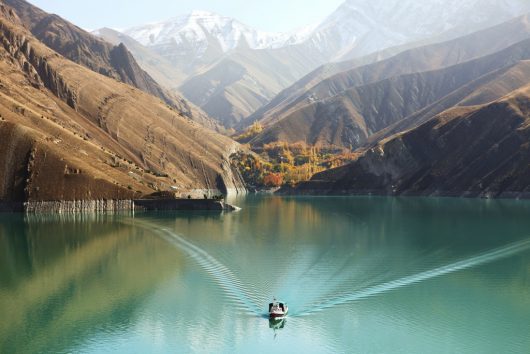
This African country, located on the edge of the Sahara, is prone to major climate-induced hardships such as extreme droughts and floods. These affect economic growth, agriculture and cause major food shortages, something this already impoverished country does not have the means to deal with properly.

Flooding of the Niger River

The most recent heavy rainfall, between early June and late September, triggered flooding in all eight regions of Niger. These floods have resulted in at least 56 deaths with more than 194,000 affected by the damage. With 22,200 acres of crops, 700 wells and 16,000 livestock ravaged by the floodwaters, the Niger population along the Niger River, and Dosso particularly, were displaced and in hardship.

The Niger government deployed personnel to flood-affected areas to respond to efforts and distribute food to communities. The humanitarian needs, however, pushed the government into overdrive, calling upon international assistance for humanitarian aid to Niger.

Humanitarian Aid to Niger from USAID

In response, USAID and the Office of U.S. Foreign Disaster Assistance provided $50,000 to support the distribution of emergency relief supplies, including shelter materials, to affected people in Dosso and Niamey. This is not the first time USAID has been called upon to assist Niger. According to the organization’s website, “USAID/OFDA continues to support the U.N. Humanitarian Air Service (UNHAS) in Niger, providing nearly $1 million in FY 2017 funding for UNHAS operations in Diffa.”

For the approximately 50,000 people that were affected by the torrential rains and floods from the Niger River, the Government of Niger, with the support of USAID, is working to find sustainable solutions to recurring floods. As part of these efforts, they have created a protective dike that should defend about 30,000 people from floods in several of the city’s neighborhoods.

A Country Moving Forward

Niger and USAID’s partnership is providing life-saving humanitarian aid to Niger in a courageous effort to assist this nation and pull it out of its many hardships. With more support like this, there is a chance Niger can ascend from its impoverished status.

– Kailey Brennan

Photo: Flickr

January 27, 2018
https://borgenproject.org/wp-content/uploads/borgen-project-logo.svg 0 0 Borgen Project https://borgenproject.org/wp-content/uploads/borgen-project-logo.svg Borgen Project2018-01-27 17:18:442024-05-29 22:39:00USAID’s Humanitarian Aid to Niger Alleviates Hardships
Aid, Foreign Aid, Global Poverty

Diplomatic Ties: How the U.S. Benefits from Foreign Aid to Iran

How the US Benefits from Foreign Aid to IranMany times, governments overshadow the amount of compensation they receive from humanitarian acts. Often, in some way or another, governments will be compensated for their actions, whether through monetary funds or through access to resources. Along with hundreds of other countries and communities, the U.S. benefits from foreign aid to Iran in many ways.
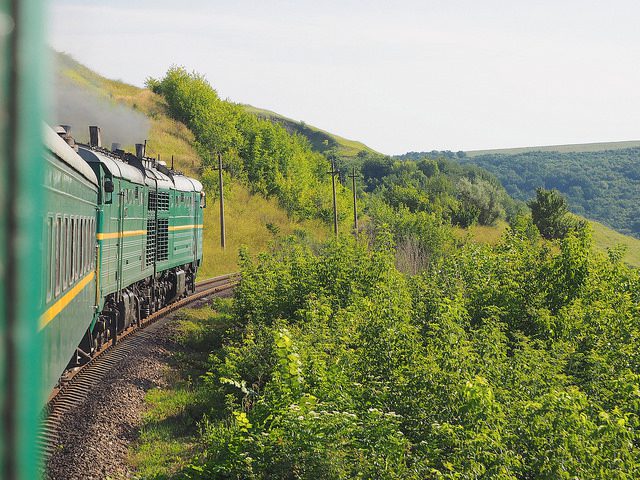
In 2016, the American government provided $3,350,327 in aid to the Iranian people. This money is portioned out into multiple areas, but the majority of it has been paid to Iran by the U.S. Department of Energy for the purpose of removing and destroying nuclear-grade weapons from Iranian civilians and other civilians who may have access. Although the U.S. has had uncertain relations with Iran in the past, the amount of aid the government has given them is fairly average in relation to how much aid they give to other countries in the region.

There are other ways that the U.S. benefits from foreign aid to Iran as well. According to the U.S. Census Bureau, the U.S. received nearly $54.8 million in imports from Iran last year. Iran’s major export is in crude petroleum, along with ethylene polymers and acyclic alcohols. However, what is surprising is that the United States does not even rank as one of Iran’s top exporting partners. Iran relies on the U.S. funds for certain processes such as energy regulation, but the U.S. does not receive quite so much financial gain in return.

So, what does the United States receive?  To some extent, the U.S. government receives diplomatic relations from the money it spends. For supporting Iran, and for interacting in an international trade society, the United States receives not only imports and surpluses from the Iranian government, but it also receives a certain level of compromise and commitment from Iran when it comes to aid and foreign interaction.

The United States has maintained diplomatic relations with Iran since 1979, when Iranian rebels held U.S. employees hostage in the U.S. embassy in Iran for 444 days. After that series of events, new sanctions and agreements were created by the joint governments in an attempt to salvage relations. Since 1981, the U.S. government has maintained diplomatic ties quite well, until recently.

Currently, with a deteriorating situation involving Iran in Syria, and Israel on the defensive in the same region, the U.S. has some serious decisions to make. These decisions will determine not only the ability of the United States to keep Iran as an ally, but will also change the dynamics of U.S. foreign relations in the Middle East as a whole. While the U.S. benefits from foreign aid to Iran on a monetary and diplomatic basis, there is definitely a delicate balance at stake for the United States and Iran both. Diplomatic Ties

– Molly Atchison

Photo: Flickr

January 27, 2018
https://borgenproject.org/wp-content/uploads/borgen-project-logo.svg 0 0 Borgen Project https://borgenproject.org/wp-content/uploads/borgen-project-logo.svg Borgen Project2018-01-27 06:59:562024-06-05 23:55:36Diplomatic Ties: How the U.S. Benefits from Foreign Aid to Iran
Aid, Global Poverty, Humanitarian Aid

Addressing the Success of Humanitarian Aid to Moldova

After being occupied by the Soviet forces in 1940, the country of Moldova became independent approximately fifty years after the second world war. In 1992, Moldova was declared an independent republic. Even though the invasion took place over fifty decades ago, Moldova still suffers the consequences of the fall of the Soviet era today.

Out of all the Eurasian countries that were affected by the war, poverty-struck Moldova the hardest. The country was, in fact, in a better economic situation in 1991 than after its freedom. The now democratic country is one of the poorest on the European continent. Up to 34 percent of the population lives below the poverty rate.

Environmental issues are also affecting Moldova, thus leaving the country with unsuitable ground to cultivate on. The European country mostly relies on agriculture in order to create economic profit. But such activity contributes to a decline in the quality of land due to soil erosion.

The Polish government has taken a big step forward with the success of humanitarian aid to Moldova. With a contribution of PLN 1 million, or almost $300,000, the Polish government has helped the Moldovan population to lower the level of starvation during droughts and other environmental issues that greatly affect the agriculture sector.

These and many more related issues have increased the flow of humanitarian aid to Moldova. The independent humanitarian organization Help Moldova has been a pioneer in aiding the nation. Rebuilding hospitals, helping families living in poverty and providing medical attention to those in need are just some of the initiatives carried out by the organization.

Caritas Czech Republic is also one of the many NGOs assuring the success of humanitarian aid to Moldova. The organization has been helping Moldovan families for fifteen years. By providing job opportunities, agricultural machines to provide more profit and food and creating school opportunities for disadvantaged children, Caritas Czech Republic is leading Moldova into becoming a better country day by day.

While Moldova is in the process of rebuilding itself, it is still not part of the European Union. But help and humanitarian aid to Moldova from nonprofits and government organizations alike are building a better, more developed country. Moldova still has a long way to go to become a fully developed country in terms of economic and social aspects, but the success thus far has been and still is, undeniable.

– Paula Gibson

Photo: Flickr

January 27, 2018
https://borgenproject.org/wp-content/uploads/borgen-project-logo.svg 0 0 Borgen Project https://borgenproject.org/wp-content/uploads/borgen-project-logo.svg Borgen Project2018-01-27 01:30:402024-05-29 22:38:52Addressing the Success of Humanitarian Aid to Moldova
Aid, Foreign Aid

How the U.S. Benefits from Foreign Aid to Kazakhstan

US Benefits from Foreign Aid to KazakhstanOn Jan. 16, 2018, U.S. President Donald Trump held press conferences at the White House with President Nursultan Nazarbayev of Kazakhstan to discuss U.S. benefits from foreign aid to Kazakhstan, and trade agreements which favor both countries. “[President Nazarbayev] is working to improve Kazakhstan’s business environment, which will create new opportunities for American companies who are over there, and lots of jobs are being provided to both countries,” President Trump stated.

American businesses are among the largest investors in Kazakhstan’s economy. Both presidents are pursuing opportunities to increase U.S. investment in Kazakhstan and the energy sector, in particular.

The U.S. Agency for International Development (USAID) has a strong focus on supporting Kazakhstan through its energy sector. USAID assists in strengthening the nation’s green energy policies, improving energy efficiency and increasing renewable energy supply. By improving regional business and trade connections, Kazakhstan’s energy sector enhances trade avenues between Central and South Asia. By diversifying Kazakhstan’s economy, the U.S. benefits from foreign aid to Kazakhstan through the energy sector.

During the press conference, President Nazarbayev elaborated on the key role that economic relations play between U.S. and Kazakhstan, saying “[w]e have major American companies operating for many years. We have Chevron, ExxonMobil. We have General Electric, Halliburton. And all these companies invested about 50 billion into Kazakhstani economy so far. And also, that trade created additional 5,000 jobs in United States.”

In President Nazarbayev’s recent visit to the White House, he signed major trade agreements which consisted of 20 commercial contracts worth $7.5 billion. The trade agreements are set to accomplish the following:

  1. Promote U.S. investment in the technical modernization of Kazakhstan’s economy.
  2. Initiate the purchasing of Boeing planes in Kazakhstan.
  3. Initiate the assembling of 900 new General Electric locomotives in Kazakhstan.
  4. Collaborate with the U.S. in Kazakhstan’s agriculture sector.

President Trump applauded U.S. investment in Kazakhstan as part of the Central Asia Trade Forum and Central Asia Trade and Investment Framework Agreement. The presidents are working in providing American products and services in the form of commercial aircraft, railways, medical services, technology and energy.

The U.S. benefits from foreign aid to Kazakhstan through national security. Kazakhstan has provided humanitarian and technical support to Afghanistan worth $75 million. Additionally, the nation has invested $50 million in providing professional training and education to Afghanis in Kazakhstan, which would have been otherwise unavailable Afghanistan. Kazakhstan plays a crucial role in moving toward a peace process in Afghanistan, which will in turn foster greater stability and prosperity across the Central and South Asian region and minimize national security threats.

National security is central to the foreign powers’ relations. Kazakhstan is a valued partner in preventing the North Korean regime from threatening the globe with nuclear devastation, a direct result of how the U.S. benefits from foreign aid to Kazakhstan. President Trump commended Kazakhstan’s voluntary elimination of nuclear weapons in the country, which provides a safer and healthier environment for Kazakhstani children.

President Trump has pledged to offer assistance to improve English education programs in Kazakhstani schools, in part to sustain global competitiveness. The two nations are reaching trade agreements entailing the reciprocity of consular expansion and jobs in both the U.S. and Kazakhstan.

Kazakhstan’s economic growth has increased steadily since gaining independence after the Soviet Union’s dissolution in 1991. However, the nation continues to face developmental challenges, and 25 percent of the population lives below the poverty line. In 2017, the U.S. invested $13 million to Kazakhstan in foreign assistance.

As of January 2018, the U.S. Department of State and USAID plan on funding $1.7 million toward peace and security to Kazakhstan in the 2018 fiscal year, exclusive of the nations’ recent trade agreement. The projected amount of U.S. foreign aid is expected to increase as the year progresses, furthering Kazakhstan’s chance for economic success.

– Alex Galante

Photo: Flickr

January 27, 2018
https://borgenproject.org/wp-content/uploads/borgen-project-logo.svg 0 0 Borgen Project https://borgenproject.org/wp-content/uploads/borgen-project-logo.svg Borgen Project2018-01-27 01:30:262024-05-29 22:39:01How the U.S. Benefits from Foreign Aid to Kazakhstan
Page 39 of 65«‹3738394041›»

Get Smarter

  • Global Poverty 101
  • Global Poverty… The Good News
  • Global Poverty & U.S. Jobs
  • Global Poverty and National Security
  • Innovative Solutions to Poverty
  • Global Poverty & Aid FAQ’s
Search Search

Take Action

  • Call Congress
  • Email Congress
  • Donate
  • 30 Ways to Help
  • Volunteer Ops
  • Internships
  • Courses & Certificates
  • The Podcast
Borgen Project

“The Borgen Project is an incredible nonprofit organization that is addressing poverty and hunger and working towards ending them.”

-The Huffington Post

Inside The Borgen Project

  • Contact
  • About
  • Financials
  • President
  • Board of Directors
  • Board of Advisors

International Links

  • UK Email Parliament
  • UK Donate
  • Canada Email Parliament

Get Smarter

  • Global Poverty 101
  • Global Poverty… The Good News
  • Global Poverty & U.S. Jobs
  • Global Poverty and National Security
  • Innovative Solutions to Poverty
  • Global Poverty & Aid FAQ’s

Ways to Help

  • Call Congress
  • Email Congress
  • Donate
  • 30 Ways to Help
  • Volunteer Ops
  • Internships
  • Courses & Certificates
  • The Podcast
Scroll to top Scroll to top Scroll to top