• Link to X
  • Link to Facebook
  • Link to Instagram
  • Link to TikTok
  • Link to Youtube
  • About
    • About Us
      • President
      • Board of Directors
      • Board of Advisors
      • Financials
      • Our Methodology
      • Success Tracker
      • Contact
  • Act Now
    • 30 Ways to Help
      • Email Congress
      • Call Congress
      • Volunteer
      • Courses & Certificates
      • Be a Donor
    • Internships
      • In-Office Internships
      • Remote Internships
    • Legislation
      • Politics 101
  • The Blog
  • The Podcast
  • Magazine
  • Donate
  • Click to open the search input field Click to open the search input field Search
  • Menu Menu

Archive for category: Aid

Aid, Global Health, Global Poverty

New Training for Global Health Workers Announced by USAID

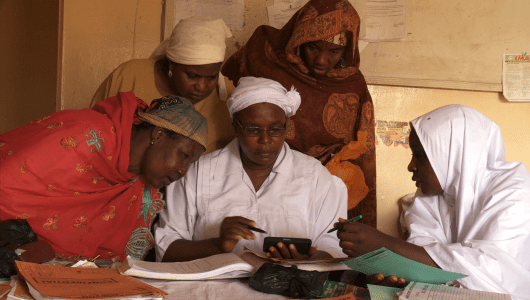
New Training for Global Health Workers Announced-TBPThe top government agency in the United States working toward ending global poverty announced a revolutionary online training tool for frontline global health workers earlier this month.

The U.S. Agency for International Development (USAID) unveiled a free and readily accessible resource for mobile devices that have an Internet connection. The training tool, named “ORB,” is the first of its kind.

The launch follows criticism of USAID by a panel comprised of business and development leaders last year. Mainly, the panel cited the agency for management problems, including insufficient coordination, accountability and progress-measuring data collection.

In April, Representative Christopher Smith (R-N.J.) introduced H.R. 1567 in an effort to ensure that Congress is doing all it can to assist USAID in saving impoverished lives around the world. The bill, which was unanimously approved by the House Foreign Affairs Committee, would compel USAID to create clear, measurable and transparent goals.

In addition, the bill calls for an approach that would “improve nutritional outcomes, especially for women and children.” More than 6 million children under 5 years of age die from preventable and treatable causes every year, with more than half of these deaths attributed to malnutrition. For developing countries encountering these issues, global health workers are the primary, and sometimes only, source of healthcare, but they often lack the necessary training and support.

This is where the new USAID training comes in. The tool consists of a library of over 200 resources in 13 different languages that can help train health workers all over the world. The agency is anticipating the library will be able to support up to 100,000 frontline global health workers by 2017 with its easy-to-use, open source content.

The hope is that the new USAID training will improve the quality and reach of previous training efforts, leading to more knowledgeable, confident workers who will then alter the outcome of health matters for the more than 10 million women and children they currently service.

– Matt Wotus

Sources: The Library of Congress, Pittsburgh Post Gazette, USAID 1, USAID 2
Photo: USAID

July 4, 2015
https://borgenproject.org/wp-content/uploads/borgen-project-logo.svg 0 0 Borgen Project https://borgenproject.org/wp-content/uploads/borgen-project-logo.svg Borgen Project2015-07-04 11:06:082020-07-13 12:02:30New Training for Global Health Workers Announced by USAID
Aid, Global Poverty, Nonprofit Organizations and NGOs, Water

5 NGOs Going Above and Beyond

5 NGOs Going Above and Beyond
There are many NGOs doing good for the world’s poor, but here are five that go above and beyond the rest.

1. The Garden of Hope Foundation

The Garden of Hope foundation was founded in Taiwan and acts to aid girls who were victims of the sex trade. This NGO provides psychiatric counseling and safe half-way houses for many girls while they recover from their abuse. The Garden of Hope foundation also works closely with the government to promote policymaking and discussions about the sex trade. Their main focus is to empower girls and women to stand up for themselves and realize that they, too, can have an impact on this world.

2. Save The Children

Save the Children gives children in the United States and around the world what every child deserves: A healthy start, the opportunity to learn and care when disaster strikes. Save the Children acts on all fronts of poverty, ranging from education needs throughout the world to health and humanitarian issues, such as helping children with HIV and AIDS. Save the Children can be found worldwide after any major disaster attempting to rebuild communities and make them stronger. This NGO is wholeheartedly dedicated to improving the lives of the next generation and is a huge part of the bright future that we have to look forward to.

3. Water.org

According to their website, Water.org provides innovative, market-based solutions that change lives every day through safe water and sanitation. This NGO is supporting countless projects that will hopefully provide sanitary water to everyone around the world. There is a basic human need for clean water, but this instead seems like a luxury for every 1 in 9 individuals worldwide. Water.org has become so well organized that for every $1 donated there is a $4 economic return; this comes from the countless lives that are bettered when clean drinking water is available. Water.org has been very successful in involving high-profile celebrities with its cause and has gained international recognition as one of the strongest players in sanitation.

4. Acumen Fund

Acumen raises charitable donations to invest in companies, leaders and ideas that are changing the way the world tackles poverty. This group seems to be searching out the best of the best and providing them with the funding they need to change the world for good. Acumen states that their main goal is “dignity” rather than the usual goal of profitability. They want to help people believe that dreams do come true and to provide them with an arena in which to do this. By funding leaders and innovators in developing communities, the Acumen Fund is able to build rural communities from the bottom up, allowing them to compete in the global market and, in turn, become more developed. This is one great idea that has clearly allowed people all over the world to realize that dreams really do come true.

5. The Borgen Project

The Borgen Project was founded by one man with one computer and one very big dream. Founder Clint Borgen and his team are seeking to make a mark on global poverty by going right to the source: the lawmakers. The Borgen Project seeks to educate individuals on worldwide poverty and what is being done to make an impact. They also communicate one-on-one with lawmakers to gain support for bills that will better the global community. The Borgen team has met with almost every member of Congress and the House and is continuing to inform lawmakers and the public about changes that could be made to make this world a better place to live in.

– Sumita Tellakat

Sources: The Global Journal, The Garden of Hope Foundation, Save the Children, Water.org, Acumen
Photo: Western University

July 1, 2015
https://borgenproject.org/wp-content/uploads/borgen-project-logo.svg 0 0 Borgen Project https://borgenproject.org/wp-content/uploads/borgen-project-logo.svg Borgen Project2015-07-01 09:46:022024-12-13 17:51:395 NGOs Going Above and Beyond
Aid, Global Poverty, USAID

Increase US Aid to Darfur

us_aid_to_darfur
While Darfur has been at the head of aid policy for a long time, aid may be more important to the region than it has been historically.

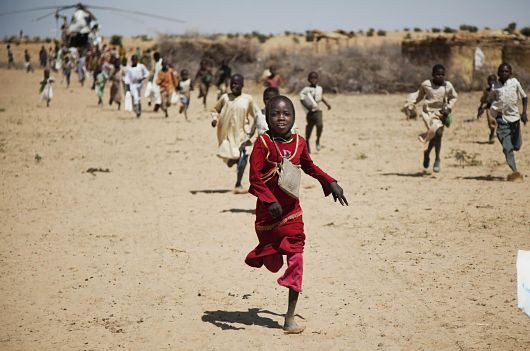
In 2003, war in Darfur erupted, partially due to the lack of resources and the diversity of groups living in the area.

Poverty and diversity working together to create conflict is not unique to Sudan, but rather is something that I have seen as well in Kenya. Africa was split into countries, not by groups who wanted to live together, but by European countries seeking land and resources. Now, the people of those countries, including Kenya, are impoverished and left with few resources.

It is easy for groups who did not ever mean to live together to fight over the remaining resources. In Kenya, the conflict is often in the form of cattle raids. In Darfur, there was a split between Arabs and non-Arabs that led to a war against the non-Arab population in Darfur, leaving thousands dead and many more as refugees.

The United States has been providing assistance to Sudan since before this conflict, starting in about the 1980s, but US aid to Darfur did not begin until much later. When the conflict began, USAID became a leader in the effort to stabilize Darfur.

USAID had made progress in transforming the Government of Southern Sudan into a stable government (although civil war has broken out once again). In addition, the organization has provided a million people with access to clean water, as well as increasing the number of children in school.

In May, USAID provided Sudan with emergency food assistance of 47,500 metric tons of grain.

This assistance is crucial at this point in time. Violence in Darfur is increasing and Sudanese people are being recruited into ISIS. Recently, a groups of Sudanese students fled to Syria in order to join the organization.

Areas undergoing political transition and violence are easy places for terrorist groups like ISIS to target as recruitment grounds and safe havens. Darfur is possibly more at-risk for this because of its conflict that began, in part, from Arabs in the region feeling discriminated against.

If Muslims in Darfur continue to feel as if there is no future in their country, because of conflict and poverty, and continue to feel discriminated against, even the United Nations is afraid that Darfur could be a “breeding ground” for extremist groups like ISIS.

Khartoum, the capital of Sudan, however, would like for the African Union and United Nation’s troops to pull out of Darfur. Yet, this is not the time.

In light of the conflict, and rise of ISIS, Darfur can use all of the aid that it can get. The United States should continue to be a role model in helping Darfur by increasing aid to the region. With increased aid, hopefully other leaders in world aid will follow suit and increase aid to the region.

The increased emergency food aid was a good first step, but perhaps increased structural aid should come next.

– Clare Holtzman

Sources: Aid Data, All Africa, WN, Brookings, National Bureau of Economic Research, Open Democracy, Poverties, Reuters, Slate, Time, Thomas Reuters Foundation, USAID
Photo: End Genocide

June 30, 2015
https://borgenproject.org/wp-content/uploads/borgen-project-logo.svg 0 0 Borgen Project https://borgenproject.org/wp-content/uploads/borgen-project-logo.svg Borgen Project2015-06-30 16:47:132024-12-13 17:51:42Increase US Aid to Darfur
Aid, Global Poverty

Goodeed and Freerice: Two Easy Ways To Help

goodeed_and_freerice
Helping those in need has never been easier with Goodeed and Freerice, websites that make it incredibly simple for those with computer access to make a difference in the lives of the less fortunate.

Goodeed allows users to donate to a cause for free. How is that possible, donating for free? On the website, you watch a twenty-second advertisement, and the revenue from watching the ad goes to one of three causes: trees, vaccines or meals.

The trees are in the East Khasi Hills in the Meghalaya forest in India. This area is known as the wettest place on earth and is under serious threat. Goodeed partnered with WeForest to not only conserve local biodiversity and the livelihood of the people but also to promote women’s entrepreneurship and empower the indigenous community.

The vaccines are delivered to Chad, where the goal is to completely eradicate polio. Today, 80 percent of people get vaccinated for polio, and Goodeed wants that percentage to be 100. Lastly, the meals go to Kenya schools to ensure that students get at least one nutritious meal a day. Goodeed teamed up with the World Food Programme to make this happen.

Each person can make a total of three donations a day, a grand total of 60 seconds of your time to support three worthwhile causes.

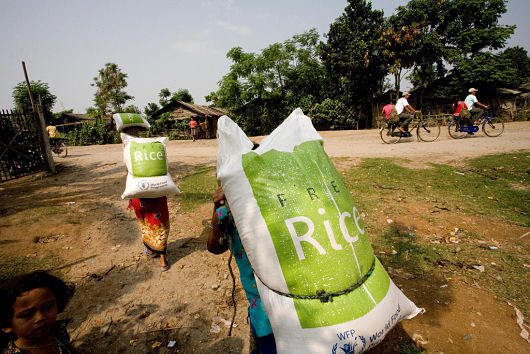
Freerice operates on a similar platform of effortless community involvement. Freerice is an English vocabulary test where, with each question answered correctly, 10 grains of rice are donated.

Freerice works with the World Food Programme to deliver rice to areas in need. They fed 27,000 refugees of Myanmar in Bangladesh for two weeks, and in Cambodia, they provided take-home rations of rice for over 13,500 pregnant and nursing women who needed it over the span of two months. In addition, they have sent rice to Uganda, Nepal and Bhutan.

Freerice is an educational tool for children in the First World, as well as an asset to the Third World. Melissa Foor, a middle school teacher in the United States, used Freerice as a vocabulary lesson for her students. Her classroom, as well as those of other inspired teachers in the school, raised 1,000,000 grains of rice. The students practiced vocabulary and learned a lesson on helping others.

There is a fine line between what people are willing to sacrifice to help others and what they are not. Goodeed and Freerice have made this sacrifice so minimal that making a difference in the lives of others takes no more than 60 seconds, and you can even have a little fun while doing it.

– Hannah Resnick

Sources: Freerice, Goodeed, The Next Web, World Food Programme
Photo: World Food Programme

June 23, 2015
https://borgenproject.org/wp-content/uploads/borgen-project-logo.svg 0 0 Borgen Project https://borgenproject.org/wp-content/uploads/borgen-project-logo.svg Borgen Project2015-06-23 15:46:142024-05-27 09:25:16Goodeed and Freerice: Two Easy Ways To Help
Aid, Humanitarian Aid, Nonprofit Organizations and NGOs, Philanthropy

Humanitarian Aid and How to Help

humanitarian_aid
With all that happens in today’s philanthropic world, definitions can get muddled. Humanitarian aid is material and logistic assistance to promote human welfare, often after natural or man-made disasters. The World Health Organization defines it as “aid that seeks to save lives and alleviate suffering of a crisis affected population.”

In essence, humanitarian aid is humans helping other humans.

There are countless examples of humanitarian aid, from large organizations to small-scale philanthropy events that benefit a larger cause. One of the goals of the United Nations is to provide humanitarian aid.

An example of a large humanitarian aid organization is Doctors Without Borders. Every year, Doctors Without Borders provides emergency medical care to millions in crisis after a disaster. It has operated in over 70 countries around the world over crisis such as armed conflict, epidemics, malnutrition and natural disasters. According to their website, every day over 30,000 people are helping others through Doctors Without Borders.

On a smaller scale, humanitarian aid can be found locally. A local fundraiser for a cause, such as a charity walk to raise money, can support a humanitarian aid organization. For example, nearly 1,000 GoFundMe campaigns were made to raise money after the earthquake in Nepal, raising a total of over $5 million.

There are plenty of ways to get involved in humanitarian aid! Keep it simple and think locally. How can your community help others in need? Here are 5 easy ideas for you to try:

1. Organize a dinner with your friends and ask each person to donate a little to the charity of your choice.

2. Attend a charity walk or ride. You’ll get some exercise while raising money and awareness for a greater cause.

3. Clean out your closet and donate your old clothes.

4. Join an organization like Habitat for Humanity and help build a home for those who have lost their own.

5. Help out at a local food pantry. Make a difference right in your own neighborhood.

Before getting involved with the humanitarian aid of your choice, make sure to do your homework. Understand the issue–the problem at hand, the potential solutions, the dilemmas–before launching yourself into the organization. That way you will understand the complexity of the problem and be able to get a lot out of your experience.

– Hannah Resnick

Sources: GoFundMe, World Health Organization
Photo: Flickr

June 16, 2015
https://borgenproject.org/wp-content/uploads/borgen-project-logo.svg 0 0 Borgen Project https://borgenproject.org/wp-content/uploads/borgen-project-logo.svg Borgen Project2015-06-16 14:52:432024-05-27 09:24:07Humanitarian Aid and How to Help
Aid

10 Facts About the 150 Account

150 account
The federal budget has many functions, and thus accounts, that deal with different areas of spending. The 150 Account, in particular, outlines U.S. funding for international affairs. Below are some basic facts about the 150 Account, international assistance and foreign aid.

  1. The 150 Account deals with the relationship between the United States government and other governments around the world. It allocates funds to operating U.S. embassies all over the world, as well as military assistance to U.S. allies.
  2. The 150 Account deals with the economic relations between the United States and other countries. It allocates funds for economic assistance to new democracies, promoting U.S. exports internationally, and making U.S. payments to international organizations.
  3. The 150 Account deals with foreign aid. It allocates funds to aid developing nations and international peacekeeping efforts.
  4. The major agencies in this function include the Departments of Agriculture, State, and the Treasury, the United States Agency for International Development, and the Millennium Challenge Corporation.
  5. It has two subsections that specifically deal with international aid: the 151 Account and the 152 Account.
  6. The 151 Account is for funding international development and humanitarian assistance. International development aims to improve the daily lives of people, while humanitarian assistance aims to help a country after a natural or manmade disaster.
  7. The 152 Account is for funding international security assistance. This includes training other countries about U.S. military practices and peacekeeping.
  8. The 150 Account makes up about 1 percent of the federal budget.
  9. On May 21, 2015, the Senate approved the allocation of $49 billion for the international affairs budget.
  10. Base funding for the international affairs budget is $39 billion, which is $1 billion less than the current budget for base spending.

More awareness of the 150 Account, international affairs budget and foreign aid functions can help influence policy and change in the United States and abroad.

– Ella Cady

Sources: House of Representatives Budget Committee, Center for Global Development, FAS, Global Humanitarian Assistance, U.S. Global Leadership Coalition
Photo: Flickr

June 14, 2015
https://borgenproject.org/wp-content/uploads/borgen-project-logo.svg 0 0 Borgen Project https://borgenproject.org/wp-content/uploads/borgen-project-logo.svg Borgen Project2015-06-14 14:49:472024-12-13 17:51:2610 Facts About the 150 Account
Aid

Happiness in Switzerland Means Happiness Elsewhere

happiness_in_switzerland
With the Alps reaching elevations beyond 15,000 feet, it is no wonder Switzerland sits at the top of this year’s list of happiest countries, produced by the 2015 World Happiness Report. While the country’s jocular vibes are great for its 8 million inhabitants, a closer look indicates impoverished individuals across the world should also be celebrating.

Since first being published in 2012, the World Happiness Report has delved into the intricacies of socioeconomic development. Turning the subjective nature of “happiness” into objective measures, the study reveals trends in the overall standard of living.

Using a scale that runs from 0 to 10, people in over 150 countries were surveyed by Gallup from 2012 to 2015. Real gross domestic product per capita, healthy life expectancy, having someone to count on, perceived freedom to make life choices, freedom from corruption and generosity were all gauged in the surveys.

“As the science of happiness advances, we are getting to the heart of what factors define quality of life for citizens,”  said John F. Helliwell, professor at the University of British Columbia and the Canadian Institute for Advanced Research. “We are encouraged that more and more governments around the world are listening and responding with policies that put well-being first. Countries with strong social and institutional capital not only support greater well-being, but are more resilient to social and economic crises.”

Switzerland, in its snowcapped glory, pulled out all the stops – winning first place. Iceland, Denmark, Norway and Canada followed close behind.

A transparent government, superb healthcare system and dedicated education sector are the driving forces behind happy lifestyles. Their 35.2-hour workweeks may also have a little bit to do with it.

Regardless, Switzerland spreads the socioeconomic joy when it comes to foreign aid. Though countries like Sweden and Luxembourg beat out the Swiss in terms of giving, the country’s government is aiming to meet applause-worthy goals.

In 2011, officials agreed to give approximately 0.43 percent of their gross national income, best known as GNI, to official international development aid. At the time, the U.S. was only contributing 0.2 percent of its GNI.

Now, as Switzerland strives for a greater role in global poverty reduction and sustainability, the benchmark is set at 0.5 percent.

“Switzerland is well-placed to become a more visible leader on development issues and can capitalize on its extensive experience on the ground to influence global policy in areas like conflict, fragility, food security and climate change,” said Eril Solheim of the Organization for Economic Co-operation and Development.

In the wake of Nepal’s recent 7.8 magnitude earthquake, the Swiss delivered on their promises. Swiss Humanitarian Aid dispatched an integrative team of doctors, engineers, water specialists and logistics specialists to assess the damage.

Nationwide efforts raised $18.4 million, offered in the way of emergency aid and reconstruction projects.

“The fundraising day proves that major disasters strike a chord across the nation,” Swiss President Simonetta Sommaruga said. “[…] the Swiss population shows generous solidarity regardless of age, language or income.”

– Lauren Stepp

Sources: Spring, SWI, UNSDSN
Photo: Flickr

June 2, 2015
https://borgenproject.org/wp-content/uploads/borgen-project-logo.svg 0 0 Borgen Project https://borgenproject.org/wp-content/uploads/borgen-project-logo.svg Borgen Project2015-06-02 08:00:052020-07-17 21:01:48Happiness in Switzerland Means Happiness Elsewhere
Page 65 of 65«‹636465

Get Smarter

  • Global Poverty 101
  • Global Poverty… The Good News
  • Global Poverty & U.S. Jobs
  • Global Poverty and National Security
  • Innovative Solutions to Poverty
  • Global Poverty & Aid FAQ’s
Search Search

Take Action

  • Call Congress
  • Email Congress
  • Donate
  • 30 Ways to Help
  • Volunteer Ops
  • Internships
  • Courses & Certificates
  • The Podcast
Borgen Project

“The Borgen Project is an incredible nonprofit organization that is addressing poverty and hunger and working towards ending them.”

-The Huffington Post

Inside The Borgen Project

  • Contact
  • About
  • Financials
  • President
  • Board of Directors
  • Board of Advisors

International Links

  • UK Email Parliament
  • UK Donate
  • Canada Email Parliament

Get Smarter

  • Global Poverty 101
  • Global Poverty… The Good News
  • Global Poverty & U.S. Jobs
  • Global Poverty and National Security
  • Innovative Solutions to Poverty
  • Global Poverty & Aid FAQ’s

Ways to Help

  • Call Congress
  • Email Congress
  • Donate
  • 30 Ways to Help
  • Volunteer Ops
  • Internships
  • Courses & Certificates
  • The Podcast
Scroll to top Scroll to top Scroll to top