• Link to X
  • Link to Facebook
  • Link to Instagram
  • Link to TikTok
  • Link to Youtube
  • About
    • About Us
      • President
      • Board of Directors
      • Board of Advisors
      • Financials
      • Our Methodology
      • Success Tracker
      • Contact
  • Act Now
    • 30 Ways to Help
      • Email Congress
      • Call Congress
      • Volunteer
      • Courses & Certificates
      • Be a Donor
    • Internships
      • In-Office Internships
      • Remote Internships
    • Legislation
      • Politics 101
  • The Blog
  • The Podcast
  • Magazine
  • Donate
  • Click to open the search input field Click to open the search input field Search
  • Menu Menu

Archive for category: Aid

Aid, Foreign Aid, Global Poverty

The US Benefits from Foreign Aid to the Philippines

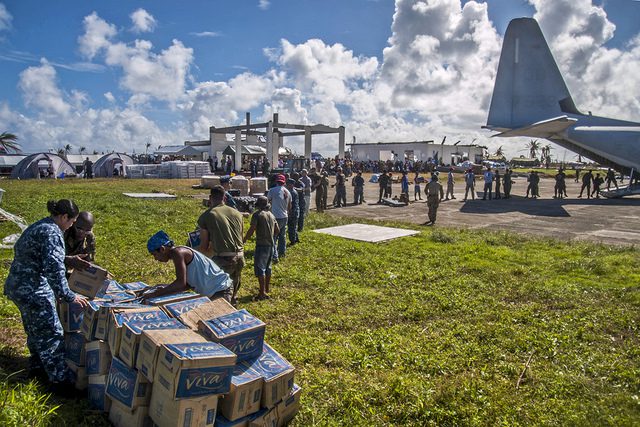
U.S. benefits from foreign aid to the Philippines
It is well known that the relationship between the U.S. and the Philippines is strained to say the least. This tension between the countries stems from a variety of issues, mainly differences in opinion on how each government is run, and the allies each country chooses to associate with. Even with such a rocky relationship, the U.S. continues to spend foreign aid on the Philippines. This is not only because they have been a longstanding ally of the U.S., but also because the U.S. benefits from foreign aid to the Philippines. These benefits come in many different forms and work for both countries.


A Strong Ally

One of the main reasons for foreign aid is that the U.S. sees the Philippines as a strong partner for trade and economic growth. Much of the aid given to the Philippines goes to increasing the economic growth and trade abilities of the country. Although the two countries are already strong economic partners, the U.S. being one the Philippines’ largest trading partners, promoting the growth of trade and increasing the power of the country’s economic capabilities benefits both countries economically.

To put this relationship into perspective, in 2017 there was $9.35 billion worth of trade between the two countries, but it was a slower year than usual. As of 2012, the average amount of trade between the two countries has been around $14.17 billion per year. The main commodity traded between the countries is electronics, the U.S.’ second biggest import is fresh fruit, and the Philippines’ is transport.


A Powerful Investment (and Investor)

The second way that the U.S. benefits from foreign aid to the Philippines is equally connected to the economic status of both countries — investment. Whether aid goes directly to investing in businesses or U.S. investments benefit from aid indirectly, this fiscal back-and-forth improves the economic growth and abilities of businesses in the Philippines which then, in turn, benefits its investors.

The U.S. is, in fact, one of the largest foreign investors in the Philippines. So as aid helps improve the economy and capabilities of businesses, the U.S. benefits just as much as the Philippines.


A Hub for Foreign Aid

Foreign aid also works as a way to strengthen the currently unstable relationship between the U.S. and the Philippines. The more both countries are able to work together and aid one another, the stronger the alliance between them grows.

The U.S. has designated the Philippines as a major non-NATO ally, and keeping this alliance together, with the help of foreign aid, benefits the U.S. both geographically and politically. The Philippines could be a valuable military ally of the U.S. if the need ever arises, and the nation also works as a diplomatic ally, whether through the alliances the Philippines holds with countries the U.S. does not, or from connections made through trade and economics.

The U.S. benefits from foreign aid to the Philippines both directly and indirectly. Not only does aid strengthen the relationship between both countries and provide a valuable political ally in the east, but it also benefits both countries through trade and investment.

– Keegan Struble

Photo: Flickr

February 8, 2018
https://borgenproject.org/wp-content/uploads/borgen-project-logo.svg 0 0 Borgen Project https://borgenproject.org/wp-content/uploads/borgen-project-logo.svg Borgen Project2018-02-08 01:30:212019-12-06 07:34:50The US Benefits from Foreign Aid to the Philippines
Aid, Global Poverty, Humanitarian Aid

The Success of Humanitarian Aid to Cote d’Ivoire

humanitarian aid to Cote d'IvoireCote d’Ivoire is known to be one of the more prosperous West African countries; its cocoa production and strong ties to France allow for widespread export and trade. However, as with many African nations, Cote d’Ivoire is also known for its recent political upheaval.

In the early 2000s, a military coup took place which resulted in Laurent Gbagbo obtaining office, instigating a civil war between government supporters and dissidents in the region. With this civil war beginning, Cote d’Ivoire’s import/export business faltered, and with the economic and political unrest in the region, the success of humanitarian aid to Cote d’Ivoire has yet to fully be understood.

In terms of positive outcomes, the most obvious success of humanitarian aid to Cote d’Ivoire is the recent completion of the United Nations’ peacekeeping mission in the region. On June 30, 2017, the U.N. successfully removed peacekeeping forces from Cote d’Ivoire. According to a brief which took place on February 8, 2017, the U.N. considered the peacekeeping efforts an overwhelming success.

Included in the list of positive impacts the U.N. made in the region are revised legislative elections, a re-drafted constitution that improves the quality of life for women and children and a dramatic decrease in the amount of human rights violations taking place in the area. The U.N.’s peacekeeping efforts have truly worked to stabilize the country.

Another source of success in humanitarian aid to Cote d’Ivoire is the growth of nonprofit work in the region. In 2014 and 2015 Ebola broke out in West Africa. With the effects of political unrest still plaguing the country, aid and access to medical care and Ebola preventatives were hindered. The European Commission has addressed this issue by allocating more than €119 million to Cote d’Ivoire to aid in the recovery process after the disease swept the nation.

Similarly, the rate of maternal mortality in Cote d’Ivoire is a cause for concern. According to the EC, there are several humanitarian projects working within the country, such as a hospital in the Tonkpi region offering more overarching services for new mothers and their children, including infant vaccinations, postpartum follow-ups and continued infant medical care, in an attempt to lower mortality rates.

The Partnership for Transition program through the EC has helped collect medical supplies to distribute to hospitals and clinics in Cote d’Ivoire. From 2012 to 2014, more than 26 cargo planes full of medical supplies flew to Cote d’Ivoire. In each plane were cesarean section kits, anesthesia kits and basic pharmaceutical supplies. These were distributed between 17 different regional clinics and have helped maintain the goal of free and accessible healthcare that the government desired.

The successes of humanitarian aid to Cote d’Ivoire that have been mentioned here do not even scratch the surface. Nonprofit organizations are helping to build food security, agricultural sustainability and civil services, and others within the nation are working to maintain a healthy and functioning government. While this aid will most likely remain necessary for the foreseeable future, Cote d’Ivoire has grown much more stable with the help of international humanitarian aid in both the social and the political arenas.

– Molly Atchison

Photo: Flickr

February 7, 2018
https://borgenproject.org/wp-content/uploads/borgen-project-logo.svg 0 0 Borgen Project https://borgenproject.org/wp-content/uploads/borgen-project-logo.svg Borgen Project2018-02-07 07:30:552024-05-27 23:59:18The Success of Humanitarian Aid to Cote d’Ivoire
Aid, Foreign Aid, Global Poverty

How the U.S. Benefits from Foreign Aid to Zimbabwe

U.S. benefits from foreign aid to Zimbabwe
U.S. citizens share a common misconception in attitudes towards foreign aid. Contrary to popular belief, the United States government spends less than 1 percent of the federal budget on foreign assistance. Of the countries receiving this less than 1 percent, Zimbabwe relies on the United States the most heavily as its number one foreign aid provider.

With improvements in HIV/AIDS prevention and economic growth, the benefits Zimbabwe reaps from foreign aid are more apparent than what the United States gets out of the deal. Oftentimes the successes in aid-receiving countries get the focus, but the U.S. benefits from foreign aid to Zimbabwe in different, less measurable ways.


Bilateral Economic Relations

For the fiscal year of 2018, the United States is targeted to provide almost $150 million in funds to Zimbabwe. Why provide so much money to a country navigating a rather turbulent period of governance and recovering from years of economic decline?

By providing funds to Zimbabwe, the United States is working to promote Zimbabwe’s economic recovery. This provides opportunities for trade and investments that will benefit the economies of both Zimbabwe and the United States. As Zimbabwe’s economy continues to grow and prosper with the funds the United States provides, business opportunities in Zimbabwe will open up and allow U.S. citizens to take advantage of those opportunities.


International Cooperation

In addition to benefiting economically, by providing funds, the United States promotes positive international relations and thus benefits from foreign aid to Zimbabwe. The United States and Zimbabwe are members of many of the same international organizations. Both countries are members of the United Nations, the International Monetary Fund, the World Bank and the World Trade Organization.

As the world enters an age of increased international interaction and communication, the U.S. benefits from foreign aid to Zimbabwe and many other countries by cultivating relationships with other international players.


National Security

From a national security standpoint, politically and economically stable countries are less likely to go to war or engage in any type of international conflict. Military leaders have seen firsthand how addressing poverty and disease in countries benefits the United States.

Zimbabwe is currently in an uncertain political period. In November 2017, Robert Mugabe resigned as Zimbabwe’s president after 37 years in office. After a week of military occupation, Emmerson Mnangagwa came to power and is serving as president until elections in August 2018.

The United States hopes to allocate its 2018 funds to programs that advocate government transparency, enhance political participation and create an active civil society. These sorts of programs have the potential to create a sense of political stability that contributes to the security of both citizens from Zimbabwe and the United States.

One of the critiques of foreign aid is that the U.S. sends money that is chewed up by corrupt governments. This is not the case. In Zimbabwe, the United States works directly with a variety of NGOs and community leaders.

The U.S. benefits from foreign aid to Zimbabwe in many different ways encompassed by a variety of sectors. The economy, international relations, and national security are all improved by providing foreign assistance.

– Sonja Flancher

Photo: IRIN

February 7, 2018
https://borgenproject.org/wp-content/uploads/borgen-project-logo.svg 0 0 Borgen Project https://borgenproject.org/wp-content/uploads/borgen-project-logo.svg Borgen Project2018-02-07 01:30:242024-05-29 22:39:09How the U.S. Benefits from Foreign Aid to Zimbabwe
Aid, Global Poverty, Humanitarian Aid

The Success of Humanitarian Aid to Angola

https://borgenproject.org/poverty-angola-causes-updates-statistics/humanitarian aid to AngolaAngola is in southern Africa, bordered by Namibia, the Democratic Republic of the Congo and Zambia. As of today, Angola continues to suffer from the repercussions of a civil war that lasted more than three decades. The local economy and the infrastructure are inadequate and unstable, and the majority of people residing in Angola live in poverty, with difficulty sustaining their livelihoods. Their difficulties also include malnutrition, illiteracy, high infant mortality rates and a lack of healthcare and quality education. This is why it is essential to ensure the success of humanitarian aid to Angola.
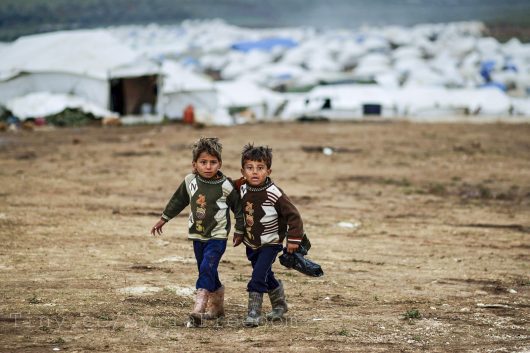
People in Need (PiN) is an organization that has been supporting Angola for more than 10 years. PiN is a Czech nonprofit and non-governmental group that provides humanitarian assistance through long-term development projects as well as educational and human rights programs. Their mission to help Angola began with setting up aid in Bié, which was one of the provinces most affected by the war and destitution.

In the early stages of PiN’s humanitarian aid to Angola, they focused on restoring and improving elementary education, while also working on developing agricultural markets in more rural areas to help crop production and economic development. The most important goal for PiN is to enable the people of Angola to provide for themselves and take control of their livelihoods.

In September 2017, PiN began working in Huambo and Huíla. The focus in these provinces was to address health issues involving mothers and children, water access, nutrition and sanitation. In doing all of this, PiN has helped upwards of 875,000 people living in Angola. This includes helping 37,000 children escape malnutrition, building 14 schools and four centers for education, developing over 10,000 toilets and providing training and tools for more than 3,000 farmers. They are able to do this so efficiently because PiN involves the communities in all of their projects and also works with local authorities in Angola.

Not only does PiN help with long-term aid, they also work with Angola in emergency situations. A specific example includes providing sanitation, hygiene and drinking water for citizens in the north, where over 33,000 people are seeking refuge from ongoing violence in the bordering country of Congo.

One of the most important goals that PiN has had is to help local children gain access to a quality education. In addition to building new schools, PiN also focuses on giving the staff at the schools specialized training, which more than 1,850 teachers have participated in. Also, 25,000 teaching materials were distributed in order to better help the teachers give the children a quality education. And because a large portion of the adult population is illiterate, PiN also focuses on assisting that part of the population to reduce illiteracy. By implementing these tactics, PiN has taught around 450,000 children and 1,2000 illiterate adults to read, write and do basic mathematics.

This is just one example of successful humanitarian aid to Angola. Assistance like this is essential for nations like Angola to survive such harsh living conditions. PiN has helped thousands of children and adults have a better quality of life through better sanitation, education, agriculture and infrastructure. It is aid like this that allows people to thrive in difficult places.

– McCall Robison

Photo: Flickr

February 6, 2018
https://borgenproject.org/wp-content/uploads/borgen-project-logo.svg 0 0 Borgen Project https://borgenproject.org/wp-content/uploads/borgen-project-logo.svg Borgen Project2018-02-06 01:30:102019-11-08 01:58:24The Success of Humanitarian Aid to Angola
Aid, Global Poverty, Humanitarian Aid

Better Disaster Preparedness: Humanitarian Aid to the Solomon Islands

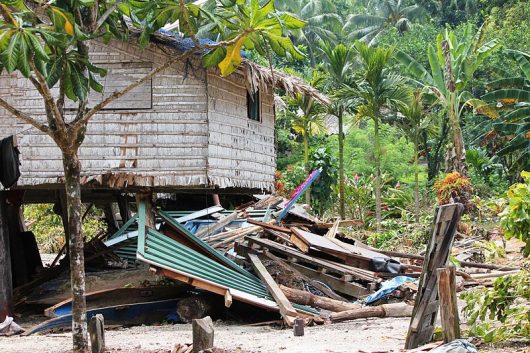
humanitarian aid to the solomon islandsConsisting of hundreds of small islands and home to roughly 600,000 people, the Solomon Islands face an array of climate-related and social issues that have caught the world’s attention. Countries and organizations are currently sending humanitarian aid to the Solomon Islands to transform the island chain into a safer place to live.
As islands in the South Pacific Ocean, the Solomon Islands are constantly threatened by some of the worst that weather and climate change have to offer: cyclones, tsunamis, earthquakes and extensive flooding. In response to this, organizations like the Asian Development Bank have worked to create disaster-resilient infrastructure, including structures and roadways. Its Sustainable Transport Infrastructure Improvement Program aims to improve transport infrastructure and maintain roadways so that they will be fully accessible year-round.

A vital piece of creating consistently accessible roadways in the Solomon Islands is ensuring that all roads are climate-resilient, which is the goal by 2030, according to the Asian Development Bank. By improving transport conditions, the Asian Development Bank hopes to boost the local agriculture industry and reveal new economic opportunities for those living in rural areas.

Natural disasters in the Solomon Islands can have devastating effects. With its ranking of sixth on the World Risk Report’s disaster exposure rating, reducing these effects should be a top priority. Without the implementation of communication technologies to warn civilians of imminent threats, disasters can cause an exponentially higher level of destruction and death than what could have been avoided.

According to ABC International Development, the Solomon Islands Media Assistance Scheme (SOLMAS) was a project that worked to implement a stronger communications program. Funded by the Australian government, SOLMAS helped the Solomon Islands Broadcasting Corporation upgrade its transmission infrastructure to expand the broadcasting audience. By increasing the audience and reaching out to rural areas, disaster awareness and preparedness have improved drastically.

Also reaching out to citizens in rural areas is the World Bank, which implemented the Rural Development Program (RDP). According to the World Bank, less than 20 percent of people in rural areas have access to electricity, falling to below 5 percent in the outer islands. Sanitation also presents an alarming statistic, with only 15 percent having access to flush toilets. Beginning in 2008, RDP supplies grants to in-need communities. More than 300 projects have been completed, positively impacting about 50 percent of the rural population, or 225,000 people. Projects providing humanitarian aid to the Solomon Islands have spanned water access, electricity and education to road maintenance. As of 2013, the rural area’s access to clean water doubled and more than 50 percent of farmers changed their agricultural practices following advice from the project.

Despite the lack of adequate infrastructure, rural areas are not the only region to receive humanitarian aid to the Solomon Islands. According to the United Nations Human Settlements Program, open public spaces are a rare commodity in urban areas with overcrowded cities. UNHabitat is currently working to improve conditions in the capital city of Honiara by developing a sustainable plan to maintain public spaces. The project, Participatory Slum Upgrading Program, cost about $100,000.

Humanitarian aid to the Solomon Islands has been proven to improve living conditions in the islands and is essential to creating sustainable infrastructure. By upgrading sanitation, access to water and transport infrastructure, economic opportunities will continue to open.

– Austin Stoltzfus

Photo: Wikimedia Commons

February 5, 2018
https://borgenproject.org/wp-content/uploads/borgen-project-logo.svg 0 0 Borgen Project https://borgenproject.org/wp-content/uploads/borgen-project-logo.svg Borgen Project2018-02-05 07:30:482024-05-29 22:39:07Better Disaster Preparedness: Humanitarian Aid to the Solomon Islands
Aid, Foreign Aid, Global Poverty

How the US Benefits from Foreign Aid to Syria

U.S. benefits from foreign aid to SyriaIn March 2018, the crisis in Syria will hit the seven-year mark. The U.S. has been the top contributor of foreign aid to Syria since the Syrian civil war began. As of April 2017, the U.S. has invested $3.3 billion inside of Syria since the 2012 fiscal year.

The U.S. benefits from foreign aid to Syria in several ways. Giving foreign aid to Syria will help keep Syrians alive while the country’s civil war goes on. Several countries surrounding Syria have closed their borders, preventing Syrian refugees from fleeing the country. Closed borders cause Syrians to be displaced in the country under unlivable conditions.

The U.S. provides several critical resources to Syrians such as clean water, ready-to-eat food rations, emergency medical services and shelters, as well as many other important services to the most vulnerable Syrians, such as children, the elderly and the disabled. The U.N. estimates that approximately three million Syrians have been displaced within their country to rural areas, which are not easily accessed, which is a small portion of the 13.5 million Syrians suffering within Syrian borders. The U.S. benefits from foreign aid to Syria in many respects:

Syrian Oil

Because of the Syrian civil war, the U.S. has not imported oil from the country since late 2011. Globally, Syria is a small oil distributor. However, the surrounding countries are well known for their large oil exports. Once stability is established in Syria, the U.S. will have another oil export option. Investing foreign aid into Syria helps provide the stability that its citizens desperately need.

Diplomacy

The U.S. benefits from foreign aid to Syria by showing support for its citizens during a time of crisis. Showing support for a country during times of need strengthens diplomatic relationships, which creates further socioeconomic benefits in the future. When Syria’s civil war ends, these acts of humanitarianism will not be forgotten. Continuing to invest in foreign aid for Syria will help promote positive foreign relations with the country, as well as keep the citizens well for the remainder of the civil war.

Terrorism

Syria is affected by acts of terrorism every single day. The extremist group ISIS already exists within Syrian borders. Giving foreign aid to suffering Syrians will potentially keep them from choosing to join those extremist groups. Providing hope and help to those that are suffering benefits the U.S. because it will discourage the growth of terrorism.

Refugees

Many displaced Syrians have fled to countries that will accept them. As of March 2017, more than five million Syrians have left Syria in hopes of surviving in another nation. While accepting refugees from war-torn countries is a very humanitarian thing to do, providing foreign aid within Syria gives Syrians the opportunity to continue their lives in their homeland, and lowers the chance of families being torn apart by being displaced into different nations.

As this civil war goes on, it is important for the U.S. to continue to provide help and security to the innocent Syrian citizens. The U.S. benefits from foreign aid to Syria, but more importantly, continuing to provide assistance to those in need is simply the right thing to do.

– Courtney Hambrecht

Photo: Flickr

February 4, 2018
https://borgenproject.org/wp-content/uploads/borgen-project-logo.svg 0 0 Borgen Project https://borgenproject.org/wp-content/uploads/borgen-project-logo.svg Borgen Project2018-02-04 07:30:162024-06-05 23:55:37How the US Benefits from Foreign Aid to Syria
Aid, Global Poverty, Humanitarian Aid

Success of Humanitarian Aid to Tuvalu Slowly Brings Sustainability

Humanitarian Aid to Tuvalu

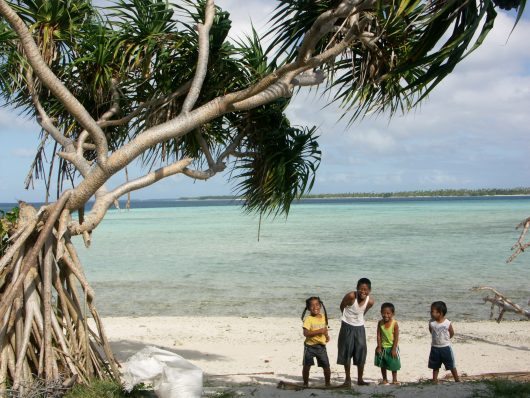
Tuvalu is an independent island country consisting of nine islands in the South Pacific. As one of the smallest countries in the world, Tuvalu’s economy is constrained. This is also affected by the country’s remoteness.

Despite Tuvalu remaining fiscally resilient, the poverty rate is still high. The small economy does not allow room to grow and the country has few exports, meaning that Tuvalu relies almost entirely on foreign aid. As of 2015, about 89.2 percent of the Growth National Income (GNI) was in foreign humanitarian aid to Tuvalu.

Tuvalu’s primary donor and partner in humanitarian aid is New Zealand. Official visits between Tuvalu and New Zealand began in 2010 and New Zealand created an official partnership in 2015 in order to bring humanitarian aid to Tuvalu. However, New Zealand has been helping fund Tuvalu since the 1980s. In 1987, New Zealand, Australia and the United Kingdom created the Tuvalu Trust Fund, an international fund dedicated to benefitting Tuvalu. The goal of the fund is to help Tuvalu reach financial autonomy.

New Zealand has continued to support and send humanitarian aid to Tuvalu, especially after Tuvalu joined the United Nations in 2000. The New Zealand Ministry of Foreign Affairs and Trade introduced and started implementing the New Zealand Aid Programme 2015-2019 in Tuvalu in early 2015. The program’s goal is to increase economic growth and create a sustainable economy, reduce poverty and increase Tuvalu’s resilience to natural disasters. Through the implementation of this program, New Zealand and Tuvalu have signed a Joint Commitment for Development.

The majority of the program’s funding goes toward activities and initiatives in Tuvalu. As of 2017, New Zealand’s Ministry of Foreign Affairs and Trade has spent $9 million in humanitarian aid to Tuvalu. Though the program is still new, improvements in Tuvalu have already begun. The Tuvalu Trust Fund has successfully adopted a new investment strategy which has resulted in economic growth. This has strengthened economic governance, returning just under $9 million to the government.

Furthermore, Tuvalu has seen a strengthening of resilience against natural disasters, specifically in Tuvalu’s capital Funafuti. The program has also funded the fixing of the Tagako Breach, a thin strip of land on the island of Funafuti. This has improved Tuvalu’s stability during cyclones and storms.

Though New Zealand has already helped create some stability and relief in Tuvalu, it is still working to make a more sustainable and prosperous economy in the country. The Ministry of Foreign Affairs and Trade, through the New Zealand Aid Program, offers scholarships to Tuvaluan scholars. The applications open in early 2018 and studying will begin in early 2019. The goal of these scholarships is to help young Tuvaluans get an education they can use to improve the development of their country.

New Zealand will also fund and implement the Tuvalu Borrow Pits Rehabilitation Project in 2018. Based mainly in Funafuti, the aim of the project is to improve the living standards, sanitation services and access to clean water. The project will fill up 10 borrow pits on the Funafuti Atoll. The project has already been approved.

The humanitarian aid to Tuvalu from New Zealand seems small but has already started making a difference. New Zealand has laid the groundwork for Tuvalu to continue to improve for years to come.

– Courtney Wallace

Photo: Flickr

February 4, 2018
https://borgenproject.org/wp-content/uploads/borgen-project-logo.svg 0 0 Borgen Project https://borgenproject.org/wp-content/uploads/borgen-project-logo.svg Borgen Project2018-02-04 01:30:592024-05-29 22:39:07Success of Humanitarian Aid to Tuvalu Slowly Brings Sustainability
Aid, Global Poverty, Humanitarian Aid

The Success of Humanitarian Aid to the Marshall Islands

humanitarian aid to the marshall islands

Like most of the islands in the Pacific, the Marshall Islands have a history of natural disasters and their susceptibility is increasing due to climate change. These have ranged from floods and cyclones to tsunamis and earthquakes, and all of them have caused destruction in the nation. The United States has been fairly diligent about sending humanitarian aid to the Marshall Islands for relief from a number of natural disasters and for the prevention of future destruction.

The Marshall Islands were a U.S. territory until 1986 when it gained independence. However, the nation is under a Compact of Free Association, which ensures that the United States provides economic assistance and other benefits to the Marshall Islands. Some of this funding does provide for disaster response programs, but humanitarian aid to the country is not limited to this.

Humanitarian aid to the Marshall Islands from the U.S. has been fairly consistent over time, and a number of government agencies run programs and provide assistance to the nation. There have been many programs funded by U.S. agencies that have been quite successful. In 2013, the United States sent $5.1 million in drought assistance to the Marshall Islands after President Obama declared the drought a disaster, opening the way for emergency funding. This is an example of the U.S. providing disaster relief to the nation, but it also does a fair amount in the way of disaster prevention and response.

The United States funded the Climate Adaptation, Disaster Risk Reduction and Education program in the Marshall Islands. This program educated 500 children and 5,000 community members on effective disaster response and evacuation. The U.S. also provided humanitarian aid to the Marshall Islands for the development of the Pre-Propositioning Emergency Relief Commodities project. This project facilitated the placement of emergency relief supplies in a number of locations throughout the country. Both these projects helped to improve response times and disaster preparedness in the Marshall Islands.

As climate change worsens, so does the amount of aid the Marshall Islands and the other Pacific islands will need. Disaster response needs to be continually improved, and even then, no one can predict every catastrophe. The United States has done a lot to provide humanitarian aid to the Marshall Islands and this trend will likely continue, as it has many benefits for the U.S.

– Liyanga de Silva

Photo: Wikimedia Commons

February 3, 2018
https://borgenproject.org/wp-content/uploads/borgen-project-logo.svg 0 0 Borgen Project https://borgenproject.org/wp-content/uploads/borgen-project-logo.svg Borgen Project2018-02-03 07:30:542024-05-29 22:39:06The Success of Humanitarian Aid to the Marshall Islands
Aid, Foreign Aid, Global Poverty

How the US Benefits from Foreign Aid to South Africa

US Benefits from Foreign Aid to South Africa
One of the crucial details to understand about foreign aid is that it benefits America as well foreign countries. Over the years, America has done a lot to contribute to struggling countries and provide them with the life-saving help and supplies they would not have otherwise.

Through this progress, America has seen benefits in disease control and the prevention of pandemics, country stabilization and national security. Consequently, foreign aid to different countries and regions across the world benefits not only the foreign countries the aid is going to but also America itself. To narrow the topic down, here are a few instances of specific U.S. benefits from foreign aid to South Africa.

Humanitarian Benefits

By aiding countries in need, America upkeeps its values and leadership by responding vigorously in times of distress. For example, after the Horn of Africa drought and consequential famine in the year 2011, the U.S. provided $740 million to Kenya, Ethiopia, Somalia, South Sudan and Sudan. America ensured its reliability as a strong and generous country by providing aid to these struggling foreign areas.

National Security Benefits

National security interests are yet another way the U.S. benefits from foreign aid to South Africa. Terrorist activities have taken place close to South Africa, including Somalia and Mali, and there has been a potential danger of Boko Haram on Nigeria, which is one of the United States’ main trading partners in Africa. Due to this, the U.S. has essential national security interests existing in that region.

The State Department handles U.S. national security interests by providing funding for counterterrorism partnerships among the U.S. and African militaries, in addition to providing training for African soldiers to practice peacekeeping missions in countries such as Somalia, Sudan and the Democratic Republic of the Congo and Liberia. So, providing such aid enables America to keep peace within their counterterrorism partnerships and as a result, helps protect America.

Economic Partnership Benefits

Economic trade is an important part of any country’s development. According to Brookings, Sub-Saharan Africa has substantial economic potential. From 2001-2010, six of the economies that proved to be growing the fastest were in this African region. This has opened up trading opportunities between the U.S. and Africa.

There are numerous U.S. benefits from foreign aid to South Africa and other struggling countries. By giving these countries assistance in times of distress, the U.S. has directly gained from such partnerships. Stimulating South Africa’s development provides trading opportunities, national security, humanitarian and other benefits to America.

Continuing U.S. Benefits from Foreign Aid to South Africa

Without foreign aid from America, places like South Africa would have little ability to grow, develop and become self-sufficient. It is imperative to understand the benefits that come directly to America from such foreign aid to ensure that efforts abroad continue. Foreign aid has proved to be an essential part of America’s diplomatic and security relationships, and the U.S. truly does benefit from such assistance.

– McCall Robison

Photo: Flickr

February 1, 2018
https://borgenproject.org/wp-content/uploads/borgen-project-logo.svg 0 0 Borgen Project https://borgenproject.org/wp-content/uploads/borgen-project-logo.svg Borgen Project2018-02-01 01:30:402019-12-18 05:48:12How the US Benefits from Foreign Aid to South Africa
Aid, Children, Global Poverty

Aid for Children Working in Bolivia

Bolivia’s working age is the lowest in the world. At 10 years old, children can legally work for themselves, their families and for others. Better education and a change in cultural attitude is the only way to provide aid for children working in Bolivia.

Bolivia’s Child and Adolescent Code was passed in 2014. It lowered the legal working age to 10 in an effort to prevent the exploitation of many children already working in Bolivia. But with 850,000 child laborers in Bolivia and only 78 inspectors, it is difficult to enforce regulations. Many children work illegally starting at the age of five.

Bolivian lawmakers wanted to set the minimum working age at 14, which led to riots as shoe shiners, bricklayers, street vendors and other child workers clashed with police in 2013.

The law passed with support from Bolivian President Evo Morales, who said that working children develop “social awareness.” President Morales worked with his father at age six, herding llamas.

Aid for children working in Bolivia cannot come from regulations alone, as they are too lax and purport a vicious cycle of poverty. Working from a young age threatens their health, exposes them to violence and reinforces integral cycles of poverty. As it stands, 60 percent of children working in Bolivia drop out of school in order to continue working.

Four years after the law passed, many fear that the law is failing to protect Bolivia’s working children. Children and their families must get approval from the government to work; however, only about 30 percent of applications are dealt with. Many ignore the law and put children to work unsupervised.

Bolivia has 8.3 million citizens and 59 percent of the population lives in poverty. Culture and need both contribute to child labor. It is seen as normal in Andean culture for children to help support the family. Therefore, aid for children working in Bolivia must extend from a change in social values and political priorities.

Child labor deprives children of their right to go to school, but Bolivian children need money to buy books. They also need to feed their younger siblings and help their family pay the bills. Poverty levels have decreased in Bolivia over the last few years, but children still play a key role in keeping many families afloat.

Aid for children working in Bolivia comes only in the form of regulations and unions that aim to prevent the exploitation of workers. The Union of Child and Adolescent Workers of Bolivia is an organization of young workers that have united to defend themselves from exploitation. They supported Bolivia’s Child and Adolescent Code and do not want the cessation of child labor in Bolivia, but the improvement of its regulation. By fighting for better protection for child workers, groups like this can ensure fair treatment of children in the short term while working to change the cultural norms in the long term.

– Sam Bramlett

Photo: Flickr

January 31, 2018
https://borgenproject.org/wp-content/uploads/borgen-project-logo.svg 0 0 Borgen Project https://borgenproject.org/wp-content/uploads/borgen-project-logo.svg Borgen Project2018-01-31 01:30:482024-05-29 22:38:56Aid for Children Working in Bolivia
Page 38 of 65«‹3637383940›»

Get Smarter

  • Global Poverty 101
  • Global Poverty… The Good News
  • Global Poverty & U.S. Jobs
  • Global Poverty and National Security
  • Innovative Solutions to Poverty
  • Global Poverty & Aid FAQ’s
Search Search

Take Action

  • Call Congress
  • Email Congress
  • Donate
  • 30 Ways to Help
  • Volunteer Ops
  • Internships
  • Courses & Certificates
  • The Podcast
Borgen Project

“The Borgen Project is an incredible nonprofit organization that is addressing poverty and hunger and working towards ending them.”

-The Huffington Post

Inside The Borgen Project

  • Contact
  • About
  • Financials
  • President
  • Board of Directors
  • Board of Advisors

International Links

  • UK Email Parliament
  • UK Donate
  • Canada Email Parliament

Get Smarter

  • Global Poverty 101
  • Global Poverty… The Good News
  • Global Poverty & U.S. Jobs
  • Global Poverty and National Security
  • Innovative Solutions to Poverty
  • Global Poverty & Aid FAQ’s

Ways to Help

  • Call Congress
  • Email Congress
  • Donate
  • 30 Ways to Help
  • Volunteer Ops
  • Internships
  • Courses & Certificates
  • The Podcast
Scroll to top Scroll to top Scroll to top