• Link to X
  • Link to Facebook
  • Link to Instagram
  • Link to TikTok
  • Link to Youtube
  • About
    • About Us
      • President
      • Board of Directors
      • Board of Advisors
      • Financials
      • Our Methodology
      • Success Tracker
      • Contact
  • Act Now
    • 30 Ways to Help
      • Email Congress
      • Call Congress
      • Volunteer
      • Courses & Certificates
      • Be a Donor
    • Internships
      • In-Office Internships
      • Remote Internships
    • Legislation
      • Politics 101
  • The Blog
  • The Podcast
  • Magazine
  • Donate
  • Click to open the search input field Click to open the search input field Search
  • Menu Menu

Archive for category: Aid

Aid, Global Poverty, Humanitarian Aid

The Success of Humanitarian Aid to The Gambia

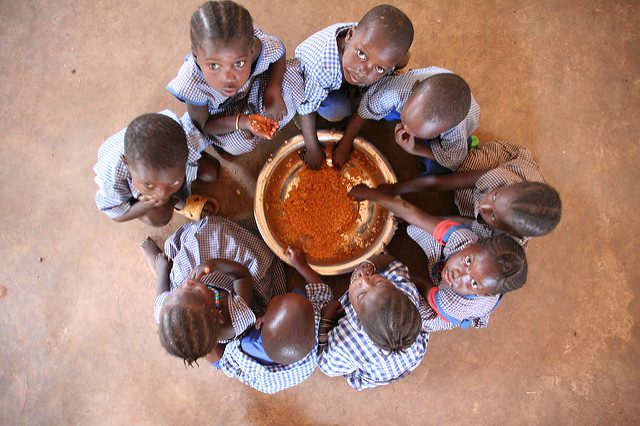
Humanitarian Aid to The GambiaThe Gambia occupies a small portion of West Africa and surrounds the Gambia River. Although only encompassing 4,491 total square miles, The Gambia is home to a population of almost 2.1 million. The success of humanitarian aid to The Gambia has only improved the lives of its citizens. These are three organizations that have worked to provide this aid.

Project Gambia

Project Gambia has been working since 2010 to bring volunteers to The Gambia and better the lives of its citizens, mainly in the Gunjur region of the country. The organization is based out of the United Kingdom. Their projects do not address one specific issue but cover a wide variety of societal needs.

Related to health, the organization has trained 420 people in emergency first aid as well as providing them with fully stocked first aid kits and reference books. In addition, the organization worked to refurbish a community health center with supplies, furniture and health information. They have also specifically addressed the problem of malaria by organizing a malaria awareness event, attended by 200 community members, and created a short film to raise awareness about malaria in the U.K.

In relation to general well-being, they have also built four wells and provided supplies for a women’s garden plot. The organization also refurbished two local schools, including playgrounds with newly planted trees. They have also done work in the U.K., such as collecting over 20 tons of recycled goods that they then shared within Gambian communities.

Foundation Humanitarian Aid Gambia (FHAG)

The Foundation Humanitarian Aid Gambia was founded in 1996 by a couple from the Netherlands who added a Gambia-based board in 2003. Their work has been focused on specific projects revolving around family and social issues.

The FHAG Orphan Project is their largest undertaking. The project involves finding safe foster families for orphaned children but also works to ensure that orphans receive the same opportunities as other children in their area. This includes ensuring food security, housing and education for orphans in The Gambia. One beneficiary of this project was able to earn a bachelor’s degree in agriculture with their help and now volunteers with the organization to repay them. The foundation still does work in health and education in addition to this project, including donating 75 desktop computers to the Ministry of Basic and Secondary Education.

Power Up Gambia

Power Up Gambia (PUG) specifically focuses on health in The Gambia, but in a unique way. They work with the Ministry of Health to bring electricity to medical centers with solar power. This humanitarian aid to The Gambia not only provides light but also life-saving water, heat and refrigeration for medication.

Power Up Gambia has brought electricity to 23 hospitals and clinics so far. The Gambia has over 60 health clinics in rural communities that provide healthcare to farmers, but most do not have access to electricity. PUG has partnered with We Care Solar to bring 58 portable solar power kits to these locations, which have been crucial during nighttime health emergencies. PUG also keeps spare parts for these kits on hand and trains Gambian technicians to complete any potential repairs. These technicians are trained at the Gambia Technical Training Institute where Power Up Gambia has implemented a curriculum on solar energy and solar technology to ensure the sustainability of the health centers the organization has provided power for.

The success of humanitarian aid to The Gambia provides a very bright future for the country. With the help of these organizations and others, the Gambian people’s lives will only continue to improve and grow.

– Megan Burtis

Photo: Flickr

January 22, 2018
https://borgenproject.org/wp-content/uploads/borgen-project-logo.svg 0 0 Borgen Project https://borgenproject.org/wp-content/uploads/borgen-project-logo.svg Borgen Project2018-01-22 01:30:042024-06-05 23:55:36The Success of Humanitarian Aid to The Gambia
Aid, Global Poverty, Humanitarian Aid

Humanitarian Aid to Morocco Contributes to Counterterrorism Efforts

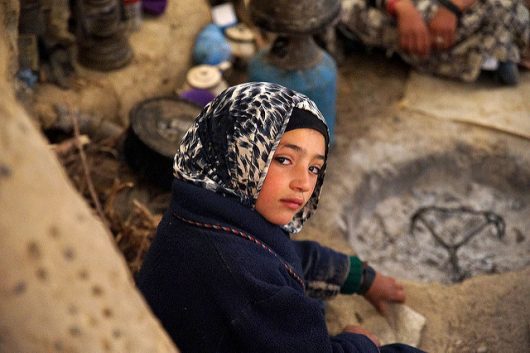
Humanitarian Aid to Morocco Contributes to Counterterrorism Efforts
As the U.S. continues to send humanitarian aid to Morocco, the Moroccan government works to protect its country from terrorist threats.

“Morocco has a comprehensive counterterrorism strategy that includes vigilant security measures, regional and international cooperation, and counter-radicalization policies,” the U.S. Department of State’s Bureau of Counterterrorism reported online. A 2013 report revealed several steps Morocco has taken that have successfully led to the dismantling of terroristic plots.

A founding member of the Global Counterterrorism Forum (GCTF), Morocco also participates in the U.S. Department of State’s Antiterrorism Assistance (ATA) program. These preventative efforts and partnership with the U.S. and the U.N. have contributed to the country’s leading role in the fight against terrorism in the Middle East.

“Morocco is number one in its national security, but that’s not the main reason for the safety of our country,” Zakaria Hamzaoui, Moroccan citizen and political advocate, said. “We take great steps to improve the quality of life for all people, especially young people, so that people are satisfied with their freedom.”

Indeed, providing hope and opportunities for the most marginalized population reduces a community’s rates of conversion to extremism. Because a population’s youth remains the most likely demographic to cause unrest, targeting this group through youth programs effectively redirects energy and attention to more positive outlets.

According to the U.S. Department of State’s website, a 2016 study showed that U.S. Agency for International Development (USAID) programs have helped to directly improve the lives of more than 12,000 marginalized, at-risk youth since 2012. These programs include a career development system that increases employability and various civil development initiatives that address the roots of unrest.

USAID has also provided humanitarian aid to Morocco in the form of police training, border security, military funding, women’s empowerment and business development.

These initiatives are not limited to U.S.-funded aid; Kuwait, Saudi Arabia, Qatar and the United Arab Emirates have also contributed humanitarian aid to Morocco in the form of a five-year agreement. This deal, totaling $5 billion in aid, will expire at the end of 2017, and its benefactors intend its use for counterterrorism and economy-building through the promotion of new infrastructure and increased tourism.

By combatting the sources of unrest that lead to the growth of extremist ideologies, Morocco and supporting countries have committed to taking preventative actions that help build the country and strengthen its national security. As a result of these efforts, Morocco remains at the forefront of the counterterrorism fight in the Middle East.

– Francesca Colella

Photo: Flickr

January 20, 2018
https://borgenproject.org/wp-content/uploads/borgen-project-logo.svg 0 0 Borgen Project https://borgenproject.org/wp-content/uploads/borgen-project-logo.svg Borgen Project2018-01-20 01:30:592019-12-26 17:06:42Humanitarian Aid to Morocco Contributes to Counterterrorism Efforts
Aid, Global Poverty, Humanitarian Aid

Addressing the Success of Humanitarian Aid to Romania

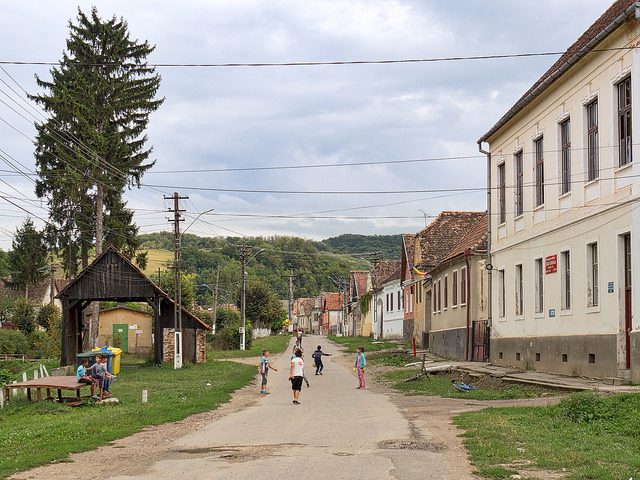
The Success of Humanitarian Aid to RomaniaLocated in the far east of Eastern Europe, Romania borders the Black Sea along with its closest neighbor countries, Bulgaria and Moldova. Romania’s economic stability failed to maintain its status during and after World War II.

The events that occurred after the war had a lasting impact on Romania’s social and economic wealth. It became a communist-ruled country led by the Soviets, leading its society and economy into a crisis that is still taking place today. By exploiting its land and population, the Soviet occupation directly fed Romania’s decline.

Regardless of such a crisis, the country has tried to stay afloat. In 2007, the European Union accepted its request to become part of the E.U. This political move had a great impact on Romania, which became unified with 26 other countries willing to support the nation. The E.U. began taking action for Romania by increasing the number of medical centers and hospitals in the country.

Alongside the E.U., humanitarian aid to Romania has also been a success for the far eastern country’s population. The organization The Family International has been working toward the improvement of Romania, as well as other countries in need, for the past few decades. It has worked to aid Romania by shipping multiple medical sources and equipment to the nation.

The Family International also worked to ship clothes to Romania and provide them to those in need. The success of this NGO was, and is, undeniable. More than a hundred families received attention and care, improving their living situation. The organization has also helped through the distribution of food products, as well as clothes, shoes and other necessities that reached more than 1,500 people.

The organization Charity Baptism Mission has also pushed efforts for humanitarian aid to Romania. It provided the nation with containers full of items meant to help alleviate poverty, such as socks, shoes, blankets, sweaters and more. The same organization has also built the success of humanitarian aid to Romania by helping create 27 homes for homeless children around the world, eight of them in Romania.

The organization Clovek v Tisni has also been a pioneer for humanitarian aid to Romania. Investing in infrastructure, creating job positions and building schools to extend education to more people are just some of the many successful actions taken toward alleviating poverty in the European country.

Romania needs help, undeniably. Despite the various NGOs willing to help the poorest country in the E.U., poverty is still an issue. Thus, donations toward organizations such as Clovek v Tisni can go a long way toward assisting the country. Romania is becoming a better country day by day, and with continued effort, it won’t be long until poverty in the nation is reduced to a thing of the past.

– Paula Gibson

Photo: Flickr

January 20, 2018
https://borgenproject.org/wp-content/uploads/borgen-project-logo.svg 0 0 Borgen Project https://borgenproject.org/wp-content/uploads/borgen-project-logo.svg Borgen Project2018-01-20 01:30:352024-05-29 22:38:43Addressing the Success of Humanitarian Aid to Romania
Aid, Humanitarian Aid

Education Needs Driving Humanitarian Aid to Brazil

Education Needs Driving Humanitarian Aid to BrazilBrazil has the fifth largest population on the globe. Despite its reputation for luxurious resorts, crystal waters and festivals, it still struggles to employ its residents. This is mainly due to a large social gap, where the richest 1 percent control 50 percent of the economy. “Chronic poverty”, or the idea that someone born into poverty has very slim chances of rising above it, is a huge factor. Humanitarian aid to Brazil is set to decrease these numbers.

Poverty in Brazil is attributed mostly to child abandonment. Mothers and fathers are leaving their children in the streets due to low incomes, health problems such as HIV/AIDS, domestic violence and a lack of resources for their other offspring. With the harsh conditions on the streets, few children live to see their 18th year.

There are roughly eight million impoverished children living in Brazil. Due to a lack of education and resources, they resort to street performing, thievery and begging to survive. In many cases, they are taken in by drug lords and other criminals and used as drug runners and prostitutes. With little to no proper nutrition, they are feeding themselves with the refuse found in garbage bins and dumps. Without an education or a family to support them, they will most likely remain unable to become employed.

A lack of education is a terrible dilemma for the 26 percent of the population who live below the poverty line. According to the Brazil Without Misery Program, 4.8 million people are living on no income whatsoever. The program teamed up with Bolsa Familia to give humanitarian aid to Brazil and its people. They provide education and basic nutritional needs to low-income families around the country. The families receive cash benefits, and in return, they must work to keep their children in school and follow the basic health and vaccination program.

The United States is set to donate $815,000 to Brazil this year. The aid is deepening the bond between the two countries and is providing humanitarian aid to Brazil in ways that are desperately needed. The money is planned to be used to deploy new technologies in healthcare and to decrease the AIDS problem spreading among young mothers. This will hopefully lower the numbers of orphaned children, and in the process, will increase the chances of them receiving an education.

With projects around the country working to promote education and healthcare among the youth, the government has started making these needs their focus. It is providing internal humanitarian aid to Brazil itself. Women are receiving better hygiene education, children are receiving healthcare and the government is working to house homeless teens and provide them with schooling.

Politicians are fighting to make civilian welfare a priority. They are working to have the government approach the poor rather than the other way around. Promoting civilian education and welfare has greatly benefited the economy as well as other countries in the process. For instance, the World Food Programme opened an office in Brazil, overseeing school feeding and food security for families and students. The program provides meal assistance for 50 countries, including 47 million children.

Brazil has since seen positive growth in linking public policy with school meals and security. School attendance has increased steadily by 200,000 annually for the past 10 years. Education is becoming a priority for families as well as the country itself.

Brazil has elevated in ranks in recent years, becoming the ninth-largest economy in the world. This shift has led to it becoming a donor country for the first time in 2008, giving 53 percent of its donations to Africa and the rest to surrounding countries in Latin America.

While the country continues to receive assistance and is working tirelessly to promote education with a wider reach, Brazil is spreading its wings and dipping into the donor pool. The world has yet to see the difference this growing country can make.

– Emily Degn

Photo: Flickr

January 19, 2018
https://borgenproject.org/wp-content/uploads/borgen-project-logo.svg 0 0 Borgen Project https://borgenproject.org/wp-content/uploads/borgen-project-logo.svg Borgen Project2018-01-19 07:30:352024-05-29 22:30:19Education Needs Driving Humanitarian Aid to Brazil
Aid, Global Poverty, Hunger

The Top 10 Most Thought-Provoking Quotes About Hunger

top 10 hunger quotes

Globally, around 795 million people lack access to adequate food resources. This equates to approximately one in nine hungry humans who do not have enough to eat. As these quotes about hunger will illustrate, hunger and malnutrition are self-perpetuating issues that affect a person’s mental ability, health, work and productivity. They constitute the world’s greatest public health risk, more pressing than AIDs, malaria and tuberculosis combined.

The good news is that hunger is preventable; the earth produces more than enough food to provide for all of its citizens. The problem lies in food access and apathy from developed nations. Solving world hunger involves investing in smallholder family farmers, healthcare, financial services and increasing women’s access to resources. The following are 10 of the greatest, most thought-provoking quotes about hunger that bring various perspectives to this complex issue.

  1. “If we can conquer space, we can conquer childhood hunger.” –Buzz Aldrin
  2. “It is an eternal obligation toward the human being not to let him suffer from hunger when one has a chance of coming to his assistance.” –Simone Weil
  3. “Every gun that is made, every warship launched, every rocket fired, signifies in the final sense a theft from those who hunger and are not fed, those who are cold and not clothed.” –Dwight D. Eisenhower
  4. “There are people in the world so hungry, that God cannot appear to them except in the form of bread.” –Mahatma Gandhi
  5. “We know that a peaceful world cannot long exist, one-third rich and two-thirds hungry.” –Jimmy Carter
  6. “The war against hunger is truly mankind’s war of liberation.” –John F. Kennedy
  7. “Hunger is not a problem. It is an obscenity. How wonderful it is that nobody need wait a single moment before starting to improve the world.” –Anne Frank
  8. “If you cannot feed a hundred people, then feed just one.” –Mother Teresa
  9. “It is important for people to realize that we can make progress against world hunger, that world hunger is not hopeless. The worst enemy is apathy.” –Reverend David Beckmann
  10. “You pray for the hungry. Then you feed them. This is how prayer works.” –Pope Francis

For anyone moved by these quotes about hunger, there are many ways for individuals to get involved. Advocacy is essential, and contacting representatives is an easy and effective means of citizen involvement. Supporting hunger initiatives and awareness over social media is another simple option. On a local level, communities can provide meals for the hungry among them.

In the last 26 years, the number of hungry people worldwide has fallen by 216 million. With enough public determination, this amount will continue to drop until no one in the world goes to bed hungry.

– Anna Parker

Photo: Flickr

January 18, 2018
https://borgenproject.org/wp-content/uploads/borgen-project-logo.svg 0 0 Borgen Project https://borgenproject.org/wp-content/uploads/borgen-project-logo.svg Borgen Project2018-01-18 01:30:232024-05-29 22:30:15The Top 10 Most Thought-Provoking Quotes About Hunger
Aid, Global Poverty, Humanitarian Aid

The Success of Humanitarian Aid to Togo

humanitarian aid to Togo

In 2005, consecutive food and nutrition crises combined with political violence left Togo crippled as a society and in dire need of basic essentials for survival. Over the next eight years, 10 million people faced food shortages and 1.4 million children were at risk for malnutrition.

Despite the conditions leaving the country in dire straits, humanitarian aid to Togo has been present both within its borders and beyond. More than 20,000 Togolese fled after the presidential election in 2005 to the nearby country of Benin to take refuge. Apportioned under the responsibility of Commissioner Louis Michel, €1.05 million was given to refugees through the Humanitarian Aid department of the European Union. Meeting refugees’ needs in terms of food aid, temporary shelter, primary health care and access to water, sanitation and essential items was the focus of the commission’s humanitarian aid. This also covered expenses for any refugee who wanted to return home to Togo, in accordance with the policy of voluntary return and international rules.

During the following years, Togo received various assistance from multiple countries. In 2012, €174 million was given to the emergency humanitarian response from the European Commission. In 2016, the United States gave $13.5 million in aid to develop the health, security and education spheres. Through the Humanitarian Assistance Program and the Department of Defense, schools and clinics receive funding and an HIV/AIDS prevention program is in place, as well as several civil engineering projects.

In 2017, AFRICOM was the only construction aid program in Togo. AFRICOM, in partner with the U.S. Army Corps Engineers European District, has $1.8 million in recent construction and renovation projects in progress. Humanitarian aid to Togo has built schools, medical clinics and garbage depots.

Although still recovering from issues in the past, humanitarian aid to Togo is still effective. With time and an increase of aid, true normalcy will exist in Togo, but currently the citizens are grateful for what they have. “Only God can learn the joy I have in my heart. We were waiting a long time for this project,” said village chief Togbui Yegbe Kokou Kini from Gblainvie, Togo. His statement exemplifies the success of humanitarian aid across Togo.

– Tara Jackson

Photo: Flickr

January 17, 2018
https://borgenproject.org/wp-content/uploads/borgen-project-logo.svg 0 0 Borgen Project https://borgenproject.org/wp-content/uploads/borgen-project-logo.svg Borgen Project2018-01-17 01:30:272024-05-29 22:30:12The Success of Humanitarian Aid to Togo
Aid, Global Poverty, Humanitarian Aid

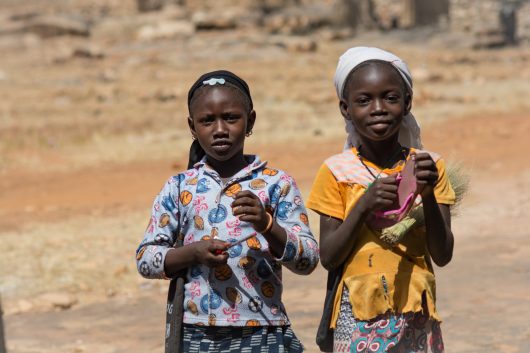
Humanitarian Aid to Mali

Humanitarian Aid to MaliMali is a landlocked country of 17 million people located in West Africa. It is a country in which poverty and disease are commonplace, and only 33 percent of people are literate. As with many of its West African neighbors, Mali experiences frequent droughts and violence and Malians rely heavily on humanitarian efforts. In 2016, humanitarian aid to Mali totaled $354 million. Largely in response to the conflict in the northern parts of the country, these funds were expected to influence 127 projects and reach more than one million Malians.

The Bamako Agreement

The 2016 Mali Humanitarian Response Plan followed a peace and reconciliation agreement the year prior, otherwise known as the Bamako Agreement. The Bamako Agreement was a response to the continued violence from a 2012 uprising of Tuareg-led rebels. It sought to bring peace between separatists and Mali loyalists and to provide better representation in government affairs.

However, due to limited funding, the Bamako Agreement did not immediately live up to its potential. One of the most negatively affected areas was Mali’s healthcare sector.  Mali is a country in which only 24 percent of citizens have access to improved sanitation and 6,000 died from HIV/AIDS in 2016. As a result, access to proper healthcare is a major concern. Underfunding following the Bamako Agreement was reflected by health concerns such as increased infant mortality and the spread of disease.

Not willing to accept a failed Bamako Agreement, the 2016 allocation of funds sought to improve humanitarian aid to Mali. This was done by allocating funds appropriately to the most urgent needs such as health, water and nutrition. It also created a more coordinated success strategy between humanitarian groups.

Humanitarian Aid to Mali: Moving Forward

While the situation in Mali remains perilous, there are encouraging signs of a turnaround. The country is stabilized compared to the time before the Bamako Agreement. The $354 million dispersed in a scrupulous manner will have lasting benefits for the people of Mali.

By further coordinating humanitarian aid to Mali, organizations such as the World Health Organization (WHO) have the resources to make a difference. The WHO is seeking additional funds from the U.S. to improve health information systems, increase access to health clinics and create better responses to calamities. The need is clear and the U.S. should increase aid efforts to better an improving, but still volatile, situation in Mali.

– Eric Paulsen

Photo: Flickr

January 15, 2018
https://borgenproject.org/wp-content/uploads/borgen-project-logo.svg 0 0 Borgen Project https://borgenproject.org/wp-content/uploads/borgen-project-logo.svg Borgen Project2018-01-15 07:30:012024-06-07 05:07:52Humanitarian Aid to Mali
Aid, Global Poverty, Humanitarian Aid

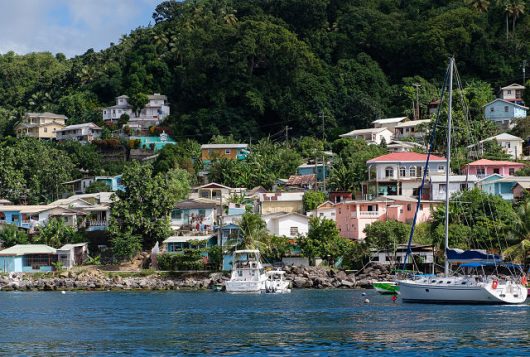
An Island’s Biggest Advocate: EU Provides Humanitarian Aid to St. Lucia

humanitarian aid to st. lucia
The European Union (EU) currently stands as the largest supporter of humanitarian aid to St. Lucia. In 1979, the same year as St. Lucia’s independence, a formal relationship between the two entities was established. The 11th European Development Fund (EDF) National Indicative Programme articulates the programming framework that will facilitate St. Lucia-EU co-operation from 2014 to 2020. The EDF’s involvement with St. Lucia focuses on employment generation via private sector development.

The EU’s Humanitarian Aid Department, ECHO, was present when St. Lucia needed aid most. After Hurricane Tomas in 2010, ECHO responded with emergency and post-emergency aid to assist with restoring the island. In July 2011, the U.S. stepped in and St. Lucia received $17 million from the Climate Investment Fund (CIF) to build it’s natural climate resilience to gain inclusion from the Caribbean Regional Program. Vulnerable, under-developed countries are normally given top priority by the CIF’s Strategic Climate Fund, and this trend has come to include this small island of St. Lucia.

In January 2014 after a Christmas Eve storm, Britain gave St. Lucia 1 million Eastern Caribbean dollars for vital emergency humanitarian aid support to help with mass amounts of fatalities and wreckage. In March, India donated $500,000 of humanitarian aid to St. Lucia to help with the damage left behind from the Christmas Eve rains. These efforts totaled about $100 million dollars — a significant amount of aid for the recovering island nation.

Later that year, St. Lucia was one of the 10 Eastern Caribbean islands to receive a portion of the €80 million in development co-operation aid. In 2016, the main focus of the EU in St. Lucia was the construction of a new hospital, for which they contributed €37 million.

The goal of EU co-operation is to enhance the quality of life of the people in the beneficiary countries through “targeted and sustainable programmes.” St. Lucia is one of the fortunate countries to be a part of the EU agenda and to really benefit from their efforts. Humanitarian aid to St. Lucia may not be given by many, but it’s at least consistent by one.

– Tara Jackson

Photo: Flickr

January 12, 2018
https://borgenproject.org/wp-content/uploads/borgen-project-logo.svg 0 0 Borgen Project https://borgenproject.org/wp-content/uploads/borgen-project-logo.svg Borgen Project2018-01-12 07:19:482024-05-29 22:30:14An Island’s Biggest Advocate: EU Provides Humanitarian Aid to St. Lucia
Aid, Global Poverty, Humanitarian Aid

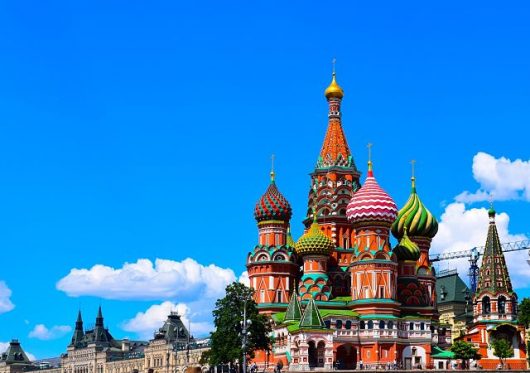
Discussing the Success of Humanitarian Aid to Russia

Humanitarian Aid to Russia
The Russian economy has been something of a roller coaster over the course of the past three decades. The rapid economic transformation after the fall of the Soviet Union is responsible for the economic hardship the country endured in its aftermath, and resulted in many countries providing humanitarian aid to Russia over the past thirty years.

While still not without its problems, Russia has gone from a recipient of foreign aid to a major donor at the international level. Its story is well worth examining, as it demonstrates that humanitarian aid to Russia has been largely successful, that countries do “graduate” from foreign aid and also that former recipients of foreign aid can put themselves in a position to turn around and become donors, benefitting other developing nations while simultaneously advancing their own interests.

The Soviet Union was a major donor of foreign aid, providing it to many countries. After its collapse, however, Russia endured years of economic hardship. Throughout the 1990s and early 2000s, humanitarian aid to Russia in various forms was regularly provided by the international community. Russia continues to receive small amounts of foreign aid from donors like the United States, although this aid has transitioned in recent years from being mostly humanitarian in nature and development-oriented to supporting governance and international law enforcement efforts.

Just last year, the United Kingdom elected to stop providing humanitarian aid to Russia out of a desire to aid “only the poorest people in the poorest countries.” This indicates that, from the point of view of the U.K., Russia has “graduated” from foreign aid, despite the widespread belief that doing so is impossible for a developing country.

While some would debate whether Russia specifically is no longer in need of aid, it is accepted that the country no longer needs as much as it once did. This would imply that foreign aid played a role in Russia’s return to economic self-sufficiency. Without debating specifics, Russia is an excellent example of how there is a return on investment when providing foreign aid.

Over the past several years, Russia has even begun providing foreign aid to other developing countries. While its foreign aid budget is still the lowest of the G8 countries, it is by no means insignificant, and it seldom decreases.

While Russia prefers to channel most of its aid through multilateral organizations, the Russian government has also indicated that it would like to expand its capacity for foreign aid and create a dedicated agency to oversee distribution in order to enhance Russia’s international image. Most of Russia’s aid money is put toward food security and vaccine distribution programs, which means that humanitarian aid to Russia has indirectly resulted in aid being provided to other countries, meaning that the return on investment far outstrips the amount initially provided.

The story of Russia is an excellent example of humanitarian aid that was a resounding success. Not only has Russia become capable of meeting its basic needs on its own, but it has now become a donor to other countries. While the situation in the nation is not perfect, Russia still serves as an excellent example of why foreign aid is worth every penny.

– Michaela Downey

Photo: Pixabay

January 11, 2018
https://borgenproject.org/wp-content/uploads/borgen-project-logo.svg 0 0 Borgen Project https://borgenproject.org/wp-content/uploads/borgen-project-logo.svg Borgen Project2018-01-11 07:30:142024-06-05 23:55:36Discussing the Success of Humanitarian Aid to Russia
Aid, Global Poverty, Humanitarian Aid

Humanitarian Aid to Zambia Saves Mothers and Infants

Humanitarian Aid to ZambiaDespite economic growth and massive Chinese investment, two-thirds of Zambia’s population lives in poverty. Expanding humanitarian aid to Zambia may reduce its poverty crisis.

Zambia has undergone rapid economic growth over the last decade as Africa’s second-largest copper producer, but the country’s dependence on copper has made it prone to falling commodity prices. Zambia’s economy is also unable to keep up with its immense population of 15.972 million. Zambia has one of the world’s fastest-growing populations with an anticipated tripling of its population by 2025.

Its total fertility rate has decreased by less than 1.5 children per woman over the last 30 years. On average, a Zambian woman will give birth to six children. Zambia’s high fertility rate derives from its lack of access to education, employment and family planning services. Its youthful demographic also plays a role in its high fertility rates; 66 percent of Zambians are under the age of 24.

The Mother and Baby Care II Project emphasizes humanitarian aid to Zambia. The project’s duration is January 2015 to December 2017 and is a follow-up to the first Mother and Baby Care Project established in 2013 and 2014. The project focuses on healthcare and improving mother and baby care in the Mongo region of the Western Province.

The Western Province is one of Zambia’s least developed regions. It faces one of the world’s highest mortality rates among mothers, newborns and children under five years old. High mortality rates stem from limited healthcare knowledge, poorly equipped medical facilities and a lack of qualified medical personnel.

Objectives of The Mother and Baby Care II Project include:

  • Support the Lewanika School of Midwifery
  • Introduce the registered nursing program
  • Ensure specialized prenatal, labor, postnatal and neonatal care
  • Equip labor piles with a new portable ultrasound
  • Promote transport for women in crisis situations
  • Establish savings support programs and food banks
  • Focus on family income security and public information campaigns

The Mother and Baby Care II Project promotes human welfare and provides basic healthcare needs to a poverty-stricken region. Projects that focus on humanitarian aid to Zambia may further the country’s development and reduce mortality rates among women and children.

– Carolyn Gibson

Photo: Flickr

January 11, 2018
https://borgenproject.org/wp-content/uploads/borgen-project-logo.svg 0 0 Borgen Project https://borgenproject.org/wp-content/uploads/borgen-project-logo.svg Borgen Project2018-01-11 01:30:002024-05-29 22:29:58Humanitarian Aid to Zambia Saves Mothers and Infants
Page 41 of 65«‹3940414243›»

Get Smarter

  • Global Poverty 101
  • Global Poverty… The Good News
  • Global Poverty & U.S. Jobs
  • Global Poverty and National Security
  • Innovative Solutions to Poverty
  • Global Poverty & Aid FAQ’s
Search Search

Take Action

  • Call Congress
  • Email Congress
  • Donate
  • 30 Ways to Help
  • Volunteer Ops
  • Internships
  • Courses & Certificates
  • The Podcast
Borgen Project

“The Borgen Project is an incredible nonprofit organization that is addressing poverty and hunger and working towards ending them.”

-The Huffington Post

Inside The Borgen Project

  • Contact
  • About
  • Financials
  • President
  • Board of Directors
  • Board of Advisors

International Links

  • UK Email Parliament
  • UK Donate
  • Canada Email Parliament

Get Smarter

  • Global Poverty 101
  • Global Poverty… The Good News
  • Global Poverty & U.S. Jobs
  • Global Poverty and National Security
  • Innovative Solutions to Poverty
  • Global Poverty & Aid FAQ’s

Ways to Help

  • Call Congress
  • Email Congress
  • Donate
  • 30 Ways to Help
  • Volunteer Ops
  • Internships
  • Courses & Certificates
  • The Podcast
Scroll to top Scroll to top Scroll to top