• Link to X
  • Link to Facebook
  • Link to Instagram
  • Link to TikTok
  • Link to Youtube
  • About
    • About Us
      • President
      • Board of Directors
      • Board of Advisors
      • Financials
      • Our Methodology
      • Success Tracker
      • Contact
  • Act Now
    • 30 Ways to Help
      • Email Congress
      • Call Congress
      • Volunteer
      • Courses & Certificates
      • Be a Donor
    • Internships
      • In-Office Internships
      • Remote Internships
    • Legislation
      • Politics 101
  • The Blog
  • The Podcast
  • Magazine
  • Donate
  • Click to open the search input field Click to open the search input field Search
  • Menu Menu

Archive for category: Aid

Aid, Global Poverty, Humanitarian Aid

Humanitarian Aid to Guinea Improves Livelihoods of All Guineans

Humanitarian Aid to GuineaA West African country bordering the North Atlantic Ocean that has been called potentially one of Africa’s richest, Guinea is a mineral-rich state with a population that is among the poorest in Africa. Humanitarian aid to Guinea is an important step in improving the livelihoods of Guineans.
Situated between Guinea-Bissau and Sierra Leone, Guinea is home to about a third of the world’s bauxite reserves which have not been smelted and refined into aluminum largely owing to the political instability in the country. Chronic underdevelopment has also angered many locals who have, in desperation, disrupted operations at the country’s mines to bring attention to their plight.

According to the U.S. State Department’s Office of Investment Affairs, Guinea suffers from “persistent corruption and fiscal management.” However, the country is not only resource-rich but also filled with economic potentials in the energy and the agricultural sector.

With over four billion tons of untapped high-grade iron ore, abundant rainfall, gold and diamond reserves, off-shore oil reserves and indeterminate amounts of uranium, Guinea has many economic drivers. The country’s natural geography also makes it very hospitable to renewable energy sources such as hydroelectric dams and turbines.

In May 2015, the 240 megawatt Kaleta Dam project was built after a $526 million investment by China. Kaleta more than doubled the country’s electricity supply and encouraged the government to seek aid for more energy infrastructure, mainly in the solar and hydroelectric sector.

According to USAID, Guinea suffered heavy losses to its economical revenue and outlook in the wake of the Ebola outbreak. Many widespread preventable and treatable diseases, such as malaria, prevail in the country and infant and maternal mortality rates remain very high. Furthermore, the agricultural sector is not able to completely function to provide the much-needed source of income and revenue for the people and the government.

The success of humanitarian aid to Guinea is underlined by USAID’s work in the country. In March 2015, USAID provided more than $7 million through the United Nations World Food Programme (WFP) to improve food security and nutrition as a means to combat poverty and hunger in Guinea.

This culminated in WFP making the largest-ever purchase of locally-produced rice, which supported the local agricultural sector and provided children with meals in hundreds of schools across the country. Furthermore, farmers were educated about the business and contracting process, including working with development partners, and were encouraged to establish relationships with banks to obtain credits and rates they could use to sustain their farms.

It has been said that Guinea’s entire population of 12 million people is at risk of malaria. Malaria control efforts and prevention policies are underway in the country, but the damage is ongoing. According to the Ministry of Health, most of the hospitalizations, consultations and deaths in Guinea are a result of malaria.

Aid organizations such as Plan International have been working for decades to provide humanitarian aid to Guinea. Plan International improves children’s access to health, education and sanitation. This is done by ensuring that sustainable, quality education is provided to all children. Children are afforded access to clean water and sanitation facilities. Furthermore, a safe environment designed to empower children is nurtured.

The International Organization for Migration (IOM) Guinea actively helps vulnerable people and migrants to resettle in other countries by advocating on their behalf and lending support at every step of the resettlement process, including performing medical health assessments on behalf of the resettlement countries. Funding for IOM Guinea is mainly provided by the same governments of resettlement countries, and the international community can and should support the efforts of these countries.

With more humanitarian aid to Guinea, this resource-rich country certainly carries the potential to infuse its wealth of resources into the livelihoods of all Guineans.

– Mohammed Khalid

Photo: Flickr

February 14, 2018
https://borgenproject.org/wp-content/uploads/borgen-project-logo.svg 0 0 Borgen Project https://borgenproject.org/wp-content/uploads/borgen-project-logo.svg Borgen Project2018-02-14 07:30:172024-05-24 23:51:40Humanitarian Aid to Guinea Improves Livelihoods of All Guineans
Aid, Global Poverty, Humanitarian Aid

The Varying Success of China’s Humanitarian Aid to Suriname

humanitarian aid to Suriname
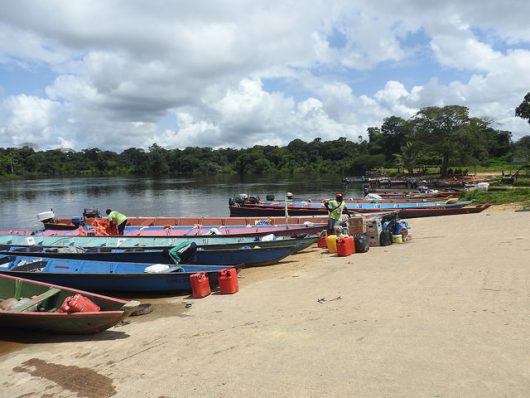
Suriname, officially the Republic of Suriname, is a small country on the northeastern coast of South America. Originally a Dutch colony, Suriname gained independence in 1975. Though Suriname is not a widely prosperous country, its economy has recently endured a variety of difficulties.


The Netherlands

In 2016, Suriname’s Gross Domestic Product (GDP) was more than $3.6 billion, the unemployment rate was slightly less than 10 percent and the poverty rate was 47 percent.

Despite gaining its independence, the Kingdom of the Netherlands was Suriname’s heaviest financial donor, sending years worth of humanitarian aid to Suriname. In 2012, the Netherlands suspended all aid to Suriname — approximately 26 million — two years after the election of President Desi Bouterse.


The European Commission

The European Commision has also approved emergency funding for Suriname over the years, especially in the case of natural disasters. Suriname is prone to severe flooding, which can wipe out homes and businesses, and increase unemployment and poverty. Usually, this aid is geared toward the population’s health, hygiene and sanitation, food and water.


People’s Republic of China

However, shortly after the Kingdom of the Netherlands completely pulled their funding to Suriname, the People’s Republic of China (PRC) increased its humanitarian aid to the country.

Since the immigration boom to Suriname in the 1990s, China has slowly been giving humanitarian relief to the South American country; in 2011, the Chinese government gifted Suriname with a new Foreign Ministry headquarters.

Also in 2012, China gave Suriname a grant of over 4 million to further the cooperation between both countries; however, it is unclear where this money is going. Since 2009, the Chinese embassy stated that development projects in Surinam — such as help with low-income housing, transportation, seaports and network television — are underway, despite any major initiatives.


Investment and Infrastructure

Within the last 10 years, China has set up various companies, businesses, shops, casinos and restaurants throughout Suriname. While this has vastly helped decrease unemployment, the poverty rate is still high, with nearly half the country living below the poverty line. In exchange for the land, China continues to give Suriname grants, buildings and advancements for the military.


Health-Related Aid

But not all of China’s aid is geared toward infrastructure and employment. In 2016, China provided Suriname with $1 million in humanitarian aid specifically geared toward Zika-related assistance. This included medical supplies and funding for medication and hospitalization for those affected. Zika virus is an infection most commonly found in Central and South America and can be fatal.

Suriname still has a long way to go before it is a completely stable country. The poverty rate still needs to lower significantly and the GDP must increase to be considered a prosperous economy.

Despite these much needed improvements, Suriname has already started distributing humanitarian aid itself. In September 2017, Suriname sent humanitarian aid to Cuba to help with relief efforts after hurricane Irma.

Though the success of humanitarian aid to Suriname is slow, the funds thus far have laid a solid groundwork. The Surinamese now have the tools they need to become a prosperous and independent country.

– Courtney Wallace

Photo: Flickr

February 14, 2018
https://borgenproject.org/wp-content/uploads/borgen-project-logo.svg 0 0 Borgen Project https://borgenproject.org/wp-content/uploads/borgen-project-logo.svg Borgen Project2018-02-14 01:30:192024-05-29 22:29:39The Varying Success of China’s Humanitarian Aid to Suriname
Aid, Foreign Aid, Global Poverty

Mutual Gains: How the US Benefits From Foreign Aid to Lebanon

U.S. benefits from foreign aid to Lebanon
From the civil war that lasted around 20 years, to the Israeli war in 2006 and the outbreak of the Syrian crisis in March 2011, Lebanon has been in a state of instability and conflict for many years. The nation has struggled to overcome the seemingly endless obstacles that prohibit the country from reform and development. Luckily, though, USAID and foreign aid in general have been a great source of support in assisting its citizens with greater accessibility to clean drinking water, increased access to primary healthcare centers and medical treatment and improving education, poverty and vaccination rates among children.


Is Foreign Aid Detrimental to the U.S.?

Answering how the U.S. benefits from foreign aid to Lebanon has been a subject of debate for many years, particularly among U.S. citizens who believe that their government is continuously providing monetary assistance to developing countries in huge amounts, far more than what is actually needed.


U.S. Perception

Most U.S. citizens estimate that around 25 percent of the federal government’s budget is spent on foreign aid; however, in reality, foreign aid accounts for less than 1 percent of the total budget. Since the perceived amount donated to help third world countries is highly inflated in the public’s eyes, it is expected that approximately 59 percent of Americans want to reduce foreign aid with the hope that the money will instead be invested in their own country.

Yet, what the public neglects is that the funds allocated to underserved nations is not just an act of compassion, but rather the establishment of a mutually beneficial relationship between both parties — the U.S. benefits from foreign aid to Lebanon through improved security, increased stability and economic prosperity. 


What are the U.S. benefits from foreign aid to Lebanon?

By contributing to the country’s development process through the investments in projects and programs aimed at educating people and providing citizens with necessary resources, the U.S. benefits from foreign aid to Lebanon through the establishment of a new trade relationship with the recipient country. This camaraderie will, in turn, increase its margin of profit.

In 2015, Lebanon imported goods from the U.S with a total value of $1.22 billion, as the U.S. ranked the country’s third top importer of goods. Such huge financial transactions have surely benefited both the donor (economic prosperity) and recipient (strong quality of goods).

Moreover, the U.S. donation of $419 million to aid Syrian refugees in Lebanon will not only help the Lebanese population in overcoming the economic and social burden imposed on their nation, but it will also reduce the influx of refugees to the U.S which can create an even greater burden if left uncontrolled.


Democratic Governance and Conflict Resolution

USAID has succeeded in initiating the start of democratic and resilient Lebanese societies by coordinating with local partners to enhance transparency and accountability of governments, as well as supporting elevated participation rates by the civil society, youth and women. By favoring government-led reforms that intend to foster more pluralistic and fair political leadership, U.S foreign aid to Lebanon has offered the country a chance to exercise proper peaceful democratic relationships.


Integration and Expansion

In response to the Syrian war crisis and its impact on Lebanon, USAID has also re-oriented existing projects in the country to integrate the refugees within the established system. Additional foreign aid to Lebanon has been provided to help host the refugees by building more schools, expanding health facilities and improving access to water.

Through foreign aid, Lebanon and the U.S. can maintain a healthy and mutually beneficial relationship that works to improve citizens’ lives from both nations.

– Lea Sacca

Photo: Flickr

February 13, 2018
https://borgenproject.org/wp-content/uploads/borgen-project-logo.svg 0 0 Borgen Project https://borgenproject.org/wp-content/uploads/borgen-project-logo.svg Borgen Project2018-02-13 07:30:302019-12-09 06:08:26Mutual Gains: How the US Benefits From Foreign Aid to Lebanon
Aid, Foreign Aid, Foreign Policy, Foreign Relations, Global Poverty

US Benefits from Foreign Aid to Colombia

U.S. benefits from foreign aid to ColombiaForeign aid has always been a source of controversy in U.S. politics. Despite some negative feedback, the aid given to other countries has been beneficial to the U.S. For example, there are multiple ways that the U.S. benefits from foreign aid to Colombia.

For more than 50 years, Colombia was ravaged by war and struggled to reach an agreement of peace that suited both warring parties. This caused the country to be caught in ongoing and seemingly never-ending turmoil. The war impacted millions of citizens in the country and took the lives of more than 220,000 people.

Plan Colombia

In 2016, the U.S. helped Colombia reach a peace agreement with the country’s largest guerrilla group, the Revolutionary Armed Forces of Colombia (FARC). The peace treaty was a culmination of years of hard work for both Colombia and the U.S., who has been working with Colombia to strengthen its military since 2000. The peace agreement has led to nearly 6,900 members of FARC putting down their guns and relocating to the demobilization zones put in place by the U.N. for the former soldiers in the war.

The peace agreement was known as “Plan Colombia,” and it resulted in many U.S. benefits from foreign aid to Colombia. The plan increased U.S. military and diplomatic support from the citizens of the country. 

Colombian Agency for Reintegration

The U.S. has helped Colombia garner peace, increasing military support in the U.S. in the process. The end of the war has prompted the Colombian government, with the help of the U.S., to start an Agency for Reintegration (ACR) in the country. The program is for the millions of people displaced by the war, as well as the soldiers that fought.

The ACR’s efforts include providing healthcare, employment opportunities, education and vocational training for the former soldiers as they transition back into society. Counting the soldiers and their families, almost 30,000 Colombians are in need of assistance and are receiving aid from the ACR.

Giving aid to foreign countries can reflect positively on the U.S. and can help other countries in need. With support from the U.S., Colombia has ended its civil war and has begun to reintegrate members of the war into society. In response to the aid given to Colombia, the U.S. benefits from raised support for the military and increased diplomatic support.

– Simone Williams
Photo: Flickr

February 11, 2018
https://borgenproject.org/wp-content/uploads/borgen-project-logo.svg 0 0 Borgen Project https://borgenproject.org/wp-content/uploads/borgen-project-logo.svg Borgen Project2018-02-11 13:30:062024-12-13 17:58:36US Benefits from Foreign Aid to Colombia
Aid, Global Poverty, Humanitarian Aid

Addressing the Success of Humanitarian Aid to Timor-Leste

humanitarian aid to Timor-Leste

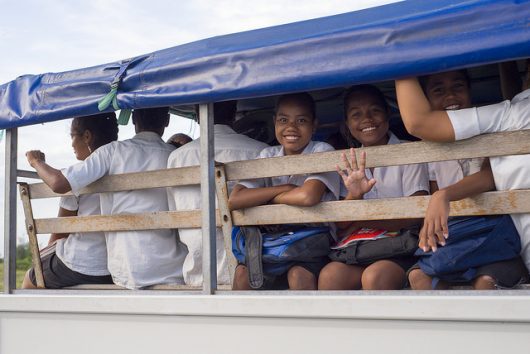
Timor-Leste, also known as East Timor and officially known as The Democratic Republic of Timor-Leste, is a sovereign state made up of a small cluster of islands in maritime Southeast Asia. After gaining independence from Portugal in 1975, Timor-Leste struggled through a quarter of a century under occupation, mass conflict and United Nations transition before finally being granted full independence in 2002.

As a result of the struggle Timor-Leste faced while gaining independence, the country was left with little infrastructure, an unstable economy and widespread poverty. Due to the country’s high instability, Timor-Leste is one of the most malnourished countries in the world. This results in a lack of food security, lack of hygiene and sanitation and an increase in poverty.

Despite receiving an abundance of humanitarian and transition relief since gaining its independence in 2002, Timor-Leste is still considered one of the poorest and least developed countries in the world. However, in the past five years, there has been a resurgence in the success of humanitarian aid to Timor-Leste. The main donor to Timor-Leste is the nation of Australia.

In 2014, the Humanitarian Aid Relief Trust (HART) began sending regular humanitarian aid to Timor-Leste. HART is a small aid organization originally founded by the United Kingdom but has since branched out into Australia and the United States. The aid organization focuses on working with communities in conflict zones, post-war zones or areas were people are exploited for cultural or political reasons.

On World Food Day 2014, HART released a detailed briefing on malnutrition and its consequences in Timor-Leste, such as high infant and child mortality rates. Shortly after releasing this briefing, HART worked with its partner, HAIM Health, to create programs and teaching centers to better educate the Timorese on proper nutrition. Programs focus on understanding nutrition, a balanced diet, preparing and cooking food and healthy sanitation practices. HAIM Health also follows up with the families enrolled in its education programs and has an 80 percent success rate of children gaining or sustaining weight.

Humanitarian aid to Timor-Leste does not stop with HART and HAIM Health. The Department of Foreign Affairs and Trade (DFAT) of the Australian government signed the East Timor Strategic Planning Agreement for Development in 2011, which establishes a shared vision of economic stability and growth between Australia and Timor-Leste. Since the signing of this agreement, Timor-Leste has seen many improvements in its development and further success toward a stable economy. In 2017-18 alone, Australia is expected to give approximately $96 million in humanitarian aid to Timor-Leste.

Thanks to Australia’s humanitarian aid to Timor-Leste, the Timorese have already seen positive results, including more than 40,000 people being provided the education and skill set needed to join the growing workforce. Also, over 21 thousand people now have access to clean water and hygiene programs and over 90 percent of primary schools now have a new and innovative curriculum, geared toward giving the students the skills they need to succeed.

Despite these improvements from humanitarian aid to Timor-Leste, the country still has a lot of room for improvement. The poverty rate in 2014 was 41.8 percent, which is still very high. With this groundwork laid, the Timorese will be able to build a brighter and more stable future.

– Courtney Wallace

Photo: Flickr

February 11, 2018
https://borgenproject.org/wp-content/uploads/borgen-project-logo.svg 0 0 Borgen Project https://borgenproject.org/wp-content/uploads/borgen-project-logo.svg Borgen Project2018-02-11 01:30:492019-12-09 06:16:40Addressing the Success of Humanitarian Aid to Timor-Leste
Aid, Foreign Aid, Foreign Policy, Global Poverty

How the U.S. Benefits From Foreign Aid to Jordan

U.S. benefits from foreign aid to JordanJordan is a Middle Eastern region tucked in between Saudi Arabia, Iraq, Syria, Israel and Palestine. The U.S. benefits from foreign aid to Jordan in many different ways.

  1. Foreign aid boosts American exports.
    USAID provides assistance for medium to small-scale enterprises, employing up to 75 percent of Jordan’s workforce. As a result of funding business development since 2006, tens of thousands of jobs have been created, yielding $1 billion in new investment. Since then, exports from Jordan to the U.S. have increased by almost $50 million.
  1. Trade with Jordan supports jobs in the U.S.
    The U.S. benefits from foreign aid to Jordan in a multitude of ways, but it also benefits from trade. Jordan currently ranks sixty-seventh among the largest U.S. trading partners. The U.S. and Jordan entered a Free Trade Agreement in 2001, eventually eliminating business tariffs for bilateral trade in goods and services, a huge benefit for U.S. companies. According to the latest data, U.S. exports of goods and services to Jordan supported an estimated 11,000 American jobs in the year 2015.
  1. Jordan is a peace broker in the Middle East.
    Nestled in the heart of the Arab Spring, Jordan is a voice for moderation, peace and reform in the Middle East, a region saturated with turmoil. Jordan’s central geographic position creates pressure on the Jordanian government for economic and democratic reform. The U.S. benefits from foreign aid to Jordan by strengthening the Middle Eastern nation’s political and economic processes, which in turn counters terrorist groups such as ISIL and promotes the Middle East peace process.
  1. Jordan assists with the refugee crisis.
    Jordan is a haven for many Syrian and Iraqi refugees. U.S. aid supports a bilateral relationship by helping Jordan temporarily absorb over 635,000 Syrian refugees and 52,000 Iraqi refugees. The influx of refugees is a challenge for the Jordanian government, but with a strong agenda for political and economic reform, and with the help of U.S. aid, Jordan serves as a partner with the U.S. in addressing the Syrian refugee conflict.
  1. Foreign Aid increases American influence and interests.
    The U.S. benefits from foreign aid to Jordan because it helps boost international leadership. Foreign aid puts America on an influential level in international politics. When U.S. foreign aid is promoting a region, it boosts American interests. The Middle East faces a complex regional conflict, which affects American soil with terrorism and refugee crises. By contributing to humanitarian aid and development, American interests hold more power.

Assistance to the Middle East and North Africa has been a highly debated topic in the United States, particularly in the recent past with President Trump’s administration’s proposed 2018 budget cut targeting international aid. In truth, there are many ways the U.S. benefits from foreign aid to Jordan greatly.

– Alex Galante

Photo: Wikimedia Commons

February 10, 2018
https://borgenproject.org/wp-content/uploads/borgen-project-logo.svg 0 0 Borgen Project https://borgenproject.org/wp-content/uploads/borgen-project-logo.svg Borgen Project2018-02-10 07:30:362024-06-05 23:55:38How the U.S. Benefits From Foreign Aid to Jordan
Aid, Foreign Aid, Foreign Policy, Global Poverty

How the US Benefits From Foreign Aid to Bangladesh

U.S. benefits from foreign aid to Bangladesh
Bangladesh has occurred as a main topic in the news lately because of the nation’s struggle to address the Rohingya crisis. Located in South Asia, Bangladesh is one of the poorest countries in the world; additionally, it is also one of the most densely populated nations with approximately 164.7 million people.

Bangladesh ranks one of the most vulnerable and least prepared countries to natural disasters, and as a result, the country heavily relies on foreign aid to fight chronic poverty that results from natural disasters. The aid Bangladesh receives usually goes towards food, commodities and development projects, thus benefitting significantly from foreign aid. However, there are numerous ways that the U.S. also benefits from foreign aid to Bangladesh.


Improved Projects and Institutions

The U.S. benefits from foreign aid to Bangladesh in a large part due to the funds that go towards projects and institutions that address gender-based violence, illiteracy, gender inequality, human trafficking and poverty within Bangladesh — all of which are issues the U.S. strives to combat on a global scale. Foreign assistance to Bangladesh also promotes democratic institutions and practices, which is crucial in the U.S. fight against terrorism.


Reduction of Terrorism

Studies have shown that lower levels of political rights and freedom are linked with higher levels of terrorism. The recent terror attack in the Dhaka city in Bangladesh proves that the country requires closer attention given towards this area. Foreign aid to Bangladesh — through agencies such as USAID — goes towards public institutions that “reduce corruption, increase transparency of government and increase accountability.”

For instance, in 2015, the USAID trained “nearly 500 local government institutions to improve their ability to provide basic services and created citizen forums” to increase citizen input on local government activities.

USAID also works to increase access to the formal justice system and educates citizens about available legal aid services. Overall, USAID focuses on improving Bangladeshi citizens’ ability to advocate for their rights.


Gains in Education

Another way the U.S. benefits from foreign aid to Bangladesh is that the aid helps to increase literacy rates in Bangladesh, which is crucial for a healthy society and a safer world. Education greatly impacts our sense of right and wrong, and in that way, serves to dictate many citizens’ actions.

In Bangladesh, almost 40 percent of all children who enroll in first grade “fail to complete primary school, and 2 percent of children achieve all prescribed competencies by the completion of fifth grade.”


Economic Growth

Additionally, foreign assistance invested in education also helps increase individual income and boosts a country’s economic growth. Nearly one in three people in Bangladesh live in poverty, and Bangladesh’s economy, in general, is a matter of U.S. interest because it could also benefit the U.S. economy. For instance, as countries like Bangladesh become more self-sufficient and better developed, countries also become potential markets for U.S. companies, thereby creating jobs here at home.

In fact, according to the United States Trade Representative, “U.S. goods exports to Bangladesh in 2016 were $895 million, down 5.0 percent ($47 million) from 2015 but up 169 percent from 2006.”


USAID

USAID works closely with the Bangladeshi government to improve literacy rates in the country. For instance, USAID provides extra-curricular activities to increase learning skills, and in 2015, improved reading skills of “more than 295,000 young boys and girls in primary schools.” It also trained more than “2400 teachers on how to assess students’ reading skills.”

The U.S. benefits from foreign aid to Bangladesh because the aid improves national security, healthcare, global access to education, gender equality and fights terrorism and crimes such as human trafficking. As one can clearly see, it is most definitely in the United States’ best interest to continue providing aid to Bangladesh.

– Mehruba Chowdhury

Photo: Flickr

February 10, 2018
https://borgenproject.org/wp-content/uploads/borgen-project-logo.svg 0 0 Borgen Project https://borgenproject.org/wp-content/uploads/borgen-project-logo.svg Borgen Project2018-02-10 01:30:082024-05-29 22:39:15How the US Benefits From Foreign Aid to Bangladesh
Aid, Global Poverty, Humanitarian Aid

Addressing the Success of Humanitarian Aid to Equatorial Guinea

humanitarian aid to Equatorial GuineaLocated in Central Africa, Equatorial Guinea is a small country that consists of the islands of Bioko and a mainland region where its largest city, Bata, resides. It has a population of about 1.2 million. Per capita, it is the richest country in Africa, with a GDP that ranks forty-third in the world when adjusted for purchasing power parity.

However, this massive wealth is distributed unevenly, and while it may be one of the region’s most powerful oil producers, very few benefit from the oil riches. Its authoritarian government has a streak of terrible human rights abuses, such as human trafficking. Furthermore, because less than half of the population has access to clean drinking water, it often appears as if no significant changes are coming about from humanitarian aid to Equatorial Guinea.

However, this does not mean that there are no groups undertaking vast projects with hopes of improving the country. For example, in 2016 the African Development Bank Group approved a grant of $3.04 million to strengthen the economic connections of Central African countries. This project allowed the creation of a bridge over the Ntem river which will link Cameroon and Equatorial Guinea. By reducing transport costs and times, it positively improves the economic ability and is a successful example of humanitarian aid to Equatorial Guinea.

Economic projects are a significant form of success in humanitarian aid to Equatorial Guinea. For example, in 2009 the African Development Bank Group signed a loan and grant agreement in the country worth up to $70 million. $40 million was used to finance a program to train young workers in middle and senior management in different regions.

With another $15 million, Equatorial Guinea supported the development of healthcare, which particularly benefited pregnant women and children under five years of age. By increasing productivity in all sectors, Equatorial Guinea hopes to improve economic growth which will hopefully improve human development and stability.

In 2006, another program, the Social Needs Fund, focused on addressing infrastructure for the poor. While resources may exist to alleviate poverty, there were few mechanisms to implement these resources. Funded by USAID, it assisted the government to improve social planning and investments, specifically for programs in the Ministry of Health, Education and Women’s Affairs. By focusing on different ministries, USAID was able to examine expenditures and monitor budgets to create more effective programs in each sector.

With continued efforts and foreign support, Equatorial Guinea continues to improve gradually. Development projects have helped push economic growth and have created a more stable and equal society in which the poor can navigate with greater ability.

– Nick McGuire

Photo: Flickr

February 9, 2018
https://borgenproject.org/wp-content/uploads/borgen-project-logo.svg 0 0 Borgen Project https://borgenproject.org/wp-content/uploads/borgen-project-logo.svg Borgen Project2018-02-09 01:30:362019-12-16 08:27:53Addressing the Success of Humanitarian Aid to Equatorial Guinea
Aid, Foreign Aid, Foreign Policy, Global Poverty

US Benefits From Foreign Aid to the Democratic Republic of the Congo

U.S. benefits from foreign aid to the Democratic Republic of the Congo
Many may ask how the U.S. benefits from foreign aid to the Democratic Republic of the Congo, and fortunately, the list of reasons is a lengthy one. Despite its wealth in natural resources, and the resulting potential for prosperity, the Democratic Republic of the Congo remains one of the poorest and least stable regions in Africa. Political and economic instability, in turn, has strained the country’s already weakened institutions, leaving citizens of the Congo to suffer under circumstances that cry out for foreign assistance.

Around nine in 10 citizens still lack basic necessities, with a USAID report showing that over 7.5 million members of the Congo require humanitarian aid. Clearly, the need for assistance to the Congo is strong; yet, unbeknownst to many Americans, there are also reasons why the U.S. benefits from foreign aid to the Democratic Republic of the Congo.


Foreign Aid Reduces Insecurity in the Congo and Increases American National Security

One way in which the U.S. benefits from foreign aid to the Democratic Republic of the Congo is in reduced instability in the nation and the resulting threat it poses to United States interests abroad. General James Jones and Admiral Mike Mullen make this point in an op-ed for Politico, in which they discuss how instability opens nations to terrorist exploitation.

“A host of international terrorist groups,” they write, “Al Qaeda, Al Shabaab, Boko Haram and ISIS, among others — have taken root in highly fragile regions and countries with shared characteristics, such as corruption and poor governance, weak institutions, high poverty and inequality, widespread indignity and low quality of life for ordinary citizens.”

If the United States increased aid to the Congo to reduce instability, it would strengthen the nation and leave it less vulnerable to terrorist attack and the dark possibilities of terrorists taking root in the country and utilizing its abundance of natural resources.


Foreign Aid Spurs Economic Growth in the Congo and Increases Trade with the United States

The United States ratified a bilateral investment treaty with the Congo in 1984, and trade between the countries has continued throughout the new millennium. The United States mainly receives imports in petroleum and exports everything from machinery to poultry, medical devices and American-made automobiles.

Increasing foreign aid to the Congo would, in turn, create a population with more disposable income and greater buying power, expanding the market for imports from the United States, strengthening America’s agricultural, auto, and medical industries and enhancing the prosperity of millions of blue-collar workers. This is an example of how U.S. benefits from foreign aid to the Democratic Republic of the Congo goes beyond simply being an act of charity.


Foreign Aid Improves the Reputation of the United States

Another reason the U.S. benefits from foreign aid to the Democratic Republic of the Congo is because currently, the U.S. has a significant image problem around the world, one that has far-reaching implications for its economic development and military programs. Perceptions of the U.S. among developed and developing nations has steadily declined for over a decade, with only Russia and Israel expressing increasing approval of the United States in the past year.

Foreign aid to developing countries not only helps the image of the United States among the Congolese but also throughout the world. This is beneficial to the U.S. since it can mean greater support from other countries on a broad range of issues, including trade, national security, and other strategic priorities.

Foreign aid might even lead to greater willingness on the part of other countries to aid the United States in times of national crisis, such as during the aftermath of Hurricane Katrina, when 95 nations from around the world offered foreign aid themselves to the United States.

– Shane Summers

Photo: Flickr

February 9, 2018
https://borgenproject.org/wp-content/uploads/borgen-project-logo.svg 0 0 Borgen Project https://borgenproject.org/wp-content/uploads/borgen-project-logo.svg Borgen Project2018-02-09 01:30:092019-12-06 07:31:31US Benefits From Foreign Aid to the Democratic Republic of the Congo
Aid, Global Poverty, Humanitarian Aid

The Successes of Humanitarian Aid to Montenegro

Humanitarian aid to Montenegro
Humanitarian aid to Montenegro has been extremely helpful to the country’s growth, thanks in part to assistance from the United States Embassy in Montenegro and organizations such as the United Nations Development Programme. The country of Montenegro continues to grow and progress in positive ways with the help of the United States Embassy, as well as organizations such as the United Nations Development Program (UNDP).


The Role of the U.S. Embassy

The United States Embassy in Montenegro has been essential in giving humanitarian aid to Montenegro in the following ways:

  • The U.S. Embassy opened the Education U.S.A. Center which offers support to all those who would like to study in the U.S. Currently more than 120 Montenegrin students are studying at U.S. universities.
  • Since 2006, the U.S. Embassy supported almost 130 projects worth nearly $1.9 million to strengthen democracy and respect for human rights and to strengthen civil society in Montenegro.
  • Over the past 10 years, almost 400 Montenegrins experienced U.S. culture through one of the nation’s professional or educational exchange programs.
  • More than 50 American companies operate in Montenegro. The U.S. interest in doing business in Montenegro is constantly on the rise, especially after Montenegro’s invitation to join the NATO Alliance.
  • The top six U.S. investors have invested over $300 million in Montenegro since its independence. An additional $300 million of investment is in the pipeline from U.S. companies operating in the tourism, telecommunications and energy sectors.

The UNDP has also provided, and continue to provide, crucial humanitarian aid to Montenegro that helps the country in their economy and in the betterment of the overall livelihood of the Montenegro people.


The United Nations Development Program

The UNDP has a few different humanitarian aid projects in Montenegro that have been a great benefit to the country. One of their projects supports anti-discrimination and gender equality policies. The purpose of the project is to contribute to the protection, promotion and enforcement of human rights and equal opportunities in Montenegro. So far, the project has empowered female members of parliamentary political parties through the advancement of their knowledge and skills in the areas of gender equality and women’s political activism. The effort has also provided trainings that “aim to enhance political engagement of women.”


Sustainability

Another UNDP project in Montenegro is geared towards strengthening sustainability of protected areas. That project’s purpose is to develop institutional capacities to design, plan and manage a more representative system of protected areas. The project has already accomplished a few of its goals such as designing an environmental information system for the Environmental Protection Agency of Montenegro, helping improve legal framework for functioning of National Parks by supporting amendments to the Law on National Parks and supporting the establishment of educational programmes in protected area management and rural development, with emphases on financial planning and management of protected areas.


The World Bank

The World Bank also deserves a worthy mention in its provision of humanitarian aid to Montenegro. Last year, the organization approved a $14 million loan to Montenegro for the country’s Revenue Administration Reform Project. The objective of that project is to improve the effectiveness of operational functions of Montenegro’s Tax Administration and to reduce the compliance costs for corporate taxpayers.

With the continued assistance from the U.S. Embassy as well as the UNDP and the World Bank, Montenegro will continue to positively progress.

– Kennisha L. Crawford

Photo: Flickr

February 8, 2018
https://borgenproject.org/wp-content/uploads/borgen-project-logo.svg 0 0 Borgen Project https://borgenproject.org/wp-content/uploads/borgen-project-logo.svg Borgen Project2018-02-08 01:30:402024-05-29 22:39:10The Successes of Humanitarian Aid to Montenegro
Page 37 of 65«‹3536373839›»

Get Smarter

  • Global Poverty 101
  • Global Poverty… The Good News
  • Global Poverty & U.S. Jobs
  • Global Poverty and National Security
  • Innovative Solutions to Poverty
  • Global Poverty & Aid FAQ’s
Search Search

Take Action

  • Call Congress
  • Email Congress
  • Donate
  • 30 Ways to Help
  • Volunteer Ops
  • Internships
  • Courses & Certificates
  • The Podcast
Borgen Project

“The Borgen Project is an incredible nonprofit organization that is addressing poverty and hunger and working towards ending them.”

-The Huffington Post

Inside The Borgen Project

  • Contact
  • About
  • Financials
  • President
  • Board of Directors
  • Board of Advisors

International Links

  • UK Email Parliament
  • UK Donate
  • Canada Email Parliament

Get Smarter

  • Global Poverty 101
  • Global Poverty… The Good News
  • Global Poverty & U.S. Jobs
  • Global Poverty and National Security
  • Innovative Solutions to Poverty
  • Global Poverty & Aid FAQ’s

Ways to Help

  • Call Congress
  • Email Congress
  • Donate
  • 30 Ways to Help
  • Volunteer Ops
  • Internships
  • Courses & Certificates
  • The Podcast
Scroll to top Scroll to top Scroll to top