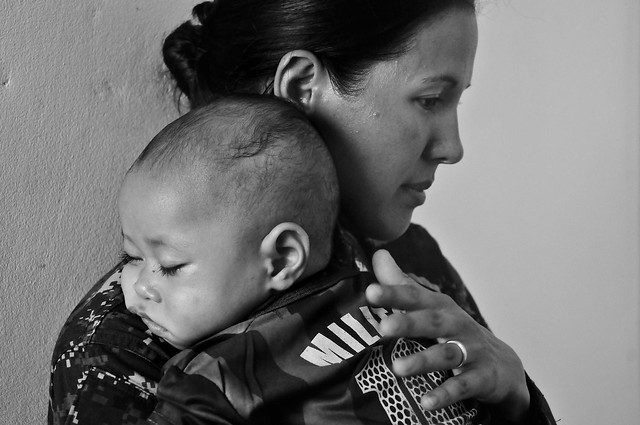
Hunger and malnutrition in Timor-Leste are largely impacted by 41.8 percent of its population living on less than $1.54 a day, making it one of the poorest nations. Timor-Leste, also known as East Timor, is an island nation in Southeast Asia, between Indonesia and Australia. Additionally, only gaining its independence in 2002, it is one of the youngest nations. Among factors impacting hunger and malnutrition in Timor-Leste also include climate variability.
Rate of Hunger and Malnutrition
In the past decade, Timor-Leste has made substantial progress reducing it’s Global Hunger Index (GHI) from 46.9 percent in 2008 to 34.3 percent in 2017; however, hunger remains classified as a “serious” concern. Timor-Leste’s high levels of food insecurity, poor agricultural yields and low levels of disposable income directly contribute to this serious-level GHI.
Malnutrition and stunting levels in Timor-Leste are one of the highest in the world and have been persistent problems. Malnutrition in Timor-Leste is the leading cause of premature death and disability. Quality nutrition is especially crucial for pregnant women and children, up to the age of 2, ensuring proper growth.
That being said, anemia affects over 40 percent of children and 23 percent of women ages 15 to 49, inclusive of childbearing years. The percent of Timorese children under 5 years old with stunted growth in 2013 was 50.2 percent. This is a slight decrease from 55.7 percent in 2002. This shows some progression, but malnourishment and stunting are still at an alarming rate in Timor-Leste.
Timor-Leste’s National Nutrition Strategy
Timor-Leste’s Ministry of Health established its first National Nutrition Strategy in 2004. It introduces basic nutrition interventions and nation-wide goals. To increase the government’s effectiveness in addressing nutrition, UNICEF is providing technical support to the Ministry of Health, which has created the Timor-Leste National Nutrition Strategy of 2014-2019.
It is Timor-Leste’s largest nutrition policy, and its overall objective is to reduce malnutrition and micronutrient deficiency among children and women. Additionally, Timor-Leste became the first Asian Pacific country to join the U.N.’s Zero Hunger Challenge in 2014 reaffirming their commitment to reach hunger and nutrition goals.
Intervention of USAID
USAID efforts are also working to combat hunger and malnutrition in Timor-Leste with 2 large programs. USAID’s Avansa Agrikultura Project works to increase agricultural productivity especially for vegetables, fruits and legumes. It also focuses on strengthening agricultural markets, food accessibility and sustainability in the midst of climate change.
Their other program, Reinforce Basic Health Services Activity, currently works to support Timor-Leste’s government in strengthening the skills of health workers to provide effective maternal and newborn healthcare.
Additional Interventions in Timor-Leste
Mother support groups are another common method to reduce malnutrition in Timor-Leste. A partnership between the European Union, UNICEF and Timor-Leste’s Ministry of Health established these support groups to empower mothers and families by supporting them to seek care for their children and themselves.
Similarly, the World Food Programme (WFP) has nutrition programs aiming to improve mothers’ health and, in turn, their children’s health. One of their programs, Moderate Acute Malnutrition (MAM) provides malnourished pregnant and nursing women with fortified meals and treatment. The WFP also has informational sessions on nutrition and cooking demonstrations. This aids in families learning more about the importance of and access to nutrition.
With the combination and collaboration of Timor-Leste’s government, national government organization’s (NGO’s), intergovernmental organizations and international aid, hunger and malnutrition in Timor-Leste are being broken down and addressed. These continued and intensified efforts provide hope for zero hunger Timor-Leste in the future.
– Camryn Lemke
Photo: Flickr

Top 4 Organizations Fighting Period Poverty
Top 4 Organizations Fighting Period Poverty
Highschoolers Nadya Okamoto and Vincent Forand founded PERIOD in 2014 to combat period poverty and period stigma. Okamoto was inspired to help launch the nonprofit after dealing with homelessness as a teen. Homeless women often lack access to menstrual products because they cannot afford them or because shelters do not have enough products to go around. Today, PERIOD has more than 300 chapters that help distribute period products around the world, and so far, 510,181 women have been served by PERIOD’s work. The nonprofit is also fighting to eliminate the luxury tax on tampons and pads in the U.S. and abroad.
Founded in 2016 by Tina Leslie, Freedom4Girls was inspired by Leslie’s experience working with the charity Maji Safi Projects in Kenya. During her time there, Leslie helped with Maji Safi Projects’ period poverty campaign, which consisted of creating sewing workshops for local women, making washable, reusable menstrual pads and delivering the pads to schools in the semi-rural area of Mombasa. The project also provided reproductive and menstrual education to girls and women in the community. Currently, Freedom4Girls provides menstrual products to 30 schools in the U.K. in order to increase girls’ abilities to go to school and participate in extracurricular activities while on their periods, since often, teachers are tasked with supplying menstrual products to their students. Freedom4Girls also works with community groups and other organizations fighting period poverty to host “Donation Stations” in order to collect menstrual products for other vulnerable groups, such as refugees.
Dignity Period is a prime example of women’s empowerment and women’s health coming together to improve lives. In 2014, Fulbright Scholar Dr. Lewis Wall spent eight months improving residency education in gynecology and obstetrics at Mekelle University’s College of Health Sciences in Ethiopia. During his time there, he and his wife met Freweini Mebrahtu, owner of the Mariam Seba Sanitary Products Factory. Seeing that period poverty was an issue that could be resolved through outreach, education and empowerment, Wall and Mebrahtu partnered to create Dignity Period. Today, Dignity Period partners with Mekelle University to conduct studies about the socioeconomic and cultural impact of periods and to provide education; at the same time, the nonprofit provides reusable menstrual pads to community members through Mebrahtu’s factory, which trains and employs women in the area.
Days for Girls (DfG), like other organizations fighting period poverty, provides reusable menstrual products for girls in need. However, it is unique in the way its menstrual products are created and how they impact communities. Days for Girls has developed menstrual product kits that are provided to women and girls in need. Each DfG Kit is sewn by volunteer individuals or chapters and begins as a Portable Object of Dignity (POD). PODs include one waterproof shield and two absorbent liners and serve as gateways to the creation of small businesses for local women. PODs are extremely affordable and can be easily adapted to the needs of the customer, meaning that women in developing countries can use PODs to start and grow their own micro-enterprises selling DfG Kits. There are five kits currently distributed by Days for Girls: the POD, DfG POD Plus, Supreme DfG Kit, Heavy Flow DfG Kit and the Menstrual Cup Kit. Each kit contains reusable menstrual pads, a washcloth, a drawstring bag, panties and other essentials for a dignified period.
Women and girls around the world face the impacts of not having access to menstrual products and reproductive education. Absences from school, decreased opportunities for socioeconomic mobility and loss of dignity are only a few of the struggles faced by those living in period poverty. As a result, organizations fighting period poverty are taking a stand to empower these women and improve their futures.
– Shania Kennedy
Photo: Pixabay
10 Facts About Life Expectancy in Morocco
Morocco is a country in North Africa that borders the Atlantic Ocean in the west and the Mediterranean in the north. Its location makes it a strong competitor in international trade and business. Forbes has classified Morocco as an emerging country with financial, educational and political potential. In 2015, the Government of Morocco and the World Health Organization (WHO) teamed up to improve the public health situation in the country, focusing on five regional priorities: health security and control of communicable diseases, mental health and violence, nutrition, strengthening health systems and responsiveness to health crises. Here are the 10 facts about life expectancy in Morocco.
10 Facts About Life Expectancy in Morocco
These 10 facts about life expectancy in Morocco should help the country adequately serve its people through health care and social programs. With this knowledge, the country can prepare to provide care and housing for an older population.
– Laura Phillips-Alvarez
Photo: Flickr
Top 4 Facts About Human Trafficking in Equatorial Guinea
Human trafficking in Equatorial Guinea is a substantial issue. Corruption and negligence run deep within its government. In Equatorial Guinea, 76.8 percent of the population lives in poverty. These circumstances make the people of this country extremely vulnerable to exploitation and trafficking.
Top 4 Facts About Human Trafficking in Equatorial Guinea
A Problem Worth Fighting For
The challenge of eliminating human trafficking in Equatorial Guinea may seem like an impossible task, but it is crucial. This modern-day slavery is a result of corruption and a violation of human rights. Although the status of human trafficking in this nation may seem bleak, the people of the country have reason to be optimistic. Foreign aid from different countries and the acknowledgment of the Equatoguinean government can help eliminate the issue of human trafficking in countries such as Equatorial Guinea.
– Marissa Pekular
Photo: Flickr
Top 10 Facts About Living Conditions in Bahrain
Bahrain is an archipelago made up of 33 small islands located between Saudia Arabia and Qatar in the Persian Gulf. In 1971, Bahrain declared its independence from the United Kingdom and then in 2002, they established themselves as its own kingdom. Known for its petroleum exports, they were the first Arab country to discover it in 1932. These 10 facts show what living conditions are like in Bahrain.
Top 10 Facts About Living Conditions in Bahrain
For Bahrain, its petroleum exports have benefited the economy as it results in 70 percent of the government’s revenues and 11 percent of its GDP. Along with its petroleum exports, they have heavily invested in tourism and financial sectors in its city in the past decades. Bahrain is a country that is on the up and coming, but it still needs to address water shortage in its future and discrimination toward women.
– Nicholas Ponzio
Photo: Flickr
Combating Hunger and Malnutrition in Timor-Leste
Hunger and malnutrition in Timor-Leste are largely impacted by 41.8 percent of its population living on less than $1.54 a day, making it one of the poorest nations. Timor-Leste, also known as East Timor, is an island nation in Southeast Asia, between Indonesia and Australia. Additionally, only gaining its independence in 2002, it is one of the youngest nations. Among factors impacting hunger and malnutrition in Timor-Leste also include climate variability.
Rate of Hunger and Malnutrition
In the past decade, Timor-Leste has made substantial progress reducing it’s Global Hunger Index (GHI) from 46.9 percent in 2008 to 34.3 percent in 2017; however, hunger remains classified as a “serious” concern. Timor-Leste’s high levels of food insecurity, poor agricultural yields and low levels of disposable income directly contribute to this serious-level GHI.
Malnutrition and stunting levels in Timor-Leste are one of the highest in the world and have been persistent problems. Malnutrition in Timor-Leste is the leading cause of premature death and disability. Quality nutrition is especially crucial for pregnant women and children, up to the age of 2, ensuring proper growth.
That being said, anemia affects over 40 percent of children and 23 percent of women ages 15 to 49, inclusive of childbearing years. The percent of Timorese children under 5 years old with stunted growth in 2013 was 50.2 percent. This is a slight decrease from 55.7 percent in 2002. This shows some progression, but malnourishment and stunting are still at an alarming rate in Timor-Leste.
Timor-Leste’s National Nutrition Strategy
Timor-Leste’s Ministry of Health established its first National Nutrition Strategy in 2004. It introduces basic nutrition interventions and nation-wide goals. To increase the government’s effectiveness in addressing nutrition, UNICEF is providing technical support to the Ministry of Health, which has created the Timor-Leste National Nutrition Strategy of 2014-2019.
It is Timor-Leste’s largest nutrition policy, and its overall objective is to reduce malnutrition and micronutrient deficiency among children and women. Additionally, Timor-Leste became the first Asian Pacific country to join the U.N.’s Zero Hunger Challenge in 2014 reaffirming their commitment to reach hunger and nutrition goals.
Intervention of USAID
USAID efforts are also working to combat hunger and malnutrition in Timor-Leste with 2 large programs. USAID’s Avansa Agrikultura Project works to increase agricultural productivity especially for vegetables, fruits and legumes. It also focuses on strengthening agricultural markets, food accessibility and sustainability in the midst of climate change.
Their other program, Reinforce Basic Health Services Activity, currently works to support Timor-Leste’s government in strengthening the skills of health workers to provide effective maternal and newborn healthcare.
Additional Interventions in Timor-Leste
Mother support groups are another common method to reduce malnutrition in Timor-Leste. A partnership between the European Union, UNICEF and Timor-Leste’s Ministry of Health established these support groups to empower mothers and families by supporting them to seek care for their children and themselves.
Similarly, the World Food Programme (WFP) has nutrition programs aiming to improve mothers’ health and, in turn, their children’s health. One of their programs, Moderate Acute Malnutrition (MAM) provides malnourished pregnant and nursing women with fortified meals and treatment. The WFP also has informational sessions on nutrition and cooking demonstrations. This aids in families learning more about the importance of and access to nutrition.
With the combination and collaboration of Timor-Leste’s government, national government organization’s (NGO’s), intergovernmental organizations and international aid, hunger and malnutrition in Timor-Leste are being broken down and addressed. These continued and intensified efforts provide hope for zero hunger Timor-Leste in the future.
– Camryn Lemke
Photo: Flickr
10 Facts About Food Insecurity in Central America
10 Facts About Food Insecurity in Central America
Central America, a region already affected by poverty, reached the brink of crisis after nearly 5 years of severe droughts. By 2018, food insecurity in Central America had spread throughout the countries of the Dry Corridor. But regional governments, with the assistance of relief agencies, implemented agriculture-based solutions to ensure that future droughts would not have the same disastrous consequences. These innovative solutions pave the way for a more secure future in Central America.
– Emelie Fippin
Photo: Flickr
1Doc3: Accessible Healthcare to Millions
Background
1Doc3 (pronounced “uno doc tres”) is an online health platform that allows millions of Spanish-speaking users to ask health-related questions and receive professional medical guidance in real-time using artificial intelligence (AI). In addition, it provides data to health insurers and pharmaceutical companies to let them reach customers more efficiently. Furthermore, 1Doc3 is free and allows users to remain anonymous. It receives around $2 million in funding from investors like Wayra, TheVentureCity, Mountain Partners and Mountain Nazca.
The platform, which can be downloaded on computers and mobile devices, keeps a database of over 400 licensed doctors who are recruited, trained and monitored, ensuring that patients receive answers from the most qualified professionals. These doctors build their reputation online by providing personalized answers to users for free. This type of access is convenient, free and anonymous and allows users to make more informed choices regarding their health and wellbeing.
Helping Its Users
1Doc3 has served over 490 million Spanish-speaking users in 120 countries, 53 percent of whom are below 34 years old. Over 60 percent of the questions asked by these younger users are related to sex. While these types of questions may normally be too embarrassing to ask in person, the anonymity of 1Doc3 allows young patients to receive the right medical guidance and even provides coupons for products like condoms.
The platform uses AI to help these users navigate towards relevant information. For example, if a user were to ask a question related to their back pain, AI would ask where the pain is “above or below,” and if it is a “stabbing pain.” The personalized and innovative service is highly sought after and has even earned itself a partnership with Internet.org, a system that brings connectivity to users in places where internet access is spotty at best.
Helping Insurance Companies and Pharmacies
There is also a commercial aspect to 1Doc3. The platform’s AI serves as a data collecting module. Over 70 million questions are asked each year and this makes the database extremely informative. With this information, health insurers can provide cheaper treatment to patients by eliminating the necessity to physically go to a physician’s office – in fact, users save an average of 11 percent on treatment when they use 1Doc3.
The platform also helps medical insurance and pharmaceutical companies identify patients for rare diseases. For example, 1Doc3 helped a client pharmaceutical company find patients who were suffering from ankylosing spondylitis, which is a relatively rare and difficult to diagnose. 1Doc3 identified back-pain along with the presence of three or four other symptoms to seek out those suffering from ankylosing spondylitis and provide resources for treatment. In this case, it connected patients to pharmaceutical companies who could provide the right medication and professional care.
The Future of the Health Industry
1Doc3 is described by Javier Cardona as a pocket-size doctor who is available to users at any time and provides integrated solutions to health issues. Although the bulk of its users are in Colombia, Mexico, Argentina and Peru, the administrative team is planning to expand globally and provide these capabilities to users all over the world.
While other healthcare platforms may also provide medical information to users, it is not always personalized. 1Doc3 is a revolutionary free service that changes the face of healthcare by connecting patients to doctors in a timely manner and pointing users in the right direction. It removes barriers like time, cost and inaccessibility and puts the health back in the hands of the user.
– Julian Mok
Photo: Flickr
Improving Girls’ Education in Papua New Guinea
While primary school enrollment rates in Papua New Guinea are low for girls and boys, there is a significant disparity between the two. Several factors contribute to the worse girls’ education in Papua New Guinea, some of which governments and organizations are working to change.
Factors Contributing to Gender Inequality
Safety is another serious concern for girls. Gender-based violence and harassment are prevalent in schools. Just under 50 percent of girls reported feeling safe at school, with 31 percent feeling unsafe. These feelings were strongest near toilets, sports fields and school gates, with only 2 percent of girls feeling safe around toilets.
Girls are harassed by male students and teachers, thereby afraid of physical and sexual assault. The high number of male teachers contributes to low enrollment rates, with male teachers out-numbering female teachers in primary schools. While the number of female teachers doubled between 2002 and 2012, there is still a significant lack of them.
Efforts to Decrease Gender Inequality in Education
World Vision launched a project targeting girls’ education in Papua New Guinea. They established community learning centers (CLCs), which provide early childhood care for girls and boys between three and six. Education improvement classes for children under 14 are also offered. The goal is to make it easier for children to succeed in school, as well as encourage parents to take a more active role in the children’s education. Between 2014 and 2017, approximately 6000 children attended classes at CLCs and 4o00 people were involved in community awareness efforts. After attending CLCs, 90 percent of children were prepared to begin primary school, significantly higher than the baseline of 80 percent.
The National Education Plan (NEP), developed in 2015, is also aiming to improve education, with a focus on gender equality. In their most recent $7.4 million grant, their goal is to better student achievement in math and science by improving pre-service and in-service teacher education, especially for women, and increasing access to textbooks.
Notable Progress
Due to these projects being implemented, some advancements have been made. A study by the National Research Institute found that the number of girls enrolled in school increased by almost 150 percent between 2001 and 2012. Additionally, primary school completion rates for girls rose by approximately 5 percent between 2014 and 2016.
While there is still a long way to go, Papua New Guinea has begun to decrease the differences between male and female education.
– Sara Olk
Photo: Flickr
A Look at the Top 10 Worst Typhoons
However, the word hurricane is used for tropical cyclones that form over the North Atlantic Ocean and Northeast Pacific, and the word typhoon is used for tropical cyclones that form over the Northwest Pacific Ocean. Typhoons are often seen as more destructive than hurricanes because they tend to hit the densely populated countries of Asia. Below is a list of the top 10 worst typhoons of all time.
Top 10 Worst Typhoons
The damage done by the top 10 worst typhoons reveals how vulnerable humans are to uncontrollable forces of nature. Humans have not yet developed the technology they need to shield themselves from all of a typhoon’s destructive effects though research efforts are ongoing.
– Jacob Stubbs
Photo: Flickr
Secondhand Clothing Import Ban in the EAC
Prior to 1980, the domestic clothing and textile industry within the East African Community (EAC) was booming and employed thousands of people. Certain liberalization policies caused the industry to fail, creating a reliance on imported products. Used clothing imports reached $151 billion in East Africa during 2015. Secondhand clothing offers a cheap and quality source of garments for the people within the EAC.
Imports of used clothing are estimated at around 540 million pieces per year versus the 20 million pieces of clothing created domestically each year in East Africa. Primarily, the United States and Europe, places where people discard large sums of used clothing, sent these imports. These areas donate 70 percent of donated garments to Africa. The EAC initiated the start of a secondhand clothing import ban in 2016 with the goal of accomplishing a complete ban by 2019. The hope is to create a self-sustaining and reliable textile industry that provides jobs for many people.
Taxation in the EAC
The plan was to expand local textile industries prior to the ban, however certain countries within the EAC, such as Rwanda, have already begun raising taxes on imported secondhand clothing. Taxes went from $0.2 to $2.5 from 2016 to 2017, at a 12 percent increase. People who oppose the ban fear that this will disproportionately affect people with lower incomes, rather than support positive industrialization. The opposition also fears that seeing the ban to completion will violate portions of the African Growth and Opportunity Act (AGOA) where many African countries agreed to lift barriers restricting trade and investment with the United States.
However, the East African Community seems concerned with positive domestic growth and industrialization with the hopes of sustaining its economy. Rwanda, Tanzania and Uganda plan to continue to raise taxes on clothing imports, while Kenya has said it cannot economically support the 2019 ban deadline because it is unable to meet domestic demands with local markets.
Creating a Textile Industry
Supporters of the ban have recognized that wearers of secondhand clothing might have a risk of obtaining skin candidiasis, scabies, ringworm, body lice and other health risks. To avoid added health risks and to maximize use of domestic commodities, the East African Business Council (EABC) has expressed the need to use the large production of cotton in the EAC domestically to create textiles, rather than exporting it for low costs. The countries within East Africa continue to work towards an improved domestic clothing and textile industry by creating facilities and advancing technology available towards textile production. Tanzania’s Minister of State, Jenista Mhagama, announced a training program in 2016 that would encourage and assist young people to become tailors.
Despite push back from European countries and the United States, the EAC continues its push towards growing its domestic textile industry and implementing the secondhand clothing import ban. As the EAC fulfills the ban, the impact of this on its economy will become clear.
– Claire Bryan
Photo: Flickr