Closing in on Food Insecurity in Morocco
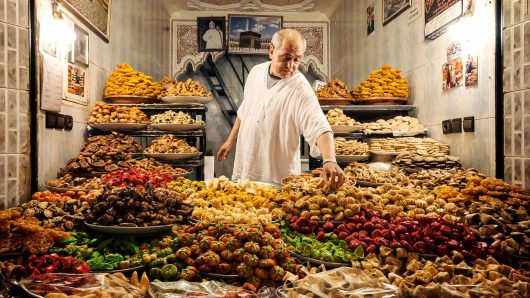 Though Morocco’s GDP growth rate has decreased from 4.4 percent rate in 2015 to below two percent this year, the country eradicating hunger for its citizens.
According to a Food and Agriculture Organization (FAO) report titled “The State of Food Insecurity in the World,” Morocco has made significant progress in the reduction of hunger.
The United Nations group reports that the nation has successfully achieved the Millennium Development Goal to cut the number of the population living in hunger by half in 2015. Addressing food insecurity in Morocco has been a priority with hunger levels currently below 5 percent.
The vast progress in hunger reduction that has earned the Northern African country praise from the United Nations is the result of an economic plan launched in 2008. “Plan Maroc vert,” a plan for a green Morocco (PMV), aimed to stimulate socioeconomic development through agriculture. The plan stipulated policies that maximized production from large-scale farms and supported small-scale farms in reducing poverty and hunger through venture capitalism.
Since 2008, several banks and international agencies have invested $12 billion have been in an estimated 700 mechanization, irrigation and soil fertilization projects.
The Moroccan ministry of economy estimates an additional $2 billion have been spent on 500 small-scale projects to help farmers bring more diversity to their businesses, increase harvest yields and experiment with new seed varieties. Private agricultural investment firms hope to bring Morocco’s fruit and vegetable export potential to fruition in Europe.
Agriculture makes up 15 percent of Morocco’s GDP, with up to 40 percent of the population working in the sector. As a result of the PMV, the agricultural industry has grown by approximately 7 percent, exports have increased by 34 percent and farmland use has risen by 11 percent. These production increases have contributed to decreasing the rate of hunger in Morocco from 7.1 percent and 4.6 percent two years ahead of schedule.
Despite the remarkable progress, some critics of the PMV believe the initiative has prioritized the interests of large-scale agricultural production firms over the needs of rural farmers living in poverty. The FAO reports that small-scale farmers, especially females, often find difficulty in obtaining financial support and technical training. The heavy reliance on rain for abundant harvests has also worried officials of the Morocco’s ability to recover from the effects of climate change.
However, the PMV has exposed neighboring countries to an alternative economic plan. “The plan Maroc vert has created an irreversible momentum without precedent,” Michael George Hage, an FAO representative in Morocco told the Guardian. “It has played a determining role in food security and is inspiring several other African countries.”
– Ashley Leon
Photo: Flickr
