• Link to X
  • Link to Facebook
  • Link to Instagram
  • Link to TikTok
  • Link to Youtube
  • About
    • About Us
      • President
      • Board of Directors
      • Board of Advisors
      • Financials
      • Our Methodology
      • Success Tracker
      • Contact
  • Act Now
    • 30 Ways to Help
      • Email Congress
      • Call Congress
      • Volunteer
      • Courses & Certificates
      • Be a Donor
    • Internships
      • In-Office Internships
      • Remote Internships
    • Legislation
      • Politics 101
  • The Blog
  • The Podcast
  • Magazine
  • Donate
  • Click to open the search input field Click to open the search input field Search
  • Menu Menu

Archive for category: Global Poverty

Key articles and information on global poverty.

Developing Countries, Development, Education, Global Poverty, Health

5 Companies that Use a Buy One Give One System

Companies that use a buy one give one system

The buy one give one model is being implemented by a variety of businesses as a way to give back to those in need. The model works under the idea that for one item sold, another item is donated to a person or community in need. Here are five companies that use a buy one give one system.

5 Companies that Use a Buy One Give One System

  • Baby Teresa – Sammie Appleyard and Kirsty Dunphey founded the Baby Teresa project in 2009, naming their company after Mother Teresa. For every sale that is made on a baby romper, hat, bib, etc., another is given to a baby in need. The two women recognized that clothing a baby can be the difference between life and death — especially in areas where poverty is high and access to necessities like baby clothes is limited. When purchasing, customers have a choice of where to send the donated item. As of 2019, Baby Teresa has impacted families in Ecuador, Vanuatu, Cambodia, Vietnam, Uganda and more.
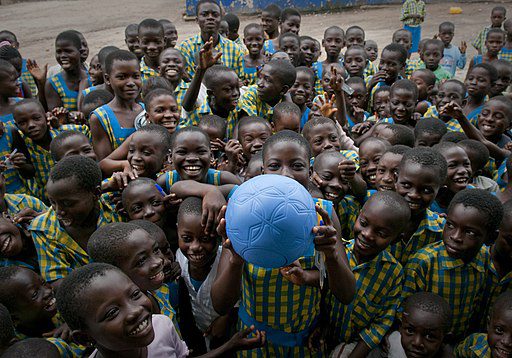
  • One World Futbol Project – The One World Futbol Project has a mission of bringing the “transformative power of play to youth living in disadvantaged communities worldwide” through its indestructible soccer ball. The ball was originally created by Tim Jahnigen after he saw a video of Darfur refugees playing soccer with a handmade ball. The idea was that the ball would be a solution for children who wanted to play but did not have the materials. Thanks to funding from international superstar, Sting, the company launched and has impacted more than 60 million lives. For every ball purchased, another is donated to a poverty-stricken community, war zone or refugee camp.
  • Figs – Figs is a company that specializes in selling medical scrubs. The founders of Figs recognized that many medical professionals in poverty-stricken areas lack access to basic medical supplies including scrubs. While owning a pair of scrubs helps medical professionals to look the part, they also contribute to clean work environments. To date, Figs has donated thousands of scrubs to medical professionals in need in more than 30 different countries through this charitable model.
  • SoapBox – SoapBox is a company that sells personal care products including body wash, hand soap, liquid soap, shampoo and conditioner. David Simnick launched SoapBox in 2010 with a mission to persuade people to change the world through everyday purchases. For every product bought, a bar of soap and hygiene lessons are donated to a community in need. More than 3 million lives in Cambodia, Haiti, India and other countries have been impacted by purchases made to SoapBox.
  • Out of Print – Since 2010, Out of Print has been selling t-shirts and apparel printed with covers of classic literature covers and quotes. With every item purchased, Out of Print donates one book to Books for Africa, helping to support literacy programs around the world. To date, the company has donated more than 3 million books to communities in need.

– Juliette Lopez
Photo: Flickr

October 25, 2019
https://borgenproject.org/wp-content/uploads/borgen-project-logo.svg 0 0 Lynsey Alexander https://borgenproject.org/wp-content/uploads/borgen-project-logo.svg Lynsey Alexander2019-10-25 09:15:302024-05-29 23:13:175 Companies that Use a Buy One Give One System
Global Poverty

10 Facts About Corruption in Colombia

10 Facts About Corruption in Colombia
Colombians often say that the biggest sport in the country is corruption. Since 1994, corruption in Colombia has steadily increased and as of 2018, Transparency International’s Corruption Perception Index ranks the country 99 out of 180. The following 10 facts about corruption in Colombia break down the issue by looking at the various affected sectors, the implications of corruption and potential solutions that the country has attempted.

10 Facts About Corruption in Colombia

  1. One can trace Colombian corruption back to the early colonial legacies of the Spanish conquest. Many believe that the Spanish Empire had a corrupt and disorganized bureaucracy. As a colony of the Spanish Empire, Colombia adopted this system when it gained independence. During the early years, the elite members of society achieved a majority of their wealth through corrupt manners, and there was little punishment due to corruption in the judiciary court as well. Consequently, many aspects of society remained vulnerable in the future.
  2.  Eighty-one percent of the Colombian population believes that political parties are corrupt. Corruption levels have increased continuously since 2009, and as of 2019, corruption exists at every level of government, from local to national. Investigations for corruption have taken place regarding over 48,000 government officials across the political spectrum. Unfortunately, due to corruption in the judiciary system as well, a majority of these politicians avoid prosecution by using their own political parties’ budget to bribe judges.
  3. Colombia has lost up to 1 percent of its GDP annually due to corruption. There is a large amount of mistrust from the people when it comes to businesses and their products, as companies are often corrupt and there is no guarantee for a product’s quality or functionality. Furthermore, Colombia suffers from a trade deficit as other nations are reluctant to engage in business. Due to diminishing consumer interest, Colombia’s production, both domestically and internationally, has decreased.
  4. There has been a 39.7 percent annual increase in crime rates. Forty-nine percent and 61 percent of Colombians believe that the military and police, respectively, are corrupt. Due to military personnel, police officers and other armed forces repeatedly taking bribes, many crimes do not receive punishment. As a result, crime has become normalized and crime rates are climbing.
  5. Eighteen networks of corruption are in Colombia’s public health care system. The Colombian health care system has lost $160 million due to corruption. Doctors and other medical professionals manipulate medical records, including inventing fake patients or fake hiring employees, in order to acquire money for their own gains. The cost of corruption has increased treatment and drug costs and weakened health care performance.
  6. In 2012, audits prompted education secretariats to reveal the embezzlement of $125 million from school budgets. Corrupt officials are inventing ghost students, nearly 180,000, to secure money from the treasury for personal gains. Over the years, this number has decreased due to stricter regulations, but the practice continues to remain in effect; it is especially prominent in smaller areas, where school reports do not receive thorough checks.
  7. Only 2.9 percent of the population views the problem of corruption as a high priority. Corruption in Colombia has become normalized to the extent that most people disregard it, opting to focus on other issues such as increased crime rates and lack of health care. Unfortunately, many of these problems have corruption rooted in them. The widespread apathy from society enables corrupt behavior to persist.
  8. Colombia has put anti-Corruption policies into place such as the Anti-Corruption Act of 2011 and the Colombian Penal Code. These legislations redefined legal framework, criminalizing active and passive bribery, political corruption, foreign bribery, extortion and trading with confidential state information. The government’s goal in implementing such legislation was to increase prevention, investigation and penalty mechanisms against both, private and public corruption. By imposing more drastic measures, the government hoped that people would become more cautious and reports of corruption would increase.
  9.  President Santos created an Anti-Corruption Office in 2011. After the legislation improved, the government needed new agencies to tackle corruption. The Anti-Corruption Office maintains control and performs checks in order to ensure that others follow the legislation. The office intends to prevent conflict of interest and avoid nepotism, cronyism and patronage.
  10. Colombia has signed many international conventions to gain further assistance in addressing corruption. In 2013, Colombia signed the OECD’s Anti-Bribery Convention, the Inter-American Convention Against Corruption and the United Nations Convention Against Corruption. By signing such documents, the country sent an important message to the government, businesses and the people about the seriousness of the issue. Colombia has also taken part in the UNCAC’s voluntary Pilot Review Programme and the Extractive Industries Transparency Initiative, both of which allow an external review of corruption in Colombia as a means to keep the country in check.

As the current government is understanding the repercussions of high corruption, it is taking steps to counteract the problem. Unfortunately, the problem of corruption has not decreased and the country’s world ranking continues to fall. Looking at the 10 facts about corruption in Colombia mentioned above, it is clear that the issue affects many different aspects of life in the country; a lack of further change will significantly hinder Colombia’s development.

– Shvetali Thatte
Photo: Flickr
October 25, 2019
https://borgenproject.org/wp-content/uploads/borgen-project-logo.svg 0 0 Jennifer Philipp https://borgenproject.org/wp-content/uploads/borgen-project-logo.svg Jennifer Philipp2019-10-25 08:33:592024-05-29 23:13:2910 Facts About Corruption in Colombia
Education, Global Poverty

Education in Peru: The “Friendly Schooling” Initiative

Education in Peru

Education in Peru is an area in need of improvement, especially for children living in the most vulnerable parts of the country. In 2017, the Peruvian government spent only 3.92 percent of its Gross Domestic Product (GDP) on education. While this represents an improvement from 10 years prior, with only 2.63 percent of its GDP spent on school improvement, there is a significant disparity between private and public education.

Private schools have a reputation for offering the highest quality education in the country, but only families with deep pockets can afford the high fees. For instance, the Markam College, one of the top bilingual schools in Lima, costs $12,500 for middle school and $8,500 for high school and the International Baccalaureate (IB) Program.

Most middle and lower class Peruvians cannot afford such high school fees. The situation is even worse in the Peruvian Andes and Rainforest regions, where indifference and tremendous cultural and linguistic barriers often hinder children from receiving an education at all. To solve these problems, UNICEF Peru started the Multicultural Bilingual Schools Initiative or “Friendly Schooling” in 2017 to tackle the three main obstacles that Andean and Rainforest students face: isolation, gender inequality and language barriers.

Education in Peru: Isolation

When referring to isolation, in many cases, children have to walk for hours to school. Others may discontinue their education altogether due to family pressures or gender discrimination. That is why Peru’s “Friendly Schooling” works closely with community leaders and parents, keeping them informed of the academic progress of their children. Parents and the rest of the population participate in the children’s education, even taking time to educate new teachers on their culture. “Friendly Schooling” also emphasizes that for the community to develop, education must be a priority.

Education in Peru: Gender Inequality

The 2015 documentary “The School of Silence” shows the desperate situation of girls in Andean schools and the reality that the main role of females in the school environment is to do chores and serve as assistants to their male counterparts. Girls were rarely seen taking on leadership roles and in general, female participation in the classroom was almost nonexistent.

“Friendly Schooling” aims to destigmatize this cultural bias. In this new school environment, both girls and boys equally participate in keeping the classroom clean. However, the most significant contribution is that girls now have the possibility of participating in class elections. Now, thanks to cooperation between teachers and parents to uplift female students, girls are taught that they are equal to their male counterparts.

Education in Peru: Language Barriers

The biggest obstacle to overcome is the language barrier that exists not only between the authorities and the community but also between students and teachers. When the “Friendly Schooling” initiative first started, several schools were selected from three provinces where native languages such as Quechua and Aymara are primarily spoken rather than Spanish. Learning in a language they barely understood caused many female students to forgo continuing their studies. In fact, according to Brookings, “along Peru’s northern Pacific coast, where the Afro-Peruvian population is most heavily concentrated, only 26.9 percent of those girls access education, compared with an average of 42.3 percent for all girls in the same geographic area.”

The point of this bilingual education initiative is not only to teach children in their native tongue but also to ensure adequate training for teachers and the provision of quality materials for students. The program also leverages the use of ICTs in delivering instruction in Spanish and the given native language of children.

Implementation Worldwide

Peru‘s “Friendly Schooling” Program can serve as an example for many countries whose native populations are suffering from a lack of educational opportunities. Indigenous communities can become empowered if their culture is formally recognized in their studies.

– Adriana Ruiz and Kim Thelwell
Photo: Flickr

October 25, 2019
https://borgenproject.org/wp-content/uploads/borgen-project-logo.svg 0 0 Kim Thelwell https://borgenproject.org/wp-content/uploads/borgen-project-logo.svg Kim Thelwell2019-10-25 08:05:012024-12-13 18:01:57Education in Peru: The “Friendly Schooling” Initiative
Global Poverty, Human Rights, Human Trafficking, Slavery

10 Facts About Human Trafficking in China

 10 Facts About Human Trafficking in China
Most people know China for its immense production capacity, sky-rocketing population, and of course its incredible cuisine. The human trafficking at the source of the nation’s production capacity, however, often remains unknown outside the country. While China’s aggressive censorship policies create a difficult barrier for the flow of information, here are 10 facts about human trafficking in China.

 10 Facts About Human Trafficking in China

  1. The Government Prosecutes Some Cases: The Chinese Ministry of Public Security (MPS) reported investigating 1,004 cases of human trafficking and arresting 2,036 suspects in 2016. China convicted 435 individuals for sex trafficking, 19 individuals for labor trafficking and 1,302 individuals in other cases slavery.
  2. Apple and Sony Offer “Internships”: Foxconn, a Chinese electronics manufacturer that produces parts for Apple’s iPhone, reportedly utilizes exploitative working conditions. The company forces students to work in the manufacturing sector by threatening to fail them and limit their ability to graduate. While job postings often list these as internships, they usually are just production line jobs in dangerous factories. Similar cases of forced labor have occurred in electronics factories supplying major brands such as Apple, Acer, HP, and even Sony, according to The Wallstreet Journal.
  3. China’s Imports Support Human Trafficking: In 2015, China imported a total value of $1.6 billion of electronic products from Malaysia, which employs forced labor to produce electronic goods. China also participates in coal trade with North Korea—importing $954 million worth of coal in 2016—which allegedly uses state-imposed forced labor to sustain many of its economic sectors, including the coal industry.
  4. Some Chinese Buy Myanmar Women for Babies: Most know about China’s one-child policy, meant to slow its burgeoning population. The black market for babies, however, remains relatively unknown outside the nation. Traffickers usually sell women, originating from Myanmar’s northern Kachin and Shan States, for some amount between $3,000 to $13,000 after luring them across the border by promising good jobs. Traffickers lock up and rape many of the victims, and force them to bear the children.
  5. China has 61 Million Left-Behind Children: With China’s booming urban economy, many people in rural areas migrate for work, often leaving behind their families and children completely. While previous estimates documented 61 million of these left-behind children in rural areas, the Chinese authorities officially altered the definition of left-behind children, resulting in a significant decrease in their numbers to 9 million in 2016. These children are prime victims for different traffickers for uses such as forced labor, sexual exploitation and others.
  6. China is One of the Largest Human Smuggling Victims: In 2011, more than 40.3 million Chinese resided overseas in 148 countries. Human smuggling syndicates, like the Snakeheads, leverage its criminal connections to transport Chinese people to other nations. Fees for transnational smuggling vary from $1,000 to $70,000 (average of $50,000) per person. Oftentimes these migrants end up dead or the gangs who smuggled them extort for more money.
  7. It Affects the U.S.: Traffickers lure many Chinese women to the U.S. with promises of “$10,000 per month, board and lodging, and opportunities to travel around.” Garden of Hope, an NGO in New York has helped 1,528 women and 420 youths escape human trafficking since its inception 13 years ago, said Yuanfen Chi, executive director of the organization. Starting in September 2013, criminal courts in New York viewed workers at illegal massage salons (where people offered sexual) not as normal criminals, but as potential human trafficking victims. Liu stated that these victims can remain and work in the U.S. if traffickers forced them to perform sexual acts or work by fraud or force as defined in The Trafficking Victims Protection Act.
  8. North Korean Refugees Face Trafficking in China: The smuggling of North Korean refugees into China constitutes part of a multi-million-dollar criminal industry, operated by a vast network of brokers in both countries. These brokers arrange for guards in both countries to allow for safe passage, often costing refugees around $8,000. This price will only increase as crackdowns on border security intensify in both countries. Once these refugees arrive in China, they become extremely vulnerable to trafficking, commercial sexual exploitation, cyber pornography and forced marriage.
  9. China Attempts to Crack Down on Marriage Trafficking: The Supreme People’s Court issued a new judicial interpretation on trafficking of women and children that entered into effect on January 1, 2017. It defines illegal trafficking as “matchmaking that involves subtle coercive measures such as withholding of passports, restriction of freedom of movement, and taking advantage of vulnerabilities such as language barriers, or unfamiliarity with the destination in order to sell the victims against their will.”
  10. Child Forced Labor is Not Overexaggerated: In 2016, police found cases of forced child labor in a garment factory in Changshu, Jiangsu Province, where managers forced underage workers to work overtime, beating them if they refused. The factory took the workers’ phones and passport if they tried to escape. The new judicial interpretation mentioned in point 9 of these 10 facts about human trafficking in China should help stop some of these cases of child trafficking and forced labor.

While China’s significant activity in human trafficking remains unknown in many aspects, these 10 facts about human trafficking in China shed some light on modern-day slavery in one of the largest and most censored nations in the world.

– Raleigh Dewan
Photo: Flickr

October 25, 2019
https://borgenproject.org/wp-content/uploads/borgen-project-logo.svg 0 0 Jennifer Philipp https://borgenproject.org/wp-content/uploads/borgen-project-logo.svg Jennifer Philipp2019-10-25 07:17:472024-05-29 23:13:2910 Facts About Human Trafficking in China
Food Insecurity, Global Poverty

Mercy Corps Provides Humanitarian Aid in Mali

Progress in Mali
With a poverty rate of 42.7 percent, Mali is one of the poorest countries in the world. Its arid climate also makes Mali one of the hottest countries and armed conflict, famine, weak infrastructure and food insecurity are widespread. Mercy Corps, a non-governmental organization (NGO), has provided humanitarian aid in Mali since 2012. Their efforts have reduced food insecurity, built resilience to armed conflict and natural disasters and assisted in infrastructure development.

Goals of Mercy Corps

Mercy Corps believes conflict prevention and long-term food security programs are important to the livelihoods of Malians. Supporting agriculture, pastoralism and other professions leads to reduced conflict over sparse water and land. Since 2012, more than 250,000 women, children and men have benefited from approximately 20 programs created by Mercy Corps.

According to the U.N., more than 3.2 million Malians need humanitarian assistance, 70 percent of whom live in the Mopti and Segou regions. About 2.7 million are food insecure and malnutrition affects more than 600,000 children. Mercy Corps’ goals are wide-reaching, yet its focus is on long-term stability. The conflict over land and water and overpopulation are two major issues that Mercy Corps and other NGOs are combating by providing humanitarian aid in Mali.

Progress in Mali

Since 2012, Mercy Corps has assisted 98,000 Malians affected by food insecurity. Agricultural support, entrepreneurship and apprentice programs and business development support are three major focus areas. In 2018 alone, the NGO helped 41,000 people through agricultural programs. More than 80 percent of Malians are farmers and fishers, which is one reason Mercy Corps prioritizes agricultural productivity. Seed distribution, technical training and infrastructure rehabilitation were all emphasized during 2018. Improving agricultural productivity and resilience to droughts is essential to helping those affected by food shortages.

Mercy Corps also made progress in Mali by assisting more than 1,112 pastoralists in 2018 with the provision of livestock feed, distribution of goats and animal care from local veterinarians. Livestock and agriculture comprise 80 percent of Mali’s exports, and the assistance from Mercy Corps and other NGOs helps to not only increase food security but also increase income. Mercy Corps provided financial assistance to 25,600 people for basic needs and in support of economic recovery.

Individual Success Stories

Mercy Corps is a major supporter of youth entrepreneurship in Mali, as 60 percent of Malians are less than 25 years old. The NGO assists young entrepreneurs by providing financial assistance and teaching better business practices.

Bibata is a 25-year-old Malian who sells paddy rice and grilled potatoes from her home. Most of her income comes from her business. With her grant money, she was able to buy more paddy rice, spices and vegetables, doubling her profit within months. She stated that the grant money helped her expand and she hopes to grow further into raising cattle.

Hassan is another Malian that benefitted from Mercy Corps’ support. He barely made enough money to care for his nine children, but after a Mercy Corps’ professional training course he understood how to get reimbursed by clients and access services from microfinance institutions. He received a grant, opened up his own shop and now earns twice the income he had earned before.

The Future of Mali

In response to violence in Mali, the United Nations launched a Humanitarian Response Plan in 2019 to assist with food, shelter, nutrition, protection, education and hygiene. Alongside continued efforts by the United Nations, United States government and NGOs, Mercy Corps is set to advance its mission of providing humanitarian aid in Mali. Conflict and high population growth are ongoing in 2019, yet progress is currently being made.

– Lucas Schmidt
Photo: USAID

October 25, 2019
https://borgenproject.org/wp-content/uploads/borgen-project-logo.svg 0 0 Kim Thelwell https://borgenproject.org/wp-content/uploads/borgen-project-logo.svg Kim Thelwell2019-10-25 05:39:032024-05-29 23:12:32Mercy Corps Provides Humanitarian Aid in Mali
Global Poverty, Poverty, Poverty Reduction

Proximity Designs in Myanmar Aids its Economy

Proximity Designs in Myanmar
The South Asian country of Myanmar has some of the best farmland in all of Asia. Considered the breadbasket of Asia, Myanmar grows a substantial amount of crops. Unfortunately, despite boasting some of the best growing conditions, Myanmar is not as prosperous as it should be. Fortunately, the company Proximity Designs has been aiding Myanmar’s economy through farmers.

The State of Farming in Myanmar

The potential for Myanmar to boost its economy through farming is there for the taking, but there are some roadblocks to recovery. Here are some facts about farming in Myanmar:

  • Agriculture makes up almost 40 percent of Myanmar’s economy.

  • Agricultural exports make up almost 30 percent of Myanmar’s total export earnings.

  • The farming industry employs 70 percent of the country’s workforce.

  • One day of work in Myanmar produces only 23 kg of crops while neighboring countries may produce 10 times that amount.

  • During monsoon season, a farmer may make around $2 a day and during the dry season around $3 a day.

  • Farmers in neighboring countries, like Thailand, make at least $7 a day in both seasons.

Poverty in Myanmar

Given the resources, both natural and human, the productivity of Myanmar is very low. With farmers making less than $4 a day and far less than farmers in neighboring countries, they have a tough time fighting poverty. One in four people in Myanmar are poor and a large number of them live in rural areas. The number of poor people in rural areas is almost seven times higher than those living in urban areas.

The government has attempted to aid the poor with some success, but a third of the population is still at risk of falling into poverty. The people of Myanmar struggle financially because their farming industry is not productive. The lack of productivity is down to a lack of education and tools in farming.

How Proximity Designs is Helping Farmers in Myanmar

Proximity Designs is a company that aims to increase the productivity of farmers in Myanmar. Its founders are Jim Taylor and Debbie Aung Din and they created the organization in 2004. Based in Yangon, Myanmar’s largest city, the company wants to raise the poor out of poverty by helping them increase their profits. To start, the company created high-tech irrigation tools like custom irrigation systems and solar-powered pumps. Despite having such rich farmland, the people of Myanmar still rely on monsoon season to provide water for their crops. If farmers can find a better way to nourish their crops in the dry season, then they can increase productivity, which is exactly what Proximity Designs is trying to do.

Another way the company helps the poor is by providing microloans. People primarily use loans during the dry season when men move to cities to find better work. They use the money to cover the cost of transportation to the city and any living expenses for the rest of the family. Proximity Designs has used its business to reach 80 percent of Myanmar’s farming population. Its work has been aiding Myanmar’s economy for almost 15 years now and the country’s economy has been on a steady rise.

The work Proximity Designs is doing in Myanmar is very important. The government alone has not done enough for the country, but with the help of foreign entities aiding Myanmar’s economy, the agricultural sector could boom. The potential to excel is clear and the workforce is available to support the industry. It is just a matter of giving farmers the right tools and education to make smart choices and increase the number of crops that they are producing. With increased production, the economy of Myanmar should grow and raise the incomes of farmers all over the country.

– Gaurav Shetty
Photo: Flickr


October 25, 2019
https://borgenproject.org/wp-content/uploads/borgen-project-logo.svg 0 0 Lynsey Alexander https://borgenproject.org/wp-content/uploads/borgen-project-logo.svg Lynsey Alexander2019-10-25 02:30:362024-05-29 22:39:13Proximity Designs in Myanmar Aids its Economy
Global Poverty

Oil Spills Are Contaminating the World’s Water Sources

Oil Spills Are Contaminating the World's Water Sources

Oil spills happen all over the world. These oil spills are contaminating the world’s water sources and destroying marine life. Every year, the U.S. Department of Energy estimates that more than 1 million gallons of oil contaminate the oceans. These oil spills cost the world important natural resources. Oil spills can happen in many ways. Some are accidental spills while mining the oil from the Earth; others happen due to oil rig malfunctions, attacked tankers or drowned tankers. The containment and clean-up of these spills can cost millions even billions of dollars.

Top 6 Major Oil Spills

The top six major oil spills in the world as of early 2019 are:

  1. The 1991 Gulf War Oil Spill resulted in 240 million gallons of oil spilled.
  2. The 2010 Deepwater Horizon Spill (also considered the Gulf of Mexico Oil Spill) resulted in an estimated 53,000 barrels of oil spilled into the ocean every day for 3 months.
  3. The 1979 Ixtoc 1 Oil Well Spill resulted in 140 million gallons of oil spilled.
  4. The 1979 Atlantic Empress Oil Spill spilled 88.3 million gallons of oil.
  5. The 1983 Nowruz Field Platform Oil Spill spilled 80 million gallons of oil.
  6. The 1991 ABT Summer Oil Spill resulted in 51 million gallons of oil spilled.

 Just these oil spills alone have caused many lost lives and damage to marine life and the ecosystem on which humanity depends. When marine life is attacked, it has an effect on world populations. Oil spills kill thousands of marine life species when they occur. While cleaning the oil spills does save some, it is not before the damage has been done. Humans partly rely on marine life to survive.

Poverty and Water Contamination

Oil spills are contaminating the world’s water sources because it makes water unconsumable. It contaminates parts of the ocean and can seep into the clean water supply that humans and other species need in order to survive. It can seep into rivers, lakes and other bodies of water naturally connected to the ocean. While developed countries have access to clean water by manufacturing companies, many underdeveloped countries do not. Poverty ridden countries tend to suffer the most when water is contaminated due to lack of access to water bottles or barrels to collect rainwater.

Furthermore, the World Wildlife Fund posits that approximately three billion people around the world rely on seafood as their only source of protein. Oil spills continue to impact an already suffering ecosystem. Around 85 percent of marine fish stocks have already been either fully exploited or overfished. Add these two factors together and the marine life that poverty-ridden countries rely on begins to decrease and an already struggling country begins to fall even more.

ISCO Is Trying to Clean Up the Oceans

The International Spill Control Organization (ISCO) is a nonprofit NGO that was established in 1984 and has members in over 45 countries. ISCO has helped clean up multiple oil spills including Exxon Valdez in 1989, the Gulf War Oil Spill in 1991, Lebanon Oil Spill in 2006 and the Gulf of Mexico Oil Spill in 2010.

Along with the aiding of cleaning up oil spills, ISCO also helps to raise co-operation and preparedness worldwide, promoting technological development and making knowledge on spill control available for all organizations when needed. Some recommended safety tips on preventing spills include regular inspections of containers including both piping and mechanical properties, proper loading and unloading procedures and proper training.

Why and how oil spills are contaminating the world’s water sources are important for society to take notice in because it costs hundreds to millions of dollars to clean up but will already have done damage towards contaminating water sources and damaging marine life ecosystems which affects poverty-ridden countries. Many oil spills can be avoided if more action towards taking safer steps to obtaining and transporting oil is taken. By increasing the safety of these actions, oil spills can begin to stop contaminating water sources.

– Chelsea Wolfe
Photo: Unsplash

October 25, 2019
https://borgenproject.org/wp-content/uploads/borgen-project-logo.svg 0 0 Kim Thelwell https://borgenproject.org/wp-content/uploads/borgen-project-logo.svg Kim Thelwell2019-10-25 01:30:192024-05-29 23:13:23Oil Spills Are Contaminating the World’s Water Sources
Global Poverty

10 Facts About Corruption in Greece

10 Facts About Corruption in Greece
When the Greek economy began to publicly collapse in 2009, it started to drown in a depression the likes of which many could not handle. Instead, the European Union and the International Monetary Fund stepped in with the largest bailout in the history of global economics. Greece got a second chance for a price of 240 billion euros. Many expected this to mark an end to illicit financial practices in Greece, however, in the past decade, corruption has managed to stay alive and well in a country with a new lease on life. These are 10 facts about corruption in Greece to help better understand what is happening and why.

10 Facts About Corruption in Greece

  1. The Price One Pays for a Civilized Society: Oliver Wendell Holmes was an American Supreme Court Justice and not an expert on the Greek economy, however, his definition of taxes shall be important in these 10 facts about Greek corruption. It expresses the importance of paying taxes to maintain a civilized society. Tax fraud is rampant in Greece. When millions of citizens lie about their income to get away with spending next to nothing on taxes and large corporations do the same (albeit on a larger scale), the tax burden often shifts to the middle class. When life in the middle class becomes unaffordable, poverty grows and the problem seems increasingly unsolvable, eroding the public’s trust in its own institutions. Former U.N. special rapporteur on extreme poverty, Magdalena Carmona, stated that “Tax fraud perpetuates income inequality. A government that does not do everything it can to fight tax fraud is a government that is not doing everything it can for economic equality.”
  2. Crime and Lack of Punishment: Millions of Greeks take no issue with lying about their income due to the fact that there are little to no consequences for it. Greek citizens and officials expect their names to disappear in a void of red tape and missing files, and it works more often than not. However, despite the general sentiment that corrupt officials can get away with their crimes, former Prime Minister Antonis Samaras, leader of the New Democracy Party, began actively pursuing financial corruption in his government. Perhaps the most notable of his achievements was the arrest of former defense minister Akis Tsochatzopoulos. Prosecutors had reportedly given him a 20-year prison sentence after they determined that he might have stolen close to a billion euros from defense contracts.
  3. Fakelakia: Corruption thrives in places that have normalized it. Generally, bribes in Greece happen through small envelopes stuffed with cash to expedite services from household utility maintenance to hospital care. The practice is so common that fakelakia, meaning little envelopes in Greek, has become shorthand for bribes. Anyone can do it in Greece, from high-level officials to everyday citizens. In an effort to combat this, a young woman named Kristina Tremonti started an anonymous whistleblower website in 2012 for people to call out corruption without risking persecution. According to Tremonti, “names are not revealed for the whistleblower’s protection. Once a significant number of complaints have been lodged against a particular clinic or doctor the authorities are promptly notified.”
  4. Justice is for Sale: It is not just everyday Greek citizens who have become all too familiar with bribery. According to the Council of Europe’s anti-corruption group, the Greek judicial system needs more clearly defined rules concerning professional conduct and integrity for judges and prosecutors in the judicial system. As the system is now, it does not resolve corporate regulation cases in an efficient manner. When it does, “over a third of companies perceive the independence of courts as fairly or very bad.” In addition, almost half of all Greek citizens believe corruption to be a common practice in Greek courts.
  5. Corruption is Classic: While overhauling a nation’s government to root out corruption is certainly a victory, as Samaras began doing in 2014, the process can be a bit messier than most people might want to deal with. When a corrupt system is the only system with which people are familiar and it goes away, the immediate aftermath is a nation of citizens who do not know what to do next or how they should do it. Older generations suffer frustration that they can no longer fully utilize a system they have known all their lives. A Greek senior citizen reported to the Guardian that, “Nothing gets done anymore because it’s so much more difficult to bribe civil servants… Now nothing works.”
  6. Expectance of Failure Can Ensure Failure: The desire to hold on to as much money as possible is not the sole motivation for the tax fraud crisis in Greece, it is also about withholding that tax money so that a government the people perceive as untrustworthy cannot spend it. Without public funds to spend on health care, social security and school systems, all public services suffer as a result, thus reinforcing the public’s belief that the government doesn’t have what it takes to help them. In the early years after the financial crisis, under-the-table payments to doctors and clinics totaled 300 million euros or $334,949,950.66 U.S. Greece has made some progress in recent years, though, and now dental and health care costs have reduced by half.
  7. Many are Guilty of Corruption: Tax dodgers or corporations are not the only offenders of bribery in Greece. Corruption is so widespread in Greece that even rehab networks and humanitarian organizations have a history of doing things under the table for the sake of efficiency. The former president of Kethea, the largest rehab network in Greece, even went on the record saying, “Even agencies like Okana, dealing with the very sensitive issue of drug addiction, have been found to have abused funds on a massive scale.”
  8. For the Record, There is not Always a Record: When people do not include economic activities in national records to avoid paying indirect taxes to the proper authorities, they are part of a country’s shadow economy. Obviously, funds that go into a shadow economy are nearly impossible to track, but the majority of funds in the shadow economy are the result of undeclared employment. Getting payment under the table means fewer taxes for everyone involved. The issue may not seem too pressing, however “various studies have calculated that the shadow economy makes up between 20 to 30 percent of GDP [in Greece], an unusually high percentage for a developed country.” To put that into solid numbers, the shadow economy took up 22.4 percent of the total economy in 2015. That means 40 billion euros went unaccounted for that year.
  9. Holding Greece’s Corruption Accountable: Through these are 10 facts about corruption in Greece, financial and political corruption are prevalent all over the world. That is why a bipartisan bill sponsored by Senators Ben Cardin (D-MD) and Sen. Todd Young (R-IN) called The Combating Global Corruption Act proposes requiring the U.S. State Department to rank countries on a three-tier system. Countries compliant with anti-corruption regulations would rank as a first-tier country whereas countries like Greece with a history of apathy towards rooting out corruption would rank as a third-tier country. This bill would let U.S. officials put money into anti-corruption policies with seized resources. Essentially, those who helped perpetuate global poverty would have to pay to clean up their own mess.
  10. Ninety Years of Financial Instability and Still Going Strong: Greece gained independence from the Ottoman Empire in 1830. The Greece that the world knows today is almost two centuries old and for 90 years of that time, it was either in the middle of restructuring debt or in default.

Despite Greece’s challenges with corruption, it is slowly moving in the right direction through Kristina Tremonti’s whistleblower website, government efforts and the reduction of costs for health care services. With the implementation of The Combating Global Corruption Act in the U.S. and Greece’s internal efforts to reduce corruption, these 10 facts about corruption in Greece may disappear into the past.

 – Nicholas Smith
Photo: Flickr

October 24, 2019
https://borgenproject.org/wp-content/uploads/borgen-project-logo.svg 0 0 Jennifer Philipp https://borgenproject.org/wp-content/uploads/borgen-project-logo.svg Jennifer Philipp2019-10-24 16:59:102024-05-29 23:13:2710 Facts About Corruption in Greece
Global Poverty, Sanitation, Water Sanitation

10 Facts About Sanitation in Fiji

10 Facts About Sanitation in Fiji
Travelers all around the world know Fiji’s islands as picture-perfect tourist locations. Although translucent aqua waters gleam in the minds of tourists, Fijians do not always picture it as a resource let alone a source of leisure. Here are 10 facts about sanitation in Fiji.

10 Facts About Sanitation in Fiji

  1. Contamination: The University of Otago’s 2018 report on the typhoid problem in the Pacific, and perhaps the first one to investigate modes of transmission of typhoid fever in Fiji, illustrates the severity of the disease in Oceania. Many now think that the area is the global region with the highest incidents of typhoid fever. Typhoid in Fiji most likely spreads through the consumption of contaminated surface water and unwashed produce.
  2. Open Defecation: People still practice open defecation in some areas of Fiji. Human waste that people would usually flush down toilets ends up in metal drums which are just above the surface of the ground. Toilets can often be too expensive and when they are affordable, flushing them could cause an endemic spread of waterborne diseases like typhoid.
  3. Toilets: Flushing toilets are not ideal in the areas that are closest to the tide and to hurricanes. When disaster strikes, many do not advise flushing frequently. According to the South Florida Sun-Sentinel, “it can overload already weakened electrical systems that power municipal and regional sewer systems.” Fijians’ options are between pressing and pour-flushing and then disposing of the waste in the metal drums.
  4. Natural Disasters: Among this list of 10 facts about sanitation in Fiji are natural disasters because typhoid outbreaks often follow them due to the practice of open defecation. According to Dani Barrington, a research fellow at the International Water Centre and Monash University, the tidal inflow mixes with industrial waste and waste from the metal drums.
  5. Typhoid: Certain water-borne illnesses look similar to others, but require different treatment options, further exacerbating typhoid’s impact. It is not uncommon to have patients presenting to the clinic with one disease and sent home to return with another, especially when there are no diagnostic laboratory tests with 100% accuracy to detect either disease. As a result, treatment decisions are usually based on how severe the symptoms are. According to the short version of the Fiji national typhoid fever treatment guideline, medical professionals often treat typhoid with Ciprofloxacin or Cipro for short.
  6. Vaccines: The NCBI notes that typhoid vaccines are not readily available in endemic regions citing several reasons. Though, the Fiji Broadcasting Corporation reported that the measles vaccine is available free of charge in Fiji’s nearest health facilities, it is unclear whether Fijians have access to typhoid vaccines as well. Fiji seems to echo NCBI’s sentiments that there is a lack of sufficient evidence concerning the vaccine’s effects on certain populations and insufficient data on the disease’s severity. In particular, limited information pertains to the lack of health care access in the poorest communities affected by typhoid.
  7. Main Exports: A positive aspect of this list of 10 facts about sanitation in Fiji is that water is one of Fiji’s main exports. For anyone who has ever wondered, the brand Fiji Water actually does come from Fiji. This means that Fiji exports much of its clean water to developed countries, yet the country’s poorest citizens do not have access to it. On the other hand, Fiji Water provides its citizens with good jobs. “The product itself is a little silly,” said journalist and “The Big Thirst” author, Charles Fishman, “but what’s interesting is that it benefits Fijians in a way that’s not silly at all.”
  8. Improvements: Fiji added clean water as a right in the constitution in 2013. UNICEF reported, “The Government’s commitment is also reflected in the National Development Plan targeting 100% access to safe drinking water by 2030 and 70% access to improved sanitation systems by 2021.” A 2011 Columbia University blog post stated that only 47 percent of Fijians had access to clean drinking water and a 2018 article by Fiji Sun reported that 78 percent of Fijians have access to a proper water supply.
  9. Portable Water Testing Laboratories: In 2018, the World Health Organization (WHO) and UNICEF assisted Fiji in developing its water quality surveillance system by providing technical guidance. The two organizations donated portable water testing laboratories and kits, Potalab and Potatest respectively. In addition, they trained environmental health officers of the Ministry of Health & Medical Services (MoHMS) in ensuring the equipment met international microbiological and chemical standards of water safety and quality. The equipment will ensure higher levels of accuracy, sensitivity and reliability in routine water quality surveillance. In addition, the equipment cuts down the amount of time needed to test water supplies after disasters.
  10. A Decrease in Poverty: In Spring 2018, the World Bank reported that poverty rates in Fiji were among the lowest in the Pacific. One should note that one can use different poverty lines to measure different poverty rates. The upper-middle-income class poverty line determined that close to half the population lived in poverty. This is the highest poverty rate in Fiji, however, whereas cases of extreme poverty are lower in contrast.

Though it may seem like Fiji has a long way to go, the country has already come so far. The progress Fijians, nonprofits and the Fijian government have made towards stabilizing Fiji’s economy and providing valuable resources is to thank for it.

– Julia Stephens
Photo: Flickr

October 24, 2019
https://borgenproject.org/wp-content/uploads/borgen-project-logo.svg 0 0 Jennifer Philipp https://borgenproject.org/wp-content/uploads/borgen-project-logo.svg Jennifer Philipp2019-10-24 13:27:022024-06-07 05:07:5910 Facts About Sanitation in Fiji
Developing Countries, Development, Global Poverty, Health

Efforts to Improve Life Expectancy in Papua New Guinea

Life expectancy in Papua New Guinea

Papua New Guinea (PNG) is a country known for its natural beauty, from Mount Wilhelm, the highest mountain in the country, to the cuscus, a marsupial that roams its rainforests. When it comes to its people, the government has made strides to improve life expectancy with life expectancy at birth totaling 64 years as of 2017 compared to only 39 years in 1960. Still, life expectancy in Papua New Guinea falls far below the global average of 72 years.

Here is a look at the factors that influence life expectancy in the country as well as efforts to further improve longevity in PNG.

Country Cooperation Strategy

The World Health Organization (WHO) launched the Country Cooperation Strategy (CCS) in 2016 to improve health facilities and access to health care in a country that is mainly rural. The CCS aims to tackle many issues that are standing in the way of attaining sustainable health outcomes for PNG citizens:

  • User fees: User fees refer to the cost of medical services, drugs and entrance fees when seeing a health care provider. In countries where the majority of the population lives in poverty, user fees serve as barriers to health care services for those who may need it the most. One of the goals of the CCS is to eliminate these fees so that that the poor will have equal access to services that are essential for good health.
  • Vaccinations: Better access to vaccinations is another way the CCS plans to ensure that the life expectancy in Papua New Guinea increases. To that end, the country’s National Department of Health, in coordination with the WHO and UNICEF started a three-week campaign in June 2019 with the goal of vaccinating 1 million children against measles-rubella and polio. As Prime Minister Marape stressed in an address to parents at the launch: “We must make Papua New Guinea polio-free again.”
  • Newborn and Maternal Health: PNG has one of the highest mortality rates in the world. The main cause of mortality in mothers is exposure to infections and high blood pressure, which can interfere with kidney and liver function and also cause anemia. Infant mortality is mainly caused by infection and asphyxia. By providing more supervision during deliveries and by promoting community-based support through non-governmental organizations, the CCS plans to change this. Care for mothers and newborns will be addressed in the CCS with a focus on support for mothers before, during and after birth.
  • Health Care Providers: A lack of health care providers is a large problem affecting life expectancy in Papua New Guinea because there are not enough doctors to care for the sick people in the country. In 2009, there were only 330 doctors nationwide for a country of 8 million. The CCS plans to work with the government to increase access to education and create better facilities for learning for those who wish to pursue careers in the medical field, therefore increasing the number of doctors.

Other Factors Affecting Life Expectancy in PNG

  • Natural Disasters: PNG is in an area that is susceptible to natural disasters and the CCS plans on implementing new strategies for dealing with these kinds of events when they occur. After a 7.5 magnitude earthquake in PNG in 2018, the death toll was estimated to be 145 and about 270,000 people needed aid. Be it a volcanic eruption, earthquake or drought, the CCS wants to make sure that the people of PNG are ready for these disasters when they inevitably occur. More surveillance of these natural occurrences and emergency planning is necessary to make sure the country is secure in case of a natural disaster.

  • Tuberculosis: Protection against epidemics is another issue affecting the life expectancy in Papua New Guinea, malaria and tuberculosis (TB) being two of the most pressing. In 2017, there were 27,935 cases of tuberculosis. The WHO plans to investigate the causes of outbreaks by identifying TB early on and reducing the transmission of the disease. The WHO also plans to strengthen training programs that deal with treating conditions like these.

– Joslin Hughson and Kim Thelwell
Photo: Pixabay

October 24, 2019
https://borgenproject.org/wp-content/uploads/borgen-project-logo.svg 0 0 Jennifer Philipp https://borgenproject.org/wp-content/uploads/borgen-project-logo.svg Jennifer Philipp2019-10-24 11:42:592020-01-18 14:59:16Efforts to Improve Life Expectancy in Papua New Guinea
Page 1194 of 2180«‹11921193119411951196›»

Get Smarter

  • Global Poverty 101
  • Global Poverty… The Good News
  • Global Poverty & U.S. Jobs
  • Global Poverty and National Security
  • Innovative Solutions to Poverty
  • Global Poverty & Aid FAQ’s
Search Search

Take Action

  • Call Congress
  • Email Congress
  • Donate
  • 30 Ways to Help
  • Volunteer Ops
  • Internships
  • Courses & Certificates
  • The Podcast
Borgen Project

“The Borgen Project is an incredible nonprofit organization that is addressing poverty and hunger and working towards ending them.”

-The Huffington Post

Inside The Borgen Project

  • Contact
  • About
  • Financials
  • President
  • Board of Directors
  • Board of Advisors

International Links

  • UK Email Parliament
  • UK Donate
  • Canada Email Parliament

Get Smarter

  • Global Poverty 101
  • Global Poverty… The Good News
  • Global Poverty & U.S. Jobs
  • Global Poverty and National Security
  • Innovative Solutions to Poverty
  • Global Poverty & Aid FAQ’s

Ways to Help

  • Call Congress
  • Email Congress
  • Donate
  • 30 Ways to Help
  • Volunteer Ops
  • Internships
  • Courses & Certificates
  • The Podcast
Scroll to top Scroll to top Scroll to top