Sustainable Agriculture in Myanmar Could Improve Economy
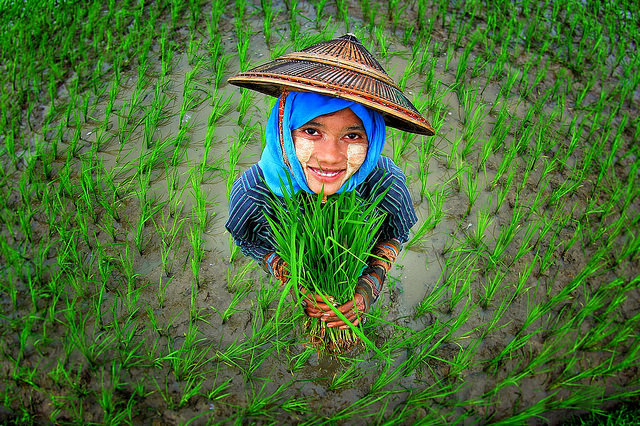 In 2015, the FAO recognized Myanmar as one of 72 countries that cut its population of people suffering from hunger in half, one of the Millennium Development Goals set by the U.N. The agriculture industry in Myanmar accounts for a majority of the country’s income and is its largest source of employment, so it makes sense that there are dozens of opportunities for growth in sustainable agriculture in Myanmar.
The potential for Myanmar’s agriculture to improve is strong. Though the country has one of the lowest yields in Southeast Asia, Myanmar also has some of the lowest labor costs. In order to capitalize on the opportunities provided by the current economic climate, Myanmar’s government has created a set of agricultural policies to “establish a peaceful, modern and developed country.” The 12 policies focus on furthering development, protecting and educating farmers and reducing poverty through the agriculture industry.
Sustainable agriculture in Myanmar is pioneered by a large population of small-scale rural farmers. Approximately 70 percent of the country’s population depends on agriculture for food and income, and the government is making an effort to support this population through The Law of Protection of the Farmer Rights and Enhancement of their Benefits. The law was enacted in 2013 and a Leading Body was appointed to assist Burmese farmers and enforce the regulations under the law. The Leading Body is in charge of giving loans, ensuring that farmers get reasonable payment for their products and importing technology, fertilizers, seeds, pesticides and other necessary provisions.
At this time, Myanmar’s biggest agricultural export is rice. According to the Ministry of Commerce, the demand for rice produced in Myanmar is the highest it has been in 50 years. However, other major rice exporters in Southeast Asia—such as Thailand and Cambodia—are taking advantage of the rising demand for high-quality rice. Myanmar has previously capitalized on exporting to low-quality markets and thus has a history of outputting low-quality products. Going forward, sustainable agriculture in Myanmar will only continue to improve if the quality of the industry’s products improves. As the industry evolves, new strains of higher-quality rice and other cereals are slowly being introduced to Burmese farms.
Many opportunities are arising to continue the development of sustainable agriculture in Myanmar. As working conditions improve and the industry grows, Myanmar’s residents are looking at an improvement of the country’s overall economic wellness.
– Anna Sheps
Photo: Flickr
