• Link to X
  • Link to Facebook
  • Link to Instagram
  • Link to TikTok
  • Link to Youtube
  • About
    • About Us
      • President
      • Board of Directors
      • Board of Advisors
      • Financials
      • Our Methodology
      • Success Tracker
      • Contact
  • Act Now
    • 30 Ways to Help
      • Email Congress
      • Call Congress
      • Volunteer
      • Courses & Certificates
      • Be a Donor
    • Internships
      • In-Office Internships
      • Remote Internships
    • Legislation
      • Politics 101
  • The Blog
  • The Podcast
  • Magazine
  • Donate
  • Click to open the search input field Click to open the search input field Search
  • Menu Menu

Archive for category: Slavery

Information and news about slavery

Education, Global Poverty, Slavery

How Freed Communities Are Building Schools in Mauritania

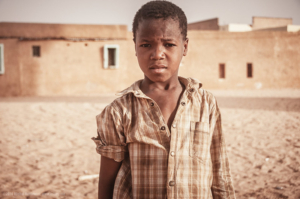
Schools in MauritaniaIn Mauritania, hereditary slavery is not always visibly evident, but its influence remains strong. For generations, the Haratine, a Black ethnic group historically enslaved by the White Moors (Beidane), have been born into lives of servitude, owned as property and made to believe that their bondage is divine will. Women face sexual violence and are forced to bear children who inherit their enslaved status. Entire families work unpaid within a caste system that persists beyond legal abolition. Although Mauritania criminalized slavery in 2007 and reinforced laws in 2015, enforcement remains weak.

Few enslavers have been prosecuted and the government denies that slavery still exists, instead targeting anti-slavery activists who challenge the system. Illiteracy, common among the Haratine, deepens their marginalization, with only half able to read and write. Public education in Mauritania is underfunded and neglected, failing those most in need, while the elite send their children to private schools.

Without birth certificates, many Haratine children are prevented from attending school, reinforcing their exclusion. Nonetheless, communities are establishing their schools in response to systemic neglect. Since 2014, more than 60 grassroots schools have been built by and for the Haratine, providing literacy and empowerment. These initiatives challenge a divided nation, where rural slavery contrasts with urban segregation and where the legacy of slavery persists in slums and segregated neighborhoods.

The Rise of Community-Led Schooling

Pervasive illiteracy and the emergence of community-led schools in Mauritania underscore both significant challenges and the resilient efforts of formerly marginalized communities to reclaim their right to education, a transformative journey from enslavement to education. Although there have been gradual improvements, stark disparities persist, exacerbated by a brain drain of young, educated Mauritanians seeking higher education abroad, leading to a fractured system.

Ali Deng of the Sahel Foundation notes that primary education is highly stratified: wealthy families send their children to elite private schools, the middle class chooses lower-tier private institutions and the impoverished rely on underfunded government schools with few resources. Rural areas are hit hardest, with severe teacher shortages making access nearly impossible. With literacy rates as low as 52% and extreme poverty impacting three-quarters of the population, grassroots organizations have stepped in to fill the gap.

Groups like Graines d’Espoir Mauritania work directly with marginalized communities, offering educational support, nutrition and agricultural programs to promote long-term development. These efforts, often led by residents and supported by diaspora networks, focus on inclusive education, rejecting ethnic or religious discrimination. While the government is gradually expanding access, NGOs and community-led schools in Mauritania enable oppressed groups, such as the Haratin, to overcome systemic barriers and create their routes to literacy and empowerment.

Political Pushback and Progress

Despite Mauritania’s official abolition of slavery in 1981 and subsequent laws against it, the practice continues with alarming impunity. Those advocating for emancipation face relentless political repression. Leading this effort is Biram Dah Abeid, an anti-slavery activist and politician who established the Initiative for the Resurgence of the Abolitionist Movement (IRA-Mauritania).

Abeid is globally recognized for his bravery, receiving awards like the 2013 U.N. Human Rights Prize, the 2016 U.S. State Department’s TIP Hero Award and the 2015 Dutch Human Rights Tulip. Abeid works to free enslaved communities, prosecute slaveholders and challenge the government’s complicity. His activism has come at a personal cost. In 2014, he and 16 fellow activists were arrested during a protest against slaveholder impunity. He was charged with unlawful assembly and sentenced to two years in prison amid international protests.

Although released in 2016, he was re-arrested in 2018, highlighting the government’s effort to silence dissent. Nonetheless, IRA-Mauritania continues grassroots activism through protests, hunger strikes and global advocacy. These suppression tactics reflect a wider pattern of resistance against Black liberation movements, where legal and political systems are weaponized to uphold oppression. Yet, Abedi’s perseverance and international support show that liberated communities are demanding education and justice and redefining resistance narratives amid systemic violence.

The Lasting Effects

In Mauritania, community-led educational and economic programs are transforming freed slave communities by breaking cycles of oppression and reshaping cultural narratives. Organizations like Anti-Slavery International and SOS-Esclaves have supported formerly enslaved individuals, especially Haratine women. They do this through vocational training, financial literacy workshops and small business support, helping hundreds achieve economic independence for the first time.

These initiatives do more than foster livelihoods; they challenge caste hierarchies by promoting self-worth and empowerment. Personal stories, such as Moctar’s, who escaped slavery at age 13 and now aims to become a lawyer, illustrate the psychological freedom these efforts provide. His mother’s initial resistance, rooted in long standing beliefs about caste superiority, highlights the cultural barriers these programs face.

By teaching skills like embroidery, sewing and market entrepreneurship, these workshops offer income opportunities and reshape social roles for Haratines, historically limited to “dirty” or “degrading” work. These community-driven initiatives demonstrate how they can address immediate survival needs while fostering long-term cultural change, turning emancipation into genuine empowerment.

A Path Forward Through Collective Action

Mauritania’s transition from enslavement to education highlights both the persistence of systemic oppression and the empowering role of community-led resistance. Although slavery has been legally abolished, hereditary slavery continues under caste hierarchies, government denial and institutional neglect. Nonetheless, freed communities, especially the Haratine, are creating spaces for empowerment through grassroots schools, vocational programs and economic initiatives in Mauritania.

The growth of community-based schooling, supported by groups like Anti-Slavery International and activists such as Abeid, shows how education can break the cycle of intergenerational trauma. These successes, though hard-won, reveal the contradictions within a state that bans slavery but criminalizes those fighting against it.

The path forward remains challenging. Repressive government actions limited public funding and deeply rooted caste ideologies still obstruct progress. However, the resilience of Mauritania’s marginalized populations provides a change model, with these grassroots efforts fostering a future where emancipation signifies freedom from chains and the opportunity to thrive.

– Emilia Bartle

Emilia is based in Watford, UK and focuses on Good News and Politics for The Borgen Project.

Photo: Flickr
July 28, 2025
https://borgenproject.org/wp-content/uploads/borgen-project-logo.svg 0 0 Hemant Gupta https://borgenproject.org/wp-content/uploads/borgen-project-logo.svg Hemant Gupta2025-07-28 01:30:352025-07-27 16:11:05How Freed Communities Are Building Schools in Mauritania
Global Poverty, Human Trafficking, Slavery

Human Traffickers Thrive Amid Global Conflict

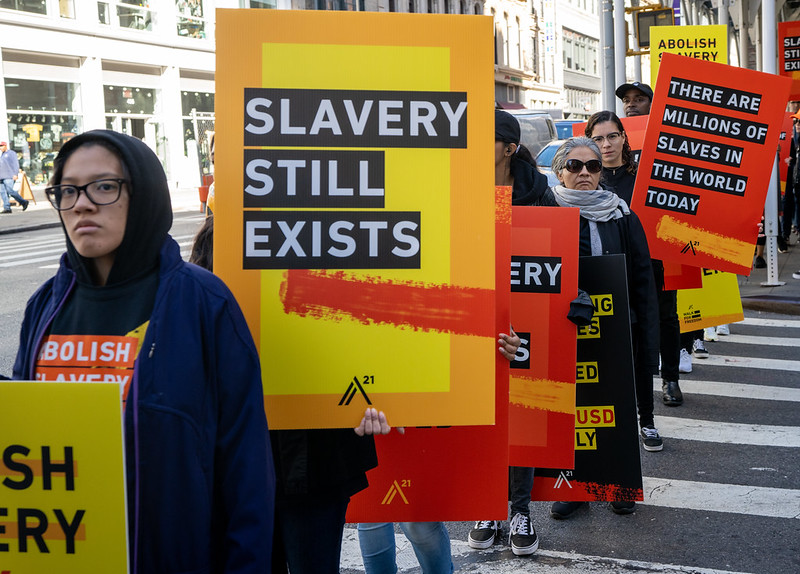
Human TraffickersThere are several reasons why people flee their home countries. War, persecution, climate disaster, hunger and extreme poverty all create circumstances that encourage people to seek out a better, more stable life. UNHCR noted more than 110 million forcibly displaced persons by the end of 2023. Human traffickers thrive amid global conflict, preying on displaced and vulnerable refugees. In a new host country, refugees may not be familiar with the legal system or language and are unlikely to have stable housing or income. The overwhelming majority of refugees reside within camps, with limited educational or job opportunities. Many are unable to gain legal status in their host country and are therefore unable to make an income.
Human Traffickers’ Tactics

Traffickers take advantage of vulnerabilities, particularly situations of poverty, using deceptive tactics to lure refugees into fraudulent travel and employment arrangements. For example, women and girls are commonly presented with vague job opportunities, with the promise of financial stability, only to be sold, trafficked and abused. Smugglers who promise refugees a safe journey and admittance into host countries, often turn around and demand more money. With little to no money to give, it is not uncommon for smugglers to exploit displaced individuals through sex trafficking.

Women and Children at Risk

Displaced children become vulnerable to child marriage and sex trafficking in exchange for food or clothes. Syrian children are often subject to child marriage, including to members of various terrorist organizations. These arrangements can lead to sexual slavery and forced labor. Similar reports of Afghan girls forced into arranged marriages have existed since the Taliban takeover. It is not uncommon for Afghan girls to face further exploitation in sex trafficking by their new husbands.

Romania has received more than 80,000 Ukrainian refugees since February 2022, when Russia invaded Ukraine. In a World Vision survey in Romania, 97% of participants had heard of instances of human trafficking. Over half of these people have identified women as the most at-risk population.

According to the International Rescue Committee, by the end of 2022, 52% of all global refugees came from three countries; Syria, Ukraine and Afghanistan. All three of these countries are struggling with conflicts and authoritarianism. Conflict weakens a country’s political stability, hence increasing economic vulnerabilities. To properly address and shut down human traffickers thriving amidst global conflict, greater awareness surrounding authoritarian government structures is necessary.

Taking Action Against Human Trafficking

The Global Protection Cluster (GPC) is a “network of nongovernmental organizations (NGOs), international organizations and U.N. agencies, engaged in protection work in humanitarian crises including armed conflict and disasters.”

The GPC, in terms of human trafficking, aims to ensure that partners and governments tasked with protecting people from trafficking are well-equipped to handle the task. It created the Task Team on Anti-Trafficking in Humanitarian Action in 2017. The Task Team is co-led by the International Organization for Migration (IOM) and UNHCR.  Task Team members include InterAction, the International Catholic Migration Commission (ICMC), the International Federation of Red Cross and Red Crescent (IFRC) and other major humanitarian organizations.

– Sophia Loizos
Photo: Flickr

February 2, 2024
https://borgenproject.org/wp-content/uploads/borgen-project-logo.svg 0 0 Kim Thelwell https://borgenproject.org/wp-content/uploads/borgen-project-logo.svg Kim Thelwell2024-02-02 01:30:452024-05-30 22:32:48Human Traffickers Thrive Amid Global Conflict
Global Poverty, Slavery

The IAF and AQUIPP Help Brazil’s Quilombola Communities

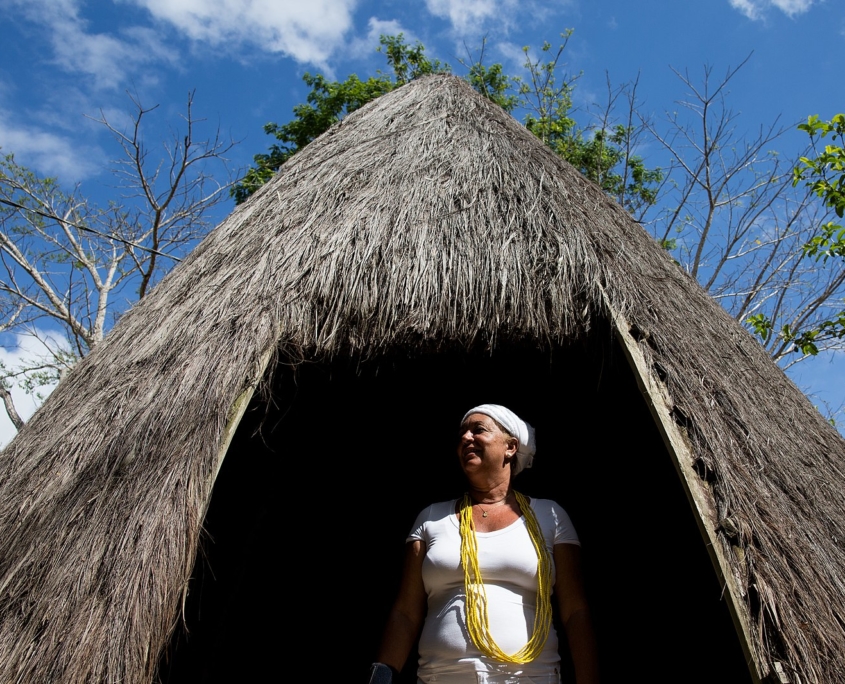
Brazil's Quilombola communitiesBrazil’s Quilombola communities consist of Africans and Afro-descended people who escaped slavery and established remote mountain communities called quilombos. In 2020, these communities were spread across Brazil and numbered close to 6,000 in total. Brazil brought in more than four million slaves from Africa over the course of its colonial history, only ending the practice when Brazil became the last country in the Americas to ban slavery in 1888. Unfortunately, the legacy of slavery persists as many descendants of enslaved people still live in poverty. Brazil’s Quilombola communities suffer a poverty rate nearly three times that of the country as a whole — 75% compared with about 25% for the country overall, according to 2018 government data.

The Inter-American Foundation in Brazil

The Inter-American Foundation (IAF) began in 1969, giving grants to grassroots projects working to improve poverty, sustainability, resource management, entrepreneurial skills, leadership, civil rights and more across Latin America and the Caribbean. The IAF currently has 343 active projects across 26 countries, investing more than $100 million in these development initiatives.

Brazil is a large beneficiary of IAF grants, with 27 active projects running as of July 2021. Brazil received its first IAF grant in 1972. IAF investment in these projects totals about $7 million and has directly benefited more than 25,700 people in Brazil. The projects work in a variety of areas, from fighting food insecurity and poverty to providing housing and job training to Venezuelan refugees.

AQUIPP and Quilombola Communities

One of the IAF’s many active projects in Brazil is a grant given to the Associação Quilombola do Povoado Patioba (AQUIPP). AQUIPP fulfills a variety of needs for Brazil’s Quilombola communities, especially when it comes to improving the lives of youth. The association provides educational workshops for young Quilombola people that focus on improving their chances of finding employment, leadership roles in the face of discrimination and strengthening their relationships with their Afro-Brazilian heritage. AQUIPP hopes that these young people will go on to become ambassadors outside their local communities, educating others in Brazil and around the world about the importance of Quilombola culture and practices.

AQUIPP and other Quilombola organizations also work in the political and health sectors. As part of their advocacy work on behalf of the Quilombola people, the organizations work with local and national governments to fight discrimination in schools and other public spaces and to protect Quilombola communities’ land rights. In the health sector, AQUIPP plays a key role in providing masks and other personal protective equipment as well as educational information about protection from COVID-19.

The IAF has been supporting AQUIPP’s work in Brazil since 2017. The IAF reports that the efforts of AQUIPP directly benefit 200 people and indirectly benefit an additional 1,000.

Preserving the Future of Quilombola Communities

Brazil’s Quilombola communities remain strong despite centuries of persecution and discrimination both before and after the abolition of slavery in Brazil. Their vibrant Afro-Brazilian traditions of music, dance, clothing, agricultural systems, languages and more, have survived against the odds.

Programs like AQUIPP help amplify Quilombola voices and fight devastatingly high poverty rates in Quilombola communities. With the help of AQUIPP and the IAF’s funding, young Quilombola people can gain access to the education and training they need to acquire well-paying jobs and rise out of poverty.

– Julia Welp

Photo: Wikimedia Commons

September 2, 2021
https://borgenproject.org/wp-content/uploads/borgen-project-logo.svg 0 0 Lynsey Alexander https://borgenproject.org/wp-content/uploads/borgen-project-logo.svg Lynsey Alexander2021-09-02 07:30:312024-05-30 22:24:53The IAF and AQUIPP Help Brazil’s Quilombola Communities
Human Trafficking, Slavery

5 Books About Human Trafficking

Book About Human TraffickingIt is always a good time to start a new book. Reading improves memory and empathy and books are important gateways to learning something unfamiliar. Books can also provide intimate accounts of harrowing experiences such as human trafficking. In 2016, an estimated 24.9 million people were subject to forced labor. Of these people, “16 million were in the private economy, another 4.8 million were in forced sexual exploitation and 4.1 million were in forced labor imposed by state authorities.” Several nonfiction books about human trafficking aim to bring global awareness to the issue.
6 Books on Human Trafficking

  1. “A Long Way Gone: Memoirs of a Boy Soldier” (2007). This memoir recounts Ishmael Beah’s time as a child soldier during the civil war in Sierra Leone. After the destruction of his village, 12-year-old Beah flees and wanders the war-devastated land. Later, the military captures Beah. At the age of 13, the military forces him to become a child soldier. Beah was eventually released by the military and rehabilitated by UNICEF. His story discusses the horrific effects of war from the eyes and mind of a child. It also explores the difficulties of adjusting to a normal life after being freed from a forced life in the military.
  2. “I Am Nujood, Age 10 and Divorced” (2009). In 2008, at the age of 10, Nujood Ali was forced to marry a man three times older than her. After enduring months of abuse, she planned her escape. Through local advocacy and support from the press, Ali was able to gain her freedom. Ali became the first child bride in Yemen to be granted a divorce. The memoir recounts the end of her childhood in a tale of survival, persistence and female empowerment.
  3. “Sex Trafficking: Inside the Business of Modern Slavery” (2009). In this book, Siddharth Kara uses an economic lens to understand the world of human trafficking. Kara “initially encountered the horrors of slavery in a Bosnian refugee camp in 1995.” After, he traveled to several countries across four continents to investigate and uncover the horrors of human trafficking. The book recounts more than 400 stories from both victims and traffickers. Using his history in business, economics and law, Kara breaks down the business of sex trafficking, the most devastating form of slavery today. In contrast to other books about human trafficking, Kara utilizes a technical analysis to educate the reader and offer an explanation as to why and how human trafficking is still happening in the modern world.
  4. “The Natashas: Inside the New Global Sex Trade” (2003). In this exposé, Victor Malarek goes inside the world of sex trafficking in Israel where women and girls from across the Eastern Bloc are lured into a life of prostitution with false promises of better jobs and better lives. Instead, traffickers force women into prostitution, strip them of their identities and give them the name Natasha. Oftentimes, their abusers are the very people meant to protect them. Malarek offers a damning account of the horrors of the sex trade and the corrupt systems keeping these women imprisoned.
  5. “God in a Brothel: An Undercover Journey into Sex Trafficking and Rescue” (2011). This nonfiction story describes Daniel Walker’s investigation into the global sex industry. He writes the tales of rescuers from inside trafficking rings. The book discusses the terrifying stories of those saved from sex trafficking, the torment they experienced and their return to society. It also tells the heartbreaking tale of those who continue living in these circumstances. In this book, Walker gives the reader an extremely close and personal look inside the world of sex trafficking.

In order to bring awareness to a global issue, it is important to remain educated and empathetic. These books about human trafficking shed light on modern-day slavery so that the world can do more to address the issue.

– Claire Olmstead
Photo: Flickr

June 29, 2021
https://borgenproject.org/wp-content/uploads/borgen-project-logo.svg 0 0 Kim Thelwell https://borgenproject.org/wp-content/uploads/borgen-project-logo.svg Kim Thelwell2021-06-29 07:30:052022-03-28 07:59:065 Books About Human Trafficking
Global Poverty, Human Trafficking, Slavery

Ending Slavery in the Thai Fishing Industry

Slavery in the Thai Fishing Industry
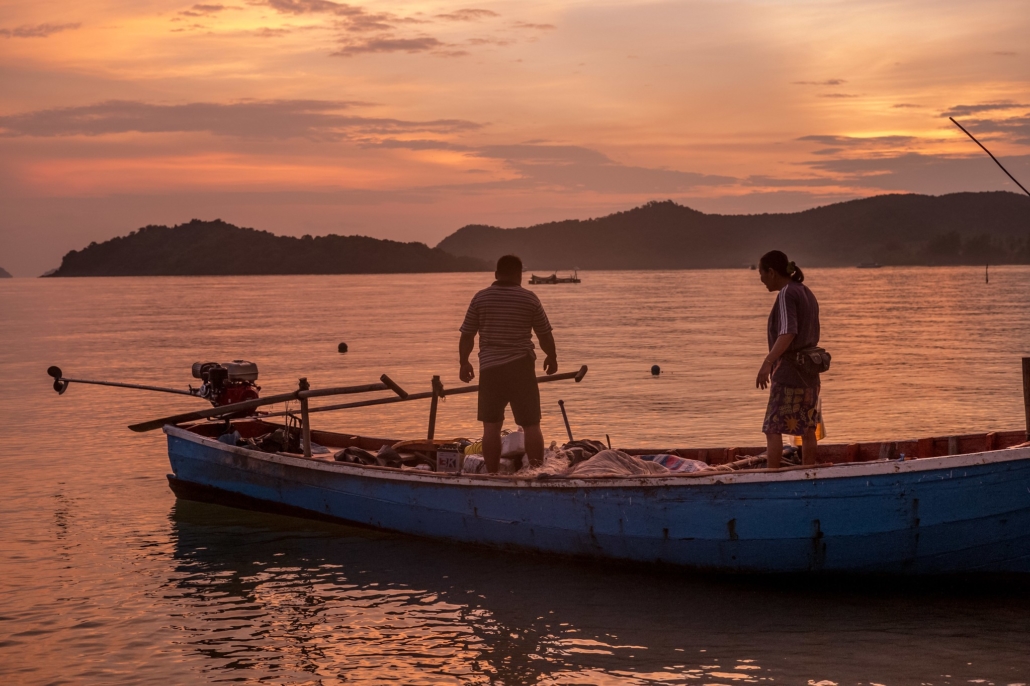
With Thailand’s status as one of the world’s largest fishery exporters, the rest of the world is entangled in the industry’s human trafficking and forced labor violations. The spotlight ended up on Thailand in 2015 due to reports of slavery in the Thai fishing industry. In response, there has been movement from world governments and organizations alike towards ending slavery. However, industry workers, mostly poor migrants from Myanmar and Cambodia, continue to suffer.

Slavery Exposed

In June 2014, the story broke that the world’s top four shrimp retailers commissioned Thai fishing boats that supposedly had workers who were human trafficking victims aboard. Further reporting revealed the Thai fishing industry’s extensive misuse of workers. Supposedly, these workers experienced poor working conditions and confinement similar to a prison. In fact, workers were receiving pay below the minimum wage and not obtaining payments on time. Additionally, in extreme cases, reports as of January 2018 have determined that some workers died, suffered beatings or were trafficking victims.

Oceana analyst Lacey Malarky explained the reason for the pattern of human rights abuses in the fishing industry. Malarky said that the decline of global fishing stocks has caused fishing boats to travel further away. This caused “operators [to resort to] illegal, unreported and unregulated fishing and human rights abuses to protect costs.” 

Global Response to Slavery in Thailand

In response to reports of slavery in the fishing industry in Thailand, the U.S. reduced Thailand to Tier 3 status in its Trafficking in Persons report. Tier 3 is the lowest status regarding human trafficking that a country can receive. Additionally, the European Commission gave Thailand a “yellow card” and threatened a “red card,” resulting in European Union sanctions.

At the time, the consequences were devastating to Thailand’s fishing industry. The U.S. and European Union are the second and third largest markets for Thai seafood exports. The E.U. imported almost $500 million of Thai seafood in 2016 and the U.S. imported over $28 billion in 2018. 

In response, Thailand’s National Council for Peace and Order made moves to overhaul “fishing industry monitoring, control and management.” New frameworks  say that “teams of officials are now supposed to check fishing boats each time they depart and arrive in port.” Additionally, it made the effort to strengthen its laws and increase penalties if laborers’ rights experienced infringement.

Issues with Enforcement

One primary issue with protecting victimized fishermen is that Thai law does not protect migrant workers. In general, Thailand does not strongly enforce laws that protect workers. A Human Rights Watch report in 2018 found that “Thai inspection frameworks fail to adequately or systematically address issues of forced labor.”

For example, the government introduced a “pink card” registration scheme in 2014. This was to decrease undocumented migrants working in Thailand. However, the initiative has done very little to protect the most vulnerable. The “pink card” monitors and controls workers by occasionally making sure that fishermen match the pink card. This details a specific location and crew manifest of the boat a particular fisherman is on. Critics say that focusing on the “pink card” denies that both documented and undocumented migrants can be victims of exploitation. 

Another issue with intervention is that many poor fishermen agree to mediation and settlements following complaints. This tends to result in laborers being unable to receive the money they have entitlement to while abusive bosses can avoid legal action. The pattern of complaints resulting in settlements causes the continuation of abuse, failing to end slavery in the Thai fishing industry.

Documenting Progress

In the last six years, there have been significant efforts to reduce instances of slavery in the fishing industry. In January 2019, Thailand became the first Asian country to ratify the International Labour Organization Work in Fishing Convention. This is a guide that specifies laws and regulations to improve working conditions in industrial fishing. Additionally, in March 2021, a dozen industry associations in Thailand “signed pacts to rid their supply chains of child and forced labor.”

Seafood Slavery Risk Tool

Developed by Sustainable Fisheries Partnership, Seafood Watch and Liberty Shared, the Risk Tool analyzes risk using both public and non-public information. This is to help businesses “identify the risk of slavery in their supply chains.” The technology continues to evolve. The updates to the Risk Tool will provide businesses with interactive maps. This shows the risk of “forced labor, human trafficking and hazardous child labor” to help businesses make decisions about suppliers.

Global Fishing Watch’s Automatic Identification System

The Global Fishing Watch is an online database tracking fishing ships via an onboard satellite transmitter. This is called the Automatic Identification System, which was originally developed to prevent ship collisions, and now catches vessels engaged in illegal behavior. The system targets ships that need further inspection by collecting data on four points of potentially illegal behavior. The points include whether ships stayed at sea for months, temporarily turned off transmitters to enter marine protected areas, engaged in trans-shipment and avoided strict ports. Using the technology, analysts are hopeful that more justice will be possible for vulnerable, victimized workers.

Reports show that Thailand has made huge steps toward ending the abuse and misuse of workers. However, more is necessary to end slavery in the Thai fishing industry. Through further attention and ongoing attempts to mitigate and bring justice to slave labor in Thailand’s fishing industry, the treatment of laborers in the Thai fishing industry should improve.

– Brittany Granquist
Photo: Flickr

May 20, 2021
https://borgenproject.org/wp-content/uploads/borgen-project-logo.svg 0 0 Kim Thelwell https://borgenproject.org/wp-content/uploads/borgen-project-logo.svg Kim Thelwell2021-05-20 09:57:072021-05-21 09:57:20Ending Slavery in the Thai Fishing Industry
Global Poverty, Human Trafficking, Slavery

Timidria’s Fight Against Human Trafficking in Niger

Human trafficking in Niger
Niger has experienced slave-based exploitation due to the border crossing between it and Libya, a key launching point for human traffickers. However, the Nigerien borders are not the root issues. A Nigerien anti-slavery organization, Timidria, found that various Niger officials, who the country chose to combat human trafficking in Niger, may have slaves in their own households.

Overview

Ilguilas Weila, a Niger native, founded Timidria in 1991. Together with Anti-Slavery International, Timidria has been standing at the forefront seeking to protect more than 40,000 lost, unidentified and identified victims of inherited slavery and trafficking. This is its printed testimony:

“It clearly emerged from this review that the failure of slavery prosecutions had less to do with litigation itself than to external elements, particularly the influence of traditional chiefs and social hierarchies on judges’ decisions and disputations between customary and statutory law.”

This is a credible statement depicting the Nigerien government’s failure to identify, prosecute and convict traffickers, as it has failed to identify the ones among them.

Timidrias’ Success

In 2003, the anti-slavery organization gained much praise for its contributions to the Nigerien Anti-Slavery enacted Law 2003-25. Timidria also promoted efforts to fund a governmental 2019 Child Protection Committee in each commune in order to eliminate the worst forms of child labor. In 2019, Niger’s supreme court ruling also declared wahaya, the traditional practice of selling and trading young girls as fifth wives, an illegal act in 2019. Unfortunately, the news is yet to reach the majority of Nigerien citizens, a concern that left many victims trembling. Critics report that the government has made no efforts to identify and prosecute families who practice such practices.

What Makes Niger Vulnerable to Human Trafficking?

Niger underwent conflicts relating to the criminalization of traditional slavery that wealthy Tuaregs most invoke, some of whom serve in government seats. This includes Prime Minister Rafini who shares a Tuareg descent although no indication claims that he practices slave-ownership. The Tuareg tribe participates in various traditional and slave-based practices against children. A known practice is wahaya where little girls become trafficking victims by ending up in marriages as fifth wives or slavery. Meanwhile, talibés are young boys who traffickers place in slavery and extreme labor such as mining and cattle herding. Despite the 2003 slavery abolition, Timidria adduced that “children in {descent-based} slavery are considered to be the property of their master and face a lifetime of forced, unpaid labour and abuse.” Out of the thousand Wahaya crimes that underwent identification over the years, Timidria is only aware of one single conviction.

Government’s Role in Human Trafficking in Niger

The anti-slavery organization stated that “the implementation of the law criminalizing slavery has been inadequate and prosecutions for slavery are rare. Government alliances with the religious and political elites among the Tuareg tribes (traditionally slave-owning) is the root cause of Niger’s vulnerability.” The current President of Niger, Mahamadou Issoufou, and current Prime Minister, Brigi Rafini have both been in office since April 2011, serving 10 years as lawmakers. The 2020 Human Development Index ranked Niger at the bottom of the list caused by Niger’s late criminalization of slavery.

Similarly, reporters have described events involving seeing “women displaying the heavy brass anklets they had been forced to wear to prevent them from escaping.” Oftentimes, these women’s knowledge of laws and rights is limited in their areas, especially with no education or help in sight.

The Niger government has strained the workload of Timidria by the failure to identify government officials’ role in slavery-ownership. Despite this, Timidria is present all throughout Niger. It has over 680 offices in villages and camps, 182 offices in rural and urban communities and a growing legal team among its 300,000 members and supporters. This makes it crucially important for the organizations, with or without government assistance, to raise awareness of slavery that lingers underneath the heavy stigma of oppression.

– Ayesha Swaray
Photo: Flickr

February 19, 2021
https://borgenproject.org/wp-content/uploads/borgen-project-logo.svg 0 0 Jennifer Philipp https://borgenproject.org/wp-content/uploads/borgen-project-logo.svg Jennifer Philipp2021-02-19 01:30:172024-05-30 07:56:43Timidria’s Fight Against Human Trafficking in Niger
Global Poverty, Human Rights, Human Trafficking, Slavery

Human Trafficking in Hong Kong

Human Trafficking in Hong KongHuman trafficking is a persistent problem all around the world, including in the Hong Kong Special Administrative Region located in the People’s Republic of China. The Justice Centre Hong Kong produced a study in 2016 on human trafficking in Hong Kong and it was found that one in six of the 370,000 migrant workers in the city were forced labor victims. While Hong Kong does take steps to eradicate human trafficking, it is important to study human trafficking in every region of the world so that it can be prevented in the future.
Recent Changes and Legislation

Lawmakers in Hong Kong proposed that the government pass an anti-slavery bill based on Great Britain’s “Modern Slavery Act.” However, two of those lawmakers, Dennis Kwok and Kenneth Leung, were removed from Parliament, leaving many questioning whether the bill would ever get passed. A member of The Mekong Club, a group in Hong Kong dedicated to fighting modern slavery said, “There is little chance that this important bill will move forward.” This, in conjunction with the current protests in Hong Kong likely means that lawmakers have had little time to focus on anti-human trafficking legislation.

Another recent development on human trafficking in the nation is that in mid-2020 the U.S. demoted Hong Kong from Tier 2 on the Trafficking in Persons Report to Tier 2 Watch List, suggesting that Hong Kong “does not fully meet the minimum standards for the elimination of trafficking.” The government of Hong Kong disputed the U.S. human trafficking report’s claims, arguing that the report was not based on evidence and looks at minor flaws rather than the big picture.

Hong Kong’s Approach to Resolving Human Trafficking

One problem with the nation’s current anti-human trafficking legislation is that the city only defines human trafficking as “involving cross-border sex trafficking for prostitution,” which means the legislation does not cover “labor exploitation, debt bondage, domestic servitude or similar practices.” Unfortunately, the legal system can make it difficult for those who are trafficked in Hong Kong to get the help they need or support from legal authorities.

While anti-human trafficking laws could be amended, lawmakers and academics have shown there are creative solutions to the problem. Reed Smooth Richards Butler, a law firm, worked with Liberty Asia, an anti-slavery charity, to create the Legal Gap Analysis report, which explains how other laws can be used to persecute human traffickers. For example, individuals responsible could be arrested for false imprisonment rather than human trafficking directly. Creative efforts like these are important to find solutions to salient issues, including the trafficking of people.

Protecting Human Rights

While the government can certainly improve its response to human trafficking in Hong Kong, the country has implemented many measures to help reduce human trafficking and protect human rights. Human trafficking needs addressing and analyzing the nuances in human trafficking policy can help incapacitate the industry globally.

– Madelynn Einhorn
Photo: Flickr

February 17, 2021
https://borgenproject.org/wp-content/uploads/borgen-project-logo.svg 0 0 Kim Thelwell https://borgenproject.org/wp-content/uploads/borgen-project-logo.svg Kim Thelwell2021-02-17 01:30:392021-02-15 03:42:13Human Trafficking in Hong Kong
Child Poverty, Global Poverty, Slavery

Combating Child Poverty in Mauritania

Child Poverty in Mauritania
Mauritania in coastal west Africa is among the most impoverished countries in the world, with 31% of its 4 million people, or around 1.2 million people, living beneath the poverty line as of 2014. Consequently, child poverty in Mauritania is likely to be one of the gravest situations in the world, even though reliable data regarding child poverty is scarce due to the fact that 56% of births in Mauritania do not have legal documentation.

The Background

Despite the abundance of natural resources present in the lands and waters of Mauritania, decades of political and social instability coupled with corruption, oppression and a centuries-long history of ethnicity-based enslavement have created conditions that continually exacerbate child poverty and poverty in general. Other factors such as frequent droughts in and around the Sahara Desert in Northeastern Mauritania also deprive people of food and income to feed themselves or their children. Accordingly, one reliable indicator of the severity of child poverty in Mauritania is the fact that an estimated 19.2% of children under the age of 5 were underweight in 2018.

Child Poverty and Slavery in Mauritania

Poverty and slavery in Mauritania interconnect. Though Mauritania abolished slavery in 1981 and criminalized it in 2007, the persistence of the oppressive ethnic caste system continues to deprive the Haratine population, an ethnic minority in Mauritania, of receiving the social and economic freedoms that the rest of the country receives. As a result, 20% of Mauritania’s total population––and half of all Haratines–– remain enslaved, either explicitly through the threat of punishment or de facto due to socioeconomic discrimination and indentured servitude in 2018.

People inherited and often still inherit slave status in Mauritanian society. As a result, many children are born into slavery to serve the slave masters of their parents or the masters sell them to other families where they often suffer neglect and injury. This continuing cultural practice of hereditary slavery perpetuates a self-sustaining cycle of poverty in the Haratine population of Mauritania. This is one of the ways by which child poverty in Mauritania manifests itself––and by which the practice of slavery continues to maintain itself.

Education

As slaves, children do not receive an education that could provide them with valuable knowledge and skills to improve their living situation. As a result, the threat of living in near-certain poverty if they were to leave their master’s household traps children with their masters. With few viable alternatives to make enough money to live, “former [child] slaves (commonly descendants of slaves) continue to endure slave-like practices, including working for their former masters in exchange for food, money, and lodging” according to the U.S. Department of Labor’s Bureau of International Labor Affairs.

In 2014, estimates determined that 18.2% of children in Mauritania, ages 5 to 14 years old, were working and not receiving an education. An additional 10.8% of children in the same age group were reportedly splitting their time between work and school. Furthermore, UNICEF estimates that the primary school completion rate in Mauritania is 63% indicating that more than one-third of children in Mauritania do not receive a sufficient education.

Solutions

One promising solution that focuses on reinvesting in childhood development in order to break the poverty cycle is providing direct transfer payments to people––primarily mothers–– in impoverished villages on the condition that they attend classes on hygiene, nutrition and early childhood development. This program is jointly funded by the Mauritanian government, the World Bank, the U.K. Department for International Development and the French Agency for Development. Households receiving the payments have seen their families’ and their village’s living conditions improve as they take more care to prevent disease and malnutrition. One of the main objectives of the program is “to invest in the next generation and break the poverty cycle by tackling intergenerational poverty.”

Though Mauritania is currently one of the most impoverished nations in the world, its young population and abundance of natural resources should help the country achieve long-term prosperity.

– Willy Carlsen
Photo: Flickr

January 21, 2021
https://borgenproject.org/wp-content/uploads/borgen-project-logo.svg 0 0 Kim Thelwell https://borgenproject.org/wp-content/uploads/borgen-project-logo.svg Kim Thelwell2021-01-21 07:30:092021-01-27 08:19:26Combating Child Poverty in Mauritania
Global Poverty, Slavery

Anti-slavery Efforts in Mauritania

Anti-slavery Efforts in Mauritania
Mauritania, described in a CNN documentary as “Slavery’s Last Stronghold,” was the last country in the world to formally abolish slavery. Arrests for protesting slavery and lax punitive practices have shown Mauritania’s long list of subsequent anti-slavery legislation to be merely lip service. Still, recent attention and a growing frequency of successful prosecutions hint at incremental progress and intersectional anti-slavery efforts in Mauritania.

The Situation

Since outlawing slavery in 1981, Mauritanian officials have publicly denied any presence of the practice in their borders. In spite of these claims, data that independent observers collected shows that slavery is still prevalent: the Global Slavery Index (G.S.I.) estimates that 90,000 Mauritanians live in modern slavery, a figure likely lower than reality because the government obstructs all efforts to study the practice.

Mauritania ranks sixth on the G.S.I’s Prevalence Index, behind North Korea, Eritrea, Burundi, the Central African Republic and Afghanistan. Other estimates, from local sources, claim that as much as 20% of the population lives in slavery.

Because the Mauritanian government has categorically denied the existence of slavery, efforts to measure or sanction the practice have made slow progress. Major sites like the Washington Post claim that there are no reliable statistics on how many people are enslaved due to government obstruction and cultural norms that make measurement difficult. In fact, Mauritania’s census does not count enslaved people. Slavery did not receive criminalization until 2015, and Mauritanian courts have largely neglected to prosecute individuals accused of enslavement.

SOS-Esclaves and Anti-Slavery International

Still, anti-slavery efforts in Mauritania have seen small victories of varying impact. SOS-Esclaves, joined by Anti-Slavery International, filed a successful lawsuit in 2016 that served two former slave masters a five-year prison sentence and forced them to pay significant compensation to two victims. They won a similar conviction in November 2019, but the defendants appealed their sentence and remain free. The most recent win came on July 9, 2020, when courts served two former slave masters 10 and 15-year sentences and ordered the state to assist them in attaining citizenship. Because a lack of citizenship is one of the greatest obstacles to former slaves’ self-sufficiency, NGOs have touted this latest ruling as a significant victory.

The increasing frequency of these legal wins suggests incremental but steady progress in anti-slavery efforts in Mauritania. Other wins highlight the intersectionality of the issue. Alongside the first two successful convictions in 2016, successful appeals downgraded the charges of two anti-slavery activists who peacefully protested slavery, allowing them to walk free. According to the think tank Freedom House, convictions like these are common obstructive tactics that the government uses. Mauritanian courts frequently convict individuals for activism and inhibit a free press: “journalists risk arrest for reporting on sensitive topics,” and the government “continues to arrest antislavery and antidiscrimination activists.”

The Challenges

Non-governmental organizations’ efforts to stop slavery are beholden to a political system that actively opposes their cause. In turn, Mauritania’s government has resisted international pressure to reform. In January 2019, the United States terminated its trade agreement with Mauritania, citing forced labor practices and government retaliation against peaceful activism.

Further, the Sahara Desert covers 90% of Mauritania’s territory, making only 0.2% of Mauritanian land farmable. In Mauritania’s southern deserts, slavery and poverty deeply intertwine. Masters allow many enslaved families to live and farm on their own but the families have to give up a portion of their harvest each time their masters visit. When people manage to escape, they often gather in desert villages called adwaba where food and water are scarce, and conditions of poverty mirror those of their previous lives. The region’s harsh climate and lack of resources make it extremely difficult to flee abuse or find better circumstances.

Anti-slavery efforts in Mauritania are also battling against ingrained racial distinctions. A majority of slaves are the descendants of dark-skinned people who lighter-skinned Arab Berbers captured centuries before. In interviews, slaves claim that they lack representation in a government filled with lighter-skinned Mauritanians.

Ways to Abolish Slavery in Mauritania

Slavery in Mauritania deeply ties to the country’s cultural, political and geographic roots. The makers of “Slavery’s Last Stronghold” argue that substantively abolishing slavery in Mauritania means addressing the deep poverty that many dark-skinned Mauritanians face. In one interview they conducted, a former slave who had suffered beating and rape by her master nonetheless described him as a benevolent relative because “he also made sure she was fed in a country where many die of hunger.”

The approach that they and local anti-slavery organizations advocate addresses not only slavery but also the issues at its roots: poverty, famine, lack of citizenship or legal rights, obstructions of justice and persecution of activists. Further, slavery rests at the intersection of race, gender, poverty and geography in Mauritania. Successfully prosecuting slave masters brings about slow and incremental progress that inconsistent rulings, which the African Union Court condemned in 2018, still undermine. Anti-slavery efforts in Mauritania encompass improvements in criminalization, but they also extend the other areas mentioned. All they are missing is unity and resources.

– Skye Jacobs
Photo: Flickr

October 17, 2020
https://borgenproject.org/wp-content/uploads/borgen-project-logo.svg 0 0 Jennifer Philipp https://borgenproject.org/wp-content/uploads/borgen-project-logo.svg Jennifer Philipp2020-10-17 16:03:502020-10-17 16:03:50Anti-slavery Efforts in Mauritania
Global Health, Global Poverty, Slavery

5 Ways to Help End Slave Labor in Libya

Slave Labor in LibyaIn the midst of the Black Lives Matter movement, an outbreak of news coverage uncovered the mass institutionalized racism within the United States. However, it is important to also bring to light the racist acts in other countries, such as slave labor in Libya, that still continue the prejudice against black communities today.

The migration of more than 150,000 migrants from Libya to Europe motivated the government to allocate funding towards the Libyan Coast Guard. As a result, Libya accumulated at least 400,000 refugees in detention centers, concentration camps and slave auctions. Currently, there are three times the amount of people in these modern slavery systems in comparison to the transatlantic trade in the 1600s. Here are five ways to help end slave labor in Libya.

5 Ways to Help End Slave Labor in Libya

  1. Social Media: As social media is becoming more popular by the minute, try raising awareness about the mistreatment of migrants in Libya through social media. It is crucial, especially with the sentiment of the Black Lives Matter Movement, to provide resources to the community on how to help during this crisis.
  2. Email or Call U.S. Congressional and International Leaders: Support from the United States is instrumental in providing foreign aid to refugees in Libya. For example, calling attention to certain legislation, such as the International Affairs Budget or the Global Health Security Act, could ensure safety and enrichment for countries at risk. It is also important to grasp the attention of the most vocal leaders across the globe. One could also contact different U.N. ambassadors about taking priority in this cause and mobilizing efforts to solve this global issue.
  3. Boycott Slave Labor in Large Industries: Living in a primarily capitalistic economy, many do not realize how slavery persists through global businesses and industries. Popular brands, such as Nestle and H&M, have used slave labor previously in support of mass production. With over 850,000 textile workers since 2018, H&M does not provide its laborers up to minimum wage. In fact, many of the large industries outside of H&M have their laborers work up to 11 hours a day for six days a week. However, there are simple measures that one can take daily to boycott slave labor. For example, one could support smaller black-owned businesses, such as Aaks, to foster an antislavery sentiment within the community. Other examples of black-owned businesses that follow ethical guidelines are Moda Operandi and Aliya Wanek.
  4. Support Antislavery Movements: Many organizations, such as the International Organization for Migration (IOM), protect victims from human trafficking and support safe departures for refugees. Adding on, smaller projects, such as the Polaris Project, have geared themselves towards ending global enslavement. The Polaris Project takes significant value in its name. It translates to the “North Star” which slaves used as a navigation tool for their freedom. To be more specific, the Polaris Project has run a national human trafficking hotline that has served as a model in many other countries. Having more than 4,000 service providers in the U.S. alone, the Polaris Project has helped survivors and victims who have experienced human trafficking. In addition, it has researched and formed databases, such as the Global Modern Slavery Directory, to connect various countries in ending the slave trade. As of now, more than 2,900 organizations have the database to end human trafficking and slave trading internationally.
  5. Restorative Justice Within Libya: Libya does not criminalize labor trafficking, which allows slave labor to endure. This is largely due to weak law enforcement and the judicial institution in Libya. For example, labor trafficking is not a criminal law, which allows for slave labor to persist. To take part in restorative action, it is necessary to assemble support to provide legal reform in overlooked matters, such as labor trafficking, within Libya. Some organizations that are combating this issue are the Ministry of Interior (MOI) and the Directorate For Combating Illegal Migration (DCIM).

Although the slave trade remains to be an integral problem in Libya, some are making various strides in the fight against slave labor and labor trafficking. For example, the United Nations made it an official goal to end slavery by 2030. In addition, the United Nations Human Rights Council is providing more funding towards antislavery actions as well as providing health care to migrants and refugees. With this support, Libya is taking action in making internal improvements, such as collaborating with IOM on imperative initiatives such as the better treatment of migrants. With numerous efforts together, there is more solvency not just in Libya, but in the widespread systemic oppression that many face today.

– Aishwarya Thiyagarajan
Photo: Flickr

July 20, 2020
https://borgenproject.org/wp-content/uploads/borgen-project-logo.svg 0 0 Kim Thelwell https://borgenproject.org/wp-content/uploads/borgen-project-logo.svg Kim Thelwell2020-07-20 14:28:082020-07-20 14:28:085 Ways to Help End Slave Labor in Libya
Page 1 of 6123›»

Get Smarter

  • Global Poverty 101
  • Global Poverty… The Good News
  • Global Poverty & U.S. Jobs
  • Global Poverty and National Security
  • Innovative Solutions to Poverty
  • Global Poverty & Aid FAQ’s
Search Search

Take Action

  • Call Congress
  • Email Congress
  • Donate
  • 30 Ways to Help
  • Volunteer Ops
  • Internships
  • Courses & Certificates
  • The Podcast
Borgen Project

“The Borgen Project is an incredible nonprofit organization that is addressing poverty and hunger and working towards ending them.”

-The Huffington Post

Inside The Borgen Project

  • Contact
  • About
  • Financials
  • President
  • Board of Directors
  • Board of Advisors

International Links

  • UK Email Parliament
  • UK Donate
  • Canada Email Parliament

Get Smarter

  • Global Poverty 101
  • Global Poverty… The Good News
  • Global Poverty & U.S. Jobs
  • Global Poverty and National Security
  • Innovative Solutions to Poverty
  • Global Poverty & Aid FAQ’s

Ways to Help

  • Call Congress
  • Email Congress
  • Donate
  • 30 Ways to Help
  • Volunteer Ops
  • Internships
  • Courses & Certificates
  • The Podcast
Scroll to top Scroll to top Scroll to top