• Link to X
  • Link to Facebook
  • Link to Instagram
  • Link to TikTok
  • Link to Youtube
  • About
    • About Us
      • President
      • Board of Directors
      • Board of Advisors
      • Financials
      • Our Methodology
      • Success Tracker
      • Contact
  • Act Now
    • 30 Ways to Help
      • Email Congress
      • Call Congress
      • Volunteer
      • Courses & Certificates
      • Be a Donor
    • Internships
      • In-Office Internships
      • Remote Internships
    • Legislation
      • Politics 101
  • The Blog
  • The Podcast
  • Magazine
  • Donate
  • Click to open the search input field Click to open the search input field Search
  • Menu Menu

Archive for category: Foreign Aid

Foreign aid coverage and information.

Foreign Aid, Global Poverty

Foreign Aid to Africa: The United States vs. China

Foreign Aid to Africa
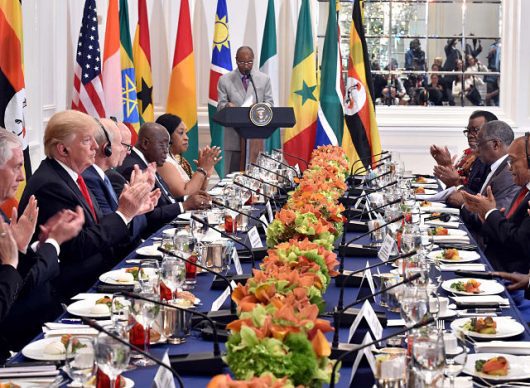
President Trump’s proposed foreign aid cuts have sparked a bipartisan effort in Congress to resist them. Among the proposed budgets, foreign aid to Africa has been affected the most, expecting a 35 percent reduction. On the other side of the world, China is constantly boosting its aid package to African countries. Here is a comparison between the U.S. and China’s foreign aid to Africa over the years.

In the past decade, U.S. foreign aid has maintained at a steady level of $32 billion distributed over 200 countries. The Official Development Assistance (ODA) focuses on three regions: Asia, Europe and Africa. From 1980-2012, almost $120 billion went to sub-Saharan countries like Sudan, Ethiopia, Kenya and Congo.

While the overall ODA budget underwent a 17-fold increase from 1960 to 2006, aid to sub-Saharan Africa increased by almost 3,000 percent, from $211 million to $5.6 billion. The U.S. gave out $97.67 billion over 18 years in ODA to sub-Saharan Africa, with infrastructure projects (48 percent of total aid) and humanitarian aid (26 percent) being the top priorities. The health sector was given $6 billion, the agriculture sector received $4.2 billion and $3.5 billion was committed to education.

China has generated tremendous impact on the aid landscape in Africa since its rapidly increased activities. Unlike countries in the Organization of Economic Cooperation and Development, China does not officially disclose its aid information. In a research published recently, AidData, a research lab at William & Mary, claimed China committed $350 billion to foreign aid between 2000 and 2014, running close to the U.S. total of $394.6 billion.

From $210 million in 2000 to $3 billion in 2011, Chinese investment in foreign aid to Africa experienced a dramatic increase. By 2009, China gave about RMB 250 billion of foreign aid to the world, with almost half (45.7 percent) of the total Chinese aid going to African countries.

Driven by natural resources and its own international economic development agenda, China drew an obscured line between investment and development assistance. Angola, Ethiopia, Nigeria, Sudan and many other countries rich in natural resources like oil, gas and minerals are on the top recipient list of Chinese foreign aid.

In terms of aid priorities, like the U.S., China committed aid to infrastructure development, but with different focuses. Between 2000 to 2013, nearly 60 percent of the total aid went to transportation ($29 billion), energy ($25 billion) and communication ($6.9 billion). After China’s arrival in Africa in early 2000, U.S. foreign aid also shifted to prioritize health and education. U.S. spending on the top three sectors for Chinese aid are only at 2.6 percent, 0.8 percent and 0.07 percent of the total ODA amount.

The emergence of China as a major player in the development of African countries did heat up the competition with the U.S., especially in terms of using foreign aid as a venue to strengthen the donor’s power among developing countries.

Chinese development assistance and other transcontinental infrastructure projects to Africa, like $900 billion to the One Belt One Road Initiative, are growing, but the Trump administration aims to slash the foreign aid budget in 2018, especially the aid to Africa, citing corruption as the main reason. The proposed cut encountered fierce opposition in Congress and was deemed simplistic and arbitrary by Senator Patrick Leahy, the Senate Appropriations Committee’s top Democrat.

On the other hand, China is seeking to establish an international development cooperation agency to coordinate its foreign aid, which “gives China an advantage over the U.S. in the approach to managing foreign aid to Africa,” said China Daily in an editorial on Secretary Rex Tillerson’s visit to China.

Congress will continue to challenge Trump’s proposed cuts and the fight against poverty in Africa will continue.

– Chaorong Wang

Photo: Flickr

April 23, 2018
https://borgenproject.org/wp-content/uploads/borgen-project-logo.svg 0 0 Borgen Project https://borgenproject.org/wp-content/uploads/borgen-project-logo.svg Borgen Project2018-04-23 01:30:352024-12-13 17:58:42Foreign Aid to Africa: The United States vs. China
Foreign Aid, Global Poverty

How the US Benefits from Foreign Aid to Myanmar

U.S. Benefits From Foreign Aid to Myanmar
Myanmar (formerly Burma) was once considered an outcast from the international community due to the oppressive, military junta that held power from 1962 until the 21st Century. It was not until 2011 that the nation embarked on their multi-year journey towards political and economic reform. Slowly but surely, Myanmar has begun implementing reforms that work to dismantle its previous, exclusive regimes that were in power for nearly 50 years.

USAID

A big part of Myanmar’s quest for an inclusive, parliamentary democracy and creating a market-oriented economy has been dependent on United States aid. Not only does the U.S. have a commitment to helping Myanmar achieve its gradual liberalization, but there are also a variety of U.S. benefits from foreign aid to Myanmar. Myanmar has immense economic potential, given that they are resource-rich with access to large, growing markets. However, due to decades of systematic corruption, the vast majority of the population have not been receivers of economic prosperity.

One of USAID’s main focuses within its quest to provide foreign aid to Myanmar is the empowerment of small-scale farmers. With agriculture taking up 70 percent of employment, USAID has invested in both agriculture and food security to reduce hunger and poverty.

USAID hopes that these investments in broad-based agricultural growth will not only help Myanmar’s small-scale farmers improve their connection to end markets, but it will also help keep an agricultural epidemic at bay; an occurrence which in turn, helps keep the U.S. economy stable.

Myanmar and Agriculture

The U.S. benefits from foreign aid to Myanmar through this process, as when Myanmar’s agricultural production is healthy and efficient, the U.S. economy has the potential to thrive off purchases of agricultural equipment from U.S. manufacturers.

Currently, Myanmar’s agricultural industry depends on traditional manual labor, and it lack advanced technologies that can add value to their goods. This is why developing Myanmar’s agricultural business is important for the U.S., as when Myanmar is able to produce products like rice, which accounts for 60 percent of their production value, at much quicker speeds, the price has the potential to decrease for U.S buyers.

Rohingya Muslim Refugees

In addition to supporting Myanmar’s agricultural industry, the U.S also contributes nearly $32 million in humanitarian aid to the Rohingya Muslim refugees.

The Rohingya Muslim refugees are a marginalized group forced to seek refuge in camps after the 2012 Rakhine State riots. Their involuntary removable from the predominantly Buddhist nation was a necessary measure to escape the systematic violence and persecution in their home country of Myanmar.

This crisis has greatly jeopardized the U.S.-funded progress Myanmar made in its move away from harsh, military rule to its now democratic state.

U.S. and Internationalism

However, the U.S. benefits from foreign aid to Myanmar in this situation because it help calms international waters. Additionally, the distributed humanitarian aid funds are going a long way in helping these refugees, as it’s supplying food and medicalcare along with sanitation and shelter to a group in desperate need of support.

U.S.-funded aid to Myanmar is a huge factor in helping this developing nation regain full control of its political, economic and social states. Myanmar has already begun to see beneficial provisions that have shifted its connotation as an isolated economy to an invested focal point.

Road of Improvement

There has also been a rise in freedom of speech — in 2015, the country held its first free general elections since 1990. While there is still a continued military influence and weak points in parliamentary politics, the political trajectory of Myanmar is not one set in stone.

Patience is a key factor in allowing Myanmar to carefully and effectively regain control of its politics; it has been a strenuous past sixty years, and peace is not going to come overnight. With the continued help of the United States, both nations are on a likely road of positive improvements.

– Alexandra Dennis

Photo: Flickr

April 22, 2018
https://borgenproject.org/wp-content/uploads/borgen-project-logo.svg 0 0 Borgen Project https://borgenproject.org/wp-content/uploads/borgen-project-logo.svg Borgen Project2018-04-22 01:30:392019-11-05 11:08:29How the US Benefits from Foreign Aid to Myanmar
Aid, Foreign Aid

How the US Benefits from Foreign Aid to Croatia

U.S. benefits from foreign aid to Croatia
Fewer than 30 years ago, Croatia gained its independence from Yugoslavia, and now this newly independent country is working to find its place in the world economy. With assistance from the United States, not only can Croatia solidify a position, but also the U.S. benefits from foreign aid to Croatia.

The United States’ Foreign Assistance

The United States currently spends approximately $3.4 million on foreign aid to Croatia, with the largest expense being $1.1 million going to military training, $1 million on foreign military financing, $850,000 on mine and explosive remnants of war, $274,000 on counterproliferation programs and $60,000 on humanitarian and civic assistance. This aid not only benefits Croatia but brings many benefits to the United States, including:

  1. Alliance in international organizations
  2. Opportunity for new markets for the U.S.
  3. Foreign aid to Croatia keeps the U.S. safe

International organizations such as the North American Treaty Organization (NATO), and the European Union (EU) are key institutions in coordinating foreign policy to create diplomatic relations and tie nations together.

Foreign Policy Gains

The United States actively supported Croatia’s induction to NATO in 2009, and Croatia’s inclusion to the EU in 2013. According to the U.S. Department of State, Croatia, as a part of these institutions, has taken part in peacekeeping missions in neighboring countries — a priority that aligns with the U.S.

Interestingly, it is also the sector where $3.3 million of foreign aid to Croatia is spent. The U.S. further benefits from this relationship because it gains an ally that can help implement foreign policy, be an outlet for new trade partners or target worldwide policy goals such as global warming.

Economic Benefits

The U.S.-Croatia relationship also opens new markets for U.S. This is arguably the most prominent benefit to the U.S. One of the goals that the U.S. supported upon Croatia’s independence was developing a market-oriented economy.

This support has so far held true and consistent. U.S. aid to Croatia has helped enable the country in becoming a leading partner is southeast Europe. With Croatia’s induction to the EU, the United States has gained another market opportunity for many overseas industries.

Additionally, the United States has been identified as a potential energy partner, which is particularly important given the current energy crisis in Europe.

Nonprofit Organizations and Global Allies

Foreign aid to Croatia comes not only through official government channels, but also through nonprofit organizations. For example, SOS Children’s Villages International sends humanitarian aid to Croatia from the U.S., with the goal of alleviating poverty and helping children and families flourish in the newly independent country.

This benefits the United States as the aid brings individuals in Croatia out of poverty and into educational outlets and the economy, enhancing economic opportunity for the United States.

Many of the top trading partners with the United States were once, or still are, foreign aid recipients, including China, Mexico and Brazil. While these nations receive less aid now, they still receive U.S. foreign aid and simultaneously act as great trading partners for the United States.

Interestingly, Croatia poses the same opportunity. As the nation develops its economy in a post-war era, there is opportunity for new trade opportunities for the U.S.; such a possibility highlights how the U.S. benefits from foreign aid to Croatia.

But, U.S. benefits from foreign aid to Croatia don’t end there. All of these factors — foreign aid, these relationships and numerous economic opportunities — all work together to keep America safe. Economic opportunity, increased government accountability and lessened poverty help create a more stable nation, and pose a lesser risk to both involved nations.

How the U.S. Benefits from Foreign Aid to Croatia

Foreign aid creates diplomatic ties with other nations such as Croatia, and together can work to stop the spread of disease, terrorism and poverty, all of which pose threats to national security.

In one of The Borgen Project’s articles on the benefits of foreign aid, the organization posits a similar perspective to one referenced by Time Magazine — in a powerful statement by Bill Gates, founder of Microsoft, philanthropist and humanitarian: “[Foreign aid] represents less than 1 percent of the federal budget, not even a penny out of every dollar. It is some of the best return on investment anywhere in government.”

While the relationship between the United States and Croatia is still relatively new, U.S. foreign aid to Croatia is helping a nation to become a world player, while also benefiting the U.S. economically and politically.

– Katherine Kirker

Photo: Flickr

April 22, 2018
https://borgenproject.org/wp-content/uploads/borgen-project-logo.svg 0 0 Borgen Project https://borgenproject.org/wp-content/uploads/borgen-project-logo.svg Borgen Project2018-04-22 01:30:272024-06-06 00:07:57How the US Benefits from Foreign Aid to Croatia
Aid, Foreign Aid

How the US Benefits from Foreign Aid to South Sudan

U.S. benefits from foreign aid to South SudanSouth Sudan, declared the newest African country after receiving independence from Sudan in 2011, has been torn apart by civil war and its citizens are in need of foreign assistance now more than ever. Following the secession from Sudan, violent political uprisings in the capital of South Sudan, Juba, ignited civil war in December of 2013.
A Country Devastated by Conflict

The people of South Sudan are experiencing famine and a huge economic shift due to the cessation of oil exports, a lasting side effect of cutting ties with Sudan. Last year marked the country’s fourth year in civil war, and since then about two million people have been internally displaced and another two million sought refuge in other countries. Approximately 5.3 million people faced severe food insecurity in January of 2018, a 40 percent increase from last year.

The 2013 dispute was a result of tension between President Salva Kiir and ex-vice president, Riek Machar. President Kiir and Machar are part of two of South Sudan’s largest ethnic groups, the Dinka and the Nuer, respectively. The rivalry between the two ethnic groups runs deep; in 2013, Dinka members of the presidential guard attempted to disarm the Nuer members.

This resulted in an eruption of violence across the country, with many Nuers rebelling and seizing oil-producing land and other territory. There were more violent outbursts in July of 2016 and Machar went into exile thereafter. The political unrest has also spurred looting, civilian attacks, rape and torture, among other abuses.

How the U.S. Benefits from Foreign Aid to South Sudan

In addition to moral reasons, there are economic ways in which the U.S. benefits from foreign aid to South Sudan. Studies have shown that the U.S. is one of the highest donors to South Sudan, donating $887.5 million in 2017, although the country only gives about one percent of its budget toward foreign aid.

Another way in which the U.S. benefits from foreign aid to South Sudan is through security. Cutting aid may put the security of the United States at risk as well as jeopardize valuable relationships. Vulnerable states may easily fall under the control of people who do not operate within the best interest of the U.S. Foreign assistance can ward off potential threats. In the case of South Sudan, the country has plentiful oil reserves, which are also of value.

Good relationships with vulnerable states also provide trade opportunity, which may include job opportunities. In 2016, exported goods to South Sudan totaled to about $55 million and imports around $15 million. According to the Office of the United States Trade Representative, U.S. exports of goods to Sudan sustained about 400 jobs in 2015.

USAID’s Humanitarian Work

USAID has been working diligently to alleviate hunger and displacement, provide safe drinking water and begin other initiatives in South Sudan. Its Office of Food for Peace and its partner organizations have responded particularly through food and water intervention, providing assistance to about 1.4 million people per month, as 56 percent of the country’s population faced unrelenting hunger in 2017.

With organizations like USAID and donations from others, innocent civilians caught in violent political crossfire can start to rebuild their lives. By continuing to work toward a peaceful ending to this turmoil, the U.S. benefits from foreign aid to Sudan greatly.

– Camille Wilson

Photo: Flickr

April 21, 2018
https://borgenproject.org/wp-content/uploads/borgen-project-logo.svg 0 0 Borgen Project https://borgenproject.org/wp-content/uploads/borgen-project-logo.svg Borgen Project2018-04-21 01:30:312024-05-29 22:42:11How the US Benefits from Foreign Aid to South Sudan
Foreign Aid, Refugees, War and Violence

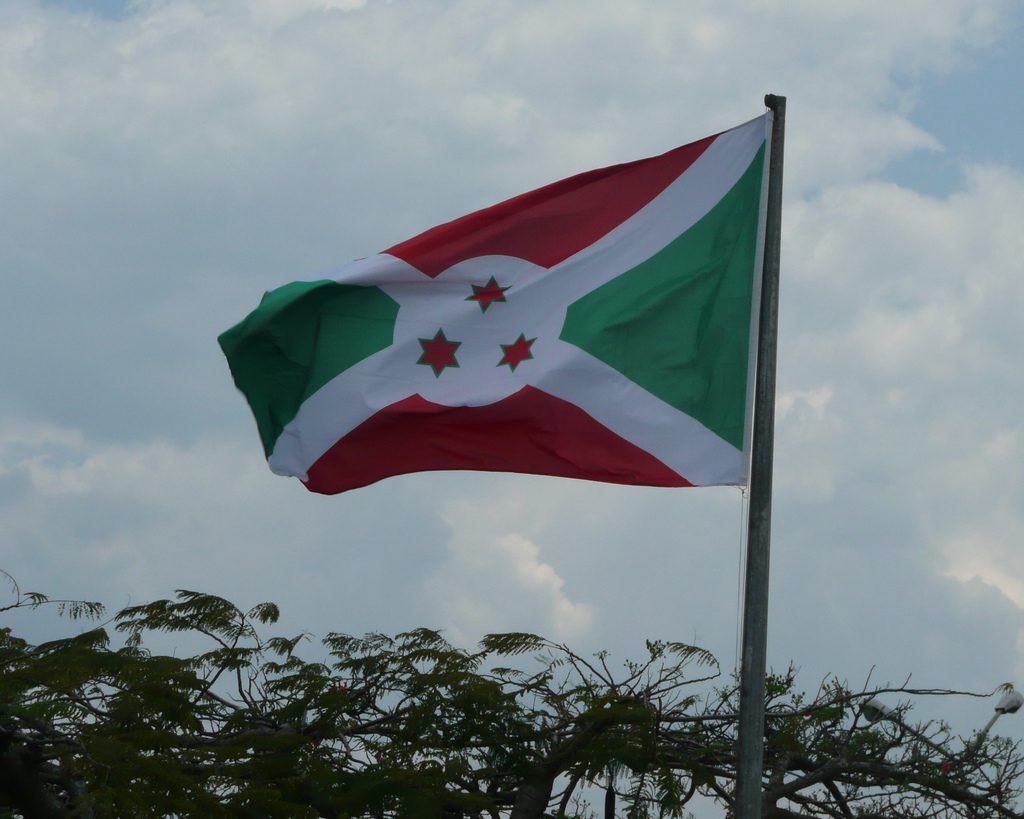
Struggle and Sanctuary: How the Media Misrepresents Burundi


The general public is unable to form any positive conclusions from media sources due to how the media misrepresents Burundi. Through closer analysis, however, the public may see a shimmer of hope behind all the destruction that the media portrays is occurring in Burundi.

How Does the Media Portray Burundi?

The media portrays Burundi as economically unstable; however, this fact is only partially true. Population growth in Burundi continues to rapidly increase, leaving the nation fighting to support their growing nation.

Burundi’s economy is lacking in their growth rate with the population growth rate at 3.1 percent annually, and the GDP per capita not growing more than 1.5 percent even in the best of recent years. Because of these economic difficulties the country has endured, Burundi’s economy relies 49 percent on international financial aid.

International Aid

The media states that Western donors are in the process of cutting support towards Burundi, pushing the nation even more towards intolerable levels of poverty; however, in the past three years alone, the United States has donated over $135 million in foreign aid towards the country of Burundi.

Other organizations such as the World Bank pledged $440 million towards helping the country’s financial crisis, and the EU has already made firm commitments towards achieving this goal. Overall, donors have pledged over $2 billion for Burundi’s development strategy in order to rebuild the nation after its civil war and national political crises.

Internal Controversy

How the media misrepresents Burundi can also be seen in the violence occurring in the country due to political turmoil. Burundi’s president, Pierre Nkurunziza, who has been in office since 2005, released a referendum date for May 17 for a controversial constitutional reform. If this reform is passed, it would allow President Nkurunziza to remain in power until 2034 — an unjust situation that would cause public uproar.

The violence has increased to such a degree that the U.S. State Department has warned Americans not to travel to Burundi, and that Burundi citizens are trained to promote violence and on the path towards another civil war. However, this media representation fails to mention measures taken within the nation to ensure the people of Burundi have alternative methods to violence.

New Generation

Diedonné Nahimana, an award-winning Burundi citizen, created the program of New Generation in Bujumbura to coach victims of war to become ambassadors for peace. New Generation was created to provide victims or orphans of war with alternative opportunities for a successful life rather than turning to violence.

This program develops a new generation of leaders who will restore Burundi after their 12-year civil war, and hopefully prevent the return of war. The foundation of their teaching is based upon non-violence as in the steps of Ghandi and Martin Luther King Jr.

The dream is that by 2020, this new generation will control leadership positions in the country and teach this method of non-violence to others and ensure peace in the country. Due to all of this violence, more than a quarter of a million people have Burundi in terror, seeking refuge in other countries.

Global Priority

Despite this, sources claim that the world doesn’t seem to notice this violence occurring in Burundi and thus serve as another example of how the media misrepresents Burundi.

The people of Burundi are under constant persecution and live in terror in their country due to the political crises and increased poverty conditions; however, it is not the case that the world has turned their back on this African country. Since 2015, over 300,000 people have fled the country of Burundi, many to refugee camps in neighboring African countries where unfortunately, persecution and inhumane actions still exist.

Struggle and Sanctuary

Other countries, such as Canada, have developed methods to ensure Burundi refugees are welcome in their countries. Canada has designated refugee claims from Burundi which welcomes refugees into their country. In fact, Canada proudly holds a Burundian community of roughly 10,000 and continues to allow refugees inside its borders. The United States has also welcomed over 2,000 Burundian refugees in the past two years and the numbers increase daily.

Although Burundi endures many hardships from political crises, poverty and population growth, there is more good occurring in the country than what the media showcases to the public.

– Adrienne Tauscheck

Photo: Flickr

April 20, 2018
https://borgenproject.org/wp-content/uploads/borgen-project-logo.svg 0 0 Borgen Project https://borgenproject.org/wp-content/uploads/borgen-project-logo.svg Borgen Project2018-04-20 01:30:072019-11-08 13:39:22Struggle and Sanctuary: How the Media Misrepresents Burundi
Foreign Aid, Global Poverty

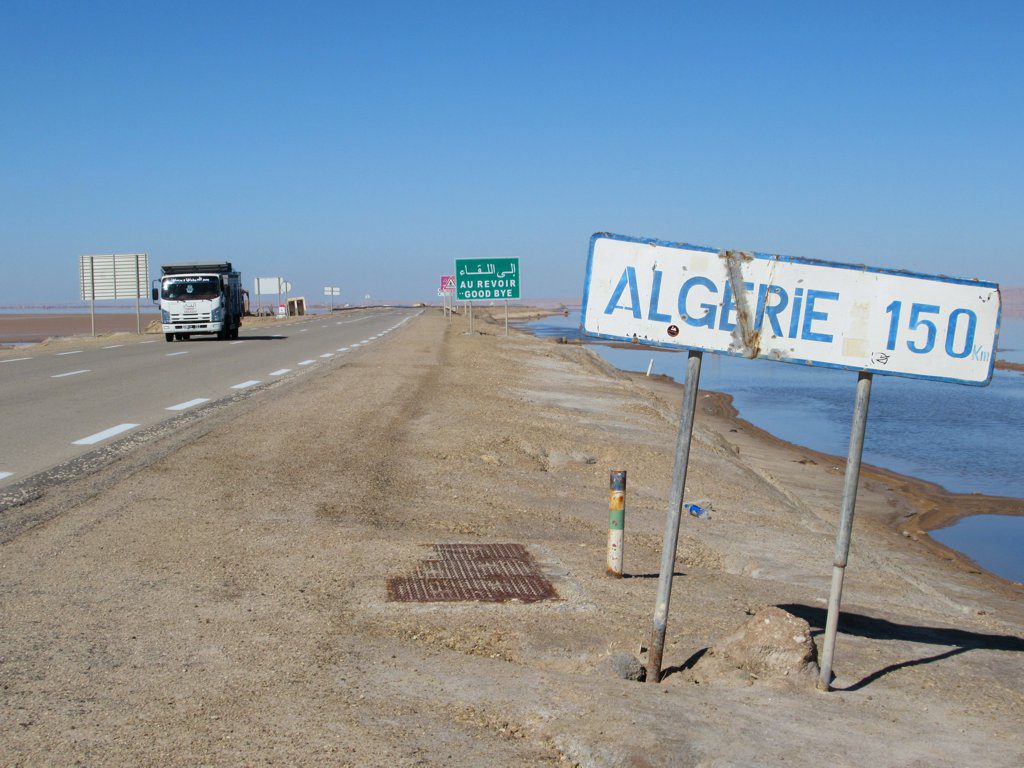
Understanding How the US Benefits from Foreign Aid to Algeria

U.S. Benefits from Foreign Aid to Algeria

The diplomatic relationship between the U.S. and People’s Democratic Republic of Algeria officially began in 1962 after the close of a long war for independence from France. Although there was a brief break in diplomatic relations in 1967, Algeria has remained one of the United States’ most reliable partners in the Middle East/North African region.

Having maintained this relationship since 1974, U.S. benefits from foreign aid to Algeria have returned dividends. According to the State Department on U.S.-Algerian relations, the “U.S. has strong diplomatic, law enforcement and security cooperation.” Continuing the current diplomatic status quo through foreign aid benefits the U.S. for multiple reasons. 

First and foremost, Algeria holds an important strategic location in North Africa which provides a foothold for U.S. economic and security interests. In comparison to Algeria’s neighbors, mainly Libya and Northern Mali, the country has remained relatively stable. Furthermore, Algeria has sought to promote regional stability in lieu of the current Libyan conflict and security situation in Northern Mali. 

In recent years, North Africa has seen an increased presence in extremist activity. Most notably, ISIS and al-Qaeda in Islamic Maghreb have continued to launch terror attacks within Algeria and its neighboring countries. Algeria continues to be a key partner in the U.S. initiative to combat terror groups in both the Middle East and North Africa. As of today, a major component of the U.S. foreign assistance programs seeks to strengthen Algeria’s ability to combat terrorism. Algeria also is an active member of the Global Counter Terrorism Forum. 

Furthermore, the U.S. benefits from foreign aid to Algeria through ironclad bilateral economic relations in conjunction with security benefits. Algeria has seen a large U.S. investment in the sector of hydrocarbons. In return, the U.S. imports a large amount of the country’s crude oil. The U.S. continues to assist Algeria through modernization in fiscal and monetary policy. Moreover, the U.S. has sought to diversify the Algerian economy by promoting other exported goods in addition to crude oil. 

Planned U.S. funding in foreign assistance to Algeria currently sits at $1.5 million for FY 2019. Out of the total budget, all 100 percent of the funds will go toward peace and security; 33 percent focuses on “combating weapons of mass destruction,” while the other 67 percent has been earmarked for “stabilization operations and security sector reform.” 

As armed conflict continues throughout North Africa and the Middle East, Algeria remains an essential target for U.S. foreign aid. U.S. benefits from foreign aid to Algeria provide both economic benefits in the form of crude oil imports and a strong partner in addressing extremist groups. The U.S. mission of eliminating terror groups and maintaining regional security leaves Algeria in an important place. For U.S. interests, the country has proved to be a reliable ally in the war on terror and continues to act as a strong economic partner. 

– Colby McCoy

Photo: Flickr

April 19, 2018
https://borgenproject.org/wp-content/uploads/borgen-project-logo.svg 0 0 Borgen Project https://borgenproject.org/wp-content/uploads/borgen-project-logo.svg Borgen Project2018-04-19 07:30:412024-05-29 22:42:03Understanding How the US Benefits from Foreign Aid to Algeria
Foreign Aid

Understanding the Top Sectors for Chinese Foreign Aid to Africa

Chinese Foreign Aid

Countries that are part of the Organization of Economic Co-operation and Development (OECD) have been the dominant force in foreign aid to developing countries in Africa. But in recent years, China has emerged as a game changer, reshaping the global aid landscape and becoming Africa’s biggest donor. Here is a breakdown of the Chinese foreign aid package to Africa and what it means to China.

Chinese investment in Africa rocketed from a mere $210 million in 2000 to more than $3 billion in 2011 and has continued to grow. As a matter of fact, Africa is the largest recipient of Chinese foreign aid, accepting 45.7 percent of China’s ¥256.29 billion total foreign aid by the end of 2009.

The aid is divided into eight categories: complete projects, goods and materials, technical cooperation, human resource development cooperation, medical teams sent abroad, emergency humanitarian aid, volunteer programs in foreign countries and debt relief. By the end of 2009, China had sponsored more than 2,000 development projects in African countries.

Unlike OECD countries, China does not officially disclose its aid information on a regular basis. Data about Chinese foreign aid often comes from media reports and governmental documents. Research labs like AidData are scrutinizing streams of sources and have constructed a fairly solid picture of Chinese foreign aid.

According to AidData, between 2000 and 2013, the largest sector of Chinese aid to Africa was transport and storage, summing to $29 billion distributed to 36 countries. South Africa received $5.2 billion and Kenya accepted $4.8 billion. Sudan, Mozambique and Angola received $3 billion, $2.6 billion and $2.5 billion worth of aid in this sector, respectively.

The second-largest sector was energy generation and supply. Among the $25 billion aid package, Sudan got the largest amount of aid at $4.6 billion. Ethiopia received $3.9 billion and Nigeria, Zambia and Angola each received about $2 billion.

Other multisector and unallocated/unspecified sectors were the third and fourth largest sectors in Chinese aid to Africa. The former sector comprised $20 billion worth of aid and the latter $8.7 billion. Due to China’s non-disclosure policy, the specific items that these budgets financed are difficult to pinpoint. What is worth noting is that Angola received $4.1 billion, the second-most amount of aid in the other multisector category, making Angola the largest recipient in the top three categories.

A total of $6.9 billion was devoted to projects in the communications sector. Nigeria, Ethiopia and Tanzania were the top three recipients, receiving $1.7 billion, $1.2 billion and $676 million respectively.

Chinese foreign aid projects in Africa focus on infrastructure, with transportation, energy and communication dominating almost half of the total aid package. China is also very careful in selecting recipient countries for its aid. Most of the African countries that are endowed with generous aid are very rich in terms of natural resources.

For example, Angola, being the top recipient of more than $12 billion over the thirteen-year span, has important reserves of oil, gas and minerals. Chinese aid to Angola focuses on infrastructure development that will make the export of this wealth accessible. Other leading recipient countries like Ethiopia, Nigeria and Sudan are also rich in natural resources.

Currently, Angola is one of the largest trading partners of China. The Chinese foreign aid agenda seems to indicate an intention to establish trade with the recipient countries, which is an understandably important reason for giving out foreign aid by any country in the world.

One issue that has been hotly debated over the past several years is that, as a non-OECD member, China constantly blurs the line between development finance and foreign aid. Chinese aid does not follow the definition of official development aid set by the OECD. As a result, many of China’s activities are deemed “evil” as they demonstrate a quest for the return of natural resources or trade partnership.

Nevertheless, trading opportunity is a fundamental benefit of foreign assistance that every aid donor is concerned with. In addition, according to Brookings Institution, in reality, China’s investment in and trade with Africa only accounts for a “tiny percentage”–less than five percent–of its global investment and trade. This disproportional aid-to-trade ratio proves China’s foreign aid to Africa agenda is not so selfish.

– Chaorong Wang

Photo: Pixabay

April 17, 2018
https://borgenproject.org/wp-content/uploads/borgen-project-logo.svg 0 0 Borgen Project https://borgenproject.org/wp-content/uploads/borgen-project-logo.svg Borgen Project2018-04-17 07:30:212024-05-29 22:42:02Understanding the Top Sectors for Chinese Foreign Aid to Africa
Foreign Aid, Global Poverty

Programs Across the World Address Poverty in the Philippines


Despite the rising economic growth rates in the Philippines, poverty in the Philippines continues to prevail nationwide. According to the Asian Development Bank (ADB), 21.6 percent of Filipinos live below the national poverty line.

There are many factors that create and maintain the cycle of poverty in the Philippines. Unemployment is one of the main reasons that poverty reduction has not kept up with the country’s growth. Alongside an increasing population, job resources remain insufficient for millions of Filipinos.

The Philippine poverty condition remains a challenge due to the government’s lack of capacity to establish sustainable poverty reduction programs. Governments from other countries, alongside international institutions, have implemented strategies aimed to tackle the Philippine poverty crisis. These programs share the common goal of alleviating poverty in the Philippines by addressing unemployment in the country.

The World Bank

The World Bank plays a large role in working towards eradicating poverty in the Philippines. One of the projects financed by the World Bank is the ‘Philippine Rural Development Project.’ The goal of the project is to create greater work opportunities for Filipinos in the rural areas by supporting farmers and fishermen through improving their access to markets.

As of last year, results from The World Bank reported an increase in household incomes for farmers and fisherfolk beneficiaries. As of January 2018, this project has been approved for additional financing to continue its contribution in addressing poverty in the Philippines.

The United States of America

USAID has established the Philippine-American Fund (Phil-Am Fund) as a strategy to tackle poverty in the Philippines. One of the program’s objectives is to develop solutions to the country’s economic challenges. The Phil-Am fund financially supports  Philippine organizations to support business start-ups.

This strategy to address the poverty crisis promotes entrepreneurship by offering a self-sufficient facility for citizens who do not have the capacity to take part in the province’s economic activities.

As of last year, the Phil-Am fund has managed to support the establishment of start-up businesses, provide training in standards for food-related establishments and has integrated more efficient farming technology in the Philippines.

Australia

Australia’s foreign aid to the Philippines includes ‘The Philippines’ Sustainable Livelihood Program’ (SLP), which helps Filipino families by providing employment assistance. The SLP also helps Filipino citizens start at enterprise — an approach that encourages self-sufficiency.

Australia’s aid program aligns with the Philippine government’s goal to tackle poverty and promote development. Sustainable livelihood is the primary goal of this program, and includes micro enterprises, skills training and pre-employment assistance.

Filipinos who take part in this program have agency and decision-making responsibilities by providing access to microenterprise development and employment. SLP has become an efficient platform for productivity and development and since its establishment in 2011, SLP has achieved 97 percent of targeted program participants.

Promotion of Autonomy

The above-mentioned programs designed to address the Philippine poverty crisis all share one feature: the encouragement of self-efficiency. Rather than providing charity to the Filipino citizens living in poverty, these programs empower the people by giving them access to opportunities. The citizens are provided with the agency to take control of their work, promoting an inclusive form of development.

– Dane de Leon

Photo: Flickr

April 13, 2018
https://borgenproject.org/wp-content/uploads/borgen-project-logo.svg 0 0 Borgen Project https://borgenproject.org/wp-content/uploads/borgen-project-logo.svg Borgen Project2018-04-13 01:30:182024-12-13 17:51:14Programs Across the World Address Poverty in the Philippines
Aid, Foreign Aid, Global Poverty, USAID

How the US Benefits From Foreign Aid to the Central African Republic


Relations with the United States and the Central African Republic (CAR) began in 1960 following the nation’s independence from France. While CAR is one of the least developed nations in the world, the United States has enjoyed strong relations with CAR since it began. The U.S. benefits from foreign aid to the Central African Republic by recognizing the steps the country has taken after decades of instability and weak governance.

The United States had suspended embassy operations three times over the past 20 years, most recently in December 2012 in the CAR due to violence and the overthrow of the CAR government. The embassy reopened in September 2014 and remains open today.

Keeping the Peace

Due to the result of years of weak government and violence, the United Nations (U.N.) installed a multi-dimensional peacekeeping operation with over 10,000 peacekeepers in September 2014 to aid the transition process of a new constitution and election.

In December 2015, the country approved a new constitution and successfully held national elections for the President in February 2016 and for the National Assembly in April 2016. The U.S. benefits from foreign aid to the Central African Republic through a more stable country that enjoys greater security through improved economic growth and development.

While the CAR has a more a stable government, conflict has grown between armed groups across 2017 as have attacks against civilians, humanitarian workers and peacekeeping forces. The Assistant Secretary-General for Humanitarian Affairs and Deputy Relief Coordinator of the U.N., Ursula Mueller, has noted that 637,00 people received emergency food help and 1.4 million people received clean water assistance.

A Strong Ally

In addition to a now more stable government, the CAR does have some natural resources, with timber and diamonds dominating exports; however, transportation and electricity are extremely limited. The CAR is now the United States 187th largest goods trading partner with $37 million in total goods traded during 2015.

The U.S. Department of Commerce estimates that U.S exports of good to Central African Republic supported 100 jobs in 2014. The U.S. benefits from foreign aid to the Central African Republic through top exports, including vehicles ($23 million) and electrical machinery ($3 million).

USAID decided to step up its aid to the people of the CAR as over 60 percent of the CAR lives in poverty, population displacement continues to increase as a result of ongoing violence, and the number of internally displaced persons increased by more than 70 percent since early 2017.

Humanitarian Aid

Both the U.N. and USAID’s partners coordinate to give emergency humanitarian help to affected populations. USAID’s Office of Food for Peace continues to support the U.N. World Food Program’s distribution of food to the most vulnerable people of the CAR — an estimated $14.9 million expenditure to the U.N. agency.

USAID and other humanitarian organizations also established an early warning system that sent or received nearly 130 humanitarian alerts throughout the year, identifying areas for potential relief interventions.

The U.S. has provided over $500 million of humanitarian, development and security assistance in support of the CAR people’s efforts to find long-term stability and peace. It remains to be seen how relations between the Central African Republic and the United States continue, but so far, the two nations are mutually beneficial.

– Zachary Ott

Photo: Flickr

April 13, 2018
https://borgenproject.org/wp-content/uploads/borgen-project-logo.svg 0 0 Borgen Project https://borgenproject.org/wp-content/uploads/borgen-project-logo.svg Borgen Project2018-04-13 01:30:122024-05-29 22:42:01How the US Benefits From Foreign Aid to the Central African Republic
Aid, Aid Effectiveness & Reform, Foreign Aid, Global Poverty, USAID

Understanding the Negative Effects of Budget Cuts to USAID

cuts to USAID
Recently, the Trump administration, in collaboration with congressional leadership on Capitol Hill, has hammered out a deal to prevent a government shutdown while effectively gutting the State Department and agencies like USAID of their funding. This move not only signals a sidelining of diplomacy but marks one of the biggest budget cuts to USAID and the State Department since the early 1990s.

The effects of the budget cuts to USAID are undoubtedly going to hinder diplomatic agencies in eliminating poverty around the globe and increasing diplomatic relations with the countries that depend on us the most. The United States Agency for International Development (USAID) is the State Department’s main tool for dispensing aid to foreign countries and strengthening diplomatic relations.

USAID currently operates in roughly 100 countries, fighting the spread of poverty and disease while working to improve economic conditions worldwide. The proposed budget cuts to USAID weigh in at approximately $9 billion, a staggering defeat to those working toward the end of poverty worldwide.

The President’s proposed budget cuts to USAID amount to nearly one-third of its total budget, in what seems to be a strategic move away from diplomacy and toward military strengthening. Regardless of the President’s agenda, this move away from soft power and diplomacy has been condemned by many members of the military.

A total of 151 retired senior military commanders, including former chiefs of the Navy, Army, Air Force, Marine Corps and Special Operations Command, have warned that a reduction of this magnitude could have detrimental effects around the globe. As threats to the United States’ national security continue to grow, it is a risk to decrease diplomatic ties at such a pivotal moment.

Many civilians and government employees agree with the opinions of their military leaders. Former USAID Administrator Andrew Natsios said, when facing the 1999 budget cuts to foreign aid, that it is likely budget cuts could have detrimental effects toward the technical expertise of USAID and could mark the beginning of a disaster in the long-term.

As well as the statement above, Natsios describes budget cuts toward foreign aid and agencies such as USAID as an “evisceration of the most important tool of American influence in the developing world.” Other staffers from USAID warn of the spread of disease in the United States rising as foreign aid spending is cut. Outbreaks such as the Ebola outbreak may become much larger and harder to contain with a lack of funding to agencies such as USAID. These concerns are still relevant and even more serious today.

Agencies such as USAID are pivotal in diplomatic relations and national security. By providing funds, resources, goods and trade to other countries, the U.S. invests in itself as well as others. By providing healthcare to those in need, USAID prevents the spread of communicable diseases, prevents premature death and builds a market for low-cost medical technologies.

By providing food and farming technologies, the U.S. prevents world hunger and promotes market trading of produce and other consumable goods. By providing foreign aid, the country also helps form more efficiently-run governments and promotes democracy wherever possible. All of these efforts also prevent bigger catastrophes around the globe, such as mass migrations, food shortages and natural disasters.

At the end of March, Congress approved an omnibus appropriations bill for FY18 that will keep the government open through September 30, 2018. When it comes to funding for development and diplomacy, the omnibus overwhelmingly rejects the deep and disproportionate cuts proposed by the Administration in FY18 – highlighting the strong bipartisan support in Congress for these critical programs. Still, there is more work to be done to protect funding for the foreign aid budget in FY19 and beyond. 


Email Congress in Support of the International Affairs Budget

– Dalton Westfall

Photo: Flickr

April 12, 2018
https://borgenproject.org/wp-content/uploads/borgen-project-logo.svg 0 0 Borgen Project https://borgenproject.org/wp-content/uploads/borgen-project-logo.svg Borgen Project2018-04-12 01:30:012019-11-10 10:22:56Understanding the Negative Effects of Budget Cuts to USAID
Page 32 of 61«‹3031323334›»

Get Smarter

  • Global Poverty 101
  • Global Poverty… The Good News
  • Global Poverty & U.S. Jobs
  • Global Poverty and National Security
  • Innovative Solutions to Poverty
  • Global Poverty & Aid FAQ’s
Search Search

Take Action

  • Call Congress
  • Email Congress
  • Donate
  • 30 Ways to Help
  • Volunteer Ops
  • Internships
  • Courses & Certificates
  • The Podcast
Borgen Project

“The Borgen Project is an incredible nonprofit organization that is addressing poverty and hunger and working towards ending them.”

-The Huffington Post

Inside The Borgen Project

  • Contact
  • About
  • Financials
  • President
  • Board of Directors
  • Board of Advisors

International Links

  • UK Email Parliament
  • UK Donate
  • Canada Email Parliament

Get Smarter

  • Global Poverty 101
  • Global Poverty… The Good News
  • Global Poverty & U.S. Jobs
  • Global Poverty and National Security
  • Innovative Solutions to Poverty
  • Global Poverty & Aid FAQ’s

Ways to Help

  • Call Congress
  • Email Congress
  • Donate
  • 30 Ways to Help
  • Volunteer Ops
  • Internships
  • Courses & Certificates
  • The Podcast
Scroll to top Scroll to top Scroll to top