• Link to X
  • Link to Facebook
  • Link to Instagram
  • Link to TikTok
  • Link to Youtube
  • About
    • About Us
      • President
      • Board of Directors
      • Board of Advisors
      • Financials
      • Our Methodology
      • Success Tracker
      • Contact
  • Act Now
    • 30 Ways to Help
      • Email Congress
      • Call Congress
      • Volunteer
      • Courses & Certificates
      • Be a Donor
    • Internships
      • In-Office Internships
      • Remote Internships
    • Legislation
      • Politics 101
  • The Blog
  • The Podcast
  • Magazine
  • Donate
  • Click to open the search input field Click to open the search input field Search
  • Menu Menu

Archive for category: Foreign Aid

Foreign aid coverage and information.

Food & Hunger, Food Security, Foreign Aid, Global Poverty

The Impacts of the Food For Peace Modernization Act

Food For Peace Modernization Act
On March 14, the Food For Peace Modernization Act (H.R. 5276) 
was introduced on the House floor. Though this bill has not received much attention from the media, it is an important piece of legislation that could have a drastic impact on global food insecurity if passed.

The Food For Peace Modernization Act

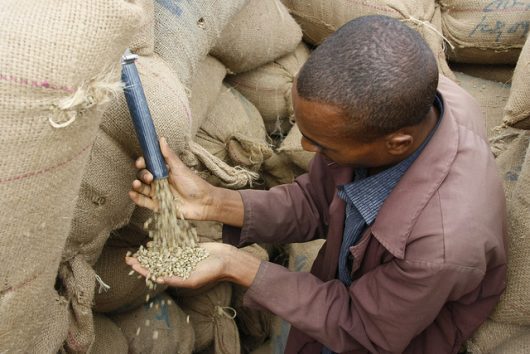
The Food For Peace Modernization Act is a bipartisan bill introduced by Senator Bob Corker (R-TN) and Senator Chris Coons (D-DE) in an effort to reform the Food For Peace program, which was originally signed into law by President Eisenhower in 1954. The goal of the program is to deliver healthy food to people all over the world who suffer from malnutrition.

Since its creation, the Food For Peace program has provided aid to over 3 billion people and is widely considered a success; however, lawmakers now address that the effort hasn’t yet reached its full potential.

As it currently stands, the law requires that all food used for foreign assistance purposes has to be produced in the U.S. While this may sound like a good way to promote American farming, it is an extreme burden for the Food For Peace program. Due to the costs incurred by transporting all of the food overseas, only 30 percent of the program’s funds are spent on actual food.

The Food For Peace Modernization act seeks to change this aspect of the law. Instead of requiring 100 percent of food products to be made in the U.S., the revised version of the bill drops this number to just 25 percent. This would mean that the majority of food can be derived from within the countries the program is trying to assist.

The Monetization System

Another part of the law the Food For Peace Modernization Act hopes to alter is the “monetization” system. Currently, NGOs are required to take food which was donated to them by the U.S., sell it in overseas markets, and use the profits to fund their food insecurity programs. However, this process often negatively affects the communities in which the food is sold because it forces local farmers to drive down their prices in order to compete. The new version of the bill (S. 2551) would eliminate this requirement.

Not only will these revisions allow more money to be spent on actually feeding the hungry, it may also boost the economies of the local food markets in impoverished countries and ultimately decrease their dependence on U.S. assistance — all at no extra cost to the American taxpayers.

Overall the hope is that, if passed, the bill will redirect the focus of the Food For Peace program to be on the people who need assistance, rather than the business ventures of U.S. corporations.

Representative Ed Royce (R-CA-39) captured this sentiment in a statement to the House Foreign Affairs Committee stating, “Just as aid can’t be an entitlement for those overseas, it shouldn’t be an entitlement here at home. This includes food aid, which for too long has been treated as an entitlement for a handful of shipping companies rather than as a humanitarian program meant to save lives.”

– Maddi Roy

Photo: Flickr

April 11, 2018
https://borgenproject.org/wp-content/uploads/borgen-project-logo.svg 0 0 Borgen Project https://borgenproject.org/wp-content/uploads/borgen-project-logo.svg Borgen Project2018-04-11 01:30:002019-11-10 10:25:16The Impacts of the Food For Peace Modernization Act
Foreign Aid, Global Poverty

The Top 4 Foreign Aid Blogs

Top Foreign Aid Blogs
Foreign aid is the giving of money, food and various supplies from one country to another, usually for the purpose of bettering a nation’s well being. Foreign aid is often provided by countries as a peace-seeking measure, and it can be enacted to promote order and security. For everyday citizens, it can be hard to stay up to date on all the foreign aid developments happening around the world. Below is a list of some of the top foreign aid blogs that can help you stay informed on who is helping who, and who might need help soon.

Center for Global Development

The Center for Global Development is a U.S. nonprofit that specializes in covering international development and foreign aid. Its website is home to a blog with nearly two dozen categories ranging from global finance and investment to aid effectiveness.

With its inception back in 2002, this blog is a great resource for gaining well-judged and well-researched analyses of various world affairs. The use of expert opinion and exceptional journalistic inquiry furthers the site’s credibility, and it does an exemplary job of focusing on the topic at hand and using resources to educate the public.

Gates Notes

Gates Notes, the blog of Bill Gates, is a great resource for staying up to date within the scope of global affairs. Gates Notes has articles on nearly every world topic – from travel to foreign aid to success stories of international development.

This blog is also resourceful if you are looking for subcategories of foreign aid news. For example, the Saving Lives section of the blog looks into specific global issues. In the section, Gates recently wrote an article on five international and domestic heroes who are doing exemplary humanitarian work regarding poverty, hunger and disease.

If you are looking for a place to absorb the good and uplifting news of the world, Gates Notes is a great resource for doing so – it’s certainly one of the top foreign aid blogs out there.

Global Voices

Global Voices is an international community of writers and activists. They work to verify and translate various media stories in circulation and provide readers with an unadulterated version of what’s really happening in the world.

This nonprofit is primarily volunteer-based. One of its main goals in reporting is to rise above the censorship that often conceals the truth behind news stories about marginalized communities. Instead, its goal is simply to educate. Global Voices is one of the top foreign aid blogs for those wanting the truth about the variety of injustices that never reach the main western media outlets.

ForeignAssistance.gov

While ForeignAssistance.gov may not follow the typical blog format, it is still an essential resource for staying tuned in to U.S. foreign assistance spending. ForeignAssistance.gov is great for receiving just the logistics as its website is mostly data-based rather than analysis-based. 

However, ForeignAssistance.gov is essential when you want to know what the U.S. government is up to internationally, as these interactions are often not covered in the media given the plethora of other domestic topics needing covering.  

The four resources listed above are some of the most reliable information centers for staying up to date on what goes on inside the world of foreign aid. The concept of intercontinental help and support can be hard to follow when you’re not on the inside, so be sure to check up on these top foreign aid blogs regularly so you can stay current on who is getting help, and more importantly, who is still in need of assistance.  

– Alexandra Dennis

Photo: Flickr

April 9, 2018
https://borgenproject.org/wp-content/uploads/borgen-project-logo.svg 0 0 Borgen Project https://borgenproject.org/wp-content/uploads/borgen-project-logo.svg Borgen Project2018-04-09 07:30:452024-12-13 17:58:40The Top 4 Foreign Aid Blogs
Aid, Aid Effectiveness & Reform, Foreign Aid, Global Poverty, USAID

U.S. Signals Possible Change in Foreign Assistance Programs

In a recent internal memo titled “America First Foreign Assistance Policy,” U.S. Ambassador to the United Nations Nikki Haley outlines possible aid cuts to nations that vote against U.S. initiatives within the U.N. It is suggested that foreign assistance programs should be partially contingent upon voting with the U.S. at the U.N. The memo comes in the wake of the United States’ motion to move its embassy to Jerusalem, a move that recognizes Jerusalem as the capital of Israel.
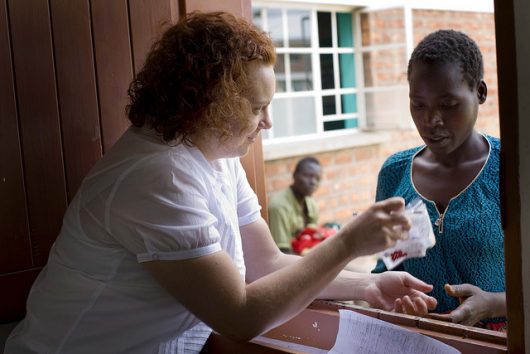
Although the motion passed, it was also met with widespread condemnation; 128 countries in total condemned the move. In response, the United States threatened to cut foreign aid programs. Commenting on the vote at a recent AIPAC conference, Haley stated, “We’re not forgetting that vote. As I said at the time: On that vote, we were taking names.”

As of today, only Palestine has received cuts in foreign aid assistance. This is largely due to the Palestinian Authority’s refusal to enter into peace negotiations with Israel. In the view of the Palestinian government, the United States has lost its position as the neutral-party at the negotiating table.

A major element of Haley’s “America First Foreign Assistance Policy” is the direct link between foreign assistance programs and American security interests. For example, Iraq and Egypt remain exempt from cuts in foreign aid even though both countries have voted against the United States in the past on multiple resolutions. It is argued that continued aid to Iraq and Egypt is vital in protecting U.S. security interests in the Middle East.

Countries not exempted from cuts who offer the U.S. little economic or security benefit could see major shifts in aid assistance. Specifically, American foreign assistance programs in Ghana, Vietnam and Zimbabwe are under fire. $4.9 million to aid in Ghana’s construction of schools, Vietnam’s $6.6 million climate change program and a $3.1 million job training initiative in Zimbabwe are highlighted in the document. Currently, aid programs for roughly 40 countries who have voted against the U.S. in the past are under review.

In addition to the details of the “America First Foreign Assistance Policy” document, the State Department has put more than $100 million on hold in funding for the U.N. Relief and Works Agency (UNRWA). Another $100 million requested by the Bureau of Population, Refugees and Migration has also been denied. It is unclear as to why the funds have been denied or when they may be approved.

With the recent release of U.S. Ambassador Nikki Haley’s proposal for major changes to American foreign assistance programs, there is much concern for countries that receive U.S. aid, most notably for nations viewed as nonessential to U.S. economic and security interests. Furthermore, countries that lack a track record of voting with the U.S. on U.N. resolutions could face serious cuts.

It is unknown whether these policy changes will be formally adopted in Washington, D.C. The proposed changes have seen much backlash from both the Department of Defense and intelligence community. Ultimately, the American mission to eradicate international poverty and obtain global security is at risk.

– Colby McCoy

Photo: Flickr

April 6, 2018
https://borgenproject.org/wp-content/uploads/borgen-project-logo.svg 0 0 Borgen Project https://borgenproject.org/wp-content/uploads/borgen-project-logo.svg Borgen Project2018-04-06 01:30:422019-11-15 19:27:00U.S. Signals Possible Change in Foreign Assistance Programs
Aid, Aid Effectiveness & Reform, Foreign Aid, Global Health, Global Poverty

The Effects of the Proposed Budgets for Global Health and Foreign Aid

Proposed Budgets for Global Health and Foreign Aid
After months of threatening to make serious cuts in the proposed budgets for global health and foreign aid, the Trump administration and Congress signed a budget deal on March 21, 2018 indicating increases to nearly all government-allocated scientific research agencies, many of which contribute to global health research. For instance, the National Institues of Health received a $3 billion increase in federal budget allocations, a reversal of the 22 percent reduction in the budget proposed by the White House earlier this year.

These developments fall in line with press releases published on the White House website. The White House explains that the Trump administration champions the Global Health Security Agenda (GHSA), funded by the Centers for Disease Control and Prevention (CDC), which helps to prevent the spread of diseases through increases in disease prevention provisions in countries prone to an outbreak.

President Trump himself has expressed that “the world cannot have prosperity unless it is healthy”. His administration’s reports detail the GHSA and clearly show the impact that this specific global health advancement has had on outbreaks of dengue fever in Burkina Faso, as well as the Marburg virus in Uganda.

This viewpoint on global health security and the recently approved 2018 budget contrast with the Trump administration’s 2019 proposed budgets for global health and foreign aid. The 2019 budget proposes 30 percent cuts to the Senate Foreign Affairs Budget as well as the Department of Health and Human Services.

While the recently approved 2018 budget increased the funding to agencies vital to public health, it is still important to understand the impact these proposed budgets for global health and foreign aid could have on agencies internally. Budget cuts to United States government institutions materialize in a slowdown of impactful research and operations that occur within the agency. Decreases in budgets inevitably reduce the number of grants that are approved and also limit the number of researchers institutions are allowed to hire.

The less money an agency receives, the fewer projects it is able to complete. As of right now, the deepest cut in the proposed budget for global health and foreign aid are to the State Department, with a primary focus on the United States Agency for International Development (USAID). Cuts to USAID will reduce the number of programs and limit the amount of personnel and projects carrying out USAID work.

As of right now, USAID is in a hiring freeze and only seeking out critical personal on an as-needed basis through specialized waivers. Despite this challenge, current USAID administrator Mark Green claims that the tightening of the USAID budget causes the agency to operate as efficiently as possible. Green explained that even with budget restrictions, he is working with the president to show how development is a necessary soft approach to national security and global health.

While some global health programs are proposed to receive equal or additional funding through presidential and Congressional support of the CDC’s GHSA program, USAID looks to remain under tight restrictions. Overall, advocates of global health and USAID will continue to emphasize the institution’s importance to foreign policy, but it is ultimately up to President Trump and Congress to approve the organization’s desired funding.

– Daniel Levy

Photo: Flickr

April 4, 2018
https://borgenproject.org/wp-content/uploads/borgen-project-logo.svg 0 0 Borgen Project https://borgenproject.org/wp-content/uploads/borgen-project-logo.svg Borgen Project2018-04-04 01:30:362024-05-29 22:40:05The Effects of the Proposed Budgets for Global Health and Foreign Aid
Aid, Foreign Aid, Global Poverty

How the US Benefits from Foreign Aid to Argentina

How the U.S. Benefits From Foreign Aid to Argentina
Aid to foreign countries is essential to help maintain stability and reduce poverty in countries that are struggling to achieve those goals on their own. However, foreign aid also benefits the United States: it increases national security, can expand the U.S. economy and help develop a relationship with a strategic ally.

Globally, each year the United States gives about $30 billion in foreign aid, a seemingly large number that actually amounts to only about 1 percent of the federal budget. Argentina is one recipient of money allotted in that budget, and there are numerous U.S. benefits from foreign aid to Argentina. In 2016, U.S. agencies gave $2.6 million in aid to Argentina, with half of the money coming from the Department of State.

According to the Department of State, U.S. foreign aid to Argentina works to increase stability and democracy, as well as increase support for non-proliferation and border security. Through aid and U.S. officials, the United States has established programs to train law enforcement and justice officials in Argentina. These programs increase Argentina’s ability to promote shared security interests, which is a benefit to the U.S.

The U.S. government is also working with Argentina to focus on peacekeeping and disaster preparedness. Further agreements between the countries are working to increase the shared knowledge between the U.S. and Argentina to improve security. These programs will enhance stability in Argentina and the broader region, and increase both travel security and border security in Argentina.

In addition to government aid, many United States corporations invest in Argentina’s businesses, making the U.S. the largest foreign investor in Argentina. These investments benefit the United States, as the U.S. is the second largest export destination for goods from Argentina. Argentina’s top exports include soybeans and corn, while top U.S. imports from Argentina include mineral fuel and oil, wine, food and aluminum. In the five years prior to 2016, exports of Argentina increased by more than 2 percent annually. The U.S. benefits from foreign aid to Argentina by importing a greater quantity of those goods.

On top of increased imports, U.S. corporations with business interests in Argentina employ more than 150,000 people across more than 500 companies. Both the United States and Argentina have goals of sustainable and balanced economic growth. To achieve those goals, the countries are working together through the help of U.S. investments and held the first meeting between the two governments on that topic in 2016.

Additionally, United States foreign aid to Argentina will help increase renewable energy technologies. Specific focuses are on changing and optimizing energy markets and integrating renewables into the existing power grid. Working to increase clean energy sources in Argentina will help achieve global goals of reducing harmful carbon emissions, a goal that is beneficial to all people regardless of national identity.

Cooperation between the U.S. and Argentina is vital in achieving global goals for the United States. The U.S. benefits from foreign aid to Argentina by maintaining a relationship that helps people of both countries and grows both economies, which leads to an overall more stable world.

– Hayley Herzog

Photo: Flickr

April 4, 2018
https://borgenproject.org/wp-content/uploads/borgen-project-logo.svg 0 0 Borgen Project https://borgenproject.org/wp-content/uploads/borgen-project-logo.svg Borgen Project2018-04-04 01:30:242024-06-06 00:07:55How the US Benefits from Foreign Aid to Argentina
Aid, Foreign Aid, Global Poverty

How the US Benefits From Foreign Aid to Cambodia

U.S. benefits from foreign aid to Cambodia
In light of recent political events and President Trump’s “America First” agenda, many politicians are considering cutting spending on U.S. foreign aid. However, there are a number of ways that the U.S. benefits from foreign aid to Cambodia, making foreign aid a wise investment. United States foreign aid to Cambodia is a very complex issue and must be treated as such.

The United States, by providing aid to foreign countries, fosters stability, revitalization and cooperation all over the world. Many countries compete to gain diplomatic and political influence around the globe through foreign aid spending. The U.S. benefits from foreign aid to Cambodia include fighting global warming and preventing the spread of diseases such as HIV/AIDS and malaria. Not only are these efforts morally good, they protect United States citizens from epidemics and disasters while stabilizing the economies and governmental relations of many countries around the globe.

Cambodia has been ravaged by wars, corruption and poverty in recent years. United States foreign aid has been effective at stabilizing the country, and since economic conditions have normalized, the United States has become the largest purchaser of Cambodian exports in the world. In 2017, the United States spent $88.52 million in Cambodia on foreign aid for health, education, economic growth, security, environmental protection and governance. Through the United States Agency for International Development (USAID), many improvements have been made in Cambodia through the disbursement of foreign aid.

The U.S. benefits from foreign aid to Cambodia have manifested in preventing the spread of diseases, reducing crime and fostering economic development. An example of a program run by USAID in Cambodia is the ASSIST Project, in which the United States provides funding and advisors from health-related professions, ensuring that business models and medical practices are effective.

USAID also funds other programs such as the Country Development Cooperation Strategy to utilize resources that provide education and resources for a more efficient democracy in Cambodia. By promoting a stable government, the U.S. benefits from foreign aid to Cambodia by reducing the risk of war or other conflicts that could involve the U.S. military or put American citizens in danger.

U.S. foreign aid also helps build schools for children to learn other languages, increase government involvement and promote human rights and civil liberties in Cambodia. Cambodians have also seen improvements in their health services, a reduction in preventable deaths and a rise in literacy rates as a result of U.S. foreign aid. Because of these improvements, Cambodians are better able to participate in the economy, which allows U.S.-Cambodian trade to continue to grow.

In conclusion, while foreign aid may seem like an unnecessary expense in modern times, it may be one of the most needed expenses our government has today. The people of Cambodia not only rely upon the United States for foreign aid, but reward the U.S. with cooperation and trade in return. For the people of Cambodia and many other countries around the world, U.S. foreign aid is an investment on which they depend on and one which the United States cannot afford to overlook.

– Dalton Westfall

Photo: Flickr

March 26, 2018
https://borgenproject.org/wp-content/uploads/borgen-project-logo.svg 0 0 Borgen Project https://borgenproject.org/wp-content/uploads/borgen-project-logo.svg Borgen Project2018-03-26 07:30:442024-05-29 22:39:58How the US Benefits From Foreign Aid to Cambodia
Aid, Foreign Aid

The Ways That the US Benefits From Foreign Aid to Chad

Relations with the United States and Chad began in 1960 following its independence from France. Over the past few decades, Chad has emerged from a half-century of regional conflicts and internal turmoil to pursue better governance and development. The U.S. benefits from foreign aid to Chad by recognizing the significant steps the country has taken after decades of instability.

The United States and Chad

The U.S. has supported the Chadian government in committing to more regional stability and security, and promoting human rights and the rule of law. The U.S. government hopes to pursue these goals through the State Department, diplomatic engagement and multilateral, regional and bilateral assistance programs.

Today, over half of Chad’s population lives in poverty and has experienced decades of conflict and instability. Chadians face one of the highest rates of maternal mortality, high infant mortality and life expectancies of fewer than 50 years in the world. Many of Chadians are food-insecure, meaning they do not have consistent access to the food they need for basic nutrition.

To address these issues, USAID has partnered with the U.N. World Food Program to distribute food to those in need. Also, the organization aids in providing money to hungry families and aid farmers by getting the seeds they need to produce more food.

U.S. Benefits from Foreign Aid to Chad

According to the Office of the U.S. Trade Representative, the U.S. benefits from foreign aid to Chad by being its 95th largest goods trading partner with $931 million in total goods in 2016, and goods exported totaling $33 million. Chad was the United States’ 176th largest goods export, and top export categories included vehicles, machinery and electrical machinery.

U.S. total exports of agricultural products to Chad totaled $1 million, and Chad was the U.S.’s 78th largest supplier of goods imports in 2016; interestingly, U.S. goods imports from Chad totaled $899 million in 2016, down 31.1 percent from 2015. The U.S does not have an investment treaty or bilateral tax agreement with Chad, which is a partnership that could lead to better U.S. benefits from foreign aid to Chad in the future.

Uncertain Partnership

Recently, the Trump administration included Chad in Presidential Proclamation 9645 restricting travel from Chadians. The decision to include Chad in the “travel ban” occurred over the objections of the Pentagon and State Department.

Chad has been one of America’s more reliable counterterrorism allies in Africa. Chad has battled Islamic terrorists in the region, including offshoots of Al Qaeda and Boko Haram. Chad’s military has worked closely with Americans, playing host to exercises conducted by the United States.

Over the past decades, many top U.S military officials have talked about the importance of foreign aid and how it strengthens relations with countries around the world and national security. In 2011, senior Pentagon officials — including Secretary of Defense Robert Gates and the Director of the CIA — argued before Congress in halting proposed cuts to America’s foreign aid budget.

The U.S. benefits from foreign aid to Chad by having a reliable ally in Africa to fight terrorism in the region and a strong trade partner to increase both nations’ economies. It remains to be seen how relations between Chad and the United States continue, but whatever the outcome, peaceful conversations are always preferable.

– Zak Ott

Photo: Flickr

March 26, 2018
https://borgenproject.org/wp-content/uploads/borgen-project-logo.svg 0 0 Borgen Project https://borgenproject.org/wp-content/uploads/borgen-project-logo.svg Borgen Project2018-03-26 01:30:042024-05-29 22:39:58The Ways That the US Benefits From Foreign Aid to Chad
Foreign Aid, Global Poverty

Increasing the Amount of French Foreign Aid in Africa

French Foreign Aid in Africa
France’s intimate relationship with Africa began in the 17th Century and, like other major European nations, ended after two consecutive World Wars. However, France stubbornly held on to territory in Morocco for years after the end of the wars; it was not until 1964, after a war nearly a decade long, that France relinquished its claim to the North African territory.

France’s Goals in Africa

Now, like other formal colonial powers, France has changed its goals in Africa. French foreign aid in Africa is now meant to help develop the world it left behind. In 2015, a representative from Oxfam France defended France’s bias to helping its former colonies “because the former French colonies in Africa are de facto the poorest countries in the world. There is a consistency in that decision.”

In 2009, France was the second largest donor of foreign aid in the world, only behind the United States. French foreign aid during these years was focused to two main areas — the Mediterranean Basin and Sub-Saharan Africa. French foreign aid in Africa was focused in five sectors: health, education, sustainable development, food security, and economic growth. In 2010, France was the third largest foreign aid donor.

It is also important to note that unlike other nations, France does not have one departement or governmental agency dedicated to the distribution of foreign aid; it instead relies on a multi-agency board to oversee its distribution.

Online Foreign Aid Resources

Due to the lack of a central agency to track French foreign aid in Africa, France launched a website to help citizens track projects. The website separates aid into eight different areas: environment and natural resources, agriculture and food security, outside sectors CICID, water and sanitation, education, productive sector, health and the fight against AIDS, infrastructure and urban development.

There is also an interactive map that allows anybody curious enough to look at projects in each of the 16 priority nations: Benin, Burkina Faso, Burundi, Central African Republic, Chad, Comoros Islands, the Democratic Republic of the Congo, Djibouti, Ghana, Guinea, Madagascar, Mali, Mauritania, Niger, Senegal and Togo.

French Agency for Development and Africa

An example of French foreign aid in Africa at work is the aid project currently underway in Madagascar. The French Agency for Development (AFD) has worked since 2013 in Madagascar to help locals live in harmony with the environment.

Slash-and-burn agriculture is still the most prominent technique for clearing forest, and the goal of this project is to help people learn other farming techniques to preserve the rainforest since using slash-and-burn agriculture in a society with a large population is not sustainable. Since December 2017, over 1.9 million euros have been spent on this particular project.

By simply clicking the water and sanitation tab, a user can find information about all French aid projects under this category. Of the 148 water and sanitation projects underway or completed, just over 120 of these projects are located in sub-saharan Africa. Projects range from improving water- and sanitation-provision infrastructure, to building entirely new systems. Maintaining old infrastructure is important as well, since poorly-kept human waste management systems can taint clean drinking water.

The Website

French foreign aid in Africa and around the world can be traced on the website. The map differentiates between three French foreign aid agencies, or societies, as they are referred to on the website. The largest is the aforementioned French Agency for Development, who leads the majority of these projects around the world.

According to the website, this organization is involved in over 2,500 projects in 108 different countries around the world. In 2016, the AFD hit the milestone of effectively using $9 million euros on over 600 different aid projects.

Due to political and public pressure, though, France slowly began fall behind on the list of the world’s top donors. In an act of compromise, France’s new President, Emmanuel Macron, has decided to once again increase France’s soft power footprint. In July of 2017, he announced that by 2022, .55 percent of the French GDP will be spent on foreign aid. This announcement was a U-turn on previous promises made by the President as a candidate.

GDP to Foreign Aid

OECD set a 0.7 percent of GDP goal for well-developed nations, and these countries are expected to reach this benchmark by 2030. According the the President, France is on the way to reach this goal. As more and more countries regain independent influence in the world, it will be important for France to show that it can compete if the nation wants to remain relevant on the international stage.

– Nick DeMarco

Photo: Flickr

March 25, 2018
https://borgenproject.org/wp-content/uploads/borgen-project-logo.svg 0 0 Borgen Project https://borgenproject.org/wp-content/uploads/borgen-project-logo.svg Borgen Project2018-03-25 01:30:482019-11-22 08:51:41Increasing the Amount of French Foreign Aid in Africa
Food Security, Foreign Aid, Global Poverty

Global Food Security Reauthorization Act of 2018 Introduced to House

Global Food Security Reauthorization Act of 2018 Introduced to House Committee on Foreign Affairs
On February 27th 2018, Representative Chris Smith introduced a bill to reauthorize the Global Food Security Act for four years from 2018 through 2021.

The Original Law

The original Global Food Security Act, also introduced by Rep. Chris Smith, became a law in 2016. The law only lasted a year, and has since encountered difficulty being reintroduced.

The law sought to outline a clear approach for the United States’ foreign assistance, so that its role was not just to increase food security in developing countries (as the name of the bill suggests), but to also provide economic growth through sustainable agricultural means, increase nutrition and resilience, help women and children particularly to receive that nutrition and fight against hunger and poverty in general.

The bill became law in 2016 under then-President Obama, who said of the law at the White House Summit on Global Development: “No society can flourish, children can’t flourish if they’re going hungry. We can’t ask a child to feed her mind when she can barely feed her stomach.”

Senator Robert P. Casey Jr. attempted to reintroduce the law in 2017. The law was read twice and referred to the Senate Committee on Foreign Relations in December of that year, but never made it to a vote.

New Changes

Rep. Chris Smith’s Global Food Security Reauthorization Act of 2018 would add several amendments to the old law. The first change would be to one of the goals in the Statement of Policy Objectives. The new objective focuses on providing adequate nutrition to women and children, and increasing maternal and child health.

Aside from the goal of improving nutrition and encouraging more diverse diets, the 2018 version of the act would add a new emphasis on deworming programs. The second amendment includes The Inter-American Foundation in the list of relevant federal departments and agencies for the Global Food Security Reauthorization Act.

The last three changes update the language of the bill so that the act will extend from September of 2018 through 2021.

Foreign Assistance Act of 1961

Another addition to the Global Food Security Reauthorization Act of 2018 is that it amends the Foreign Assistance Act of 1961 to reflect the extension of the years to 2021.

The Foreign Assistance Act of 1961 is a law that was originally signed by President John F. Kennedy in November of that same year. Its goal was to promote the United States’ general welfare, security and foreign policy through helping developing countries achieve security and a stable economy.

The Foreign Assistance Act of 1961 and the Global Food Security Reauthorization Act of 2018 are both important not just for the benefit of developing countries, but also for achieving the best national security interest for the U.S. The original 2016 act states that helping developing countries by encouraging economic growth based on agriculture is an important step to end global poverty and hunger.

So far, the Global Food Security Reauthorization Act of 2018 has been referred to the House Committee on Foreign Affairs. To help get this bill signed into law, you can use the Borgen Project’s website to contact your representative and encourage them to support it.

– Jennifer Jones

Photo: Flickr

March 25, 2018
https://borgenproject.org/wp-content/uploads/borgen-project-logo.svg 0 0 Borgen Project https://borgenproject.org/wp-content/uploads/borgen-project-logo.svg Borgen Project2018-03-25 01:30:282024-05-29 22:39:55Global Food Security Reauthorization Act of 2018 Introduced to House
Aid, Foreign Aid, Global Poverty

How the US Benefits From Foreign Aid to Paraguay

How the US Benefits From Foreign Aid to Paraguay
With federal aid, the U.S. has the opportunity to advocate economic and social growth for other countries. This reputation has earned the trust and cooperation of many nations around the world, including Paraguay.

Located in South America, Paraguay is a nation with lush tropical forests and agricultural activity. Paraguay struggles more in comparison with other Latin American countries in several socioeconomic categories such as potable water and secondary school enrollment.

With the assistance of the U.S., Paraguay is progressing in reducing poverty and corruption. As a result of strong production and high global prices, Paraguay’s economy has grown at an average of four percent every year since 2014.

U.S. Assistance to Paraguay

The United States has supported Paraguay’s democracy and economic reform through foreign aid since 1861, just fifty years after Paraguay declared its independence from Spain. For the 2018 fiscal year, $400,000 of the $28 billion foreign aid budget was allocated to Paraguay, a large decrease from 2017’s allocation of $6 million.

In previous years, the money was budgeted for categories including Economic Development and Democracy and Human Rights and Governance; this year’s budget specifically targets Peace and Security.

The U.S. previously aided Paraguay in reducing corruption and creating jobs, and have stressed the significance of supporting groups such as women, indigenous peoples and youth. The aid is intended to strengthen Paraguay’s democracy and increase economic opportunities.

U.S. Benefits of Economic Progress

The U.S. invests aid into other countries to build their economic growth through aspects such as healthcare, education and infrastructure. Providing the opportunity for stability in impoverished countries strengthens the nation’s stability and contributes to ally and trade relations with the U.S.

Investing in other countries means investing in the U.S. Businesses that export goods to other countries account for one in every five American jobs. The U.S. benefits from foreign aid to Paraguay through providing economic benefits in exports and jobs; in fact, in 2015, U.S. exports of goods to Paraguay supported an estimated 7,000 jobs.

The U.S. has several investors in Paraguay as well, including computer, telecommunications and banking firms. About 75 U.S. businesses have employees working in Paraguay.

Trade

With $2.1 billion in goods traded in 2016, Paraguay is the U.S.’s 73rd largest goods trading parter. Also in 2016, the U.S. goods trade surplus with Paraguay experienced a 34.8 percent increase from the prior year of 2015.

The U.S. benefits from foreign aid to Paraguay through trade imports and exports. Exports to Paraguay in 2016 were $2 billion, which is a 30.7 percent increase from 2015 and a 117.4 percent increase from 2006.

Exports include a wide range of items such as cell phones, computer accessories and vehicle parts, but the largest export categories in 2016 were electrical machinery ($1 billion), machinery ($1 million) and chocolate and cocoa products ($965,000).

In 2016, U.S. goods imported from Paraguay was $57 million, a 170.1 percent increase since 2006. Top imports include sugar ($60 million), metal and stone ($23 million) and seeds and fruit ($15 million).

Foreign Relations

The U.S. benefits from foreign aid to Paraguay through strengthening foreign relations. The U.S. and Paraguay both are members of international organizations such as the United Nations, Organization of American States, World Bank and the World Trade Organization. The organization also partners with 100,000 Strong in the Americas, an organization that aims to increase the amount of U.S. students that study across the Western Hemisphere to 100,000.

The U.S. aims to improve countries around the world through foreign aid. Countries such as Paraguay have shown that the money provided to them has strengthened their socioeconomic and economic conditions, which in turn benefits the U.S. through economy, trade and relations.

– Anne-Marie Maher

Photo: Flickr

March 25, 2018
https://borgenproject.org/wp-content/uploads/borgen-project-logo.svg 0 0 Borgen Project https://borgenproject.org/wp-content/uploads/borgen-project-logo.svg Borgen Project2018-03-25 01:30:072024-05-29 22:39:58How the US Benefits From Foreign Aid to Paraguay
Page 33 of 61«‹3132333435›»

Get Smarter

  • Global Poverty 101
  • Global Poverty… The Good News
  • Global Poverty & U.S. Jobs
  • Global Poverty and National Security
  • Innovative Solutions to Poverty
  • Global Poverty & Aid FAQ’s
Search Search

Take Action

  • Call Congress
  • Email Congress
  • Donate
  • 30 Ways to Help
  • Volunteer Ops
  • Internships
  • Courses & Certificates
  • The Podcast
Borgen Project

“The Borgen Project is an incredible nonprofit organization that is addressing poverty and hunger and working towards ending them.”

-The Huffington Post

Inside The Borgen Project

  • Contact
  • About
  • Financials
  • President
  • Board of Directors
  • Board of Advisors

International Links

  • UK Email Parliament
  • UK Donate
  • Canada Email Parliament

Get Smarter

  • Global Poverty 101
  • Global Poverty… The Good News
  • Global Poverty & U.S. Jobs
  • Global Poverty and National Security
  • Innovative Solutions to Poverty
  • Global Poverty & Aid FAQ’s

Ways to Help

  • Call Congress
  • Email Congress
  • Donate
  • 30 Ways to Help
  • Volunteer Ops
  • Internships
  • Courses & Certificates
  • The Podcast
Scroll to top Scroll to top Scroll to top