• Link to X
  • Link to Facebook
  • Link to Instagram
  • Link to TikTok
  • Link to Youtube
  • About
    • About Us
      • President
      • Board of Directors
      • Board of Advisors
      • Financials
      • Our Methodology
      • Success Tracker
      • Contact
  • Act Now
    • 30 Ways to Help
      • Email Congress
      • Call Congress
      • Volunteer
      • Courses & Certificates
      • Be a Donor
    • Internships
      • In-Office Internships
      • Remote Internships
    • Legislation
      • Politics 101
  • The Blog
  • The Podcast
  • Magazine
  • Donate
  • Click to open the search input field Click to open the search input field Search
  • Menu Menu

Archive for category: Foreign Aid

Foreign aid coverage and information.

Aid, Foreign Aid

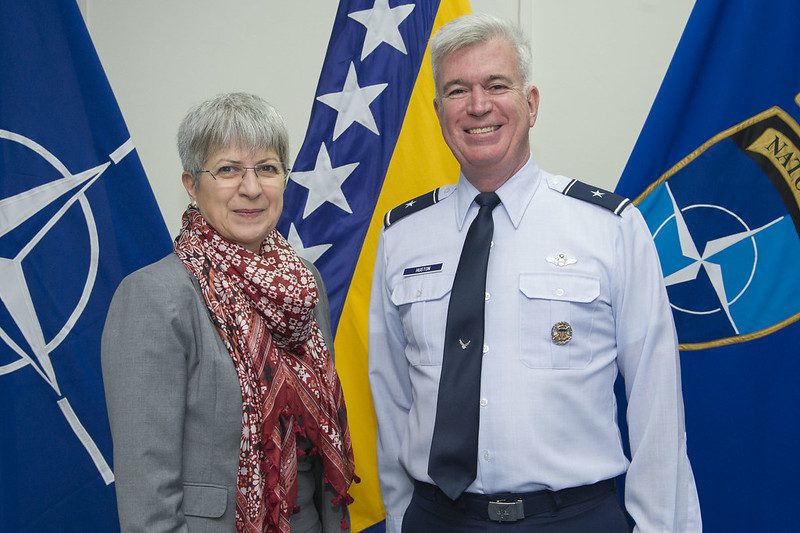
How the US Benefits From Foreign Aid to Bosnia and Herzegovina

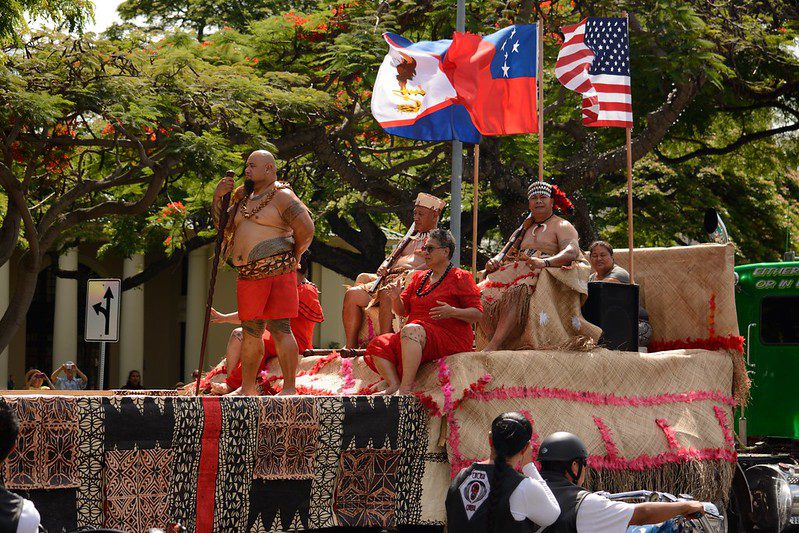
U.S. benefits from foreign aid to Bosnia and HerzegovinaBosnia and Herzegovina is a culturally and ethnically rich country situated in the western Balkan peninsula. The U.S. has contributed more than $1.7 billion in foreign aid to the country since 1996, and the country has allocated this aid to rebuilding itself as a nation after the effects of a devastating civil war.
Bosnia and Herzegovina was involved in an ethnically-motivated civil war from 1992 to 1995. It was not until 1995 that NATO intervened and a ceasefire (the Dayton Accords) was negotiated that finally ended the conflict. Today, the Dayton Accords are still in force.

How USAID Has Helped Bosnia and Herzegovina

The millions of dollars donated to the country have been allocated towards efforts of reconstruction, humanitarian assistance, economic development and military rebuilding. USAID assistance has had a large role in numerous projects and programs to get the country back on its feet and helping it become a thriving and economically stable country.

USAID has laid out in its official fact sheet its aid to the people of Bosnia and Herzegovina in the following areas:

  • Rebuild
  • Create Jobs
  • Reduce Rural Poverty
  • Develop A Better Business Environment
  • Introduce a More Efficient Justice System
  • Increase Transparency and Accountability
  • Promote Tolerance and Acceptance
  • Support Marginalized and Vulnerable Groups

In 2016, the EU accepted Bosnia and Herzegovina’s application into the EU, but member states say the country should continue with reform, “including socioeconomic reforms, reforms in the area of rule of law and public administration.” Challenges including the country’s poor governance and an effort made by the Republika Srpska to move the country to secession has made its commitment to the EU-driven package harder to accomplish. Nevertheless, economic reforms made by Bosnia and Herzegovina in order to join the EU has led to it becoming one of the fastest growing economies in Eastern Europe.

How the U.S. Benefits From Foreign Aid to Bosnia and Herzegovina

According to the Department of State, “U.S. assistance will help BiH implement this reform package and improve government accountability and efficiency, trade with Europe, and inter-ethnic dialogue and reconciliation.” The U.S. benefits from foreign aid to Bosnia and Herzegovina by securing the country’s stability in the region.

With U.S. assistance, the U.S. benefits from foreign aid to Bosnia and Herzegovina joining the EU would bring Bosnia and Herzegovina one step closer to joining NATO, creating a stronger alliance with the U.S. Bosnia and Herzegovina has been vocal since 2008 about its desire to join NATO. Not only did the country join the Partnership for Peace, but has contributed to NATO projects in Afghanistan. Bosnia and Herzegovina’s cooperation with NATO will not only provide defense for the U.S., but will also increase trade between the two countries.

Continued efforts from Bosnia and Herzegovina to reform its social, political, and economic situation in order to enter the EU would allow the EU’s organizations, such as its Common Security and Defense Policy, to ensure that the U.S. benefits from foreign aid to Bosnia and Herzegovina.

– Emma Martin

Photo: Flickr

May 2, 2018
https://borgenproject.org/wp-content/uploads/borgen-project-logo.svg 0 0 Borgen Project https://borgenproject.org/wp-content/uploads/borgen-project-logo.svg Borgen Project2018-05-02 01:30:022024-05-29 22:42:13How the US Benefits From Foreign Aid to Bosnia and Herzegovina
Foreign Aid, Global Poverty

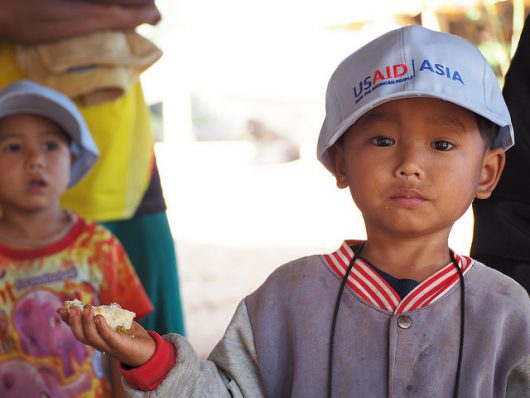
How the US Benefits from Foreign Aid to Laos

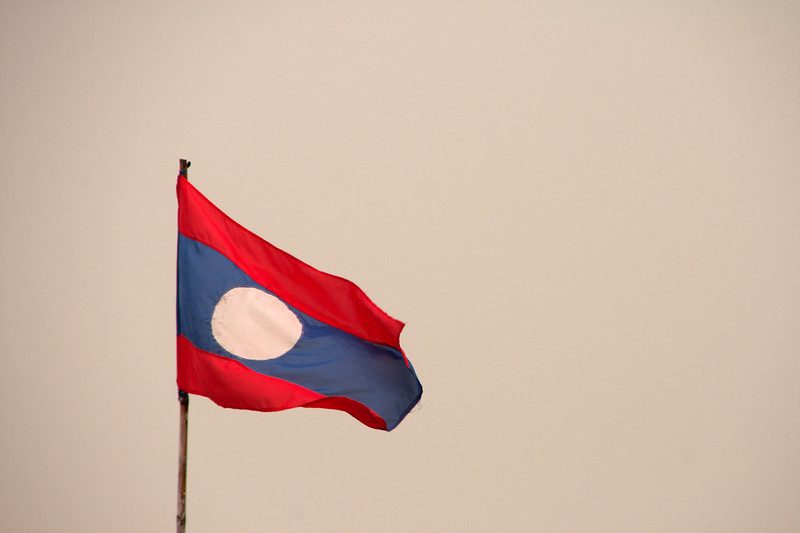
U.S. Benefits from Foreign Aid to LaosThe United States established full diplomatic relations with Laos in 1955 following its full independence from France in 1954. After a communist government rose to power in 1975 in Laos, U.S. representation was downgraded. Full U.S.-Laos relations were restored in 1992. The U.S. benefits from foreign aid to Laos by helping the country meet its development goals and improve governance, the rule of law and the global economy.
The relationship between the two countries has broadened to include cooperation on a range of issues including health, nutrition, education, environmental protection, trade liberalization, legal reform, law enforcement and English training. One of the major U.S. benefits from foreign aid to Laos is in improving health and child nutrition. A 2011 Lao government survey revealed that 44 percent of children under five are stunted due to limited access to nutritious foods and sanitation.

The Lower Mekong Initiative

Cooperation was accelerated since 2009 with the launch of the Lower Mekong Initiative (LMI) which serves as a platform to discuss the complex transnational development and policy changes in the lower Mekong subregion. The U.S. helps to improve trade policy in Laos, promotes sustainable development and biodiversity conservation and works to strengthen the criminal justice system and law enforcement. President Obama became the first U.S. President to visit Laos in September 2016.

U.S. exports to Laos include metals, aircraft, vehicles and agricultural products. U.S. imports from Laos include apparel, inorganic chemicals, agricultural products and precious metals.

Clear Unexploded Ordnance

The U.S. is helping Laos clear unexploded ordnance (UXO) which poses a threat to people and hampers economic development. Annual casualties over the last 20 years have lowered from more than 300 to fewer than 50. The U.S. has provided significant support for the clearance of UXO from the war and in 2016, President Obama announced $90 million in UXO funding over three years during his visit.

This funding will help make sure UXO victims have better access to quality rehabilitation services, including orthotics and prosthetics to improve their lives. Since the end of the Vietnam War, both countries have worked jointly to search for and recover the remains of U.S. soldiers who were unaccounted for. So far, the remains of 273 people have been recovered and identified.

USAID will lead new initiatives including a new five-year early grade reading program that will prepare Lao students for an increasingly competitive and integrated ASEAN community. The United States through the U.S Department of Agriculture has contributed nearly $100 million over 10 years for school meal programs in Laos that allow children to concentrate on education.

The U.S. benefits from foreign aid to Laos by seeking to strengthen people-to-people ties with Laos by multiplying the connections between the young people of the two countries. With 70 percent of Laos population under 30 years old, the U.S is engaging the next generation of young leaders and sponsors the full range of U.S exchange programs for Lao citizens. Lao takes full advantage of these programs and has facilitated exchanges for more than 2,300 emerging Lao leaders.

Both the U.S and Laos are committed to begin discussions on establishing a Peace Corps country agreement. It remains to be seen how relations continue between the United States and Laos.

– Zachary Ott
Photo: Flickr

May 1, 2018
https://borgenproject.org/wp-content/uploads/borgen-project-logo.svg 0 0 Borgen Project https://borgenproject.org/wp-content/uploads/borgen-project-logo.svg Borgen Project2018-05-01 07:30:152019-10-30 12:09:40How the US Benefits from Foreign Aid to Laos
Foreign Aid, Global Poverty

How the US Benefits from Foreign Aid to Burundi

U.S. Benefits from Foreign Aid to Burundi
Burundi is a small, landlocked country in Eastern Africa with a population of 8 million people. It also stands to be one of the poorest and least developed countries in the world, ranked 184 out of 188 countries on the U.N.’s Human Development Index. While aiding the struggling country, the U.S. benefits from foreign aid to Burundi as well.

Burundi’s Political Climate

Burundi suffered a civil war in 1962 and since then has been plagued by ethnic and political conflict amidst continuing efforts to recover as a nation. Poverty has increased due to the spike in violence since the election of Pierre Nkurunziza in 2005. Nkurunziza has since bypassed constitutional limits on his electoral eligibility through announcing a law permitting him to remain in office until 2034.

With the instability in Burundi, continued funding to the country ensures the wellbeing of its citizens. However, the European Union suspended funds to Burundi in March after declaring the president had not done enough to resolve the ongoing political and economic crisis.

But this is not the time to suspend funds to Burundi, for it would do more harm than good. For example, the U.S. benefits from foreign aid to Burundi in a multitude of ways.

U.S. Benefits from Foreign Aid to Burundi: Peacekeeping

The foreign aid provided to Burundi would help support America’s goal of peacekeeping in other nations. Burundi is the second-highest contributor to the African Union Mission in Somalia (AMISOM), which focuses on regional peacekeeping.

Through Burundi’s 5,432 troops participating in AMISOM, it is slowly restoring stability around the continent as far as the Horn of Africa.

However, with continued unrest, Burundi faces recalling its deployed troops within and surrounding the country. In this case, the rate of violence and instability will increase not only in the country of Burundi but also in surrounding regions.

Without receiving the foreign aid, Burundi’s military would be unable to assist in peacekeeping throughout the continent, which would most likely lead to the deployment of more American troops onto African soil.

U.S. Benefits from Foreign Aid to Burundi: Boosting the Economy

Another method for how the U.S. benefits from foreign aid to Burundi is by pouring financially into the economy of Burundi, which in turn would boost America’s economy.

U.S. investments to Burundi ensure the country can climb the economic ladder, and therefore provide more income for the people of Burundi. When the people of Burundi have higher incomes, they are able to contribute more to the economy of the country.

This benefits American businesses by providing connections with new customers and suppliers. It also prevents additional markets that could be potential competition.

The U.S. benefits from foreign aid to Burundi through economic growth and development, political stability and respect for human rights; therefore, it is important to continue funding the nation of Burundi.

– Adrienne Tauscheck

Photo: Flickr

April 30, 2018
https://borgenproject.org/wp-content/uploads/borgen-project-logo.svg 0 0 Borgen Project https://borgenproject.org/wp-content/uploads/borgen-project-logo.svg Borgen Project2018-04-30 07:30:222024-12-13 17:58:42How the US Benefits from Foreign Aid to Burundi
Aid, Developing Countries, Foreign Aid, Global Poverty

The Boomerang Effect: How Foreign Aid Gives Back

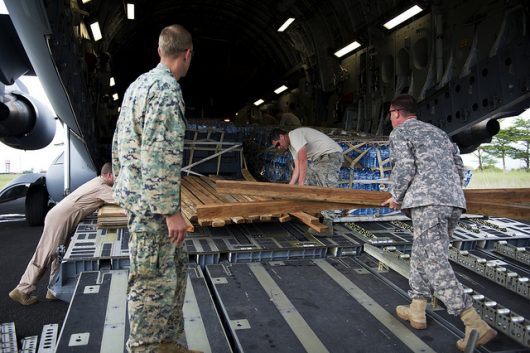
Foreign aid gives backForeign aid is too often misidentified as charity, with the implication of a one-way relationship. Like other myths surrounding aid, such as its depletion of the federal budget, a reality much different than popular belief silently survives. In truth, only one percent of the U.S. federal budget goes toward foreign aid and shrouded in much the same circumstances lies the fact that foreign aid gives back just as much, and more.
Who Gives to Whom?

According to an article by Jason Hickel, Global Financial Integrity (GFI) and the Centre for Applied Research at the Norwegian School of Economics completed a study in which they found that a much larger amount of money travels from poor countries to rich countries, rather than the other way around. As of 2015, cumulative foreign investment in the U.S. totaled more than $3 trillion.

Beyond the quantitative, the proof of return on investment manifests in countries like South Korea, Japan and Germany. All having once depended on U.S. aid in their times of need, these nations now play major roles in the global economy.

How Foreign Aid Gives Back to Developed Nations

Consider the fact that half of U.S. exports now go to developing countries and that developing countries’ economies grow three times faster than our own. The economics speak for themselves—with more new consumers to trade and do business with, more growth opportunities arise both at home and abroad. In Tennessee alone, more than 22 percent of jobs are supported by trade—that’s 830,000 reasons to continue investing in developing nations.

Beyond the wallet, though, foreign aid gives back in ways that cannot be measured. Potential new markets keep the U.S. competitive on the world stage, allowing its reputation and influence to spread. As Bill Gates points out, foreign aid even helps to keep the U.S. safe. By its nature, aid fights poverty, promotes development and largely focuses on foundational areas like healthcare, nutrition and education, which provide for a strong infrastructure.

The ultimate goal of this infrastructure-building rests in the ability to form a middle class, and by extension, find some stability. Countries that achieve this are more capable of preventing global health epidemics and are less likely to go to war. Stabilizing these nations by promoting democracy and human rights and by helping to install strong governance has far-reaching effects.

What Drawbacks Exist for Foreign Aid?

While some would argue that corruption and misuse of aid render the process futile, the results drown out the argument. Programs are in place to fight against this kind of criminality and are finding success. Foreign aid gives back in ways never thought of before now, such as:

  • Stopping diseases before they gain global reach.
  • Promoting U.S. exports.
  • Countering violent extremism.
  • Combating climate change through education.
  • Supporting overseas embassies and new allies.

Foreign aid gives back despite the stigma that claims otherwise. Experts say that cutting the U.S. foreign aid budget would do very little to reduce the federal deficit anyway. If the strongest argument against the use of foreign aid remains money, then it is time to take out the wallet and make a change.

– Daniel Staesser

Photo: Flickr

April 30, 2018
https://borgenproject.org/wp-content/uploads/borgen-project-logo.svg 0 0 Borgen Project https://borgenproject.org/wp-content/uploads/borgen-project-logo.svg Borgen Project2018-04-30 01:30:292024-05-29 22:39:36The Boomerang Effect: How Foreign Aid Gives Back
Foreign Aid, Global Poverty, USAID

Understanding How the U.S. Benefits from Foreign Aid to Angola

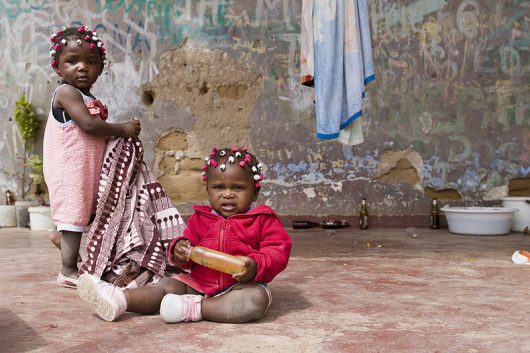
U.S. Benefits from Foreign Aid to AngolaAngola is a country in southern Africa sandwiched between three nations: Namibia, the Congo and Zambia. The United States established diplomatic relations with Angola in 1993, shortly after Angola’s independence from Portugal in 1975. Between 1975 and 1993, Angola witnessed 27 years of violent civil wars among many groups with the backing of various world powers including the United States, the Soviet Union, China and other countries in Africa.
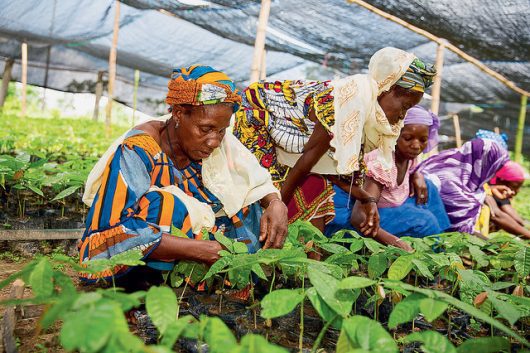
Angola continues to see repercussions from decades of war in the region. Roughly two-thirds of Angola’s citizens live in poverty, and much of Angola’s infrastructure has been destroyed by civil conflicts, war and lack of maintenance. The civil unrest in the region is also exacerbated by Angola’s possession of large oil reserves and a strong military force, creating a strong incentive for power struggles and polarizing forces in the region.

The U.S. benefits from foreign aid to Angola include providing food and food security, promoting democratic practices, providing disaster relief, providing better and more widely available health care and fighting the spread of disease in Angola. As well as these humanitarian efforts, the United States supports Angola in its efforts to utilize its agricultural abilities and sell oil reserves on the open market.

U.S. benefits from foreign aid to Angola have been in place since 1989 when the United States began providing large-scale disaster relief and humanitarian aid in the form of consumable material goods. In 1992, the United States Agency for International Development (USAID) began a relief and assistance program for Angola in the hopes that it would help prevent the region from falling back into the grips of civil conflict.

Unfortunately, the fighting did not stop and aid was suspended until 1995 when U.S. benefits from foreign aid to Angola resumed with millions being dispersed toward the rehabilitation of the agricultural sector and displaced children/orphans in the region. Much of the U.S. foreign aid dispersed during times of conflict in the area was provided in the form of material goods such as medical supplies and food, helping stabilize conditions and promote health and humanitarian causes.

Since the beginning of more peaceful times in Angola, U.S. benefits from foreign aid to Angola have provided over $1 billion in aid to programs directly helping the people of Angola. The year 2011 marked the 15-year anniversary of the full-time presence of USAID assistance programs in Angola, helping citizens rebuild and promote health standards in the country.

While aid dollars for humanitarian efforts have been successful in the region, it is important to remember that the primary U.S. benefits from foreign aid to Angola are to support leaders and governments that wish to take Angola down the road to a peaceful future. These aid dollars fund programs in Angola to increase credit access to citizens and governmental bodies, create fair and healthy economic conditions for trade and business expansion and create land registration systems to help prevent turf wars and property theft.

With the help of U.S. foreign aid dollars, Angola has made progress in installing leaders with a more peaceful vision for the future and a willingness to improve socioeconomic conditions for its citizens. The United States hopes to help Angola in its efforts to become the economic powerhouse it has the potential to be. With the help of programs like USAID, Angola has the potential to improve conditions not only for itself but the rest of Africa. With its agricultural and natural resources, Angola could prove itself to be one of Africa’s largest economic breadwinners.

– Dalton Westfall

Photo: Wikimedia Commons

April 28, 2018
https://borgenproject.org/wp-content/uploads/borgen-project-logo.svg 0 0 Borgen Project https://borgenproject.org/wp-content/uploads/borgen-project-logo.svg Borgen Project2018-04-28 01:30:402019-08-01 11:21:23Understanding How the U.S. Benefits from Foreign Aid to Angola
Foreign Aid, Global Poverty

How the US Benefits from Foreign Aid to Côte d’Ivoire

U.S. Benefits from Foreign Aid to Côte d’IvoireCôte d’Ivoire, located in West Africa, is also known as the Ivory Coast. Agriculture dominates its economy, with oil and natural gases improving economic growth, too. Another aspect helping the economy is foreign aid, and the U.S. benefits from foreign aid to Côte d’Ivoire as well.
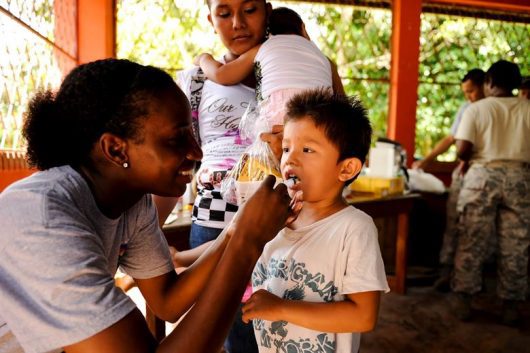
A Strong Partnership

The U.S. has been building diplomatic relations with Côte d’Ivoire since 1960 when it became independent from France. The U.S. mainly focuses on four areas to assist Côte d’Ivoire:

  1. Upgrading the health care system
  2. Facilitating democracy and governance
  3. Exploring economic potentials
  4. Improving security reform

In 1999, a coup in Côte d’Ivoire disputed elections and spurred rebellion. The U.S. assisted Côte d’Ivoire in moving beyond its decade-long crisis by restoring peace, offering more than 25 percent of the funding for U.N. operations in Côte d’Ivoire. Later on, the U.S. Agency for International Development promoted the African Growth and Opportunity Act (AGOA), which is a U.S. Trade Act issued on May 18, 2000.

U.S. Benefits from Foreign Aid to Côte d’Ivoire in Trade

Since then, the U.S. and Côte d’Ivoire have shared bilateral economic relations, and the amount of U.S imports from Côte d’Ivoire grew from $384 million in 2000 to $1,163 million in 2016. This is just one of the ways the U.S. benefits from foreign aid to Côte d’Ivoire.

Côte d’Ivoire is viewed as one of Africa’s fastest economic growing countries. From 2006 to 2016, Côte d’Ivoire’s gross domestic product has grown from $17.8 billion to $36.3 billion. In 2015, Côte d’Ivoire exported $12.7 billion in products and 29 percent was cocoa beans. Another noticeable product was refined petroleum, which composed 8.8 percent of the country’s exportation.

AGOA created duty-free imports for certain products from several sub-Saharan African countries. This act further stimulates the U.S. and sub-Saharan African trade and investment and integrates sub-Saharan African economy into the global picture.

Côte d’Ivoire’s economy is heavily based on the agricultural sector, especially cocoa beans. The U.S. is one of the biggest cocoa beans consumers and has easier and cheaper access to import cocoa beans from Côte d’Ivoire. In 2016, the U.S. had imported $834 million of cocoa beans from Côte d’Ivoire. AGOA eliminates extra costs for the U.S. on daily necessities. In this way, the U.S. benefits from foreign aid to Côte d’Ivoire.

A Boost for the Future

In Nov. 2017, Côte d’Ivoire signed $525 million compacts from the U.S. Millennium Challenge Corporation. The money will be spent in a five-year period to stimulate economic growth and eliminate poverty.

The government of Côte d’Ivoire will contribute another $22 million to various projects, such as the Abidjan Transport Project, which can maintain and improve transportation conditions. Another project receiving funding will be the Skills for Employability and Productivity Project, which will facilitate education systems and provide more opportunities to access secondary education.

Côte d’Ivoire is becoming an even stronger country with U.S. support. Its economic development is accelerating, and its social system is improving as well. Now, Côte d’Ivoire is trying to move its economic anchor from agriculture to other aspects. The U.S. benefits from foreign aid to Côte d’Ivoire will increase if Côte d’Ivoire can develop into a more integrated economic model.

– Judy Lu

Photo: Flickr

April 27, 2018
https://borgenproject.org/wp-content/uploads/borgen-project-logo.svg 0 0 Borgen Project https://borgenproject.org/wp-content/uploads/borgen-project-logo.svg Borgen Project2018-04-27 18:41:002024-12-13 17:58:43How the US Benefits from Foreign Aid to Côte d’Ivoire
Foreign Aid, Global Poverty

The Ways How Foreign Aid Has Benefited Costa Rica


Costa Rica sits just above Panama in Central America, and foreign aid has benefited the nation so well that could be considered the overall standard for the effectiveness of foreign aid. This claim comes with a disclaimer and compliment to Costa Rica: Costa Rica is unique in that the will and dedication of the people caused Costa Rica to hold onto a tradition of democracy and relatively stable governments. This type of behavior and system is not always the case when it comes to the regions that receive foreign aid.

A stable government can help increase the effectiveness of foreign aid. Even after a substantial economic downturn during the 1980s and defaulting on is loans from the International Monetary Fund (IMF), Costa Rica was able to economically recover with guidance from the IMF — a success  often considered controversial.

United States’ Withdrawal from Costa Rican Aid

By 1996, the United States’ International Development Fund closed its mission in Costa Rica. In the last ten years, the United States government has allocated less than $50 million in foreign aid to Costa Rica.

During the years that IMF imposed economic planning, Costa Rica was able to begin to diversify its economy. Before the 2008 economic crisis, large tech firms shifted the manufacturing of microprocessors and other hardware to Costa Rica.

The investment from international business before 2008 helped shift Costa Rica away from its agrarian-based economy. Currently, only 5.5 percent of Costa Rica’s 58.91 billion GDP is attributed to agriculture, 21 percent of the GDP comes from industry and 73.5 percent is from the service and tourism industry. It can be seen that foreign aid has benefited Costa Rica due to the nation’s survival of the 2008 economic crisis.

Diverse Economy and Loan Qualification

Due to its new, more stable and diverse economy, Costa Rica was able to qualify for loans from the IMF and other international banking organizations. Although it weathered the storm, Costa Rica is still paying the price — its credit rating was downgraded in 2017.

In March of 2018, the United Nations and Costa Rica agreed to United Nations Development Assistance Framework from 2018-2022 to help both the private and public sectors of the nation. The plan seems to target sectors and institutions hit hardest by increased public and government debt post-2008.

Due to Costa Rica’s reliance on foreign direct investment, a downgraded credit score has the potential for a loss in those investments, making aid more risky for investors. Poverty still remains between 20-25 percent in Costa Rica, so stabilizing its economy and increasing FDI is extremely important for the nation as a whole.

To Remain Steadfast While Promoting Growth

While the economic story of Costa Rica seems akin to a roller coaster, it will hopefully stabilize again with the help of the United Nations. Foreign aid has benefited Costa Rica in other ways as well. Due to the relatively stable economy, Costa Rica spends 7 percent of its GDP on the education system, a decision that has caused the youth literacy rate (ages 15-24) to increase to 99 percent.

The country also boasts a nearly 100 percent primary school graduation rate, and a low teacher-to-student ratio of 1 to 13 in primary school and 1 to 14 in secondary school. The United States Peace Corps has maintained a presence in the education system of Costa Rica since 1963.

How Foreign Aid Has Benefited Costa Rica

Foreign aid has benefited Costa Rica immensely in the 20th and 21st Centuries. Due to the wise use of aid, Costa Rica was able to remain firm and grow, albeit slowly, though the 2008 economic crisis which made every country in the world stumble.

As the country steadies itself with only slight economic assistance in the coming years, it will hopefully regain its secure footing. And this is the aim of most foreign aid — to help a nation prosper so that it can one day stand on its own.

– Nick DeMarco

Photo: U.S. Air Force

April 27, 2018
https://borgenproject.org/wp-content/uploads/borgen-project-logo.svg 0 0 Borgen Project https://borgenproject.org/wp-content/uploads/borgen-project-logo.svg Borgen Project2018-04-27 01:30:152024-05-29 22:42:07The Ways How Foreign Aid Has Benefited Costa Rica
Foreign Aid, War and Violence

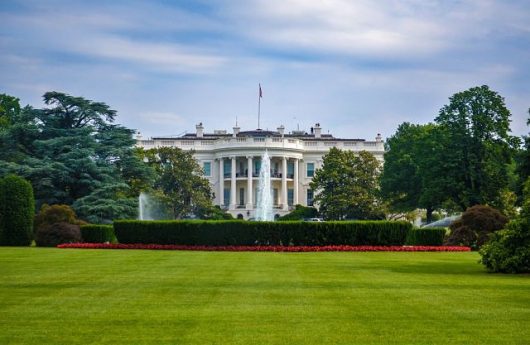
Why and How Foreign Aid Is A Matter of National Security

Foreign Aid Is a Matter of National Security
In February of 2018, the Trump administration released a budget proposal indicating deep 29 percent budget cuts to the state department and steady 13 percent increases to the defense department. These state department cuts materialize into $16.2 billion taken away from the previous $55.6 billion allocated in Fiscal Year (FY) 2018. The Trump Administration justifies the cuts by stating that aid will remain in the accounts of “friends” of our future foreign policy decisions.

Ramifications of the 2018 Budget Proposal

Meanwhile, the proposed budget increases the amount of money spent on national defense by 13 percent, raising the $600 billion budget to nearly $690 billion. The increased defense budget will be used to completely update the United States’ nuclear arsenal and increase the amount of ground-based missile interceptors in Alaska working to address the increased threat of the Korean Peninsula.

Assessing nuclear threats is a fair concern and position for the United States government to take, however it should not come at the expense of drastically decreasing foreign aid. In truth, foreign aid is a matter of national security.

Foreign Aid is a Matter of National Security

While it may not appear obvious at first, foreign aid is known and regarded by many U.S. military officials as beneficial to United States foreign policy and national security. To illustrate, in 2017-retired General Mike Mullen and retired Admiral James Jones wrote a piece explaining the hands-on benefits they saw foreign aid bring in leading American troops.

Both officials explain that military power alone cannot prevent despair within vulnerable countries from turning into outbursts of violence and instability. Robust foreign aid should not be looked upon as a no-strings-attached giveaway to the poorest nations in the world, but rather as stability enhancement to places most susceptible to radical influence.

Threat of Extremism

The generals explain that countries with limited social hope and foreign assistance are the most prone to radicalization that materializes into extremism. Terror organizations like Al Qaeda, Al Shabab, Boko Haram and ISIS take root in countries with common characteristics — instability and poor governance. These terror cells bring about a sense of social support that citizens do not believe their public officials and service programs will be able to provide them.

The former military officials further explain that Congress can, and should, fully fund the International Affairs Budget, as the funding leads to active approaches from the U.S. government, non-government organizations and in-country support to provide services that meet citizens’ basic needs.

Foreign Aid and the Military

Moreover, foreign aid goes hand-in-hand with a strong military. Without support after a strong U.S. military presence, countries can remain unstable and vulnerable to extremist influence. Therefore, foreign aid creates proactive conflict-prevention strategies which are far less expensive in resources and expended lives than reactionary use of United States Armed Forces.

In 2013, Secretary of Defense Jim Mattis bluntly summarized the words of the retired officials and explains why foreign aid is a matter of national security: “If you don’t fund the State Department fully, then I need to buy more ammunition ultimately. So I think it’s a cost benefit ratio. The more that we put into the State Department’s diplomacy, hopefully the less we have to put into a military budget…”

Diplomacy is ultimately less expensive than the wars that a lack of diplomacy brings about. While a strong military is considerably important in 2018 and beyond, cutting foreign aid to increase military spending weakens our strength as a nation, a role model and peacekeeper.

The words of these military officials should be kept in mind in future policy decisions so as to clearly explain why foreign aid is a matter of national security.

– Daniel Levy
Photo: Unsplash

April 26, 2018
https://borgenproject.org/wp-content/uploads/borgen-project-logo.svg 0 0 Borgen Project https://borgenproject.org/wp-content/uploads/borgen-project-logo.svg Borgen Project2018-04-26 01:30:282019-11-03 18:39:38Why and How Foreign Aid Is A Matter of National Security
Aid, Foreign Aid

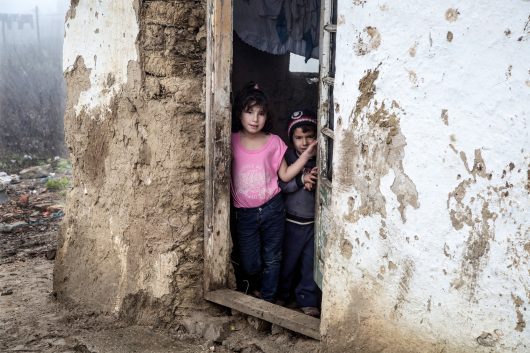
How the US Benefits from Foreign Aid to Romania

U.S. benefits from foreign aid to RomaniaRomania is a relatively small country in eastern Europe that is bordered by Ukraine to the north, Hungary to the west, Moldova to the east and both Serbia and Bulgaria to the south. Romania’s population in 2017 was 21.5 million, ranking as the 58th largest country in the world in terms of population. Romania joined the North Atlantic Treaty Organization (NATO) in 2004 and the European Union in 2007.

The projected amount of aid that will be allocated to Romania from the United States’ budget for foreign assistance is $1.5 million in 2019. The breakdown of how this money will be utilized shows that the majority of it is being earmarked for military aid to troops in nearby regions, according to foreignassistance.gov. Information shared on this site further clarifies the importance of U.S. government aid to Romania and specifies which organizations and departments receive funds, such as the Peace Corps. The information provided shows how funds are used; however, the connection between the purposes of the funding and how the U.S. benefits from foreign aid to Romania is not quite clear without examining the issues from a broader perspective.

Romania is considered to a be a key partner in NATO and allows the U.S. access to military facilities both for training purposes and for closer proximity to nearby regions to the south and east of Romania that are experiencing instability. Currently, Romania is “hosting deployment of the U.S. ballistic missile defense capabilities under the European Phased Adaptive Approach”, which is what constitutes the United States’ contribution to NATO’s ballistic missile defense. Romania is also promulgating stability and greater cooperation among its neighbors by working on improvements in areas of defense, law enforcement, energy, economic development, environment and democratic values in this particularly sensitive area of eastern Europe.

The U.S. benefits from foreign aid to Romania in part because Romania has played a major role in aiding U.S. forces to weaken the Russian threat to American soil and elsewhere in Europe. Planned assistance will therefore be partially devoted to Romanian military modernization efforts, which also serves to strengthen its relationship with the U.S. and other nearby countries. Furthermore, Romania has a prior history of providing aid when needed to Afghanistan, Kosovo and Bosnia and Herzegovina. The country’s willingness to do so is evidence of its standing as a peaceful, forward-thinking ally and worthy member of NATO.

While also addressing the sensitivities regarding the less stable regions surrounding Romania, the country of Romania and those who offer foreign assistance simultaneously work to diminish the threat of Syria, Russia and other potentially hostile nations by creating more partnerships through such benevolence. The end result is ideally improved conditions for Romania and surrounding countries. This is achievable through international efforts to work together to achieve stability, progress and modernization. A better quality of life naturally weakens hostility and thus serves as an intelligent defense for those who have the upper hand. Thus, the U.S. benefits from foreign aid to Romania, while serving the international community at large as well.

– Bridget Rice

Photo: Flickr

April 24, 2018
https://borgenproject.org/wp-content/uploads/borgen-project-logo.svg 0 0 Borgen Project https://borgenproject.org/wp-content/uploads/borgen-project-logo.svg Borgen Project2018-04-24 07:30:092024-05-29 22:42:13How the US Benefits from Foreign Aid to Romania
Aid, Foreign Aid

Understanding How the U.S. Benefits from Foreign Aid to Djibouti

U.S. benefits from foreign aid to DjiboutiA tiny, desert-like East African nation, Djibouti is more synonymous with counter-terrorism and the piracy concerns of its southern neighbor than economic ties to the U.S. However, substantial U.S. foreign aid is indirectly creating opportunities for U.S. exporters. Additionally, the U.S. benefits from foreign aid to Djibouti by securing efficient and reliable trade routes to other nearby African countries such as Ethiopia, in which the U.S. has key commercial interests.

Home to roughly 875,000 people, as well as a significant U.S., German, Japanese, French and most recently Chinese military presence, Djibouti has a decidedly disproportionate amount of foreign military within its borders. The U.S. pays $60 million each year to Djibouti for the rights to maintain its only permanent sub-Saharan military base.

But, U.S. foreign aid coming into the country is equally important in Djibouti for the majority of citizens looking for work. Although U.S. investment in the country pales in contrast to that of new entrants into the region such as China, the actual workforce of Djibouti is benefiting from the more nuanced and domestically-oriented U.S. foreign aid.

New ventures in the construction of ports, pipelines, international airports and railways have somewhat failed to raise the standard of living and stimulate employment. Accounting for 70 percent of GDP, the new port projects have only added a few thousand jobs. According to the U.N., despite recent Chinese soft loans toward these various infrastructure projects, the unemployment rate in Djibouti still stands at 60 percent.

This high level of unemployment is partly due to a lack of qualified candidates in many sectors of the economy. Workers looking for jobs simply do not have the necessary skills required to fill many of the possible vacancies.

Through the Workforce Development Project (WDP), the United States Agency for International Development and Djibouti are working together to reduce unemployment and create a more modern labor force. Investments of nearly $25 million over five years (2016-2021) are aimed at increasing competitiveness by tailoring the workforce to the needs of a modern economy.

The WDP emphasizes creating stronger connections between worker training programs and employers. Specifically, through more meaningful ties between vocational education centers and businesses, the future workforce will be better suited for the demands of firms and will likely have greater hiring potential.

Although not as flashy as the new Doraleh Port or the new electrified railroad connecting Djibouti City and Ethiopia’s capital, Addis Ababa, the WDP will create thousands of new consumers to U.S. exports. This is especially promising since the soaring unemployment rate allows for ample economic improvements should this transformation of the workforce take place. USAID, centered on workforce assimilation, is therefore fostering job growth that will be more sustainable than temporary employment based on glitzy infrastructure projects.

Another way in which the U.S. benefits from foreign aid to Djibouti is by promoting ongoing access to the substantial trade flows emanating from regional neighbors. A prime example of this is Ethiopia. Much of Ethiopia’s exports—including coffee, vegetables and cosmetics—are routed through Djibouti on their way to the U.S. Meanwhile, as of 2016, 90 percent of all Ethiopian imports were brought via ports in Djibouti.

U.S. foreign aid indirectly contributes to these regional trade routes of East Africa by creating a more prosperous and modernized workforce in Djibouti. A thriving, educated and healthy Djibouti society will undoubtedly increase the opportunities for cross-border trade.

One byproduct of this increasingly interconnected region around Djibouti would be more timely and reliable shipment of goods and lower associated transportation costs. As in Ethiopia, the U.S. benefits from foreign aid to Djibouti are amplified when stability across the wider East African region is maintained.

On this last issue, there is little doubt that the military presence plays a prominent role. However, U.S. programs aiming to reduce unemployment such as the WDP, by indirectly promoting a more sustainable domestic environment in Djibouti, also contribute to regional stability. Garnering less attention than the massive infrastructure spending, transforming the country one worker at a time will lead to continued U.S. benefits from foreign aid to Djibouti

– Nathan Ghelli

Photo: Flickr

April 24, 2018
https://borgenproject.org/wp-content/uploads/borgen-project-logo.svg 0 0 Borgen Project https://borgenproject.org/wp-content/uploads/borgen-project-logo.svg Borgen Project2018-04-24 01:30:322024-05-29 22:42:11Understanding How the U.S. Benefits from Foreign Aid to Djibouti
Page 31 of 61«‹2930313233›»

Get Smarter

  • Global Poverty 101
  • Global Poverty… The Good News
  • Global Poverty & U.S. Jobs
  • Global Poverty and National Security
  • Innovative Solutions to Poverty
  • Global Poverty & Aid FAQ’s
Search Search

Take Action

  • Call Congress
  • Email Congress
  • Donate
  • 30 Ways to Help
  • Volunteer Ops
  • Internships
  • Courses & Certificates
  • The Podcast
Borgen Project

“The Borgen Project is an incredible nonprofit organization that is addressing poverty and hunger and working towards ending them.”

-The Huffington Post

Inside The Borgen Project

  • Contact
  • About
  • Financials
  • President
  • Board of Directors
  • Board of Advisors

International Links

  • UK Email Parliament
  • UK Donate
  • Canada Email Parliament

Get Smarter

  • Global Poverty 101
  • Global Poverty… The Good News
  • Global Poverty & U.S. Jobs
  • Global Poverty and National Security
  • Innovative Solutions to Poverty
  • Global Poverty & Aid FAQ’s

Ways to Help

  • Call Congress
  • Email Congress
  • Donate
  • 30 Ways to Help
  • Volunteer Ops
  • Internships
  • Courses & Certificates
  • The Podcast
Scroll to top Scroll to top Scroll to top