• Link to X
  • Link to Facebook
  • Link to Instagram
  • Link to TikTok
  • Link to Youtube
  • About
    • About Us
      • President
      • Board of Directors
      • Board of Advisors
      • Financials
      • Our Methodology
      • Success Tracker
      • Contact
  • Act Now
    • 30 Ways to Help
      • Email Congress
      • Call Congress
      • Volunteer
      • Courses & Certificates
      • Be a Donor
    • Internships
      • In-Office Internships
      • Remote Internships
    • Legislation
      • Politics 101
  • The Blog
  • The Podcast
  • Magazine
  • Donate
  • Click to open the search input field Click to open the search input field Search
  • Menu Menu

Archive for category: Development

Information and stories on development news.

Advocacy, Developing Countries, Development, Global Poverty, Poverty, Poverty Reduction

ADB Helps Pakistan to Fight Poverty

ADB Helps Pakistan to Fight Poverty

The Asian Development Bank (ADB) helps Pakistan to fight poverty by pledging  $10 billion to Pakistan over the next 5 years for the purpose of infrastructure development, with the goal of improving important economic sectors that could revitalize regional trade. Two central areas of investment for the ADB will be water resource development and transportation infrastructure. Transportation infrastructure is an especially important focus area, as it undergirds the possibility of developing trade in other sectors of Pakistan’s economy. Water resource development will be crucial in continuing to sustain the agriculture sector and in ensuring that citizens have access to water. Here are some ways ADB helps Pakistan to fight poverty by addressing some major issues.

Trade and Transportation

While trade and poverty may appear to be separate, the economic growth prospects offered by expanding trade programs often spill over to effect poverty reduction. The positive gains in GDP growth result in increased capital coming into a country, which creates more opportunities for employment and access to markets. Since 2001, consistent yearly GDP growth in Pakistan, ranging from 1.7 percent to 7.5 percent has come alongside a 24.7 percent reduction in the number of Pakistanis living in extreme (less than $1.90 a day) poverty.

However, the poor transit system could have negative effects on the future of economic growth in Pakistan. Most of the nation’s railway system is over 100 years old and was built during the British colonial period. This has severely hampered the possibility of ramping up trade and industrial production, as only 4 percent of commerce can be shipped via rail. This has had a while GDP growth has been consistent, the share of growth caused by trade has declined, as the service industry, at 58.6 percent of GDP and agriculture sector at 24 percent both outpace the contributions of industrial production, which has declined from 22 percent of GDP to 19.3 percent. Moreover, the ADB estimates that 2 percent of GDP is lost annually due to poor transportation infrastructure.

In response to this, the ADB has announced plans to invest in providing more locomotives, increasing the overall prospects for shipping capabilities by rail, and has also invested in updating railway lines, as well as improving north-south highways for travel via motor vehicles.

Water Resource Development

Water resource development is another way ADB helps Pakistan fight poverty. This is not to suggest that agriculture is unimportant, as in some cases, agricultural development is integral to the maintenance of local economic growth, offering a means of mitigating the worst impacts of poverty. This is especially true of Balochistan, a province that faces severe water scarcity, impacting both the living standards of the population and the local economy. Agricultural production requires massive levels of water to operate successfully, and with 60 percent of the population employed in agriculture, the impact of water scarcity on poverty is compounded by pressing economic concerns.

As a result of water scarcity in Quetta, the provincial headquarters of Balochistan, many tube-wells were installed in order to redirect water from rural areas to provide water to the urban areas. This program has produced a massive strain on the population of Balochistan, eliminating access for water for both drinking and for use in agricultural production, with poor water resource management producing a scenario in which one portion of the population is only able to access the water by depriving another.

However, the ADB is seeking to combat this water scarcity by protecting watersheds and building 276 kilometers of new irrigation channels, to support agricultural production. Watersheds will prevent soil erosion, and increase water storage capabilities in the region, while irrigation channels will assist in combating the scarcity brought on by tube-wells. Beyond its use for irrigation, these programs will also be important for developing methods of helping increase access to water in the region, which some estimate could have a profound impact on increasing women’s access to water.

Conclusion

Water scarcity and poor transportation infrastructure have hindered effective economic development in Pakistan, limiting the prospects for sustainable economic growth and poverty reduction. The influx of capital offered by expanding networks for regional trade promises to offer new avenues for employment and sustainable income for Pakistanis living in poverty. Water resource management will provide new avenues for managing agricultural development, ensuring stable irrigation routes and providing overall water security.

– Alexander Sherman
Photo: Flickr

October 1, 2019
https://borgenproject.org/wp-content/uploads/borgen-project-logo.svg 0 0 Kim Thelwell https://borgenproject.org/wp-content/uploads/borgen-project-logo.svg Kim Thelwell2019-10-01 12:22:432024-05-29 23:12:40ADB Helps Pakistan to Fight Poverty
Developing Countries, Development, Global Poverty, Health, Life Expectancy

7 Facts About Life Expectancy in Jordan

life expectancy in Jordan

Jordan is an Arab country in West Asia with a population of more than 10 million people and a life expectancy of 74 years. Although some in Jordan face health and economic struggles, efforts are in place to raise the average life expectancy rate. Here are seven facts about life expectancy in Jordan.

7 Facts about Life Expectancy in Jordan

  1. As of 2017, road injuries ranked number nine of 10 factors causing the most deaths in Jordan. In 2007, road injuries ranked much higher at sixth, as there were 110,630 road accidents and 992 fatalities. That statistic increased from 1987’s 15,884 accidents. In response to these 2007 numbers, the Jordanian government applied new traffic laws in 2008 and increased police activity, which, ultimately, boosted life expectancy.
  2. Air pollution is in the top 10 risk factors of death and disability combined in Jordan. In urban areas, 50-90 percent of Jordan’s air pollution comes from road traffic, and based on a report in 2000, air pollution causes around 600 premature deaths each year. The main factor of poor air quality is lead-based gasoline used in cars, emitting lead pollution. In 2006, the government introduced two types of unleaded petrol for cars. However, air pollution was still a leading cause of death in 2017.
  3. Noncommunicable diseases are on the rise in Jordan. Even though these diseases cannot be transmitted to others, they remain some of the most common causes of death. From 2007 to 2017, Ischemic heart disease continued to be the number one cause of death for Jordanians and diabetes moved up from fifth to fourth. As of 2017, strokes ranked second.
  4. Chronic illnesses are some of the most common diseases in Jordan. Approximately one-third of Jordanians over 25 have a chronic illness or suffer from more than one. Reported chronic illnesses are largely caused by the practice of smoking tobacco. Out of the entire population, 38.2 percent use tobacco, including 65.5 percent of males over 15. If the amount of smokers does not decrease in the future, it will negatively impact the mortality rates and overall life expectancy in Jordan.
  5. Jordanian’s access to healthcare and insurance is increasing every year. From 2000 to 2016, on average, the percent of those insured increased by an average of 1.2 percent. Overall, 70 percent of Jordanians are insured. All children under six and citizens older than 60 are eligible for insurance with Jordan’s public healthcare sector as well. Primary healthcare clinics are available in both urban and rural areas, and those with insurance receive free medication.
  6. The Jordanian government developed a national electronic medical library (ELM). The ELM gives students and healthcare workers free access to medical resources to encourage and increase the number of people pursuing a career in medicine. The government hopes that the ELM will help increase the availability of healthcare and allow the medical industry in Jordan to flourish in the future.
  7. Mercy Corps has been supporting Jordanians since 2003. The organization has 250 workers in the country. Mercy Corps not only provides basic needs but also long-term solutions, such as working to reduce tensions between leaders in communities. Mercy Corps has helped more than 3,000 vulnerable households with costs to meet urgent needs and in 2017 alone, more than one million Jordanians benefitted from their work.

Although certain health and economic issues are prominent, Jordan is making improvements to its quality of living. The government is taking the initiative to move the country forward, economically and medically, which can only mean an increase in life expectancy in Jordan in the future.

– Jordan Miller
Photo: Unsplash


October 1, 2019
https://borgenproject.org/wp-content/uploads/borgen-project-logo.svg 0 0 Jennifer Philipp https://borgenproject.org/wp-content/uploads/borgen-project-logo.svg Jennifer Philipp2019-10-01 08:17:232019-12-17 15:07:597 Facts About Life Expectancy in Jordan
Developing Countries, Development, Global Poverty, Poverty, Poverty Reduction

How Plastic Bank is Tackling Global Poverty

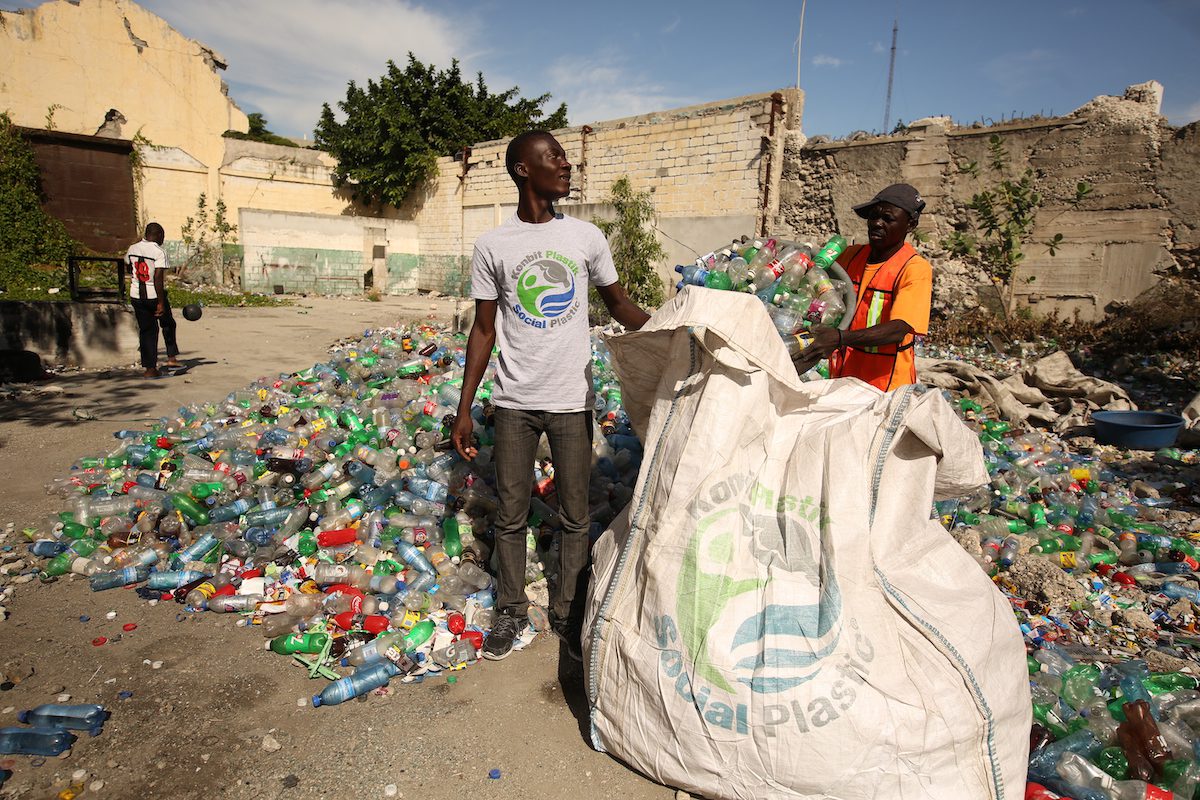
Plastic BankThere are more microplastics in the ocean than there are stars in the Milky Way galaxy and the majority of this plastic waste comes from areas of extreme poverty, where recycling is simply not an option. Because a garbage truck’s worth of plastic is dumped into the ocean every minute, David Katz and Shaun Frankson were compelled to create the organization known as Plastic Bank. During a TED talk, Katz explains that the solution to this problem is to “turn off the tap,” since ridding the oceans of plastic waste may be futile. Thus, the organization was launched with two goals in mind: stopping the flow of plastic waste into the ocean, while simultaneously alleviating global poverty.

What is the Plastic Bank?

The Vancouver-based Plastic Bank, launched in 2013, is predicated around the idea of turning plastic waste into digital currency in impoverished communities. This gives plastic too much value to be simply dumped into the ocean. The organization touts the mantra, “Plastic is a resource — not waste.”

At numerous locally-run Plastic Bank locations, individuals turn in plastic they have collected from within their communities. In Haiti, more than 40 recycling centers have been established and plastic collectors earn as high as $5 per day in a country where the average citizen lives on $2 a day, according to the World Bank. Since 2015, the first Plastic Bank center opened in Haiti has collected an amount of plastic equivalent to more than 100 million plastic bottles.

The plastic is weighed and assigned a value, which is then deposited into an online account that can be accessed via a smartphone application. According to Frankson, 50 percent of people in Haiti have a smartphone that can run the app and those who do not can use plastic to buy a phone. The app uses blockchain technology on IBM’s LinuxONE servers, meaning that all transactions are tracked and free of any danger involved in a cash-based system, such as robbery or forgery. At Plastic Bank stores, individuals can use their credits to buy necessities such as water, food, sustainable cooking fuel, high-efficiency stoves and even medical insurance, school tuition, solar-powered smartphone charging and Wi-Fi access.

Another innovation is the app’s banking features. Utilizing the same blockchain technology to create a secure “hyper ledger,” users can build credit over time and eventually earn low-interest loans. Before this feature, this was a very uncommon opportunity in countries like Haiti since many citizens do not qualify for bank accounts.

The Advent of Social Plastic

Once the plastic is collected at recycling centers, it is cleaned, crushed into pellets and sold as what the organization calls Social Plastic, or a form of plastic that is more socially responsible. Social Plastic is purchased by companies and multinational corporations such as German Henkel, Shell, IBM and Marks & Spencer and is used directly in the manufacturing of their goods. According to Katz, Social Plastic is a “globally recognized currency“ that “alleviates poverty and cleans the environment at the same time.”

The Future of Plastic Bank

Currently, Plastic Bank is expanding operations to over two dozen countries and developing the app further, including IBM visual recognition technology to help users identify the value of certain plastics, like a barcode scanner in a store. Plastic Bank expects to entice major corporations such as Coca-Cola, PepsiCo and Colgate-Palmolive to join the initiative. Plastic Bank currently operates in the Philippines, Haiti and Indonesia and is projected to have 530 locations by the end of 2019.

– Adam Bentz
Photo: Flickr

October 1, 2019
https://borgenproject.org/wp-content/uploads/borgen-project-logo.svg 0 0 Jennifer Philipp https://borgenproject.org/wp-content/uploads/borgen-project-logo.svg Jennifer Philipp2019-10-01 01:30:562019-10-10 10:13:42How Plastic Bank is Tackling Global Poverty
Children, Developing Countries, Development, Global Poverty, Life Expectancy

Top 10 Facts About Life Expectancy in Montenegro

Life Expectancy in Montenegro

Montenegro is a Balkan country that obtained independence from Yugoslavia on June 3, 2006. The data regarding life expectancy in Montenegro attests to its modernization and the continuing integration of the country into the global market system. With the fall of communism and the dissolution of Yugoslavia, improvements in life expectancy outcomes have accompanied the increased prevalence of ills more characteristic of developed countries. Below are the top 10 facts concerning life expectancy in Montenegro.

Top 10 Facts About Life Expectancy in Montenegro

  1. Overall life expectancy has improved slightly. As of 2016, life expectancy in Montenegro reached 76.6 years, an increase from 75.28 in 2010. Women on average live 79.2 years, while men on average live 73.9 years.
  2. Some age groups have undergone mortality rate declines, while others have experienced increases. Males under 1-year-old experienced the largest decline in mortality in 2010, down 65 percent from 1990. In contrast, the most significantly increased mortality rate between 1990 and 2010 shows up among females between ages 35 and 39, constituting an 8 percent increase.
  3. The infant mortality rate has declined significantly since 1969. Infant mortality in Montenegro has been subject to a regular and substantial rate of decrease from 1969 to the present. While in 1969 there were 43.3 deaths per 1,000 live births, this rate has declined to merely 2.55 deaths per 1,000 live births as of 2018.
  4. Efforts are being made to target the leading causes of death and their risk factors. As of 2010, ischemic heart disease, cerebrovascular disease and cardiomyopathy constituted the leading causes of death in Montenegro.
    • Between 1990 and 2010, lower respiratory infections declined by 7 percent.
    • High blood pressure remains the principal risk factor for premature death, followed by dietary habits and tobacco consumption.
    • Montenegro’s Law on Food Safety of 21 December 2007 places restrictions on the marketing of such unhealthy foods as play a role in poor health outcomes.
    • The Law on Protection of Consumers of 16 May 2007 prohibits food advertisements that target minors or use minors in promoting products.
  5. In Montenegro, suicides outnumber homicides. The suicide rate remained consistent from the years 2013 to 2015, experiencing only a slight decrease between 2011 and 2012. With 11.07 suicides per 100,000 people in 2015, Montenegro exceeded the global suicide rate average of 9.55 suicides per 100,000 people. When distinguishing by sex, the suicide rate for males numbered 15.03 per 100,000 and for females numbered 7.19 per 100,000, with 4.1 suicides for every homicide. Prior to independence from Serbia, a government initiative successfully reduced the annual suicide rate of the Yugoslav Army (Serb and Montenegrin soldiers) from 13 per 100,000 between 1999 and 2003 down to 5 per 100,000 in 2004. This program, involving the efforts of physicians and psychologists as well as officers, entailed informing soldiers about substance abuse and suicide risk factors, as well as the dismissal of recruits with severe psychological problems.
  6. Obesity is a significant issue. Moderate obesity may reduce one’s life expectancy by three years, while severe obesity may reduce one’s life expectancy by 10 years. Statistics demonstrate that as of 2008, 55.6 percent of the adult Montenegrin population were overweight while 22.5 percent were obese. Men are more likely to be overweight (62 percent) or obese (23.3 percent) than women (49.9 percent and 21.7 percent respectively). In 2015, the European Association for the Study of Obesity (EASO) issued the 2015 Milan Declaration, of which the Montenegrin chapter of the EASO was a signatory. This declaration proposes treating obesity as a crisis requiring the development of educational, research and clinical care strategies for its reduction at the national level.
  7. HIV is rare in Montenegro. The HIV epidemic has had little impact on Montenegro compared to other countries as only 0.01 percent of the population is infected with the virus as of 2011. Data collected in that year established 128 total HIV cases, 62 total AIDS cases and 32 AIDS-related deaths. Of these, 2011 saw nine new HIV cases, three new AIDS cases, and only one AIDS-linked death. Eight out of nine diagnoses in 2011 were male. No mother-to-infant transmission cases were reported in 2011.
  8. Most Montenegrins have access to an improved water source. Access to potable water sources plays a major role in increasing life expectancy, particularly in reducing the incidence of potentially fatal water-borne diseases. By 2015, 99.7 percent of the Montenegrin population could access an improved water source.
  9. Health care staffing suffers a deficit. Health care comprises 6.8 percent of Montenegro’s GDP, totaling $177 in expenditures per capita. However, as Montenegrin health care services usage exceeds the European average, Montenegro faces an understaffing crisis. This chronic understaffing poses a continued risk of increased patient mortality in medical treatment centers.
  10. Life expectancy in Montenegro may respond to the country’s continuing urbanization. Studies show that residents of urban centers may have longer life expectancies than those in more rural, less developed or remote regions. The rural population of Montenegro declined to 35.78 percent by 2016 compared to 81.21 percent in 1960.

Although centuries of isolation and scarcity have left their legacy, these facts about life expectancy in Montenegro indicate that the country continues along the path of modernization. Overall, these top 10 facts about life expectancy in Montenegro give good cause for optimism regarding the country’s future.

– Philip Daniel Glass
Photo: Flickr

September 30, 2019
https://borgenproject.org/wp-content/uploads/borgen-project-logo.svg 0 0 Kim Thelwell https://borgenproject.org/wp-content/uploads/borgen-project-logo.svg Kim Thelwell2019-09-30 14:23:432024-05-29 23:12:58Top 10 Facts About Life Expectancy in Montenegro
Developing Countries, Development, Global Poverty

Infrastructure: Fighting Poverty in Haiti

Fighting Poverty in Haiti
Haiti is a country among the most struggle-filled in terms of development in its personal history. With a long history of changing its rule, sociopolitical instability and copious natural disasters, Haiti faces one of the tallest uphill battles of any country. The country is one of the United States’ top trading partners and there has been a solid, though rocky, history between the two nations. The following will describe some of the struggles the country faces in developing its infrastructure, as well as a quick look at how the United States and other nonprofit groups are fighting poverty in Hati.

The Challenges of Infrastructure

Developing infrastructure and fighting poverty in Haiti is no small task, but Haiti has a history and a geographical position that makes it even more challenging than many other developing nations. Economically, Haiti has faced a depreciation of value in its currency and a heavy reliance on foreign aid that composes 20% of its overall annual budget. It also has faced a long history of dictatorships or otherwise corrupt government officials, which creates difficulty in achieving political stability even today. The most damaging factors to Haiti’s infrastructure, however, come from the natural world.

Haiti faces more natural disasters than any other Caribbean nation. Positioned on a fault line and directly in the path of most hurricane formations through the Gulf of Mexico, the nation suffers earthquakes, extreme flooding and wind damage. Though these are difficult enough to face on their own, a lack of city planning or rapid response to infrastructure damage leaves Haiti recovering for a lengthy time period after such disasters. In 2010, there was a 7.0 magnitude earthquake that displaced many Haitians from their homes; from 2015 to 2017, there was a massive drought leading to losses of 70% of crops; and in 2016, Hurricane Matthew caused significant damage to infrastructure and housing. Haiti faces a number of rapid-fire disasters and it does not have the economic resources nor the political responsibility required to recover.

There are other infrastructural systems that face significant issues in Haiti. Aside from damage to roads and buildings, there are many cities in Haiti without a central sewage system. Port-au-Prince is among the largest cities in the world without such a system, causing more than 3 million people to use outhouses. The lack of improved sanitation systems leads to water contamination and outbreaks of diseases such as dengue, malaria and cholera. Internet access and electricity are also improving, but at a very slow rate – only about 12% of Haitians have access to the internet and roughly 44% have access to electricity.

Solutions

In order to assist with developing infrastructure and fighting poverty in Haiti, organizations like the World Bank and USAID, and nonprofits such as HERO and Hope for Haiti, are coming together to provide assistance to Haitians both directly and through funding. The World Bank’s International Development Association (IDA) rehabilitated over 100 kilometers of roadway, set up a debris processing facility and provided recovery kits to 50,000 people following the 2010 earthquake – all the while employing Haitians for such recovery projects and providing them a source of income.

The nonprofits HERO and Hope for Haiti are also helping with developing infrastructure and fighting poverty in Haiti. HERO provides 24/7 medical emergency response, as well as other important health services, in Haiti. This means that when such disasters occur, there will still be emergency relief aid. Hope for Haiti is also assisting with education and water-based infrastructure – providing education for more than 7,000 students, and 1.7 million gallons of clean water annually to families in need. The assistance of these organizations is integral, and with their help alongside national organizations and a potential increase in aid from the United States, Haiti can overcome its struggles with infrastructure.

– Jade Follette
Photo: Defense.gov

September 30, 2019
https://borgenproject.org/wp-content/uploads/borgen-project-logo.svg 0 0 Kim Thelwell https://borgenproject.org/wp-content/uploads/borgen-project-logo.svg Kim Thelwell2019-09-30 12:37:412022-04-22 08:43:33Infrastructure: Fighting Poverty in Haiti
Developing Countries, Development, Global Poverty, Health

Medical Reform in Ukraine Brings Hope

Medical Reform in Ukraine
Ukraine is one of the most poverty-stricken countries in the world. In fact, people often consider it to be the poorest country of all. Recently, a new medical reform has emerged that promises a brighter future for Ukraine. It will not solve the entire problem of poverty in Ukraine, but it will make health care easier to afford, and therefore, be a step towards better conditions for its citizens.

Medical Reform

The main objectives of the medical reform are to focus on patient-first goals including incorporating new electronic medical services for recordkeeping and prescription services, opening the Affordable Medicines program and implementing government-guaranteed packages of health care services so that the National Health Service of Ukraine acts as a third party focusing on the patient and more. All of these new programs and changes will provide a way for the people of Ukraine to address their medical needs and receive care that is affordable for them.

For example, over 6.6 million Ukrainians have already used the Affordable Medicines program. They received the drugs they needed from the program and the drugs were “based on 28 million prescriptions worth UAH (Ukrainian Hryvnia) 1.3 Billion.” Now, about 7,937 drug stores are part of the program. The Affordable Medicines program has achieved giving the citizens of Ukraine access to medications that are usually difficult to obtain, primarily due to cost factors. The medical reform in Ukraine emerged precisely for these purposes. It strives to give better health care to the citizens of this country on a person by person basis.

High-Quality Medical Services

The most recent medical reform in Ukraine occurred in 2019. It involved giving people access to high-quality medical services, such as ultrasound exams and biopsies. These services are new additions to the medical reform. It also expanded the Affordable Drugs program so that it will provide free medicines for cardiovascular diseases, bronchial asthma and type II diabetes.

The Ministry of Health of Ukraine calculated that more than 24 million Ukrainians were able to start receiving high-quality medical services since they signed declarations with their doctors. Ukraine is working more and more towards making expensive medicines and treatments more accessible for its citizens. With this newest reform, more people are able to get the types of treatment they need that were previously inaccessible or unavailable, thereby getting them closer to curing their ailments. The steps the country is taking are slow to accomplish, but it is building a system for better overall health care in Ukraine.

Electronic Document Management

Another important aspect that is Ukraine’s health care system is implementing is electronic document management. Nowadays, technology is prevalent and sometimes the only way to access information directly. The newly developed electronic document management in Ukraine gives people easy access to necessities such as medicine. The documents that the electronic system handles include medical cards, sick leave certificates, drug orders, appointments with doctors and patient record-keeping by doctors. Incorporating these types of documents into the medical electronic managing system makes a patient’s medical records and history easier to keep track of and easier to treat in an orderly fashion.

While the poverty conditions in Ukraine are still a major problem, the country is taking steps to make it more manageable and move towards improving the quality of life for its citizens. This is especially true with the medical reform in Ukraine. Affordable, timely, and accessible medical care will improve the health and lives of people in need.

– Haley Saffren
Photo: Flickr

September 30, 2019
https://borgenproject.org/wp-content/uploads/borgen-project-logo.svg 0 0 Kim Thelwell https://borgenproject.org/wp-content/uploads/borgen-project-logo.svg Kim Thelwell2019-09-30 10:16:042020-01-25 16:05:34Medical Reform in Ukraine Brings Hope
Developing Countries, Development, Foreign Aid, Global Poverty

4 Countries Exceeding the Commitment for Foreign Aid Spending

The International Commitment for Foreign Aid SpendingCurrently, there is an international commitment among developed countries to spend 0.7 percent of their Gross National Income (GNI) on foreign aid. The goal for this aid is to assist the world’s poorest countries in developing sustainably. However, the majority of the richest countries in the world have not met this commitment. In fact, the United States ranked last in 2018 (27th) on the Commitment to Development Index (CDI) after only spending 0.18 percent on foreign aid. While the U.S. is reducing foreign aid spending, four countries are choosing to invest even more into developing countries than international commitment. They are doing so not only for humanitarian reasons but for strategic reasons as well.

Here are the four countries exceeding the international commitment for foreign aid spending.

4 Countries Exceeding the Commitment for Foreign Aid Spending

  1. Denmark – In 2018, Denmark allocated 0.72 percent of its GNI to foreign aid. The majority of this amount took the form of bilateral aid, which means Denmark provided aid directly to foreign governments rather than international organizations. With its commitment to foreign aid spending, the country seeks to enhance its soft power and to reduce immigration to Denmark. Development Minister of Denmark Ulla Tørnæs stated, “Through our development work, we create better living conditions, growth and jobs in some of the world’s poorest countries and thereby help prevent migration.”
  2. Norway – Norway spent 1 percent of its GNI on foreign aid in 2018. Although the country directed a higher percentage of its GNI to foreign aid than Denmark, Norway’s quality of foreign aid is not as strong. According to the Center for Global Development, the country’s aid score has declined due to struggles in the transparency and learning categories. According to Børge Brende, the Former Minister of Foreign Affairs of Norway, foreign aid spending enhances Norway’s soft power and national security interests. Additionally, the promotion of business development in foreign countries “is a good example of how aid can be used as a catalyst to mobilize other, larger flows of capital.”
  3. Luxemburg – Luxemburg spent 1 percent of its GNI on foreign aid in 2018. Luxemburg’s aid score is quite high, ranking fifth out of 27 among CDI countries. As explained by the Organization for Economic Co-operation and Development (OECD), efficient bilateral foreign aid spending “enables Luxembourg to maximize its visibility, impact and international influence.” Currently, Luxemburg focuses its foreign aid spending in sub-Saharan Africa due to its particularly high rates of poverty.
  4. Sweden – At 1.01 percent, Sweden ranks first amongst developed nations for the highest percent of GNI directed towards foreign aid. Foreign aid has become a primary focus for Sweden due to the high influx of immigrants Sweden has taken in within the past few years. Like Denmark, Sweden sees foreign aid as an opportunity to reduce the inflow of immigrants by improving the economic conditions and overall wellbeing of developing countries. This high level of foreign aid spending is one of the main reasons why Sweden ranked eighth in the world in terms of soft power in 2018. In that sense, foreign aid spending is a long-term investment for Sweden because it helps Sweden manage immigration flow, build up the global economy and increase its influence on foreign countries. Since Sweden views foreign aid as an investment, the country heavily focuses on learning about the effectiveness of its foreign aid spending in order to maximize results.

Denmark, Norway, Luxemburg and Sweden all demonstrate that foreign aid spending is in the national interest of developed nations. Since these countries do not perceive foreign aid spending as a mere charity, they have become more incentivized than most other developed countries to provide high-quality aid.

– Ariana Howard
Photo: Flickr

September 30, 2019
https://borgenproject.org/wp-content/uploads/borgen-project-logo.svg 0 0 Kim Thelwell https://borgenproject.org/wp-content/uploads/borgen-project-logo.svg Kim Thelwell2019-09-30 01:30:342024-06-07 05:07:584 Countries Exceeding the Commitment for Foreign Aid Spending
Children, Developing Countries, Development, Education, Global Poverty, Health, Life Expectancy

10 Facts About Life Expectancy in Gabon

10 Facts About Life Expectancy in Gabon

Gabon, located on the west coast of Africa, is surrounded by Atlantic Ocean, Equatorial Guinea, Cameroon and The Democratic Republic of the Congo. Forest covers 85 percent of the country, and the population is sparse and estimated to be 2.17 million. Keep reading to learn the top 10 facts about the life expectancy in Gabon.

10 Facts About Life Expectancy in Gabon

  1. The average life expectancy in Gabon is 66.4 years. Males have a life expectancy of 65 years compared to 68 years for females as per the 2016 data from WHO. This is the highest life expectancy value for Gabon compared to 61 years in 1990.
  2. Gabon’s total expenditure on health care is 3.44 percent of its gross domestic product. From the total expenditure on health, 31.62 percent comes from private resources. The government spends 7.38 percent of its total budget on health. This is higher than the average of 4.2 percent expenditure on health in Central Africa and an average of 3.9 percent for low-and-middle-income countries.
  3. Gabon has a low density of physicians. The country has 26 physicians and 290 nurses for every 100,000 people. The WHO notes that a physician density of less than 2.3 per 1,000 population is inadequate for an efficient primary health care system.
  4. Maternal mortality and infant mortality rates have seen a downward trend since the 1990s. The maternal mortality rate is 291 per 100,000 live births compared to 422 per 100,000 live births in 1990. The infant mortality rate is 21.5 per 1,000 live births. Eighty-nine percent of births are attended by skilled personal. The rate of under-5 deaths is 48.5 per 1,000 live births. On average, women have 3.8 children during their reproductive years.
  5. HIV/AIDS is no longer the number one cause of death in Gabon. Deaths from HIV/AIDS have declined by 77 percent since 2007. Similarly, deaths from tuberculosis and diarrhea have reduced by almost 23 percent and 22 percent respectively over the 10-year period ending in 2017. The current number one killer in Gabon is ischemic heart diseases followed by lower respiratory infection and malaria.
  6. Malnutrition is considered the most important driver of death and disability in Gabon. Dietary iron deficiency is the most important cause of disability and has retained the top spot for more than 10 years. Sixty percent of pregnant mothers and 62.50 percent of under-5 children are anemic, severely affecting the health and life expectancy of these groups.
  7. Rolled out in 2008, Gabon’s Universal health insurance extends coverage to the poorest, students, elderly, public and private sector workers. Gabon uses the Redevance Obligatoire à l’assurance Maladie (ROAM) to fund health care insurance. This is a 10 percent levy on mobile phone companies’ turnover, excluding tax and a 1.5 percent levy on money transfers outside the country. Still, the out of pocket cost for health care accounts for up to 21 percent of the total cost.
  8. As of 2015, 41.9 percent of the population has access to improved quality of drinking water. Gabon is ranked as 150 out of 189 countries in sanitation. People practicing open defecation increased from 1.7 percent in 2000 to 3.03 percent in 2015. The World Wildlife Fund (WWF) is advocating and investing to promote clean water in Gabon.
  9. Immunization coverage is between 70-79 percent for children in Gabon per UNICEF data. Available statistics for BCG and DTP vaccine shows that 87 percent of children have been vaccinated.
  10. The literacy rate in Gabon is 82.28 percent for the population aged 15 years and above. This is below the global average of 86 percent. The literacy rate for men (84 percent) is slightly higher than women (79 percent).

– Navjot Buttar
Photo: Flickr

September 29, 2019
https://borgenproject.org/wp-content/uploads/borgen-project-logo.svg 0 0 Jennifer Philipp https://borgenproject.org/wp-content/uploads/borgen-project-logo.svg Jennifer Philipp2019-09-29 08:21:112024-05-29 23:12:5810 Facts About Life Expectancy in Gabon
Developing Countries, Development, Global Poverty, Health

Access to Medicine in Developing Countries

Access to Medicine in Developing Countries
In the late 1990s, large pharmaceutical companies priced their HIV/AIDS medications at an exorbitant $15,000 a year, barring people from access to medicine in developing countries who suffered the most from the epidemic and raising public outcry across the world. Pharmaceutical companies defended their right to maintain these prices in the name of protecting their patent of these medical, life-saving drugs.

The good news is, leading pharmaceutical companies in recent years have turned their focus to helping the poor, in what they call “equitable pricing strategies.” This strategy targets middle-to-lower income countries. Large companies have priced HIV/AIDS medication for only $100 a year, a drastic decrease since the 1990s, and have made treatments for malaria, tuberculosis, hepatitis C and some cancers accessible in developing countries.

Impact of These Changes

Nearly 20 million Africans are on HIV/AIDS medication now, a statistic that stands in stark contrast to the thousands of people that died of HIV/AIDS each day in Africa 20 years ago due to the lack of access to medicine in developing countries.

The Access to Medicine Index ranks pharmaceutical companies on how accessible and affordable their medicine is. It ranked 20 of the world’s largest (research-based) pharmaceutical companies, indicating a healthy trend towards affordable medicine that can go to those most affected by common illnesses and diseases.

The Access to Medicine Foundation performs a deep analysis of these companies. For example, the foundation observes whether companies pay attention to the socioeconomic statuses of their customers in order to tailor the prices of their medicine effectively. The foundation has also remarked that large pharmaceutical companies have departed from previous policies and have granted licenses to generic drug companies who can produce a greater quantity of medicine at a lower price.

Cause of These Changes

Statistics show disparities between the health of high-income and low-income populations. In 2011, the life expectancy between high and low-income countries was as extreme as a 36-year gap. Given such a difference, it makes sense that pharmaceutical companies have specifically researched and developed cures for five main illnesses, including lower respiratory infections, diabetes, hepatitis, HIV/AIDS and malaria, that lead to premature deaths. It did this by improving access to medicine in developing countries.

FDA Involvement

The U.S. Food and Drugs Association (FDA) has also taken part in global health and access to medicine crisis in developing countries. The FDA awarded $50,000 to four companies and $25,000 to two companies during its National Capital Consortium for Pediatric Device Innovation. These six companies received awards for their innovative solutions for childcare, ranging from devices that diagnose spinal deformities to technology that cleans central-line associated bloodstream infections. Developing and investing in these technologies could have huge impacts on access to medicine in developing countries where child mortality still poses a serious threat.

Growth for Big Pharma

There are also economic reasons for these changes in the pharmaceutical industry. Research has shown that improving public health boosts the economy. Even incremental improvements in life expectancy can increase yearly economic growth rates by nearly 0.5 percent. As populations become healthier, it increases the demand for medicine. Consequently, pharmaceutical companies have witnessed growing revenues from emerging markets in developing countries. In fact, two large pharmaceutical international companies, AstraZeneca and Sanofi, receive a third of their revenues from developing markets. In short, improving access to medicine in developing countries means future profits for pharmaceutical companies.

The Upshot of These Changes to Access of Medicine in Developing Countries

Despite all the progress that pharmaceutical companies have made, there is still a persistent problem they will only invest and research in drugs that they think will make a profit. Drug prices are often high because of rebates, the cost of taking on risks for development and research of life-saving drugs and fees for intermediary pricing companies. In order to change these persistent industry practices, public pressure seems to play the strongest role, especially in America.

The continued change will come from the convincing of top leadership in pharmaceutical companies to focus on helping the world’s poor and sick, especially in developing countries. For example, under the direction of former Chief Executive, Andrew Witty, for GSK, a British-based pharmaceutical company which has always ranked first on the Access to Medicine Index, has pledged to do as much as he could for the poor in Africa and Asia. It is up to large pharmaceutical companies to set the tone in this new era of providing access to medicine in still developing countries.

–  Luke Kwong
Photo: Pixabay

September 25, 2019
https://borgenproject.org/wp-content/uploads/borgen-project-logo.svg 0 0 Jennifer Philipp https://borgenproject.org/wp-content/uploads/borgen-project-logo.svg Jennifer Philipp2019-09-25 09:30:192024-05-29 23:12:38Access to Medicine in Developing Countries
Development, Foreign Aid, Global Poverty

What is Global Development?

Global Development
Global development is a term that politicians, think tanks and scholars frequently use when they discuss foreign aid, but what is it? Simply put, global development refers to the actions countries or organizations take to lend aid to other countries in need around the world. The United States frequently contributes to global development in the form of directed financial aid through the United States Agency for International Development (USAID). In 2018, the U.S. gave a total of $29 billion of foreign aid. The countries that received the largest amount of aid in 2018 include Ethiopia, South Sudan, Afghanistan and Syria. The monetary aid that countries or organizations provide, such as the $29 billion from the U.S., supports a specific program of development. The breakdown for monetary aid to Ethiopia in 2018 shows that the primary sector receiving aid was Emergency Response at approximately $409 million with Developmental Food Aid receiving the second-largest amount of aid at approximately $142 million.

Global Development and Climate Change

With the increased degradation of natural resources and the frequent occurrence of natural disasters, sustainable development acquires a new meaning. In Ethiopia, USAID implemented a program under its Food Security sector to help pastoralists living in rural areas of Ethiopia to sustain themselves despite worsening droughts. A USAID program in Ethiopia has made it possible for pastoralists to collect and sell their milk to a regular buyer, thus creating a dependable source of income for many families in the area. Programs such as this one create food and economic security for families where there previously was none or where security was undependable.

Past programs for global development have found success by taking into account the resources that communities require and what the availability of those resources might be in the future. The focus of the development itself may also face necessary change in response to a changing environment. If a community has begun to experience repeated damage from natural disasters, foreign aid for development could focus on preparing the community to meet future disasters. For example, the Pacific Islands have experienced an increase in weather-related natural disasters in recent years resulting in washed-out roads, a shortage of freshwater and widespread power outages. Recurring storms of this strength make life difficult for all people living on the islands, but especially those with disabilities. In 2017, USAID partnered with the University of the South Pacific as part of its USAID Ready Project to work to create a five-month-long management course for individuals with disabilities. This course gives participants skills in risk assessment and business communications to equip them to advocate for the creation of sustainable solutions to the impacts of climate change that include people with disabilities.

Global Development Projects

There are many ongoing projects for global development around the world. Currently, the World Bank is developing a project of the Greater Accra Resilient and Integrated Development Project for Ghana. As it currently stands, the Odaw River Basin floods frequently and the lack of poor drainage for waste in the area contaminates the water of the river which is necessary for life in the region. This project’s objective is to create long-term solutions to flood and waste management of the Odaw River Basin in the Greater Accra Region of Ghana with a projected closing date of December 31, 2025. By this projected end date, the World Bank aims to increase the capacity of the Odaw River to carry floodwaters, increase the upstream detention of floodwater, create a forecast system for floods, increase the amount of solid waste that people dispose of in sanitary landfills and increase the number of people who have access to urban living conditions. This program plans to achieve these end goals through the creation of new drains in the Odaw River as well as the rehabilitation of existing drains and the implementation of improved sanitation practices within low-income communities. With the proposed development in the Odaw River Basin from the World Bank, the quality of life for the people of this particular region of Ghana would improve significantly and see sustained improvement for future generations.

Global development is a common and effective approach to foreign aid. When employed responsibly and intentionally, global development can be a force for good and a tool for the improvement of life for thousands of people around the world.

– Anne Pietrow
Photo: Flickr

September 25, 2019
https://borgenproject.org/wp-content/uploads/borgen-project-logo.svg 0 0 Kim Thelwell https://borgenproject.org/wp-content/uploads/borgen-project-logo.svg Kim Thelwell2019-09-25 01:30:452024-06-06 00:26:21What is Global Development?
Page 76 of 163«‹7475767778›»

Get Smarter

  • Global Poverty 101
  • Global Poverty… The Good News
  • Global Poverty & U.S. Jobs
  • Global Poverty and National Security
  • Innovative Solutions to Poverty
  • Global Poverty & Aid FAQ’s
Search Search

Take Action

  • Call Congress
  • Email Congress
  • Donate
  • 30 Ways to Help
  • Volunteer Ops
  • Internships
  • Courses & Certificates
  • The Podcast
Borgen Project

“The Borgen Project is an incredible nonprofit organization that is addressing poverty and hunger and working towards ending them.”

-The Huffington Post

Inside The Borgen Project

  • Contact
  • About
  • Financials
  • President
  • Board of Directors
  • Board of Advisors

International Links

  • UK Email Parliament
  • UK Donate
  • Canada Email Parliament

Get Smarter

  • Global Poverty 101
  • Global Poverty… The Good News
  • Global Poverty & U.S. Jobs
  • Global Poverty and National Security
  • Innovative Solutions to Poverty
  • Global Poverty & Aid FAQ’s

Ways to Help

  • Call Congress
  • Email Congress
  • Donate
  • 30 Ways to Help
  • Volunteer Ops
  • Internships
  • Courses & Certificates
  • The Podcast
Scroll to top Scroll to top Scroll to top