• Link to X
  • Link to Facebook
  • Link to Instagram
  • Link to TikTok
  • Link to Youtube
  • About
    • About Us
      • President
      • Board of Directors
      • Board of Advisors
      • Financials
      • Our Methodology
      • Success Tracker
      • Contact
  • Act Now
    • 30 Ways to Help
      • Email Congress
      • Call Congress
      • Volunteer
      • Courses & Certificates
      • Be a Donor
    • Internships
      • In-Office Internships
      • Remote Internships
    • Legislation
      • Politics 101
  • The Blog
  • The Podcast
  • Magazine
  • Donate
  • Click to open the search input field Click to open the search input field Search
  • Menu Menu

Archive for category: Aid

Aid, Foreign Aid

How the US Benefits from Foreign Aid to Sri Lanka

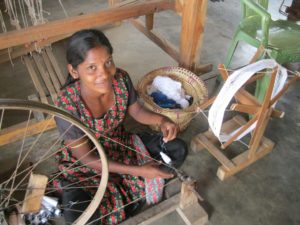
U.S. benefits from foreign aid to Sri LankaThe small South Asian country of Sri Lanka has been supported by the United States since the 1950s through U.S.-led programs that have invested in the island nation. Programs over the years have focused on a variety of causes, including health, education, business development, trade and good governance, just to name a few.

Since the tsunami of 2004, more assistance has come to this country of 21 million residents to help it continue to grow its economy as the U.S. pursues its goal of widening and accelerating economic growth as well as reconciling the ethnic and religious tensions within Sri Lanka.

However, the foreign aid cut proposed by President Trump will directly affect the amount of aid the U.S. can donate to this country, which is still trying to recover from a series of natural disasters and civil conflicts. In light of these recent developments, it is important to examine how the U.S. benefits from foreign aid to Sri Lanka.

The Realities of Foreign Aid

Trump’s proposal intends to cut foreign aid by an estimated 28 percent from last year, a significant amount that can no longer be used to continue to aid the world’s poor. A common assumption is that the U.S. spends a large portion of its federal budget on foreign aid, but this is a misconception.

According to the Kaiser Family Foundation, on average, Americans believe that roughly a quarter of the U.S. federal budget is spent on foreign aid, when, in reality, the U.S. government has only allocated roughly 1 percent of its annual budget to be spent on foreign aid.

In the case of a nation like Sri Lanka, foreign aid from the U.S. has not only helped citizens rebuild their lives after natural disasters and civil conflicts, but in turn, the U.S. benefits from foreign aid to Sri Lanka by receiving returns on its business relations with the country, due to the support the U.S. has given the Sri Lankan economy.

Bilateral Business Relations

The U.S. benefits from foreign aid to Sri Lanka through its continued participation in bilateral trade with the country, by exporting products such as industrial machinery, medical instruments, aircraft parts, lentils, paper, food, garment fabrics and pharmaceuticals.

This bilateral trade agreement between the U.S. and Sri Lanka has helped the U.S. economy over the years. In 2017 alone, the U.S. sent $335.7 million in exports to the nation, while imports from Sri Lanka totaled $2.86 billion.

Sri Lanka currently desires to uplift its citizens out of poverty and develop the nation into an upper middle-income economy. The nation’s gross domestic product was an estimated $81.3 billion in 2016, and is expected to increase by 7 percent by the year 2020.

Growth Opportunities in Sri Lanka

Unlike many of its Asian counterparts, Sri Lanka is looking to arrange more foreign investment deals, which is an arena the U.S. can take advantage of with investments. U.S. investment in Sri Lanka will generate more annual revenue for both countries, especially in tourism, a thriving industry that serves as an example of how the U.S. benefits from foreign aid to Sri Lanka.

This potential revenue will help strengthen the U.S. economy while helping to provide local jobs for Sri Lankan citizens. Sri Lanka also has other advantageous policies to offer the U.S., such as a relatively open financial system, a moderately stable monetary policy, improved infrastructure and world-class local companies.

If the U.S. continues to aid the citizens of Sri Lanka in resolving the country’s economic challenges, it will also find itself generating more revenue for its own economy, Time will tell what effects the current circumstances will have on both nations.

– Lois Charm

Photo: Flickr

March 23, 2018
https://borgenproject.org/wp-content/uploads/borgen-project-logo.svg 0 0 Borgen Project https://borgenproject.org/wp-content/uploads/borgen-project-logo.svg Borgen Project2018-03-23 07:30:392024-12-13 17:58:39How the US Benefits from Foreign Aid to Sri Lanka
Aid, Foreign Aid, Global Poverty

The Fight For Aid to Puerto Rico

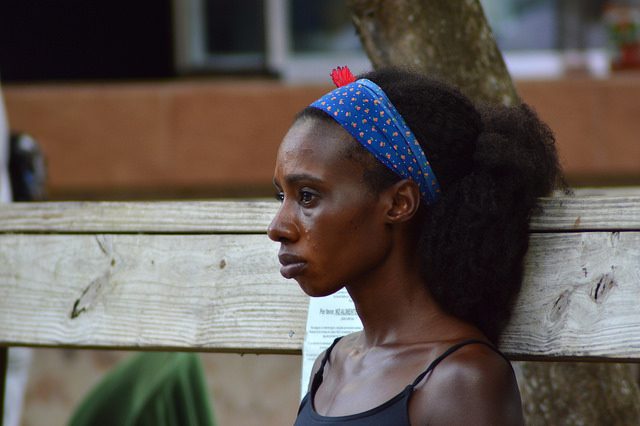
The Fight For Aid to Puerto RicoThe island of Puerto Rico has yet to recover from Hurricane Maria’s landfall in September 2017. Power outages, food shortages and a lack of coordination from disaster relief organizations have jeopardized an entire island inhabited by U.S. citizens. Timely aid to Puerto Rico has become detrimental to the island and as the U.S. government’s funding shrinks, so do many of the people’s chances of prosperity.

Insufficient Funding

Puerto Rican Governor Ricardo Rossello requested approximately $94.4 billion from the U.S. federal government: $31 billion for housing and $17 billion to reestablish power. The federal government initially offered only around $4.7 billion in loans, but the offer has since shrunk. The aid to Puerto Rico from the U.S. has been cut in half, now at around $2.2 billion.

Congress’ plan allocated a total of $90 billion in disaster relief for Texas, Florida and California, combined with Puerto Rico’s aid. In comparison, Hurricane Sandy garnered around $37 billion in aid to New Jersey alone. Needless to say, $90 billion is an insufficient amount to counter the enormous wreckage these four U.S. territories endured in the past year. Aid to Puerto Rico is the most crucial concerning total loss, yet it is the least prioritized based on governmental decisions for funding placement.

One reason aid to Puerto Rico is scarce is due to the U.S. Treasury Department’s unwillingness to help, suspecting the small island of having a central cash balance that isn’t low enough, despite the island’s debt of $74 billion.

FEMA explains the $2.2 billion is divvied up between housing repairs, at around only $620 million, and other needs at $510 million. This funding, along with other FEMA programs, has helped 130,000 Puerto Ricans and housed fewer than 10,000. These numbers fall short of what’s needed to supply appropriate aid to Puerto Rico.

Misplaced Trust

The federal government and FEMA have also given enormous funds to small, often understaffed or simply untrustworthy organizations to supply help.

One example is Bronze Star, LLC, a Florida company that was granted 30 million to supply tarps and plastic sheets for temporary roof repairs for those without proper shelter. By November of the same year, the contract was nulled and funding was withdrawn as the company did nothing to deliver. The entire process of approval and cancellation took four crucial weeks.

Another example is Tribute Contracting, LLC, whose sole employee was awarded a lofty $156 million as part of a plan to disperse nearly 30 million meals. The contract and funding were withdrawn after the company served only 50,000 people, failing over 18 million others who requested the nutritional aid in Puerto Rico. Since the cancellation, the owner has publicly accused the U.S. government of making her a scapegoat for FEMA’s decision-making.

Looking Ahead

Aid to Puerto Rico is improving, but there’s still much to do. With FEMA’s teetering funding, much of the island is being repaired by its inhabitants and some private investors looking to help. Still, 16 percent of the island is without electricity, leaving 200,000 U.S. citizens without it for 6 months.

Locals and visitors to the island have already made tremendous improvements and repairs since the hurricane hit, but much more work still needs to be done. Most Puerto Ricans don’t have the luxury of waiting for help to come and are forced to do what they can.

– Toni Paz

Photo: Flickr

March 17, 2018
https://borgenproject.org/wp-content/uploads/borgen-project-logo.svg 0 0 Borgen Project https://borgenproject.org/wp-content/uploads/borgen-project-logo.svg Borgen Project2018-03-17 01:30:372024-05-29 22:39:50The Fight For Aid to Puerto Rico
Aid, Foreign Aid, Global Poverty

Ways the US Benefits From Foreign Aid to Bhutan

U.S. benefits from foreign aid to Bhutan
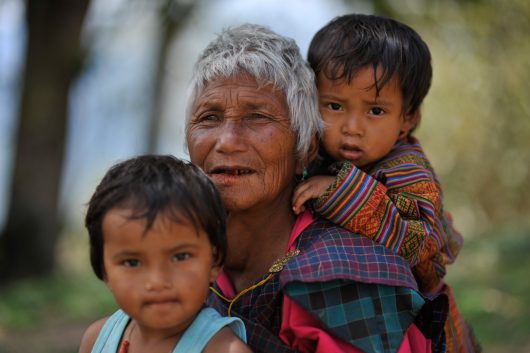
Bhutan is a small country sandwiched between India and China and the only country in the world that is carbon negative. The U.S. benefits from foreign aid to Bhutan in more ways than one can imagine. Although the U.S. and Bhutan never established formal diplomatic relations, the two countries maintain warm, informal relations via the U.S. embassy situated in New Delhi, India and Bhutan’s mission to the U.N., New York.

Both countries are members of many global financial institutions such as the United Nations, International Monetary Fund, World Bank and the Asian Development Bank.

Bhutan and the U.S.

The U.S. is one of the major indirect foreign sponsors of development of the fledgling economy of Bhutan. Yet, viewing it as an investment and not aid is more accurate as the U.S. benefits from foreign aid to Bhutan.

The World Bank granted a $9 million interest-free loan to help Bhutan develop a calcium carbide plant near Phuntsholing. As of 1990, total Asian Development Bank loans to Bhutan amounted to $30 million.

Bank Loans

In 1987 and 1988 alone, the Asian Development Bank approved loans amounting to around $6.9 million to cover the costs of industrial estates modernization and to provide foreign currency for the Bhutan Development Finance Corporation, which in turn provided credit for agricultural projects and private-sector businesses.

Asian Development Bank loans to Bhutan for 1990-93 were projected at $35 million, plus a grant of more than $4.85 million; the aid was for technical assistance.

How the U.S. Benefits from Foreign Aid to Bhutan

Naturally, these plans have emboldened Bhutan; however, it is essential to note how the U.S. benefits from foreign aid to Bhutan. The U.S. benefits from foreign aid to Bhutan by opening up numerous opportunities of an untapped market. Although, these may not be visible at first. The following points may bring about a new perspective:

  1. In 2015, foreign exports from the United States to Bhutan totaled $213,126 — a significant economic benefit to the U.S. from its foreign aid to Bhutan.
  2. Bhutan is the only country in the world whose major export is a clean energy – hydropower. The U.S., meanwhile, is striving to become a major exporter of renewable energy technology.
  3. To this day, there are still no chain establishments such as McDonald’s, Starbucks, 7-11, Baskin Robbins, Subway, etc. Bhutan remains almost untouched by the outside world.
  4. There only two airlines that fly to Bhutan, which are Druk Air and Royal Bhutan.
  5. There is only one escalator in the whole country located in a shopping mall in Thimpu.

As Governor Tom Ridge rightly states, “By building new markets overseas, for American products, the International Affairs budget creates jobs and boosts the economy here at home.” The opportunities in developing Bhutan could be endless!

– Himja Sethi

Photo: Flickr

March 14, 2018
https://borgenproject.org/wp-content/uploads/borgen-project-logo.svg 0 0 Borgen Project https://borgenproject.org/wp-content/uploads/borgen-project-logo.svg Borgen Project2018-03-14 01:30:012019-11-29 14:33:26Ways the US Benefits From Foreign Aid to Bhutan
Aid, Aid Effectiveness & Reform, Foreign Aid, Global Poverty

How Chinese Foreign Aid Boosts African Development

Chinese foreign aid boosts African developmentIn 15 years, China has built invested over $350 billion in Africa. Chinese foreign aid boosts African development and covers 140 African countries and territories.

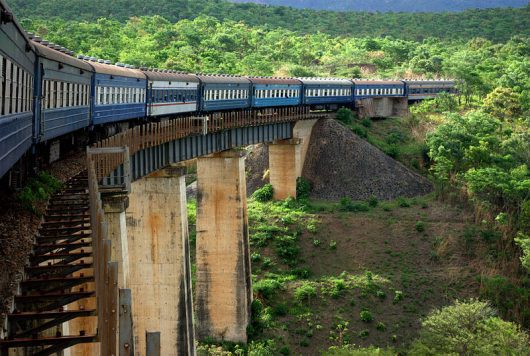
China has been engaging with African countries since 1955, with the Bandung Conference. From the first efforts in Egypt to the TAZARA Railway, the most remarkable project China has in Africa, Chinese foreign aid boosts African development mainly in infrastructure, education, agriculture and energy generation.

Energy Generation

China spent $134.1 billion on energy generation and supply from 2000 to 2014. In August 2017, China-Africa Renewable Energy Cooperation and Innovation Alliance and Africa Renewable Energy Initiative (AREI) signed a Memorandum of Understanding to consolidate a cooperative relationship. This project includes building micro-grids for which Chinese providers and core renewable energy manufacturers will provide technological and financial support. This project shows prominent progress in renewable energy.

In addition, China has been increasingly engaging in the wind and solar PV industries under South Africa’s Renewable Energy Independent Power Producers’ Procurement Program, which focuses more on Chinese investors and companies’ investments, technology supply and manufacturing. Renewable energy generation is a win-win strategy, protecting the global environment and building the China-Africa connection.

Agriculture

Until 2014, China spent $10 billion on agriculture, forestry and fishing projects. In 2015, Chinese President Jinping Xi announced a $60 billion funding for 10 comprehensive plans to strengthen China-African cooperation. China-Africa agricultural industrial chains are one of the top priorities in these plans.

Additionally, China has been introducing agricultural technology and new breeds into Africa and has been sending agricultural experts to train African farmers. From 2000 to 2013, Chinese foreign aid to Africa in the agricultural sector has grown from $25 million to $325 million. The remarkable growth has brought African citizens an alternative way to improve their lives.

Infrastructure

Infrastructure investment has dominated Chinese foreign aid to Africa for more than a decade. The most significant project is the TAZARA railway in East Africa. The TAZARA railway was designed and built from 1968 to 1976. This 1,860 km railway stretches from Tanzania’s largest city, Dar es Salaam, to New Kapiri Mposhi in Zambia, which eliminates Zambia’s economic dependence on Rhodesia and South Africa.

This railway benefits the many rural regions along the route. There are thriving marketplaces at every train platform, providing a valuable method for rural residents and farmers to trade daily necessities. China invested more than $400 million in this project, along with technical assistance.

TAZARA railway is only one example of the many infrastructure projects China has worked on in Africa. From 2000 to 2014, China invested $88.8 million in transport and storage. The infrastructure aid has helped to stabilize African economic development.

Overall, Chinese foreign aid boosts African development mainly in infrastructure, agriculture and energy generation. Even though Chinese foreign aid to Africa is controversial, its investment has motivated African development on a large scale.

– Judy Lu

Photo: Wikimedia Commons

March 13, 2018
https://borgenproject.org/wp-content/uploads/borgen-project-logo.svg 0 0 Borgen Project https://borgenproject.org/wp-content/uploads/borgen-project-logo.svg Borgen Project2018-03-13 01:30:542019-11-05 01:16:30How Chinese Foreign Aid Boosts African Development
Aid, Foreign Aid, Global Poverty

How the US Benefits from Foreign Aid to Macedonia

U.S. benefits from foreign aid to MacedoniaSince it gained independence from Yugoslavia in 1991, Macedonia has worked to become a stable democratic nation with a strong trade economy. Macedonia often struggles with being recognized or treated as an independent nation, a recent example being Greece’s demands for its constitutional name to be changed. Surrounded by more powerful countries, Macedonia requires steadfast support from its allies, which often comes in the form of foreign aid to help the country grow as a nation both politically and economically. The U.S. is one of these allies and has been supporting the country since it gained independence. Although America is keen on supporting countries moving towards democratic systems of government in general, the U.S. benefits from foreign aid to Macedonia as well.
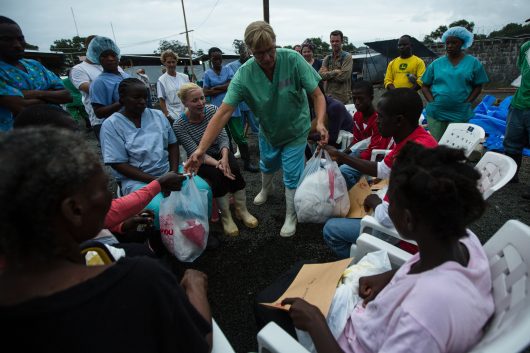
One of the main goals of U.S. aid is to support Macedonia’s transition towards a market-oriented economy as well as its integration into the global trade economy, especially in the Euro-Atlantic. Trade between the U.S. and Macedonia in 2016 was around $276 million and is increasing every year. Electrical machinery and equipment have been the most popular U.S. exports to Macedonia, while imports from Macedonia to the U.S. focus on tobacco, apparel and metals such as iron and steel. The U.S. benefits not only from direct trade to Macedonia, but also through investment in its developing trade economy with other countries.

U.S. aid only helps to further bolster Macedonia’s improving trade economy through funding economic reforms and development, which not only improves direct trade to the U.S. but also increases the success of investments in the economy itself.

Trade is not the only improving economy in Macedonia. Recently, tourism has started to develop. Although in its infancy, contributing to 6.7 percent of the country’s GDP and employing only 1.6 percent of the country’s workers as of 2016, these numbers are expected to rise slowly but steadily. Tourism is also a very open market for foreign aid investment, with only about 2.4 percent of investment being in tourism. Considering that the U.S. benefits from foreign aid to Macedonia going to other sectors, this could be yet another way to make aid more valuable to both countries by helping to better tourism in Macedonia, and in turn, providing profits for U.S. companies.

Lastly, keeping Macedonia as an ally gives the U.S. a valuable strategic partner for foreign policies and interests. Macedonia has often lent its airspace and provided troops to aid the U.S. as well as other countries in the U.N., such as for operations in Afghanistan and Iraq. In general, the location of Macedonia is strategic to many of the conflicts the U.S. is involved in as well as for the stability of the region.

With a stabilizing government growing more democratic through reforms as well as a growing economy, there are many ways in which the U.S. benefits from foreign aid to Macedonia financially, and with continued support, these benefits will increase for both countries. If the U.S. continues to be a dependable and helpful ally to Macedonia, it will return the favor as it has throughout its relationship by helping the U.S. and U.N. create stability in the region.

– Keegan Struble

Photo: Flickr

March 13, 2018
https://borgenproject.org/wp-content/uploads/borgen-project-logo.svg 0 0 Borgen Project https://borgenproject.org/wp-content/uploads/borgen-project-logo.svg Borgen Project2018-03-13 01:30:332024-05-29 22:39:47How the US Benefits from Foreign Aid to Macedonia
Aid, Foreign Aid

How the US Benefits From Foreign Aid to Somalia

The East African country of Somalia is one which faces many hardships. Violence, poverty and human rights violations are some of the highest-ranking issues, but the major focus of late has been the severe, ongoing drought that has impacted the nation since 2015.

The lack of water has inflicted suffering upon the entire region; however, conditions are improving since this time last year, largely due to U.S. humanitarian assistance in the region. In addition to supporting the nation, the U.S. benefits from foreign aid to Somalia.

A National Disaster

In February of 2017, Somali President Mohamed Abdullahi Mohamed declared a national disaster due to the onset of an extreme drought in the country.

In a meeting with the National Drought Committee, Prime Minister Hassan Ali Khaire remarked, “my estimation is that half the country has felt the impact of this drought.” Millions of people were in desperate need of food, and Somalia was on the verge of famine.

Famine is a constant fear among the Somali people, as such an incident occurs often and has devastating consequences on the community. The last famine in Somalia occurred from 2010 to 2012 and was brought on by the East Africa Drought — a natural occurrence that resulted in nearly 260,000 deaths by starvation in the region.

This was considered the worst famine in a quarter century, but many more have taken place before, including one in 1992 which left approximately 300,000 dead.

U.S. Humanitarian Aid

To prevent the situation from becoming this severe again, the U.S. stepped up its humanitarian efforts in the country. USAID provided $187.77 million of foreign aid to Somalia in the 2017 fiscal year that included emergency assistance to approximately 2.7 million people per month from July to December.

These operations consisted of large donations of food, provision of food vouchers, access to safe drinking water, vocational training, medical assistance and employment opportunities in local marketplaces.

According to the most recent report on conditions in Somalia from USAID, this help significantly reduced the risk of famine. Between July of 2017 and February 2018, there has been a 17 percent decline in the acutely malnourished population — a major accomplishment considering the relatively short amount of time over which intervention has taken place.

U.S. Benefits from Foreign Aid to Somalia

There are many ways from which the U.S. benefits from foreign aid to Somalia. According to a report by the World Food Program, food insecurity is a “threat and impact multiplier for violent conflict.” When people are starving and looking for any way out, they may engage in violent activities if a terrorist organization promises food or money in exchange.

Somalia is one of the most unstable countries in the world, especially with the terrorist group al-Shabaab on the rise. It is important for the U.S. to take any measure possible to prevent the spread of violent conflict, and reducing food insecurity is a small way to aid in that effort.

By contributing to solving Somalia’s famine crisis, the U.S. actively takes steps to ensure its own national security.

Another way the U.S. benefits from foreign aid to Somalia is that by extending a helping hand to a country in need, the U.S. simultaneously establishes a friendship between itself and the Somali government. This collaboration may advance our foreign policy agenda in the future.

According to political science expert Clair Apodaca, foreign aid “allows the donor state access and influence in the domestic and foreign affairs of other states.”

Mutual Benefits in Times of Crisis

By offering humanitarian assistance in times of crisis, the U.S. gains leverage over the way Somalia governs its country. With this influence, the nation may be able to achieve its objectives to strengthen democratic institutions and improve stability in the region.

Lastly, the U.S. benefits from foreign aid to Somalia because providing helpful programs and funding to people who are suffering improves our image as a leader in the global community.

Such actions demonstrate that the U.S. is an ethical and reliable partner, which can improve our favorability in the eyes of foreign leaders and ultimately help our diplomatic and trade relations.

Still Work To Do

Though U.S. foreign aid has helped Somalia avoid falling into a full-fledged famine, the country is by no means out of harm’s way. Rainfall is expected to be below average from April to June again this year, and around 5.4 million people are still experiencing either “stressed” or “crisis” level food insecurity.

It is important that the U.S. continue its humanitarian assistance programs in Somalia throughout 2018, and for as long as it takes to restore the country to a relatively stable state because by doing so, the nation is not only promoting the interests of Somalia, but of the U.S. as well.

– Maddi Roy

Photo: Flickr

March 13, 2018
https://borgenproject.org/wp-content/uploads/borgen-project-logo.svg 0 0 Borgen Project https://borgenproject.org/wp-content/uploads/borgen-project-logo.svg Borgen Project2018-03-13 01:30:272024-05-29 22:39:51How the US Benefits From Foreign Aid to Somalia
Aid, Aid Effectiveness & Reform, Global Health, Global Poverty

Medical Humanitarian Aid Can End Epidemics Around the World

Medical humanitarian aidAccording to the Center for Disease Control and Prevention (CDC), an epidemic is a significant and sudden increase in the number of cases of a particular disease in a specific area or within a certain population. Epidemics can present themselves all over the world. However, epidemics are most common in impoverished, war-torn and developing countries.

Medical humanitarian aid can help end epidemics in many impoverished countries. Most countries that receive foreign humanitarian aid are not properly equipped to deal with disease outbreaks, nor do they have the trained medical professionals needed. This is how a disease outbreak quickly turns into an epidemic.

Many international medical relief groups focus their efforts on controlling epidemics by providing adequate medical training, professionals and equipment. Listed below are some of the international medical relief groups that are working toward ending epidemics.

Medical Teams International

Medical Teams International is a Christian-based international relief group that has been using medical humanitarian aid to help end epidemics. The group works by delivering medical supplies and trained volunteers to areas in need. The mission of the group is to provide medical, dental, humanitarian and holistic relief to diverse areas without discrimination.

For over 25 years, Medical Teams International has been providing relief for refugees in impoverished and war-torn countries. For example, in 2017 the United Nations declared a famine in South Sudan as a result of the civil war that has been ongoing since 2013. Shortly after the declaration, Medical Teams International dispatched massive relief efforts to combat the Cholera and Malaria epidemics.

Currently, Medical Teams International has provided medical humanitarian aid to over 520 thousand Sudanese refugees, severely curving the disease epidemics in that area.

Médecins Sans Frontières (MSF)

Medecins Sans Frontieres, also known as Doctors Without Borders, is one of the most well known international medical-based relief groups in the world. For over 45 years, the group has dispersed trained medical professionals and medical humanitarian aid across the globe. Medecins Sans Frontieres is also on the cusp of many medical initiatives in impoverished countries.

Medecins Sans Frontieres is known for tackling large disease outbreaks and epidemics in poor and dangerous areas. In 2017, Medecins Sans Frontieres dispatched relief efforts to Uganda after the country was declared in a state of humanitarian emergency. The group focused its efforts on the recent Cholera outbreak spreading through Uganda, setting up multiple Cholera clinics to help treat and prevent the spread of Cholera to other refugees in Uganda.

Direct Relief

Direct Relief is another nonprofit humanitarian aid organization that primarily focuses on medical relief to devastated areas. The goal of the organization is to provide proper and comprehensive medical aid for impoverished areas and emergencies. In 2017, Forbes ranked Direct Relief among the top United States charities.

Over the past five years, Direct Relief has provided medical humanitarian aid to over 80 countries, many in Africa and South Asia. They have supplied over two thousand healthcare facilities and have sent billions of U.S. dollars worth of medical equipment and supplies.

These international organizations and many more have worked hard to make medical humanitarian aid more accessible to impoverished countries. Many epidemics that have started due to unsafe food, unsafe water and a generally poor environment have been contained and even eliminated by medical humanitarian aid. These organizations believe that with the right aid and volunteers, diseases around the world can be eradicated.

– Courtney Wallace

Photo: Flickr

March 12, 2018
https://borgenproject.org/wp-content/uploads/borgen-project-logo.svg 0 0 Borgen Project https://borgenproject.org/wp-content/uploads/borgen-project-logo.svg Borgen Project2018-03-12 01:30:172024-05-29 22:39:46Medical Humanitarian Aid Can End Epidemics Around the World
Aid, Global Poverty, Humanitarian Aid, Poverty Reduction

Humanitarian Aid to Comoros Assists the Poor and Needy

Humanitarian Aid to Comoros Assists the Poor and the Needy
One of the least developed countries in the world, the Republic of Comoros has one of the highest population density in Africa. The three-island archipelago is located between Madagascar and Mozambique in the Indian Ocean, with a population of about 800,000 people.

A Country Hungry for Change

Between the 1997-2014 period, Comoros was the third country on the list of world’s hungriest countries. The Borgen Project reported in 2014 that Comoros was “one of nineteen nations still labeled as ‘alarming’ or ‘extremely alarming’ on the Global Hunger Index, leaving 870 million without food.”

According to the Index, countries with the lowest levels of food security (such as Comoros) are either engaged in or have recently emerged from war. Interestingly, Comoros ranked 159 (out of 188) on the United Nation’s Human Development Index in 2015.

Humanitarian Aid to Comoros

Aid organizations have aimed to provide health, relief and other humanitarian aid to Comoros. The Islamic Relief International Organization has assisted over 1 million people from 2006-2018, giving almost $3 million to uplift the poor and the needy. Almost $2 million has gone to establish health dispensaries and centers for men, women and especially malnourished children in the country.

Last year, Tadateru Konoé, the head of the International Federation of Red Cross and Red Crescent Societies (IFRC), visited Comoros and emphasized the development of humanitarian assistance efforts to bolster Africa’s island nations prone to natural disasters.

“More efforts should be made to boost domestic resource mobilization, building community resilience, and country-level policy dialogue between governments and local actors such Red Cross and Red Crescent Societies,” he said.

Earthquake Aftermath

After a 4.8 magnitude earthquake struck the Anjouan island in March 2014, heavy rains and deep fissures caused heavy infrastructure damage and cordoned off supplies from tens of thousands of people. United States Agency for International Development (USAID) and the Office of U.S. Foreign Disaster Assistance (OFDA) partners delivered emergency hygiene, water and sanitation supplies that provided relief to those displaced by the disaster.

In its Country Strategy Paper for Comoros (2008-2013), the European Union (EU) provided €63 million in total to tackle three major priorities as part of the 10th European Development Fund: governance, transport and education. Cyclonic rehabilitation was also added to the entire agenda, which comported Comoros’ development strategy as defined in the Growth and Poverty Reduction Strategy Document.

Aid for Children

Humanitarian aid to Comoros is also needed to protect children against sexual violence from their teachers in religious schools. The United Nations Children’s Fund (UNICEF) has supported legislation in the area of children rights, the fight against child labor and violence against women.

Grants from Global Partnership in Education and Education a Child have led to the rehabilitation of dozens of classrooms and construction of schools for children. UNICEF has also supported the government’s response to emergencies and ensured safe drinking water supplies, devising development plans that protected against possible outbreak of Ebola.

Reforming the Nation

The economy of Comoros is highly dependent on subsistence fishing and agricultural production. As the country lacks natural resources and a well-educated labor force, fiscal and structural reforms are necessary to promote the population’s long-term welfare.

The World Bank predicts that political stability in Comoros after the 2016 presidential elections will lead to increased economic growth and opportunities. As part of that effort, humanitarian aid to Comoros will be critical in both maintaining stability and prosperity in this burgeoning country, and benefitting the poor and the needy.

– Mohammed Khalid

Photo: Flickr

March 12, 2018
https://borgenproject.org/wp-content/uploads/borgen-project-logo.svg 0 0 Borgen Project https://borgenproject.org/wp-content/uploads/borgen-project-logo.svg Borgen Project2018-03-12 01:30:092024-06-08 03:58:36Humanitarian Aid to Comoros Assists the Poor and Needy
Advocacy, Aid, Global Health, Global Poverty, Health

The Top Five Jobs in Global Health

Top 5 Jobs in Global HealthThe ongoing international fight for global health employs many people around the world. Many organizations, such as the World Health Organization and Medecins Sans Frontieres, employ and dispatch medical professionals on a daily basis to crisis areas. These include doctors, nurses and paramedics.

However, many people do not realize that there is a multitude of global healthcare workers behind the scenes making sure that the proper aid reaches the people who need it the most. Many of these people spend time studying aspects of global health such as policy, law and financing. These global healthcare jobs are considered non-clinical careers. Below are the top five jobs in global health that focus on non-clinical work.

Global Health Policy Analyst

A global health policy analyst is usually a government-based job, which means that the analyst will be grounded in the country of the government or organization that is sending the aid. A worker in this field will gather data, assess healthcare initiatives, assess new developments and policies and consult with other global healthcare professionals.

Many times a global health policy analyst will deal with foreign aid and medical relief, both in receiving it and deciding how to distribute it. They will also analyze other countries’ global health policies and be an influencer in deciding when to distribute medical-based foreign aid to other countries.

Global Health Educator

Global health is an important issue around the world and to be able to help as much as possible, the public must be informed. A global health educator is a trained professional that manages and provides educational programs for maintaining a healthy lifestyle. These programs can be geared towards individuals, families or even entire communities.

An educator will collect data to identify a community’s health needs as well as the current policies and environment. Global health educators can also provide medical and financial resources to the community.

Community Health Worker

A community health worker works directly with the community they serve and are considered one of the frontline global healthcare professionals in any designated area. Many times a community health worker will serve as a link between the people of the community and health institutions, governments and aid agencies.

These global health workers also work to build strong relationships with the local community, becoming a trusted and informative person for those in need of medical assistance to lean on. Community health workers can be found in rural and urban areas and in some of the richest and poorest countries in the world.

Health Systems Planner

A health systems planner is an integral non-clinical worker in global health. Planners support the health system of individual countries through population-based planning, research and innovations. They also establish relationships with clinical and non-clinical workers, global governments and relief groups.

Though a health systems planner rarely works directly with the communities they are responsible for helping, all of the planning and research they do is in direct correlation with the community’s growth and needs.

Clinic Administrator

Administration is an important variable to the success of global health. A clinic administrator usually manages a health clinic for physicians and other medical personnel. They take care of the clinic’s financial and budgeting needs.

In addition, they are usually in charge of hiring new staff. This is particularly important in health clinics, as they need to be equipped with a whole host of doctors to deal with a variety of problems.

These are the top five jobs in global health. Every global healthcare worker is an integral part of the fight for global health, whether they are doctors or administrators. These jobs in global health outline how important each aspect of the various and complex global healthcare systems are.

– Courtney Wallace

Photo: Flickr

March 11, 2018
https://borgenproject.org/wp-content/uploads/borgen-project-logo.svg 0 0 Borgen Project https://borgenproject.org/wp-content/uploads/borgen-project-logo.svg Borgen Project2018-03-11 07:30:252024-05-29 22:39:45The Top Five Jobs in Global Health
Aid, Foreign Aid, Global Poverty

How the US Benefits from Foreign Aid to Ukraine

How the US Benefits from Foreign Aid to UkraineUkraine has faced ferocious political turmoil and civilian unrest in recent years, marked by war and corruption. Currently, it is crucial for Ukraine to continue its path to democracy. Congress must recognize how the U.S. benefits from humanitarian aid to Ukraine now more than ever. In the wake of recent cuts to foreign assistance in the 2018 and 2019 budget proposal, Ukraine’s stability depends on its American partnership.

For more than two-thirds of the twentieth century, Ukraine endured the oppressiveness of the Soviet Union. In 1991, Ukraine gained its independence, but it was plagued by deep-seated political corruption. This stronghold-tainted governance in Ukraine resulted in the imprisonment of its first female prime minister Yulia Tymoshenko in 2011 and the exiling of its fourth president Viktor Yanukovich in 2014.

Not only has Ukraine suffered instability and corruption in its political arena, but dirty politics have bled through its microeconomics as well. For example, patients may have access to medical treatment, but they oftentimes must bribe doctors in order to get the treatment they really need. This deep-rooted corruption that permeates all levels of society and government in Ukraine has historically threatened foreign aid and investment.

Unfortunately, foreign interest is tightening its grip on the power of the purse. In a recent breakthrough, Ukraine’s largest foreign backers, including the International Monetary Fund (IMF) and the European Union (E.U.), announced they will not lend to Ukraine without serious progress on key reforms, including the fight against corruption. The IMF is comprised of 189 countries working to promote sustainable economic growth, trade and global poverty reduction.

The upside is that corruption levels have actually begun to decrease. In recent years, Ukraine has taken long-term steps to fight against corruption, including implementing anti-corruption agencies in the judiciary, public procurement and state-owned enterprises. These are some incentives that Congress can rely on when weighing in on how the U.S. benefits from foreign aid to Ukraine.

The U.S. has been the world’s only superpower since the fall of the Soviet Union. America as a superpower holds great influence, characterized by its far-reaching ability to exert influence on a global scale. So what are the U.S. benefits from foreign aid to Ukraine?

The U.S. has much to gain from coordinating with donors to Ukraine. Undeniably, foreign aid has been historically used in policymaking as a means to gain international leverage. Assisting Ukraine with humanitarian and foreign aid helps promote U.S. policy objectives. Ukraine is situated between Russia and the NATO-affiliated European countries, a geostrategic location for both the U.S. and the E.U.

Foreign aid to Ukraine will also support nuclear security, a strong interest to global safety, despite much of Ukraine’s energy resources now coming from Europe. Establishing Ukraine’s own energy supplies will prevent Russia from making weapons of Ukraine’s energy resources in the future.

Additionally, remedying Ukraine’s medical industry under the Global Health Initiative (GHI) will significantly improve disease containment. GHI aims to improve public health and strengthen U.S. national security through detecting, preventing and controlling global disease. Agencies such as PEPFAR provide direct service and assistance in Ukraine to maximize the medical quality and coverage of the national HIV/AIDS response.

Lastly, the U.S. benefits from foreign aid to Ukraine by assisting Ukrainians who suffer from the War in Donbass. In March of 2014, Russia responded to Ukraine’s distressed political state by invading and annexing Crimea, an Eastern Ukrainian territory, which has caused war and hurt Ukraine’s economic growth. This has created political, economic and social conflict, and is a direct result of the War in Donbas, home to Ukraine’s major mining industry.

The Trump administration recently approved a sale of lethal weapons to Ukraine. Political analysts believe that the public will see the sales as a principled signal that the United States will support its allies. This type of political leverage is a clear way the U.S. can benefit from its support to Ukraine. The move was made in light of ongoing requests by Ukrainian advocates as a result of the War in Donbass and supported by the fact that Ukraine was not the aggressor.

The U.N. Office for the Coordination of Humanitarian Aid in Ukraine (OCHA) has calculated that nearly 4.4 million Ukrainians are affected by the conflict in Donbas and 3.4 million are in need of humanitarian aid and protection. Now, more than ever, Ukraine needs humanitarian aid.

Because funding for humanitarian aid has been cut in 2018 and is projected to be cut again in 2019, the World Food Bank can only assist those affected by the War in Donbass. Yet, the rest of Ukraine suffers, as 23 percent of households will go without adequate food. Despite this, people in Eastern Ukraine are suffering the most from displacement, lack of medical care and food and subjectivity to war.

As the world’s only superpower since the dissolution of the Soviet Union, which left Ukraine in disarray, the U.S. benefits from foreign aid to Ukraine because it will help build confidence in the people suffering in Ukraine and promote the democracy Ukraine has struggled to achieve. When democracy is encouraged in the world, it is always an interest of the U.S.

– Alex Galante 

Photo: Flickr

March 11, 2018
https://borgenproject.org/wp-content/uploads/borgen-project-logo.svg 0 0 Borgen Project https://borgenproject.org/wp-content/uploads/borgen-project-logo.svg Borgen Project2018-03-11 01:30:092024-05-29 22:39:44How the US Benefits from Foreign Aid to Ukraine
Page 33 of 65«‹3132333435›»

Get Smarter

  • Global Poverty 101
  • Global Poverty… The Good News
  • Global Poverty & U.S. Jobs
  • Global Poverty and National Security
  • Innovative Solutions to Poverty
  • Global Poverty & Aid FAQ’s
Search Search

Take Action

  • Call Congress
  • Email Congress
  • Donate
  • 30 Ways to Help
  • Volunteer Ops
  • Internships
  • Courses & Certificates
  • The Podcast
Borgen Project

“The Borgen Project is an incredible nonprofit organization that is addressing poverty and hunger and working towards ending them.”

-The Huffington Post

Inside The Borgen Project

  • Contact
  • About
  • Financials
  • President
  • Board of Directors
  • Board of Advisors

International Links

  • UK Email Parliament
  • UK Donate
  • Canada Email Parliament

Get Smarter

  • Global Poverty 101
  • Global Poverty… The Good News
  • Global Poverty & U.S. Jobs
  • Global Poverty and National Security
  • Innovative Solutions to Poverty
  • Global Poverty & Aid FAQ’s

Ways to Help

  • Call Congress
  • Email Congress
  • Donate
  • 30 Ways to Help
  • Volunteer Ops
  • Internships
  • Courses & Certificates
  • The Podcast
Scroll to top Scroll to top Scroll to top