10 Facts About Life Expectancy in Comoros
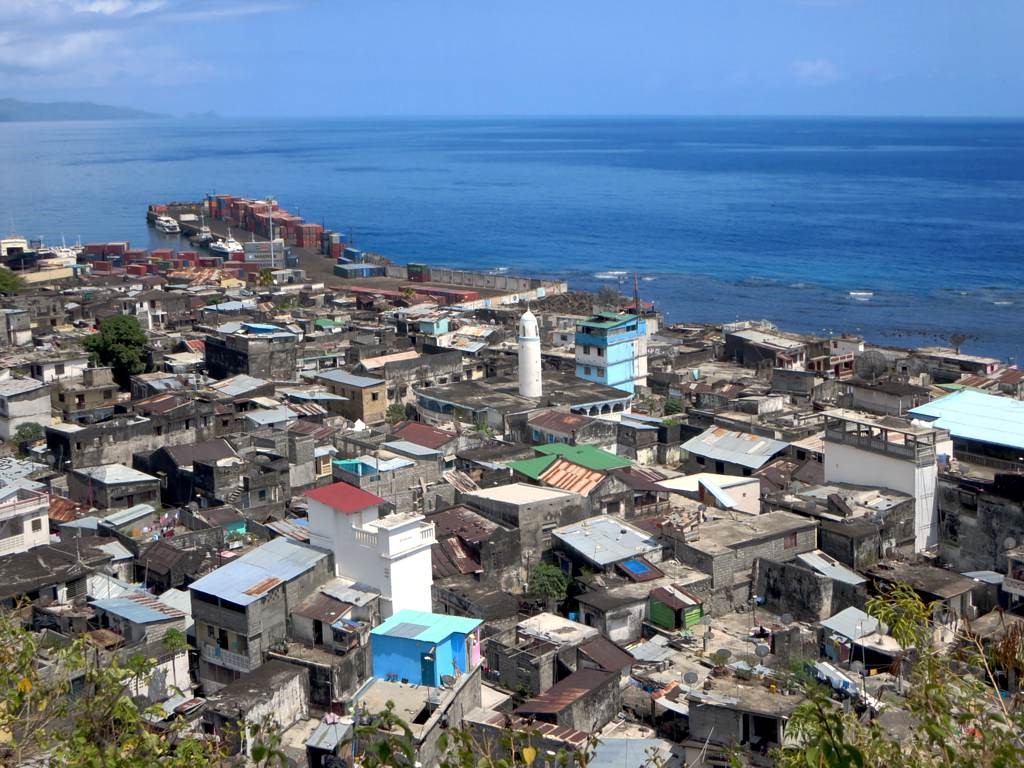
Comoros is a small country comprised of four islands located just off Africa’s eastern coast. Poverty is widespread across the island due to limited access to transportation to the mainland and very few goods that could be exported to encourage economic growth. These 10 facts about life expectancy in Comoros will demonstrate how poverty and other factors contribute.
10 Facts About Life Expectancy in Comoros
- The population of Comoros is rapidly growing with poor health services unable to keep up. As of 2018, the average was 350 people per square mile. Anjouan has the largest population of the Comoros islands. Overcrowding makes resources scarce and health is rapidly declining. The life expectancy of any person on the islands rarely exceeds the age of 65; in 2018, the CIA reported that only 3.98 percent of the population was 65 years or older. Most of the population are children from infancy to the age of 14 at 38.54 percent.
- Overcrowding on the island has led some to attempt illegal immigration to the French island of Mayotte. In 1995, the French government declared travel to Mayotte without a visa illegal. Immigration for the people of Comoros is more challenging, but it does not stop them from fleeing to find a better life outside of the overpopulated islands. As of 2017, 40 percent of the population of Mayotte comprised of illegal immigrants from Comoros. The journey is certainly not safe; The New Humanitarian estimates 200 to 500 deaths every year are a result of attempted immigration to Mayotte in the tiny fishing boats that the Comoros people call kwassa-kwassa. The majority of those who cross are children that parents send in search of a better life, contributing to the high mortality rate of children in Comoros.
- The overcrowding is due in part to the high birth rate as compared to the death rate. Despite the low age of life expectancy, the death rate overall is only seven deaths per 1,000 people as reported by the CIA. In comparison, the birth rate is 25 births per 1,000.
- The infant mortality rate, however, is extraordinarily high. The country ranks number 17 on the CIA’s list with an estimated 58 deaths per 1,000 births. The problem is, in part, due to the limit of financing toward health care and hospitals. Financing has not exceeded 5 percent in total government spending within the last few decades according to the African Health Observatory (AHO).
- Illness, as a result of low attendance to health care facilities, runs rampant in Comoros. Malaria was once the deadliest disease until 2011 when it finally began to decline. The Comoros government launched the Residential Spraying campaign to provide insecticide and treatments to the water. Transmittable diseases, according to a table released by the AHO, are the prime suspect for illness and fatality on the islands. Sixty-six percent of all deaths related to diseases are a result of transmittable illnesses, while only 25 percent are non-transmittable and 9 percent are due to injury or natural causes.
- Cardiovascular disease (CDV) is on the rise, according to a report by the World Health Organization (WHO); as of 2016, CDV has fatally affected 17 percent of the population of Comoros. The AHO links CDV to malnutrition and the consumption of less than adequate food to survive. Since 2005, cerebrovascular heart disease and ischemic heart disease have increased by 4.2 percent and 5.4 percent respectively. As of 2015, these diseases were the third and fourth most deadly in Comoros.
- Tuberculosis is also rampant on the islands; WHO estimates 28,000 of Comoros became infected with the deadly disease in 2017. Twenty-one thousand of those infected with TB died. Only 10 percent of the population receive a preventative for TB, clearly demonstrating the need for better health care access to increase life expectancy in Comoros.
- The leading cause of death as of 2015 is lower respiratory infections. This includes bronchitis, influenza and pneumonia, among others. According to WHO, 47 percent of all deaths in the country as of 2016 are due to communicable diseases such as these infections. The Institute for Health Metrics and Evaluation (IHME) reported that between 1990 and 2010, lower respiratory infections remained the deadliest issue in Comoros with an estimated 27,000 years of life lost among the younger generations fatally affected.
- Though illnesses are slowly declining, other health issues are beginning to arise in their place. A lack of adequate nutrition is beginning to plague the people of Comoros. The CIA estimates that Comoros exports roughly 70 percent of all food it grows, leaving very little for its people. According to a report in 2011 by the World Bank, 44 percent of children in Comoros are malnourished and one in every four children is born with low birth weight. This contributes to the infant mortality rate mentioned earlier. Vitamin A deficiency and anemia are the leading causes of health issues among those who are malnourished in Comoros.
- Sanitation issues are on the rise due to the overcrowded population. Water sanitation is one of the top concerns. The islands have very little freshwater resources; Grande Comoro, the main island, has no surface water at all and the people import water from the mainland. Meanwhile, the other 50 percent of the population in rural communities rely on collecting rainwater. The United Nations Development Program (UNDP) wants to change this dangerous way of living and ensure that all the citizens of Comoros have access to safe drinking water. With the government of Comoros, its goal is to increase the freshwater supply to 100 percent for all by the year 2030. With all parties assisting, the project has $60 million at its disposal.
These 10 facts about life expectancy in Comoros show that in recent years, aid to Comoros has increased, especially with sanitation. The life expectancy in Comoros is only one part of the problem that the people of the country faces. Comoros must come to an agreement with Mayotte and other countries accept the refugees who are seeking a better life.
– Nikolas Leasure
Photo: Flickr
