• Link to X
  • Link to Facebook
  • Link to Instagram
  • Link to TikTok
  • Link to Youtube
  • About
    • About Us
      • President
      • Board of Directors
      • Board of Advisors
      • Financials
      • Our Methodology
      • Success Tracker
      • Contact
  • Act Now
    • 30 Ways to Help
      • Email Congress
      • Call Congress
      • Volunteer
      • Courses & Certificates
      • Be a Donor
    • Internships
      • In-Office Internships
      • Remote Internships
    • Legislation
      • Politics 101
  • The Blog
  • The Podcast
  • Magazine
  • Donate
  • Click to open the search input field Click to open the search input field Search
  • Menu Menu

Archive for category: Aid

Aid, Global Poverty, Humanitarian Aid

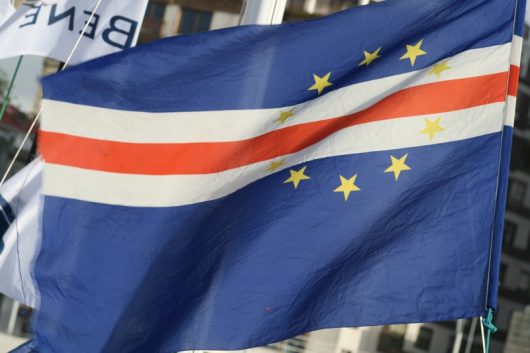
The Success Story of Humanitarian Aid to Cabo Verde

humanitarian aid to Cabo Verde

Around 500 kilometers off the west coast of Africa lies the former Portuguese colony of Cabo Verde, a volcanic archipelago republic made up of ten islands and five islets in the central Atlantic Ocean. The country not only lacks in natural resources but also possesses a tiny portion of arable land and is prone to drought.

Despite these prevalent difficulties, Cabo Verde won an international reputation for maintaining economic and political stability, due largely in part to the humanitarian aid sent to the country.


Cabo Verde

Cabo Verde is a stable multi-party parliamentary democracy with a high trade deficit, most of which is offset by foreign aid and economic remittances sent by emigrants back to the country. The U.S. State Department praises the country as a “model of democratic governance,” noting the country’s high literacy rates and high per capita income among “the best development indicators of any country in the region.”

Cabo Verde received the notable distinction of becoming the first African state to complete its first Millennium Challenge Corporation (MCC) Compact in late 2010. The MCC is an independent foreign aid agency established by Congress that works with partner countries around the world to alleviate global poverty.


Compact Stipulations

Following this successful $110 million MCC initiative that strengthened the country’s infrastructure and boosted agricultural production, the Cabo Verde government signed a five-year compact in 2012 to institute further water, sanitation and land management reforms. This second compact builds upon the first to establish transparency and accountability to achieve actionable results.

Last year, the government celebrated the end of its second compact and became the first one in the world to benefit from such a remarkable success of humanitarian aid to Cabo Verde.

“We are proud of the partnership between MCC and Cabo Verde that has built a solid foundation aimed at reducing poverty and improving the lives of individuals, families, and communities across the country,” MCC Vice President Robert Blau said at a closeout ceremony held on November 30, 2017. “We are also heartened by the Government of Cabo Verde’s commitment to continuing these programs and reforms in order to guarantee sustainability of the investments.”

Essentiality of Humanitarian Aid

The success of humanitarian aid to Cabo Verde is possible thanks to the united efforts of numerous countries and international aid organizations across the globe. The Cabo Verde government has also managed and administered the aid funds responsibly, entrusting state-owned companies and religious institutions with the implementation of developmental projects.


The United Nations

The United Nations (U.N.) has actively worked within the country through many conventions and projects. For instance, in early December, the U.N. held a seminar on social security, economic growth and development in the country. A month earlier, the United Nations Population Fund (UNFPA) worked with the National Directorate of Health and National Sexual Health Program to develop a national strategic plan for improving sexual and reproductive health in the country.

Specialized programs and agencies of the United Nations, such as the United Nations Educational, Scientific and Cultural Organization (UNESCO), the World Health Organization and the United Nations Children’s Fund (UNICEF), have also advised the government on the best ways to make efficient use of humanitarian aid to Cabo Verde.


The Success Story

The African Development Bank has highlighted the success story of humanitarian aid to Cabo Verde in a detailed research project report, affirming that the very small island economy has “managed to defy the odds and transform itself from an extremely poor country into one of the better performing economies in Africa in just over two decades,” and thus managed to overcome “severe geographic, economic, and social challenges to become an African success story.”

– Mohammed Khalid

Photo: Flickr

February 27, 2018
https://borgenproject.org/wp-content/uploads/borgen-project-logo.svg 0 0 Borgen Project https://borgenproject.org/wp-content/uploads/borgen-project-logo.svg Borgen Project2018-02-27 01:30:282024-06-05 23:55:39The Success Story of Humanitarian Aid to Cabo Verde
Aid, Foreign Aid, Global Poverty

How the US Benefits From Foreign Aid to Vietnam

U.S. Benefits From Foreign Aid to Vietnam

Vietnam stirs up mixed emotions in many Americans because of one of the U.S.’ most controversial conflicts. To many it will always be a war that touched their lives in a negative way – a lesson to be learned or a friend never to be forgotten. But as a government does not have the luxury of emotions and must secure the future for its citizens, the U.S. provides aid to Vietnam. The U.S. benefits from foreign aid to Vietnam in three ways:

  1. Through the process of healing and spreading goodwill
  2. Through a new stable trading partner
  3. As a possible military ally

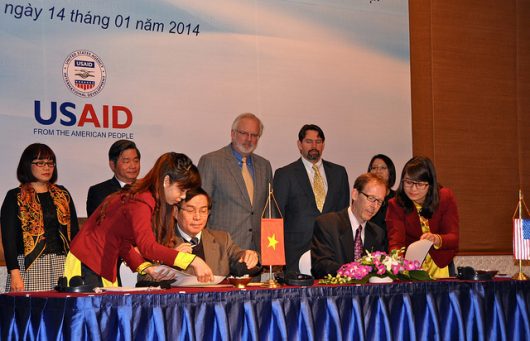
Since 1989, through the U.S. Agency for International Development (USAID), the U.S. government has been sending humanitarian aid to Vietnam in the hope of developing an important strategic partner in an increasingly contentious part of the world. 


Rebuilding a Complicated Relationship

In 1989, the U.S. and Vietnam began the process of healing. A conflict nearly two decades long cost the lives of millions of Vietnamese and thousands of Americans. As a gesture of goodwill, USAID began to send foreign aid to Vietnam through the Patrick Leahy War Victims Fund and the Displaced Orphans and Children’s Fund. The Communist government of Vietnam spent more than a decade healing the wounds of the divided country, and aid from the U.S. helped this process. 

Over the next two decades, how the U.S. benefits from foreign aid to Vietnam can be seen. The U.S. and Vietnam began to normalize political relations. With this came increased aid and funding for USAID projects in Vietnam. USAID continues to support cleanup efforts from the U.S. military’s use of Agent Orange, while also allocating funding to health, municipal and education projects.

USAID’s five-year plan (2014-2019) in Vietnam consists of a budget of $344 million and three objectives:

  1. $86 million for sustainable economic growth
  2. $239 million for health, education and climate change
  3. $19 million for addressing the legacy of the war, including funding to help decontaminate areas where Agent Orange was used and combat its effects on people and the environment

The Mutual Benefits of Trade

The U.S. benefits from foreign aid to Vietnam were seen through the mutual interests of trade. Within 16 years of the start of new U.S-Vietnam relations, an economic and technological cooperation deal was signed by both nations. President George W. Bush signed the deal in 2005. In 2013, President Barack Obama signed another cooperation deal, further strengthening economic and technological ties. Obama’s deal also included environmental, educational and medical cooperation.

In May of 2017, Prime Minister of Vietnam Nguyen Xuan Phuc announced that he would sign another trade deal with the U.S. This deal is reportedly worth up to $17 billion and will mainly focus on electronic technology. General Electric agreed to a $6 billion deal with the Vietnamese government. Vietnam increasing its imports from the U.S. is a good sign of cooperation and is another way the U.S. benefits from foreign aid to Vietnam.

Currently, the U.S and Vietnam have a trade deficit of more than $30 billion, which is the sixth largest deficit among U.S trade partners. The Trump administration campaigned on the promise of reducing trade deficits. Since his election, both the U.S. and Vietnamese governments have agreed to work on terms and deals that would reduce the deficit. The large deficit is caused by cheap apparel imported from Vietnam to the U.S. Over an eight-year period (2008-2016), the U.S. investment in Vietnam grew to almost $10 billion.


The Development of a Military Ally

In May 2016, President Obama lifted the ban on the sale of weapons to Vietnam. This was an important step economically and to increase military cooperation. Vietnam has shown interest in buying U.S multi-role fighter jets, specifically the F-16 A/B. The country has also shown interest in maritime reconnaissance aircraft and unmanned drones.

Under the Obama administration in 2014, the first joint training exercise was held between the U.S and Vietnamese militaries. The exercises focused on a joint military response to a humanitarian crisis caused by natural disasters. Afterward, both navies would begin to work more closely together, focusing on maritime defense and security. The development of a potential military ally is another way the U.S. benefits from foreign aid to Vietnam.

Also in 2014 was the introduction of monetary aid from the U.S. to Vietnam for its security and defense. More than $45 million was given through the State Department’s Foreign Military Financing and Law Enforcement building programs. Another $425 million was agreed to be paid over a period of five years through the Department of Defense’s Cooperative Threat Reduction Program and Maritime Security Initiative. The U.S. is also helping Vietnam build a peacekeeping training center in Hanoi to help Vietnam increase its ability to take part in peacekeeping missions for the U.N.

The U.S. benefits from foreign aid to Vietnam are manifold, and the bilateral relationship is on track to become a shining example of the transition from donor-recipient to a strong partnership. While millions of people spanning generations will have only painful associations with U.S.-Vietnam relations, the past two decades offer hope to new generations for a peaceful and prosperous future.

– Nick DeMarco
February 26, 2018
https://borgenproject.org/wp-content/uploads/borgen-project-logo.svg 0 0 Borgen Project https://borgenproject.org/wp-content/uploads/borgen-project-logo.svg Borgen Project2018-02-26 13:30:502024-05-29 22:39:34How the US Benefits From Foreign Aid to Vietnam
Aid, Global Poverty, Humanitarian Aid

The Success Levels of Humanitarian Aid to Kazakhstan

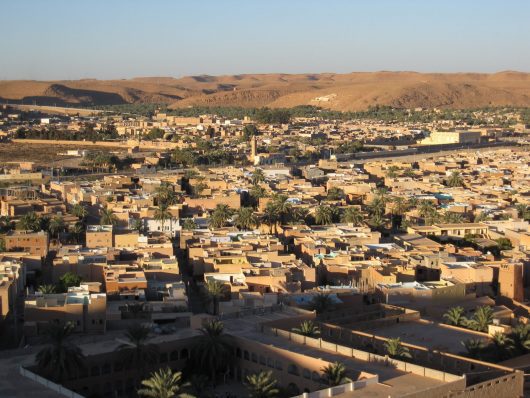
The Success of Humanitarian Aid to KazakhstanHumanitarian aid is one way neighboring communities help each other grow and advance. When a country experiences difficulties socially or economically, others will reach out in the form of financial assistance, medical assistance or help rebuild the nation’s infrastructure. Kazakhstan is a country riddled with tribal conflict, border rewrites and ethnic diversity and a place constantly undergoing significant change in economic and cultural success. Humanitarian aid in Kazakhstan is crucial to the growth of the nation, and the success of humanitarian aid to Kazakhstan is reliant on many factors.


A Middle Income Country

According to the European Commission (EC), Kazakhstan is now considered a middle-income country, which means that it is self-sufficient enough to maintain a stable economy. However, this also means that the rest of the world has less influence and can offer less assistance to the Kazakh people. The EC worked from 1991 to 2014 to help turn Kazakhstan into a less corrupt state through an increase in their judicial efficiency, healthcare reform, more inclusive education and public administration.


Decreased Poverty, Increased Gender Equality

Despite the continuation of growth and economic prosperity in Kazakhstan, there is still need in the region; many countries still attempt to eradicate poverty completely and increase gender equality. Norway is one of those countries. According to the Norwegian government, it is working to stop the influx of illicit and criminal actions, as well as building on existing maternal health in the area.

Until poverty is eradicated (hopefully by 2030), and maternal death rates fall, Norway will not be satisfied with the success of humanitarian aid to Kazakhstan.


Success of Humanitarian Aid to Kazakhstan

Now that Kazakhstan is growing into a strong and independent country, it is time for the success of humanitarian aid to Kazakhstan to be translated into humanitarian aid for others. According to an article by the Astana Times, Kazakhstan, with its strong history of ethnic and religious diversity, provided humanitarian support to Syrians ravaged by civil war.

Kazakhstan is also known to support many other countries, such as Myanmar, Ukraine and parts of the Caribbean. Kazakhstan contains many natural resources, such as oil, mineral and metal reserves, and now with the help and success of humanitarian aid to Kazakhstan, the country has the potential to spread its stability to others.

– Molly Atchison

Photo: Flickr

February 25, 2018
https://borgenproject.org/wp-content/uploads/borgen-project-logo.svg 0 0 Borgen Project https://borgenproject.org/wp-content/uploads/borgen-project-logo.svg Borgen Project2018-02-25 01:30:372024-05-29 22:39:31The Success Levels of Humanitarian Aid to Kazakhstan
Aid, Foreign Aid, Global Poverty

How the US Benefits From Foreign Aid to Libya

U.S. benefits from foreign aid to LibyaDespite showing movement towards democratic values in 2011, when an armed uprising stripped longtime dictator Mu’ammar al-Qadhafi of his hold on the country, Libya’s civil and political rights regressed back to a state of chaos. The country is currently plagued by feuding regimes, organized criminals and factions of the Islamic State all fighting over power in the country. This makes it more important than ever that the United States delivers humanitarian aid to the struggling nation. However, such aid stands to improve conditions not only in Libya; the U.S. benefits from foreign aid to Libya as well.
Current Efforts

Currently, the United States is set to deliver $31 million in foreign aid to Libya in 2018. The United States Agency for International Development (USAID) estimates that half of this will be spent protecting the country’s weakened representative governing bodies and shifting the country’s values towards those of democratic governance and humanitarianism. The United States hopes to spread these values by working with smaller grassroots movements and entrepreneurs in order to establish a stronger civil society that will hold government officials accountable. The vast majority of the remaining half of the $31 million is aimed at stopping the spread of terrorist cells that pose a threat to Libyan citizens and the United States of America.

Protection from Terrorism

One of the primary reasons the U.S. benefits from foreign aid to Libya is national security. By fighting the spread of extremist groups and working to create a robust and peaceful civil society, the United States does more than spread humanitarian values; it also protects itself from future terrorist threats. In stopping the spread of terrorist groups such as the Islamic State in North Africa, the United States is halting the further spread of extremism and, with the development of a strong civil society, making it harder for terrorist groups to establish themselves in the region. Weak and vulnerable communities that are already lacking in civil and political rights tend to serve as prime targets for terrorist groups to infiltrate.
By strengthening these communities with foreign aid, the United States removes opportunities for the further expansion of terrorism and reduces the likelihood of violent insurgencies. In the long run, foreign aid to Libya is an investment in the continued security of the United States, and one of the proven strategies for solving the problem of extremism.

Economic Development

The remaining money that is not spent on fighting extremism and promoting humanitarian values in Libya is dedicated to the further economic development of Libya’s private sector. This is important to establish regional security, as a stronger economy helps build communities and promote a representative and accountable method of governance. Furthering the economic development of Libya also serves to benefit the economy of the United States. A Libyan populace with more spending capital, along with a stronger national GDP and a functioning government, promotes global economic development and provides a new market for exports from the United States, strengthening the U.S. economy and spurring the creation of new jobs.

Helping Others Does Not Hurt the U.S.

Americans often worry that spending money promoting the economic and political development of other countries somehow hurts the U.S. economy and the nation’s own citizens. This thinking is deeply flawed. Research shows the opposite to be true. The U.S. benefits from foreign aid to Libya, as the United States is not only helping Libyans lift themselves out of poverty and political turmoil, but such aid also improves America’s own national security and economic development.  Clearly, continued investment in Libya vital is to future United States efforts at home and around the globe.

– Shane Summers

Photo: Flickr

February 24, 2018
https://borgenproject.org/wp-content/uploads/borgen-project-logo.svg 0 0 Borgen Project https://borgenproject.org/wp-content/uploads/borgen-project-logo.svg Borgen Project2018-02-24 01:30:112024-05-29 22:39:28How the US Benefits From Foreign Aid to Libya
Aid, Global Poverty, Humanitarian Aid

Humanitarian Aid to Croatia and Its Children

Humanitarian Aid to Croatia and its Children
SOS Children’s Villages International is providing humanitarian aid to Croatia specifically targeted at children in the context of a struggling economy, high poverty rates and high unemployment levels.

In the wake of the war with the former Socialist Republic of Yugoslavia that lasted from 1991 to 1995, Croatia has struggled to recover from the decimation of its economic infrastructure. The six-year-long recession beginning in 2008 also contributed to Croatia’s weak economic structure.

Unemployment remains relatively high at 16.1 percent. The proportion of the population living at or below the national poverty line is 19.5 percent. The historic economic hardships that contribute to these statistics are clear, but how do these statistics affect the most vulnerable population, Croatia’s children?

Children in Croatia took the hardest hit from the 2008 recession, with child poverty rising over 50 percent. Poverty and unemployment have contributed to an increasing number of children being placed in institutions because families living below the poverty line are unable to feed or care for these children.

Children with mental and physical disabilities, behavioral issues or psychological problems are particularly at risk. Croatia’s infrastructure does not have the specialized centers to adequately accommodate and support these children. Their families are offered very little support and the children are often removed from their families and placed in institutions where they are deprived of the parental support and specialized care that they need. With little support from within local communities, SOS Children’s Villages has stepped in to provide humanitarian aid to Croatia and its children living in poverty.

SOS Children’s Villages International was founded in 1949 by Hermann Gmeiner in response to the proliferation of orphaned children after World War II. Gmeiner’s vision was to provide loving care in a family environment for children that were without parental care for whatever reason, and to help families stay together so they could care for their children. SOS Children’s Villages now operate in 135 countries through the support of donors, child sponsors, partners and friends.

SOS Children’s Villages seeks to provide humanitarian aid to Croatia by supporting local children, young people and families. Children in institutions are placed with loving SOS families to receive essential care, attention and support. SOS provides housing for young people where they can learn to live semi-independently. Families also benefit from kindergartens that will look after their children while they work.

Humanitarian aid to Croatia’s children also extends to children affected by the 2015 refugee crisis, many of whom are alone. SOS Children’s Villages works with local organizations to respond to the evolving needs of children affected by the crisis.

SOS Children’s Village has two locations in Croatia, providing support to children, young people and families throughout the country. Humanitarian aid to Croatia from SOS Children’s Village helps support families and children struggling with poverty.

– Sydney Lacey

Photo: Flickr

February 22, 2018
https://borgenproject.org/wp-content/uploads/borgen-project-logo.svg 0 0 Borgen Project https://borgenproject.org/wp-content/uploads/borgen-project-logo.svg Borgen Project2018-02-22 07:30:452019-12-05 08:51:00Humanitarian Aid to Croatia and Its Children
Aid, Global Poverty, Humanitarian Aid, USAID

The Many Forms of US Humanitarian Aid to Pakistan

U.S. humanitarian aid to Pakistan
On January 4, 2018, U.S. president Donald Trump’s administration announced that it would cut military aid to Pakistan on the grounds that Pakistan has not been doing enough to combat the more than 14 terrorist organizations operating within its borders. Many of these organizations support international terrorist operations and carry out attacks within the borders of Pakistan.

The United States is concerned with the operations being carried out against its forces in Afghanistan, which borders Pakistan. The mountainous border is porous and is a haven for terrorists. Some regions are officially governed by the Pakistani government but under the de facto control of the terrorists. North and South Waziristan are the most contested territories.

The Pakistan government recently launched a military operation in North Waziristan to liberate the area from the terrorist organizations that controlled it. The continuing success of this operation could hinge on the possible $900 million cut in military and security aid from the United States. However, the Trump administration has made it clear that the cuts would not affect U.S. humanitarian aid to Pakistan.

The United States has been aiding Pakistan for many decades, with a focus on humanitarian aid and economic development. In the 1960s and 1970s, economic aid helped to build two major hydroelectric dams. During the 1980s and the early 1990s, the United States helped to build a large power station and Lahore University for Management Science. These are only a few examples of early and continued non-military aid to Pakistan.

Currently, most of the U.S. humanitarian aid to Pakistan is delivered by USAID. According to USAID, more than $7.7 billion has been spent on non-military aid to Pakistan. The United States government has budgeted $344.5 million in humanitarian aid to Pakistan for 2018. USAID projects in Pakistan focus on six major areas: energy, economic and agricultural growth, democratic and societal resilience, education and gender equality. Examples of USAID work in these areas are:

  • Energy
    USAID energy projects have been successful because they are multifaceted. Not only do they increase the power output of the existing infrastructure, the funds also help repair it. The most important projects are the repairs of the hydroelectric dams. Repairing these dams increases their electrical output and increases the efficient use of water from rivers and reservoirs.
  • Economic and Agricultural Growth
    Agriculture contributes to 24.7 percent of Pakistan’s GDP. Up to 40 percent of the working population is employed by the agricultural sector. USAID has helped improve the agricultural sector by helping small and medium farms gain access to financing. They have also introduced new crops or modified versions of existing crops. A similar approach is used to help the private sector.
  • Reliance
    USAID has worked hard to increase access to common markets, education and government in an attempt to solidify social engagement. They have also worked to rebuild areas destroyed by internal conflict and help displaced families. Helping society function smoothly helps people feel that they are part of something bigger and are not being left behind. This helps to stabilize the fragile democratic government of Pakistan.
  • Education
    USAID has provided more than 18,000 scholarships for higher education over the last eight years, built or repaired over 1,300 schools since 2011 and increased the quality of basic education across the country.
  • Health
    U.S. humanitarian aid to Pakistan has helped to build two new hospitals in the last five years. USAID projects have helped over 9.4 million women and children. Working with the government of Pakistan, USAID plans to increase funding for women’s and children’s healthcare through 2025.
  • Gender Equality
    USAID has helped form a registration of 496,000 women to promote voting rights, awarded 6,000 college scholarships to women and improve the care and representation of gender-based violence.

U.S. humanitarian aid to Pakistan has been effective. Over the last three years, the country’s GDP has grown by an average of 4.6 percent and 2017 saw a 5 percent industrial growth rate. Other social issues such as gender equality will take much more time to show major results. The most important milestone came in 2013, when Mahmoon Hussain was elected president of Pakistan and Asif Ali Zardari stepped down. The role of the president of Pakistan is mostly ceremonial; however, this was the first time that a democratically elected president served a full term in Pakistan. Hopefully, with time Pakistan will begin to transition and will be seen as a pillar of stability and peace in the region rather than a place of instability and violence.

– Nick DeMarco

Photo: Flickr

February 22, 2018
https://borgenproject.org/wp-content/uploads/borgen-project-logo.svg 0 0 Borgen Project https://borgenproject.org/wp-content/uploads/borgen-project-logo.svg Borgen Project2018-02-22 01:30:092024-05-29 22:39:28The Many Forms of US Humanitarian Aid to Pakistan
Aid, Global Poverty, Humanitarian Aid

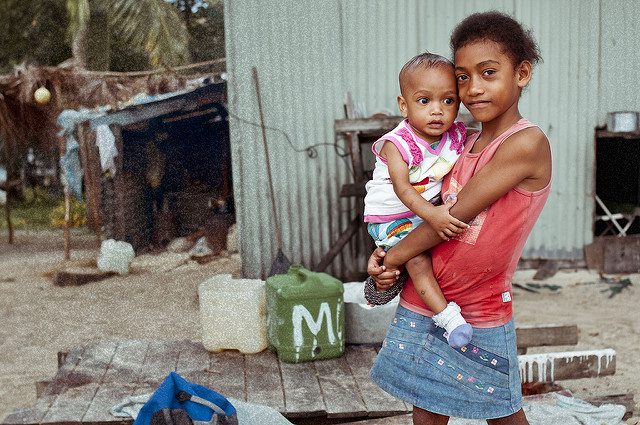
How the US Benefits from Foreign Aid to Fiji

How the US Benefits from Foreign Aid to FijiThe U.S. is a powerful, stable society that is capable of supporting other communities who need assistance. Providing aid to other nations can benefit the U.S. in return. The U.S. benefits from foreign aid to Fiji.

According to the U.S. Department of State, assistance from the U.S. to Fiji is focused mainly on humanitarian services, such as hurricane relief and security assistance.


Democratic Assitance

In 2006, a tumultuous coup suspended democratic rule in Fiji. In 2014, the country held elections to restore the democratically elected government. The U.S. was one of 13 countries to oversee the elections to maintain security measures and ensure a peaceful political process. In return, the U.S. received increased access to trade and resources in the region.


Tourism

One of the most important trades the U.S. and Fiji take part in is the tourism industry. According to the Fiji Bureau of Statistics, 842,884 foreign nationals visited Fiji in 2017. While not all of these were U.S. citizens, the number of Americans visiting Fiji is increasing. In addition to tourism, Fiji’s economy is stimulated by foreign consumers buying Fijian products.


Exports

The biggest exports from Fiji to the U.S. are bottled water, tuna and sugar. In return, the U.S. exports transport equipment and food. However, access to Fiji’s tuna is one of the U.S. fishing industries’ most vital investments. The U.S. created a multilateral trade agreement with the Pacific Islands (including Fiji), which allowed U.S. fishers to access the tuna-infested waters in the Pacific Islands. 

The agreement also protects the Fiji fish population from overfishing and other things that may cause harm to marine life in the area. This, along with the trade of other natural products, increases both Fiji’s economy and natural resource protection. It also helps with U.S. relations in the area and product importation.

Fiji is a small island with a large economy, which not only needs the U.S. to help support economic prosperity but also to protect democracy in the region. The U.S. benefits from foreign aid to Fiji through access to crucial natural resources and through Fiji’s influence as a newly reorganized democracy in the Pacific Island region.

– Molly Atchison

Photo: Flickr

February 20, 2018
https://borgenproject.org/wp-content/uploads/borgen-project-logo.svg 0 0 Borgen Project https://borgenproject.org/wp-content/uploads/borgen-project-logo.svg Borgen Project2018-02-20 13:30:352024-12-13 17:58:37How the US Benefits from Foreign Aid to Fiji
Aid, Foreign Aid

How the US Benefits from Foreign Aid to Ecuador

How the U.S. Benefits From Foreign Aid to Ecuador

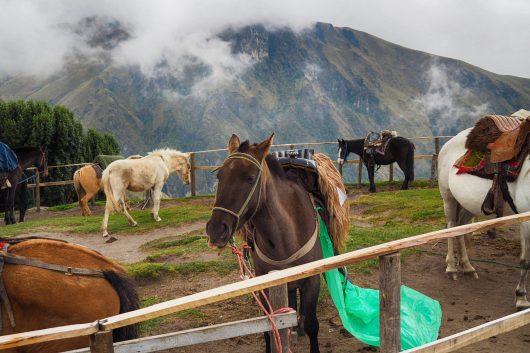
The U.S. often has something to gain when it chooses to lend a hand to a country in need. The U.S. benefits from foreign aid to Ecuador by sponsoring structured efforts to eradicate narcotics and human trafficking. Ecuador has a long history of being an essential piece in the transportation of such networks. This has subsequently been a focus of foreign aid from the U.S. to Ecuador for quite some time. Despite USAID leaving Ecuador in 2014, the country has continued implementing the strategies fostered by American and Ecuadorian relations.

Thanks to the relations between the U.S. and Ecuador, the country has made significant progress to curb drug trafficking and modern-day slavery because of these initiatives:

  • U.S. logistical and operational support in counternarcotic cases
  • Prevention and rehabilitation programs after addiction was declared a public health issue
  • Criminal code targeting drug transit through tiered penalties
  • Improvement of detection and analysis in special crime laboratories in Quito and Guayaquil
  • Increases in the monitoring of maritime trade

Ecuador is working to increase the seizure of illicit drugs, especially cocaine, as well as the vigilance of law enforcement in arresting key players in the narcotics trade. The country has been incrementally successful and is seeing new progress each year.

The supplanting of restorative systems returns benefits to the U.S. As one of America’s largest commerce partners, it remains crucial that trade stays legal and in compliance with human rights. The U.S. benefits from foreign aid to Ecuador because the decrease in narcotics transit spares the U.S. from networks of volatile crime.

To address human trafficking, the U.S. began implementing steps within Ecuador to aid the country with this prevalent issue. America and Ecuador are aiming to educate the people of Ecuador with:

  • Public service announcements played throughout children’s television programs detailing the rights of each child in order to instill the knowledge of such rights in children from an early age, as well as in their parents.
  • An educational campaign and two-day conference depicting judicial corruption in Ecuador for the public.

Additionally, the American Bar Association (ABA) has been working continuously in Ecuador to strengthen its justice system. The ABA has aided Ecuadorian lawyers in transitioning from the old inquisitorial criminal justice system to an adversarial criminal justice system, which has proven to be a challenge, as the judiciary still clings to the previous system.

According to the ABA website, the organization has aided in the institution of hybrid law, “a mixture of civil law and common law systems” and analyzing the effectuality of such law in Ecuador specifically.

Similar to the reduction of illegal narcotics transportation, the U.S. benefits from foreign aid to Ecuador through reciprocatory change. By pushing Ecuador in the right direction to minimize illegal trade, America is consequently minimizing active human trafficking within its borders.
Essentially, the trade and transport of narcotics and human trafficking webs in Ecuador directly affect the same trade and transport in the United States. These dual-effort relations have resulted in a consistently increasing number of arrests, seizures and preventions of human and narcotics trade. Each time America helps Ecuador target this issue, it also directly targets the issue within its own borders.

– Lydia Lamm

Photo: Flickr

February 20, 2018
https://borgenproject.org/wp-content/uploads/borgen-project-logo.svg 0 0 Borgen Project https://borgenproject.org/wp-content/uploads/borgen-project-logo.svg Borgen Project2018-02-20 07:30:232024-05-29 22:39:20How the US Benefits from Foreign Aid to Ecuador
Aid, Foreign Aid, Global Poverty

How the US Benefits from Foreign Aid to Uganda

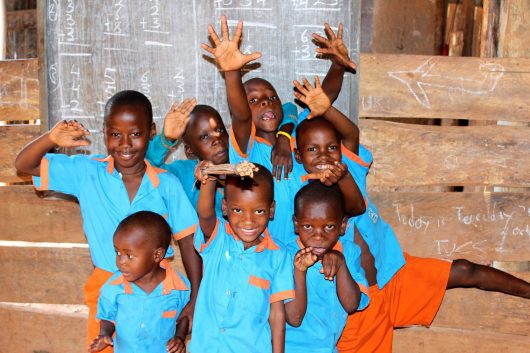
U.S. benefits from foreign aid to UgandaUganda, a landlocked country in East Africa, is considered one of the poorest countries in the world. The country has rich natural resources and its rural population is significantly high at 83.56 percent, according to the World Bank. Despite the fact that it is considered a poor country, the poverty rate is declining rapidly.

The U.S. international aid budget cuts would severely affect the aid given to Uganda and consequently might hamper Uganda’s development. This is because Uganda’s rapid development is at least partially due to the foreign aid it receives. However, it is in the United States’ interests to continue providing aid to Uganda, because the U.S. benefits from foreign aid to Uganda as well.

The rapid poverty rate decline in Uganda is notable: in 2013, the proportion of the population living below the national poverty line declined from 31.1 percent in 2006 to 19.7 percent and the share of people living on $1.90 per day or less dropped from 53.2 percent in 2006 to 34.6 percent in 2013, one of the fastest decreases in sub-Saharan Africa. Poverty reduction among households in agriculture accounts for 79 percent of Uganda’s national poverty reduction from 2006 to 2013. Favorable prices and weather led to the increase in income in the agriculture sector.

Factors that demonstrate market efficiencies, such as investments in infrastructure, economic liberalization and better trade services, lead to favorable prices. Foreign aid, especially from the U.S., has led to the decline in poverty since much of the aid is used to develop agriculture and infrastructure and boost the economy. For instance, Uganda is a part of the U.S. government’s global hunger and food security initiative Feed the Future. Through this initiative, USAID investments focus on three value chains (maize, coffee, and beans) with the greatest market potential, nutritional benefits and income potential for farming households. This has the benefit of transforming subsistence farms into more commercial operations.

Additionally, USAID works to improve farmers’ skills in production, post-harvest handling and storage technologies, all of which increase the likelihood of earning a higher income. This initiative has clearly made a notable impact in the country, as Feed the Future farmers in Uganda earned $97 million from agricultural sales. These numbers show that Uganda benefits immensely from foreign aid. However, other effects such as social capital derived from foreign aid show that the U.S. also benefits from foreign aid to Uganda.

A recent study found that foreign aid has a strong impact on trust among people and can change beliefs and social capital. This study surveyed specific counties in Uganda and found a positive correlation between aid in a county and the subsequent level of trust, which aligns with the hypothesis that foreign aid contributes to an increase in trust. This is significant because trust is considered a “proxy of social capital and determinant of future growth,” meaning it can be converted into conventional economic gains in the future. In this way, the U.S. benefits from foreign aid to Uganda since it allows the U.S. access to Ugandan domestic and foreign policy, making foreign aid to Uganda an essential foreign policy tool. Moreover, foreign aid helps both the U.S. and Ugandan governments establish a mutually beneficial relationship based on cooperation on a wide range of shared issues.

Also, the U.S. benefits from foreign aid to Uganda because, as a nation like Uganda improves economically to become a middle-income country, it becomes a potential market for U.S. companies, thereby creating jobs in the U.S.

In short, there are many ways the U.S. benefits from foreign aid to Uganda. Hence, the recently proposed budget cuts indirectly harm more than they help the U.S. Additionally, Uganda, as one of the poorest nations in the world, still requires foreign aid in order to continue its development. Hopefully, it will continue to fight poverty amid these cuts in foreign aid from the U.S.

– Mehruba Chowdhury

Photo: Flickr

February 19, 2018
https://borgenproject.org/wp-content/uploads/borgen-project-logo.svg 0 0 Borgen Project https://borgenproject.org/wp-content/uploads/borgen-project-logo.svg Borgen Project2018-02-19 01:30:392024-05-29 22:39:24How the US Benefits from Foreign Aid to Uganda
Aid, Foreign Aid, Global Poverty

A Crucial Shift: How the US Benefits from Foreign Aid to Venezuela

U.S. benefits from foreign aid to VenezuelaGovernments may not always be straightforward with the way “freely-given” humanitarian aid to other countries is repaid. Many times, in exchange for helping another country solve a financial crisis or rebuild from a natural disaster, the benefactor receives greater access to resources or stronger political alliances with the country benefiting from aid. The ways the U.S. benefits from foreign aid to Venezuela has changed because the political turmoil turning Venezuela on its head is putting strain on the United States government.

Human Rights Defense

According to the U.S. Department of State, assistance from the United States to Venezuela is focused mainly on human rights issues, civil services and building up the strength of political interests in the area. One main interest in Venezuela is building a strong counter-narcotics network in the region, but recently the USDS has reported that Venezuela has failed to maintain the network to adequate levels.

Politically, this demonstrates the inability for the Venezuelan government to control its national defense programs, which became even more obvious after a presidential election putting Nicolas Maduro in charge, an action widely disputed for its legitimacy.  

Venezuela’s Economy

According to CNN, a major reason for this election and presidential cycle being so tumultuous is due to a decline in Venezuela’s economy, which is one area wherein questions arise about the way the U.S. benefits from foreign aid to Venezuela.

Another article from CNN Money states that the Venezuelan crisis spreads further than just a loss of democracy; it spreads to the pockets of the people as well. Venezuela’s cash revenue has fallen from $30 billion in 2011 to $9.9 billion in 2017. That drastic of a drop is causing a humanitarian crisis disproportionate to Venezuela’s economic capacity.

The U.S. and Venezuela

This being said, the United States remains one of Venezuela’s largest suppliers of goods. According to the U.S. Department of State, the U.S. exports nearly $8.3 billion to Venezuela include agricultural products, car parts and petroleum. In return, the U.S. imports a large number of oil products from Venezuela, totaling around $15.6 billion. However, this number has declined since the price of oil fell, causing an economic shift in Venezuela’s market.

This occurrence, along with a cash-poor economy, has pushed Venezuela into a crisis situation. With food being harder to get and inflation through the roof, humanitarian aid to Venezuela is going to increase in the next few years — that is, if the rest of the world wants to help stabilize the country.

A Global Shift

The way the U.S. benefits from foreign aid to Venezuela is going to change. As long as political alliances don’t shift too far from their current position, there is a high chance that the U.S., through increased humanitarian efforts and support for the agricultural and healthcare systems in the country, can help Venezuela recover before the nation degrades any further.

– Molly Atchison

Photo: Flickr

February 18, 2018
https://borgenproject.org/wp-content/uploads/borgen-project-logo.svg 0 0 Borgen Project https://borgenproject.org/wp-content/uploads/borgen-project-logo.svg Borgen Project2018-02-18 01:30:142024-05-29 22:39:22A Crucial Shift: How the US Benefits from Foreign Aid to Venezuela
Page 35 of 65«‹3334353637›»

Get Smarter

  • Global Poverty 101
  • Global Poverty… The Good News
  • Global Poverty & U.S. Jobs
  • Global Poverty and National Security
  • Innovative Solutions to Poverty
  • Global Poverty & Aid FAQ’s
Search Search

Take Action

  • Call Congress
  • Email Congress
  • Donate
  • 30 Ways to Help
  • Volunteer Ops
  • Internships
  • Courses & Certificates
  • The Podcast
Borgen Project

“The Borgen Project is an incredible nonprofit organization that is addressing poverty and hunger and working towards ending them.”

-The Huffington Post

Inside The Borgen Project

  • Contact
  • About
  • Financials
  • President
  • Board of Directors
  • Board of Advisors

International Links

  • UK Email Parliament
  • UK Donate
  • Canada Email Parliament

Get Smarter

  • Global Poverty 101
  • Global Poverty… The Good News
  • Global Poverty & U.S. Jobs
  • Global Poverty and National Security
  • Innovative Solutions to Poverty
  • Global Poverty & Aid FAQ’s

Ways to Help

  • Call Congress
  • Email Congress
  • Donate
  • 30 Ways to Help
  • Volunteer Ops
  • Internships
  • Courses & Certificates
  • The Podcast
Scroll to top Scroll to top Scroll to top