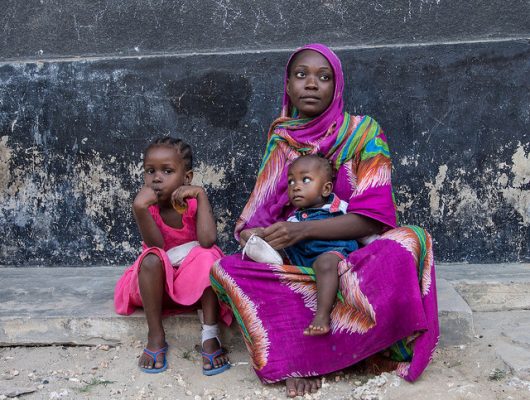
Among other diseases endemic to the region, malaria presents a constant danger in sub-Saharan Africa. While the disease continues to spread, new methods and technology are utilized to contain and treat it. Habiba Suleiman Sefu, a malaria surveillance officer, stands on the front lines of this fight on the archipelago of Zanzibar, off the coast of Tanzania.
Malaria is by far the deadliest disease known to mankind, killing more than 1,000 children a year. Most victims of the disease live in sub-Saharan Africa, in moist, humid regions where disease-carrying mosquitoes thrive. While the disease is not contagious, it is blood-borne and can spread quickly in areas with poor sanitation and standing water.
Historically, malaria in Zanzibar has been a constant danger, as it is the leading cause of death in mainland Africa. In 2000, malaria accounted for 30 to 50 percent of all hospital admissions and approximately half of all hospital deaths.
Sefu, 29, is an environmental science graduate and works as a malaria surveillance officer in the village of Shikani, in the southwest region of Zanzibar. Habiba tracks and treats malaria on the archipelago using her tablet, mobile phone and motorcycle, all supplied to her by the U.S. President’s Malaria Initiative (PMI).
When a case of malaria is reported at the local clinic in Shikani, Sefu receives an SMS message on her mobile phone. She then visits the family of the patient and tests them for the disease. If it is detected, she distributes medication and encourages affected individuals to go to the hospital.
In addition to treating malaria, Sefu educates families on the disease and makes certain that they are aware of contributing risk factors. She makes sure that families understand the importance of intact mosquito nets, insecticide, and the elimination of standing water, which provides a breeding ground for mosquitoes.
Sefu represents a new generation of disease control, utilizing new methods and technology to target malaria at its source and stop outbreaks before they begin. These new methods of malaria identification and treatment have yielded unprecedented results in fighting the disease. In fact, the prevalence of malaria in Zanzibar was reduced from 40 percent in 2005 to less than one percent in 2012. In addition, hospital admissions for malaria decreased to less than five percent in 2012, and no malaria-related deaths have been reported in Zanzibar since 2009.
While malaria has historically been a problem in sub-Saharan Africa, places like Zanzibar are making great strides towards eradicating the disease through the use of new technology and tracking methods. These methods have effectively eliminated malaria in Zanzibar, and with the use of surveillance officers like Sefu, malaria can be similarly eradicated on the African mainland.
– Chasen Turk
Photo: Flickr

15 Statistics on Refugees
The refugee statistics are appalling. The last few years have seen the highest levels of refugees on record. The topic is everywhere — on television, online and on the minds of both those displaced and those trying to help. To grasp how big the world refugee crisis truly is, below are 15 statistics on refugees worth knowing.
Top Refugee Statistics
These statistics on refugees show the extent to which this unprecedented crisis has affected the world. Certain regions are more affected than others, but affected most are the displaced persons themselves.
– Michael Ros
Photo: Flickr
Malaria in Zanzibar: Conquering Disease with Technology
Among other diseases endemic to the region, malaria presents a constant danger in sub-Saharan Africa. While the disease continues to spread, new methods and technology are utilized to contain and treat it. Habiba Suleiman Sefu, a malaria surveillance officer, stands on the front lines of this fight on the archipelago of Zanzibar, off the coast of Tanzania.
Malaria is by far the deadliest disease known to mankind, killing more than 1,000 children a year. Most victims of the disease live in sub-Saharan Africa, in moist, humid regions where disease-carrying mosquitoes thrive. While the disease is not contagious, it is blood-borne and can spread quickly in areas with poor sanitation and standing water.
Historically, malaria in Zanzibar has been a constant danger, as it is the leading cause of death in mainland Africa. In 2000, malaria accounted for 30 to 50 percent of all hospital admissions and approximately half of all hospital deaths.
Sefu, 29, is an environmental science graduate and works as a malaria surveillance officer in the village of Shikani, in the southwest region of Zanzibar. Habiba tracks and treats malaria on the archipelago using her tablet, mobile phone and motorcycle, all supplied to her by the U.S. President’s Malaria Initiative (PMI).
When a case of malaria is reported at the local clinic in Shikani, Sefu receives an SMS message on her mobile phone. She then visits the family of the patient and tests them for the disease. If it is detected, she distributes medication and encourages affected individuals to go to the hospital.
In addition to treating malaria, Sefu educates families on the disease and makes certain that they are aware of contributing risk factors. She makes sure that families understand the importance of intact mosquito nets, insecticide, and the elimination of standing water, which provides a breeding ground for mosquitoes.
Sefu represents a new generation of disease control, utilizing new methods and technology to target malaria at its source and stop outbreaks before they begin. These new methods of malaria identification and treatment have yielded unprecedented results in fighting the disease. In fact, the prevalence of malaria in Zanzibar was reduced from 40 percent in 2005 to less than one percent in 2012. In addition, hospital admissions for malaria decreased to less than five percent in 2012, and no malaria-related deaths have been reported in Zanzibar since 2009.
While malaria has historically been a problem in sub-Saharan Africa, places like Zanzibar are making great strides towards eradicating the disease through the use of new technology and tracking methods. These methods have effectively eliminated malaria in Zanzibar, and with the use of surveillance officers like Sefu, malaria can be similarly eradicated on the African mainland.
– Chasen Turk
Photo: Flickr
Solar Power and Pest Control Advancements Protect Kenyan Harvests
According to statistics released by YieldWise, a Rockefeller Foundation initiative, approximately one-third of all available food in the world spoils or gets thrown away before it reaches the consumer. With one out of every nine people on the planet either undernourished or food-insecure, this loss of resources is unacceptable. Additionally, the environment unnecessarily suffers due to the waste. YieldWise reports that 3.3 billion tons of carbon dioxide from uneaten food is released into the atmosphere and 66 trillion gallons of water are used on crops that are never eaten.
A Solar Power “Refrigerator”
Kenya is no stranger to unnecessary waste. Kenyan farmers used to watch 30 to 50 percent of their harvests go to waste because they had no means to extend the life of their fruits while they searched for buyers. Many lacked cold storage to preserve their harvests.
Launched in 2016, YieldWise has already made great strides in mitigating those losses and making sure more food makes it to the table. In partnership with TechnoServe, a cold storage facility that runs on solar power was recently made available to approximately 150 Kenyan farmers. With a simple car battery, an inverter and four solar power panels, the facility prevents approximately 3.4 tons of mangoes from spoiling prematurely. Although the facility does not get quite as cold as a traditional refrigerator, it still adds precious days to the shelf lives of the fruits.
Chemical-Free Pest Control
The oppressive heat is not the only hurdle Kenyan farmers face. Another foe, this one with wings, threatens profits by destroying more than 60 percent of fruits. The insect menace is Bactrocera dorsalis, a species of fruit fly. The increased temperatures create a favorable environment for the invasive flies.
Previously, farmers used pesticides to kill the flies, but many buyers were uninterested in produce that has been exposed to chemicals. In response, the International Centre of Insect Physiology and Entomology (ICIPE) in Nairobi instituted a fruit fly pest management program. Ivan Rwomushana, who leads the program, reports that ICIPE is training farmers in alternatives to chemicals. Unique solutions like pheromone traps and parasitic wasps are being used in lieu of pesticides.
Reaping the Rewards
Farmer John Musomba is a big supporter of the new pest control methods and the solar power facility. “With the organic control interventions in addition to the cold storage facility, I now harvest and sell 250 tons of mango fruits in a year,” Musomba said. Prior to the introduction of the solar power cold storage facility and the organic methods, he only sold 100 tons of mangoes.
Musomba and his family are reaping the benefits. He said that buyers used to snub their harvests because of the exposure to pesticides, but that all changed with the new pest control approach. “Since we switched to organic farming, traders are now trooping around here for our fruits,” he said.
Thanks to the new cold storage facility, those fruits last even longer.
– Gisele Dunn
Photo: Flickr
Poverty in Andorra
Andorra is a mountainous region located between France and Spain, officially a principality with two co-princes and its own constitution. Known for having lavish skiing attractions, Andorra had a 2014 GDP of $3.28 billion. With a population of just 85,000, this gives Andorra the ninth-highest GDP per capita in the world, at about $53,000. No data exists on poverty in Andorra, but it is generally assumed to be nonexistent.
Andorrans enjoy a high standard of living and have the highest life expectancy in the world, at 83.5 years. Most exports consist of technology equipment such as integrated circuits and orthopedic appliances, along with another stream of revenue, briquette sales. GDP has risen steadily since 2013, partially due to austerity measures.
Dominated by an urban population, only five percent of the region’s land is arable. That is why most food has to be imported from other countries. Prior to tourism, agriculture was the leading stream of revenue as tobacco was sold.
Major sources of income now include tourism and retail sales on products like perfume because of the country’s duty-free status. These are the primary sources of wealth and account for three-quarters of GDP.
The government of Andorra did a good job stabilizing its economy after the steady decline in tourism that occurred after 2010. Relaxation of the residency and investment laws contributed to the country’s attractiveness to foreign visitors, however now its relatively small housing market is among the many around the world affected by speculation.
With lavish hotels and a change in laws, stabilization of tourism was able to occur. Even with a negative trade balance, poverty in Andorra is minimal and the country is projected to continue to rise in GDP into 2017. Taking the appropriate steps helped the Andorran economy recover.
– Nick Katsos
Photo: Flickr
Severe Diseases in Benin
Benin is a relatively stable democratic West African nation that lies between Togo and Nigeria. There are a number of diseases in Benin putting the health of its residents at serious risk. Malaria and meningococcal meningitis are among the top diseases in Benin. Both are potentially life-threatening for individuals who become infected.
The Fight Against Malaria
Malaria is a severe and life-threatening blood disease transmitted through the bite of the Anopheles mosquito. According to the Centers for Disease Control and Prevention (CDC), malaria is considered to be one of the high-risk diseases in Benin, affecting all areas of the country. As a result, it recommends that all potential travelers into the country get vaccinated prior to entering.
There are different mechanisms in place aimed at fighting against diseases in Benin. In 2005, the President’s Malaria Initiative (PMI) was created to help reduce the spread of malaria in particular. Researchers working in conjunction with PMI have found that malaria is currently the leading cause of health problems in Benin, and that it “accounts for 40 percent of outpatient consultations and 25 percent of all hospital admissions.” Consequently, families are forced to spend large amounts of money paying for treatments.
In response to this issue, PMI has been making progress in helping residents of Benin fight against malaria by providing residents with valuable resources such as trained healthcare workers, insecticide treatments, house-sprays and Rapid Diagnostic Tests. As of 2016, PMI has raised $155.2 million toward the effort.
The Fight Against Meningococcal Meningitis
In addition to malaria, meningococcal meningitis is another of the high-risk bacterial diseases in Benin. It is also common in other parts of sub-Saharan Africa.
Meningococcal meningitis causes inflammation of the brain and spinal cord. It is typically transferred via person-to-person contact. Some common symptoms associated with the disease are vomiting, headaches, neck stiffness and fever.
Furthermore, it has also been classified as one of the high-risk diseases in Benin, particularly during December through June. The CDC has recommended that persons traveling to the country during these months get vaccinated to help protect themselves from contracting the virus.
In response to this epidemic, the World Health Organization (WHO) has developed a strategy to help reduce the spread of meningococcal meningitis in Benin and surrounding countries. The WHO strategy consists of vaccinating everyone under 29 in the African meningitis belt with the MenA conjugate vaccine, and using “prompt and appropriate case management with reactive mass vaccination of populations not already protected through vaccination.”
– Lael Pierce
Photo: Flickr
5 Outstanding Advocates for Women’s Education
Malala Yousafzai is a brave Pakistani advocate for young women’s education and the youngest ever Nobel laureate. An attempt was made on her life when she was shot in the head by militants, and she has faced many other obstacles. Yousafzai is one among hundreds of advocates around the world fighting for women’s education. More than 63 million girls are still not enrolled in school, and fewer than 10 percent of teenage girls finish secondary school. Here are five more outstanding advocates for women’s education.
Chattan has advocated for peace for young women in Pakistan since she was a teenager. She grew up in the same town as Yousafzai. While Yousafzai was being attacked, and the Taliban were taking over Pakistan, Chattan launched a campaign called Peace for a New Generation, promoting education and extracurricular activities for girls and boys. Even though she and her family face various threats, she remains fearless in helping children and young adults get the education they need.
The former First Lady, along with her husband, former President Barack Obama, launched the Let Girls Learn organization in March 2015. The organization works with communities and leaders of third-world countries to promote girls’ education. She has also visited Africa and raised $27 million in funding for young women’s education in Liberia. Michelle Obama hopes that more people will continue fighting for young women’s education.
Machel has fought not only for young women’s education, but also against childhood marriage. She acknowledged that women and children “pay the highest prices” from war in Nigeria. Her hard work has led to the Graca Machel Trust.
A Grammy-nominated West African singer and songwriter, Kidjo is also a UNICEF goodwill ambassador and the founder of the Batonga Foundation. She uses her talents as a singer and her passion for young women’s education to effect important change. She continues to work with the Batonga Foundation, supporting secondary and higher education for girls in Africa by improving school infrastructure, increasing enrollment, granting scholarships, providing financial support for families, and spreading community awareness.
As the first female president in an African country, Liberian President Sirleaf has been a huge supporter of general women’s rights, including women’s right to vote and women’s right to education. She has used her power to expand the quality of education in preschool and primary education by joining the Global Partnership for Education in 2007. Despite dealing with the Ebola crisis in 2015, she worked hard to reopen schools and provide quality education for all students.
In the face of widespread and systemic adversity, millions of women around the world do not have education as a birthright. These five advocates of women’s education are advancing an agenda of equality that will empower and uplift communities forever.
– Emma Majewski
Photo: Flickr
Economic Inequality in Saudi Arabia
King Salman of Saudi Arabia traveled to Indonesia in March to promote economic ties, and the visit sparked some discussion on the current state of inequality in Saudi Arabia. The cost of the trip was estimated at $18 million, involving six Boeing passenger jets and a military transport aircraft, which held two electric elevators and a limousine.
The Saudi family is the richest in the world, worth an estimated total of $1.4 trillion, predominately due to its assets in petroleum. However, Saudi Arabia is still relatively poor; with 20 percent of people living in poverty, the problem of income inequality in Saudi Arabia is quite evident.
Despite an annual oil revenue of more than $200 billion, most Saudis lack adequate housing, healthcare, sanitation and education. Author Karen House highlights these issues in her book On Saudi Arabia. Most of the oil revenue flows right into the hands of the royal family. At least 80 percent of the revenue in the Saudi treasury comes from petroleum, but the average Saudi citizen does not benefit from those gains. The central government in Riyadh, where the royal family is settled, receives most of the oil profits. This sustains a strong monarchy and keeps the majority poor and powerless. The public simply has no say in how the government spends its money.
Moreover, with so much revenue coming in from oil, the government is still unable to provide jobs for its citizens. Saudi Arabia provides one in four barrels of oil exported around the world, yet 40 percent of Saudi youth between twenty and twenty-four are unemployed. The unemployment is partly due to the fact that 90 percent of all employees in the private sector are foreign workers.
The consequences of having a corrupt government are highlighted in times of chaos. In January 2011, during the Cairo revolution, the city of Jeddah flooded because the monarchy failed to establish basic protections against the weather. Ten people died due to improper sewerage and drainage. The inadequate preparation was blamed on corrupt businesses and the government stealing money from both sewer and drain-related construction projects.
Education in Saudi Arabia is of a poor quality and tends to exclude females. The government restricts the economic opportunities of women, who are denied the same rights as men. The lack of economic freedom also correlates with the high rates of poverty, as 40 percent of Saudis live in poverty and at least 60 percent cannot afford a home.
Saudi Arabia is one of the richest nations in the world, yet the majority of the population lacks basic amenities. The poverty rates show clear income disparity in Saudi Arabia and it needs to be further addressed.
– Marcelo Guadiana
Photo: Flickr
10 Facts About Brazilian Slums
In 2016, the Summer Olympic Games in Rio de Janeiro drew massive media attention to Brazil. While the majority of the media focus centered on the games themselves, concerns grew about Brazil’s dangerous climate, particularly in regard to the country’s slums. Below are facts about Brazilian slums.
Top Facts about Slums in Rio de Janeiro and Brazil
Although progress appears underway, the Brazilian government must take more secure action to ensure that conditions within these Brazilian slums improve further.
– Genevieve T. DeLorenzo
Photo: Flickr
Why Are Child Soldiers Used In War?
The use of child soldiers in war is a persistent issue, despite ongoing international efforts to stop the practice. The U.N. defines a child soldier as anyone under age 18 who is recruited or used by an armed force or group in any capacity. The International Criminal Court further designates recruiting or using children under age 15 as a war crime. Yet, military groups continue to recruit children because they are cheap and manipulable.
Many children are forced to join military groups at a young age. Child soldiers are also easier to manipulate and force into conflict. Recruiters typically target children from troubled areas or conflict zones, likely accustomed to violence and with fewer educational or work opportunities.
Other children join military groups voluntarily to flee poverty, gain protection, or to connect with something resembling a family. Military organizations are viewed as a safe and secure group of comrades, distant from their difficult lives.
There are several roles that militant groups fill with child soldiers. In many cases, children participate directly in conflict, but they can also be used for other dangerous support roles. Many are porters who carry heavy loads of ammunition or injured soldiers, while others are lookouts or cooks. Girls are often forced to be sex slaves.
Participating in armed conflict has significant consequences for the physical and emotional development of children. Many endure abuse and witness extreme violence or death. Even worse, they are forced to commit horrific acts, resulting in lifelong psychological distress. Child soldiers also have a higher risk of sexual abuse by adults or other children. These children are plagued by depression, anxiety, insomnia and numerous other health issues.
While the issue of child soldiers remains daunting, progress is being made to reduce the practice across the globe. UNICEF created a campaign in 2014 called “Children, Not Soldiers” aimed towards global prevention of the use of child soldiers. The campaign focuses on seven countries: Afghanistan, Chad, the Democratic Republic of the Congo, Myanmar, Somalia, Sudan, and Yemen. Thousands of soldiers have been released and introduced back into civilian life because of the campaign.
National campaigns have also helped countries make significant strides towards reducing the use of child soldiers. Countries have implemented disarmament, demobilization and reintegration programs to make a change. Stopping such an ingrained practice and rehabilitating children who have grown up in conflict is a difficult task. However, these programs represent a strong effort to stop the recruitment and use of child soldiers.
– Lindsay Harris
Photo: Flickr
Water Quality in Madagascar
Many who hear the word ‘Madagascar‘, think of the family-friendly animated movie with dancing lions, lemurs, and other wild animals. This association overlooks the 22.9 million people who lack access to safe water in the country ranked fourth-worst in water quality in Africa.
Water is a basic necessity for survival, and 88 percent of people in Madagascar do not have access to improved sanitation. Over 2,100 children a year die from diarrhea because of unsafe and poor water quality in Madagascar.
Child mortality rates are 10 times higher in Madagascar than in the U.K. Sixty-six percent of people who live in urban areas have access to safe drinking water, but less than 15 percent of people in the rural area have access to such a luxury, only intensifying poverty in Madagascar.
Families who live in isolated villages do not have access to clean drinking water. Wells are contaminated with bacteria and viruses, and those who drink that water are exposing themselves to diseases. Most have no alternative to drinking the contaminated water.
Malalatiana Rasoanisina, a young Madagascar resident, explains that, “Twice a day I have to [collect water], it gave me a stomach ache as that water was yellow. I couldn’t go to school and had to go to the doctor.”
Organizations Working to Improve Water Quality
Madagascar receives about 449 billion m3 of water per year. So why is the water quality in Madagascar so unsanitary?
Madagascar’s government was not formally set up until a few years ago, which means that the nation was lacking the political or economic basis to provide solutions to the water problems. The nation has been relying on help from international organizations such as the International Development Association (IDA) and the Water & Sanitation for the Urban Poor (WSUP).
Even with the recent establishment of a formal government, people still face poor water quality in Madagascar. The public water and electricity company in the nation, JIRAMA (Jiro Sy Rano Malagasy), only covers a few areas of the nation, and JIRAMA faces an estimated debt of $27 million due to low water tariffs.
All people in Madagascar deserve clean water. Organizations such as the WSUP have been doing great work to help keep supply clean. They’ve helped improve water quality for over 700,000 people, improve sanitation services for over 180,000 people, and helped to improve hygiene practices for over 2.7 million.
Although many productive advancements have occurred in Madagascar, there remains a great deal of work ahead for the nation’s people. Many still need help and support, both inside and outside of the nation. Developed countries with safe, established water sanitation systems need to help Madagascar provide sanitary water to its people.
– Mary Waller
Photo: Flickr