• Link to X
  • Link to Facebook
  • Link to Instagram
  • Link to TikTok
  • Link to Youtube
  • About
    • About Us
      • President
      • Board of Directors
      • Board of Advisors
      • Financials
      • Our Methodology
      • Success Tracker
      • Contact
  • Act Now
    • 30 Ways to Help
      • Email Congress
      • Call Congress
      • Volunteer
      • Courses & Certificates
      • Be a Donor
    • Internships
      • In-Office Internships
      • Remote Internships
    • Legislation
      • Politics 101
  • The Blog
  • The Podcast
  • Magazine
  • Donate
  • Click to open the search input field Click to open the search input field Search
  • Menu Menu
Blog - Latest News
Global Poverty, Slums

10 Facts About Brazilian Slums
Brazilian Slums rio de janeiro facts
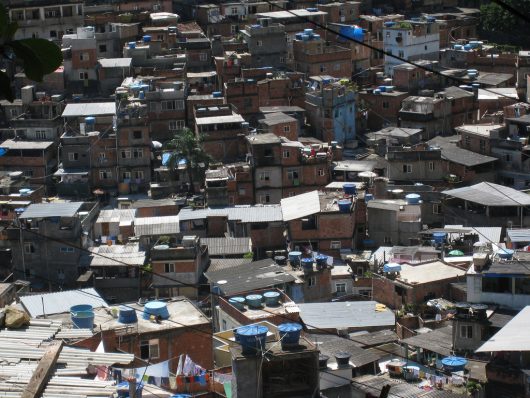
In 2016, the Summer Olympic Games in Rio de Janeiro drew massive media attention to Brazil. While the majority of the media focus centered on the games themselves, concerns grew about Brazil’s dangerous climate, particularly in regard to the country’s slums. Below are facts about Brazilian slums.

Top Facts about Slums in Rio de Janeiro and Brazil

  1. The common term for a Brazilian slum is a favela. The name originated out of wartime, as soldiers during Brazil’s civil war sought temporary refuge on hills filled with favela plants.
  2. Favelas grew as migration increased. Since proper housing was too expensive for many immigrants, they turned to the poor, yet cheap, conditions favelas provided on the outskirts of Brazil’s major cities, such as Rio de Janeiro and São Paulo.
  3. Approximately six percent of Brazil’s population lives in favelas. Today, there are about 1,000 favelas in Rio and 1,600 in São Paulo.
  4. The typical favela has poor infrastructure, leading to difficulties in electricity and plumbing.
  5.  Disease is also rampant within favelas, as there is no standard for sanitation. Health risks may stem from overcrowding, pollution and a lack of waste disposal systems. Life expectancy within favelas is approximately 48 years, while the national average is 68.
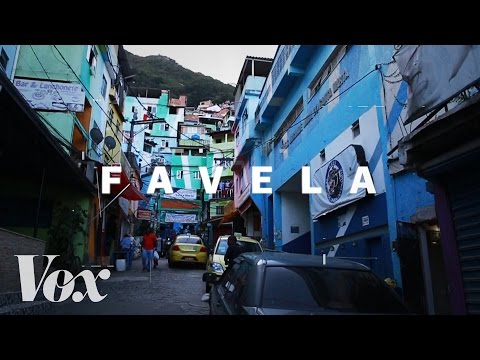
  6. Poor living conditions within favelas often breed crime. Drug trafficking is common, with most members being young male teenagers, who are four-fifths more likely to die before age 21, Joe Griffin of The Guardian reports.
  7. Gangs not only initiate wars amongst each other in Brazilian slums, but against police. There have been frequent shootouts between gangs and police, especially during the 2016 Summer Olympics in Rio when the state government was forced to employ numerous police pacification units (UPPs).
  8. Although UPPs originally heightened safety when initially introduced in 2008, they have recently been the center of much controversy, as civilian deaths have increased as a result of police misconduct.
  9. Despite these poor conditions, life in favelas is beginning to improve. NGOs, such as Community in Action, are focused on sustainable community development within these Brazilian slums.
  10. Many houses now have access to new technologies, such as television and the Internet. In addition, small businesses are making progress within their communities, most recently in the area of tourism.

Although progress appears underway, the Brazilian government must take more secure action to ensure that conditions within these Brazilian slums improve further.

– Genevieve T. DeLorenzo

Photo: Flickr

April 7, 2017
Share this entry
  • Share on Facebook
  • Share on X
  • Share on WhatsApp
  • Share on Pinterest
  • Share on LinkedIn
  • Share on Tumblr
  • Share on Vk
  • Share on Reddit
  • Share by Mail
https://borgenproject.org/wp-content/uploads/borgen-project-logo.svg 0 0 Borgen Project https://borgenproject.org/wp-content/uploads/borgen-project-logo.svg Borgen Project2017-04-07 01:30:202020-04-30 11:47:1810 Facts About Brazilian Slums

Get Smarter

  • Global Poverty 101
  • Global Poverty… The Good News
  • Global Poverty & U.S. Jobs
  • Global Poverty and National Security
  • Innovative Solutions to Poverty
  • Global Poverty & Aid FAQ’s
Search Search

Take Action

  • Call Congress
  • Email Congress
  • Donate
  • 30 Ways to Help
  • Volunteer Ops
  • Internships
  • Courses & Certificates
  • The Podcast
Borgen Project

“The Borgen Project is an incredible nonprofit organization that is addressing poverty and hunger and working towards ending them.”

-The Huffington Post

Inside The Borgen Project

  • Contact
  • About
  • Financials
  • President
  • Board of Directors
  • Board of Advisors

International Links

  • UK Email Parliament
  • UK Donate
  • Canada Email Parliament

Get Smarter

  • Global Poverty 101
  • Global Poverty… The Good News
  • Global Poverty & U.S. Jobs
  • Global Poverty and National Security
  • Innovative Solutions to Poverty
  • Global Poverty & Aid FAQ’s

Ways to Help

  • Call Congress
  • Email Congress
  • Donate
  • 30 Ways to Help
  • Volunteer Ops
  • Internships
  • Courses & Certificates
  • The Podcast
Link to: Why Are Child Soldiers Used In War? Link to: Why Are Child Soldiers Used In War? Why Are Child Soldiers Used In War? Link to: Economic Inequality in Saudi Arabia Link to: Economic Inequality in Saudi Arabia Economic Inequality in Saudi Arabia
Scroll to top Scroll to top Scroll to top