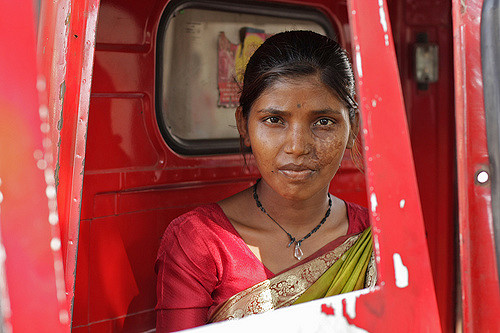
Currently, one in eight people across the world lives in slums. In 2014, an estimated 881 million urban residents lived in poor informal settlements in developing countries. These numbers are especially high in India where the 2011 census found that more than 17 percent of urban Indian households live in slums. Mumbai is one of the most populous cities in India, and while it is one of the wealthiest and most developed regions in India, it is also home to one of the world’s biggest slums. This article discusses the key facts about Mumbai slums.
Top Facts about Mumbai Slums
1. The United Nations Habitat program defines slums as informal settlements that lack one or more of the following five conditions: access to clean water, access to improved sanitation, sufficient living area that is not overcrowded, durable housing and secure tenure.
2. Mumbai, which is surrounded by water on three sides, has waged a constant battle since the colonial era to find space to expand. Adding to the pressure is the fact that growing employment opportunities in the city have led to a continuous influx of migrants from other areas of India. The shortage of affordable housing and a steady increase in real estate prices in the city has made formal housing unaffordable for most of these migrants.
3. An estimated 6.5 million people, around 55 percent of Mumbai’s total population, live in slums.
4. In Mumbai, slums are notified or recognized by the government if they were settled on state or city government-owned land prior to 2000. Nearly half of Mumbai’s slums are non-notified, meaning they have no security of land tenure and are not entitled to access city services like connections to the water supply and sanitation.
5. Most slum houses do not have individual toilets and taps. Residents have to pay to use community toilets which are rarely maintained and buy overpriced water from vendors. Some 78 percent of community toilets in Mumbai’s slums lack water supply and 58 percent have no electricity. Many slum houses do not have proper doors.
6. Dharavi, with an estimated population of one million people, is not only one of the biggest slum areas in Mumbai, but in the whole of Asia. While physical conditions in the area are dire, it has a thriving informal economy with an annual turnover of one billion dollars by some estimates.
7. Mumbai’s slums occupy 12 percent of its total geographic area and up to a quarter of the available construction area in the city.
8. Alarmed by the rising number of slums and in order to free up land, the state government has been attempting to rehabilitate the slums in Mumbai since the 1990s. The Slum Rehabilitation Authority allows private builders to construct new properties in former slum areas if they can get the consent of the current residents. The developer has to re-house the residents in the newly constructed buildings, free of cost. The rest of the available construction area can then be used to build upscale towers for commercial sale. These slum rehabilitation projects thus provide developers with an opportunity to access prime real estate, while renewing the area.
9. These slum rehabilitation projects are receiving significant resistance. The main concern is that they mainly focus on residential buildings that leave no space for informal businesses that are the livelihoods of many.
10. Apart from the millions of people living in Mumbai slums, the city also has a high number of homeless who cannot afford any form of permanent shelter. The official number of homeless people in the city is around 50,000. Some argue that the actual figure might be much higher.
While the living conditions in Mumbai slums are unimaginable and much more attention should be given to providing adequate services to people who live there, they also provide shelter and employment for millions of migrants who hope for better lives in the city.
– Helena Kamper
Photo: Flickr


Education in Dominica
Dominica is a beautiful island with volcanic peaks, hot springs and rain forest canopies. We know a lot about Dominica as a traveling destination, but what do we know about education in Dominica?
Who is Responsible for the Education in Dominica?
The responsibility for primary and secondary education in Dominica falls in the hands of The Ministry of Education and Human Resources, an organization that helps educate and prepare students. Their mission statement is “to educate and prepare all students to live productive lives in a complex and changing society.” The Ministry is dedicated to providing students with support and leadership. The Ministry is also responsible for implementing policies and standards. In addition, they supervise early childhood education.
Other prominent agencies include the Curriculum Unit, the National Documentation Centre Database and the National Library Services. The Curriculum Unit is responsible for maintaining a curriculum framework and handling teaching materials and examination provisions. The National Documentation Centre Database and the National Library Services are in charge of the country’s libraries and archives.
Primary and Secondary Schools
The academic year begins in September and ends in July. The system is structured so that primary school runs from grade one to grade seven and secondary school runs from grade eight to grade 12.
The last two years of secondary school are not free. Therefore, students who wish to attend university must have the money for it or acquire a scholarship. Unfortunately, there aren’t many scholarships available. For this reason, many people are unable to attend school and escape rural poverty through further education.
Higher Education
Higher education in Dominica is divided into three categories: state, external and private.
Dominica State College falls under the state category, as it is a public-funded institution. The State College provides certificates and Associate’s Degrees. It is also beginning to award bachelor’s degrees in nursing.
Under the external category lies the University of the West Indies. The University of the West Indies does not have a campus on the island, but it does have a division. The division provides some first-year studies and full degree programs.
Under the private category lies All Saints University School of Medicine, International University for Graduate Studies, New World University and Ross University School of Medicine. Ross University School provides courses for U.S. citizens. In fact, only five Dominicans are allowed to enroll every year.
– Solansh Moya
Photo: Flickr
Huge Global Decrease in Child Mortality Since 1990
Between 1990 and 2015, there was a significant global decrease in child mortality. The number was reduced from nearly 14.2 million deaths in 1990 to just over 7.2 million in 2015. It was only recently, in 2015, that the number of deaths for children under age five dropped below six million.
Around one-third of the world’s nations have reduced their child mortality rates by two-thirds. In another 74 countries, the number has been reduced by one-half.
In a study conducted by the Global Burden of Disease Child and Adolescent Health Collaboration, health in children under the age of 19 in 195 countries was studied and examined. The report defines the most common causes of death for children and compares countries based on the socio-demographic index. The socio-demographic index is a measurement of development and is based on average income, educational attainment and total fertility rate.
Global Efforts at Reducing Child Mortality Rates
So, what has the international community been doing to contribute to the global decrease in child mortality? The world has been focused on implementing and popularizing several health initiatives and strategies. The World Health Organization (WHO) has outlined several of these strategies. These initiatives include ensuring immediate and exclusive breastfeeding as well as medical professional advice during birth and postnatal care. In addition, access to nutritional supplements and educational resources about warning signs in health have become more prevalent. Appropriate provisions for sanitary water and immunizations employed by WHO have also contributed to decreasing child mortality rates.
Many international organizations are partnering up to support the fight against child deaths. A Global Vaccine Action Plan is working toward universal access to immunization by the year 2020. Over 170 countries have signed onto A Promise Renewed, a call for action led by the United Nations Children’s Fund (UNICEF) and the governments of Ethiopia, the U.S. and India. The campaign is working to ensure that children are not dying from easily preventable causes.
There is Still Work to be Done
Although the number of child deaths has been reduced significantly, child mortality is still an issue, especially in South Asia and sub-Saharan Africa. Most of the world has not yet reached the levels outlined in the Millennium Development Goals. Countries with lower socio-demographic indexes still suffer disproportionately from child mortality. Experts suggest that this may be due to a historical lack of health development resources and accessibility.
The study from the Global Burden of Disease Child and Adolescent Health Collaboration concluded with a statement that, “timely, robust and comprehensive assessment of disease burden among children and adolescents provides information that is essential to health policy decision making in countries at all points along the spectrum of economic development.” The Collaboration hopes that the data from the study will help the international community to continue fighting child mortality. The global decrease in child mortality has made a positive impact on poverty and health care development, but there is still a ways to go before the Millenium Development Goals are met.
– Taylor Elgarten
Photo: Flickr
10 Facts About Mumbai Slums
Currently, one in eight people across the world lives in slums. In 2014, an estimated 881 million urban residents lived in poor informal settlements in developing countries. These numbers are especially high in India where the 2011 census found that more than 17 percent of urban Indian households live in slums. Mumbai is one of the most populous cities in India, and while it is one of the wealthiest and most developed regions in India, it is also home to one of the world’s biggest slums. This article discusses the key facts about Mumbai slums.
Top Facts about Mumbai Slums
1. The United Nations Habitat program defines slums as informal settlements that lack one or more of the following five conditions: access to clean water, access to improved sanitation, sufficient living area that is not overcrowded, durable housing and secure tenure.
2. Mumbai, which is surrounded by water on three sides, has waged a constant battle since the colonial era to find space to expand. Adding to the pressure is the fact that growing employment opportunities in the city have led to a continuous influx of migrants from other areas of India. The shortage of affordable housing and a steady increase in real estate prices in the city has made formal housing unaffordable for most of these migrants.
3. An estimated 6.5 million people, around 55 percent of Mumbai’s total population, live in slums.
4. In Mumbai, slums are notified or recognized by the government if they were settled on state or city government-owned land prior to 2000. Nearly half of Mumbai’s slums are non-notified, meaning they have no security of land tenure and are not entitled to access city services like connections to the water supply and sanitation.
5. Most slum houses do not have individual toilets and taps. Residents have to pay to use community toilets which are rarely maintained and buy overpriced water from vendors. Some 78 percent of community toilets in Mumbai’s slums lack water supply and 58 percent have no electricity. Many slum houses do not have proper doors.
6. Dharavi, with an estimated population of one million people, is not only one of the biggest slum areas in Mumbai, but in the whole of Asia. While physical conditions in the area are dire, it has a thriving informal economy with an annual turnover of one billion dollars by some estimates.
7. Mumbai’s slums occupy 12 percent of its total geographic area and up to a quarter of the available construction area in the city.
8. Alarmed by the rising number of slums and in order to free up land, the state government has been attempting to rehabilitate the slums in Mumbai since the 1990s. The Slum Rehabilitation Authority allows private builders to construct new properties in former slum areas if they can get the consent of the current residents. The developer has to re-house the residents in the newly constructed buildings, free of cost. The rest of the available construction area can then be used to build upscale towers for commercial sale. These slum rehabilitation projects thus provide developers with an opportunity to access prime real estate, while renewing the area.
9. These slum rehabilitation projects are receiving significant resistance. The main concern is that they mainly focus on residential buildings that leave no space for informal businesses that are the livelihoods of many.
10. Apart from the millions of people living in Mumbai slums, the city also has a high number of homeless who cannot afford any form of permanent shelter. The official number of homeless people in the city is around 50,000. Some argue that the actual figure might be much higher.
While the living conditions in Mumbai slums are unimaginable and much more attention should be given to providing adequate services to people who live there, they also provide shelter and employment for millions of migrants who hope for better lives in the city.
– Helena Kamper
Photo: Flickr
Water Quality in Chile: A Multifaceted Problem
Water quality in Chile includes many facets and issues that must be resolved. One recent event that has drawn attention to this issue is a drought during the weekend of Feb. 25, affecting five million people. This water quality emergency is due to runoff and debris in the Maipo River, the main water supply for Chile’s capital Santiago. Runoff is created by drought and wildfires, making it difficult for the land to retain water. When land is unable to retain water, mudslides are created and debris flows.
Chile measures the levels of precipitation, surface water, groundwater and water needed to remove the pollution in order to access its water footprint. These standards were created by the Water Footprint Network and the Chile Foundation.
Not only does poor water quality affect citizens in Chile, it affects entire industries. Copper is a major export from Chile, and mines must use expensive desalination technology in order to have suitable water. In addition, poor water quality affects agriculture. There are projects in place to improve both the removal of contaminants and water quality.
Former military ruler General Pinochet made water a private commodity in Chile in 1980, a move meant to encourage investment in infrastructure used to distribute water. In reality, privatizing water has created high tariffs and removed the incentive to distribute water in low-income areas. Citizens have to pay for water and to have their water quality improved. The Chilean government has a plan to invest $5 billion into irrigation projects by 2022 and encourage private sector investment into these projects.
Water quality in Chile is a multifaceted problem to solve, but there is impressive research and progress being made to resolve it.
– Jennifer Taggart
Photo: Flickr
Zika infections in Puerto Rico
According to National Public Radio (NPR), health researchers have reported that the number of new cases of Zika infections in Puerto Rico has risen to over 34,000 since 2015. The Center for Disease Control (CDC) states that the virus peaked during the summer months of 2016, with more than 2,000 new cases being reported per week.
Because Zika is a relatively new epidemic, individuals living in Puerto Rico have not yet developed any immunity to the virus. Therefore, the transmission of the disease has been rampant.
In more recent months, the number of Zika infections in Puerto Rico has decreased to around 200 new cases per week. However, it continues to remain a serious problem within the region. Researchers from the CDC have confirmed that the number of Zika infections in Puerto Rico has far surpassed that of dengue virus infections. Dengue is another disease most commonly spread by mosquitoes.
The Zika virus is transmitted via the bite of an infected Aedes species mosquito. Pregnant women who become infected are especially at risk of the disease. Those infected are likely to pass on the infection to the fetus during pregnancy, which can lead to serious birth defects. Additionally, sexual relations and blood transfusions can spread the virus. Common symptoms of Zika virus include fever, rash, headaches, muscle pain and red eyes.
As of 2017, over 1,000 confirmed cases of reported Zika infections in Puerto Rico were among pregnant women. Doctors at the High-Risk Clinic at the University of Puerto Rico have treated some of these infected women. They witnessed at least 14 cases of babies born with severe brain damage.
Notwithstanding, some babies may not begin to show signs of defects or abnormalities until several years after birth. This calls for babies to be closely monitored by health professionals for up to four or five years after birth.
The CDC has listed different recommendations for preventing contraction of the disease. These recommendations are especially important because of the lack of a vaccine for the disease. Some of their recommendations include wearing long-sleeved shirts and long pants when mosquitoes are around, ridding homes of any standing water and using insect repellents registered by the Environmental Protection Agency. They especially advise against pregnant women traveling into Puerto Rico or any other areas where the virus is present.
– Lael Pierce
Photo: Flickr
Top Three Deadliest Diseases in Botswana
Located in Southern Africa, Botswana is one of Africa’s most stable countries, with a solid economy built on diamonds and Safari-based tourism. However, the country continues to struggle with high rates of HIV/AIDS, as well as other preventable diseases. Here are the top three deadliest diseases in Botswana:
1. HIV
HIV is not only one of the deadliest diseases in Botswana, but it is also the number one cause of death, accounting for 32 percent of all deaths in the country. Despite the disease’s prevalence, the Ministry of Health’s national HIV program has helped efforts progress. Approximately 96 percent of people in need of HIV treatment in Botswana have received it. Increased prevention of mother-to-child transmission has reduced the transmission rate to less than four percent.
2. Malaria
While seven percent of deaths each year are due to malaria, Botswana has significantly reduced the disease’s burden. Government interventions, such as establishing rapid response teams and adequate healthcare facilities, has helped reduce incidences from 0.99 to 0.01 percent between 2000 and 2012. Botswana’s progress has not gone unnoticed. In 2016, the country received the African Leaders Malaria Alliance (ALMA) Award for its progress in reducing malaria.
3. Tuberculosis (TB)
Tuberculosis is very common in Botswana, causing six percent of deaths each year. Part of what makes TB so dangerous is that it is a common opportunistic infection in people with HIV. In Botswana, 75 percent of patients with TB are HIV-positive. TB rates began rising in Botswana with the increase in HIV/AIDS in the 1990s, with rates from 200 cases per 100,000 people in 1990 to 620 per 100,000 in 2002. With the help of international partners, the government has launched numerous programs aimed at increasing testing, prevention and awareness of the link between HIV and TB.
Despite its steady economy and stable government, Botswana continues to suffer from high rates of preventable diseases. That said, the government has made significant progress in reducing this prevalence of these diseases and continues to dedicate important time and resources to prevention.
– Alexi Worley
Photo: Flickr
Top Diseases in Dominica
Dominica is an eastern Caribbean nation with clusters of coastal communities and a sparsely populated volcanic interior. The top diseases in Dominica are chronic non-communicable diseases (CNCDs), responsible for 52 percent of deaths. According to a survey taken in Dominica, from 2005 to 2009, the main causes of death were strokes, diabetes, and heart diseases. The survey also shows the number of deaths on the island due to CNCDs:
According to Pan American Health Organization director Carissa Etienne, Dominican health statistics are concerning. “For every three persons, one has high blood pressure. For every five persons in Dominica, one has diabetes. For every four persons in Dominica, one has high cholesterol. For every two people in Dominica, one is overweight or obese,” Etienne said.
Most diseases in Dominica are caused by preventable risk factors including tobacco use, unhealthy diet, physical inactivity and the harmful use of alcohol. These can be prevented with a change in lifestyle.
According to healthdata.org, in 2015, the highest cause of death in Dominica was from cardiovascular complications, at 55.8 percent. Chronic kidney disease resulted in the most combined death and disability, affecting more than 30 percent of people that year. The second-highest contributor was cerebrovascular disease, with more than 20 percent of people becoming disabled.
Furthermore, diabetes is becoming a prevalent disease in Dominica. From 2005 to 2015, diabetes affected 19.9 percent of the population. According to the International Diabetes Federation, in 2015, there were 6,000 cases of diabetes. Pan American Health Organization representative for Barbados Godfrey Xuereb said the prevalence of diabetes in Dominica had risen from about five percent in 1980 to almost 15 percent in 2014.
The number of CNCDs is very high. However, Dominica has been holding conferences to address the situation. Doctors have brought this problem to light, and have been working on ways to help people stay aware of their health and to take care of themselves.
– Solansh Moya
Photo: Flickr
Stella Artois Supports Clean Water Campaign
Take a moment to imagine waking up in the morning, and instead of reaching for the faucet or filtered system you may use for water, you reach for a bulky jar and begin the trek to fill it with water. Imagine filling that jar until it weighs more than 40 pounds and carrying it for miles to bring home. For millions of women living in poverty, this is a daily routine. More than 600 million people worldwide, most of whom live in sub-Saharan Africa, still lack access to clean water. Stella Artois is partnering with water.org through the Buy a Lady a Drink campaign to bring clean water to those still living without it.
To raise money for clean water, Stella Artois is selling limited-edition chalices. The chalices feature artwork from countries like Brazil, Cambodia and Uganda. Only $6.25 from each sale is needed to provide clean water for five years. So far, the Buy a Lady a Drink campaign has helped provide 800,000 people in the developing world with clean water.
For women like Anita, in developing countries, the Buy a Lady a Drink campaign offers much more than clean water — it creates opportunity. Since Anita no longer has to waste precious time collecting water, she is able to contribute to the family business and grow crops for the household. In addition, her children have hope for a better future as they are able to attend school instead of waiting in line for water.
Although the Millennium Development Goal to halve the proportion of people without access to clean water has been reached, there are still millions of people living without easy access to this precious and essential resource. Through the Buy a Lady a Drink campaign, Stella Artois is bringing not only clean water to needy communities, but hope for building a better future.
– Rebecca Yu
Photo: Flickr
Severe Diseases in Nauru
Among the various diseases in Nauru, the most serious and commonly transmitted in the country are dengue fever and typhoid fever.
Dengue Fever: Cause and Symptoms
According to WebMD, dengue fever is a disease that is transmitted through the bite of an infected Aedes mosquito. Unlike many other diseases in Nauru, dengue fever cannot be transmitted via person-to-person contact. Symptoms common to the disease include high fever, vomiting, fatigue, skin rash, nosebleeds, and bruising. If left untreated, it is potentially life-threatening.
Recently, dengue fever has been a rising epidemic in Nauru. Medical researchers have confirmed at least 70 cases of dengue fever within the country. While there has been a rapid increase in infections, Nauru is currently working with a limited amount of treatment supplies.
Nauruan government officials have met with officials from the World Health Organization (WHO), the Australian government, and hospital staff members of International Health and Medical Services, in order to develop an effective solution to the epidemic. However, due to limited medical resources, some infected patients have been evacuated to Australia for proper treatment.
Typhoid: Causes and Symptoms
Another common disease, typically transmitted through contaminated food and water in Nauru, is typhoid. Common symptoms of typhoid include high fever, headaches, stomach pains, loss of appetite, internal bleeding and in extreme cases, death.
The risk of infection is especially high in Nauru and the surrounding regions, so the Center for Disease Control (CDC) highly recommends that potential travelers get vaccinated before traveling into the country.
Travelers who reside with friends or relatives, visit small cities and eat “risky” foods face the highest risk of becoming infected with typhoid disease. The CDC recommends that travelers into the country be especially cautious of the kinds of food and drink that they consume, such as tap or well water, salads, unwashed raw fruit and food from street vendors.
One of the best ways to avoid contracting typhoid, as well as other diseases in Nauru, is to keep hands washed and well-sanitized. It is also best to avoid all physical contact with individuals who are infected with the disease.
– Lael Pierce
Photo: Flickr
10 Worst Slums in the World
According to Merriam-Webster, the definition of a slum is “a densely populated usually urban area marked by crowding, dirty run-down housing, poverty and social disorganization.” The worst slums in the world have combinations of inadequate shelter, limited access to healthcare, sanitation, clean water and education.
Facts About the 10 Worst Slums in the World
Kenya has many of the 10 worst slums in the world. Kibera is about five kilometers from the center of Nairobi and has been called Africa’s largest slum. Nearly half the population is without work, there is no garbage collection, and there is limited access to clean water.
Mathare is one of Nairobi’s oldest slums, with residents dating back to the 1920s. This area lacks necessities such as electricity, roads, clean water and sanitation.
Kawangware is 15 kilometers west of the center of Nairobi. Poverty is a serious issue, with most living on less than $1 each day. Most families can’t afford more than one meal a day so malnutrition is rampant. Disease, lack of clean water and lack of funds to afford education are also major problems.
Kangemi is home to some of Nairobi’s poorest. Lack of running water, high unemployment, drug addiction, alcoholism and HIV are significant issues in the area.
Sanitation is a huge issue in Khayelitsha with thousands lacking access to toilets. Other issues include shack-style housing and the fact that 99 percent of the population is black due to “spatial segregation.”
Lack of housing isn’t as much of an issue as limited resources. Locals ended up building their own sewers after waiting on the government to build them. Now 96 percent of households have a toilet.
Locals have worked hard to form a sense of community and improve public services. The area is still in need of more employment, more transportation and more schools.
Dharavi is often regarded as the largest slum in Asia and is well known as the filming location for Slumdog Millionaire. Most residents have gas for cooking and electricity. Despite the area’s many struggles, it has a booming small business sector.
The 10 worst slums in the world face serious issues. One-fourth of those living in a city resides in a slum, which equates to more than 900 million people globally. With proper assistance, government reconstruction and international aid, many of the factors contributing to the creation of a slum can be extinguished.
– Shannon Elder
Photo: Flickr
Get Smarter