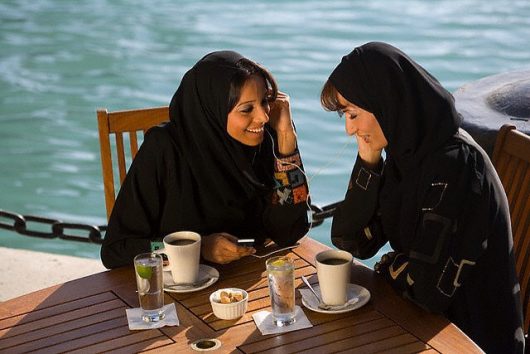
The inception of the United Nations (U.N.) Millennium Goals spearheaded the push towards achieving more social progress by promoting gender equality and the empowerment of women. Despite the fact that two-thirds of the developing world have achieved a level of parity, the problem still persists in the Middle East and North African countries. The lack of access to education, the right to marriage, ownership and custody rights are some very common and debilitating issues that contribute to gender discrimination. However, some of the following examples of gender discrimination shed light on the more uncommon and often overlooked examples of gender inequality.
8 Powerful Examples of Gender Discrimination
1. The Gender Gap
Developing and developed countries have faced this social issue, although to varying degrees. Women in developed countries still face social hindrances owing to the gender – wage gap – a phenomenon that will still take 188 years to even up, according to the World Economic Forum. Women also have fewer responsibilities and are given fewer rewards for their work.
2. Being Forbidden to Drive
Across many conservative communities in Saudi Arabia, women still face this major social bulwark. Despite it not being a law, women are still not allowed licenses and can only exercise the right to go out in public if accompanied by a chaperon. The Arab Spring in 2011 resulted in a deluge of rallies and protests among women. Even though society is becoming more progressive, especially with regards to allowing women to contribute to the labor force, it will take further social reform to overcome this hindrance.
3. Restrictions on Clothing
Upon the pretext that women should not ‘flaunt their beauty,’ women in many conservative communities have to wear the complete body burqa, coupled with loose-fitting clothes when they are out in public as an interpretative exegesis of the Sharia Law. Many world leaders like U.K. Prime Minister Theresa May have spoken against the issue which is very pervasive in Saudi Arabia, Gambia, Sudan and North Korea.
4. Not being Allowed to Travel
In some extreme cases, women are not allowed to leave the country without the consent of their husbands. Up until the age of 40, single women are required to ask their father for permission. For example, Niloufar Ardalan, the Captain of the Iranian Women’s Soccer team was banned from taking part in the Women’s Futsal Championship of Malaysia in 2015 by her husband as it was in violation of Islamic Law.
5. Honor Killing
This is a deplorable practice that revolves around the hidebound idea that girls have to uphold the supposed ‘cachet’ of their families and abide by the patriarchal demands of the society. Honor killing is largely attributed to the poor education system and ineffective government legislation among rural communities. Consequently, Qandeel Balcoh was killed by her brother Waseem Ali in 2016 because she had supposedly brought dishonor upon her family because of how she expressed herself on social media.
6. Female Genital Mutilation
This problem is prevalent in Sub-Saharan African countries, Egypt and other countries in South Asia due to lack of sex education and awareness. The practice stems from a fundamentalist cultural ideology still held by many traditional communities and based on ensuring a girl’s fidelity before marriage. It is one of the very dire examples of gender discrimination and is a human rights violation. It results in severe pain, difficulties in urination and spread of infection.
7. Female Infanticide
Unfortunately, this practice is rather prevalent among rural communities in India, Pakistan and China. For example, China’s one-child policy has contributed to this issue. Boys are thought to galvanize the financial security of the family, while women are treated as burdens and often seen only as child-bearers and caretakers of the household. In some regions, there are as low as 300 girls for every 1,000 boys. Moreover, Beti Bachao, Beti Padhao (Save Girls, Teach Girls) in India, is a social reform initiative that is cracking down on related issues like child marriage.
8. Lack of Legal Rights
This form of gender discrimination is ubiquitous in many countries. From child custody and rape laws, this broad term encompasses many aspects where women are not given enough legal counsel. Spousal rape is not criminalized in many countries and complaints lodged with the police never materialize. In many countries in the Middle East, divorce laws are very weak. The evidence is often not admissible in court and eyewitnesses are always required for cases to be considered.
The progress made over the decade to combat gender discrimination is truly remarkable. Historically pivotal revolutions like the Suffrage movement have been the foundation for women’s rights activism today. Both modern and classical feminism are becoming widespread concepts that many in the international community are adopting. The steady momentum of human rights organizations like Amnesty International, the International Alliance for women, U.N. Women and other local non-governmental organizations have already made a big difference.
Achieving women’s rights is an effective way to crumble ramparts made by society. Female participation greatly helps bolster the economy and catalyze social development in the long run.
– Shivani Ekkanath
Photo: Flickr

Boko Haram’s Impact On Education In Nigeria
Boko Haram, the dangerous Islamic extremist terrorist organization in Nigeria, has been severely attacking the country’s education system. If the attacks continue, the lasting negative legacy will be detrimental for Nigeria.
Boko Haram is based in Nigeria and a translation of the group’s name in Hausa is “Western education is forbidden.” Boko Haram’s impact on education has flipped the Nigerian educational system as a whole by stealing the education of the youth and attacking the system in every way possible. Boko Haram gained publicity when they kidnapped 276 schoolgirls from a secondary school in Chibok.
Girls as young as 11 have been employed as suicide bombers. Teachers have been targeted, resulting in 600 teachers being murdered and 19,000 teachers fleeing in fear. Other teachers have been threatened, injured or even kidnapped.
“I have been a teacher for 20 years now, but I’m always afraid to attend class,” Ahmadau Abba, a teacher at Jajiri Government Day School in Maiduguri explained. “Most of our colleagues have been killed or injured.”
Finding teachers who are willing to teach in the region has become a great struggle because of the dangerous repercussions. Boko Haram’s impact on education has been felt throughout the entirety of the Nigerian educational system.
Out of a total population of 160 million, about 10 million Nigerian youths are not in school, many of them girls. Instead of reading and learning, they are married off in their teens, while out-of-school boys are recruited into terrorist ranks.
By early 2016, an estimated 952,029 school-aged children have fled the violence, with little or no access to education.
The high displacement from the hands of Boko Haram has forced school-aged children to be placed in private homes and communities. In such communities, schools are made up of students of the same age congregating in large rooms or under trees for about three to four hours a day. However, these children do not have access to textbooks and their teachers must teach without any teaching aids.
In Borno, one of the devastated states, schools at all levels have been closed in 22 out of the 27 local government areas for a minimum of two years. With this gridlock on education, children are more vulnerable to becoming trapped in a cycle of poverty.
Boko Haram’s impact on education has impacted thousands of students by stealing what is rightfully theirs. For a nation that has the lowest school attendance nationwide, the attacks on the educational system have been severely damaging for Nigeria.
“Education is the foundation of society; without it, development is very difficult,” says Margee Ensign, the president of the American University of Nigeria. “I don’t think that many in the international community understand the dimension of the problems here in the northeast.”
– Mary Waller
Photo: Flickr
10 Facts About South Sudanese Refugees
The Sudanese civil war ended with South Sudan’s successful secession referendum. The referendum effectively split Sudan in two. Less than two years later, South Sudan was plunged into its own three-year civil war. As a result, South Sudan, the youngest country in the world, now has the largest refugee crisis in Africa. Here are 10 facts about South Sudanese refugees.
If the South Sudanese government continues with its new capital project and the international community remains unsuccessful in accruing the $3.9 billion funding gap necessary to end the famine, then this humanitarian crisis will continue to develop and complicate poverty in sub-Saharan Africa, likely becoming one of the largest humanitarian crises of our time.
– Josh Ward
Photo: Flickr
Threatening Diseases in Croatia
With an evolving population of 4.3 million people, Croatia is known for its rich historical culture, beautiful landscapes and pleasant climate. As a result, Croatia has become a booming tourist destination. Although widely known for its attractions, many transmittable diseases in Croatia threaten the health of its population and the country’s tourism industry.
Here are just a few of the threatening diseases in Croatia:
Typhoid Fever
Typhoid fever is a systemic infection, usually contracted through contaminated food or water. The symptoms include prolonged fever, nausea, headache, loss of appetite and constipation or diarrhea. It thrives in areas with poor sanitation and lack of clean drinking water. According to a study published in 2014, approximately 21 million cases and 222,000 typhoid-related deaths occur annually worldwide, demonstrating the real threat that this communicable infection poses.
Currently, there are two typhoid vaccines that are recommended for use, including an injectable polysaccharide vaccine (Vi-PS vaccine) for persons of age two years and above. The other vaccine is a live attenuated oral Ty21a vaccine for those over five years of age.
Malaria
Malaria is a life-threatening disease caused by parasites that are transmitted through mosquito bites. The symptoms include fever, headache, chills and vomiting, which usually appear within 7 days or more (usually 10-15 days). If not treated quickly, this can progress to severe illness, often leading to death.
Malaria is preventable and curable, easing the burden in many countries around the world. Currently, there are no licensed vaccines against malaria or any other human parasite. However, with insecticide-treated mosquito nets and antimalarial drugs, malaria can be prevented.
Hepatitis B
As a viral infection that attacks the liver, hepatitis B is a virus that is transmitted through contact with blood or other bodily fluids of an infected person. Every year, more than 686 million people die due to the complications of hepatitis B, including cirrhosis and liver cancer.
A vaccine against hepatitis B is available in preventing the infection and the development of chronic disease and liver cancer complications. However, the treatment does not cure all cases of hepatitis B. By only suppressing the replication of the virus, lifelong treatments are necessary in order to fight against the complications of the virus.
Although the diseases in Croatia are constantly threatening the health of the country’s population and its tourism industry, many are continuing to develop innovative methods to help bring vaccinations and preventable solutions to Croatia, potentially saving millions of lives.
– Brandon Johnson
Photo: Flickr
Humanitarian Crisis in Yemen
The humanitarian crisis in Yemen is reaching new heights. There is a proxy war being fought between the Sunni Muslim state of Saudi Arabia and the Shiite Muslim state of Iran. More than 10,000 Yemeni civilians have been killed and roughly 2.1 million have been displaced.
According to the U.N., 80 percent of the population is in need of some form of humanitarian aid. There is a water shortage that may completely deteriorate in 2017. There are now 21 million people dependent on international aid to survive.
Factors Contributing to the Crisis
The Houthi uprising began in the wake of the Tunisian civil war in 2011. This was a major security concern for the Saudi government, as it shares its southern border with Yemen. Yemen’s President Ali Abdullah Saleh, backed by Saudi Arabia and the U.S., was forced to resign from office in 2011. This occurred after widespread protests were held in opposition to his illegal business dealing and his amassed $60 billion. A U.N. expert panel stated in a report that, “Many have argued that the country’s spiraling debt and economic problems would be alleviated with a repatriation of these alleged stolen assets.”
Power was ceded to Abd Rabbuh Mansur Hadi in February 2012. Houthi rebels then took control of Sana’a, the capital city, through a string of terrorist attacks. Hadi fled the country.
The humanitarian crisis in Yemen continued to worsen with a growing food deficit, increasing drought and terrorism concerns. Half of Yemen’s population was living below the poverty line, and almost half of the population was under the age of 18 and unemployed. Saudi Arabia led a U.S., U.K., and France-backed coalition in support of Hadi’s internationally recognized government against the Houthi rebels.
Former secretary-general Ban Ki-Moon announced that the U.N. had documentation of widespread violations of children’s rights in Syria that were committed as part of the Houthi child soldier recruitment efforts, as well as the child casualties from the Saudi airstrikes. Saudi Arabia threatened that if it were not removed from the report, they would cut off its funding to the U.N. and incredulously, the threat succeeded. This miscarriage of justice has hurt the U.N.’s reputation as an impartial mediator in the conflict.
War crimes are being committed on both sides as the humanitarian crisis in Yemen carries on. Unfortunately, these crimes will likely continue without reprimand or sanctions as Saudi allies, like the U.S., have vetoed the U.N.’s independent international investigation into these war crimes. This effectively kills any charges against the Saudi’s or Houthi rebels, endangering countless more children’s lives.
– Joshua Ward
Photo: Flickr
Fast Fashion and Ethical Fashion
The fashion industry is having a dramatic impact on the environment and on the lives of people around the world, predominantly those in poverty. Fashion can be bucketed into two categories: fast and ethical. To the regular consumer in the United States or in Europe, it might be hard to know the difference between the two.
Negative Global Impacts of Fast Fashion
We are living in a world of fast fashion, a term Merriam-Webster defines as, “an approach to the design, creation and marketing of clothing fashions that emphasizes making fashion trends quickly and cheaply available to consumers.” Some of the large-scale fast fashion brands include H&M, Levis and Nike. With fashion trends changing quicker and fashion seasons getting shorter, cheap clothing is purposely being made poorly in order to not last.
With these big brands producing so much clothing at such a fast rate, there are more and more amounts of clothing going to thrift stores. Thrift stores can’t keep up either, though. What many don’t know is that about 40 percent of donated clothes end up getting baled up and sent to different countries overseas. In New York City, most donated clothes end up making their way to Africa.
Besides the overwhelming amount of tangible fabric leftovers, fast fashion is having a dramatic impact on the people who make our clothing. Garment workers are practically invisible, with 97 percent of our clothes being made overseas in developing countries.
Workers in the fashion industry are exploited; they receive extremely low wages while working in inadequate conditions. About 40 million people around the world (85 percent who are women) create clothes. In 2013, an eight-story garment factory called Rana Plaza collapsed in Bangladesh killing 1,135 people and injuring around 2,500. The average monthly income for a garment worker in Bangladesh is only 68 dollars.
Ethical Fashion is Gaining Visibility as a Solution
With such problematic issues surrounding the fashion industry, it is increasingly important consumers make responsible and sustainable purchases. Ethical fashion has gained popularity as many companies and organizations are adopting fair-trade and other responsible business practices.
The United Nations’ Ethical Fashion Initiative is just one of many such initiatives. Seeing fashion as a means for development, this initiative upholds that, “in all things, people need to come first.” This initiative also stresses the significance of “fair supply chains” and “dignified working conditions” that do not involve “any form of labor exploitation.”
There are many people who put work into creating the things we purchase. There is fast fashion and ethical fashion – it is our choice which one to support.
– Shannon Elder
Photo: Flickr
Drought and Famine in Somalia
Famine is looming in Somalia and intergovernmental organizations are preparing to respond. According to the World Food Programme of the United Nations (U.N.), about half of Somalia’s population is affected by the drought and a quarter of the population needs urgent assistance.
Somalia has faced a drought since August 2015. The U.N. announced a risk of near-future famine in Somalia in early February. The U.N. appealed for 864 million dollars to help more than three million people in Somalia, and the U.N. Food Programme has a 26 million dollar plan to respond to the drought. Currently, the World Food Programme offers rapid emergency response, nutritional meals and vocational training, among other crucial services to Somalia.
The U.N. is not the only major non-governmental organization concerned about the possibility of famine. The European Commission’s Joint Research Centre and the Famine Early Warning Systems Network created a report with the U.N. Food and Agriculture Organization and the U.N. Food Programme to express risk of famine.
This is not the first time that Somalia has faced famine. When the country had a famine from 2011 to mid-2012, more than 250,000 people died. This famine resulted from a drought that began in October 2010. Philippe Lazzarini, the U.N. Humanitarian Coordinator for Somalia, said that more could have been done sooner to prevent these deaths. By the time the U.N. declared a famine based on the Integrated Food Security Phase Classification, many people had already died.
In addition to the famine in Somalia, there are also looming famines in South Sudan, Nigeria and Yemen. There are more than 20 million people affected by food insecurity in all of these countries combined. The U.N. needs 4.4 billion dollars by March to address the problem and the World Food Program needs 1.2 billion dollars of those funds to aid these four countries for the next five months.
Early intervention is necessary to avert the famine in Somalia and in nearby countries.
– Jennifer Taggart
Photo: Flickr
Top 10 Hunger Stats
Recent growth and investment in agriculture in Eastern Asia and Latin America have put the regions on the path toward eliminating hunger. On the other hand, climate change, conflict and poverty have prevented more than 50 countries from reaching international food availability goals. This list of the top 10 hunger stats references in-depth studies and highlights global trends. Additionally, the list offers perspective into the effects of hunger on impoverished communities. Ahead are the top 10 hunger stats.
10 Hunger Statistics
Hunger begets hunger. Many times malnutrition and undernourishment leads to low weight and poor human growth and development. These symptoms cause future health and financial problems. These top 10 hunger stats represent that, while the numbers of hunger are improving, past deficiencies have stunted growth for many nations.
– Shaun Savarese
Photo: Flickr
Striving to End World Hunger: 20 Key Facts
While progress has been made in the effort to end world hunger, one in nine people around the world still go to bed hungry. Here are 20 world hunger facts:
Top World Hunger Facts
Undernourishment remains a pressing issue in both developing and developed countries; however, new research and technology reveal promising solutions to help end world hunger.
– Alexi Worley
Photo: Flickr
8 Examples of Gender Discrimination in the Middle East and North Africa
The inception of the United Nations (U.N.) Millennium Goals spearheaded the push towards achieving more social progress by promoting gender equality and the empowerment of women. Despite the fact that two-thirds of the developing world have achieved a level of parity, the problem still persists in the Middle East and North African countries. The lack of access to education, the right to marriage, ownership and custody rights are some very common and debilitating issues that contribute to gender discrimination. However, some of the following examples of gender discrimination shed light on the more uncommon and often overlooked examples of gender inequality.
8 Powerful Examples of Gender Discrimination
1. The Gender Gap
Developing and developed countries have faced this social issue, although to varying degrees. Women in developed countries still face social hindrances owing to the gender – wage gap – a phenomenon that will still take 188 years to even up, according to the World Economic Forum. Women also have fewer responsibilities and are given fewer rewards for their work.
2. Being Forbidden to Drive
Across many conservative communities in Saudi Arabia, women still face this major social bulwark. Despite it not being a law, women are still not allowed licenses and can only exercise the right to go out in public if accompanied by a chaperon. The Arab Spring in 2011 resulted in a deluge of rallies and protests among women. Even though society is becoming more progressive, especially with regards to allowing women to contribute to the labor force, it will take further social reform to overcome this hindrance.
3. Restrictions on Clothing
Upon the pretext that women should not ‘flaunt their beauty,’ women in many conservative communities have to wear the complete body burqa, coupled with loose-fitting clothes when they are out in public as an interpretative exegesis of the Sharia Law. Many world leaders like U.K. Prime Minister Theresa May have spoken against the issue which is very pervasive in Saudi Arabia, Gambia, Sudan and North Korea.
4. Not being Allowed to Travel
In some extreme cases, women are not allowed to leave the country without the consent of their husbands. Up until the age of 40, single women are required to ask their father for permission. For example, Niloufar Ardalan, the Captain of the Iranian Women’s Soccer team was banned from taking part in the Women’s Futsal Championship of Malaysia in 2015 by her husband as it was in violation of Islamic Law.
5. Honor Killing
This is a deplorable practice that revolves around the hidebound idea that girls have to uphold the supposed ‘cachet’ of their families and abide by the patriarchal demands of the society. Honor killing is largely attributed to the poor education system and ineffective government legislation among rural communities. Consequently, Qandeel Balcoh was killed by her brother Waseem Ali in 2016 because she had supposedly brought dishonor upon her family because of how she expressed herself on social media.
6. Female Genital Mutilation
This problem is prevalent in Sub-Saharan African countries, Egypt and other countries in South Asia due to lack of sex education and awareness. The practice stems from a fundamentalist cultural ideology still held by many traditional communities and based on ensuring a girl’s fidelity before marriage. It is one of the very dire examples of gender discrimination and is a human rights violation. It results in severe pain, difficulties in urination and spread of infection.
7. Female Infanticide
Unfortunately, this practice is rather prevalent among rural communities in India, Pakistan and China. For example, China’s one-child policy has contributed to this issue. Boys are thought to galvanize the financial security of the family, while women are treated as burdens and often seen only as child-bearers and caretakers of the household. In some regions, there are as low as 300 girls for every 1,000 boys. Moreover, Beti Bachao, Beti Padhao (Save Girls, Teach Girls) in India, is a social reform initiative that is cracking down on related issues like child marriage.
8. Lack of Legal Rights
This form of gender discrimination is ubiquitous in many countries. From child custody and rape laws, this broad term encompasses many aspects where women are not given enough legal counsel. Spousal rape is not criminalized in many countries and complaints lodged with the police never materialize. In many countries in the Middle East, divorce laws are very weak. The evidence is often not admissible in court and eyewitnesses are always required for cases to be considered.
The progress made over the decade to combat gender discrimination is truly remarkable. Historically pivotal revolutions like the Suffrage movement have been the foundation for women’s rights activism today. Both modern and classical feminism are becoming widespread concepts that many in the international community are adopting. The steady momentum of human rights organizations like Amnesty International, the International Alliance for women, U.N. Women and other local non-governmental organizations have already made a big difference.
Achieving women’s rights is an effective way to crumble ramparts made by society. Female participation greatly helps bolster the economy and catalyze social development in the long run.
– Shivani Ekkanath
Photo: Flickr
10 Facts About Hunger in Sierra Leone
The West African country of Sierra Leone is home to some of the greatest diamond, gold, and titanium mines in the world. Despite this natural wealth, however, more than half of Sierra Leone’s people live below the poverty line. Here are 10 facts about hunger in Sierra Leone:
While the country is still struggling to rebuild its economy after repeated crises, progress has been made. Numerous programs have been put in place that are making a significant impact in the fight against hunger in Sierra Leone.
– Alexi Worley
Photo: Flickr