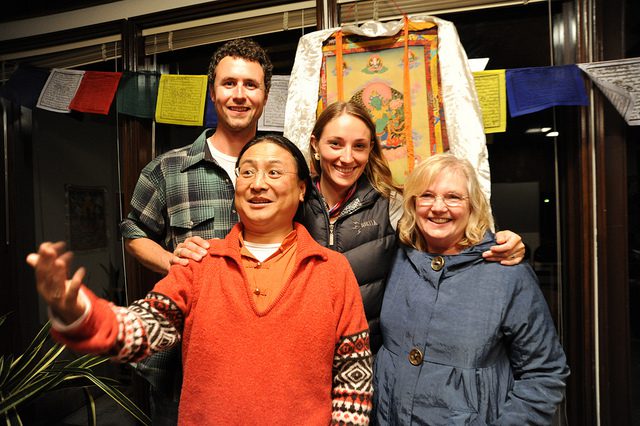
 Despite the ongoing desperate struggle in Tibet over freedom and territory, collaboration is growing between Tibetan healers and the Chinese healthcare system.
Advancing Medical Care, Advancing Camaraderie
Medical care and advancements have often been sources of truce, respect and mutual benefits between cultures in conflict or war with one another. Such medical neutrality is evident amid the chaos between China and Tibet.
Chinese authorities recognize value in traditional Tibetan medicine, and some Tibetans recognize value in merging with conventional technology.
The conflict in Tibet is still unfolding. Over 150 Tibetans burned themselves to death since 2009 in despair and protest of Chinese control, and some plead for the Dalai Lama’s return to Tibet from exile in India. The latest death from such desperate protest occurred in March 2018, with the self-immolation of Tsekho Tugchak in eastern Tibet.
Actions in Medical Neutrality
While the severe struggle for respect and freedom continues in Tibet, some traditional Tibetan healers are acting in medical neutrality beyond the conflict with China to preserve the benefits of their medical heritage and continue working as doctors. Also, mutual benefits are evident as traditional Tibetans are merging with more modern healthcare ways and patients are increasingly requesting integration of conventional methods.
New medical facilities and schools are growing in Tibet that merge traditional Tibetan medicine with more modern technology such as x-rays, MRI’s, antibiotic therapy and IVs. One such merging is happening in the Xinning, Amdo region of Tibet, where the Qinhai Tibetan Medical School connects with the Xinning Tibetan Medical Hospital.
The school includes a collaborative degree program of traditional and conventional medicine. At the hospital, traditional Tibetan doctors work with conventional Chinese doctors while innovating integrative treatments. There are several such schools and hospitals developing that integrate traditional and conventional ways.
Merging of Old and New
Scientific research efforts are also underway to use modern technological equipment for finding the active constituents of the plants that have been used for thousands of years by Tibetan healers. While traditional Tibetan healers use multiple plants in their remedies along with holistic methods, the research into active constituents may bring mutually beneficial “revolutionary drugs” and treatments.
Chinese authorities recognize such potential and are actively attempting to preserve ancient Tibetan medical knowledge. Employees of the State Administration of Traditional Chinese Medicine are working to translate Tibetan medical documents, and the government of the Tibet Autonomous Region dedicates at least 10 million yuan (~$1.5 million) per year developing traditional Tibetan medicine, which includes preserving twelfth-century documents.
Use of Tibetan Plants in Tibetan Medicine
Many of the herbs used by traditional Tibetan doctors are not found in other cultures’ medicines, and an estimated 70 percent of the botanicals used in Tibetan medicine are local to the Tibetan plateau area. The Qinghai-Tibet Plateau is known as “a gene bank for the world’s plateau plants.”
Many of these unique plants grow slow and don’t produce enough material to support a larger population’s medical needs. Therefore, an effort is underway to domesticate and cultivate wild botanicals unique to Tibetan land.
Tashi Tsering is the deputy chief of the Biological Research Institute of Tibetan Medicine (BRITM) at Men-Tsee-Khang in Lhasa, which is a hospital based in traditional Tibetan medicine that received quality-improvement funding of 256 million yuan (nearly $40 million) between 2014 and 2016 from the central government.
Cultivating Plants and National Success
BRITM has been working diligently to cultivate wild Tibetan herbs, which is no easy feat. Traditional Tibetan healers put extensive effort into learning what makes each plant medicinal, including many years of study and meticulous harvest and usage methods. These include efforts such as identifying which specific part of the plant to use and the correct weather for gathering.
Despite initially unsuccessful attempts at domesticating the Tibetan botanicals since 2011, Tsering and his team persevered and have since successfully cultivated at least 27 endangered medicinal plants.
The organization’s success is in part due to its careful efforts in mimicking the plants’ natural environment, including temperature, light, moisture and soil condition. BRITM continues to grow and improve its laboratory and technological equipment, aiding in the effort to cultivate valuable Tibetan plants.
While specific herbs are important in traditional Tibetan remedies, they are only part of the equation for health according to adherents of the ancient practice. Successes of Tibetan holistic methods have resulted in increased adoption of such ways.
Steps Towards Peace in Tibet
The president of Arura Hospital in Xining, Konchok Gyaltsen, explains that the combination of unique herbs and philosophy cause good health. For example, 94 percent of patients with rheumatoid arthritis at Arura Hospital are cured of the illness through medicated baths, psychology and dietary changes.
As several traditional Tibetan healers continue with medical neutrality working as doctors and researches, sharing ancient knowledge and leading schools and clinics, they rise beyond the desperate struggle in Tibet and help humanity overall. However, the self-sacrificing painful pleas for help from the Tibetan protestors against China are symptoms of major problems in the world.
The United States passed the bipartisan resolution 429 in March 2018, for “Commemorating the 59th anniversary of Tibet’s 1959 uprising as ‘Tibetan Rights Day,’ and expressing support for the human rights and religious freedom of the Tibetan people and the Tibetan Buddhist faith community.” The resolution also includes that “the Secretary of State should make best efforts to establish an office in Lhasa, Tibet, to monitor political, economic, and cultural developments in Tibet.”
With such support from the U.S., and collaboration between traditional Tibetan healers and conventional Chinese medical professionals, perhaps there is a way towards peace and respect in Tibet.
– Emme Leigh
Photo: Flickr

What is Impacting Girls’ Education in Uganda
Continuing this trend for girls’ education in Uganda is necessary to transform the country. However, there are still numerous barriers preventing girls from completing their education.
School Attendance
Despite being compulsory, 13 percent of girls between the ages of 6 and 12 didn’t go to primary school in 2011. Of the girls that did go, only 53 percent actually completed the required seven years. In secondary school, which typically encompasses students from 13 to 18 years old, female attendance significantly drops; 30 percent of girls between these ages weren’t enrolled in secondary school in 2011.
Poverty is one of the key reasons girls drop out of school. Impoverished families often need their daughters to stay at home and help with the housework or other income-generating activities. Some families have to marry off their young daughters to receive a dowry, which prevents them from continuing their education. Of the girls that stopped attending school, 40 percent dropped out because of child marriage.
Gender Roles
Another key barrier to girls’ education in Uganda are the traditional gender roles and male-dominated society. Women and girls are expected to do the majority of the domestic labor, often leaving little time to attend school and do the assigned homework.
In some areas, girls are actively discouraged from attending school. Instead, they are told education is for boys. Female students are often stigmatized as being promiscuous. These beliefs can be perpetuated in the classrooms if they are held by teachers, peers and eventually the girls themselves. The desire to participate and even attend classes suffers as a result.
The facilities and teaching style of schools were not designed to accommodate girls. The lack of proper sanitation and privacy makes it difficult for girls to attend school while menstruating. Girls can also face risks associated with a lack of security at schools, such as sexual abuse.
Alleviating Poverty
Improving girls’ education in Uganda can help pull families, and perhaps even the country, out of the poverty cycle. Every additional year of education yields a 10-25 percent increase in the income of a woman. An educated woman will then reinvest 90 percent of this income into her family. Helping a girl complete her schooling will double the likelihood that she will send her own children to school.
Educating girls can also help control the rapid population growth. Uganda currently has a 3.2 percent population growth rate, which is the fifth-highest in the world. On average, a mother has her first child at about 19 years old. Because women start having children at such a young age, Uganda also has a high fertility rate of about 5.7 children per woman.
By keeping girls in school, the rates of child marriage and teen pregnancy significantly decrease. If all girls were able to complete their education, the rate of teenage pregnancy would decrease by 59 percent.
Improvements for Girls’ Education in Uganda
Girls’ education in Uganda has been steadily improving, but still has a long way to go. Much of this progress was a result of the 1997 implementation of free, universal primary education. This policy significantly helped decrease the gaps in primary enrollment between girls and boys.
However, a report by the Uganda Bureau of Statistics, using 2014 Census data, found that although there were similar levels of primary school education between boys and girls, there were significant disparities in performance, levels of classroom engagement and access to facilities. In addition, there are still significant gender disparities in enrollment for secondary schools.
Because of the profound implications of girls’ education in Uganda, many organizations are determined to continue improving its accessibility and quality. Some of the most effective are local programs, which were developed to address specific problems in Uganda.
Nonprofit Uganda For Her began after one Ugandan noticed the poor access to sexual and reproductive health information for girls in rural areas of the country. It has since broadened into a more comprehensive strategy for empowering girls and women. The Girl Up Initiative Uganda has similarly local roots. The organization was founded when three individuals recognized the lack of educational opportunities for girls living in urban slums.
These organizations address the unique challenges girls in Uganda face when trying to attend school. Educating girls creates a ripple effect, helping families and communities break free from poverty.
– Liesl Hostetter
Photo: Flickr
The State of Girls’ Education in Palestine
With its 25 percent rate of poverty and 60 percent rate of youth unemployment in conflict zones like Gaza, Palestine has an opportunity for growth and development. Investing in girls’ education could help kick-start that process. Girls’ education in Palestine can improve local young girls’ futures and the future of the whole region.
Palestinian women are among the most educated in the Middle East. They have a 94 percent literacy rate and go to primary school just as often as boys do. Palestinian girls consistently outscore their male peers in Tawhiji testing. In the 2006 school year, 14,064 more Palestinian women were enrolled in university than Palestinian men. Compared to the situations for women in Yemen, Egypt or Afghanistan, girls’ education in Palestine is thriving. However, there are still some obstacles to overcome.
Conflict with Israel
Conflict with Israel often disrupts the educational infrastructure of Palestine. Schools are damaged by rockets and bombs in volatile areas like the Gaza Strip and West Bank, limiting all children’s access to education. In 2014, in the Gaza Strip alone the education of 475,000 students was affected by this destruction. Palestinian schools in Israeli territory are regularly underserved, with overcrowded classrooms and lower budgets.
Higher Dropout Rates and Poorer Quality
Secondly, the dropout rate for high school students (though still low at less than 3 percent) has risen recently, with girls being slightly more likely than boys to leave school early. Women also tend to receive a poorer quality of education. Families are more likely to send boys to private schools because in a traditionally patriarchal culture they are seen as necessary for the extended family’s financial livelihood. When families have limited resources, they allocate them toward the boys who often work abroad, especially in the Gulf states.
Improvements for Girls’ Education in Palestine
Despite these challenges, girls’ education in Palestine continues to progress. Girls are equally represented in STEM alongside boys and their presence in universities continues to grow. The main challenges to female education in the region are political and cultural. While it may be unrealistic to expect a solution to the Israeli-Palestinian land conflict any time soon, attitudes about women are already changing.
One group of 40 Palestinian girls attending Sokaina Girls School in the Gaza Strip decided to challenge social norms about women’s role by building a library for their school. With support from UNICEF and other NGOs, they were able to bring a new world of learning and hope to a community where libraries are scarce. If more organizations and individuals supported initiatives for girls’ education in Palestine, the region would be one essential step close to eliminating poverty.
Despite cultural and political challenges, girls’ education in Palestine is progressing well. Success stories like the Sokaina Girls School library prove the power of education in bringing hope and change to the region’s underserved communities. A concentrated investment in these efforts for female education has the potential to reduce Palestinian poverty fundamentally.
– Lydia Cardwell
Photo: Flickr
Girls’ Education in Romania
Inclusive Education in Romania
Inclusive education is defined as the right to equal access to quality education for all children, in a protective and open environment, regardless of one’s social and economic class, ability, or connection to an ethnic, cultural, or linguistic minority. Mag et al.’s work on inclusive education for the journal Materials Science, Engineering, and Chemistry, or MATEC, states that “inclusive education is a child’s right, not a privilege.” However, achieving this can be particularly difficult in a country with a recent economic crisis, such as Romania, where pressures to contribute to the family’s baseline needs at a young age can fall unequally on girls.
Girls’ education in Romania is often in jeopardy—particularly young women in rural areas—as they are often forced to drop out of school in order to better support their families within the household. In the primary school years, between the ages of seven and 10, only 85 percent of Romanian girls are enrolled in school. As they move from primary to secondary education, only 64 percent of the girls who had previously attended school make the transition compared to the 72 percent of boys who continue their education.
Effects of Limited Education
A lack of education from an early age creates a ripple effect felt throughout these young women’s lives. Many women are unable to complete the education required for even low-paying professional jobs, effectively holding them in a state of dependency throughout their lives, while also limiting their ability to contribute to the national economy. Only 65 percent of young women between the ages of 15 and 24 are literate in Romania, corresponding with a high 18.4 percent youth unemployment rate in 2017—nearly 10 percent above the U.S. youth unemployment rate.
International Organizations offer Assistance
Since the early 2000s, there has been a movement for greater equality in girls’ education in Romania. With the help of UNICEF, the country has created policies and programs to address the need for education reforms with a focus on gender. However, overarching policies, while effective in bringing change to the education system, do not necessarily target a child’s individual needs, or even the needs of a specific minority.
Education Priority Areas, or EPA, is a project focusing on disadvantaged communities in order to increase the communities’ youth’s access to quality and equal educational opportunities. EPA, created by UNICEF together with the Institute for Educational Sciences, a nonpartisan research branch of the United States Department of Education, has provided Romania with funds for schools and computers and has assisted in setting up programs both in and outside the classroom. These programs are designed to level the playing field for young women in need of additional support by achieving the education that is, indeed, the right of all children.
Improving opportunities for students can only be as effective as those providing the education are willing and able to make it. In addition to its work on education reform and assistance to the children themselves, UNICEF, in partnership with the Romanian Ministry of Education, created the National Programme for Education on Democratic Citizenship, a program dedicated to the rights of citizens’—particularly children’s—education. This program was launched in 2003, and was responsible for the inclusivity and inter-cultural approach training for nearly 300 educators within one year of the program’s conception, furthering the effort to create more opportunities concerning girls’ education in Romania.
As recently as 2011, there have been important advancements in the policy not only limited to girls’ education in Romania but focused on all children aged zero to three years old. A law which went into effect that year mandates an additional, transitional year of schooling, to be taught either at the kindergarten or primary education level. This is a particularly vulnerable time in a child’s development, a time where growth and adjustment are very closely linked to both family and socialization through preschool.
Romanian communities and many others throughout the world have been able to benefit from the work done by UNICEF and other organizations, providing students with the support necessary to build brighter futures, regardless of gender.
– Anna Lally
Photo: Flickr
Girls’ Education in Moldova
Previously part of the Soviet Republic, Moldova continues to be one of Europe’s poorest countries. The nation is home to some 3.6 million people, yet women in Moldova face discrimination and inequality in nearly all aspects of life. The Moldovan government has made one of its goals to promote women empowerment and gender equality. Nevertheless, the possibilities for young girls are weakened by stubborn patriarchal mindsets. Although girls’ education in Moldova does not appear to be as discriminatory in practice, statistically, men and women go for more traditional gendered degrees.
Education
A result of a prolonged economic crisis, poverty and unemployment, the quality of education in Moldova is lacking. Many children of Moldova’s poorest families start school later and usually finish their education after primary school. With the number of students enrolled plummeting, schools in villages are at risk for shutting down. To combat this, the government of Moldova has made education a national priority, as it acknowledges the role that education has in strengthening society. To increase primary education completion, the government has increased access to pre-school services for children in rural areas. New teachers have been trained and an emphasis has been placed on early childhood development.
UNICEF reported that girls’ education in Moldova is equal to that of boys. Boys and girls face the same levels of access to education. If anything, girls are faring better in schools. UNICEF stated that girls were achieving slightly higher marks than boys in their classes. In 2005, the Education Policy and Data Center reported that both girls and boys in primary schools had equal levels of pupils not enrolled in school. The same report concluded that a larger portion of secondary male students did not attend school.
Gender Gap in Higher Education
The gender gap in education is especially small in secondary education and below. However, girls’ education in Moldova becomes segregated when women seek higher education. Women make up 51 percent of students in higher education. (No source found). Although there is a supposed equality in this schooling, women and men do not tend to study the same degrees. Instead, there are degree patterns that men and women take. A horizontal segregation appears, where female students tend to study social sciences and male students typically choose technical subjects.
A possibility for this sort-of gendered degree choice is the wish of their parents. In one instance, a Moldovan student was asked what she would like to study. Given her parents’ preference for a more feminine job, she said that she would likely finish her education in pedagogy because her mother preferred that she did that. Yet, she also had the desire to go to the police academy to disrupt gender norms.
Society imposed gender norms are likely the root of why there is this divide in studies between men and women. The Women’s Law Centre conducted research in 2015 that discovered that over 90 percent of men and more than 81 percent of women in Moldova believe that domestic chores should be the main responsibility of a woman. Men are expected to earn money, while women are expected to take a more traditional route.
The government of Moldova has increasingly found success in education reform. Girls and boys are offered and attain the same levels of education. At a higher education level, girls’ education in Moldova differs from that of their male colleagues.
– Stefanie Babb
Photo: Flickr
Path to Improvement: Top 10 Facts About Poverty in Belize
Belize is a Central American country located along the Caribbean Sea with a 2017 population of over 360,000 people. It became an independent nation in 1981, and tourism has become one of the biggest drivers of the economy.
Belize has suffered major challenges that have had a detrimental impact on the country and its people. These challenges include a high public debt and the effects of environmental disasters like hurricanes. Here are the top 10 facts about poverty in Belize.
Top 10 Facts About Poverty in Belize
These top 10 facts about poverty in Belize show that there are significant obstacles to improving the state of poverty in the country. However, they also show that many improvements are currently happening that will contribute to helping those in need in Belize. Development is not only achievable, but it occurs at this very moment.
– Lindabeth Doby
Photo: Flickr
What You Need to Know About South Sudan Child Soldiers
Child soldiers were brought to the attention of the American public in 2012 when the “KONY2012” campaign, aimed at dismantling a Ugandan warlord, soared in publicity. However, children being used in combat is not new to various regions of Africa, including South Sudan.
Children in Combat
In 1983, civil war broke out among the Sudanese people, eventually creating in 2011 the countries known today as Sudan and South Sudan. This war led to the separation of families, murders, poverty, lack of educational resources and most notably, South Sudan child soldiers.
According to the International Rescue Committee, the number of children fleeing South Sudan in 1985 to escape recruitment as soldiers in the civil war was as high as 20,000. This number is shockingly high with a 1985 population of only five million in South Sudan. Children fled to neighboring Ethiopia only to die from hunger, dehydration, crossfires and wild animals along the way.
Draws of South Sudan’s Military
Due to outcomes associated with the war, South Sudan has been unable to properly maintain nutrition among its citizens in recent years. Often, children are only guaranteed meals and housing if they enlist in the South Sudanese military, leaving them with the choice between staying unarmed, educated and hungry, or armed, fed and uneducated. Children may choose to join the military simply as a means of survival.
South Sudan child soldiers are known to be used in every way that an adult soldier would be used. Children are given and taught how to use assault rifles, engage in direct combat (as spies), and serve as cooks for troops among other activities.
The prevalence of South Sudan child soldiers seemed to dissolve throughout the early 2000s; however, over the last several years, the numbers have begun to creep up again. In 2013, South Sudan ended a several-year-long ceasefire when tensions between different ethnic groups rose.
Hope for South Sudan
When the war resumed, the children of South Sudan were again recruited for combat. This sparks a series of issues for the South Sudanese people over the next years, such as infrastructure instability, economic poverty, food shortages, violence and poor education.
Although the situation in South Sudan may seem bleak, there is very real hope. South Sudan is rich in diversity with many different religious practices and ethnic cultures. While the tensions between different ethnic groups have instigated a large amount of violent tension, the different groups each bring something unique to the cultural brand of South Sudan.
A history of aid workers present in the country assists the country’s development and recovery from its civil wars. The next few years will be a pivotal time in shaping the future of the Republic of South Sudan and its children, so time will tell if child treatment improves.
– Alexandra Ferrigno
Photo: Flickr
Beyond Conflict: Merger with Traditional Tibetan Medicine
Advancing Medical Care, Advancing Camaraderie
Medical care and advancements have often been sources of truce, respect and mutual benefits between cultures in conflict or war with one another. Such medical neutrality is evident amid the chaos between China and Tibet.
Chinese authorities recognize value in traditional Tibetan medicine, and some Tibetans recognize value in merging with conventional technology.
The conflict in Tibet is still unfolding. Over 150 Tibetans burned themselves to death since 2009 in despair and protest of Chinese control, and some plead for the Dalai Lama’s return to Tibet from exile in India. The latest death from such desperate protest occurred in March 2018, with the self-immolation of Tsekho Tugchak in eastern Tibet.
Actions in Medical Neutrality
While the severe struggle for respect and freedom continues in Tibet, some traditional Tibetan healers are acting in medical neutrality beyond the conflict with China to preserve the benefits of their medical heritage and continue working as doctors. Also, mutual benefits are evident as traditional Tibetans are merging with more modern healthcare ways and patients are increasingly requesting integration of conventional methods.
New medical facilities and schools are growing in Tibet that merge traditional Tibetan medicine with more modern technology such as x-rays, MRI’s, antibiotic therapy and IVs. One such merging is happening in the Xinning, Amdo region of Tibet, where the Qinhai Tibetan Medical School connects with the Xinning Tibetan Medical Hospital.
The school includes a collaborative degree program of traditional and conventional medicine. At the hospital, traditional Tibetan doctors work with conventional Chinese doctors while innovating integrative treatments. There are several such schools and hospitals developing that integrate traditional and conventional ways.
Merging of Old and New
Scientific research efforts are also underway to use modern technological equipment for finding the active constituents of the plants that have been used for thousands of years by Tibetan healers. While traditional Tibetan healers use multiple plants in their remedies along with holistic methods, the research into active constituents may bring mutually beneficial “revolutionary drugs” and treatments.
Chinese authorities recognize such potential and are actively attempting to preserve ancient Tibetan medical knowledge. Employees of the State Administration of Traditional Chinese Medicine are working to translate Tibetan medical documents, and the government of the Tibet Autonomous Region dedicates at least 10 million yuan (~$1.5 million) per year developing traditional Tibetan medicine, which includes preserving twelfth-century documents.
Use of Tibetan Plants in Tibetan Medicine
Many of the herbs used by traditional Tibetan doctors are not found in other cultures’ medicines, and an estimated 70 percent of the botanicals used in Tibetan medicine are local to the Tibetan plateau area. The Qinghai-Tibet Plateau is known as “a gene bank for the world’s plateau plants.”
Many of these unique plants grow slow and don’t produce enough material to support a larger population’s medical needs. Therefore, an effort is underway to domesticate and cultivate wild botanicals unique to Tibetan land.
Tashi Tsering is the deputy chief of the Biological Research Institute of Tibetan Medicine (BRITM) at Men-Tsee-Khang in Lhasa, which is a hospital based in traditional Tibetan medicine that received quality-improvement funding of 256 million yuan (nearly $40 million) between 2014 and 2016 from the central government.
Cultivating Plants and National Success
BRITM has been working diligently to cultivate wild Tibetan herbs, which is no easy feat. Traditional Tibetan healers put extensive effort into learning what makes each plant medicinal, including many years of study and meticulous harvest and usage methods. These include efforts such as identifying which specific part of the plant to use and the correct weather for gathering.
Despite initially unsuccessful attempts at domesticating the Tibetan botanicals since 2011, Tsering and his team persevered and have since successfully cultivated at least 27 endangered medicinal plants.
The organization’s success is in part due to its careful efforts in mimicking the plants’ natural environment, including temperature, light, moisture and soil condition. BRITM continues to grow and improve its laboratory and technological equipment, aiding in the effort to cultivate valuable Tibetan plants.
While specific herbs are important in traditional Tibetan remedies, they are only part of the equation for health according to adherents of the ancient practice. Successes of Tibetan holistic methods have resulted in increased adoption of such ways.
Steps Towards Peace in Tibet
The president of Arura Hospital in Xining, Konchok Gyaltsen, explains that the combination of unique herbs and philosophy cause good health. For example, 94 percent of patients with rheumatoid arthritis at Arura Hospital are cured of the illness through medicated baths, psychology and dietary changes.
As several traditional Tibetan healers continue with medical neutrality working as doctors and researches, sharing ancient knowledge and leading schools and clinics, they rise beyond the desperate struggle in Tibet and help humanity overall. However, the self-sacrificing painful pleas for help from the Tibetan protestors against China are symptoms of major problems in the world.
The United States passed the bipartisan resolution 429 in March 2018, for “Commemorating the 59th anniversary of Tibet’s 1959 uprising as ‘Tibetan Rights Day,’ and expressing support for the human rights and religious freedom of the Tibetan people and the Tibetan Buddhist faith community.” The resolution also includes that “the Secretary of State should make best efforts to establish an office in Lhasa, Tibet, to monitor political, economic, and cultural developments in Tibet.”
With such support from the U.S., and collaboration between traditional Tibetan healers and conventional Chinese medical professionals, perhaps there is a way towards peace and respect in Tibet.
– Emme Leigh
Photo: Flickr
Girls’ Education in Libya
The Funding Initiative
The program has sent educators and students alike to receive training at elite international schools to spur development upon return. The government pays for the student’s expenses and awards them a monthly stipend of 1,600 euros a month. Initially, the fund gave scholarships to students who fought in militias during the civil war but was later expanded to allow women and handicapped students to receive scholarships as well.
This legislation built on an already strong commitment to education made by previous Libyan governments. Former president Muammar Gaddafi made it mandatory and free for all students to attain a primary education. Mandating a public school education transformed Libya from a largely illiterate country before its independence to having 80 percent of its population receiving a primary education.
Education Policies in Libya
Coeducational schools were built across east Libya to accommodate the influx of students. West Libya still has male and female students attend separate schools, but the curriculum is regulated by the government as an incentive for students to choose fields that benefit the nation’s current need. A standardized curriculum helps level the playing field for all students.
The results of these policies have been largely successful for girls’ education in Libya, but the country still has a long road to true equality in education. The Libya Status of Women survey found that 52 percent of Libyan women reached secondary education or higher, compared to 53 percent of Libyan men. Both men and women are achieving similar levels of higher education which will help combat gender economic inequality. Additionally, 77 percent of female students under the age of 25 reported having plans to complete secondary education or higher compared to 67 percent of men.
More Work to be Done
Women are striving for positions in extremely skilled and specialized positions which increases their economic desirability. These numbers are especially impressive given Libya’s recent civil war that devastated the region. Following the revolution against the Gaddafi regime, 15 schools were completely destroyed resulting in tens of thousands of students not finishing their school years. The education system has demonstrated great resilience in this chaos which has greatly benefited girls’ education in Libya.
Despite these promising statistics, Libya still has to address several areas of gender inequality in its education systems to promote girls’ education across the country. The same Libya Status of Women survey also discovered that 14 percent of Libyan girls failed to finish their first six years of basic education, compared to only three percent of boys. Unfortunately, cultural stereotypes of females still put them at a systemic disadvantage. This is especially the case in rural Libya. The schools are coeducational, but boys are required to sit at the front of the class and girls in the back. West Libya faces a similar problem. The boys’ schools are given priority in government resources because it is believed they will become more skilled workers.
Opening the study abroad program to women demonstrates the current administration’s commitment to gender equality in education which will hopefully combat the disparity observed in the primary education completion rate. These efforts need to extend to rural communities in Libya to maximize effectiveness.
The future looks very optimistic for Libyan women as activists continue to pressure the government to install change. Since 1955, notable women’s rights movements have helped level the playing field for women in education and continue to be an effective driver of change. Libyan women are continually becoming more educated and some of the most skilled workers in society.
– Anand Tayal
Photo: Flickr
How the US Benefits from Foreign Aid to Dominica
Natural disasters occur globally, and many countries overcome these disasters with the help of foreign aid. Hurricane Maria, a Category 5 storm, hit Dominica on September 18, 2017. USAID has sent assistance to Dominica, which becomes beneficial to the U.S. by building good relations and maintaining a positive reputation by working with other countries in providing foreign assistance to Dominica.
The U.S. Benefits from Foreign Aid to Dominica by Fostering Good Relations
All countries, especially impoverished ones, need help to recover from a natural disaster of Hurricane Maria’s magnitude. The U.S. benefits from foreign aid to Dominica by stepping in and using its power to help, which strengthens relations between the countries. After Hurricane Maria, Samaritan’s Purse, the Pan American Health Organization and the International Federation of the Red Cross, all under USAID, were able to contribute $3.25 million in foreign aid to Dominica.
The U.S. Department of Defense’s Southern Command worked with USAID’s Caribbean Hurricanes Disaster Assistance Response Team (DART) to help repair roofs in Dominica that were damaged by the hurricane. USAID provided plastic sheeting and DART taught a group of local builders how to use the tools provided to fix the damaged roofs properly. Through donations and direct assistance to individuals, the U.S. is building good relations with other countries.
International Collaborations Build a Positive Reputation
The U.S. has worked with other countries to provide water, food and tools to rebuild Dominica immediately after Hurricane Maria hit the island. The U.N. World Food Programme (WFP) contributed about 10 metric tons of food, which fed around 25,000 people in Dominica over three months. By assisting with the WFP’s food distribution, the U.S. benefits from foreign aid to Dominica by using its resources to help impoverished countries, which grows a positive international reputation.
Collaborations with other countries to help provide foreign aid to developing countries do make a difference and help the U.S. maintain a positive reputation. According to Diálogo Digital Military Magazine, the prime minister of Dominica, Roosevelt Skerrit, commented positively on the progress the U.S. and other countries have made. He stated, “We have many allies. Thanks for helping my people, without you, our partner nations, it would not have been possible to get past the first phase of this emergency.”
Countries dealing with poverty and disasters benefit from other countries stepping in to help via foreign aid, and that help allows the affected country to get back on its feet. The U.S. benefits from foreign aid to Dominica through maintaining its positive reputation by doing good for poor countries.
While natural disasters can do great damage to countries dealing with poverty, those countries can also recover promptly with the foreign aid provided by other countries. The U.S. benefits from foreign aid to Dominica by connecting with its people to encourage good relations, as well as ensuring a positive reputation by reaching out to less developed countries in times of need. The U.S. can retain in its positive relationship with the government of Dominica by continuing to support the country, especially when natural disasters hit.
– Kelly Kipfer
Photo: Flickr
Girls’ Education in Laos: Tackling Gender Inequality in Schools
For many households of the indigenous Hmong people in Laos, girls are second on the priority list for attending school. Even some families with the desire and financial resources to send their daughters to school enforce restrictions on their education but not on their sons’. Education builds financially independent women and transforms them into critical thinkers. Such practices can also have the long-term effect of reducing poverty. The benefits of girls’ education in Laos reach out to the general community, not just to the girls.
A famous Hmong proverb translates to “Nine moons can’t compare to one sun; nine daughters can’t compare to one son.” It means that boys are expected to grow up to become breadwinners while women are seen as not being worth investing in. In part, this mindset leads to higher school enrollment rates for boys.
Exposure to Western Education Systems Influences Girls’ Education in Laos
Laotian history has been marked by the Pathet Lao’s rise to power in 1975. The communist regime began a genocide against the Hmong people in retaliation for aiding the United States with covert operations related to the Vietnam War. As a result, nearly one in 10 Hmong citizens fled to Thailand, later arriving in the United States. Education is especially valuable to the children of refugee parents because it offers a chance for them to seek a better life than what previous generations in Laos endured.
In the Journal of Southeast Asian American Education and Advancement, Kaozong N. Mouavangsou, the daughter of Hmong refugees, described the influence of Hmong culture even as she pursued higher education in the U.S. Family members encouraged her to attend a university close to home while her brothers got to choose schools farther away. They aimed to protect Mouavangsou from environments where she might get distracted from her studies by men who wanted to marry and have children.
When girls pursue higher levels of education, they are able to form their own opinions about how girls are treated in Hmong culture. Mouavangsou’s Western education gave her insight into the differences between the U.S. and Laos in terms of women’s roles in society. Such knowledge provided her an opportunity to choose which path in life was best for her, instead of prioritizing the needs of a potential husband and children.
International Organizations Work to End Sexual Harassment in Schools
Unfortunately, many girls in Laos do not receive the advanced schooling they need to forge such a path for themselves. In South Asia, approximately 100 million girls will drop out of school before getting a chance to pursue secondary education. Girls have a lower attendance rate in secondary education because those schools are located farther from home. This means it is harder for parents to guard against sexual harassment inflicted by male classmates.
In response to such issues, UNICEF began a project in collaboration with Plan International, CARE, U.N. Women and Girl Guides to make secondary schools safer environments for girls. The project created a chatbot where boys and girls can share their ideas about how to end violence. This forum engages a demographic of people who might have peers that are either the aggressor or the ones being harassed.
In addition to UNICEF’s chatbot, more plans are being implemented to help make girls’ education in Laos more accessible. Some schools are offering flexible hours to accommodate when girls can attend classes. Others are promoting an atmosphere free of gender-based violence and awarding scholarships to make the cost of education more affordable. Overall, the gender disparity in the Laotian education system dropped from 4 percent in 2008 to less than 2 percent in 2010.
Many issues, such as sexual harassment, gender inequality and poverty are interdependent upon one another. With that in mind, girls’ education in Laos can help the whole of Hmong society as well as provide girls with greater well-being.
– Sabrina Dubbert
Photo: Flickr