Top 10 Facts about Living Conditions in Moldova
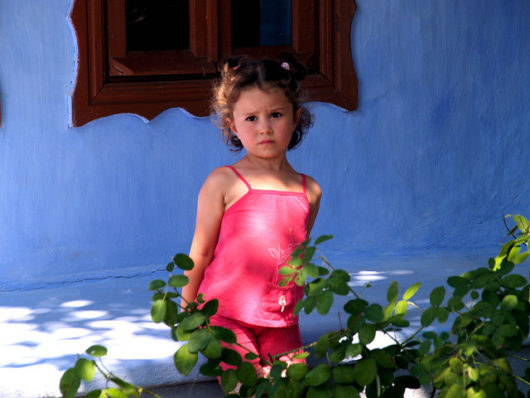
The Republic of Moldova is a landlocked nation, situated between Romania and Ukraine. It is a former satellite nation of the USSR, gaining its independence in 1991. Moldova’s transition to democracy and a market-based economy has been very challenging. The country still remains one of Europe’s poorest countries, heavily dependent on Russian resources. However, poverty is decreasing at a steady rate. In the text below, the top 10 facts about living conditions in Moldova are presented.
Top 10 Facts about Living Conditions in Moldova
- Moldova is a relatively small nation and has around 3.5 million residents. One troubling statistic for its long-term outlook is a negative population growth rate of -1.06 percent. This can be attributed to low birth rates, along with economic migration from citizens to more affluent and developed nations.
- Moldova suffers from a phenomenon called “brain drain”, which affects many developing nations around the world. Skilled workers in a country with limited employment opportunities emigrate, depriving their home of talented professionals. According to Deutsche-Welle, it is estimated that every fourth Moldovan work abroad, with many taking advantage of having dual Romanian citizenship, entitling them to work throughout the European Union.
- In an effort to retain more of its skilled workforce, both the private sector and Moldovan government are investing in the technology startup infrastructure. Tech giants are investing in Moldova’s universities, along with a plan to contribute $112.000 to each of the 10 best Moldovan startups. Although this may be a nascent industry, building a tech-friendly business environment should help Moldova retain skilled workers, as well as integrate with the Western economy.
- Around 19 percent of rural Moldovans live in poverty, versus 5 percent in urban areas. Economic opportunities in rural Moldova are mainly limited to agriculture, with higher paying jobs concentrated in cities such as the capital Chisinau.
- Moldova vacillates between allying with its more EU friendly neighbors, and Russia. Linguistically, Moldova is more similar to Romania. However, Russia’s status as an energy exporter subordinates Moldova to its influence. Moldova imports 98 percent of its energy, ranking it the ninth riskiest country in the world in terms of short-term energy security.
- Moldova’s system of governance has come a long way since independence from the USSR. Indeed, corruption still persists, but Moldova recently achieved a “partly free” rating from Freedom House International. Additionally, the country signed an Association Agreement with the EU, signifying a commitment to economic reforms in hopes of favorable trade deals with the bloc.
- Remarkably, the national poverty rate has dropped from 68 percent in 2000 to just 11.4 percent in 2014. These developments, coupled with an increase in tech startups and the potential for economic cooperation with the EU, bodes well for the country’s future.
- The education system in Moldova consists of a preschool, primary, secondary and higher education. Primary education is compulsory in Moldova. Primary school consists of grades one through four, and secondary school is divided into lower and upper education grades five through nine, and 10 through 12 respectively. With high school attendance rates, and a near 100 percent literacy rate, Moldova’s education system appears to be a very successful one.
- Pollution remains a concern in Moldova. Heavy industrialization during the Soviet regime resulted in improper disposal of waste. Moldova’s traditionally agrarian economy also results in groundwater pollution and fertilizer runoff into waterways.
- The country has a major public health issue. According to the Independent, Moldovans are the heaviest drinkers per capita in the world. The average Moldovan consumes 18.22 liters of pure alcohol per year, around three times the global average of 6.1. These rates of alcohol consumption likely contribute to the country’s relatively low life expectancy that are 67.4 years for males, and 75.4 for females.
Moldova is a country that finds itself in a dilemma between Russia and the European Union. This impacts the country’s economy and development. Due to this reason, young people are leaving the country in search of a better life and stable jobs. Government is recognizing this problem and has various initiatives that are intended for improving the living conditions in the country.
– Joseph Banish
Photo: Flickr
