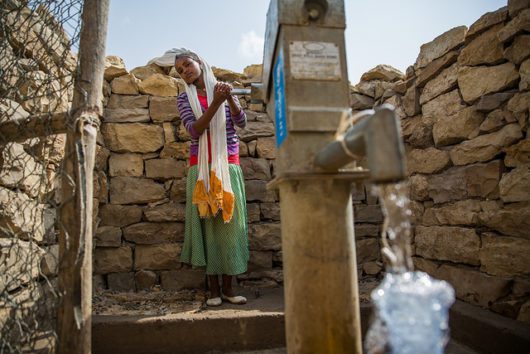
The 2015-2016 El Nino climate pattern was one of the most extreme occurrences in years, affecting almost 60 million people, more than half of whom live in Africa. The effects of El Nino created extreme weather changes, ranging from severe drought to severe flooding. These changes posed drastic problems for the population. Drought caused food insecurity and poverty due to crop failure, and flooding created problems with sanitation and increased the spread of water-borne and communicable diseases. Furthermore, flooding threatened infrastructure and housing. The damage also restricted access to healthcare facilities, preventing victims from receiving the help they need.
The Effects of El Nino on Africa
In Southern Africa, El Nino-related droughts had led to massive crop failure. South Africa had a 25 percent drop in maize and a 23 percent drop in grain production. Maize prices were the highest they had ever been following the drop. The drought aggravated the existing food insecurity, with 14 million people already hungry and as crop failure continued, the number of people at risk of hunger increased.
Most El Nino effects are related to soil dryness or reduced rainfall, but in 2016, this occurrence resulted in a massive drought. In Cambodia, 2.5 million people were left without access to clean water. People had to travel long distances in search of clean and drinkable water after the wells and ponds had dried up. In South Africa, parts of Mozambique, Zimbabwe, Zambia and Namibia, these effects of El Nino are still posing problems. In past years, most food production decreases have corresponded to El Nino, regardless of its magnitude.
The Effects of El Nino on South-East Asia
South-East Asia faced droughts and below-average rainfall as well. Thailand had faced its most severe drought in 20 years during the 2015-2016 El Nino. Water levels in dams throughout the country fell below 10 percent, leading to Thailand pumping water from nearby rivers. The Mae Jok Luang Reservoir, for example, typically served 11 sectors and can now, as a result of El Nino, can only serve one.
The droughts hit farmers hard, causing mass crop failure. Rice production and exports especially had gone down in Thailand. Consequently, many farmers found themselves in debt and unable to pay back loans. To deal with financial stress, many Filipino farmers started sending their children into town to work instead of going to school. Indigenous farmers turned to odd jobs as well, giving up on trying to farm in the drought.
The Effects of El Nino on Latin America
Effects of El Nino on Latin America often vary, and in 2016, there were droughts in Colombia, Venezuela, Mexico, Central America as well as floods in Argentina and parts of Peru and Chile. Areas like Brazil had an increase in wildfires and tropical storms as a result of El Nino. Similar to South-East Asia, farming and fishing industries faced decreased production and exports during El Nino.
This was not the first time that El Nino has harmed the health and population of South American fisheries. The 1972 El Nino played a major role in the collapse of the Peruvian fishery, the largest fishery in the world at the time. With less fish, the population of seabirds also decreased, which damaged the seabird-dependent fertilizer industry. The impact on agricultural production led to higher food prices and lower food availability.
As a result of El Nino, 2.3 million people in Central America needed food assistance in 2015-16. The weather conditions also posed a great threat to civilians. Peru declared a state of emergency in 14 provinces where the lives of two million people had been at risk of mudslides and flooding. In October 2015, 500 people in Guatemala City died because of widespread mudslides.
Aid for Countries Affected by El Nino
Fortunately, there are organizations working to combat the effects of El Nino. Care, a nongovernmental organization, for example, has distributed food and emergency supplies to drought-ridden countries. In Cambodia, Care distributed water tanks and filters to the most affected areas. They had continued aid well into 2017.
While the work of organizations like Care is valuable, long-term plans to combat general climate change is necessary for countries to prepare for future climate change events. The results and effects of global warming and weather changes can be felt throughout the whole world, and the countries that suffer the most are usually less developed ones that do not have the right tools to combat this issue. People need to start taking climate issues seriously before it becomes too late to recover from these effects.
– Massarath Fatima
Photo: Flickr

President Trump’s Threat to Cut Foreign Aid Hinders Success
President Trump’s administration has proposed cutting the foreign aid budget, hindering the country’s ability to fund outreach organizations and decreasing the country’s global influence. Such threats limit low-middle income countries’ ability to grow out of poverty and increase potential security threats. While President Trump claims that the U.S. spends a great deal of money on foreign aid (currently $54.4 billion), this figure makes up only 0.26 percent of the country’s total GDP.
President Trump’s Threat to Cut Foreign Aid
Foreign Aid, Domestic Improvement
More Aid, More Allies
Photo: USAID
Top 10 Facts About Living Conditions in Romania
Among the European Union (EU) nations, Romania has been considered as one of the most severely underdeveloped for a long time. Some of the worst housing conditions on the continent can be found here, along with a great risk of poverty. However, there are reports of an improving economic climate and rapidly rising incomes indicative of consistent progress. Potential challenges for the country are citizens leaving in more prosperous countries, resulting in negative population growth and threats to the nation’s economic progress. These top 10 facts about living conditions in Romania show a country grappling to maintain both its post-communist prosperity and its people.
Top 10 Facts about Living Conditions in Romania
Romania is currently one of the most underdeveloped nations of the European Union. Due to this reason, many young people are leaving the country, in search of work and better living conditions. However, various nongovernmental organization and government are working to improve the living conditions for the young people and other citizens of the country.
– Marissa Field
Photo: Flickr
The Lasting Effects of El Nino
The 2015-2016 El Nino climate pattern was one of the most extreme occurrences in years, affecting almost 60 million people, more than half of whom live in Africa. The effects of El Nino created extreme weather changes, ranging from severe drought to severe flooding. These changes posed drastic problems for the population. Drought caused food insecurity and poverty due to crop failure, and flooding created problems with sanitation and increased the spread of water-borne and communicable diseases. Furthermore, flooding threatened infrastructure and housing. The damage also restricted access to healthcare facilities, preventing victims from receiving the help they need.
The Effects of El Nino on Africa
In Southern Africa, El Nino-related droughts had led to massive crop failure. South Africa had a 25 percent drop in maize and a 23 percent drop in grain production. Maize prices were the highest they had ever been following the drop. The drought aggravated the existing food insecurity, with 14 million people already hungry and as crop failure continued, the number of people at risk of hunger increased.
Most El Nino effects are related to soil dryness or reduced rainfall, but in 2016, this occurrence resulted in a massive drought. In Cambodia, 2.5 million people were left without access to clean water. People had to travel long distances in search of clean and drinkable water after the wells and ponds had dried up. In South Africa, parts of Mozambique, Zimbabwe, Zambia and Namibia, these effects of El Nino are still posing problems. In past years, most food production decreases have corresponded to El Nino, regardless of its magnitude.
The Effects of El Nino on South-East Asia
South-East Asia faced droughts and below-average rainfall as well. Thailand had faced its most severe drought in 20 years during the 2015-2016 El Nino. Water levels in dams throughout the country fell below 10 percent, leading to Thailand pumping water from nearby rivers. The Mae Jok Luang Reservoir, for example, typically served 11 sectors and can now, as a result of El Nino, can only serve one.
The droughts hit farmers hard, causing mass crop failure. Rice production and exports especially had gone down in Thailand. Consequently, many farmers found themselves in debt and unable to pay back loans. To deal with financial stress, many Filipino farmers started sending their children into town to work instead of going to school. Indigenous farmers turned to odd jobs as well, giving up on trying to farm in the drought.
The Effects of El Nino on Latin America
Effects of El Nino on Latin America often vary, and in 2016, there were droughts in Colombia, Venezuela, Mexico, Central America as well as floods in Argentina and parts of Peru and Chile. Areas like Brazil had an increase in wildfires and tropical storms as a result of El Nino. Similar to South-East Asia, farming and fishing industries faced decreased production and exports during El Nino.
This was not the first time that El Nino has harmed the health and population of South American fisheries. The 1972 El Nino played a major role in the collapse of the Peruvian fishery, the largest fishery in the world at the time. With less fish, the population of seabirds also decreased, which damaged the seabird-dependent fertilizer industry. The impact on agricultural production led to higher food prices and lower food availability.
As a result of El Nino, 2.3 million people in Central America needed food assistance in 2015-16. The weather conditions also posed a great threat to civilians. Peru declared a state of emergency in 14 provinces where the lives of two million people had been at risk of mudslides and flooding. In October 2015, 500 people in Guatemala City died because of widespread mudslides.
Aid for Countries Affected by El Nino
Fortunately, there are organizations working to combat the effects of El Nino. Care, a nongovernmental organization, for example, has distributed food and emergency supplies to drought-ridden countries. In Cambodia, Care distributed water tanks and filters to the most affected areas. They had continued aid well into 2017.
While the work of organizations like Care is valuable, long-term plans to combat general climate change is necessary for countries to prepare for future climate change events. The results and effects of global warming and weather changes can be felt throughout the whole world, and the countries that suffer the most are usually less developed ones that do not have the right tools to combat this issue. People need to start taking climate issues seriously before it becomes too late to recover from these effects.
– Massarath Fatima
Photo: Flickr
Hunger and Whale Hunting in Japan: What’s Tradition Got to Do With It?
Whale hunting in Japan is immaterial to feeding the population. As a result, many wonder why the nation continues to practice the antiquated ritual, while a bulk of its citizens are starving and fighting an uphill battle against the national welfare program. Japan’s current poverty rate is 15.3 percent, and more than 19 million citizens are living below the poverty line.
Welfare and Whale Hunting in Japan
The Japanese government has defended whaling practices by claiming that the practice is a part of the ancient Japanese culture. From the 1940s to the mid-1960s, whales were the biggest source of meat for the Japanese people. This was due to food shortages throughout the country. The government found an inexpensive solution in canning whale meat and serving in the government-funded national school lunch programs. At the highest point of the hunt, 24,000 whales were killed in just one year.
However, the economic climate has shifted. Japan has one of the wealthiest economies in the world and can easily afford to import meat from the United States or Australia. Currently, with Japan leaving the International Whaling Commission (IWC), the financial burden of whaling will again fall on taxpayers. Expenditure of citizens’ tax money on whaling is justified by classifying whaling as research. The International Court of Justice has disproved Japan’s research claims, yet, funding that could be allocated to other benefits, like welfare, continues to be allocated to the practice.
According to a poll in 2015, the average consumption by the Japanese people of whale meat was just one ounce per person. Whale meat in Japanese cuisine has only been popular post World War II, and it would be categorized as nostalgia food by older generations. Nevertheless, Japan continues to fund whaling with $50 million annually. Regarding the Japanese welfare system, the central government acknowledges 75 percent of the costs, and Japan is planning on cutting back even further to their system.
When it comes to welfare, Japanese citizens do not have the right to be taken care of by the government. Welfare in Japan is most commonly utilized by either the elderly, single mothers or handicapped citizens. Currently, there are five million unemployed Japanese citizens. Since 2008, the Japanese government has tried to make acquiring government assistance more manageable. However, most applicants are obliged to ask their family for help before applying, and impoverished people who are physically capable of working are still ineligible. Professor Hiroshi Sugimura from Hoesei University in Tokyo said: “Local governments tend to believe that using taxpayer money to help people in need is doing a disservice to the citizens, only those who pay taxes are citizens.” The government currently gives 3.4 trillion Yen to welfare a year, but this only amounts to 10 percent of all tax revenues.
With the strict guidelines of the welfare program, people in need often slip through the cracks. Just in the past ten years alone, 700 Japanese citizens have starved to death, most of them elderly people. While the poverty rate in Japan does not reach the global levels (nearly 3.4 billion people, or half of the world’s population, struggle to meet basic needs), Japan is currently in the lowest category of children in need, with the OECD estimating there are 3.5 million Japanese children who are living in relative poverty.
What Is Being Done?
An organization called Second Harvest provides the only nationwide food bank in Japan. Since 2002, Second Harvest has been food security for the needy. It delivers to children’s homes, women’s shelters and handicapped facilities. Second Harvest also works tirelessly with companies to acquires left-over food that is still edible and recycles it into free meals.
The Japanese government supports the Sustainable Development Goals, one of which is to bring hunger to zero by the year 2030. Japan is putting forth procedures that will help build a sustainable society and help with social improvements. By incorporating the Sustainable Development Goals, Japan is hoping to prioritize ancillary benefits, far removed from previous oversight, promoting human rights for every citizen.
The heated issue of whale hunting in Japan and the hunger of its citizens has been recognized by the Japanese government. Acknowledging the fact that many citizens are starving to death, and few are interested in eating whale meat, is an impetus for the government to remedy the issue. Solutions are being established and proposed on a regular basis, and with time. these two issues will be combatted and Japan’s healing as a nation will happen quickly.
– Jennifer O’Brien
Photo: Google
Top 10 Facts About Living Conditions in Mauritania
With potential in its iron, copper and fishing industries, the West African nation of Mauritania could see economic improvements in the coming years. However, the country remains crippled by a multidimensional crisis caused by food insecurity, a high rate of malnutrition, limited access to water, institutional barriers to educational opportunities and an existing system of slavery. Here are 10 facts about living conditions in Mauritania.
Top 10 Facts About Living Conditions in Mauritania
As these top 10 facts about living conditions in Mauritania show, the country faces an uphill battle as it continues to progress into a self-sustaining country. However, government initiatives along with support from international aid groups continue to tackle social and systematic barriers in order to change the status quo.
– Leroy Adams
Photo: Flickr
Top 10 Facts About Hunger in Tunisia
Tunisia, a small North African country, is often seen as a success story of the Arab uprisings after making strides towards consolidating its democracy. However, the economic woes that triggered the 2011 revolts have yet to be addressed and some citizens are unable to access sufficient nutrients as a result. These top 10 facts about hunger in Tunisia outline the issues that the country faces today in regards to food insecurity.
Top 10 Facts About Hunger in Tunisia
Overall, as demonstrated by these top 10 facts about hunger in Tunisia, the situation in the country is improving. Fewer people are, according to the data, going without food every year, and this trend shows no sign of stopping. The efforts today appear to be more concentrated on the nutritional density of food available than its access. While no situation is perfect, Tunisia has made and is still making strides towards minimizing food insecurity within its borders.
– Chelsey Crowne
Photo: Flickr
Thaw in Eritrea-Ethiopia Relations To Spearhead Poverty Alleviation?
In a historic moment in the year 2018, Eritrea-Ethiopia relations were finally reinstated with the opening of the border between the two former rivals. The landmark occurrence finally signaled an end to the nearly two-decade-long conflict and regional destabilization in the Horn of Africa. It also provides equally strong potential for poverty alleviation as 70 percent of the Eritrean population continues to live under poverty.
Eritrea-Ethiopia Relations
To provide historical context, Ethiopia and Eritrea fought a war that resulted in casualties of nearly 80,000 in 1998. Despite the signing of the Algiers Agreement between the two countries in 2000, leaders of the previous administrations refused to reinstate ties till the agreement made between Prime Minister Abiy and President Isaias in July 2018. Ethiopia also began withdrawing its troops from the Eritrean border in December 2018.
Ethiopia continues to condemn Eritrea of backing rebel groups in the Afar region as well as undermines and opposes the government seated in the Eritrea capital of Asmara. Owing to the fact that Ethiopia refused to acknowledge the joint Eritrea-Ethiopia Boundary Commission (EEBC), Eritrea began to stir up support among rebel groups like the Ogaden National Liberation Front.
Bridging the Divide
Eritrea has been accused of gross human rights violations and condemned for its suspension of the constitution and ban on press freedom. Ethiopia, in turn, is accused of similar actions and has tried to suppress protest movements that have echoed across the country in recent times.
However, the new open borders between the two countries could bridge shortages and deficiencies that Eritreans previously faced as they will have access to Ethiopian markets, goods and services. Cross border trade between the two countries may begin to flourish as lorries have already started transporting goods like construction cables and cement to and from Ethiopia. Additionally, Ethiopia will also now have access to Eritrea’s ports which will help maximize the benefits of new sea trade.
The newly forged Eritrea-Ethiopia relations is also a good sign for neighboring towns along the border between the two countries as families and communities plagued by conflict can finally unite and celebrate their shared culture, heritage and language.
Reintegration and Renewed Hope
The new budding diplomatic relationship also resulted in Eritrea’s reintegration — particularly with the country’s readmission into the Intergovernmental Authority on Development (IGAD). The possibility of joint-development programs between the two countries could boost economic and financial potential along with the collaboration of financial bodies like the International Monetary Fund (IMF). A report by the Guardian in 2018 remarked that the move was akin to “…the fall of the Berlin Wall. Only amplified 1,000 times.”
Moreover, the move may also hint at a possible solution for the Eritrean refugee crisis as refugees can now cross the borders safely to seek a new home. The UNHCR also reported an increase in the number of refugees arriving at the border since its reopening.
Overall, the renewal in Eritrea-Ethiopia relations will maintain regional stability and provide an impetus to resolve similar border conflicts and proxy wars. The noteworthy historic move may help build a strong foundation for further development and prosperity for Eritrea in the long run and hopefully reinstate its reputation and influence on a global scale.
– Shivani Ekkanath
Photo: Google
Drones Bring Life-Saving Vaccines to Vanuatu
In December of 2018, Vanuatu made headlines as the first nation to receive a vaccination delivered by a drone. Vanuatu is a remote island off the coast of Australia, directly west of Fiji, made up of more than 70 smaller islands. After winning their independence from Britain and France in 1980, many of the islanders maintain their traditional Melanesian culture and lifestyle with an economy revolving around fishing, agriculture and tourism.
Vaccines to Vanuatu
Most villages scattered across Vanuatu are only accessible by boat or mountain footpath, which makes it difficult to deliver vaccines in a timely and safe manner. Vaccines must be kept at precise temperatures, which the warm, wet climate of Vanuatu makes especially difficult. However, technology is making healthcare possible, even on the small island of Vanuatu.
An Australian-based drone company, Swoop Aero, is working to deliver vaccines to Vanuatu. This is the first time the Vanuatu government, or any government for that matter, has contracted a drone company. Funded by UNICEF and the Australian government, Swoop Aero’s mission is to provide networks of autonomous drones to transport medical supplies, on-demand, to the people who need them most. Currently, 85 percent of the world has access to vaccines; if used correctly, drones will increase this figure to 95 percent vaccine coverage worldwide.
Success at Cook’s Bay
Also in December, Swoop Aero held their first trial run to a small village in Vanuatu called Cook’s Bay. Their drone traveled 25 miles to deliver hepatitis and tuberculosis (TB) vaccines to a one-month-old baby named Joy Nowai. She became the first person ever to receive vaccines from a drone. Almost 20 percent of children in Vanuatu under 5-years-old lack access to life-saving vaccines, but after a successful trial flight by Swoop Aero, drones will continue to bring vaccines to Vanuatu.
Here are some other ways drones are helping to improve healthcare:
Increasing Access to Healthcare, One Drone at a Time
In this new age of technology, drones are providing unprecedented levels of access to medical supplies, including vaccines, lab testing and blood samples. After a successful trial run delivering vaccines to Vanuatu, Swoop Aero, UNICEF and other drone companies like Zipline are looking forward to a time when 100 percent of people will have access to medical supplies and healthcare.
– Natalie Dell
Photo: Pixabay
The Effects of Poverty While Pregnant in Niger
Pregnancy can be challenging anywhere, but being pregnant in Niger is often life-threatening. Around 14,000 women in Niger die every year as a result of pregnancy-related complications, with only 29 percent of births attended by skilled medical professionals. Because giving birth at home is a deeply ingrained cultural tradition in Niger, only 17 percent of women give birth in health facilities.
Challenges in Being Pregnant in Niger
The difficulties of being pregnant in Niger are exacerbated by the persistence of gender inequality. Women are often treated as property, with girls being married or even sold off before reaching puberty. Violence against girls and women remains a huge problem, especially because victims have often been conditioned to expect and tolerate these abuses.
Due to limited national resources and inadequate funding, the health care system in Niger is unequal to the task of providing universal care for all Nigeriens and relies heavily on assistance from charitable organizations. In 2015, an evaluation of Niger’s national health policy, led by the World Health Organization, revealed that only minimal progress had been made in the area of maternal health. To address this need, nonprofit groups such as Nutrition International are taking action.
Nutrition International
Nutrition International is an organization “helping more pregnant women and their newborns receive access to essential health care services, medicines and other commodities, including vitamins and minerals.” This initiative includes assessing the prenatal and antenatal care as well as pregnancy outcomes and evaluating the potential barriers to care for Nigerien women. These barriers range from a lack of confidence that prenatal and antenatal care is as important as they are being told to more practical concerns such as being able to afford transportation to medical appointments.
The period of time during and shortly after birth is a crucial one for both mother and newborn child. Unforeseen complications can arise, and without adequately trained health providers as well as the proper medicine and equipment, too many mothers and babies needlessly die. Nutrition International is also making materials available to facilities in Niger to provide care to pregnant and postpartum women as well as to train health personnel to give improved care and counseling to their patients. Furthermore, they are utilizing volunteers within the community to impart to pregnant women and their families the importance of antenatal care.
UNICEF and UNFPA
In 2017 alone, 81 out of every 1,000 live births resulted in the death of the infant before reaching one year of age. UNICEF provides support to the government of Niger to ensure that mothers and their babies receive a “continuum of care,” from prenatal to antenatal and promotes the education of girls, which can decrease the odds of childhood or adolescent pregnancy.
The United Nations Population Fund (UNFPA) implemented a program in 2014 called Action for Adolescent Girls. This has played an important role in helping to improve conditions for women who are pregnant in Niger. One important mission of the organization is to ensure that the women, and not young girls, are entering into marriages of their own volition and not being impregnated before they are physically and emotionally ready.
UNFPA sought out and trained local women to serve as mentors to young Nigerien girls, teaching them the basics of female hygiene, reproductive health, literacy and the basics of how to manage money. They were taught that child marriage is illegal and were informed of their other rights as citizens and human beings. Within the first eight-month cycle of the program, this initiative had already resulted in an increase of contraceptive use from 19 percent to 34 percent.
Looking Ahead
The government of Niger continues to work with global organizations to improve the health of prospective and new mothers as well as their children. USAID contributes to this effort with development and humanitarian programs in Niger, all of which are aimed at making the country more self-sufficient. The more financially solvent the country is, the better educated its population will be, ensuring that fertility rates continue to decline while the Nigerien economy continues to improve. With assistance from the U.S. and other wealthy nations, Niger can fulfill its potential and all of its citizens can thrive.
– Raquel Ramos
Photo: Unsplash
Polio Eradication in Afghanistan, Pakistan and Nigeria
Poliomyelitis, often called polio or infantile paralysis is an infectious disease caused by the poliovirus. It is a devastating disease that primarily impacts children and it can survive in the wild, but not for long without a human host. There is no cure, therefore, immunization is the foundation for eradication efforts. Today, polio is almost entirely eradicated from the planet.
Global immunization campaigns have made terrific progress in decreasing wild poliovirus (WPV) cases by over 99 percent in the past 30 years, down from an estimated 350,000 cases in 1988 to 29 reported cases in 2018. While more work needs to be done, the world is closing in on the virus and all eyes are on polio eradication in Afghanistan, Pakistan and Nigeria– the three final endemic countries. In the text below, the status of polio in these three countries is presented.
Polio Eradication in Afghanistan
Between the three countries listed above, in 2018 the most global polio cases were reported in Afghanistan. However, Afghanistan is the only endemic country not currently battling vaccine-derived polio, a form that can paralyze, in addition to WPV, which is a victory. The Global Polio Eradication Initiative (GPEI), in conjunction with Afghanistan’s Emergency Operation Centres, has dedicated continuing high-priority surveillance and instituted an aggressive immunization campaign to eradicate WPV in order to protect those most affected.
In November 2018, the country concluded an immunization campaign that targeted over five million children in the highest-risk provinces. These accomplishments are impressive, but at the same time fragile, because every single child must be vaccinated in this rapidly growing country. The Emergency Operation Centres are continuing to work under a National Emergency Action Plan and with local communities to ensure that all children are consistently reached now and in the future.
Polio Eradication in Pakistan
Polio could be eliminated from Pakistan this year, with continued strategic implementation. A vaccination campaign in December reached nearly 40 million children and the number of reported cases in the country is the lowest it has ever been. The race to the finish line requires continued focus on immunity gaps in high-risk and mobile communities, especially those that are close to the places where the virus is still indigenous, as well as continued accountability and high childhood vaccination rates.
Additionally, several of the endemic polio regions remain on the border with Afghanistan, which will require the two countries to continue addressing these WPV strongholds together. This region highlights the continued global threat of a virus that transcends geopolitical boundaries.
Polio Eradication in Nigeria
While WPV has never stopped circulating in Nigeria, there have not been any WPV cases since 2016. This is a terrific start towards wild polio eradication, but Nigeria has seen years without a WPV outbreak in the past only to see it return. The country is also managing continued vaccine-derived outbreaks. While immunization is paramount to eradication, some forms of the vaccine can infect patients and cause an outbreak. Though this adds a complex level to eradication strategies, immunization remains the most viable solution.
Currently, a variety of innovative solutions are underway to reach children in high-risk areas, including international immunization campaigns in the Lake Chad Basin whenever security permits, market vaccinations and seeking out nomadic communities. Similar to Afghanistan and Pakistan, continued efforts remain focused on closing immunity gaps, vaccinating all children and working with the country’s neighbors, but additional support for political and financial commitment is needed in Nigeria.
Going Forward
Wild polio eradication in Afghanistan, Pakistan and Nigeria is almost complete, but there are several challenges facing major vaccination efforts. In order to achieve elimination, every single child needs to be immunized. Even one unvaccinated child leaves the entire world at risk of infection.
There are, however, real challenges to this seemingly straightforward goal. Barriers like reaching children in mobile populations or in active conflict zones require international political coordination and more resources for mobile and stationary vaccination teams. Another major barrier is vaccine-derived polio cases, which threaten populations that don’t currently see polio in the wild. Research into the implications of adjusting the vaccine are underway and seek to address eliminating the spread of vaccine-derived infection.
It will not be possible to eradicate every disease with vaccination. Polio is one of the ones that can be. As global health efforts target polio eradication in Afghanistan, Pakistan and Nigeria, the world will likely be able to list polio next to smallpox and rinderpest on the coveted list of globally eradicated diseases.
– Sarah Fodero
Photo: Flickr