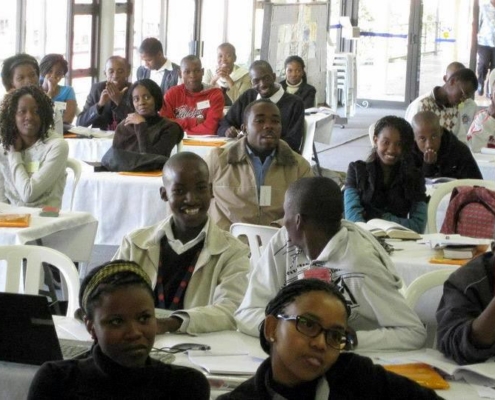
Botswana continues to treat education as a critical driver of national development. Since gaining independence in 1966, the country has made impressive strides in increasing access to learning and boosting literacy rates. The education system is managed primarily by two government bodies: the Ministry of Basic Education, which oversees primary and secondary education, and the Ministry of Tertiary Education, Research, Science, and Technology, which governs higher learning and vocational training.
The structure of Botswana’s education system follows a 7-3-2 model. Students usually begin primary school at age 6 and complete seven years of foundational learning before advancing to junior secondary school for three years. Afterward, they may proceed to senior secondary school, a two-year cycle that prepares them for university, vocational education, or employment. Although public education makes up more than 85% of total enrollment, private institutions and homeschooling also play a role in the broader educational landscape. According to the Botswana Statistics Office, over 96% of eligible children are enrolled in primary school, with a completion rate exceeding 90% as of 2022.
Investment, Policy, and Persistent Gaps
Botswana has long boasted one of the highest levels of public education spending in Africa. In 2020, education accounted for 8.06% of its gross domestic product (GDP), far surpassing the global average of around 4.6%. This commitment aligns with the country’s broader development agenda, including Vision 2036, which seeks to transform Botswana into a high-income, knowledge-based economy. The four core values guiding educational policy – democracy, development, self-reliance, and unity – are crucial to achieving that vision.
Nevertheless, educational inequalities are still a major issue in rural regions. For example, recent Junior Certificate Examination results reveal that the overall pass rate at grade C or better rose modestly to 36.3 %, but students from largely rural regions, such as Ghanzi and North West, trail well behind urban areas like North East and South East. Furthermore, district-level analyses confirm that up to 35 % of rural youth face higher dropout rates than those in cities. The main factors behind this underperformance are poor infrastructure, limited teaching resources, and high student-teacher ratios. These challenges contribute to unequal learning outcomes and highlight the need for targeted investment to tackle the urban-rural divide.
Closing the Divide: Reforms and Partnerships
To tackle such persistent disparities, Botswana has implemented a range of domestic reforms and engaged in international partnerships. On the domestic front, the government’s 2013 Inclusive Education Policy pledges to assist children with diverse learning needs, expand support for marginalized groups, and supply more learning tools to under‑resourced schools. Internationally, the country collaborates with UNICEF and the U.N. under its national Sustainable Development Cooperation Framework (2022–26) to meet SDG 4 targets, notably prioritizing equal access for girls, the poor, and remote learners. It’s clear that, while most policy leadership remains governmental, Botswana is increasingly leveraging global expertise and funding to close the education gap.
Overall, by prioritizing inclusivity, quality, and innovation, Botswana aims to ensure that education is not just a right but a catalyst for national progress. The government’s high level of investment, combined with strategic reforms and technological adoption, positions the country to kickstart a new era of learning.
– Jeff Zhou
Photo: Flickr
