• Link to X
  • Link to Facebook
  • Link to Instagram
  • Link to TikTok
  • Link to Youtube
  • About
    • About Us
      • President
      • Board of Directors
      • Board of Advisors
      • Financials
      • Our Methodology
      • Success Tracker
      • Contact
  • Act Now
    • 30 Ways to Help
      • Email Congress
      • Call Congress
      • Volunteer
      • Courses & Certificates
      • Be a Donor
    • Internships
      • In-Office Internships
      • Remote Internships
    • Legislation
      • Politics 101
  • The Blog
  • The Podcast
  • Magazine
  • Donate
  • Click to open the search input field Click to open the search input field Search
  • Menu Menu

Archive for category: Human Trafficking

Global Poverty, Human Trafficking, Violence Against Women

A Global Treaty to End Violence Against Women

Lobbying for a Global Treaty to End Violence Against Women
With the #MeToo movement sweeping the United States, Portland-native Lisa Shannon is pushing for an end to violence against women around the world. Shannon is CEO and Co-Founder of the Every Woman Treaty, a campaign to establish a global treaty to end violence against women. At a recent discussion panel hosted by Global Washington, Shannon spoke out about the consistent violations of women’s rights pervading every corner of the globe and explained how Americans can make a lasting impact.

Defining Violence Against Women

Violence against women, whether psychological, physical or emotional, is “the most pervasive human rights violation on earth.” Sex trafficking, forced marriage and domestic violence are three of its most common forms, and all are prevalent globally. While the Convention on the Elimination of All Forms of Discrimination Against Women (CEDAW), adopted in 1979, suggests establishing protective legislation for women, the agreement has not sufficiently fueled action to prevent violence. There is a need for a more direct global treaty to end violence against women.

Sources of Violence

Human trafficking causes significant violence against women due to how it damages each person involved and the expanse of the industry. Suamhirs Piraino-Guzman from the International Rescue Committee shared at the Global Washington event that “40 million people around the world are victims of human trafficking.” A recent U.N. report adds that 79 percent of trafficking consists of the sexual exploitation of women and girls, which means that there is a total of around 30 million women being sex-trafficked today. That is greater than the population of Australia. In addition, human trafficking is the fastest-growing criminal industry in the world.

Forced marriages represent another preventable source of violence against women. They eliminate a woman’s freedom of choice and frequently result in violent partnerships. According to UNICEF, although international law and many national legislations prohibit it, forced marriage is still a widespread practice. One in five women enters marriage without offering full, free and informed consent. This is mostly due to lack of government crackdown on forced marriage cases.

Even when a relationship is consensual, domestic violence is frustratingly frequent. The World Health Organization estimates that about 35 percent of women experience physical or sexual violence from an intimate partner in their lifetimes. It does not help that an estimated one billion women lack legal protection from domestic violence, according to a World Bank Study. Domestic sexual violence is only a crime in one in every three countries.

What Needs To Change

The establishment and enforcement of legislation related to protecting women have been lax. A lack of accountability leads to millions of women suffering. UNODC Director Antonio Maria Costa lamented that “while the number of convictions for human trafficking is increasing, two out of every five countries covered by the UNODC Report had not recorded a single conviction.”

People are not holding governments accountable for protecting women within their borders. However, many professionals agree that lasting change will stem from the political realm. Data easily shows the benefits of legislation. Shannon pointed out countries that, in the past, experienced a reduction in female mortality by 32 percent with a ban on domestic violence. There is a need for a global treaty to end violence against women to improve the accountability of governments that create and enforce laws protecting women. That is exactly what Every Woman Treaty is striving to accomplish.

The Global Treaty To End Violence Against Women

The Every Woman Treaty requests a partnership between every country in the global community to bring accountability to protecting women. Countries that sign the treaty would ensure they have sufficient legislation to prevent the most common abuses of women, provide services for victims, promote prevention education and contribute towards a global implementation fund with a goal towards ending violence against women. As the movement gains traction, the Every Woman Treaty is asking individuals to sign onto its platform to show governments that it has the support of the public.

Several of the 2015 Sustainable Development Goals released by the U.N. focus on protecting women from violence. Voices across the global community scream for change on this issue. Despite this, governments are still not providing the legislative changes necessary to end the violence once and for all. A global treaty to end violence against women, like the one the Every Woman Treaty proposes, could be the answer—the final push to make this issue a priority. Lisa Shannon made clear at the event that violence against women is horrible, but an “absolutely solvable problem. We just have to decide we’re ready to (solve it).”

To sign onto the Every Woman Treaty’s cause, visit https://everywoman.org.

– Olivia Heale
Photo: Flickr

September 3, 2019
https://borgenproject.org/wp-content/uploads/borgen-project-logo.svg 0 0 Kim Thelwell https://borgenproject.org/wp-content/uploads/borgen-project-logo.svg Kim Thelwell2019-09-03 19:28:442019-09-03 19:28:44A Global Treaty to End Violence Against Women
Global Poverty, Human Trafficking, Refugees

Why Refugees Are Fleeing Central America

Why Refugees are Fleeing Central AmericaThe northern region of Central America is currently one of the most dangerous places on Earth. So, it’s no surprise that refugees are fleeing Central America. This circumstance has caused high levels of migration as many refugees are fleeing for their lives. In countries such as Honduras, El Salvador and Guatemala, many people experience gang-related violence, human trafficking and extreme poverty. The brutality forcing refugees to leave their homes is constant and not improving.

Moreover, poverty in Central America is widespread. In some regions, half of the population lives below the poverty line. Consequently, the number of asylum-seekers is increasing in neighboring countries, such as Mexico and the U.S. In 2014, there were 2,000 asylum applications in Mexico. In 2017, applications escalated to more than 14,000. As this crisis continues, it is important to understand the reasons why refugees are fleeing Central America.

Gang Culture in Central America

In the 1980s, civil wars weakened countries in Central America, leaving a legacy of violence and fragile governments. Due to these civil wars and mass deportations from the U.S., organized crime groups flourished. These groups grew into the overwhelming gangs present today.

Over the last 15 years, gangs have taken over rural and urban areas within Central America. They target poor, and thus vulnerable, communities by imposing their own authority. They also recruit boys as young as 12 years old and living in poverty as they lack educational or economic opportunities. Because of gang violence, the Northern Triangle is considered one of the deadliest places in the world, outside a war zone. For example, between 2014 and 2017, almost 20,000 Salvadorans were killed due to gang-related violence.

Gang culture has deeply penetrated the social fabric of northern Central America. Their grip on society is so severe that many migrants fear that their deportation will result in death. For example, 82 percent of women reported they would most likely be tortured or killed if they were to return home. Despite decades of authorities trying to eliminate gang activity, these criminal groups remain defiant and seemingly unbreakable.

Extortion and Human Trafficking

Similarly, extortion-related crimes are common in this region. Gangs extort small businesses and local individuals by forcing them to pay protection payments. If these individuals cannot afford these amounts, the gangs will murder them. For example, it is estimated locals in Honduras pay $200 million in extortion fees every year. Extortion fees cost Salvadorans $756 million a year. This results in a significant financial loss for local businesses and endangers many lives.

Moreover, human trafficking is another common reason why refugees are fleeing Central America. Women and young girls are most vulnerable to sexual exploitation. Often, gangs target and traffick young children for the sex trade. In Guatemala alone, at least 15,000 children are victims of child sex trafficking networks.

Gangs also manipulate children. They subject children to forced labor, making them sell and transport drugs throughout El Salvador, Honduras and Guatemala. Though widespread, authorities prosecute an extremely low number of people accused of human trafficking. In Guatemala between 2009 and 2013, police detained 604 human traffickers. However, only 183 went to trial and only 33 were convicted.

Helping Central America

A huge reason why refugees are fleeing Central America is lack of opportunity. Of course, this is largely due to the rampant crime and violence in the region. While the reality is grim, there is a reason to be optimistic. Many organizations and volunteers help these migrants in any way they can. In particular, Doctors Without Borders has been providing medical relief and mental health care to refugees traveling along migration routes through Mexico since 2013. The organization reported they provided more than 33,000 consultations at mobile health clinics and other facilities. Many patients need mental health care, especially women who are victims of sexual abuse. In fact, 31 percent of women reported being sexually assaulted along their journey.

UNICEF also recognizes the humanitarian crisis happening in Central America. UNICEF has offices in Mexico, El Salvador, Guatemala and Honduras. In these countries, UNICEF is working directly with people to prevent violence and alleviate poverty. They also help reintegrate deported children into their home countries and support children in asylum countries, protecting them from discrimination and xenophobia. UNICEF’s work in Central America is necessary as it is bettering the lives of many vulnerable people.

Often times, the only ways for migrants to escape the persecution and violence plaguing their hometowns is to seek asylum in another country. No matter how bleak these circumstances may be, hope can be found through the compassion and understanding of volunteers around the world. By understanding why refugees are fleeing Central America, people and organizations can begin working to change the conditions in these countries.

– Marissa Pekular
Photo: Flickr

August 3, 2019
https://borgenproject.org/wp-content/uploads/borgen-project-logo.svg 0 0 Kim Thelwell https://borgenproject.org/wp-content/uploads/borgen-project-logo.svg Kim Thelwell2019-08-03 01:30:212020-01-26 19:42:46Why Refugees Are Fleeing Central America
Education, Global Poverty, Human Trafficking

Top 10 Facts about Child Labor in Liberia

Top 10 Facts about Child Labor in Liberia
Liberia, a country along the western coast of Africa, is Africa’s oldest republic and enjoyed relative stability until the civil war of 1989. This destructive civil war lasted from 1989 until 1997. Fighting, however, did not officially end until 2003. This war left the country without infrastructure and displaced approximately 300,000 people. Public services shut down and maternal and infant mortality rates increased, drastically affecting the number of people living in poverty. Below are the top 10 facts about child labor in Liberia everyone should know.

Top 10 Facts about Child Labor in Liberia:

  1. Approximately 16.6 percent of children in Liberia are employed. Of this 16.6 percent, 78.4 percent work in the agricultural field. Work in agriculture includes rubber and charcoal production and farming including the cocoa, cassava and coffee production. All of these industries are deemed hazardous by the U.S. Department of Labor.
  2. The minimum age for recruitment into the Armed Forces of Liberia is 18 years old. However, during the civil war and up until 2005, children were recruited to be a part of the army. In 2005, the Council on Foreign Relations estimated there were between 5,000 to 15,000 child soldiers in Liberia. During the civil war, former President Charles Taylor used children in his army who participated in rapes, murders, executions and dismemberments.
  3. Only 75.6 percent of children between the ages of 5 and 14 attend school. However, only 58.8 percent finish primary schooling. Longstanding consequences of the civil war and school closures during the 2015 Ebola outbreak have taken a toll on the Liberian education system. The cost of textbooks, uniforms and transportation all severely limit a child’s ability to attend school. Instead, children who do not attend school begin working.
  4. Children under the age of 15 are not legally allowed to work more than 2 hours of “light work” a day. Children under the age of 18 are not allowed to do hazardous work. However, a 2018 Human Rights Report from the U.S. State Department found that the Child Labor Commission did not enforce child labor laws effectively due to inadequate staffing and underfunding.
  5. The 2018 U.S. State Department Human Rights Report detailed the widespread child labor infractions found throughout every socio-economic sector of the country. In urban areas, children work as street vendors or tap rubber on private farms. Other children are involved in hazardous labor such as alluvial diamond and gold mining. Girls are also sent from their homes in rural areas to do domestic housework in the urban sector to raise money to send home to their families instead of receiving an education.
  6. Instate, the Liberian government-sponsors and participates in programs to eliminate and prevent child labor. For example, Winrock International donated $6.2 million to reduce child labor in the rubber sector. Through this program, 3,700 households were rewarded livelihood services, and 10,126 children were provided with education services.
  7. In July 2018, the Liberian government promised to eliminate child labor in Liberia by 2030. Through the Ministry of Labor, the country has stated that over 12 years they will take measures to eradicate forced labor, modern slavery and human trafficking. With the introduction of this plan, the country began a National Action Plan, demonstrating how they will address child labor and a Hazardous List, addressing which fields are not acceptable places for children.
  8. Only 25 percent of children are registered at childbirth, making their births unknown to the government. The lack of registration and identification documents makes children more susceptible to trafficking. Traffickers are often family members who promise poorer relatives a better life for their children. The children are often forced into street vending, domestic servitude or sex trafficking. In some poorer families, young girls are encouraged to participate in prostitution to supplement the family’s income.
  9. In June 2019, Verité, a nonprofit organization, partnered with Lawyers without Borders and Winrock International, to provide technical assistance to Liberia’s Ministry of Labor to reduce child labor. The CLEAR II project, funded by the U.S. Department of Labor, aimed to improve the government’s response to labor, increase awareness of child labor and reduce the number of children exploited. The project held training sessions for government employees to improve their understanding of child labor and allow them to train other employees correctly.
  10. In 2019, the Liberian government investigated four traffickers, however, only one was prosecuted. This marks a decrease from the year before when the government investigated four traffickers and convicted all four. In a report, the U.S. Department of State stated that many officials did not consider internal trafficking, such as child domestic servitude, a crime but rather a community practice.

These top 10 facts about child labor in Liberia depict a country that is in need of humanitarian aid and more governmental funding. Child labor continues to be a problem in Liberia. However, the government is actively working to eradicate this problem and allow children the opportunity to get a formal education. Advocating for laws such as the Keeping Girls in School Act gives young girls the chance for a life without domestic servitude.

– Hayley Jellison
Photo: Unsplash

July 29, 2019
https://borgenproject.org/wp-content/uploads/borgen-project-logo.svg 0 0 Kim Thelwell https://borgenproject.org/wp-content/uploads/borgen-project-logo.svg Kim Thelwell2019-07-29 05:15:402024-05-29 23:10:15Top 10 Facts about Child Labor in Liberia
Global Poverty, Government, Human Trafficking

10 Facts About Human Trafficking in Thailand

Facts about Human Trafficking in Thailand

Characterized by breathtaking beaches, delicious food and stunning temples, Thailand is often called the “Land of Smiles.” As the number one tourist destination in Southeast Asia, it is an extremely popular place for millions of people to visit every year. Unfortunately, with convenient routes that funnel women and children in and out of the country, Thailand has also become a popular destination for human traffickers. Here are 10 facts about human trafficking in Thailand.

10 Facts about Human Trafficking in Thailand

  1. Human trafficking by boat is common – First up in this list of facts about human trafficking in Thailand is the method of transportation. The fishing industry is a major asset to Thailand’s economy, so many ships go out to sea to fish. These boats sometimes do not come back for up to three years at a time. This makes it nearly impossible for authorities to monitor the activity of boats. Thus, many traffickers prefer to travel through the seas, despite the risks it may pose on the trafficked victims.
  2. Thailand’s geographical location makes it particularly vulnerable to traffickers – Land routes from neighboring countries into Thailand are not very well secured and corruption is prevalent. This makes it much easier for human traffickers to smuggle people into the country.
  3. Minorities and migrants are high-risk for being trafficked – Among those at the greatest risk for being trafficked in Thailand are foreign migrants, ethnic minorities and stateless persons. They may experience various abuses including the withholding of identity and work documents and debt bondage. They could even be subject to illegal salary deductions. Language barriers and low socioeconomic status further contribute to the vulnerability of these populations.
  4. There is no one “type” of trafficking offender – Profiles of traffickers vary considerably. They include both males and females, Thai and non-Thai nationals. They can be from organized networks with the ability to produce or buy fake documents and avoid immigration requirements. Additionally, traffickers can act individually, seizing opportunities to profit from coercing vulnerable persons into situations of exploitation.
  5. There are various forms of trafficking networks – Trafficking networks can be well-structured and work across borders through the use of brokers. However, most trafficking cases are facilitated by individual and local level networks of friends, family members and former victims that often begin with voluntary migration.
  6. Most victims of human trafficking in Thailand are, in fact, of Thai nationality – The majority of trafficking victims identified in Thailand are Thai nationals, trafficked both domestically and internationally. Migrants from neighboring countries make up a large portion of identified trafficked persons in Thailand. However, many more victims from neighboring countries are not identified. These victims often willingly migrate from their home countries in search of better opportunities. Some of their home countries include China, Vietnam, Russia, Uzbekistan and Fiji.
  7. Victims are often trafficked into Thailand through established migration routes – These victims come from neighboring states with significantly lower levels of socioeconomic development. Facilitated by long and porous borders, irregular migration is a common trend in meeting the labor demands of low-skilled employment sectors.
  8. Trafficking in Thailand is a $12 billion industry – This makes it a bigger cash earner than the country’s drug trade, according to the International Labor Organization.
  9. More than 900 victims of human trafficking have been rescued in 2019 – According to official statistics released by the Thai anti-trafficking department, since the beginning of 2019, the police have rescued 974 victims of human trafficking. Most of the victims were from Myanmar.
  10. The hotel industry has taken initiative in combating this issue – A French multinational hotel group set up an employee training program to identify and address sex tourism in 2001. Additionally, Airbnb works with the Department of Homeland Security’s Blue Campaign. which provides education about human trafficking. Airbnb also works with No Traffick Ahead, a coalition for combating human trafficking.

Efforts to Eliminate Human Trafficking in Thailand

These facts about human trafficking in Thailand reflect the severity of this problem on a global level. The Thai government has pledged to continue fighting the human trafficking epidemic in their country. In the last year, it partnered with airlines and charities to warn visitors against involvement in trafficking. Subsequently, they urged them to spot and report potential cases.

UNICEF has been particularly active in calling attention to child exploitation and in addressing its root causes. This organization provides economic support to families so that their children will not be at risk of sexual exploitation; it improves access to education and is a strong advocate for children’s rights.

Progress in reducing the human trafficking trade has been made in recent years. However, to make a widespread impact, the efforts of these nongovernmental organizations need to be aided by urgent government action. This action is essential to protect Thai citizens and migrant workers.

– GiGi Hogan
Photo: Flickr

July 28, 2019
https://borgenproject.org/wp-content/uploads/borgen-project-logo.svg 0 0 Kim Thelwell https://borgenproject.org/wp-content/uploads/borgen-project-logo.svg Kim Thelwell2019-07-28 01:30:182019-12-16 14:24:1310 Facts About Human Trafficking in Thailand
Global Poverty, Human Trafficking

9 Facts About Human Trafficking in Mexico

9 Facts About Human Trafficking in Mexico

Human trafficking in Mexico has recently risen to have the country become one of the most popular trafficking destinations in the world. This is largely due to its high level of corruption and powerful drug-cartels that support the illicit practice. This has been coupled with the nation’s growing national awareness toward the issue. The recent government attempts to combat it through policy change reflect this. Additionally, there is an emergence of organizations designed to reintegrate victims of human trafficking in Mexico into society.

What is Human Trafficking?

Human trafficking is the third most lucrative industry in the world. It is characterized as a form of exploitation through the act of obtaining someone for (often sexual) services and subjecting them to a form of involuntary servitude. Its somewhat confusing and wide-ranged definition creates a vast multitude of unique cases, allowing many criminals to slip through the cracks. Many countries all of the world struggle with passing sufficient anti-human-trafficking policy. This partially explains its prevalence and therefore profitability worldwide.

9 Facts about Human Trafficking in Mexico

  1. Poor Data and Broad Targets
    Much of the criticism surrounding past Mexican administrations failure to fix the problem focuses on two pillars: poor data and broad targets. The leading government commission appointed to human trafficking (the Inter-Ministerial Commission Against Human Trafficking) reports positive results. However, its technical secretary has spoken out, saying the data is unreliable. Additionally, while high ambitions seem good in principle, goals will be stunted if they are not broken into manageable parts. This was certainly the case for past administrations, according to Monica Salazar, head of non-profit Dignificando el Trabajo. Salazar blames past administrations with a lack of clarity, which made priorities vague and indeterminate.
  2. Its Prominence in Mexico
    While human trafficking ranks third internationally for most lucrative markets, it is second in Mexico. The country has also assumed the number one rank for female sex-trafficking and makers of child pornography in the Americas. Much of that comes from the government’s corruption and inability to control the drug-cartels that wreak havoc across the country. These groups are largely responsible for the kidnapping of women and children into the sex and slave trade.
  3. States Lacking Compliance
    Many states are in tune with Salazar’s comments on Mexico’s grandiose plans to combat the issue of human trafficking in Mexico. Out of the 21 states, 12 have still not updated their legislation to be in accordance with the most recent national law on human trafficking. Their failure to adhere to this mandate is telling as to why the country has made little progress on the issue.
  4. International Roots
    A large misconception regarding trafficking is that it does not just involve citizens of the country it takes place in. In Mexico, many victims are solicited from surrounding countries, and from Eastern Europe over the internet. On the opposite end, many culprits of the trafficking travel to Mexico because of its loosely-regulated trafficking reputation.
  5. Tenancingo: An Epicenter for Trafficking
    Despite its small size and a population of only 13,000, Tenancingo wields an international human trafficking presence. Susan Coppedge, a former Assistant U.S. Attorney, says young girls from small rural communities across the country are unfamiliar with its reputation. They are therefore are not suspicious of men from there.
  6. Recent Decriminalization of Sex Work
    Next in these facts about human trafficking in Mexico is that Mexico City recently started momentum towards anti-sex trafficking legislation. It did this by unanimously passing a bill that indirectly decriminalized sex work. The bill removed a law which stated that prostitutes and their clients could be fined if neighbors complained. Although the latter part already made the law unreliable, it still marks a start of anti-sex-trafficking legislation under President Andres Manuel Lopez Obrador.
  7. Local Combat Organizations Are Best
    Since human trafficking maintains many different forms, it can largely go unnoticed and disappear in the shadows. However, the optimal way to tackle this issue is to let local organizations that are well-versed in their particular areas take charge. With adequate funding from the government, these groups accomplish a lot to help the current situation in Mexico.
  8. These Organizations Exist
    But they do not have enough government support. These nonprofits work behind the scenes with a policy such as the decriminalization of sex work. However, they do not receive the funding they deserve. For the government to live up to its goals of making real progress on eliminating human trafficking in Mexico, they must dedicate the finances to their objectives.
  9. There is a Need for Proper Training
    A large portion of government money allocated to ending human trafficking should be dedicated to the training of people working at groups to end it. The broad nature of human trafficking packages each case differently. Therefore, training and hiring people in and from many different backgrounds will best help alleviate the issue.

How to Help

A final word about human trafficking in Mexico is that groups such as Polaris provide direct funding to disrupt the human trafficking trade in Mexico. By advocating for them, as well as The Borgen Project, they grow in influence and stand a better chance of grabbing the government’s attention.

– Liam Manion
Photo: Flickr

July 20, 2019
https://borgenproject.org/wp-content/uploads/borgen-project-logo.svg 0 0 Kim Thelwell https://borgenproject.org/wp-content/uploads/borgen-project-logo.svg Kim Thelwell2019-07-20 05:59:382019-11-06 11:32:059 Facts About Human Trafficking in Mexico
Global Poverty, Human Trafficking, Slavery

10 Facts About Human Trafficking in Europe

Human Trafficking in Europe
The definition of human trafficking is the act of illegally transporting people from one country or area to another, typically for the purpose of forced labor or sexual exploitation. Human trafficking occurs all over the world. There are approximately 20 to 30 million slaves worldwide and around 800,000 people trafficked across international borders every year. Moreover, 80 percent of people trafficked yearly are female. Here are 10 facts about human trafficking in Europe.

10 Facts About Human Trafficking in Europe

  1. A study in 2012 assessed human trafficking in Europe. The study identified and reported 11,000 people as victims of human trafficking.
  2. Ninety-five percent of sexually exploited victims are women and girls. Seventy percent of victims trafficked for labor exploitation are men.
  3. However, these numbers only indicate reported victims. It is predicted that at any given time there are 140,000 people in Europe trapped in human trafficking.
  4. Thirty-two percent of victims in Europe originate from the Balkans, 19 percent of victims originate from former Soviet states, 13 percent are from South America, 7 percent are from Central Europe, 5 percent of victims are from Africa and 3 percent are from East Asia.
  5. Conviction rates are low for human trafficking. In fact, for every 100,000 people in Europe, less than one person receives a conviction of human trafficking annually.
  6. The conviction rate in Denmark for human trafficking is 3.14 per 100,000 inhabitants. However, in Hungary, the conviction rate is at 0.24 per 100,000 inhabitants.
  7. Unfortunately, there is no decrease in the number of human trafficking victims. On the other hand, from 2008 to 2010, convictions for human trafficking decreased by 13 percent. This indicates slow reactions by authorities regarding trafficking and low prioritization of human trafficking as a crime.
  8. Fortunately, several organizations are working to help end human trafficking in Europe. In 2003, the Organization for Security and Co-operation in Europe (OSCE) established a plan to work on implementing measures to decrease human trafficking. This action plan is titled Action Plan to Combat Trafficking in Human Beings.
  9. Moreover, this plan lays out measures to prevent human trafficking by building awareness and addressing issues at the cause. Additionally, the plan articulates plans for how to prosecute traffickers and work with international law enforcement. Finally, it works to protect victims’ lives through compensation and assistance. The OSCE expanded the plan in 2014 with the addition of partnerships, which emphasizes the importance of international coordination and organization.
  10. Finally, La Strada is an organization working to address human trafficking internationally and within European countries. It has establishments in eight European countries. The primary goal of La Strada is to increase nongovernmental organization participation and focus toward human trafficking, with the ultimate goal of putting an end to human trafficking. Notably, La Strada is the largest organization working to end human trafficking in Europe.

Human trafficking is an issue people often brush aside over due to low report rates and a lack of focus. However, as these 10 facts about human trafficking in Europe state, the rates of trapped and abused victims are only increasing in Europe. Ultimately, it is important to acknowledge the organizations working to end human trafficking in Europe, as organizations like OSCE and La Strada work tirelessly to achieve.

– Claire Bryan
Photo: Flickr

July 20, 2019
https://borgenproject.org/wp-content/uploads/borgen-project-logo.svg 0 0 Kim Thelwell https://borgenproject.org/wp-content/uploads/borgen-project-logo.svg Kim Thelwell2019-07-20 01:38:352024-05-29 23:09:3910 Facts About Human Trafficking in Europe
Children, Global Poverty, Human Trafficking

Top 10 Facts about Human Trafficking in South Africa

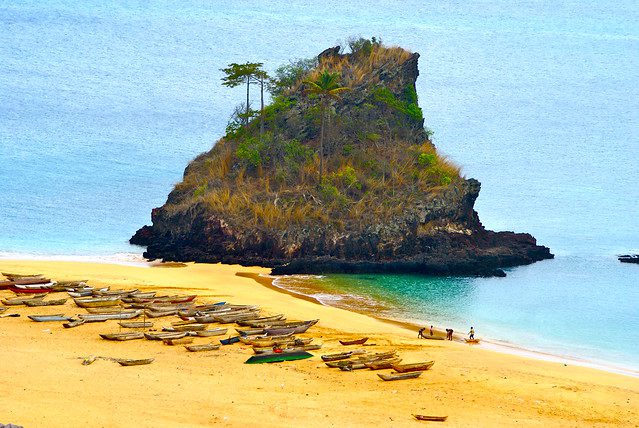
10 Facts About Human Trafficking in South AfricaEvery single day, in hundreds of countries around the world, human trafficking is taking place. It is estimated that globally, around 21 million people fell victim in 2018, and South Africa is no exception. Human trafficking is defined as “the action or practice of illegally transporting people from one country or area to another, typically for the purposes of forced labor or sexual exploitation.” While there are many important things to know about this kind of illicit activity, here are the top 10 facts about human trafficking in South Africa.

Top 10 Facts about Human Trafficking in South Africa

  1. Trafficking in South Africa is on the rise. At a press conference in 2018, Lt. Col. Parmanand Jagwa, the Hawks Gauteng coordinator of the illegal migration desk, and deputy director Rasigie Bhika said that human trafficking was a “growing activity” in the region. In response to the rising numbers, the U.S. Department of State released a report criticizing the government’s methodology, noting that “the government made little progress in prosecution of traffickers connected to international syndicates, which facilitated sex and labor trafficking with impunity throughout the country” and that “the government did little to address reports of official complicity in trafficking crimes and efforts by officials.”
  2. Girls are more likely to be trafficked for sexual exploitation and domestic servitude. Overall, 55 percent of human trafficking victims are women. Additionally, 43 percent of victims were used for sexual exploitation, and 98 percent of which were women and young girls.
  3. Boys are more likely to be trafficked for street vending, food service and agricultural purposes. Around 45 percent of all trafficking victims in the country are boys and men.
  4. South Africa is considered to be on the “Tier 2 Watchlist” for human trafficking. The U.S. Department of State has several methods to track the levels of ongoing trafficking in a given country. There are four tiers: Tier 1, Tier 2, Tier 2 Watchlist, and Tier 3. These standards are outlined in the Trafficking Victims Protection Act (TVPA) of 2000. Tier 1 represents countries whose governments fully comply with the TVPA’s minimum standards, and Tier 2 represents countries whose governments do not fully comply with TVPA’s minimum standards but are making significant efforts to bring themselves into compliance with those standards. The Tier 2 Watchlist is the same level as Tier 2, but these countries have increasing levels of criminal activity. The lowest level is Tier 3, which represents countries whose governments do not fully comply with the minimum standards and are not making significant efforts to do so.
  5. It is estimated that 1.2 million children are trafficked each year, according to UNICEF. Traffickers “recruit” children and give them fake identification documents and are most likely part of a network of organized criminals. Additionally, due to the high prevalence of HIV/AIDS in South Africa, many children are left without parents and in poverty, making them more vulnerable to these diseases.
  6. Traffickers do not fit a single profile. They can range from strangers to a relative or close friend, especially in cases of child trafficking. They can also pose as significant others and try to convince children to leave to “start a new life.”
  7. South Africa is a source, transit and destination country for victims of human trafficking. Source countries are those which supply the victims of the crime, transit countries are mediums/stopping points which the victims travel through and destination countries are the final locations to which they are brought. South Africa is all three. 
  8. Ninety-five percent of victims experience violence in trafficking. This figure represents both physical and sexual violence and applies to both men and women.
  9. Some victims are forced into drug addiction. Law enforcement in South Africa reported that traffickers drugged victims to coerce them into sex trafficking. At the same time, some government-run shelters denied victims of human trafficking because of drug addiction.
  10. The NGO Love Justice International is working to make conditions better in South Africa. The group has 44 different transit monitoring stations around the world in areas where trafficking is likely to occur. The NGO focuses on monitoring and spreading the message to reduce human trafficking and help victims escape.

– Natalie Malek
Photo: Wikimedia

July 19, 2019
https://borgenproject.org/wp-content/uploads/borgen-project-logo.svg 0 0 Kim Thelwell https://borgenproject.org/wp-content/uploads/borgen-project-logo.svg Kim Thelwell2019-07-19 09:53:542024-05-29 23:09:47Top 10 Facts about Human Trafficking in South Africa
Global Poverty, Human Trafficking

Top 4 Facts About Human Trafficking in Equatorial Guinea

Human Trafficking in Equatorial Guinea

Human trafficking in Equatorial Guinea is a substantial issue. Corruption and negligence run deep within its government. In Equatorial Guinea, 76.8 percent of the population lives in poverty. These circumstances make the people of this country extremely vulnerable to exploitation and trafficking.

Top 4 Facts About Human Trafficking in Equatorial Guinea

  1. Equatorial Guinea has remained on Tier 3 from 2011 through 2018. This means that the country does not meet the minimum standards for the elimination of human trafficking. And they are not making necessary efforts to do so. Although there have not been significant improvements concerning the status of human trafficking in the country, the government made progress by addressing this problem. Fortunately, the U.S. is helping Equatorial Guinea develop a plan for this problem. They are continuing to spread public awareness of trafficking within the country. They achieve this by providing shelter and services to victims and investigating more trafficking-related cases. Despite the government taking steps in the right direction, no traffickers have ever been convicted under the Equatoguinean 2004 anti-trafficking law. The government also failed to report any victims, making the exact number unclear. There have even been reports of general corruption by government employees in trafficking-relating cases.
  2. Equatorial Guinea is a source country for human trafficking. The majority of victims are trafficked in Bata, Malabo and Mongomo. These are three wealthy cities in the country that attract many migrant workers who are easily exploited. Women and girls are most vulnerable to sex trafficking and prostitution. In many cases, parents will send their daughters to work for intermediaries in exchange for money. However, these girls are then exploited into domestic servitude and sex trafficking. For men and young boys, forced labor is most prevalent in the mining industry. Traffickers steal boys who are begging on the streets or providing services such as shining shoes. Children from poorer villages are most vulnerable to exploitation. This is due to a lack of education and economic opportunities. Some traffickers even take children with parents’ consent. They promise the family that they will pay for the child’s education but actually selling them into forced labor.
  3. Combating human trafficking in Equatorial Guinea is one of France’s priorities. The French government acknowledges the severity of human trafficking, specifically in West Africa. In 2013, the Ministry of Foreign Affairs in France created a strategy to fight this problem. The aim was to decrease trafficking in the Gulf of Guinea countries such as Nigeria, Ghana, and Togo. These countries share the same region as Equatorial Guinea. The transnational human trafficking rate in this region is high. The project focused on stopping cross-border trafficking by increasing the country’s security. By addressing human trafficking in the Gulf of Guinea region, the French government is helping the country escape from its cruel grasp.
  4. The U.S. Embassy is involved with the Equatoguinean government. It is helping the country to address and end human trafficking. The Embassy collects significant data for the annual Trafficking in Persons Report. Additionally, it recognizes the severity of trafficking-related crimes within the country. In order to end human trafficking in Equatorial Guinea, the U.S. Embassy created a list of strategy and recommendations to further anti-trafficking efforts. Some of the main points in this list are:
    • prosecuting traffickers and complicit officials,
    • identifying the trafficked victims and
    • researching the nature of the crime within the country are some of the main points.

A Problem Worth Fighting For

The challenge of eliminating human trafficking in Equatorial Guinea may seem like an impossible task, but it is crucial. This modern-day slavery is a result of corruption and a violation of human rights. Although the status of human trafficking in this nation may seem bleak, the people of the country have reason to be optimistic. Foreign aid from different countries and the acknowledgment of the Equatoguinean government can help eliminate the issue of human trafficking in countries such as Equatorial Guinea.

– Marissa Pekular
Photo: Flickr

July 18, 2019
https://borgenproject.org/wp-content/uploads/borgen-project-logo.svg 0 0 Kim Thelwell https://borgenproject.org/wp-content/uploads/borgen-project-logo.svg Kim Thelwell2019-07-18 14:30:212024-05-29 23:00:10Top 4 Facts About Human Trafficking in Equatorial Guinea
Global Poverty, Human Trafficking

Human Trafficking in Burkina Faso

Human Trafficking in Burkina Faso
Since gaining its independence from France in 1960, Burkina Faso has trodden down a rather tumultuous path. Through political instability in the 1960s and 70s to frequent terrorist attacks in the 2010s (with over 100 confirmed extremist attacks in the first quarter of 2019), Burkina Faso has been plagued by constant insecurity.

Currently, Burkina Faso has a 77 percent unemployment rate, despite the country’s slight growth in gross domestic product (GDP) over the last three years. These high unemployment rates, combined with the tumultuous economic and political fields, fuse to create poor living and working conditions, paving the way for human trafficking, which seemingly envelops every facet of life. From agriculture to mining, human trafficking in Burkina Faso is an issue that must be addressed.

Human Trafficking in Burkina Faso

The U.S. State Department’s Office to Monitor and Combat Trafficking Persons has established a four-tier ranking to describe a country’s status regarding the presence of and efforts to eradicate human trafficking. These ranks range from tier one, which details countries that comply with 2008’s Anti-Trafficking Laws, to tier two, tier two (watchlist), and tier three, which denotes countries that both do not comply with these laws and have made very little effort in meeting the standards set forth by these laws.

Burkina Faso is currently designated as a tier two nation. The U.S. Department of State emphasizes that the country, as a whole, has not met the standards set forth in 2008, though progress has been made in attempts to combat the issue of human trafficking through awareness campaigns and the steady increase of investigations in trafficking cases.

Burkina Faso is a current source, throughway and destination for human and sex trafficking. According to the Department of State’s 2019 report on human trafficking, the Burkinabe government has identified at least 851 victims of trafficking, and 2,844 potential victims of trafficking (including an estimated 1,350 homeless children, according to Burkina Faso’s Ministry of Women). However, these numbers are still estimates from incomplete data from somewhere between 30 and 45 of Burkina Faso’s 45 provinces.

Despite the lack of concrete data, the Burkinabe government has been able to identify more at-risk populations during 2018 than in previous years due to a stark rise in awareness and attentiveness. Currently, however, Burkina Faso’s government still lacks the resources to totally dismantle the seemingly institutionalized trade.

Current Governmental Measures

Burkina Faso’s government has made efforts to support those that it has identified as potential trafficking victims, as well as those who are subjected to harsh working conditions in general, by creating shelters to provide food, clothing and security. However, these shelters are rarely found outside of large metropolitan areas and are only able to house a certain number of victims at once. Furthermore, while this support is essential, it does not solve human trafficking in Burkina Faso.

Burkina Faso lacks the tools necessary to fully abolish human trafficking. While funding and staffing-power are certainly absent, lack of information and data appear to be the largest obstacles standing in the way of progress.

Missing police reports and insufficient data blur the complete picture of human trafficking in Burkina Faso. It has been reported that 61 traffickers were convicted in 2018, though it is unclear how significant these prosecutions have been in combatting the industry as a whole. Furthermore, the sentences doled out to these traffickers did not meet the standards of 2008’s anti-trafficking law, another contributing factor to Burkina Faso’s tier two status.

To prevent future human trafficking, the Ministry of Women and the Burkinabe government have assembled a committee designed to oversee the reduction and eventual eradication of human trafficking in Burkina Faso, though, this committee did not convene during the U.S. Department of State’s reporting period, and failed to produce any full-fledged intervention due to insufficient resources.

Furthermore, additional measures have been made to ensure that children are kept out of poor labor conditions. Even without sufficient funding, the Burkinabe government was able to free 20,000 child workers from mines between the years of 2015 and 2019.

Current Non-Governmental Measures

Collaborative work and interventions between Burkina Faso’s government and non-governmental organizations (NGOs) have yielded more promising results than those spearheaded solely by the government. While these coalitions still lack the resources for a more chronic, wide-spread response to human trafficking, they have disseminated information about human trafficking, hopefully preventing certain populations from getting enveloped in the trade. This increase in awareness of human trafficking among the general Burkinabe population helps facilitate change. The more citizens are mindful of human trafficking, the higher chance that more might be done about the issue.

NGOs have also played an important role in advocating for greater police training to combat and limit stigma around certain occupations, such as prostitution. UNAids recently partnered with REVS PLUS, a French NGO, to assist in the training of the police forces in Burkina Faso to help provide adequate medical care to sex workers.

Moving Forward

Burkina Faso has made strides in combatting and preventing human trafficking through heightened awareness. That said, there is still work to be done in the area. The creation of subcommittees to form a more “boots-on-the-ground” approach has gained enough ground to educate a significant portion of the population on the issue at hand (over 500,000, with about four percent of this number being children).

Advocacy and awareness are only the first steps to improving conditions for those at-risk for trafficking, those currently being trafficked and for all Burkinabe people in general. Action steps, such as the continuation of prosecuting and convicting human traffickers, appear to be trending upward, though improvement can be seen in this area. It is also important to address the other issues plaguing Burkina Faso; continuing economic growth and maintaining political stability will go a long way in abolishing human trafficking in Burkina Faso.

– Colin Petersdorf
Photo: Flickr

July 14, 2019
https://borgenproject.org/wp-content/uploads/borgen-project-logo.svg 0 0 Kim Thelwell https://borgenproject.org/wp-content/uploads/borgen-project-logo.svg Kim Thelwell2019-07-14 07:30:242024-05-28 00:15:28Human Trafficking in Burkina Faso
Global Poverty, Human Trafficking

How One Artist is Helping Sex Trafficking Victims in India

Sex Trafficking Victims in IndiaEvery eight minutes, a child goes missing in India, becoming yet another one of the estimated three to nine million sex trafficking victims in India, many who are young girls between the ages of nine and 12. Extreme poverty, coupled with a lack of education and awareness about human trafficking, leaves women, young girls and young boys victims of sexual exploitation. However, one Indian artist has launched a campaign that uses art and technology to protect women and children from falling prey to sex trafficking.

The Artist

Leena Kejriwal grew up near Kolkata’s Sonagachi, the largest red-light district in Asia and a global sex-trafficking hub, where around 10,000 women and girls work as prostitutes. Thousands more are trafficked through the district to other brothels and sex trafficking destinations each year. “My awareness of the existence of a red light district happened as a child. I had heard tales of girls and women who were caught and put there. Every time our car passed the lane, we were told not to look to ‘that side’. Furtive glances gave me glimpses of girls and ladies standing on the roadside,” Leena described.

Leena’s childhood awareness that many women and girls around her were trapped as sex slaves spurred her to take action. She knew she had to do something, so in 2014 as a wife, mother and artist, Leena launched “Missing” at the Indian Art Fair. The goal of “Missing” is to bring mass awareness to the dark reality of the sex trafficking industry in India through a simple and engaging piece of art that speaks to everyone and transcends space and language barriers.

What is “Missing?”

The campaign is simple: erect cut-out figures of a young girl in parks, on schools, businesses and other sites throughout cities and towns, casting symbolic shadows to commemorate the millions of young lives lost in the dark shadow that is sex trafficking. Leena’s purpose with “Missing” is twofold—bring public awareness to sex trafficking and provide women, young girls and boys with knowledge so they can avoid becoming sex trafficking victims in India. Confirmed sites for the art campaign include New Delhi’s Gurgaon and Connaught Place, as well as Eco Park in Kolkata.

Leena, along with Satyajit Chakraborty of Flying Robot Studios, has also developed the “Missing” app. The app has a role-playing game that allows players to experience what a missing person goes through when she is trafficked into prostitution. The player, who assumes the role of the missing person, must assess risks and make choices throughout the game in order to find her way to freedom.

Awareness = Prevention

Leena also works in a trafficking prevention program in the remote Sundarbans area, a region that accounts for 44 percent of sex trafficking victims in India. The program, much like Leena’s “Missing” artwork and app, seeks to build awareness and empower both sex trafficking victims and potential victims, giving them a better understanding of their rights and the options available to them, along with consistent counseling.

Leena, whose motto is, “Why wait for a girl to get trafficked to save her?,” believes awareness equals prevention, and with her artwork and the app, she is opening up conversations and bringing public attention to the human trafficking industry in the hopes that Indian women and children will no longer be pulled unawares into the shadows of sex slavery.

– Sarah Musick
Photo: Wikimedia

June 20, 2019
https://borgenproject.org/wp-content/uploads/borgen-project-logo.svg 0 0 Kim Thelwell https://borgenproject.org/wp-content/uploads/borgen-project-logo.svg Kim Thelwell2019-06-20 01:30:332019-07-23 14:50:01How One Artist is Helping Sex Trafficking Victims in India
Page 22 of 31«‹2021222324›»

Get Smarter

  • Global Poverty 101
  • Global Poverty… The Good News
  • Global Poverty & U.S. Jobs
  • Global Poverty and National Security
  • Innovative Solutions to Poverty
  • Global Poverty & Aid FAQ’s
Search Search

Take Action

  • Call Congress
  • Email Congress
  • Donate
  • 30 Ways to Help
  • Volunteer Ops
  • Internships
  • Courses & Certificates
  • The Podcast
Borgen Project

“The Borgen Project is an incredible nonprofit organization that is addressing poverty and hunger and working towards ending them.”

-The Huffington Post

Inside The Borgen Project

  • Contact
  • About
  • Financials
  • President
  • Board of Directors
  • Board of Advisors

International Links

  • UK Email Parliament
  • UK Donate
  • Canada Email Parliament

Get Smarter

  • Global Poverty 101
  • Global Poverty… The Good News
  • Global Poverty & U.S. Jobs
  • Global Poverty and National Security
  • Innovative Solutions to Poverty
  • Global Poverty & Aid FAQ’s

Ways to Help

  • Call Congress
  • Email Congress
  • Donate
  • 30 Ways to Help
  • Volunteer Ops
  • Internships
  • Courses & Certificates
  • The Podcast
Scroll to top Scroll to top Scroll to top