• Link to X
  • Link to Facebook
  • Link to Instagram
  • Link to TikTok
  • Link to Youtube
  • About
    • About Us
      • President
      • Board of Directors
      • Board of Advisors
      • Financials
      • Our Methodology
      • Success Tracker
      • Contact
  • Act Now
    • 30 Ways to Help
      • Email Congress
      • Call Congress
      • Volunteer
      • Courses & Certificates
      • Be a Donor
    • Internships
      • In-Office Internships
      • Remote Internships
    • Legislation
      • Politics 101
  • The Blog
  • The Podcast
  • Magazine
  • Donate
  • Click to open the search input field Click to open the search input field Search
  • Menu Menu

Archive for category: Human Trafficking

Global Poverty, Human Trafficking, Migration

7 Facts About Human Trafficking in Central America

Human Trafficking in Central America
In 1928, the League of Nations conducted a three-year global study of sex trafficking of women and children throughout Central America, which concluded, “Latin America is the traffic market of the world.” Currently, Central America is the third-highest source of human trafficking. These 7 facts about human trafficking in Central America will explain the factors leading to this significant problem and what people are doing to combat it.

7 Facts About Human Trafficking in Central America

  1. Dangers During Migration: It is not always an easy decision to relocate one’s entire family to a new country, but rampant poverty, extreme violence and governmental corruption throughout Central America force families and children to flee for a more prosperous life elsewhere. Risky job prospects and economic opportunity abroad may tempt migrants, but the true danger of migration lies in the 2,000-mile trek from Central America to the U.S. On this journey, migrants are in danger of human trafficking for domestic servitude, forced labor or the sex trade. A report by UNICEF states, “These families must navigate a long, uncertain journey in which they risk being preyed upon by traffickers or other criminals.” To avoid detection by authorities, migrants and refugees take dangerous routes where they do not know their whereabouts and where others can take advantage of their invisibility.
  2. The Vulnerability of Children: Children are one of the most vulnerable populations to trafficking due to their immaturity and the ease in which others can overpower them. According to the U.N. Office on Drugs and Crime (UNODC), children account for three in every five victims of human trafficking, backed in large part by organized crime rings. The impact of child trafficking in Central America is far-reaching, with many risk factors leaving children susceptible. For instance, criminal gangs’ main operation is illegal adoption, which they can achieve through kidnapping and involvement of government officials. Street and orphaned children are especially vulnerable to trafficking into the sex trade, while others must work under dangerous circumstances in the agricultural and mining industries. In 2014, a report from the Department of Labor found ample evidence of the use of child labor in the production of goods throughout Central America, including bricks, coffee, gold and sugarcane.
  3. The Vulnerability of Women: Along with young children, women are another vulnerable population at high risk for trafficking, especially sexual exploitation. Traffickers traffick most females for prostitution, especially near the Guatemala-Mexico border, while they use others for stripping and pornography. These women are often irregular migrants who fall through the cracks and eventually suffer further exploitation in bars and brothels to local clientele. It can occur forcefully, with smugglers kidnapping victims or coercing them into prostitution. In other cases, women may have no other means of support, and with dependents at home, traffickers may lure them into the sex trade. Once they are involved, it is not easy to leave, as brothel owners may threaten violence or exposure if they sense that a worker is tempted to leave. Traffickers may send women internally or internationally and State Department officials have estimated that 10s of thousands of Central Americans suffer trafficking internationally each year. Large numbers of these victims come from Colombia and the Dominican Republic.
  4. Central America and Trafficking: Although human trafficking is a significant problem among Central American countries, none of them comply with the Trafficking Victims Protection Act (TVPA) of 2000, which establishes human trafficking and related offenses as federal crimes with severe penalties. Through the TVPA, the U.S. Department of State ranks countries based on tiers, focusing on the country’s governmental efforts to comply with the TVPA standards. Mexico, Panama, Honduras and El Salvador rank as Tier 2, meaning they do not meet TVPA standards but are making significant efforts to combat human trafficking. Belize ranks as Tier 3 country, signifying it does not meet TVPA standards and are not making substantial efforts to comply.
  5. The U.S. Department of Homeland Security (DHS): The U.S. Department of Homeland Security has attempted to step in in the absence of action from Central American governments. In early 2019, the DHS developed a partnership with government officials from the Northern Triangle countries of Guatemala, Honduras and El Salvador by signing a Memorandum of Cooperation, which concentrates efforts to combat human trafficking and stem the flood of irregular migration. Other initiatives are establishing, including combatting criminal organizations and gangs, addressing the root causes of human trafficking and smuggling and developing a proposal to tighten the region’s laws regarding trafficking. After a temporary halt of foreign aid being dispersed by the U.S. to the Northern Triangle countries, the White House resumed its support for the program by releasing $143 million in October 2019 to specific targeted efforts.
  6. The United States-Northern Triangle Enhanced Engagement Act: In July 2019, the U.S. took an additional effort to address the root causes of migration by passing the United States-Northern Triangle Enhanced Engagement Act. This bill, which New York Representative Eliot L. Engel and Texas Representative Michael McCaul announced, passed unanimously through the House of Representatives. Because of the serious challenges that drive illegal migration to the U.S. and threaten the Northern Triangle’s stability, the act proposes a five-year strategy that prioritizes anti-corruption, economic growth and development and strengthening security conditions. Additionally, the bill authorizes $577 million in foreign assistance to the region for the 2020 fiscal year.
  7. The Polaris Project: Another organization working to stop human trafficking is the Polaris Project. Polaris’ work focuses on dismantling the networks that support human trafficking and sexual exploitation while boosting the international safety net. It acknowledges that its response must include a comprehensive understanding of migration, cultural context and gender norms. Not only does it engage in active efforts to combat the root causes of human trafficking, but it also recognizes the importance of supporting survivors in rebuilding their lives after the trauma they have endured. The organization operates the National Human Trafficking Hotline as well as the BeFree Textline to connect survivors with resources and support. Also, as 26 percent of the world’s trafficking victims are children, Polaris synchronizes its efforts with the Alliance to End Slavery and Trafficking as well as the National Network for Youth to support legislative efforts that increase protections for youth. Its combative efforts to end human trafficking by partnering with government officials and law enforcement are the crucial steps that are necessary for ending this exploitation.

The issue of human trafficking throughout Central America is a complex and nuanced one. A combination of political, cultural and socioeconomic factors contribute to a sense of desperation in Central America, forcing individuals to seek alternatives elsewhere. This environment creates a space in which traffickers can take advantage of the vulnerable. It is important that Central American countries work with one another as well as with international supports to combat human trafficking and promote a sense of safety and security within the region.

– Rachel Baum
Photo: Flickr

October 26, 2019
https://borgenproject.org/wp-content/uploads/borgen-project-logo.svg 0 0 Jennifer Philipp https://borgenproject.org/wp-content/uploads/borgen-project-logo.svg Jennifer Philipp2019-10-26 07:30:412020-01-18 14:40:127 Facts About Human Trafficking in Central America
Global Poverty, Human Rights, Human Trafficking, Slavery

10 Facts About Human Trafficking in China

 10 Facts About Human Trafficking in China
Most people know China for its immense production capacity, sky-rocketing population, and of course its incredible cuisine. The human trafficking at the source of the nation’s production capacity, however, often remains unknown outside the country. While China’s aggressive censorship policies create a difficult barrier for the flow of information, here are 10 facts about human trafficking in China.

 10 Facts About Human Trafficking in China

  1. The Government Prosecutes Some Cases: The Chinese Ministry of Public Security (MPS) reported investigating 1,004 cases of human trafficking and arresting 2,036 suspects in 2016. China convicted 435 individuals for sex trafficking, 19 individuals for labor trafficking and 1,302 individuals in other cases slavery.
  2. Apple and Sony Offer “Internships”: Foxconn, a Chinese electronics manufacturer that produces parts for Apple’s iPhone, reportedly utilizes exploitative working conditions. The company forces students to work in the manufacturing sector by threatening to fail them and limit their ability to graduate. While job postings often list these as internships, they usually are just production line jobs in dangerous factories. Similar cases of forced labor have occurred in electronics factories supplying major brands such as Apple, Acer, HP, and even Sony, according to The Wallstreet Journal.
  3. China’s Imports Support Human Trafficking: In 2015, China imported a total value of $1.6 billion of electronic products from Malaysia, which employs forced labor to produce electronic goods. China also participates in coal trade with North Korea—importing $954 million worth of coal in 2016—which allegedly uses state-imposed forced labor to sustain many of its economic sectors, including the coal industry.
  4. Some Chinese Buy Myanmar Women for Babies: Most know about China’s one-child policy, meant to slow its burgeoning population. The black market for babies, however, remains relatively unknown outside the nation. Traffickers usually sell women, originating from Myanmar’s northern Kachin and Shan States, for some amount between $3,000 to $13,000 after luring them across the border by promising good jobs. Traffickers lock up and rape many of the victims, and force them to bear the children.
  5. China has 61 Million Left-Behind Children: With China’s booming urban economy, many people in rural areas migrate for work, often leaving behind their families and children completely. While previous estimates documented 61 million of these left-behind children in rural areas, the Chinese authorities officially altered the definition of left-behind children, resulting in a significant decrease in their numbers to 9 million in 2016. These children are prime victims for different traffickers for uses such as forced labor, sexual exploitation and others.
  6. China is One of the Largest Human Smuggling Victims: In 2011, more than 40.3 million Chinese resided overseas in 148 countries. Human smuggling syndicates, like the Snakeheads, leverage its criminal connections to transport Chinese people to other nations. Fees for transnational smuggling vary from $1,000 to $70,000 (average of $50,000) per person. Oftentimes these migrants end up dead or the gangs who smuggled them extort for more money.
  7. It Affects the U.S.: Traffickers lure many Chinese women to the U.S. with promises of “$10,000 per month, board and lodging, and opportunities to travel around.” Garden of Hope, an NGO in New York has helped 1,528 women and 420 youths escape human trafficking since its inception 13 years ago, said Yuanfen Chi, executive director of the organization. Starting in September 2013, criminal courts in New York viewed workers at illegal massage salons (where people offered sexual) not as normal criminals, but as potential human trafficking victims. Liu stated that these victims can remain and work in the U.S. if traffickers forced them to perform sexual acts or work by fraud or force as defined in The Trafficking Victims Protection Act.
  8. North Korean Refugees Face Trafficking in China: The smuggling of North Korean refugees into China constitutes part of a multi-million-dollar criminal industry, operated by a vast network of brokers in both countries. These brokers arrange for guards in both countries to allow for safe passage, often costing refugees around $8,000. This price will only increase as crackdowns on border security intensify in both countries. Once these refugees arrive in China, they become extremely vulnerable to trafficking, commercial sexual exploitation, cyber pornography and forced marriage.
  9. China Attempts to Crack Down on Marriage Trafficking: The Supreme People’s Court issued a new judicial interpretation on trafficking of women and children that entered into effect on January 1, 2017. It defines illegal trafficking as “matchmaking that involves subtle coercive measures such as withholding of passports, restriction of freedom of movement, and taking advantage of vulnerabilities such as language barriers, or unfamiliarity with the destination in order to sell the victims against their will.”
  10. Child Forced Labor is Not Overexaggerated: In 2016, police found cases of forced child labor in a garment factory in Changshu, Jiangsu Province, where managers forced underage workers to work overtime, beating them if they refused. The factory took the workers’ phones and passport if they tried to escape. The new judicial interpretation mentioned in point 9 of these 10 facts about human trafficking in China should help stop some of these cases of child trafficking and forced labor.

While China’s significant activity in human trafficking remains unknown in many aspects, these 10 facts about human trafficking in China shed some light on modern-day slavery in one of the largest and most censored nations in the world.

– Raleigh Dewan
Photo: Flickr

October 25, 2019
https://borgenproject.org/wp-content/uploads/borgen-project-logo.svg 0 0 Jennifer Philipp https://borgenproject.org/wp-content/uploads/borgen-project-logo.svg Jennifer Philipp2019-10-25 07:17:472024-05-29 23:13:2910 Facts About Human Trafficking in China
Global Poverty, Human Rights, Human Trafficking

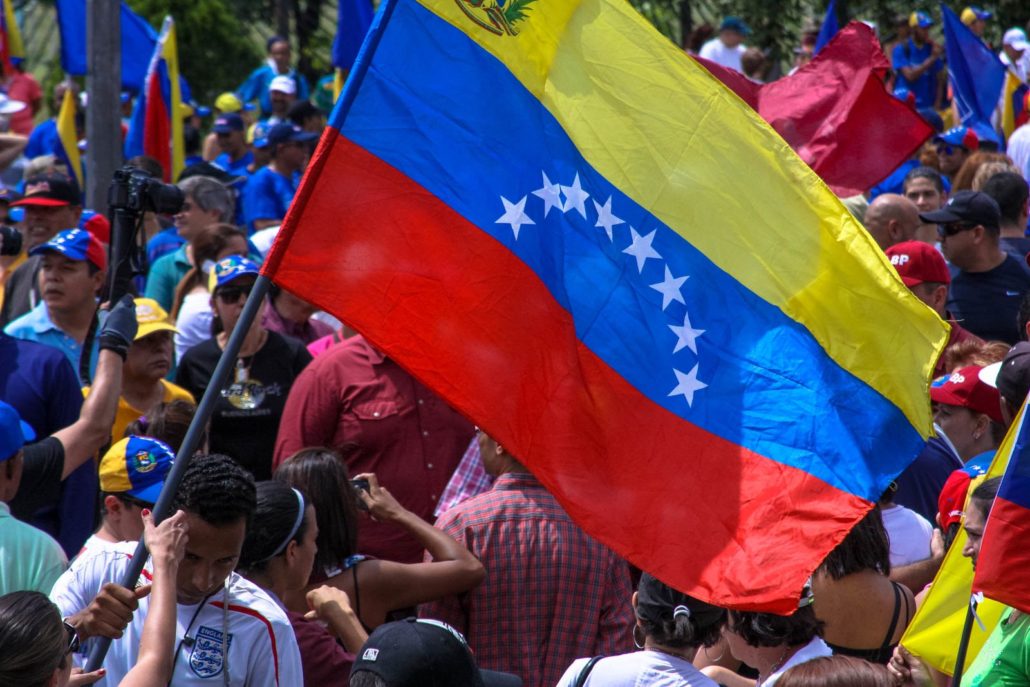
Top 10 Facts About Human Rights in Venezuela

Top 10 Facts About Human Rights in Venezuela
People have long associated the current humanitarian crisis in Venezuela with the autocratic governance of late President Nicolás Maduro and decades of socioeconomic downfall. Gross political corruption persists in Venezuela that constitutional violations show. These began in 2017 and have barred acting president Juan Guaidó from assuming the duties of his office. In September 2019, The UN Human Rights Council dispatched a team to the country to investigate alleged human rights abuses, including state-sanctioned killings, forced disappearances and torture. With this information in mind, here are the top 10 facts about human rights in Venezuela.

Top 10 Facts About Human Rights in Venezuela

  1. The Situation: Deteriorating social and economic conditions in Venezuela have incited a refugee crisis in the country. Since 2014, more than four million Venezuelans have fled (a figure which excludes unregistered migrants). Displaced by violence and corruption, Venezuelan migrants struggle to obtain legal residence, food security, education and health care resources in the nations they flee to. These bureaucratic hurdles and unstable living situations force many to return home.
  2. Maduro and Corruption: The dismantling of Venezuela’s National Assembly in March 2017 was the Maduro Administration’s first attempt of many to silence political opposition. The move stripped the opposition-led parliament of its legislating powers and immunity—important checks against potential exploits by the executive branch. Research from Amnesty International confirms that Maduro’s government used torture, unhinged homicides and extrajudicial executions to maintain support in the years following this constitutional scandal.
  3. Protests and Arrests: Nationwide protests and demonstrations began in 2014 in response to human rights violations and a buckling economy. According to the Penal Forum, authorities have arrested more than 12,500 people between the years 2014 and 2018 in connection with protests. Security personnel and government-backed militias often use excessive force—tear gas, firearms, asphyxiation, severe beatings and electroshock, etc.—against protesters and detainees in order to quell resistance efforts.
  4. Censorship: Maduro’s regime has used censorship of mainstream media to control Venezuelan civilians and eliminate its critics. A pervasive fear of reprisal effectively denies Venezuelans their freedom of expression and speech.  During times of global scrutiny, the government has blocked online news broadcasts, VPN access and streaming services to curb bad press and anti-government organizing. The government staged an information blackout in February 2019 in response to a clash between the military and aid convoys at the Colombian border.
  5. Political Bribery: The Venezuelan government has used political bribery to keep Venezuelans compliant. The government has used its monopoly on resources to withhold food and other basic goods from dissenters and reward supporters with the same incentives. In 2016, Maduro launched the government-subsidized food program, Local Food Production and Provision Committees (CLAPS). Through this insidious program, Venezuelans received monthly (oftentimes late or empty) food shares in exchange for having their voting activity tracked.
  6. Human Rights Crisis Denial: In February 2019 Maduro denied claims to the BBC that the country was undergoing a human rights crisis. He has repeatedly used the same rhetoric to reject foreign aid and unassailable evidence of health and welfare shortages in the country, by equating the acceptance of aid with the fall of his regime. That same month, there were disputes over $20 million in U.S. and European aid shipments at the Colombia-Venezuela border.
  7. Venezuela’s Inflation Rate: The International Monetary Fund forecasts Venezuela’s inflation rate will reach 10 million percent in 2019. Food scarcity and hyperinflation have led to millions of cases of malnutrition and premature death, especially amongst children.
  8. Doctors and Hospitals: Twenty thousand registered doctors have left Venezuela between 2012 and 2017 due to poor working conditions and growing infant mortality rates. Hospitals are unhygienic and understaffed, lacking the medicine and medical equipment to accommodate the excess number of patients. Tentative water sources and power outages make most cases inoperable, presenting a liability to doctors and causing untreated patients to become violent.
  9. Death Squads: In June 2019, the UN reported that government-backed death squads killed nearly 7,000 people from 2018 to May 2019. Maduro attempted to legitimize the killings by using the Venezuelan Special Police Force (FAES) to conduct the raids, which he staged through family separation techniques and the illegal planting of contraband and narcotics. Again, Maduro devised this strategy to threaten political opponents and people critical of the Maduro government.
  10. Human Trafficking: A 2016 report conducted by the U.S. Department of State condemned Venezuela’s handling of human trafficking in the country, in both regards to sex trafficking and internal forced labor. Venezuela lacks the infrastructure to properly identify and assist trafficking victims due to governmental corruption and rampant gain violence which facilitates human trafficking and forgoes accountability. Traffickers often trick or coerce Venezuelan migrants into the sex trade. In fact, 10 percent of 1,700 recorded trafficking victims in Peru between 2017 and 2018 were Venezuelan.

The top 10 facts about human rights in Venezuela should read as a call to action. Global aid agencies and national governments are currently working to bring humanitarian aid to Venezuelans and the growing Venezuelan migrant community. While the current political climate complicates internal relief efforts, spreading awareness about the state of human rights in Venezuela is the first step in addressing the crisis.

Cuarto Por Venezuela Foundation is a nonprofit organization conceived in 2016 by four Venezuelan women living in the United States eager to alleviate the situation at home. The Foundation works to create programs and partnerships to deliver comprehensive aid to Venezuelans in need. In 2018, the organization shipped over 63,000 lbs. of medicine, food and school supplies to Venezuela (four times the number of supplies shipped the previous year). Additionally, its health program has served nearly 40,000 patients to date through vaccination and disease prevention services.

– Elena Robidoux
Photo: Flickr

October 24, 2019
https://borgenproject.org/wp-content/uploads/borgen-project-logo.svg 0 0 Jennifer Philipp https://borgenproject.org/wp-content/uploads/borgen-project-logo.svg Jennifer Philipp2019-10-24 08:44:372020-01-18 15:01:28Top 10 Facts About Human Rights in Venezuela
Global Poverty, Human Trafficking, Migration

10 Facts About Human Trafficking in Laos

10 Facts About Human Trafficking in Laos
Laos is one of the most underdeveloped countries in the world and the poorest in its region. Poverty and low levels of education leave its residents vulnerable to diverse sorts of crime and one of the largest crimes the country faces is human trafficking. Here are 10 facts about human trafficking in Laos.

10 Facts About Human Trafficking in Laos

  1. Human Trafficking Numbers: Between 200,000 and 450,000 people in Laos fall victim to human trafficking each year. Labor migration within Laos’s geographical region has a link to trafficking as many natives leave in search of better employment opportunities.
  2. The Vulnerability of Girls: Girls aged 12 to 18 make up about 90 percent of trafficking victims each year. These young Lao women must drop out of school to make a living to sustain their families. The girls then willingly seek employment opportunities abroad.
  3. Migration to Thailand: The majority of human trafficking from Laos occurs when its people choose to move to Thailand. One of the reasons that Thailand is a destination is that it is close and shares a similar culture and language. Moreover, people in Laos tend to move to Thailand due to its higher economic standing. Since education levels in Laos are particularly low, its people often seek better lives and are naïve and vulnerable to criminals who trick and cheat them.
  4. Sex Trafficking and Forced Labor: The commercial sex trade and forced labor situations are the two most common types of human trafficking that Laotians face. Since young females are the main people migrating from Laos, traffickers often take them to countries like China to sell them as brides. Others receive false promises of high paying jobs but end up trapped in slave work.
  5. A Tier 3 Rank: These conditions have manifested due to the Laos government’s failure to meet the minimum standards to end human trafficking. In 2018, the U.S. downgraded Laos to a Tier 3 in terms of the Victims of Trafficking and Violence Protection Act of 2000 (TVPA). Tier 3 is the worst rating a country can have.
  6. UN-ACT and Ending Human Trafficking in Laos: Human trafficking remains one of Laos’s most significant struggles, but positive headway has been developing over the years. Laos’s government has started to tighten its border security. The police force is now receiving training from organizations like the United Nations Action for Cooperation Against Trafficking in Persons (UN-ACT). UN-ACT has implemented the three P’s protocol including prevention, protection and prosecution, to deter human trafficking in Laos.
  7. Raising Awareness: Not only is awareness spreading through law enforcement, but it is reaching civilians too. Officials have launched campaigns to spread information about human trafficking at border crossings. This initiative educates individuals on what to look out for and how to avoid potentially dangerous situations while traveling.
  8. The Lotus Project: While the government has started to do its part, other private organizations have lent Laos efforts too. The Lotus Project, founded in 2008, has a mission to support and provide young Loa women with education. Since the Lotus Project’s start, it has been able to impact 80 families and keep those girls from falling victim to human trafficking.
  9. Lao Women’s Union: Lao Women’s Union is the country’s largest support association. Not only does it focus on trafficking victims, but also on domestic violence victims. To serve the women of Laos, the LWU is an active advocator for women’s rights and their ability to prosecute traffickers.
  10. Village Focus International (VFI): In Laos, there are three shelters for trafficking survivors and two of them are a result of Village Focus International. At the shelters that VFI established, girls receive safe accommodations, food, health care and emotional support to repower themselves. VFI has been able to aid over 500 lives over the years and is helping make Laos a safer country for its residents.

The people of Laos, and especially the young women who live there, face great dangers when seeking employment opportunities abroad. As expressed in these 10 facts about human trafficking in Laos, however, the country is making positive strides. Thanks to recent government efforts and groups like LWU, The Lotus Project and VFI, more Laotians are able to avoid those hardships or receive rescue.

– Ariana Kiessling
Photo: Flickr


October 23, 2019
https://borgenproject.org/wp-content/uploads/borgen-project-logo.svg 0 0 Jennifer Philipp https://borgenproject.org/wp-content/uploads/borgen-project-logo.svg Jennifer Philipp2019-10-23 09:25:092024-05-29 23:13:2210 Facts About Human Trafficking in Laos
Global Poverty, Human Trafficking, Malnourishment, Sanitation

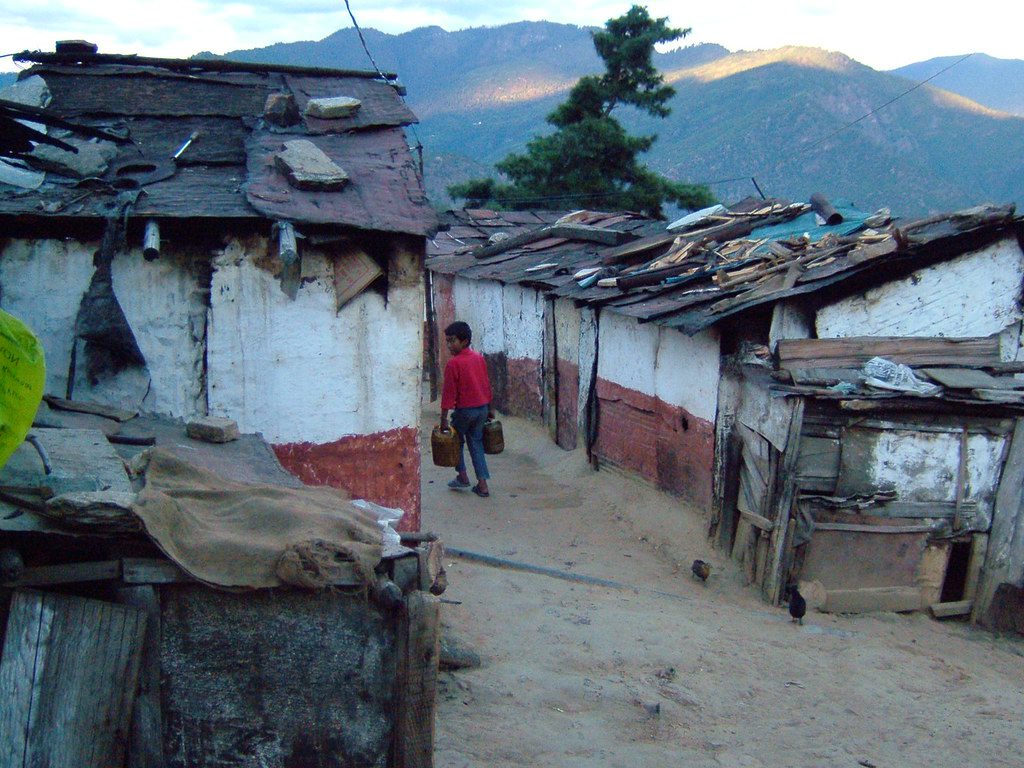
15 Facts About Poverty in Nepal

Poverty in Nepal
Straddled by two of Asia’s growing giants, India and China, Nepal features vast, mountainous landscapes and people from diverse ethnic cultures. However, the nation remains one of the poorest countries in the world. Here are 15 facts about poverty in Nepal.

15 Facts About Poverty in Nepal

  1. Poverty Rate: Twenty-five percent of the Nepali population lived below the poverty line in 2011. However, the country has seen a significant improvement compared to a rate of 41.8% in 1996 and 30.9% in 2004.
  2. Malnourishment: High food prices and limited access to farming in rural areas contribute to hunger in Nepal. Around 5 million people in Nepal do not have sufficient nourishment. Additionally, more than 85% of people rely on small-scale agriculture as their main form of sustenance.
  3. Civil War: Nepal experienced a civil war between 1996 and 2006, the effects of which the country still feels today. Conflict within a country often coincides with increasing poverty rates, as it limits the transportation of resources, health care access and a healthy job market.
  4. Corruption: Nepal’s government holds a reputation for being corrupt. Abuse of authority leads to an unfair economic system and unequal distribution of resources thereby perpetuating the issue of poverty in Nepal. Countries often feel the effects of corrupt government bureaucracy during natural disasters.
  5. Natural Disasters: Natural disasters have heavily afflicted Nepal, such as the 2015 earthquake which destroyed infrastructure, homes and economic growth. An already struggling economy and little political stability often exacerbate the effects of earthquakes in Nepal. Between the main earthquake in 2015 and the aftershock that came two weeks later, 8,970 lost their lives and 22,303 people became seriously injured. Estimates have determined that the total value of the damages from the earthquake and aftershock are equivalent to $7 billion.
  6. Infant Mortality Rates: A lack of health care and access to education in impoverished regions, for which there are many in Nepal, contribute to high infant mortality rates. In 2016, for every 1,000 children born in Nepal, 34 died before their fifth birthday.
  7. Geography: The geography of this country makes it difficult to effectively alleviate poverty. As a landlocked and mountainous region, the development and transportation of resources are cumbersome in Nepal. Furthermore, Nepal experiences political pressures from neighboring countries that can interfere with resource distribution.
  8. Infrastructure: Nepal’s roads are often in rough condition and the seasons heavily affect them. Delays, flat tires and small spaces are common. Because of their rural location, distance and terrain isolate much of Nepal’s population from employment and economic opportunities. Lack of basic infrastructure and access to transportation services makes it difficult for those in poverty to access markets and services.
  9. Agriculture: A lack of advanced farming methods also makes it hard for the country to make progress against poverty. Eighty percent of Nepal’s population lives in rural areas. In 2017, agriculture made up nearly one-third of the Himalayan country’s GDP. Additionally, more than 85% of its people relied on agriculture as their main form of sustenance. However, outdated methods are slowing the farming pace, and Nepal’s government continually fails to provide proper infrastructure to farmers.
  10. Education: Prior to 1951, only members of the upper class received an education. Since then, the Nepali government began expanding the reach of education. However, when the country introduced private education, the gap between rich and poor children only widened. Poor children still have low rates of access to education and many children leave school to work or help at home. Nepal as a whole has a literacy rate of only 65%. Furthermore, the quality of education remains low, as the teachers themselves often have very little schooling.
  11. Forced Labor and Human Trafficking: Nepal is a source, transit and destination country for forced labor and human traffickers. Lack of education for women and children leaves them particularly vulnerable. Many women will agree to marriages through matchmaking companies and find themselves in a domestic slavery situation instead. In desperation, parents will allow people to take their children in exchange for education opportunities. However, these children often end up in false orphanages to garner donations from tourists.
  12. Sanitation: Access to basic sanitation is still a major problem in Nepal. Nearly 10.8 million people are without access to basic sanitation and 16% of the population practices open defecation. Organizations such as the Global Hope Network have sought to educate inhabitants of villages about the health issues associated with these systems, and have begun building more sanitary infrastructure in places without access to toilets.
  13. Rice Production and Economic Growth: In 2017, Nepal produced 5.2 million tons of rice, the most ever recorded. This helped the country grow economically by 7.5% and greatly reduced its poverty levels. During this same time period, Nepali foreign workers sent significant amounts of remittances and inflation rates stabilized for the time being.
  14. SAMBHAV: There are many nonprofits working to alleviate poverty in Nepal from the ground up. Organizations such as SAMBHAV are beginning with the education system. This group has reconstructed schools and moved them to more convenient locations in order to increase attendance. SAMBHAV also renovates and rebuilds schools so that students can study in modern, clean and safe classrooms, often adding sanitation facilities where they did not previously exist.
  15. Habitat for Humanity: Habitat for Humanity is also working on the ground in Nepal to address the housing crisis. Currently, the organization, alongside its partners, is building 2.3 houses per hour.

The issues contributing to these facts about poverty in Nepal are many, but the country is making progress. The country’s poverty rate has seen significant improvement over the past two decades, and recent economic successes should continue that trend, leading to a better quality of life for more and more Nepalis. Efforts of volunteers and nonprofit organizations have the potential to make a big difference. These 15 facts about poverty in Nepal highlight the various issues that contribute to the problem and the impact they have on the country.

– GiGi Hogan
Photo: Flickr

October 9, 2019
https://borgenproject.org/wp-content/uploads/borgen-project-logo.svg 0 0 Jennifer Philipp https://borgenproject.org/wp-content/uploads/borgen-project-logo.svg Jennifer Philipp2019-10-09 09:33:162024-05-29 23:12:3515 Facts About Poverty in Nepal
Global Poverty, Human Trafficking

Factors That Lead to Human Trafficking

Factors That Lead to Human Trafficking

There are many factors that lead to human trafficking, a form of modern-day slavery that exists in the 21st century. Today, an estimated 24.9 million people worldwide are still forced into a world of captivity. According to the United Nations Office of Drugs and Crime (UNODC), factors that lead to human trafficking consist of three core elements: action, means and purpose. Action refers to how victims are recruited and transported. The means of trafficking includes deception, coercion and the use of or threat of force. The purpose of trafficking is always exploitation, including sexual services and forced labor.

Human trafficking is a global problem. Any nation in the world can be a country of origin, transit or destination for trafficked individuals. However, most trafficking occurs in developing countries where potential victims are vulnerable due to poverty or conflict. The problem is as widespread as it is complex and the factors that lead to human trafficking differ by country.

Factors That Lead to Vulnerability

Human trafficking is a complex issue, dependent on the social, economic and cultural spheres in origin, transit and destination countries. However, there is one commonality in every case of trafficking—traffickers seek to exploit their potential victim’s desire to move toward better opportunities. They use coercive measures to gain control and cooperation from the victim.

Victims of human trafficking often come from dangerous situations in their origin country and are falsely promised outcomes that will improve their quality of life. These factors of human trafficking are called push and pull factors. They either push people out of their origin or pull them toward their destination.

Push factors that provoke travel are often poverty, the lack of social or economic opportunity and human rights infringements. Other factors like political instability, internal armed conflict and natural disaster are also common. War creates major displacements of people, leaving women and children vulnerable to trafficking.

The pull factor is the need for slave labor, which is obtained by exploiting those in more vulnerable positions. When the origin country is devastated by war and destination countries are free of similar conflict, potential victims will be pulled toward stability. Those that desire to improve their quality of life by leaving their home countries can be deceived when trafficking offenders coerce and capture them. In the presence of conflict, the remaining vulnerable population can be exploited by offenders that deceivingly offer a better life.

Combating Root Causes

The UNODC operates on an international level and provides legislative assistance to address the root causes of human trafficking. This includes the review of domestic legislation concerning the protection of victims and the training of criminal justice practitioners to effectively prosecute offenders. Additionally, the Protocol to Prevent, Suppress and Punish Trafficking in Persons, Especially Women and Children was adopted by the U.N. General Assembly in 2000. This legal instrument aims to combat and prevent trafficking, protect victims and seek international cooperation to meet these goals.

There are many non-governmental organizations (NGOs) that address issues on a local level. Challenging Heights is an NGO based in Ghana that focuses on fighting child trafficking to Lake Volta, where an estimated 21,000 children are forced to work in the fishing industry. The organization regularly conducts rescue missions for trafficked children in the region. Recovered children are brought to Hovde House, a transitional shelter. At that point, the rehabilitation process begins, which includes education as well as medical, psychological and emotional care. Once children are ready to reintegrate into their communities, Challenging Heights continues to monitor their progress and provides services like health care.

NGOs like Challenging Heights that address regional needs distill international legal instruments like the UNODC into local efforts. By addressing the root causes of trafficking like poverty, these organizations hope to stop the cycle of and factors that lead to human trafficking.

– Andrew Yang
Photo: Pixabay

September 24, 2019
https://borgenproject.org/wp-content/uploads/borgen-project-logo.svg 0 0 Jennifer Philipp https://borgenproject.org/wp-content/uploads/borgen-project-logo.svg Jennifer Philipp2019-09-24 06:00:242024-05-29 23:12:32Factors That Lead to Human Trafficking
Children, Global Poverty, Human Trafficking

9 Facts About Human Trafficking in Brazil

10 Facts about Human Trafficking in Brazil

Brazil has a long history of human trafficking dating back to the 1400s. Slavery was legal in the region until 1888, the year Brazil officially abolished slavery. Even 130 years later, human trafficking still remains rampant as thousands of Brazilians are used for forced labor or prostitution every year. Here are nine facts about human trafficking in Brazil.

9 Facts about Human Trafficking in Brazil

  1. Brazil is considered a “source, transit, and destination country” for human trafficking. Source countries provide traffickers with the human capital they need. Transit countries help move victims from one country to another and destination countries are where trafficked humans arrive and are exploited the most.
  2. In 2004, Brazil’s government created a list of companies that were involved in slave labor and blocked those companies from receiving state loans. The list is effective at dissuading businesses from using slave labor and human trafficking. For example, Cosan appeared on the list in 2009 which led to a decrease in the business’ stock value and also caused Walmart to end business relations with the company as well.
  3. In 2017, the U.S. Department of State ranked Brazil as a “Tier 2” country, which means that human trafficking is still a significant issue despite the government’s efforts to eliminate it. Countries receive a new ranking every year depending on how well it complies with international standards. If Brazil wants to fully comply with international standards, it will need to increase its efforts of reporting human trafficking and caring for victims.
  4. Tourists from the U.S. and Europe come to Brazil for child sex tourism which is often located near the “resort and coastal areas”. Although law enforcement cooperation and information sharing with foreign governments have increased to try and combat the problem, the Brazilian government is not doing enough as there were no “investigations, prosecutions, or convictions of child sex tourists in 2017”.
  5. In 2016, a minimum of 369,000 people in Brazil lived “in conditions of modern slavery”. Modern slavery consists of anyone who is forced to work against their will. Modern slavery also includes adults and children who are treated like property and who cannot escape from their owners.
  6. To change the nation’s view of slavery, Brazil is creating television programs and documentaries that highlight the problem of human trafficking. The funds to create these films are seized from human traffickers by judges and prosecutors and are then given towards anti-slavery screenplays intended for schools, labor unions or regions where slavery is still widespread.
  7. Debt bondage is often used to keep Brazilian slave laborers from leaving. Debt bondage refers to a slave having to use their services to pay back a debt to their owner. Often times, the debt is almost impossible to pay back.
  8. When Brazil hosted the 2014 World Cup and the 2016 Summer Olympics, sexual exploitation of adults and children increased. It is common for global sporting events to lead to an increase in sexual exploitation. Traffickers are lured to these events due to the influx of workers needed to construct stadiums and the rise in tourism during the games. For example, in 2016, eight teenage girls were rescued from a sex trafficking ring located next to Brazil’s Olympic hub.
  9. In 2016, Brazil passed Law 13.344/16 which aims to prevent human trafficking and severely punish perpetrators. The law intends to prevent future human trafficking by creating a database of past offenders and by raising the penalties for those who are caught. The law also outlines provisions for providing assistance to victims of human trafficking.

There are reasons to remain hopeful as the Brazilian government is working hard to combat human trafficking in Brazil. For example, the government recently created a second list that will be used to publicly shame and denounce companies that use slave labor or human trafficking. Furthermore, one of the best ways to combat human trafficking is to reach out to local, regional or national government representatives and urge them to support legislation fighting against international human trafficking. Human trafficking is an immense issue that cannot be solved without the help of powerful government agencies.


– Nick Umlauf
Photo: Flickr

September 22, 2019
https://borgenproject.org/wp-content/uploads/borgen-project-logo.svg 0 0 Jennifer Philipp https://borgenproject.org/wp-content/uploads/borgen-project-logo.svg Jennifer Philipp2019-09-22 01:30:242019-12-17 12:41:589 Facts About Human Trafficking in Brazil
Global Poverty, Health, Human Rights, Human Trafficking

10 Facts About Human Trafficking in China

Human Trafficking
Human trafficking is any forced exploitation or trade of human beings against their will. Though it primarily manifests itself in the forms of forced labor and modern slavery, human trafficking can also apply to other issues such as sex trafficking, forced criminality and forced organ removal. China has fallen victim to these increased rates of human trafficking, and the issue will continue to prevail until more people become aware of the horrible atrocities that are occurring throughout the East Asian nation.

10 Facts About Human Trafficking in China

  1. Prevalence of Human Trafficking: Human trafficking significantly impacts China’s migrant population of approximately 180 million people. Many of them work as forced laborers producing bricks, working in factories or mining for coal.
  2. Trafficking in China: Though credible data is not always available or attainable, many sources estimate that a majority of human trafficking in China takes place internally. In other words, most of China’s human trafficking involves its own citizens. These Chinese citizens are subject to traffickers moving or exploiting them throughout the country’s expansive geographical area.
  3. Foreign Women: Due to the Chinese government’s birth control policy, as well as a historic preference for male children, China has an unbalanced gender ratio distribution of 118 males to 100 females. According to researchers, this disparity is contributing to the human trafficking problem in China. Specifically, foreign women often become forced brides for men in China, as well as being forced into prostitution.
  4. Foreign Brides from Myanmar: As previously mentioned, millions of women become foreign brides who fall victim to human trafficking in China. Many of these women come from the nation’s southern neighboring country of Myanmar. According to anecdotal evidence from some women, they were typically sold within a range of approximately $3,000 and $13,000.
  5. Disabled People: In China, many of the targets for human trafficking are disabled people. In fact, in a 2016 report from the China Ministry of Public Security, one of the investigations resulted in the Chinese government’s arrest of 464 suspects. These people were all involved in labor trafficking of disabled Chinese citizens in some capacity.
  6. Organ Trafficking: Organ trafficking is a very obscure yet problematic manifestation of human trafficking in China. Though the Chinese government publicly announced that it would only accept organs for transplants from citizens that have donated voluntarily, many experts still speculate that secretive organ harvesting and trafficking occurs. Reports indicate that, even though the Chinese government claims that roughly 10,000 organ transplants occur each year, the real numbers could be closer to 80,000 per year.
  7. Tier 3 Country: The Trafficking in Persons Report, an annual report that the U.S. State Department issues, listed China as a Tier 3 country. Essentially, Tier 3 countries are nations whose governments do not sufficiently comply with the minimum anti-trafficking standards and are not making any significant efforts to do so. China’s government is not doing all that it can to combat this pervasive issue.
  8. Organizations to End Human Trafficking: Though many of these figures are startling and disheartening, many organizations around the world are currently working towards the eventual eradication of human trafficking in China and around the world. The United Nations Action for Cooperation Against Trafficking in Persons (UN-ACT), for example, is a division of the United Nations that is currently working to improve the human trafficking situation in China. With the implementation of its National Plan of Action II, which is to conclude in 2020, UN-ACT has participated in a number of anti-trafficking actions and initiatives, such as hotspot policing borders and other high-traffic areas for potential victims of human trafficking.
  9. Women’s Roles in Eradicating Human Trafficking: Women organize many of these anti-human trafficking organizations. For example, the All-China Women’s Federation (ACWF) is a group that tackles many human and civil rights abuses throughout China. On July 3, 2019, ACWF conducted training in Central China’s Hunan Province to teach more Chinese women to spot and prevent trafficking and abductions.
  10. Equality Now: Another group called Equality Now has been working to eradicate human trafficking in China and around the world. Equality Now is an organization that works closely with Asian women, as well as other non-governmental organizations, to spread awareness and knowledge about trafficking and how to combat it. In March 2019, Equality Now participated in a conference with over 230 attendees to share ideas, anecdotes and methods to successfully spot and combat human trafficking, as well as provide critical support for victims and survivors.

Evidently, China has a continuously growing issue of human trafficking. Both Chinese citizens and foreigners can suffer exploitation in forced labor, among other things. Because of China’s vast geographic reach, combatting this issue is more difficult. That said, government initiatives, as well as anti-trafficking non-governmental organizations and local groups, are all contributing to decreasing human trafficking throughout China. The problem may seem insurmountable now, but as long as people continue to learn and spread awareness about trafficking in China, solutions will become more clear.

– Ethan Marchetti
Photo: Flickr

September 21, 2019
https://borgenproject.org/wp-content/uploads/borgen-project-logo.svg 0 0 Jennifer Philipp https://borgenproject.org/wp-content/uploads/borgen-project-logo.svg Jennifer Philipp2019-09-21 10:30:192022-07-13 07:53:2210 Facts About Human Trafficking in China
Advocacy, Global Poverty, Human Trafficking

10 Facts About Human Trafficking in Guatemala

10 Facts ABout Human Trafficking in Guatemala

According to the United Nations Office on Drugs and Crime (UNODC) about 15,000 young people are being trafficked for sexual exploitation currently in Guatemala and for every victim that is rescued approximately 30 more are exploited and kept hidden. Here are 10 facts about human trafficking in Guatemala.

10 Facts About Human Trafficking in Guatemala

  1. Poverty is considered one of the main causes behind human trafficking, given that three in five people live on less than $3.10 a day. As a result, most victims are often uneducated, unemployed and are lured based on false promises of potential job opportunities. Domestic violence can also be a main driver, given the engrained patriarchal mentality that exists in this society. Often, human trafficking situations arise from domestic violence from male relatives, in turn causing young children to flee home where they are then submitted to the harsh realities of human trafficking conditions.
  2. Only four percent of human trafficking victims in Guatemala are actually Guatemalan citizens, meaning that about 96 percent of the people who are trafficked in Guatemala are not native Guatemalans. Since the majority of the victims come from neighboring countries, human trafficking can be linked with northern migration. Guatemala‘s neighbor countries, El Salvador, Honduras and Nicaragua, are all part of the C-4 visa area, which establishes that citizens of these countries can travel freely back and forth. This means Guatemala may be seen as an attractive location to relocate for economic purposes.
  3. Of the approximately 50,000 sex trafficking victims reported in Guatemala, almost 60 percent are children. It is very common to see girls as young as 12 years old working in brothels and being forced to have sex with upwards of 30 customers a day. In some cases, traffickers can be found at schools where they recruit virgin schoolgirls to partake in such acts. With the high number of children being sold for sex trafficking, the revenue is equivalent to 2.7 percent of Guatemala’s gross domestic product (GDP).
  4. Along with young children, women are also at higher risk for victimization. According to the International Commission against Impunity in Guatemala (CIGIG), women make up 64 percent of victims, of which several are little girls as young as eight years old. Because there is often a higher demand and willingness to pay more money for specific traits in girls such as virginity, traffickers must often target younger women.
  5. Although efforts are being made to stop human trafficking, only about three percent of cases are detected every year. Additionally, there are only two prosecutors country-wide who are working solely on sex trafficking cases. Because of this, human trafficking convictions in Guatemala are extremely low.
  6. Due to a misidentification of human trafficking victims, the number of victims is actually higher than what has been reported. Over the past five years, approximately 1,568 victims have been detected annually as human trafficking victims. Of these, 317 are sex trafficking victims and 810 are human trafficking victims.
  7. The Human Trafficking Institute has listed some of the challenges that Guatemalan authorities have faced when it comes to reducing and eliminating human trafficking. Some of these challenges include the human trafficking rings that currently exist, gang related crime and high levels of poverty. Furthermore, many victims include indigenous peoples who may not speak Spanish well enough or at all in order to report the traffickers to the respective authorities.
  8. The Guatemalan government has taken notice of the increasing problem of human trafficking and is taking the appropriate measures to stop it. The government has recently released its anti-trafficking action plan for 2018 to 2022, which establishes that it aims to provide a victim protection protocol in differing languages and dialects for those whose first language is not Spanish. Additionally, the government will open an anti-trafficking unit that will operate regionally and attempt to process and bring more traffickers to justice.
  9. Although a lack of education can lead people to become prey to human traffickers, becoming more educated can help survivors overcome the trauma they have undergone. Not only does education help victims but it can also prevent people from becoming victims by raising awareness of the problem and providing them with solutions to avoid being trafficked. Education can also help young people develop a skill or interest after the fact, in order to help them move on and lead a normal life.
  10. The UNODC has developed a trust fund in order to help victims of human trafficking. This program works by rescuing victims and slowly reintegrating them into society, while giving them a much-needed support system. However, this program not only benefits the victims of human trafficking, but it also aims to raise awareness and educate the general public in how to keep human trafficking from occurring at all.

These 10 facts about human trafficking in Guatemala shed light on what a pressing issue it is, however efforts are being made by the government as well as international organizations to continue progress in ending human trafficking worldwide.

—Laura Rogers
Photo: Flickr

September 8, 2019
https://borgenproject.org/wp-content/uploads/borgen-project-logo.svg 0 0 Kim Thelwell https://borgenproject.org/wp-content/uploads/borgen-project-logo.svg Kim Thelwell2019-09-08 14:11:482019-12-17 14:49:4510 Facts About Human Trafficking in Guatemala
Global Poverty, Human Trafficking

10 Facts About Human Trafficking in the Philippines

10 Facts About Human Trafficking in the Philippines
Human trafficking is one of the most heinous crimes in the world. Trafficked individuals often have to do manual labor, become sex slaves or perform domestic servitude. Unfortunately, the prevalence of human trafficking in the Philippines is quite high. Experts estimate that the number of people in slavery in the Philippines totals over 780,000. Many believe that this large number stems from the Philippines’ low GDP per capita (the country ranks 118th out of 191 nations in this measure) and its high poverty rate of 21.6 percent. Listed below are 10 facts about human trafficking in the Philippines.

Top 10 Facts About Human Trafficking in the Philippines

  1. Prostitution is illegal in the Philippines.
    Prostitution is illegal in the Philippines, as stated in Article 202 of the Philippine Constitution. However, many individuals in the Philippines in recent years have pushed to enact bills that focus less on punishing prostitutes and more on preventing and helping victims of human trafficking. Such bills have included The Magna Carta of Women, the Quezon City Ordinance, The Anti-Trafficking Persons Act and The Philippine Plan for Gender-Responsive Development. Each seeks to amend Article 202 in an attempt to end the unlawful exploitation of trafficked individuals.
  2. Super Typhoon Haiyan increased human trafficking.
    The destruction from Super Typhoon Haiyan displaced more than 6 million people and left 1.9 million homeless. The typhoon hit the provinces of Leyte and Samar the hardest, two provinces that people already knew as places in which trafficking was common. The resulting chaos and economic instability have resulted in an increase in human trafficking in these regions.
  3. Human traffickers use the promise of work to lure victims.
    Traffickers commonly target individuals who are either from indigenous communities or are living in more rural areas. They usually offer jobs as maids, waitresses or entertainers to trick individuals into trusting them. This tactic preys on the desperation of many economically disadvantaged individuals.
  4. Children are the most vulnerable.
    Children are at great risk for human trafficking in the Philippines. Estimates determine that 60,000 to 100,000 children are victims of human trafficking in the Philippines. These children either go to work in child sex rings in the Philippines or work abroad as prostitutes. To combat this issue, the Filipino government has begun to work with international organizations, foreign donors and NGOs to fund prevention efforts and increase awareness about human trafficking in the Philippines.
  5. Tourism thrives on human trafficking in the Philippines.
    Much of the demand for prostitution in the Phillippines comes from tourists. Such commercial sex is popular in tourist cities such as Boracay, Angeles City, Olongapo, Puerto Galera and Surigao. While people do not advertise the locations where this prostitution occurs outwardly (due to the formal illegality of prostitution in the Philippines) the tourist prostitution system is unfortunately quite expansive and there are many individuals who have knowledge of these locations from other sources.
  6. Internet trafficking is very common.
    In some cases, relatives use children for profit and forced them to commit various sex acts in front of a webcam. The children committing these acts are typically no older than 12-years-old and each show can rake in about $100. In total, there were over 45,000 reports of online child sexual exploitation in 2017. In response to this, the Filipino government has begun to divert more funds towards helping identify situations in which people are sexually exploiting children. 
  7. Traffickers traffick people both nationally and internationally.
    Traffickers send some human trafficking victims in the Philippines to Manila, the country’s capital, while they traffick others abroad to countries such as Saudi Arabia, Kuwait, Hong Kong and Singapore. The Department of Foreign Affairs (DFA) and the Department of Social Welfare and Development (DSWD) have done good work recently in preventing this cross-border trafficking, but people must do more to ensure that these international human trafficking rings shut down for good.
  8. Destiny Rescue is helping to assist victims and catch traffickers.
    Destiny Rescue is an NGO that works with government officials and task forces that deal with human trafficking and the sexual exploitation of children. It works with former victims to help them heal both mentally and physically from their experiences. It also gathers intelligence regarding trafficking and exploitation rings around Southeast Asia. Recently, Destiny Rescue helped the Filipino National Bureau of Investigation (NBI) bring down a trafficking agency, freeing 159 women in the process.
  9. UNICEF has taken steps to help fight human trafficking.
    Many NGOs around the world have taken steps to help end the practice of human trafficking, including UNICEF. UNICEF has stepped into work with both the Filipino government and local communities to report and recognize trafficking. Efforts by UNICEF include working to better monitor and collect data about trafficking and informing officials such as social workers, prosecutors and church workers about laws regarding human trafficking.  UNICEF has also aided in the rescue and recovery of trafficking victims and has worked to teach parents and communities about the typical behaviors and practices that lead to exploitation.
  10. The Filipino Government is taking the issue seriously.
    The government has taken huge steps to cut back on the amount of trafficking that takes place. The budgets of the Philippine National Police (PNP) and the National Bureau of Investigation (NBI) have increased with a specific interest in fighting trafficking. In addition, various government organizations such as the Interagency Council Against Trafficking (IACAT) and members of the DOJ and the DSWD have worked together to create new policies in the hopes of preventing human trafficking in the future. The IACAT has also worked to increase awareness about human trafficking by hosting various events open to the general public.

These 10 facts about human trafficking in the Philippines demonstrate that trafficking remains a major problem in the country. However, many are working to help improve the situation and there is hope that, in the near future, human trafficking in the Philippines will be a thing of the past.

– Sydney Toy
Photo: Wikipedia Commons

September 6, 2019
https://borgenproject.org/wp-content/uploads/borgen-project-logo.svg 0 0 Kim Thelwell https://borgenproject.org/wp-content/uploads/borgen-project-logo.svg Kim Thelwell2019-09-06 06:18:572024-12-13 17:51:1510 Facts About Human Trafficking in the Philippines
Page 21 of 31«‹1920212223›»

Get Smarter

  • Global Poverty 101
  • Global Poverty… The Good News
  • Global Poverty & U.S. Jobs
  • Global Poverty and National Security
  • Innovative Solutions to Poverty
  • Global Poverty & Aid FAQ’s
Search Search

Take Action

  • Call Congress
  • Email Congress
  • Donate
  • 30 Ways to Help
  • Volunteer Ops
  • Internships
  • Courses & Certificates
  • The Podcast
Borgen Project

“The Borgen Project is an incredible nonprofit organization that is addressing poverty and hunger and working towards ending them.”

-The Huffington Post

Inside The Borgen Project

  • Contact
  • About
  • Financials
  • President
  • Board of Directors
  • Board of Advisors

International Links

  • UK Email Parliament
  • UK Donate
  • Canada Email Parliament

Get Smarter

  • Global Poverty 101
  • Global Poverty… The Good News
  • Global Poverty & U.S. Jobs
  • Global Poverty and National Security
  • Innovative Solutions to Poverty
  • Global Poverty & Aid FAQ’s

Ways to Help

  • Call Congress
  • Email Congress
  • Donate
  • 30 Ways to Help
  • Volunteer Ops
  • Internships
  • Courses & Certificates
  • The Podcast
Scroll to top Scroll to top Scroll to top